

Field Test - Nikon Nikkor Z MC 50mm f/2.8 Macro Lens Review

Nikon Nikkor Z MC 50mm f/2.8 is a compact, lightweight and versatile macro lens for full-frame Nikon Z mirrorless cameras. Designed for close-up photography, it offers a 1:1 reproduction ratio and a minimum focusing distance of 16 cm. This field test provides a factual evaluation of its optical performance in real-world conditions.
Summary
- Technical specifications
- MTF charts and optical design
- Japanese maple leaf: bokeh and aperture rendering
- Close-up arum: localised sharpness
- Texture and contrast on hosta leaf
- Everyday objects: archive box
- Rose pistils: precision at very short distance
- Autofocus and macro usage
- Light loss in macro
- Very good for slide digitisation, more limited for negatives with borders
- Conclusion
- FAQ
Technical specifications
| Mount | Nikon Z mount |
| Format | FX / 24 × 36mm |
| Focal length | 50mm |
| Maximum aperture | f/2.8 |
| Minimum aperture | f/22 |
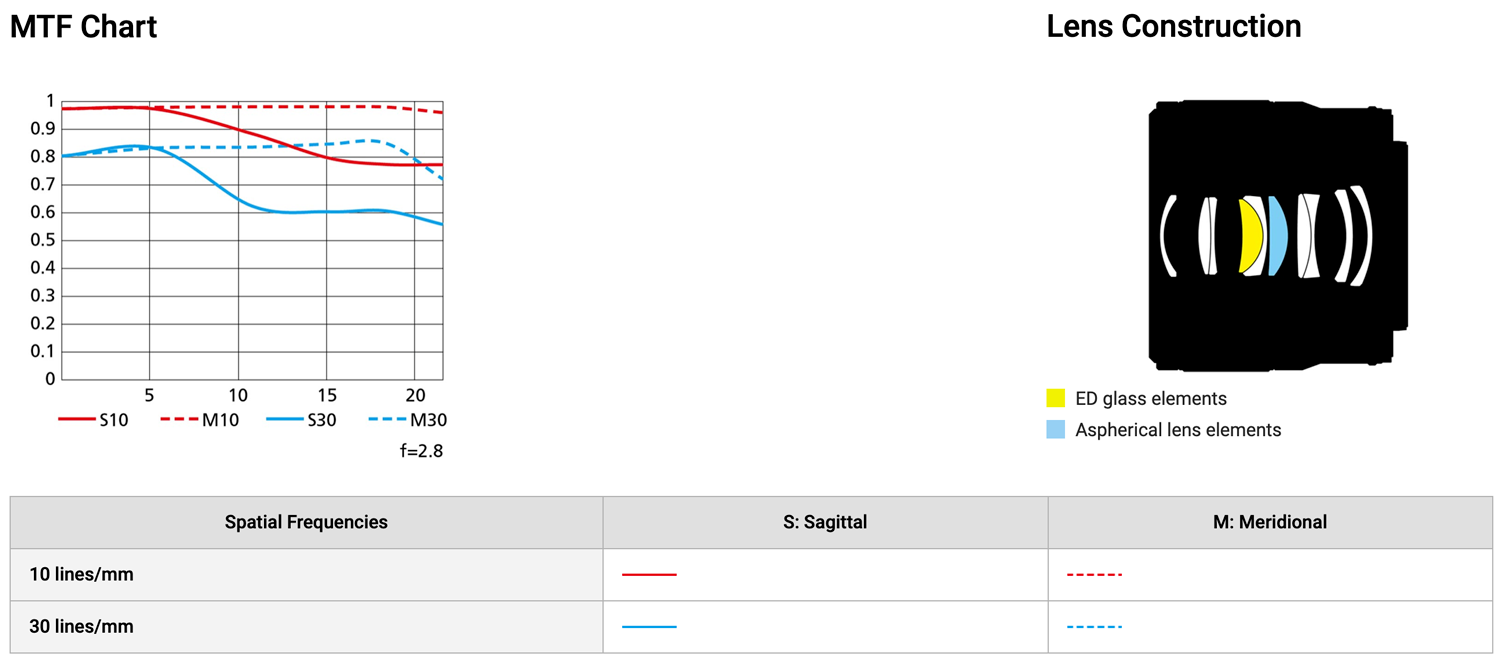
| Optical construction | 10 elements in 7 groups (including 1 ED glass, 1 aspherical element and a fluorine-coated front element) |
| Angle of view | FX: 47°, DX: 31°30' |
| Focusing system | Front focus |
| Minimum focus distance | 0.16 m from the focal plane |
| Maximum reproduction ratio | 1:1 (life-size) |
| Diaphragm blades | 9 (circular aperture) |
| Aperture range | At infinity: f/2.8 to f/22 - At 0.16 m: f/5.6 to f/32 |
| Coating | Fluorine coating |
| Filter size | 46mm (pitch: 0.75mm) |
| Dimensions (diameter × length) | Approx. 74.5mm × 66mm (from mount) |
| Weight | Approx. 260 g |
| Autofocus | Yes |
| Focusing | Auto and manual |
| Focus limiter switch | Two positions: FULL (∞ to 0.16 m) and 0.3 m to 0.16 m |
MTF charts and optical design
Japanese maple leaf: bokeh and aperture rendering
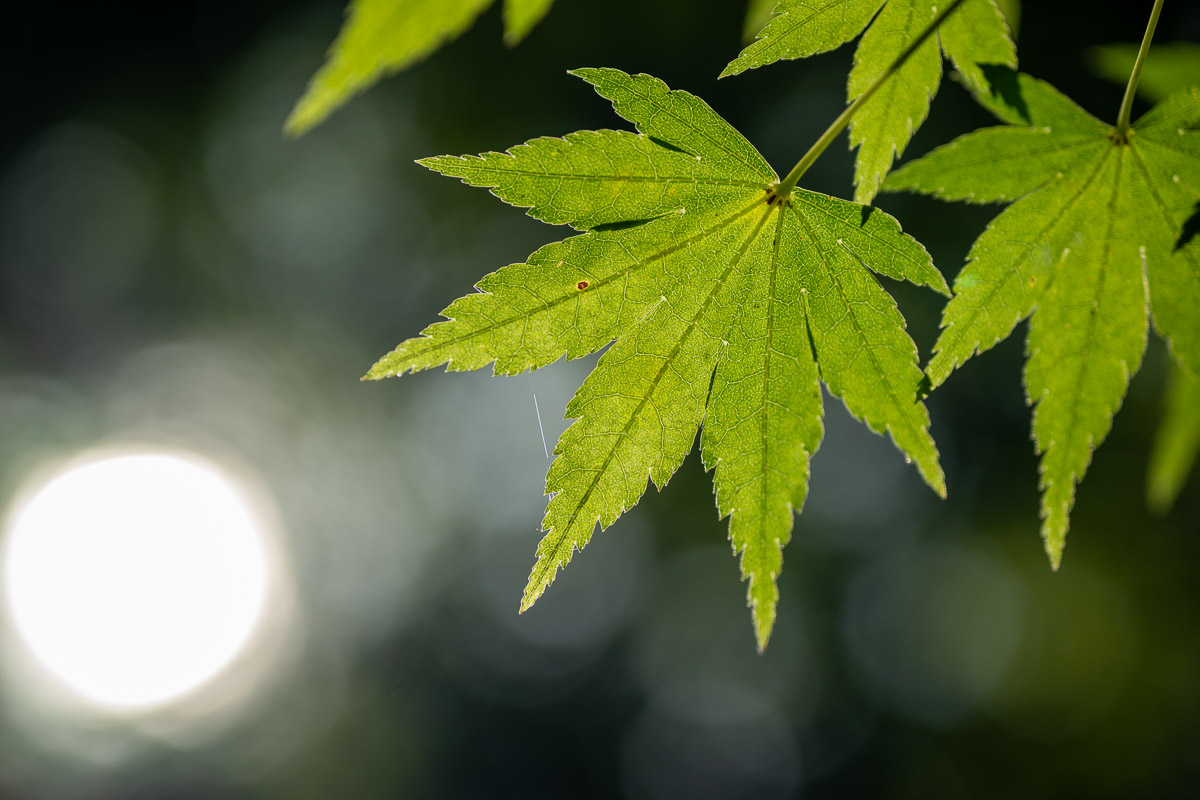
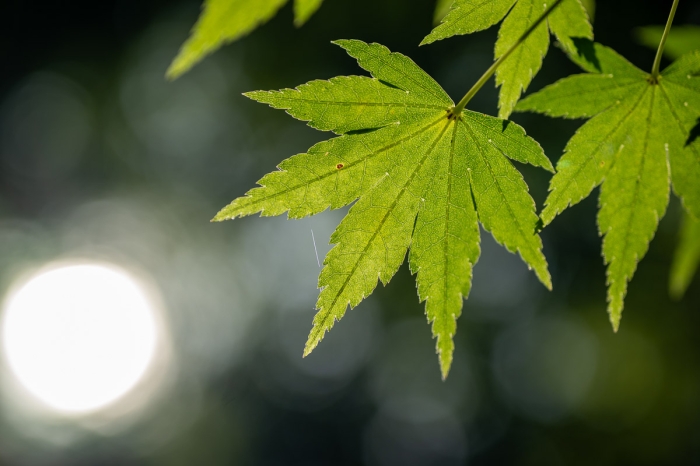
The first two images show a Japanese maple leaf photographed at close range and backlit. The subject is sharp and detailed, with smooth circular highlights in the background created by filtered light through the foliage. Their regular shape and the gentle transitions contribute to the quality of the bokeh. The lens’s 9-blade rounded diaphragm also helps to maintain rounded highlights when the aperture is slightly stopped down.
This soft and progressive bokeh rendering confirms that the Nikon Nikkor Z MC 50mm f/2.8 handles background blur transitions very well, even at wide apertures.
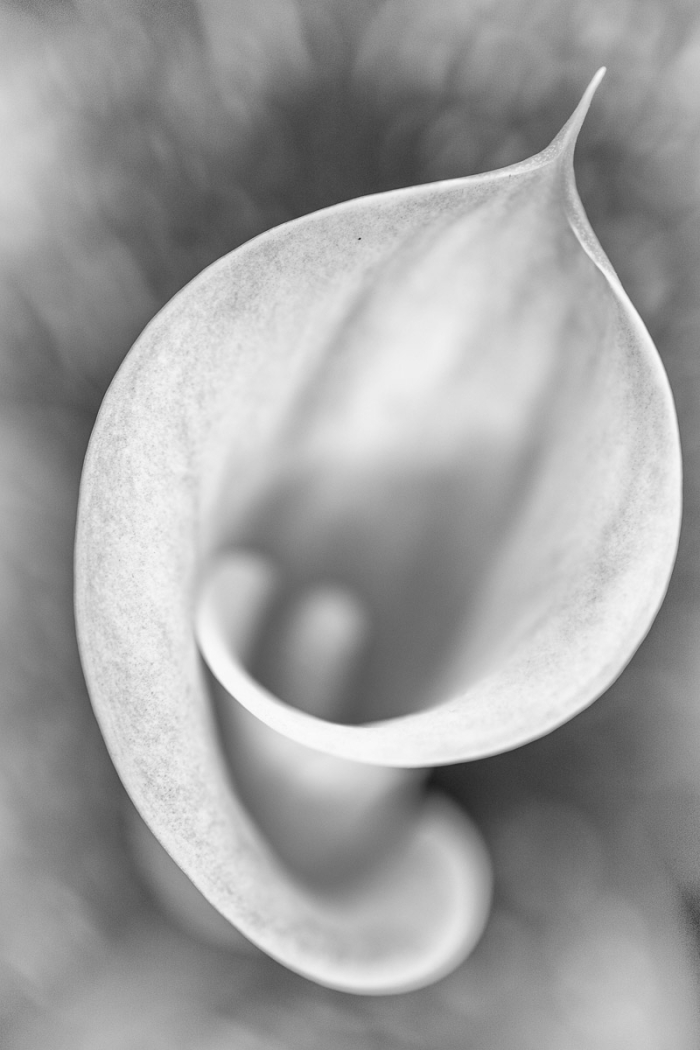
Close-up arum: localised sharpness and minimal depth of field
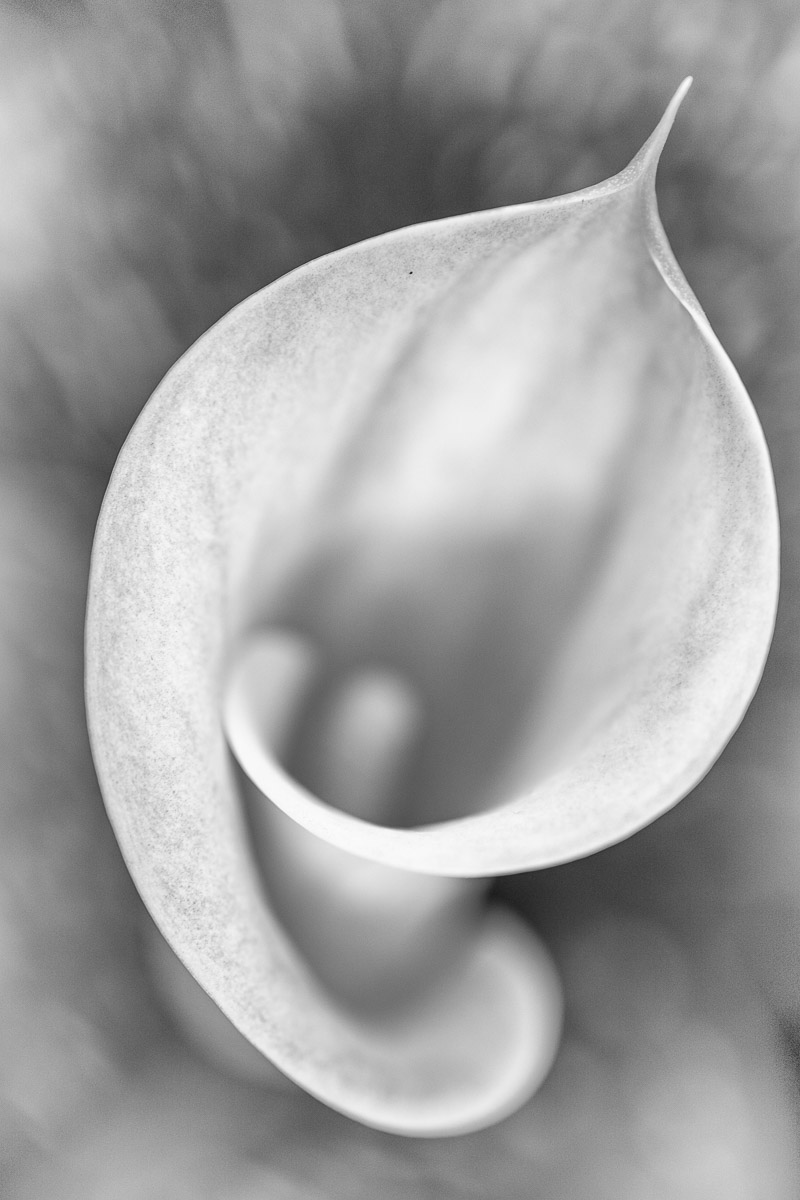
The black-and-white photo of an arum shows the extremely shallow depth of field at f/2.8. Only part of the inner petal is sharp, with the rest of the flower gradually fading into blur. This behaviour is typical of macro lenses at wide apertures, but the Nikon Nikkor Z MC 50mm f/2.8 handles it smoothly and naturally.
The transition from sharp to soft areas is fluid, with no fringing or visible aberration, making it an excellent tool for soft-light floral compositions.
Texture and contrast on hosta leaf
In black and white, the photograph of a hosta leaf reveals outstanding textural accuracy. The micro-contrast is excellent, veins are pronounced but not exaggerated, and surface imperfections are clearly visible. The Nikon Nikkor Z MC 50mm f/2.8 excels in delivering detailed close-ups, ideal for botanical or still-life photography.
Everyday objects: archive box behind a grille
The photo of a "Contre-Types France" negative box, seen through a blurred foreground grille, highlights the lens’s ability to separate layers. The front grille is pleasantly out of focus without distraction, while the handwritten label and wood texture remain perfectly legible. The Nikon Nikkor Z MC 50mm f/2.8 allows for visually complex compositions without sacrificing clarity.
Rose pistils: precision at very short distance
The final colour image focuses on the pistils of a rose. At extremely close range, the lens delivers surgical sharpness on the flower’s core, with gentle bokeh on the petals. Colour rendering is balanced and accurate, even with a mix of warm and pastel tones.
Autofocus and macro usage
Judging a macro lens solely on autofocus performance can be misleading. Between 30 cm and infinity, most lenses behave adequately. At very close range, however, depth of field becomes extremely shallow and the focusing range much greater: even a very small change in distance can move the subject outside the plane of focus, and autofocus may hesitate more frequently.
In such conditions, it is often better to switch to manual focus, especially for shooting insects, flower pistils or water drops. If the camera is not perfectly stabilised, or if the subject shifts slightly because of wind or vibration, AF can become unreliable regardless of the lens. AF-C with a touch-selected focus area, for instance, quickly shows its limits: with just millimetres of depth of field, even a small movement ruins sharpness.
Many criticisms of the Nikon Z MC 50mm f/2.8’s AF come from lab-based reviews, which often ignore the realities of real-world macro shooting. In practice, focusing accuracy relies more on your technique — stability, lighting and knowledge of the subject’s behaviour — than on test-bench scores.
It is also worth noting that macro lens choice depends primarily on your working distance. A 50mm macro requires you to get very close, sometimes too close for skittish insects or delicate objects. If you need more space, opt for a 105mm to 200mm lens instead.
Personally, I have used the following lenses for macro work: 50mm f/1.4 Ai, 105mm f/2.8 Micro-Nikkor Ai, 80-200mm f/2.8 AF-S with extension tubes or PB-6 bellows, Sigma MACRO 105mm F2.8 EX DG OS HSM, Nikon 85mm f/2.8 PC-E, and on Z mount, the AstrHori 25mm f/2.8 2-5×. Each has its strengths and limitations. The Nikon Z MC 50mm holds its own, provided that you understand its use cases and constraints.
Light loss in macro: a normal optical effect
Of course, a macro lens such as the Nikon Nikkor Z MC 50mm f/2.8 is subject to the laws of optics. As the reproduction ratio increases, the effective aperture decreases: at high magnification, less light reaches the sensor even though the diaphragm remains set to its widest mechanical aperture.
Nikon specifies an aperture range of f/2.8 to f/22 when the lens is focused at infinity, but f/5.6 to f/32 at the minimum focusing distance of 0.16 m, corresponding to a 1:1 reproduction ratio. The camera may therefore display f/5.6 at maximum aperture at 1:1, even though the lens has a nominal maximum aperture of f/2.8.
This does not mean that the diaphragm has mechanically closed to f/5.6, nor is it simply an automatic exposure correction. It is the effective aperture resulting from magnification. With the camera’s TTL metering, this loss of light is taken into account directly when exposure is measured. With an external light meter, such as the Sekonic L308 Flashmeter or Minolta Autometer IIIF that I used in the film era, this loss had to be taken into account when calculating exposure.
Bottom line: in macro photography, the effective aperture decreases as the reproduction ratio increases, even though the mechanical aperture of the diaphragm itself does not change.
Very good for slide digitisation, more limited for negatives with borders
The Nikon Nikkor Z MC 50mm f/2.8 proves to be highly effective for reproducing 24 × 36 slides with a film duplicator such as the JJC FDA K-1. Its close-focusing capability, sharpness and limited distortion, which is of little consequence when the slide fills the frame, make it an excellent choice for digitising conventional mounted slides.
However, if you want to include the edge of the negative — the black border — and obtain perfectly straight lines right into the corners when reproducing a 24 × 36 negative, slight barrel distortion remains visible with the Nikon Z MC 50mm in this reproduction setup, even after software correction. In this very specific situation, a 100 to 105mm macro lens, such as my Sigma MACRO 105mm F2.8 EX DG OS HSM or the Nikon Nikkor Z MC 105mm f/2.8 VR S, will be better suited thanks to a flatter field and lower distortion.
For more general use — macro, close-up photography and slide digitisation — the Nikon Nikkor Z MC 50mm f/2.8 remains an excellent compromise: compact, lightweight and very convenient to use on a Nikon Z mirrorless body.
To learn more about the different digitising methods, see the dedicated article How to Scan Your Film Photos: Flatbed Scanner, Nikon Coolscan or Camera?, as well as my tutorial Digitizing Black and White Negatives with a Camera and Developing Them in Lightroom. I have also published a detailed hands-on review of the VALOI easy35 v2 for digitising 35mm negatives and slides, in which I compared the Nikon Z MC 50mm and Sigma 105mm Macro for this specific application.
For the record, I initially used a Nikon Nikkor Z 50mm f/1.8 S bought second-hand, combined with extension tubes, to digitise a batch of slides. It is an excellent lens, very sharp and well corrected, but bulkier and heavier than the MC 50mm. It also overlapped with my Nikon Nikkor Z 35mm f/1.8 S, which I often use wide open, and my 24-120mm f/4 S, used at intermediate focal lengths. The Nikon Nikkor MC 50mm f/2.8 therefore seemed a better compromise for macro and close-up work, especially for film digitisation.
Conclusion
The Nikon Nikkor Z MC 50mm f/2.8 is a precise, lightweight and well-built lens. It offers pleasant bokeh, smooth focusing, convincing sharpness in the in-focus area and great versatility: macro, everyday objects, slide digitisation and occasional film reproduction. It represents very good value for money for Nikon Z system users.
It can also efficiently fill the gap between a 14-30mm (or a 35mm) and a 70-200mm if you want to lighten your camera bag and leave a standard zoom such as a 24-70mm, 24-120mm or 28-75mm at home. It is a relevant choice for photographers who prioritise compactness without sacrificing image quality.
FAQ
Is the Nikon Z MC 50mm f/2.8 suitable for insect photography?
Yes, but you will need to get very close to your subject, which may scare off some insects. For more working distance, a 105mm macro is a better option.
Can it be used to digitise slides?
Yes, it is a very good choice for digitising 35mm slides thanks to its sharpness and low distortion.
Is it compatible with screw-in filters?
Yes, it uses 46 mm screw-in filters. Note that this is an uncommon size, so you may need a step-up ring if your kit uses larger filters.
Is the autofocus reliable in macro mode?
At very close distances, it is often better to switch to manual focus. AF can become unreliable because of the extremely shallow depth of field.
Is there light loss at close focusing distances?
Yes, as with all macro lenses. At the minimum focusing distance and a 1:1 reproduction ratio, the effective maximum aperture is f/5.6 rather than the nominal f/2.8.
Is it a good choice for close-up photography?
Yes. It performs very well between 20 and 50 cm, delivering high detail and smooth bokeh.
Should you choose this over the MC 105mm f/2.8?
It depends on your needs. The 50mm is more compact and lightweight, but the 105mm gives you more working distance and slightly better distortion control.
See also: this article is part of my broader photo gear guide, where I share field-tested workflows, lens reviews and practical advice for photographers.
About the Author
Sebastien Desnoulez is a professional photographer specialising in architecture, landscape and travel photography. Trained in photography since the 1980s, he covered Formula 1 races and reported from around the globe before devoting himself to a more demanding fine art photography practice blending composition, light and emotion. He shares his technical expertise through hands-on articles for passionate photographers, built on a solid background in film and digital photography.
Click on the photos below to view them full screen.





All the photos displayed on this website are copyright protected © Sebastien Desnoulez. No use allowed without written authorisation.
Legal notice
Tags