

Film photography is not merely an old technique or a nostalgic aesthetic. For me, it represents a formative period: slide film, black and white negatives, mechanical cameras, press agency assignments, physical archives and the gradual transition to digital photography. This page brings together my articles devoted to film photography, photographic archives, film scanning, legendary cameras, early reportage work and the memory of images.
A personal history of film photography
I began photography at a time when images were built on film. Before seeing the result, you had to choose a film stock, expose carefully, accept a slower pace, wait for processing and learn from your mistakes. That way of working profoundly shaped the way I see.
Slide film required a particular kind of discipline. Its limited exposure latitude meant anticipating light, trusting the meter and thinking before pressing the shutter. Black and white opened up another space: contrast, texture, grain and interpretation, whether in the darkroom or through today’s digital development process.
This page does not present film photography as a simple return to fashion. It connects a lived practice, old archives, contemporary digitizing tools and a reflection on what images become when we look at them again several decades later.
Cameras, lenses and the material culture of film photography
Film cameras and lenses are not only collectible objects. They tell the story of a way of photographing, framing, measuring light and working with very concrete physical constraints. Some cameras have endured because they were reliable, precise, simple and suited to demanding practice.
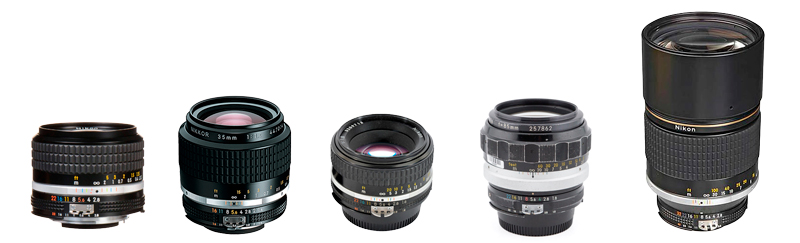
Nikon lens range for photojournalists in 1985
Nikon F: history and field test of a legendary camera body
The Nikon F is one of the most important cameras in the history of photography. This article looks back at its role, construction, ergonomics and what it still represents today for a photographer trained in the film era.
Photographers-reporters in 1985: what a professional camera bag revealed
The contents of a photographer’s bag in 1985 said a great deal about that period: mechanical cameras, prime lenses, film, flashes, accessories and field constraints. This article analyzes what this gear reveals about professional practice before digital photography.
Leica, optical rendering and film photography: understanding a reputation
Leica holds a special place in the photographic imagination. This article questions the brand’s reputation, the rendering of its lenses, the relationship to the camera body and the share of myth surrounding certain lenses associated with film photography.
Nikon Nikkor 500mm f/4 AI-P IF-ED: Nikon’s last professional manual super-telephoto lens
The Nikon 500mm f/4 AI-P IF-ED belongs to a generation of professional lenses in which manual focusing still played a central role. Its history helps understand a pivotal period between mechanical precision, specialized long lenses and the transition toward autofocus.
Film, digital and technical evolution
The comparison between film and digital photography is often caricatured. Film is not magical by nature, and digital is not merely cold or clinical. The two systems are based on different logics: sensitive medium, grain, latitude, useful resolution, dynamic range, processing, archiving and final rendering.
Having experienced the transition from film to digital in a professional context, I am less interested in opposing two worlds than in understanding their continuity. The tools change, but the essential questions remain the same: how to see, how to frame, how to expose, how to preserve and how to pass on an image.
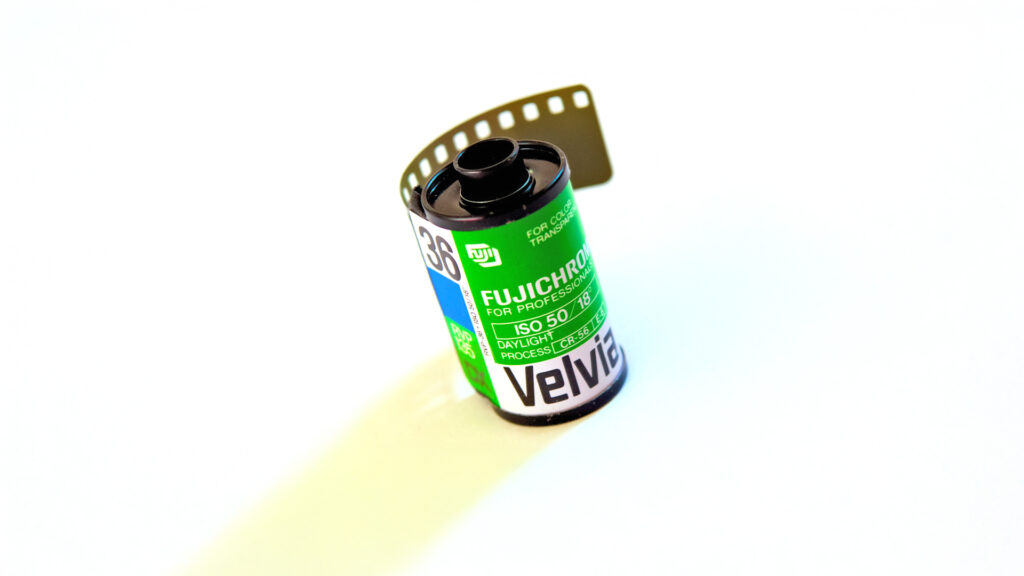
40 years of photography, from film to digital and mirrorless
Film vs digital photography: return to the roots or romantic illusion?
The renewed interest in film photography raises questions about our relationship to photography itself. Are we looking for a creative constraint, an aesthetic, slowness, authenticity or simply a nostalgic illusion? This article offers a nuanced reading of this return to film.
40 years of photography: from film to digital and mirrorless
Over forty years, photography has undergone major transformations: film, autofocus, scanning, digital SLRs, mirrorless cameras, software and mobile workflows. This article places these evolutions within a lived trajectory, from film to today’s mirrorless cameras.
Resolution comparison: digital sensors vs film
Comparing the resolution of a digital sensor with that of film requires going beyond common assumptions. Film size, grain finesse, lens quality, scanning, MTF and perceived detail all play a role in the final rendering.
Scanning, previewing and digitizing film
Digitizing has become an essential step in bringing film archives back to life. It allows images that once existed as slides, negatives or prints to be viewed, restored, shared and published.
But digitizing does not simply mean turning film into a file. One must choose a method, control lighting, manage dust, respect grain, avoid excessive sharpening and understand the limits of the original medium. Scanning an archive also means interpreting an old image with today’s tools.
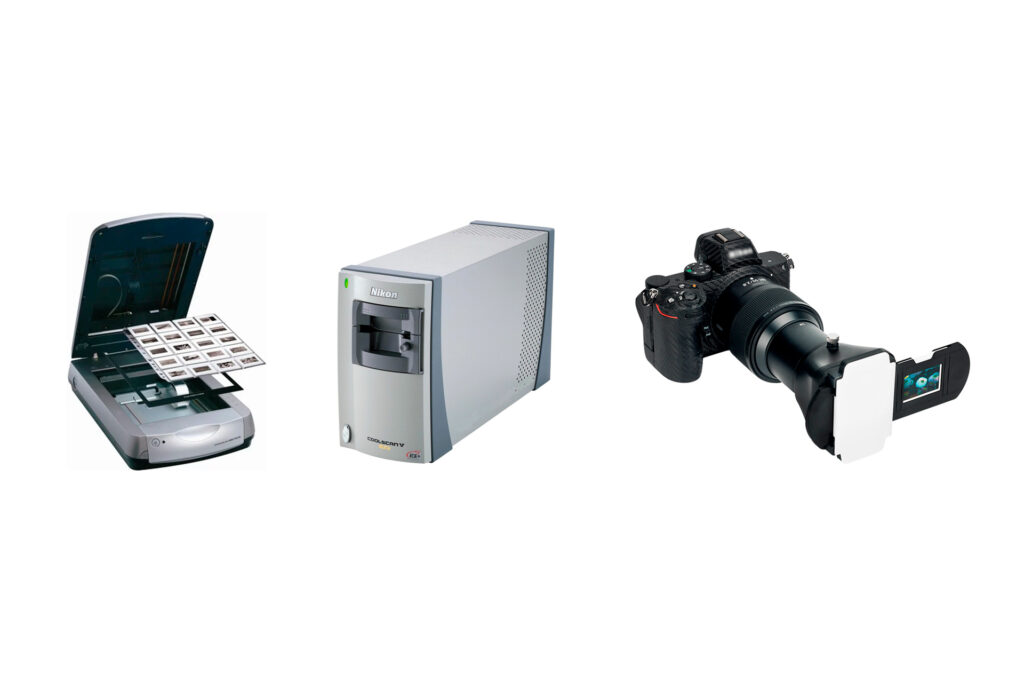
Scanning film photos: flatbed scanner, Nikon Coolscan or camera
How to scan your film photos: flatbed scanner, Nikon Coolscan or camera?
This article compares the main digitizing methods: flatbed scanners, Nikon Coolscan film scanners and camera scanning. It presents the advantages and limitations of each solution, as well as the evolution of my own equipment from the JJC FDA K-1 to the VALOI easy35 v2.
VALOI easy35 v2: the best way to digitise 35mm negatives and slides?
After using the JJC FDA K-1 to digitise a large part of my film archives, I switched to the VALOI easy35 v2 to speed up the processing of negative strips and mounted slides. This hands-on review covers its setup with a Nikon Z8, its film holders, the preservation of the negative’s black border, the evenness of its light source, and the choice between the Nikon Z MC 50mm and Sigma 105mm Macro lenses.
Digitizing black and white negatives with a camera and developing them in Lightroom
Reproducing black and white negatives with a digital camera requires a precise method: even lighting, alignment, RAW capture, inversion, density correction and respect for the film’s texture. This article details a complete workflow through to development in Lightroom.
How to preview film negatives with a smartphone
Even before scanning an archive, it can be useful to preview negatives quickly. This article explains how to use a smartphone to identify images, prepare a selection and better organize a digitizing project.
Reportage archives and documentary memory
Photographic archives are not simply old images. Over time, they become traces of a world that has disappeared or changed. A street scene, a union office, a police patrol, an urban architecture or a concert takes on new value when several decades separate it from the moment of exposure.
Revisiting an archive sometimes means discovering an image that one did not yet fully understand at the time. Historical, social or personal context changes the way we look at it. What seemed anecdotal can become documentary. What began as reportage can acquire a memorial dimension.
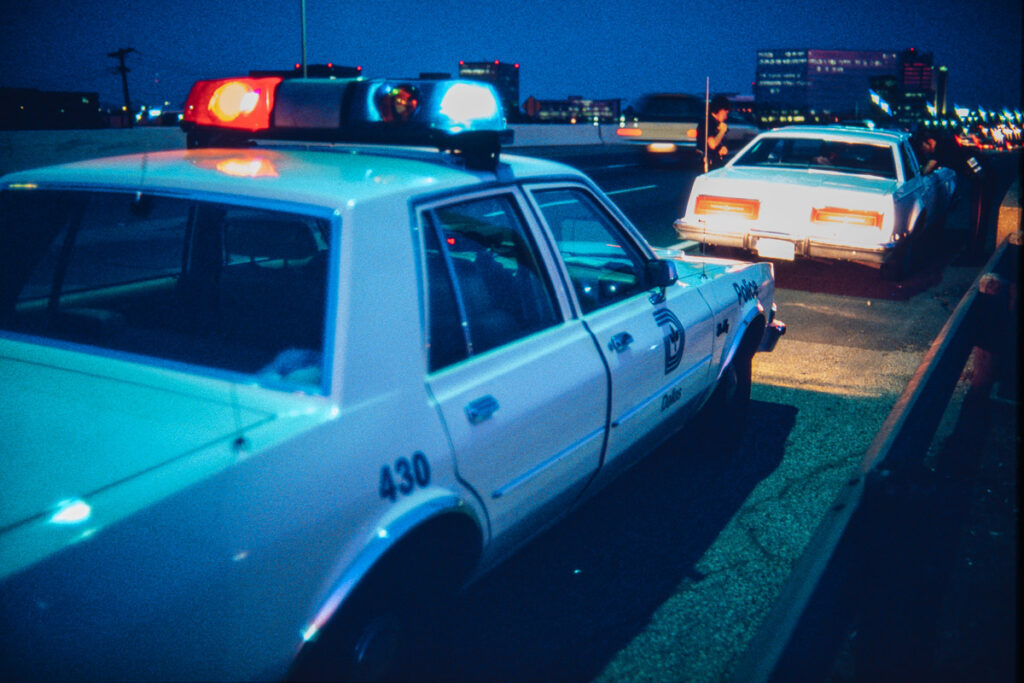
Dallas Police 1987 - Photo: © Sebastien Desnoulez
Dallas Police 1987: a photo report inside the NorthWest Dallas patrols
Made in 1987 during an immersion with the NorthWest Dallas police, this film reportage bears witness to a period, an American context and a direct photographic approach. It also represents a certain youthful audacity, with film equipment and sometimes difficult shooting conditions.
Testimony from a disappearing world: a CGT union office in the French coal basin, 1988
This series made in a union office in the French coal basin documents a social, political and working-class world in the process of disappearing. In retrospect, these images go beyond personal memory and become visual testimony to a period.
Film concert photography in 1988: Johnny Hallyday live at Vincennes
These concert photographs made on film in 1988 reveal the constraints of stage photography: difficult light, distance, film, anticipation and the energy of the performance. They also tell the story of a moment in French popular culture.
Running for shelter on the Arab World Institute terrace, 1989: black and white photograph
This black and white photograph made in the rain in Paris shows how a simple scene can become an atmospheric image. Rain, light, silhouettes and architectural context all contribute to the strength of the memory.
Under the Louvre Pyramid, a 1989 black and white photograph
Photographing the Louvre Pyramid in 1989, shortly after its opening, made it possible to capture a place still new in the Parisian imagination. Seen today, this black and white image takes on a historical dimension.
Formula 1, motorsport and agency archives
Motorsport holds an important place in my archives. Formula 1, the 24 Hours of Le Mans, IndyCar and the paddocks were intense training grounds: speed, anticipation, long lenses, fast framing, limited access and publication demands.
These images also tell the story of a period in sports photography before instant distribution and fully digital workflows, when slides, film, agencies and transmission deadlines still shaped image production.
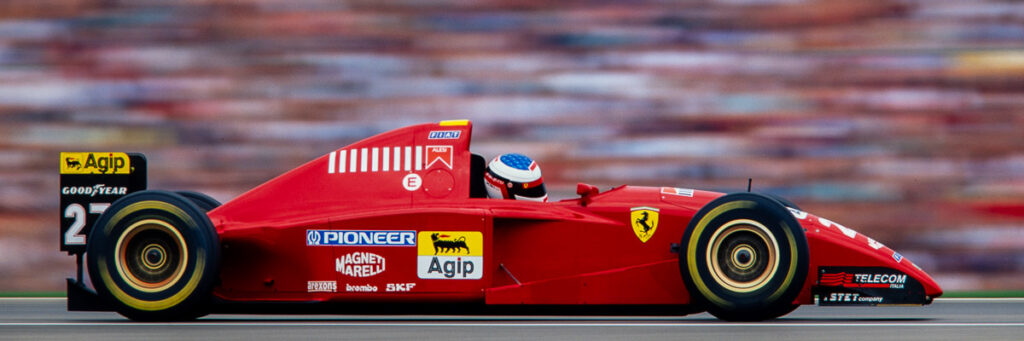
Jean Alesi Ferrari, German Formula 1 Grand Prix 1995 - Photo: © Sebastien Desnoulez
Formula 1 and motorsport photographer
This page looks back at my career in Formula 1 and motorsport photography. It helps explain the professional context in which a significant part of my archives was produced.
Motorsport photography: 15 years of passion for F1, Le Mans and IndyCar, 1988-2004
This overview brings together fifteen years of motorsport photography, from Formula 1 to the 24 Hours of Le Mans and IndyCar. It shows the evolution of a professional practice between film, autofocus, agencies and digital photography.
My first Formula 1 Grand Prix: Spa-Francorchamps 1988
The 1988 Belgian Grand Prix at Spa-Francorchamps marked a founding moment in my career as a motorsport photographer. This article tells the story of the shooting conditions, the gear used and the importance of that weekend in my entry into DPPI.
F1 with Brad Pitt: relive 1990s Formula 1 in photographs
Published around the release of the film F1 with Brad Pitt, this article looks back at the atmosphere of 1990s Formula 1 through my photographic archives. It puts into perspective the drivers, circuits, teams and aesthetics of a pivotal period.
Portrait photographs of Alain Prost: paddocks and Prost Grand Prix offices
These portraits of Alain Prost show another side of motorsport: paddocks, offices, moments of concentration and the relationship between the photographer, the driver and his professional environment.
Jacques Villeneuve 1995: a historic Indy 500 win and CART championship
The archives devoted to Jacques Villeneuve in 1995 recall a major season in North American motorsport. This article places the images in the context of a historic victory at Indianapolis and a CART championship title.
Porsche 911 GT1-98 on three wheels: 24 Hours of Le Mans 1998
This racing image tells the story of the tension specific to the 24 Hours of Le Mans: speed, imbalance, mechanics, endurance and the decisive instant. It shows how a sports photograph can become a graphic and spectacular image.
Travel, vanished places and photographic memories
Travel archives take on a particular value over time. Some places change, some landscapes remain, some architectures disappear or are transformed. The way we look at an old travel photograph is never the same as at the moment of exposure.
These photographs are not only personal memories. They also become documents about a period, a light, a way of traveling and of photographing under the constraints of film.
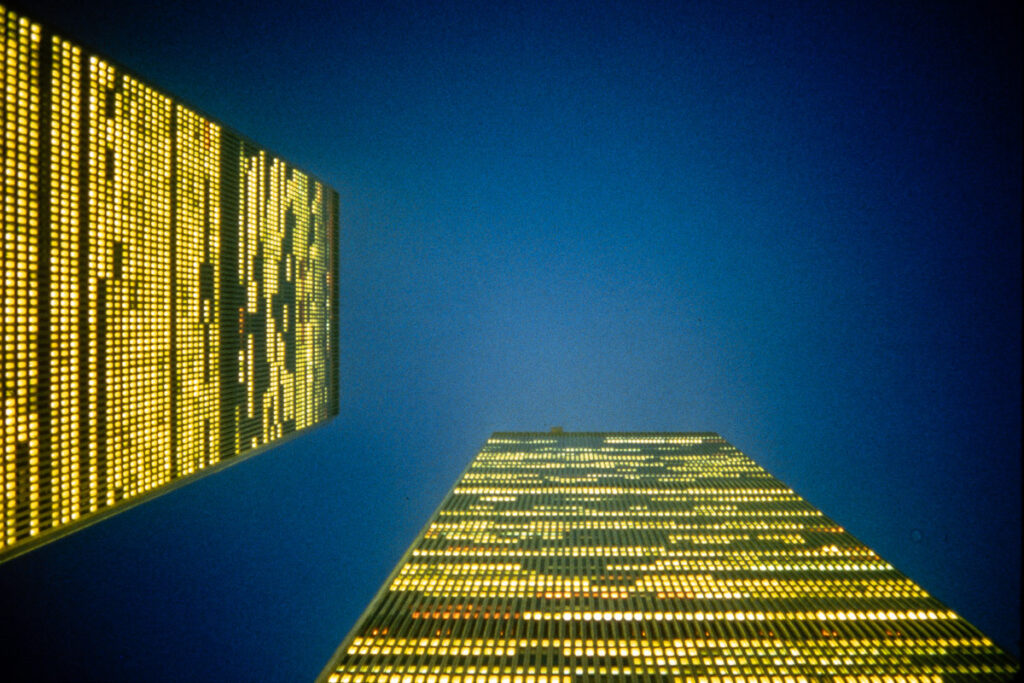
World Trade Center 1985, New York - Photo: © Sebastien Desnoulez
Petra in pictures: photographic memories of an unforgettable visit in 1992
These photographs of Petra made in 1992 bear witness to a memorable journey in Jordan. They connect personal memory, the discovery of an exceptional site and the photographic constraints of the film era.
World Trade Center, New York 1985
Photographing the World Trade Center in 1985 gives these images a special dimension today. What may once have been travel or architectural photography has, over time, become an archive charged with memory.
New York City World Trade Center 1985
This other page devoted to New York and the World Trade Center completes the view of the city in 1985, with images that take on new resonance in light of history.
White Sands, New Mexico: sunset on the gypsum dunes
White Sands is a place where light, the whiteness of the sand and the lines of the landscape compose an almost unreal scene. These photographs connect travel memory, the American landscape and a film aesthetic.
Film experiments and vintage aesthetics
Film photography is not limited to documentary fidelity. It can also open a space for experimentation: simple cameras, visual accidents, filters, imperfect rendering, grain, blur, vignetting or deliberately shifted colors.
But it is important to distinguish genuine photographic experimentation from the simple imitation of an old effect. The question is not only whether an image looks “vintage”, but whether that rendering serves a visual intention.
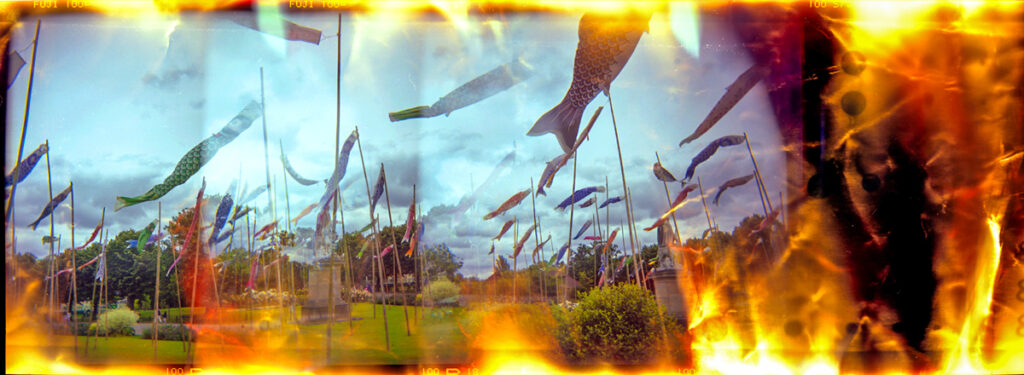
Multiple exposure of windsocks photographed with a Holga on Fuji film - Jardin d’Acclimatation, Paris, 2005 - Photo: © Sebastien Desnoulez
Experimental photography: between controlled chance and visual poetry
The Holga and experimental practices remind us that imperfection can become a language. Blur, vignetting, unpredictable light and shooting accidents can produce images far removed from classical technical precision.
Vintage photo filters: Instax Mini Evo Cinema and Fujifilm X Half, fun or a trap for your photos?
Digital vintage filters are appealing because they evoke film photography. This article questions their real value: creative play, aesthetic shortcut, trend effect or visual trap when the rendering takes precedence over the image.
Promotional photo of the band 5.1: staged vintage scene on the Merville airfield
This promotional photograph, created in a vintage atmosphere, shows how a staged scene can enter into dialogue with the imagery of an era. It connects portraiture, setting, aviation, retro atmosphere and photographic construction.
All articles related to film photography and archives
This page offers a structured reading of my content devoted to film photography, archives, scanning, old cameras and images revisited over time. It does not replace the categories and tags on the site, but serves as an entry point for understanding the links between film practice, photographic memory and digital transmission.
See also: for more technical aspects related to lenses, cameras, digitizing and workflow, read the photo gear guide: lenses, field reviews and photographic workflow.
FAQ
Why create a guide about film photography and archives?
Because film photography is not merely an old aesthetic. It helps us understand another way of photographing: slower, more constrained, but also highly formative. Archives give images a second life and make it possible to reread a photographic journey with the benefit of time.
What is the best method for digitizing negatives or slides?
There is no single ideal method. A flatbed scanner may be suitable for medium and large formats, while a Nikon Coolscan remains highly effective for 35mm film. Camera scanning now provides a fast, high-quality solution when the setup is properly controlled. To digitise large batches of my 35mm archives, preserve the black border of the negatives and speed up the processing of mounted slides, I now use the VALOI easy35 v2.
Is film photography better than digital?
No. They are two different approaches. Film imposes a slower pace, a physical relationship to the medium and an aesthetic linked to the support itself. Digital photography offers more flexibility, control and speed. The point is less to oppose them than to understand what each practice brings to a photographer’s eye.
Why do photo archives gain value over time?
An old photograph can become a testimony to a period, a place, a social practice or an event that has disappeared. Over time, some images move beyond their original context and acquire a stronger documentary, historical or emotional dimension.
Should a film archive be retouched after digitizing?
Yes, but with restraint. It is often necessary to adjust density, contrast, dust or color casts. However, excessive transformation should be avoided, as it may erase the texture of the film and the character of the original archive.
About the author
Sebastien Desnoulez is a professional photographer based in Paris, specializing in architectural photography, landscape photography and travel photography. Trained in photography in the mid-1980s, he covered Formula 1 and reported from around the world before turning to demanding fine art photography, combining composition, light and emotion. He also shares his technical experience through practical articles for passionate photographers, drawing on a strong visual culture acquired in both film and digital photography.