

Photographing the Jaguar E-Type in 1991: from Coventry to Geneva for L’Automobile Magazine

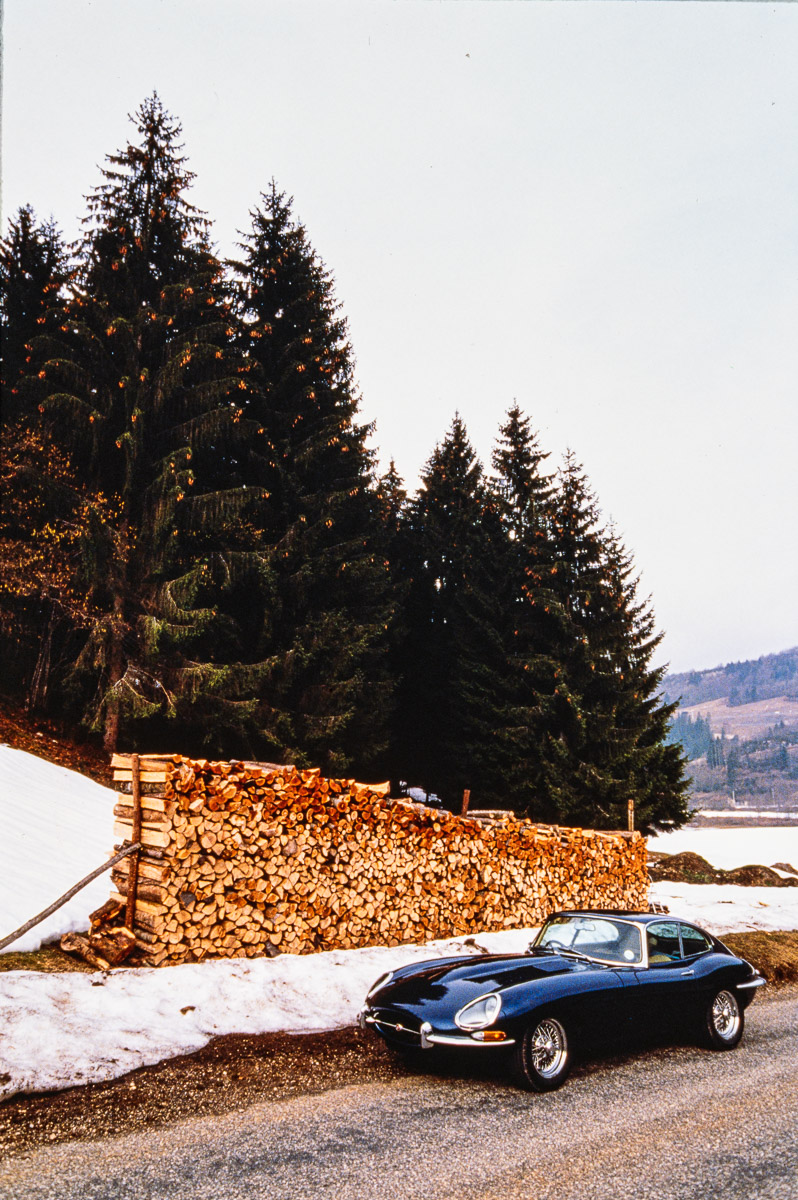
In 1991, L’Automobile Magazine commissioned me to photograph a story around a Jaguar E-Type rebuilt by Vicarage. With journalist Daniel Nacass, we set off from Coventry toward Geneva to evoke, thirty years later, the legendary route linked to the launch of the E-Type at the Geneva Motor Show.
The subject was not simply to produce an automobile road test. It was about telling a story: that of a automobile that had become an icon, of a founding journey between England and Switzerland, and of a press feature photographed on film, at a time when automobile magazines still took the time to build real visual narratives.
I therefore left for Coventry with Daniel Nacass, a journalist at L’Automobile Magazine. We already knew each other well: a few months earlier, in February 1991, I had accompanied him to Prague for a story on the Tatra factory, in Czechoslovakia, before the country split into the Czech Republic and Slovakia. These two reports, Tatra and the Jaguar E-Type, are among those professional memories whose importance becomes clearer with time.
The Geneva 1961 legend
The presentation of the Jaguar E-Type at the Geneva Motor Show, in 1961, belongs to automobile legend. At the time, two cars were driven from Coventry to answer the immediate interest generated by the model among journalists and the public: a coupé and a roadster. This spectacular arrival helped establish the E-Type in the collective imagination, not only as a sports car, but as a new, fluid, modern, almost timeless form.
Thirty years later, retracing this route with an E-Type rebuilt by Vicarage was therefore far from insignificant. The aim was not to follow the exact itinerary or timing of 1961 down to the last mile, but to recover its spirit: Coventry, the road, the crossing of France, Geneva, and the idea that an automobile can become a cultural event as much as a mechanical object.
Coventry, the starting point of an automobile reportage
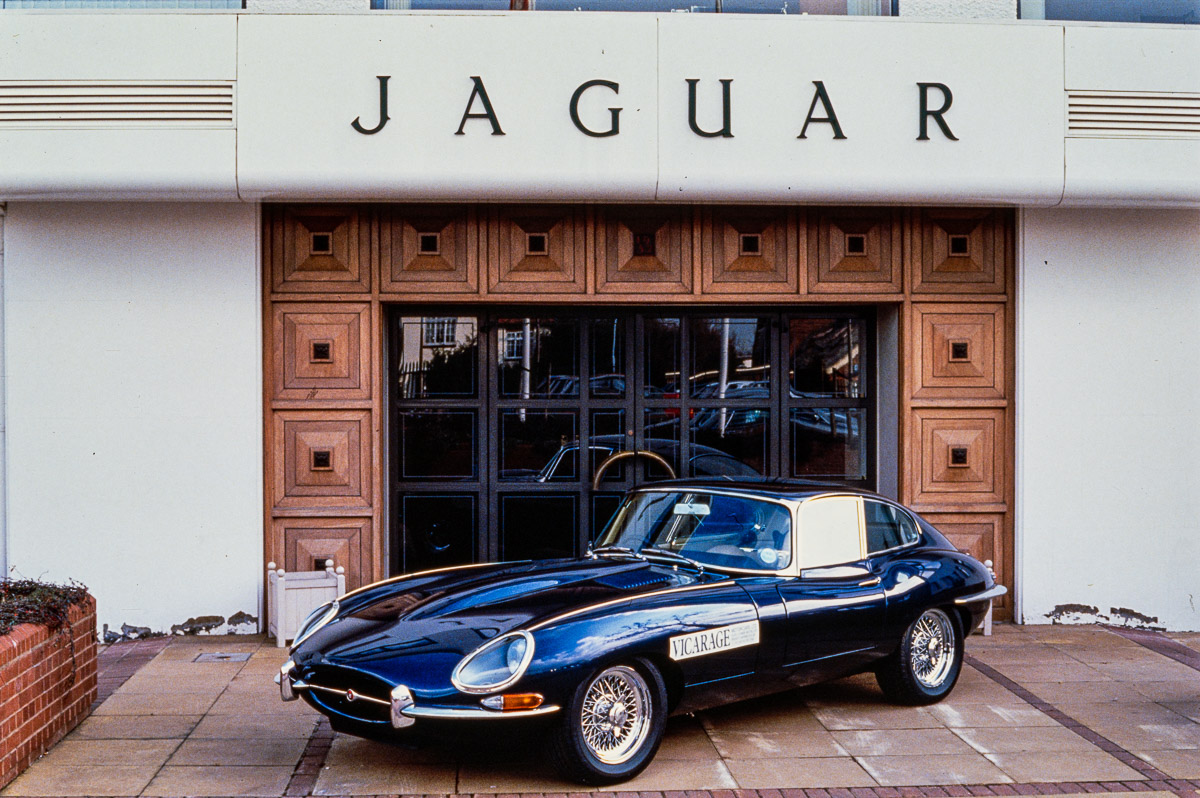
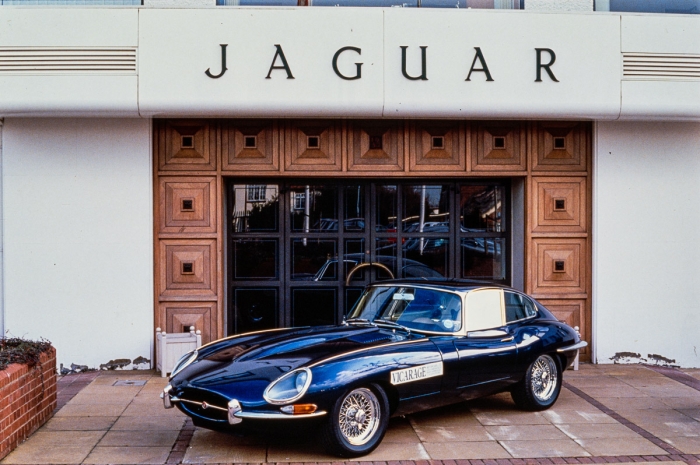
The story begins in Coventry, a city inseparable from British industrial history and from Jaguar. We had an appointment at Jaguar, with a visit to the museum. I particularly remember the lines of the Jaguar D-Type, a magnificent racing car, very different in its purpose, but driven by the same search for aerodynamic fluidity and visual efficiency.
In this context, the E-Type took on another dimension. It was not merely an object of nostalgia. It extended a history of forms, performance, engineering and images. For an automobile press photographer, beginning this story in Coventry immediately gave the subject a particular depth.
A new E-Type signed by Vicarage
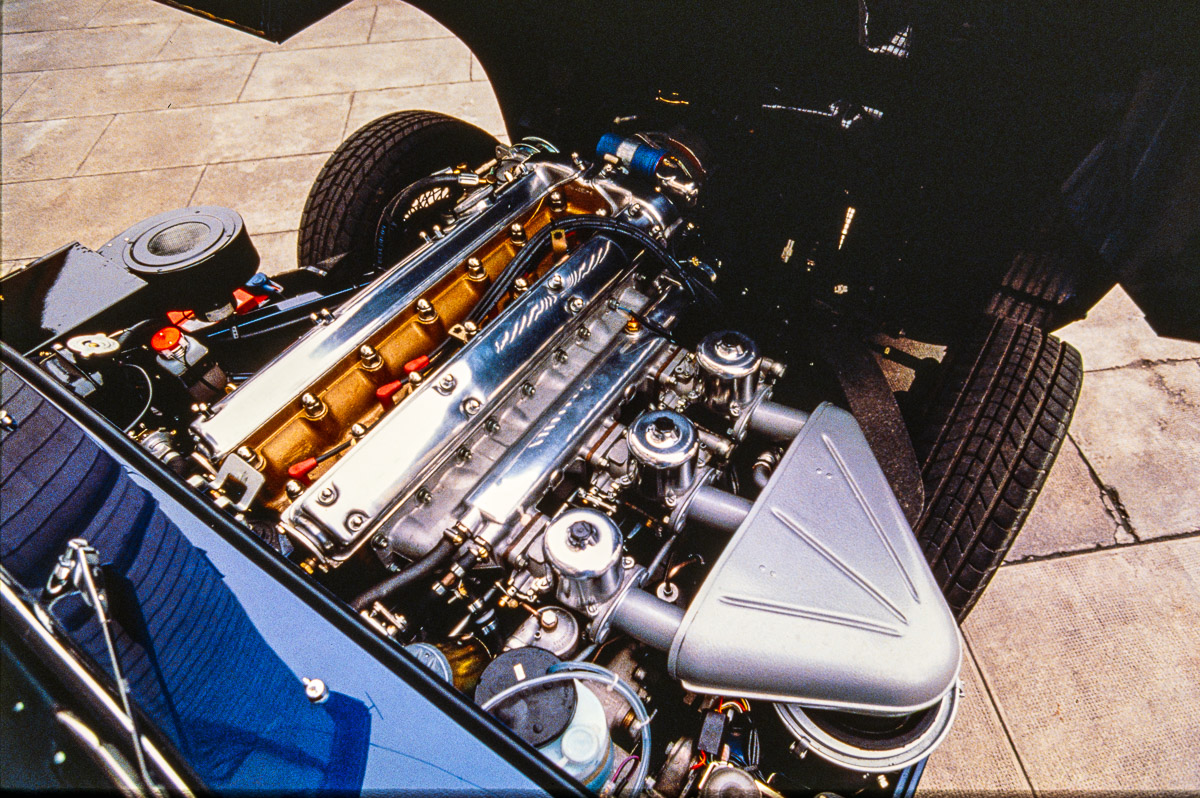
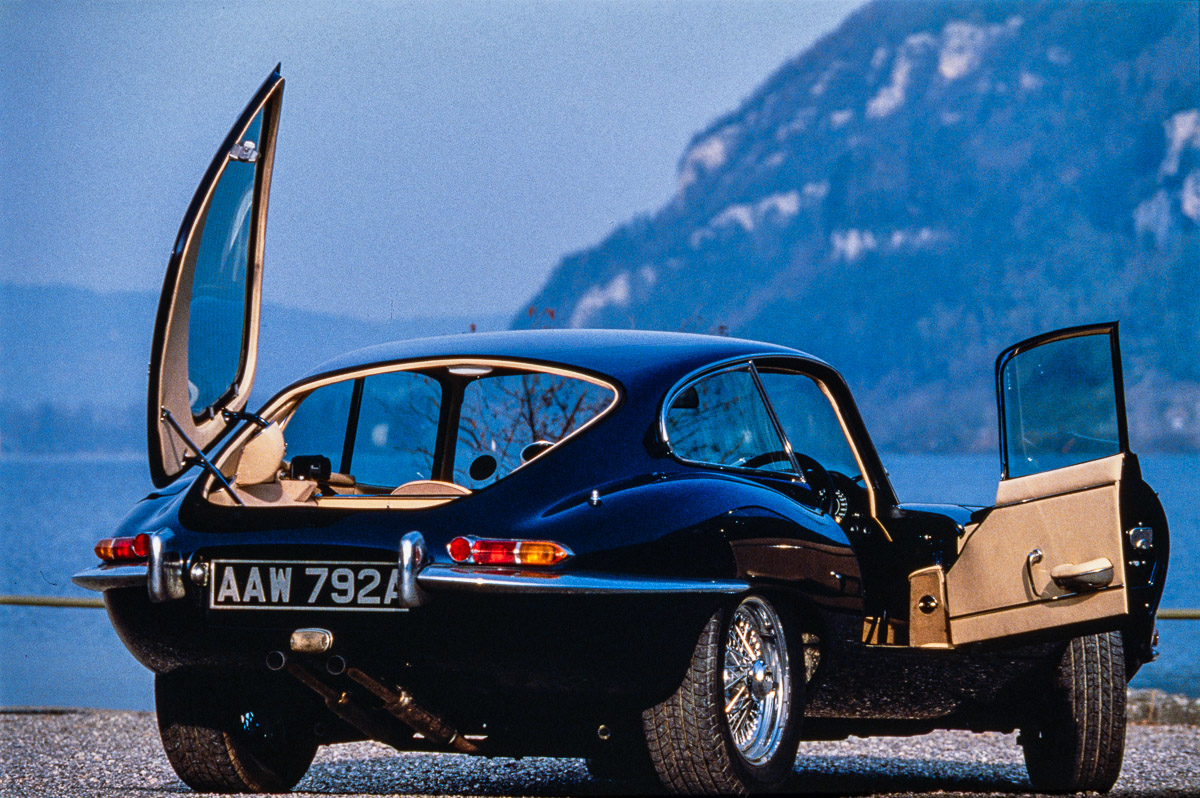
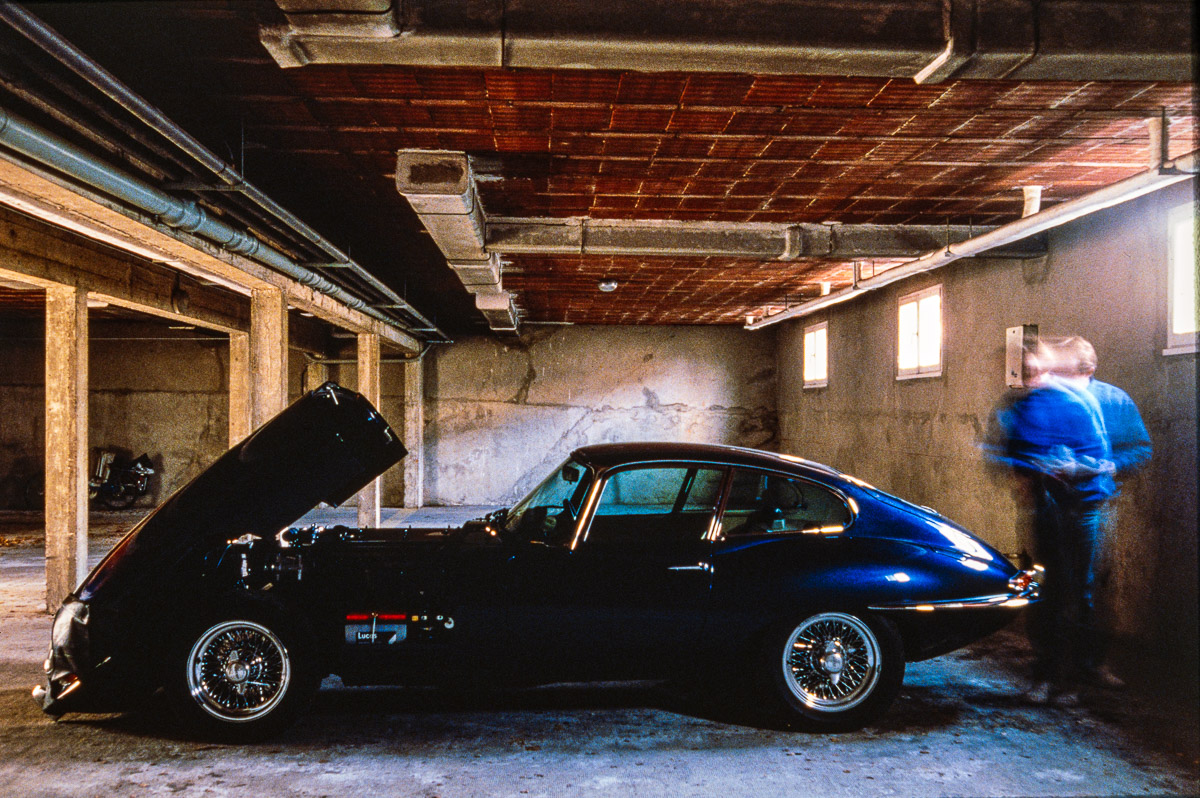
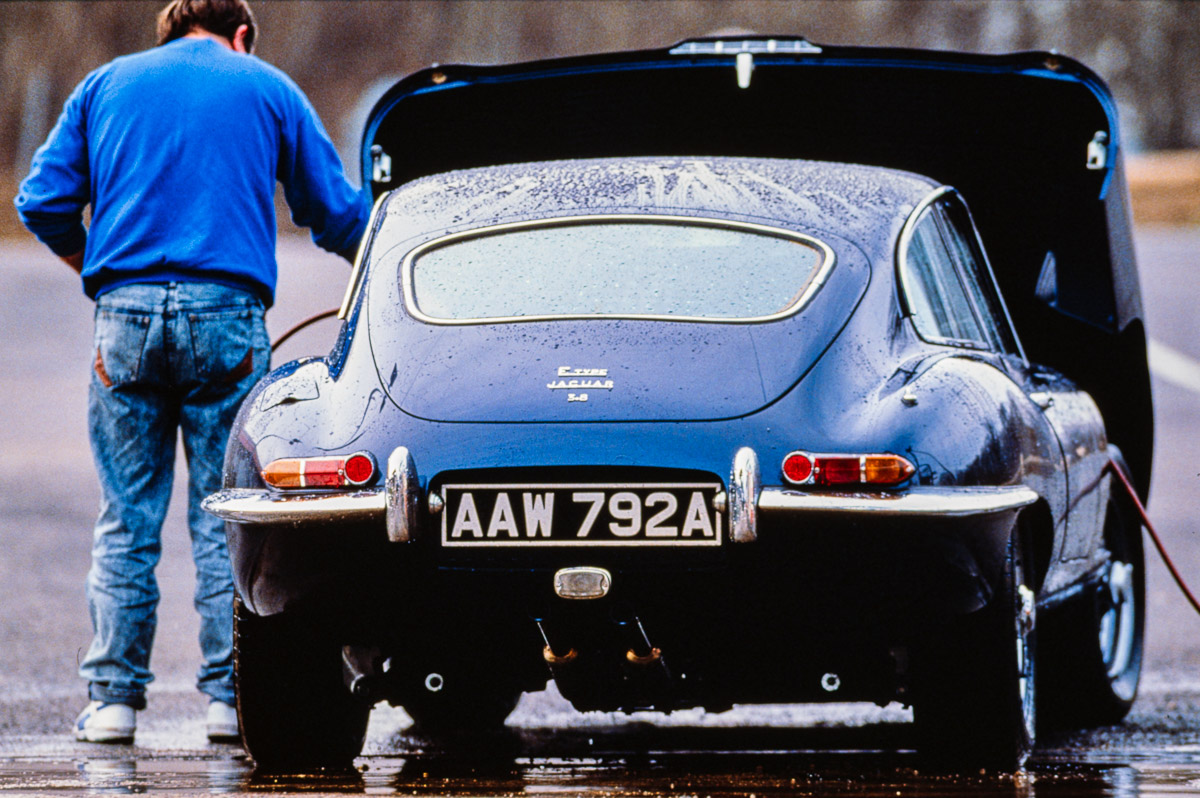
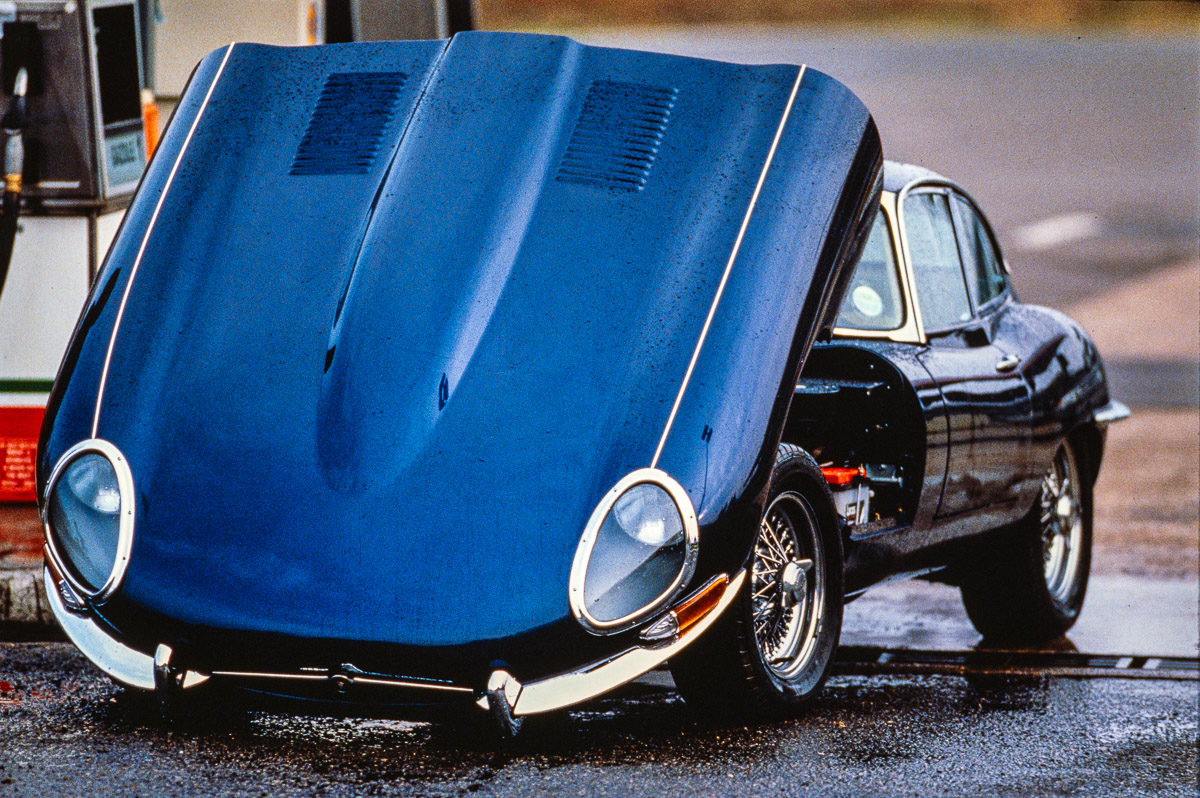
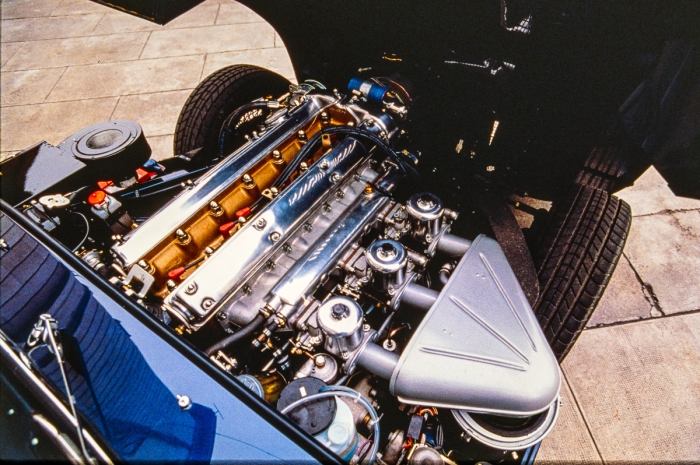
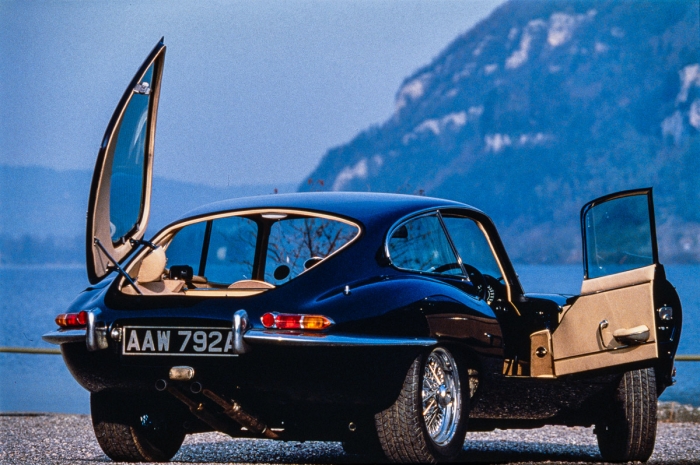
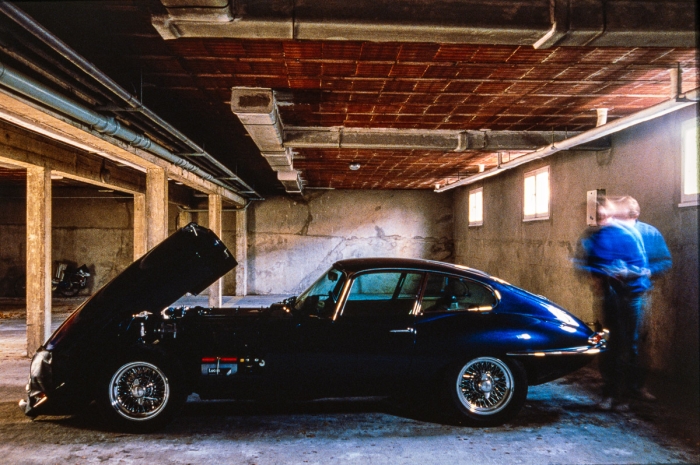
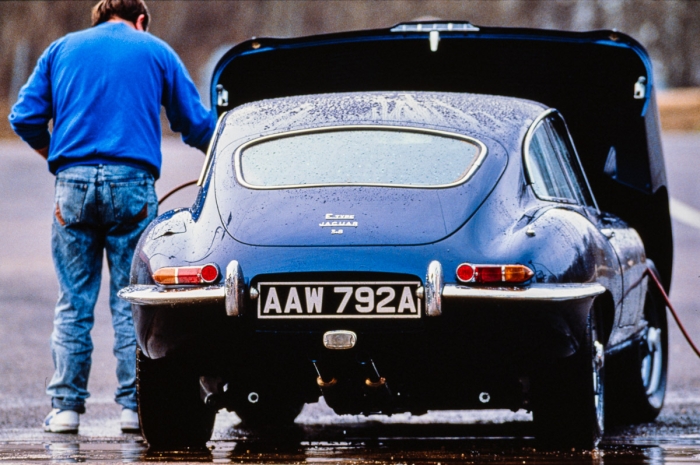
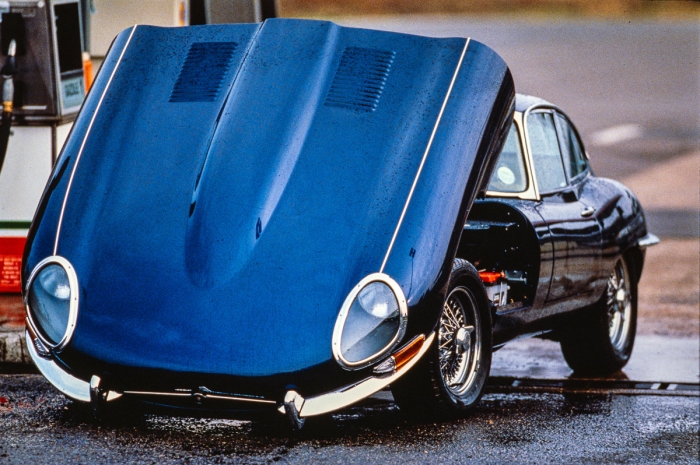
The car we photographed was not simply a collector’s E-Type taken out of a garage. It was a high-end reconstruction carried out by Vicarage, a British Jaguar specialist. The spirit, silhouette and charm of the original model were preserved, but the automobile was designed to be genuinely driven, with modernized components and reliability suited to a long European journey.
This point matters: in 1991, long before the word “restomod” became common, this rebuilt E-Type already raised a question that is still relevant today. How can the emotion of an old automobile be preserved while making it usable, reliable and coherent with contemporary road use?
Crossing Europe in a Jaguar E-Type
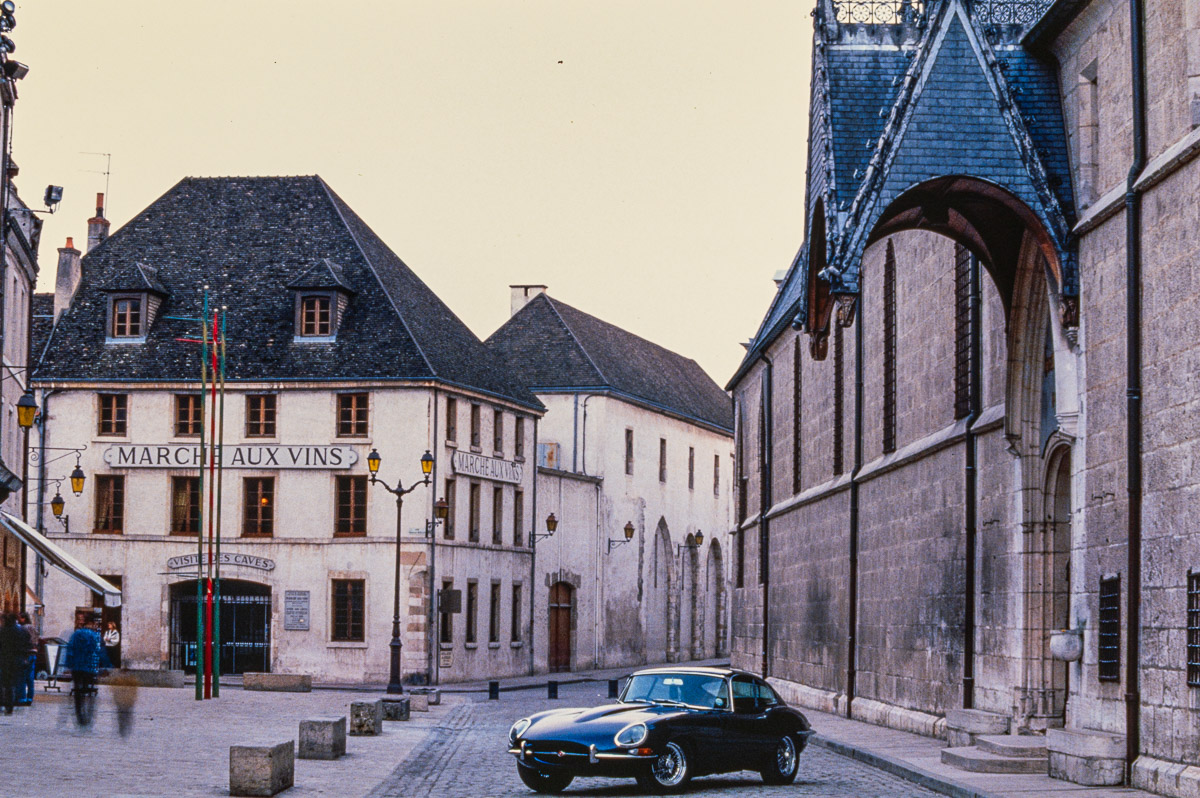
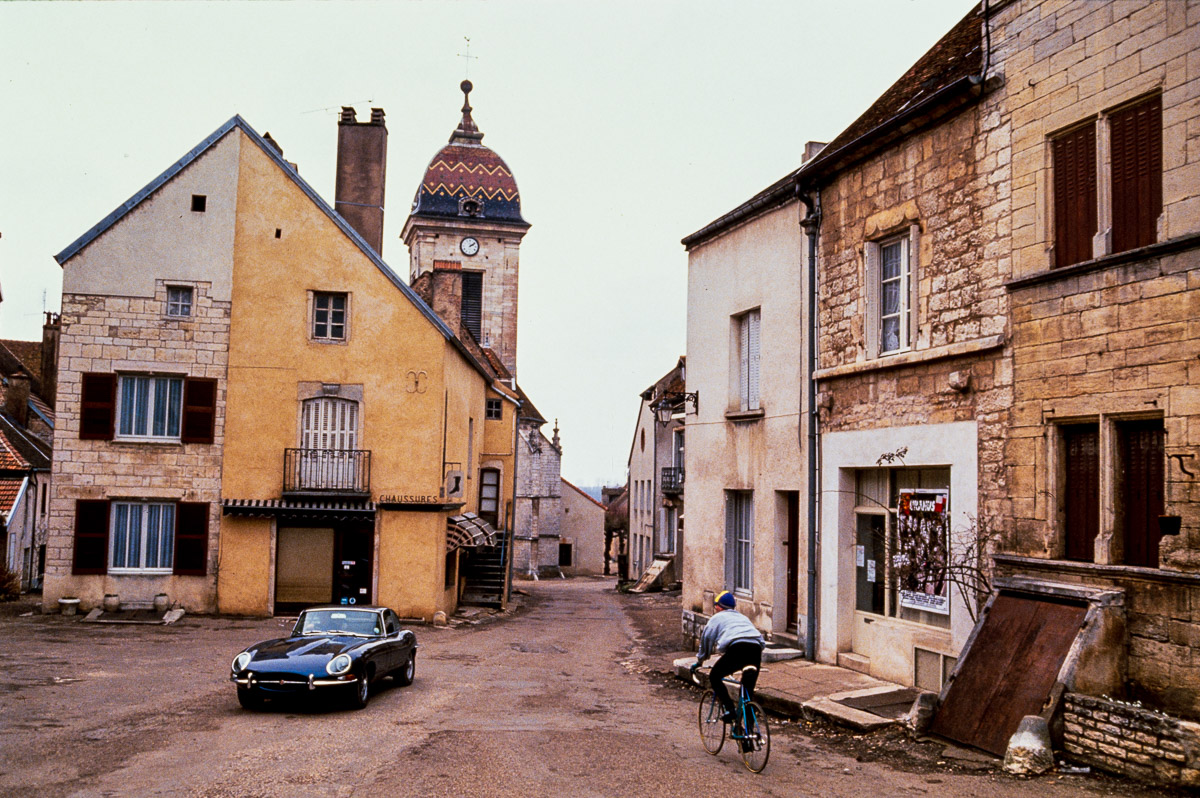
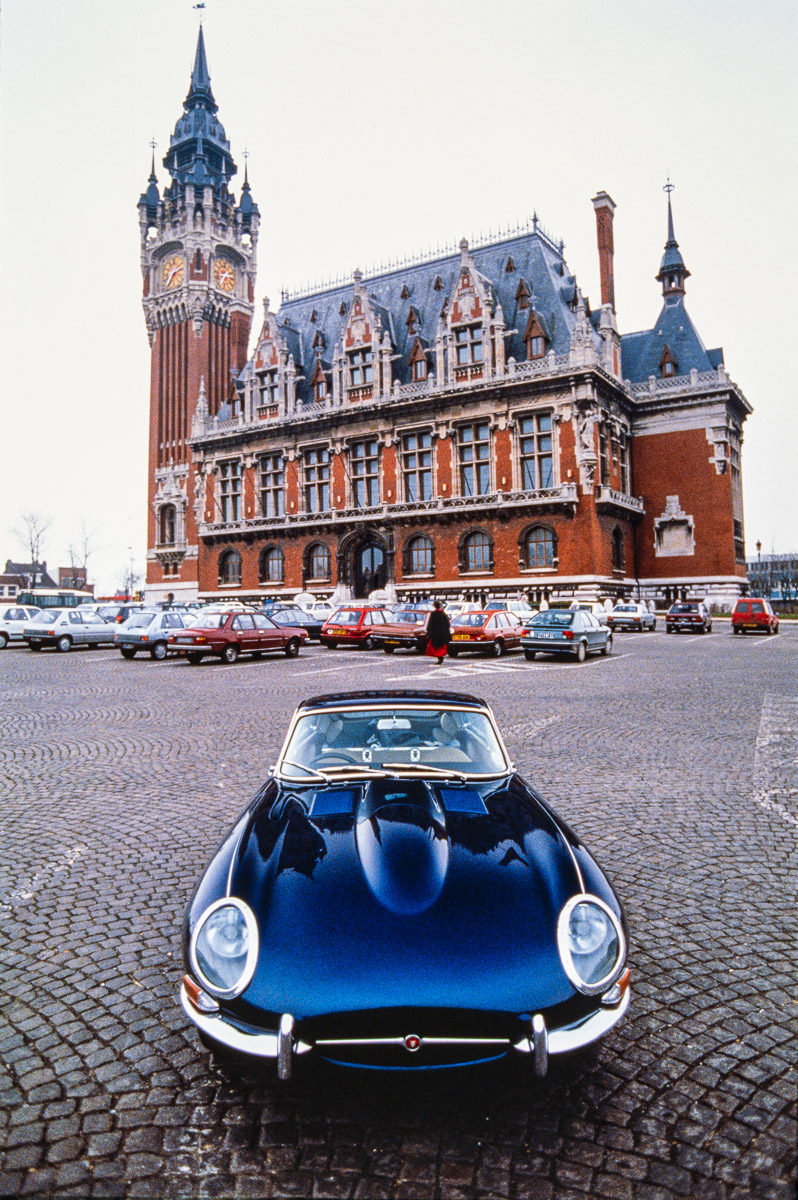
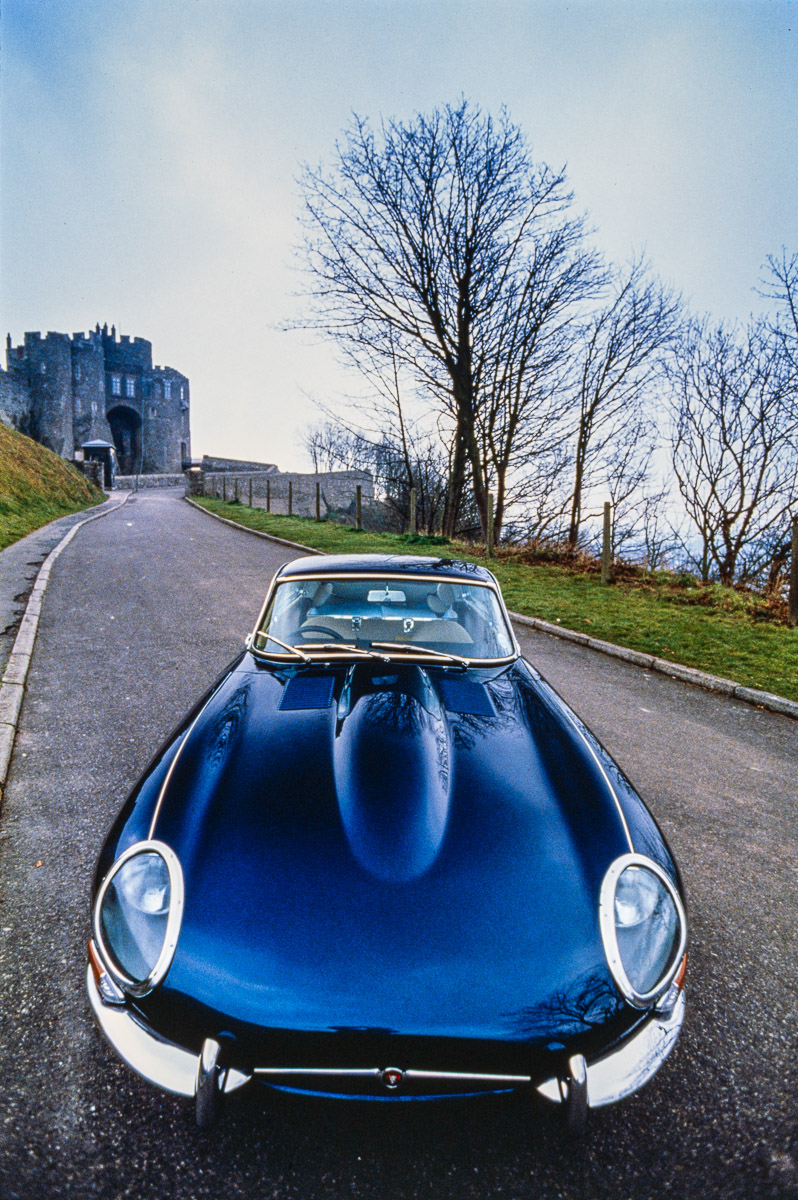
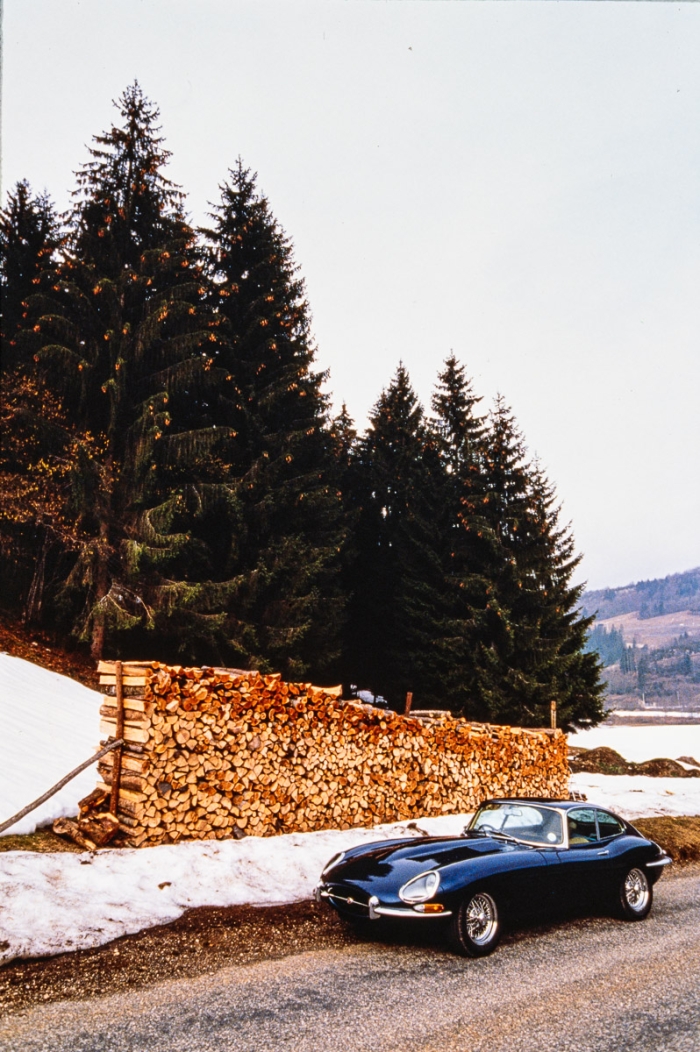
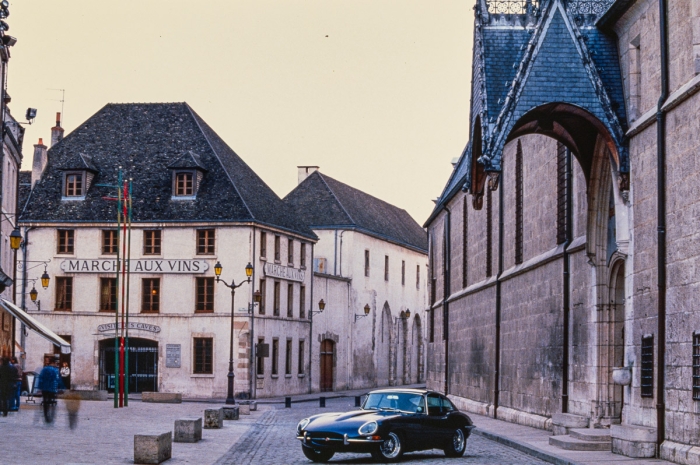
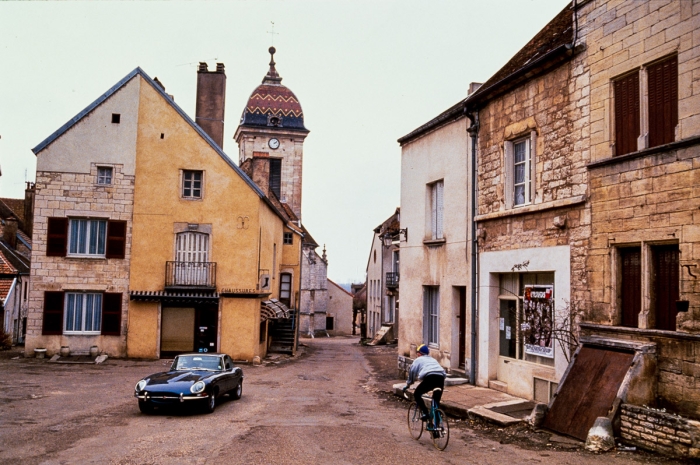
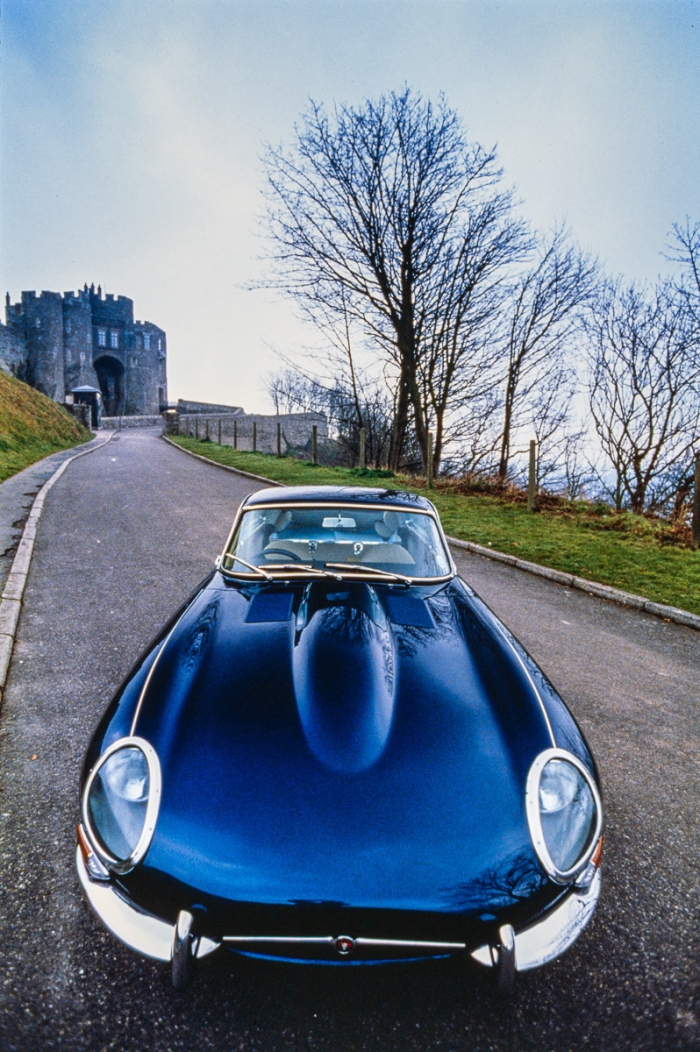
The route symbolically followed the road from Coventry to Geneva: Coventry, London, Dover, the ferry, Calais, then the crossing of France via Reims, Beaune and Bourg-en-Bresse before reaching Geneva through the Ain, Nantua, Bellegarde and the shores of Lake Geneva.
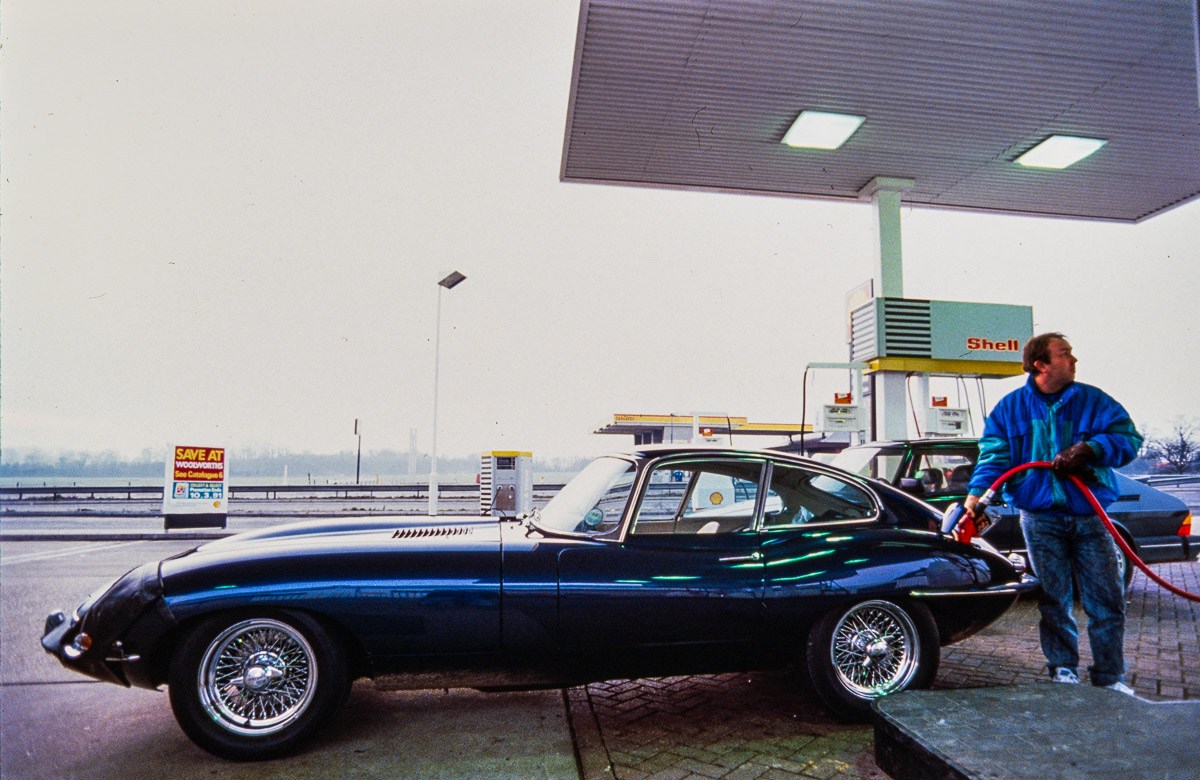
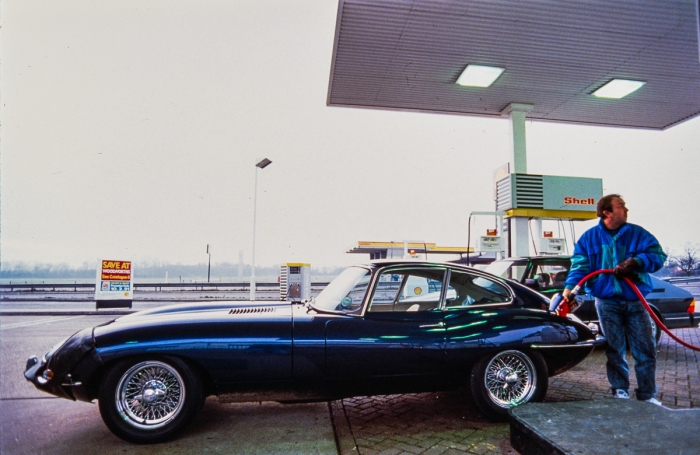
We did not try to follow the exact timing or route of 1961 to the letter. In thirty years, the roads had changed, some motorways now existed, and the needs of a reportage imposed their own constraints: meal breaks, overnight stops, scouting, shooting, weather, light and photographic stops. It was not a strict historical reconstruction, but an evocation, a journey built around an automobile myth.
Reims, a short stop in front of the old pit buildings
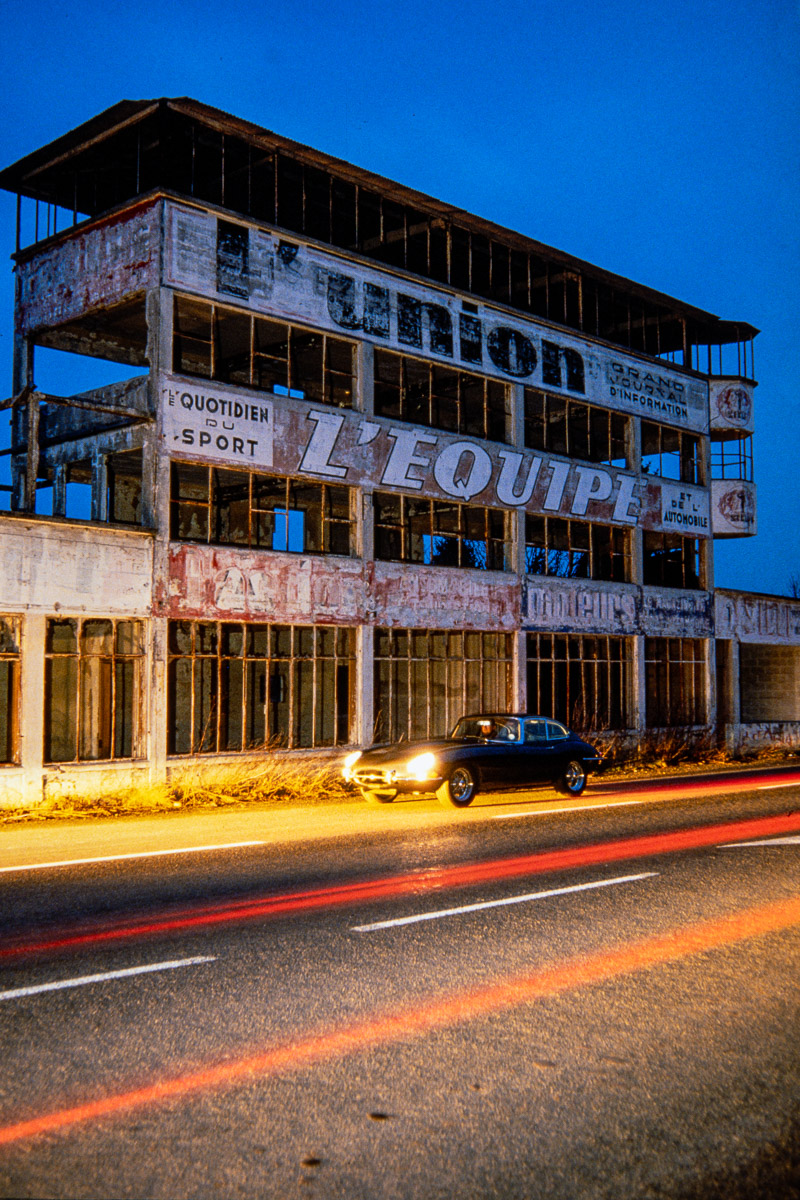
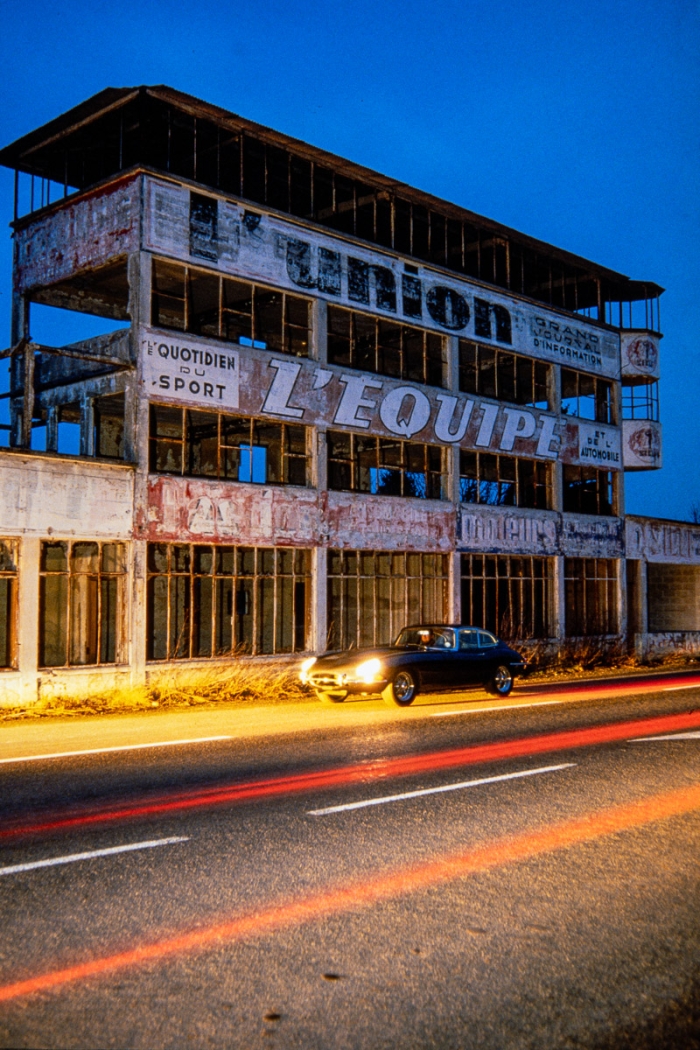
In Reims, we decided to build an image in front of the old circuit pit buildings at dusk. The place had a strong presence. The façades still bore the traces of sports journalism, racing and an era when the national road crossed a setting filled with automobile memory.
A long exposure on a tripod was the obvious choice. I framed the Jaguar in front of the old pit buildings, then used the cars driving along this open road to capture the light trails of their headlights and tail lights. They filled the foreground and suggested speed without directly showing the movement of the E-Type. The car remained almost still, set in the blue night, while contemporary traffic drew red and white lines around it.
This photograph is probably one of the strongest images from the reportage. It does not merely represent an automobile. It brings together the Jaguar E-Type, the old Reims circuit, the automobile press, the road, the night and the memory of speed. Looking back, it tells the story of an era as much as that of a car.
Further south, photographing a tracking shot
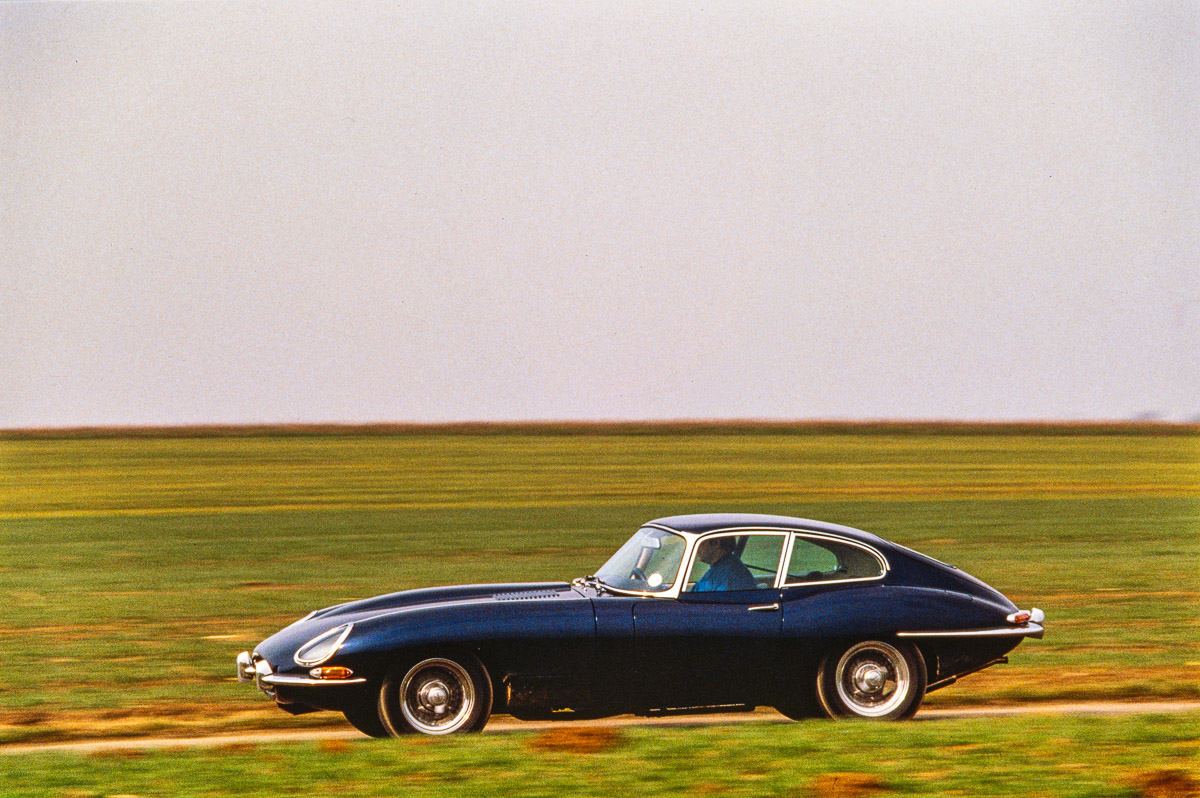
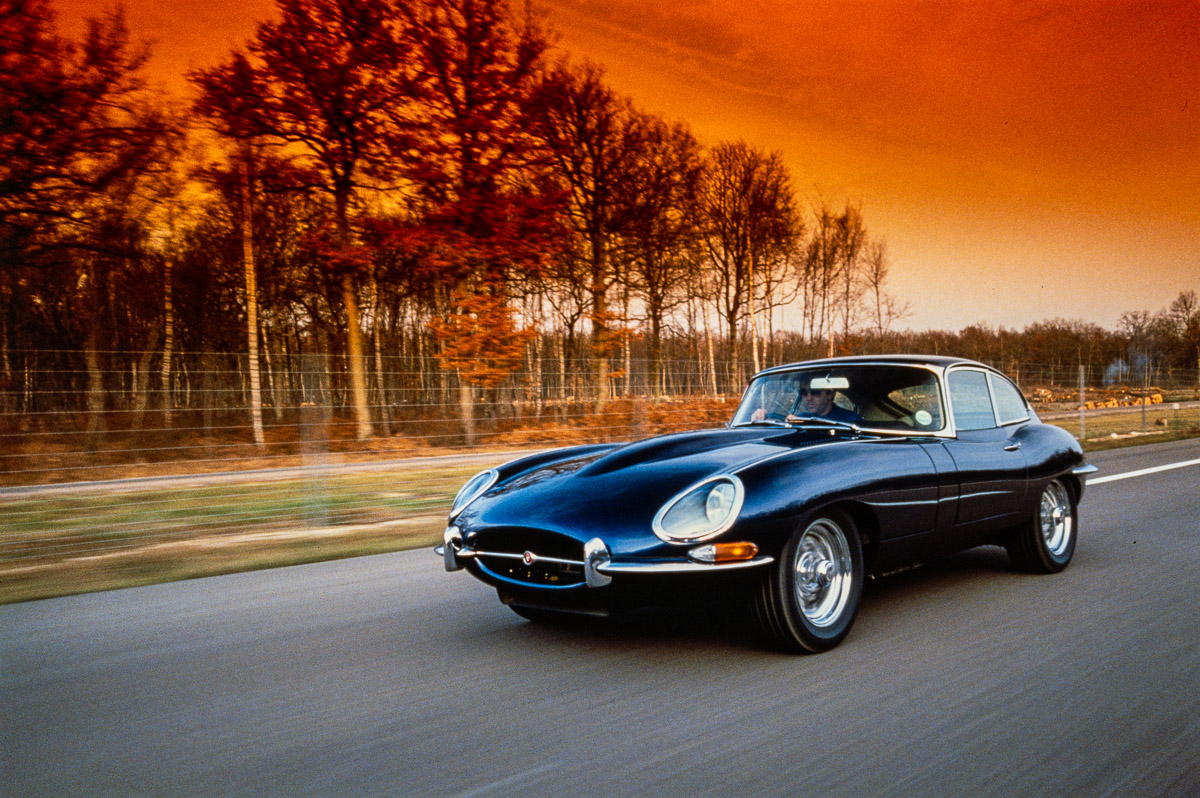
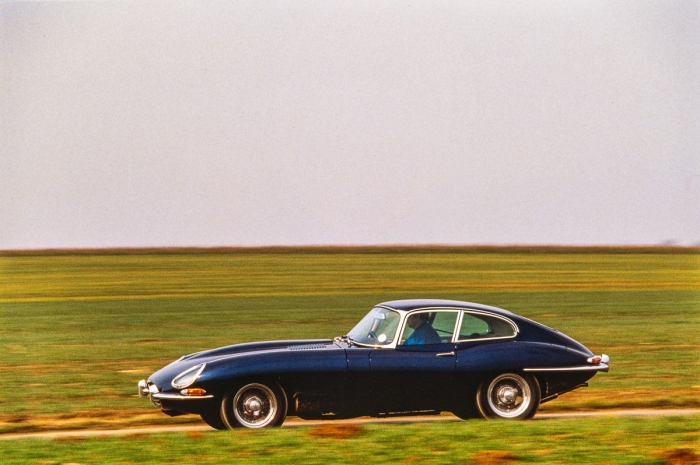
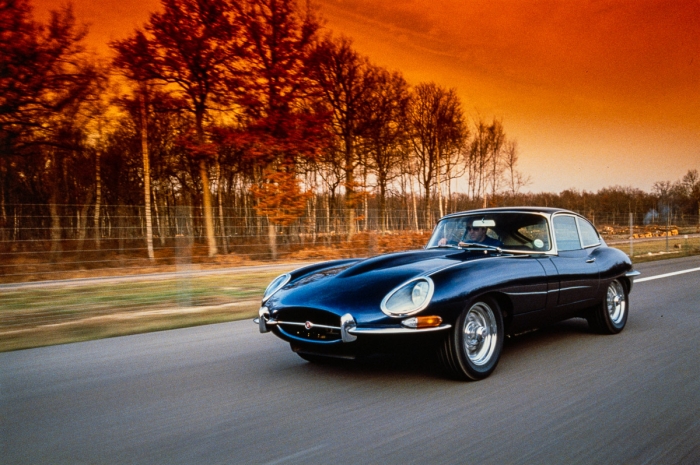
Further south, we took advantage of a lightly used motorway to produce action shots in motion, what is now more commonly called “car to car” photography. The Vicarage driver-mechanic was behind the wheel of the E-Type. Daniel was driving the Saab 900. I was on the back seat, contorting myself to photograph the Jaguar at a low shutter speed.
This kind of image required both coordination and a certain level of trust between the cars. The goal was to create a sense of movement, keep the car readable, choose the right focal length, and control a shutter speed slow enough to bring life to the background, but not so slow that the subject lost all sharpness. On film, every frame mattered.
Photographing an automobile reportage in 1991
In 1991, digital photography did not exist in our professional practice. I worked with two Canon EOS-1 bodies, a 20-35mm f/2.8, a 50mm f/1.8, an 80-200mm f/2.8 and a 300mm f/2.8. I also used a Minolta Autometer IIIF light meter with a flat diffuser to obtain a more precise reading of the light, particularly in difficult situations.
I photographed on Fujichrome 100 reversal film, as I often did at the time for magazine work. Slide film imposed a particular discipline. Exposure had to be right, highlights preserved, shadows controlled. There was no screen to check anything. You had to anticipate, measure, decide, then trust your experience.
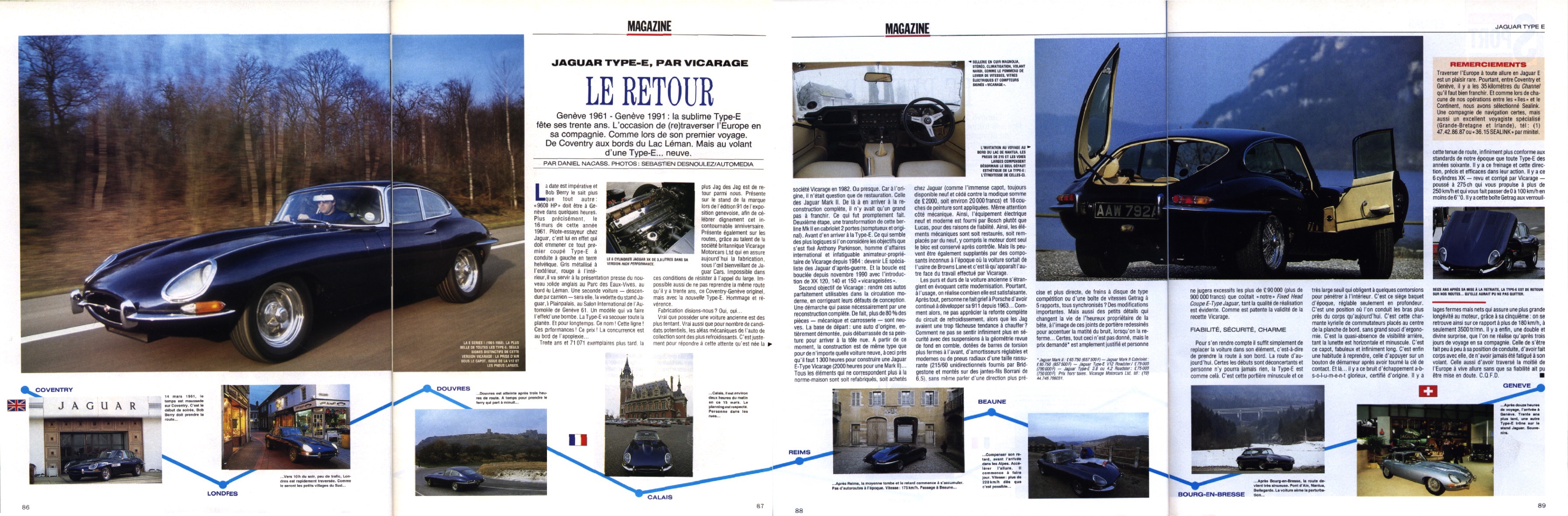
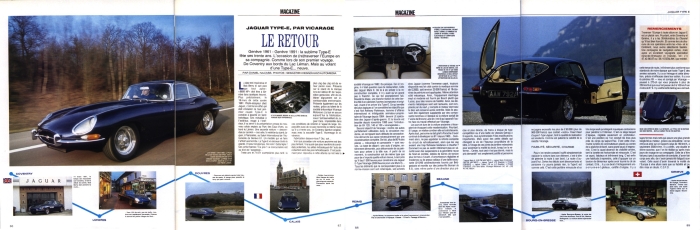
A reportage of this kind also required thinking directly in terms of publication. The images had to work as double-page spreads, opening photographs, small images, action shots, atmosphere or details. The photographer had to bring back complete visual material: the automobile, the road, the stages, the implicit portraits, the situations and the strong images capable of carrying the story in the magazine.
An era of the automobile press
With Daniel Nacass, we often talk again about these two memorable reportages: Tatra in Czechoslovakia and the Jaguar E-Type between Coventry and Geneva. We realize how lucky we were to work in the press at that time, before the deep crisis that would affect the sector in the 2000s, particularly after 2008.
The reportage was commissioned by L’Automobile Magazine. It was therefore natural for it to be published over two double-page spreads. For me, as a photographer with the DPPI press agency, specialized in motorsport, this publication was part of a regular flow of images distributed every week. At that time, my photographs were published very frequently, with at least one cover or double-page spread every month.
The automobile press was a niche, but a very active one. It included many titles in France and abroad. Thanks to the agency’s agents, our images circulated widely. We sometimes had a better chance of being published than some colleagues from general news agencies covering current affairs, crime stories or politics, even though their subjects were more visible to the general public.
Looking back at these archives thirty-five years later
Thirty-five years later, these slides and double-page spreads tell much more than the story of a simple Jaguar E-Type road test. They bear witness to a way of working, and to a relationship with time, the road, the printed magazine and film photography.
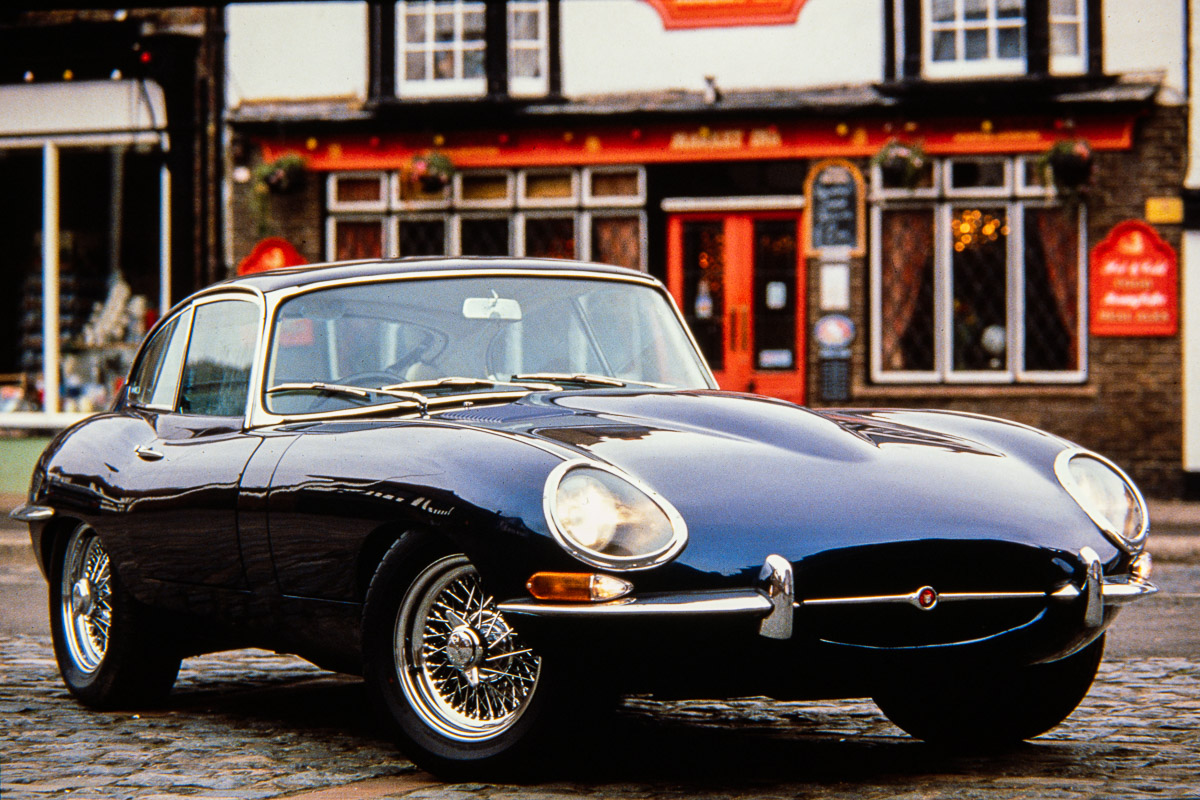
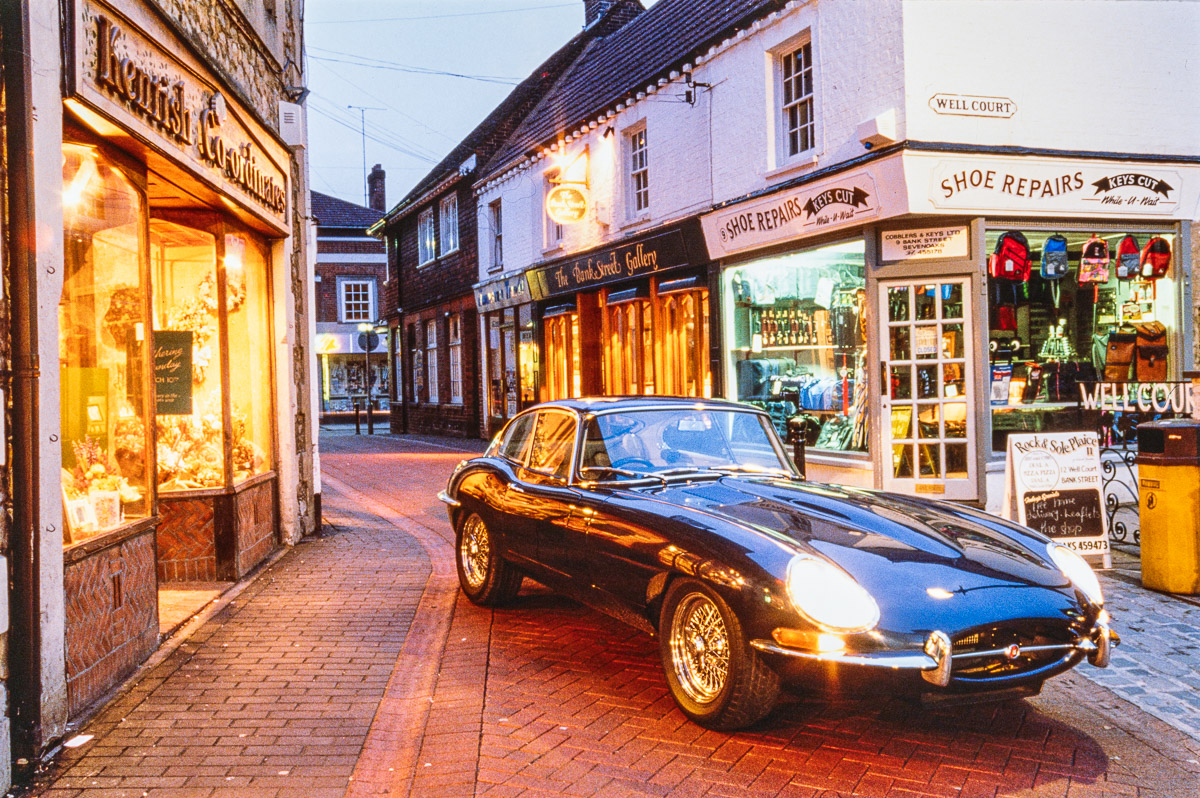
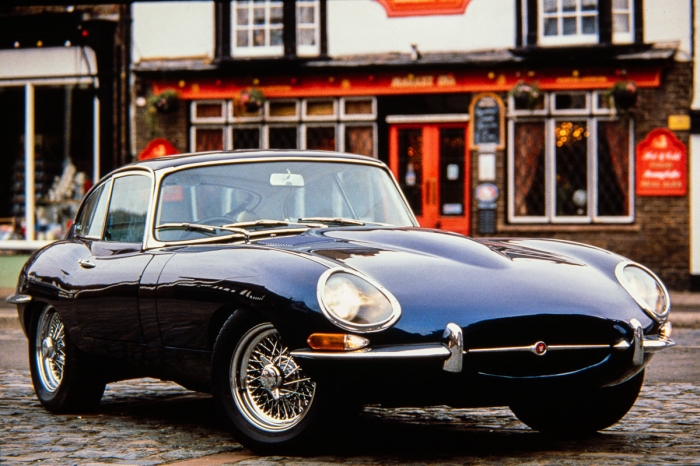
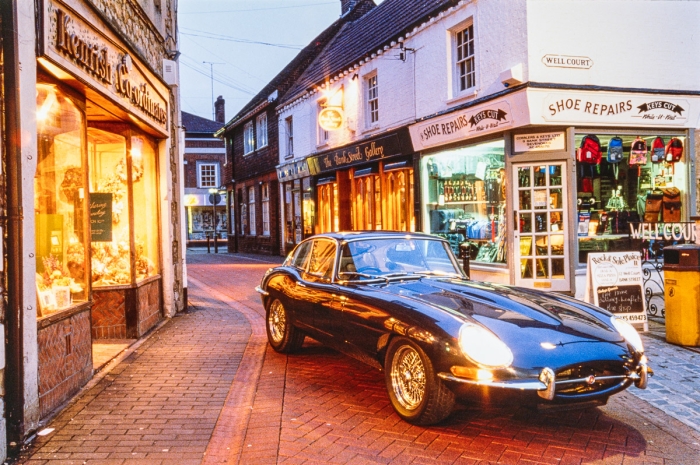
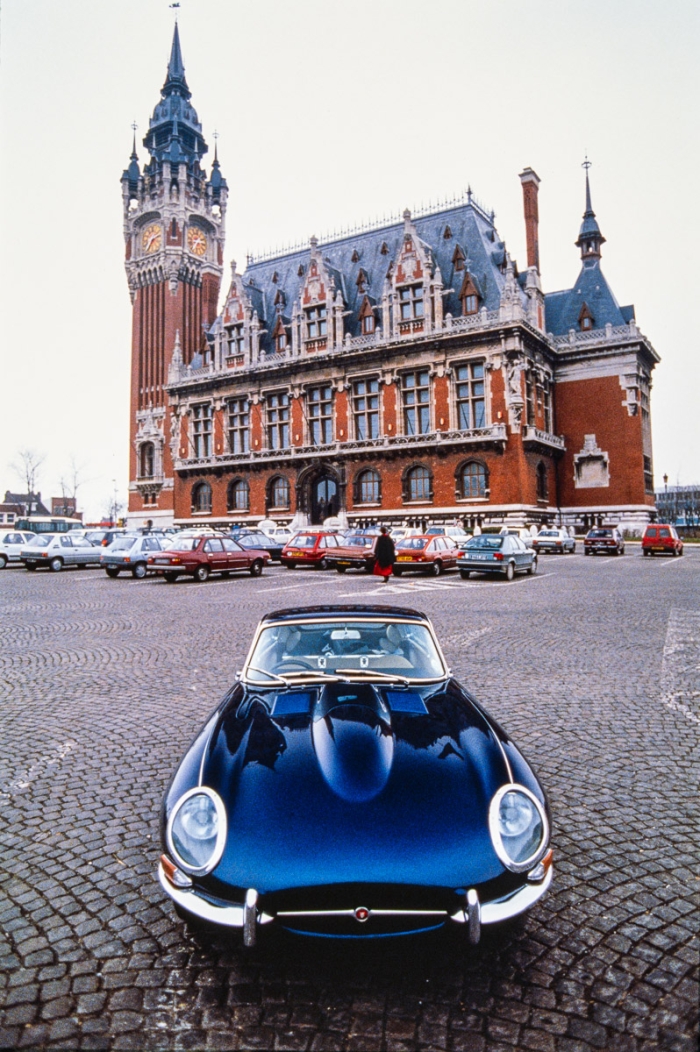
The photograph of the E-Type in front of an English pub restores an almost obvious atmosphere: England, cobblestones, the red façade, the dark and glossy bodywork. The image made in front of the old Reims pit buildings opens another dimension, more symbolic, more nocturnal, more connected to memory. Between the two, the spirit of the reportage reappears: a mythical automobile, a European itinerary, a press commission, a journalist, a photographer, a Saab 900, a rebuilt Jaguar and the very real feeling of doing an extraordinary job.
This reportage belongs to a time when the automobile press still had the means to tell stories, take to the road, build subjects and publish images over several pages. For a photographer, it was a field of learning and freedom. Today, looking back at these archives, I do not only see a Jaguar E-Type. I see again a way of photographing, travelling and working.
Click on the photos below to view them full screen.
All photos on this website are copyright protected © Sebastien Desnoulez. No use is allowed without the author’s written permission.
Legal notice
About the author
Sebastien Desnoulez is a photographer, author and image maker based in Paris. His work spans architectural photography, landscape photography and travel photography, with particular attention to composition, lines, light, blur and visual accidents. Trained in photography in the mid-1980s, he covered Formula 1 and reported from around the world before developing a fine art photography practice built around the tension between graphic rigour and visual instability. He also shares his technical experience through practical articles for passionate photographers, drawing on a strong visual culture acquired in both film and digital photography.
Tags