

Notre-Dame de Paris after restoration: visit in 2026

I had not been inside Notre-Dame de Paris since 1985. After photographing it exclusively from the outside for forty years, I returned to the restored cathedral in August 2026. The visit left me with a rather different impression from what I had expected.
Returning to Notre-Dame forty years later
On Sunday, August 16, 2026, I went to visit Notre-Dame de Paris.
My previous visit dated back to 1985. At the time, I had climbed one of the towers, but since then I had never stepped inside the cathedral again. I had, however, photographed it many times from the quays, the bridges, the Île de la Cité and the Left Bank, from just about every possible angle.
What I remembered of the interior was a rather dark building, marked by time, with weathered stone and an atmosphere that corresponded quite closely to my idea of a medieval cathedral.
Forty-one years later, the contrast is striking.
A cathedral that almost feels too new
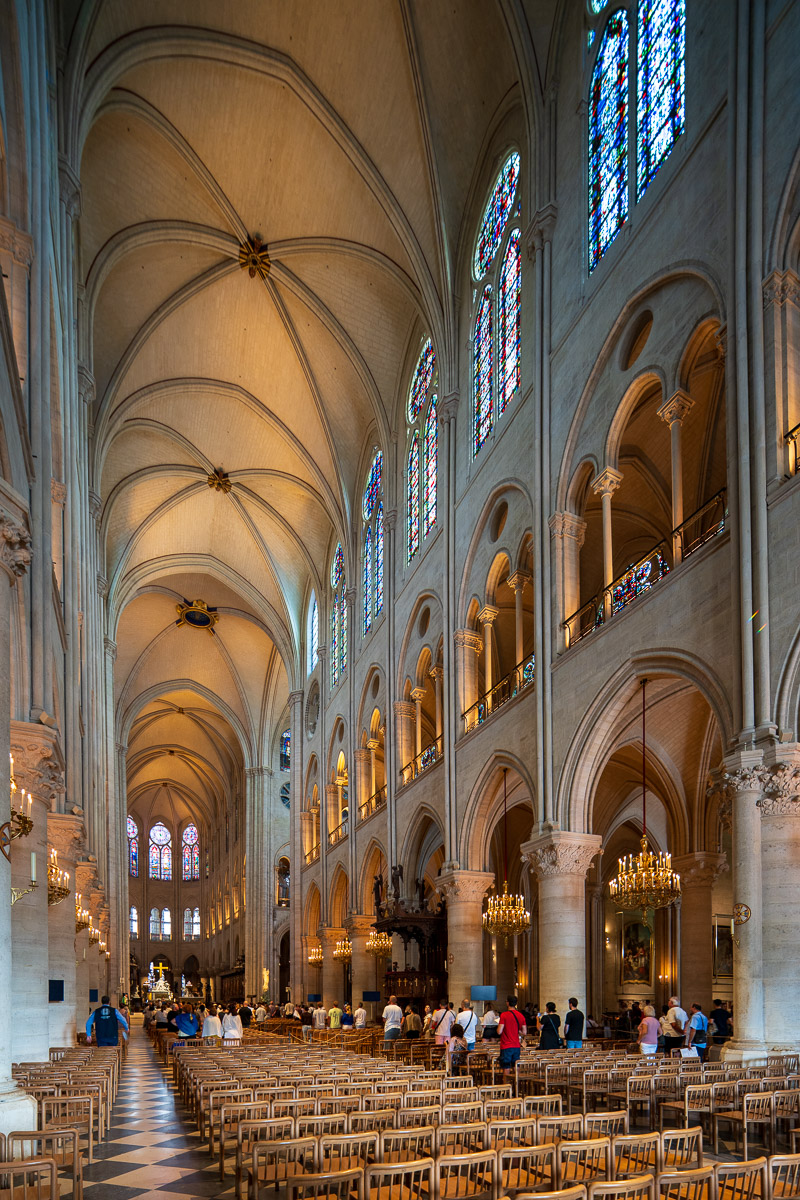
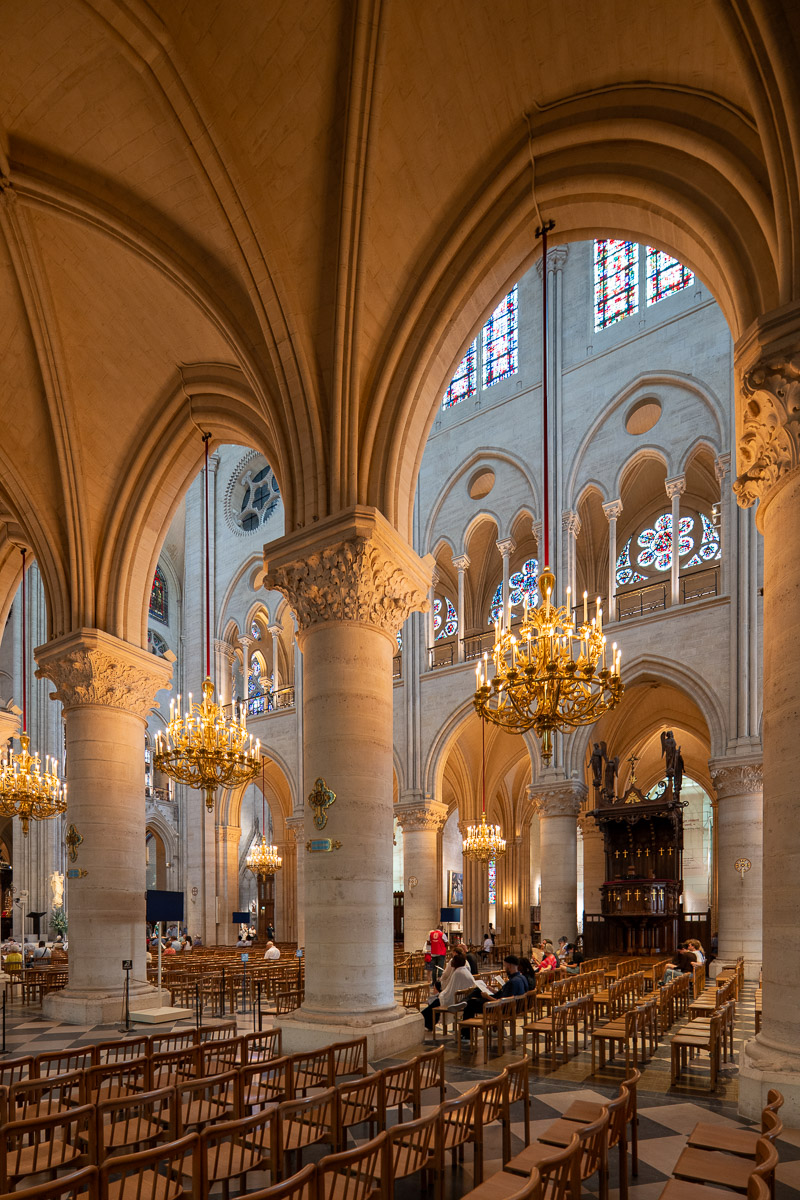
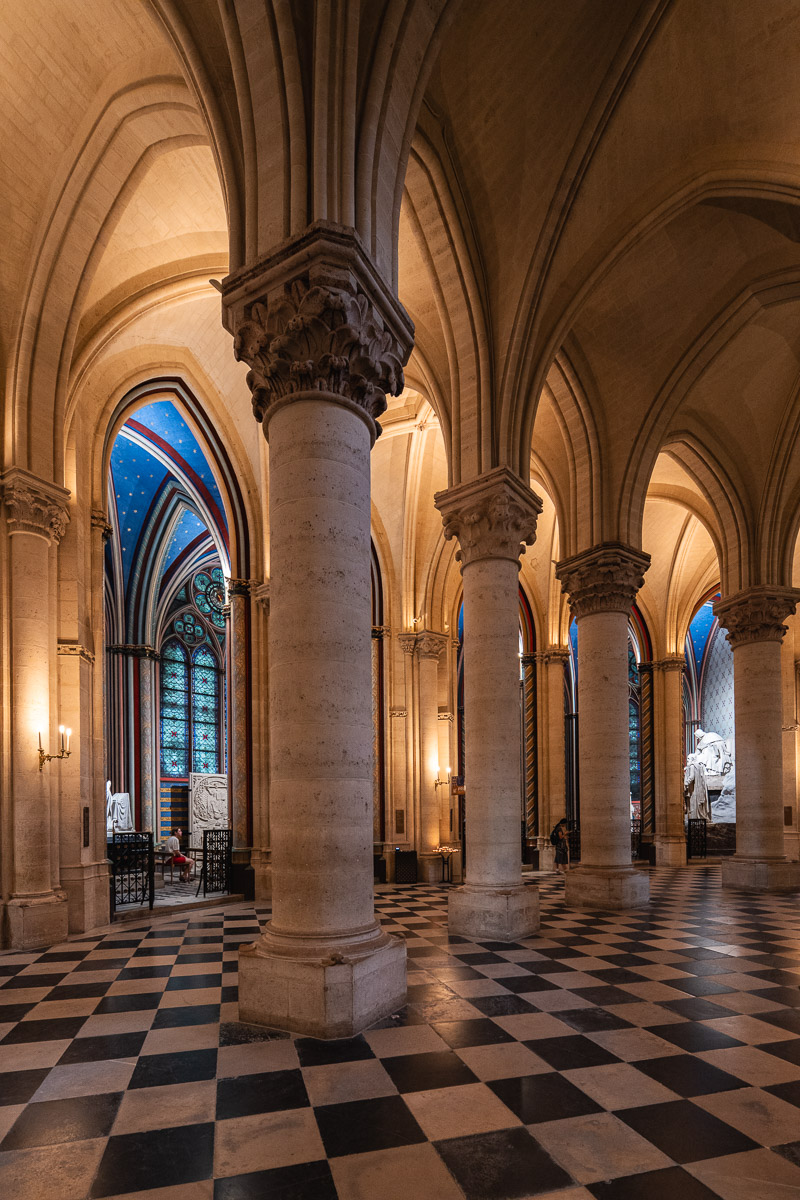
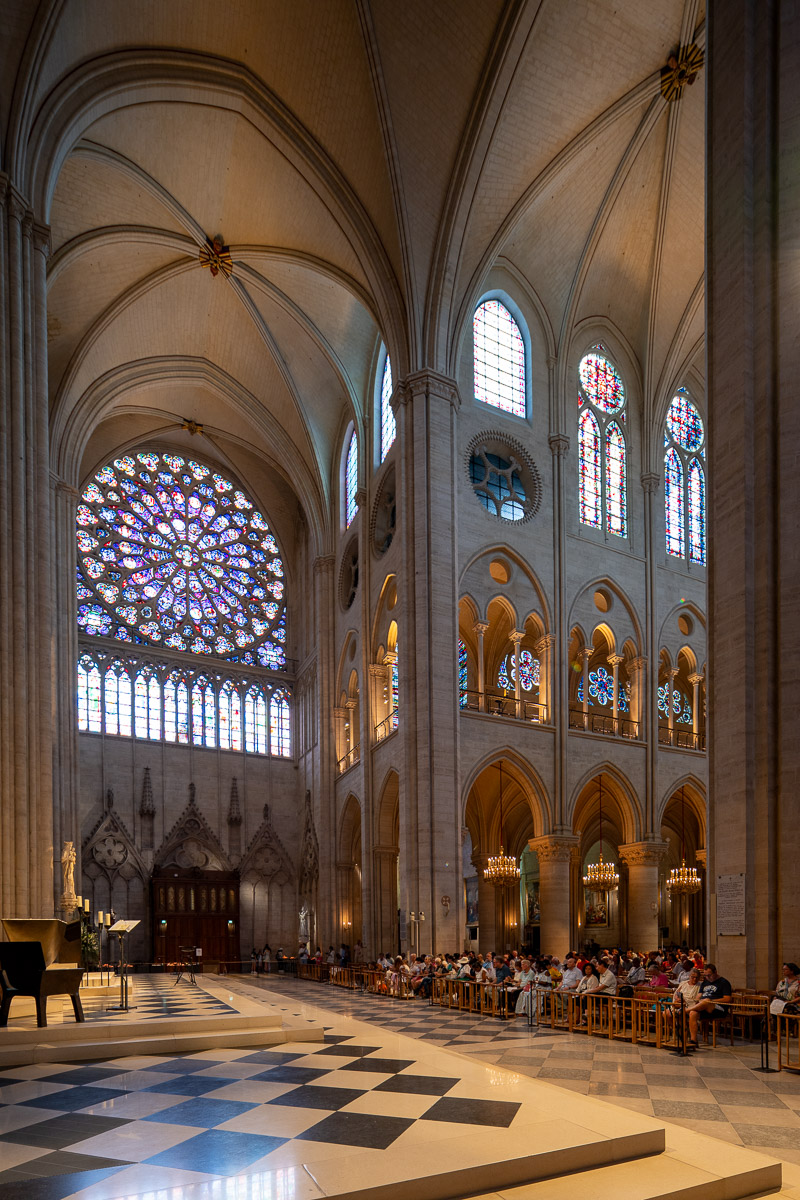
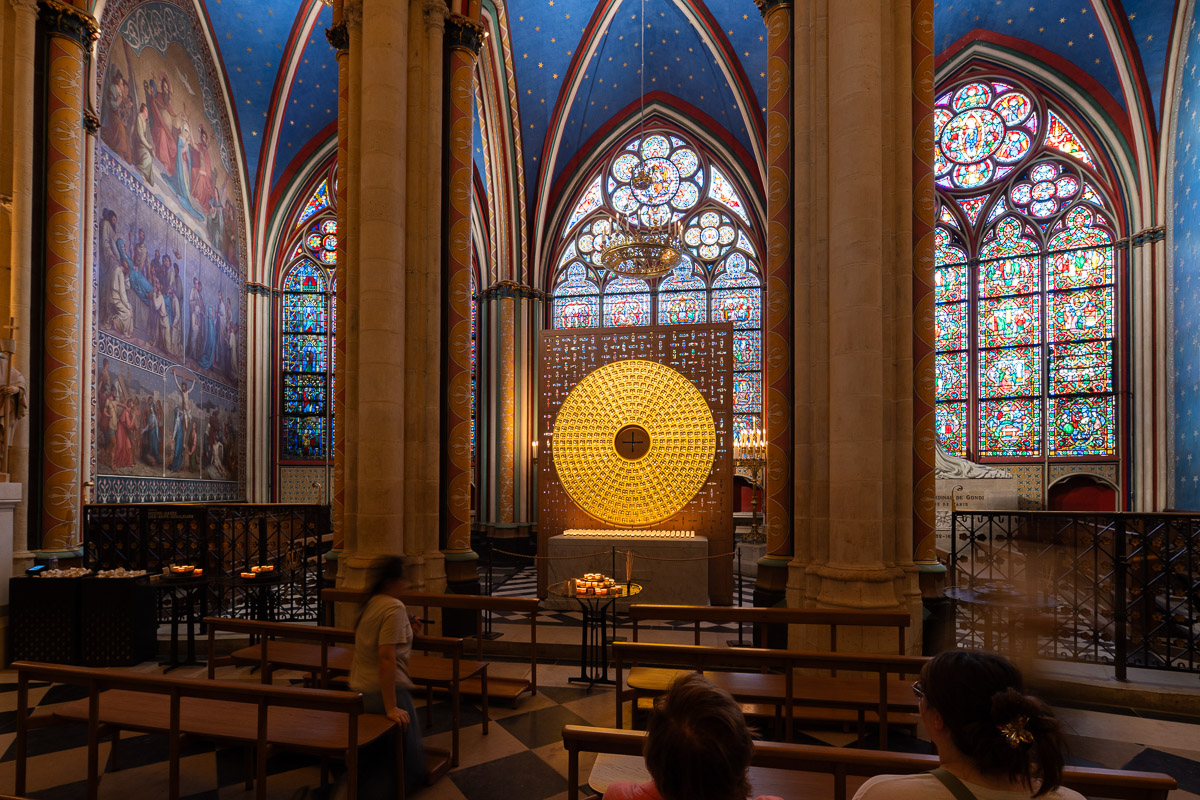
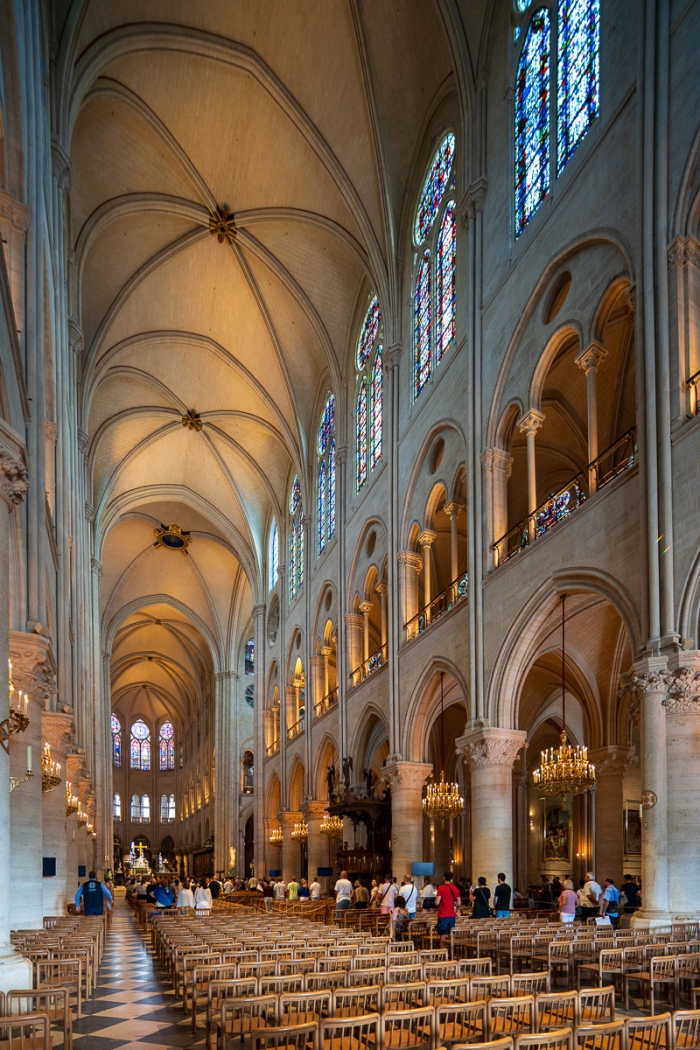
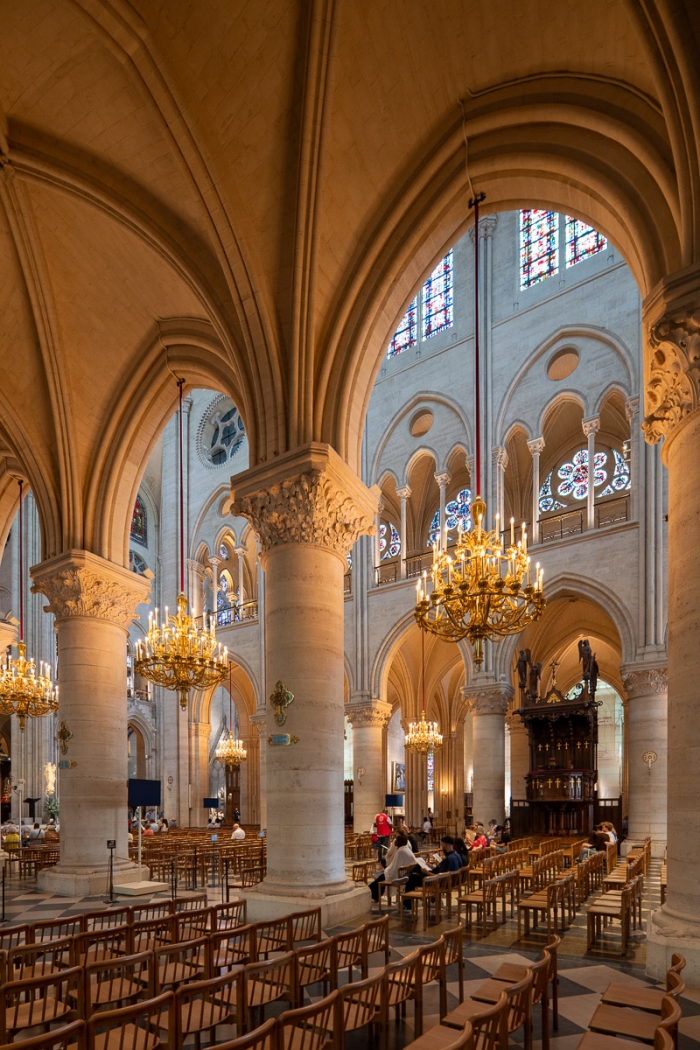
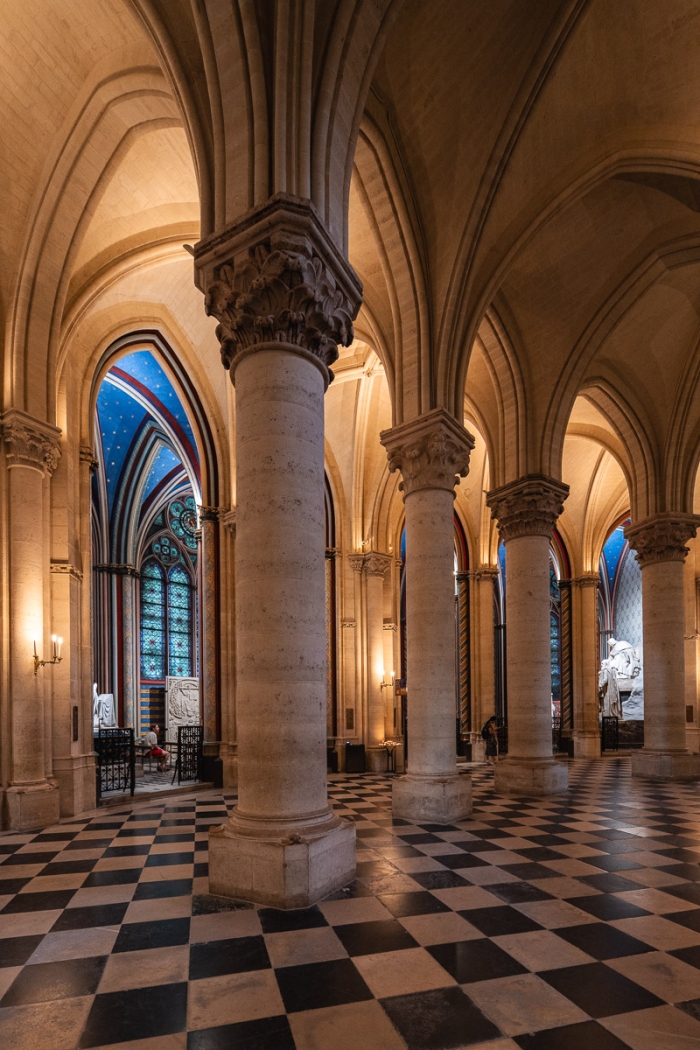
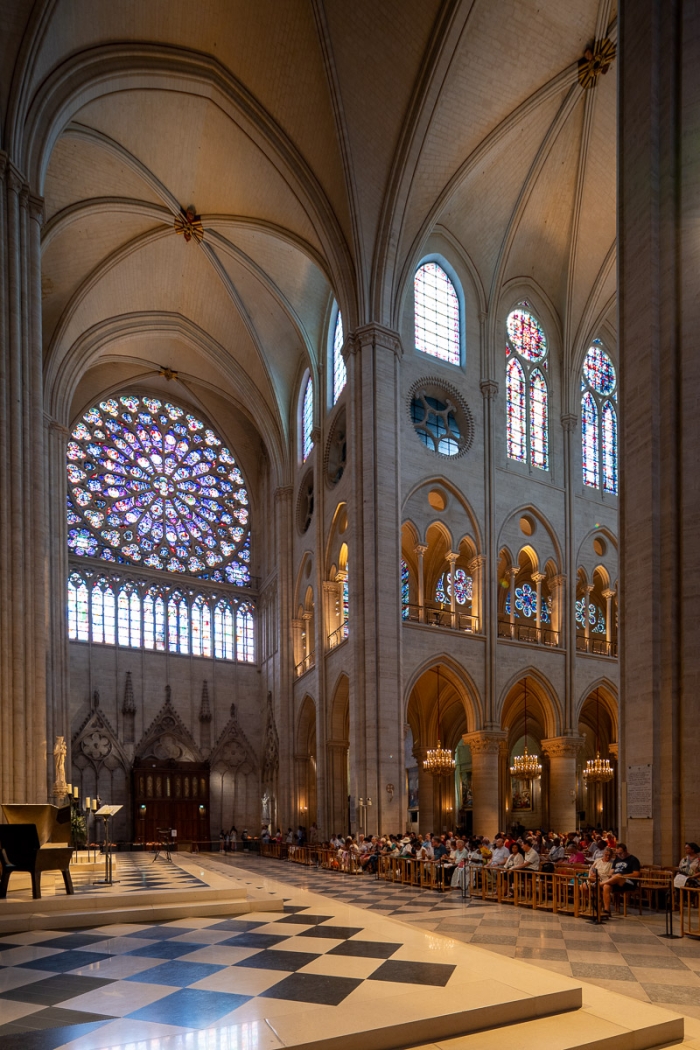
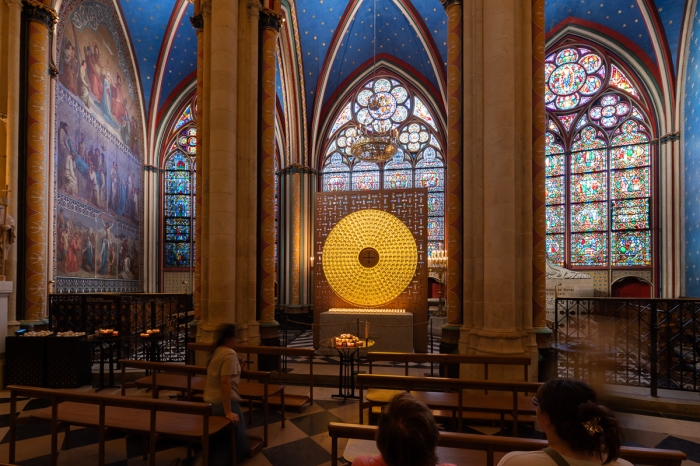
The restoration carried out after the 2019 fire has profoundly changed the way the interior is perceived. The walls, murals, sculptures and many decorative elements have been cleaned or restored. The result is remarkably bright.
Yet I was more surprised than captivated by this brightness and cleanliness.
The stone looks almost immaculate. The restored painted decorations have very vivid colours. The lighting further reinforces this impression of newness. At times, I felt as though I were visiting a church completed in the late 19th century rather than a building whose construction began in the Middle Ages.
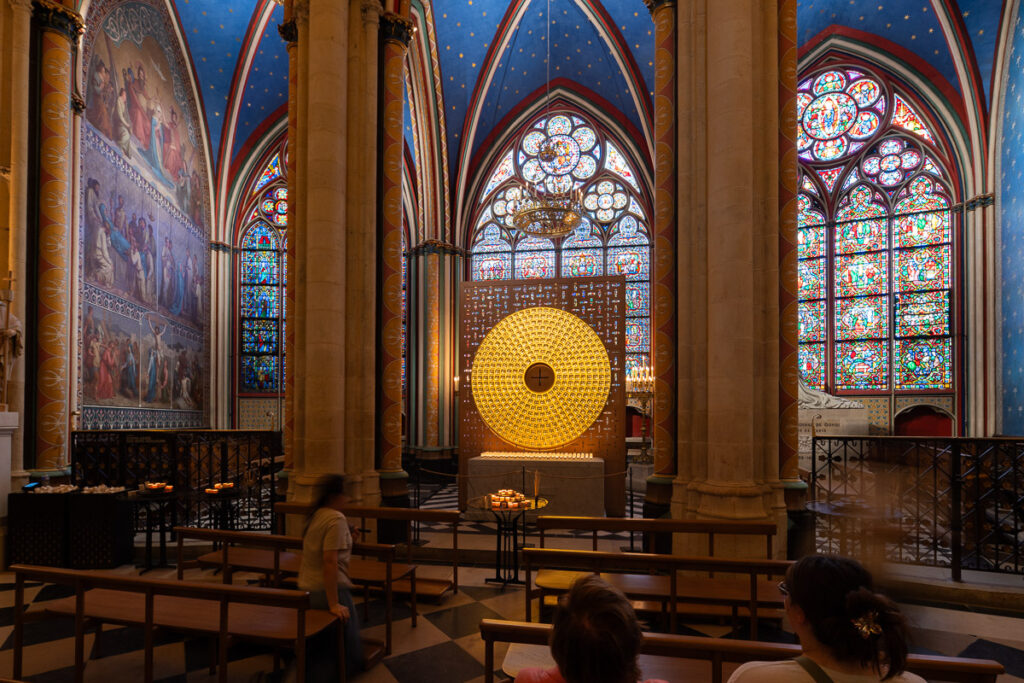 Notre-Dame de Paris after restoration: visit in August 2026 - Photo: © Sebastien Desnoulez
I am well aware that much of this appearance is precisely what the restoration has made it possible to recover, and that Notre-Dame has not simply been “repainted”. But photographically and emotionally, I feel that something is missing: the patina, the shadows and the irregularities that I associated with the building.
The impression is entirely subjective, but in some places I almost felt as though I were at Disney: everything seems extremely clean, organised, illuminated and controlled.
A highly organised visit
This feeling also comes from the way the visit itself is organised.
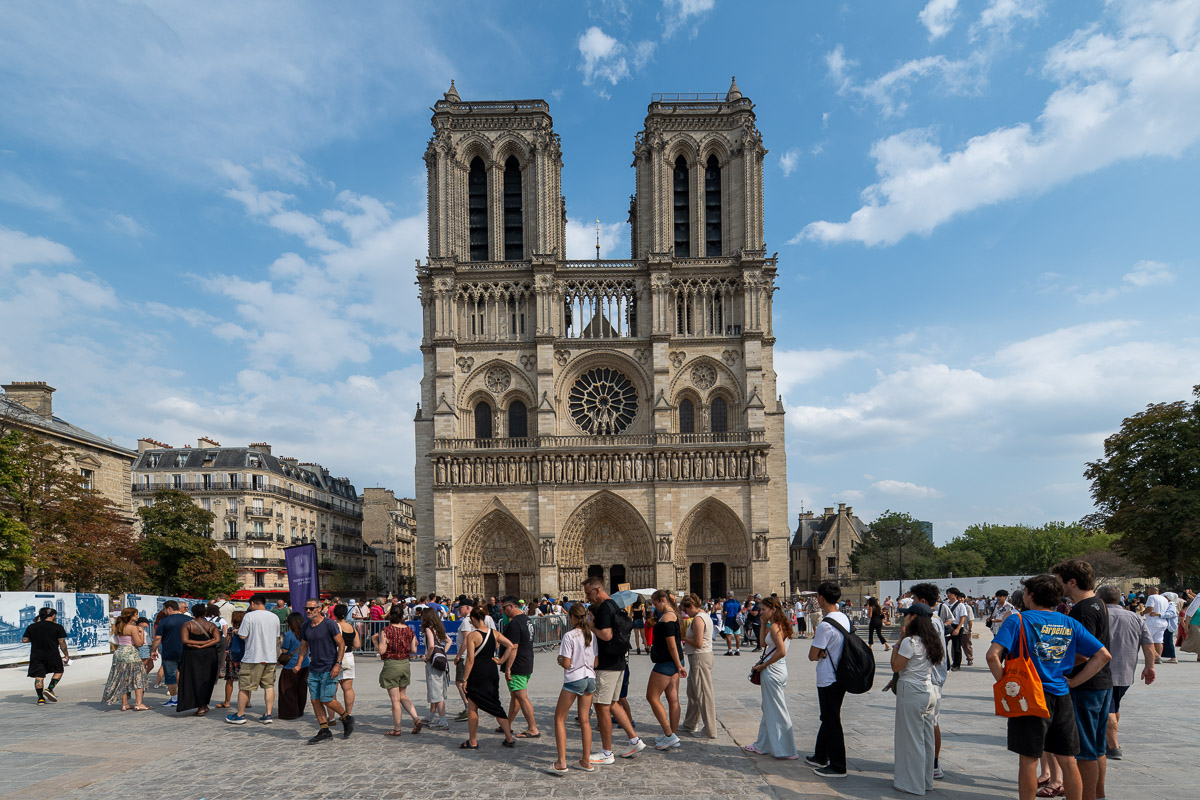
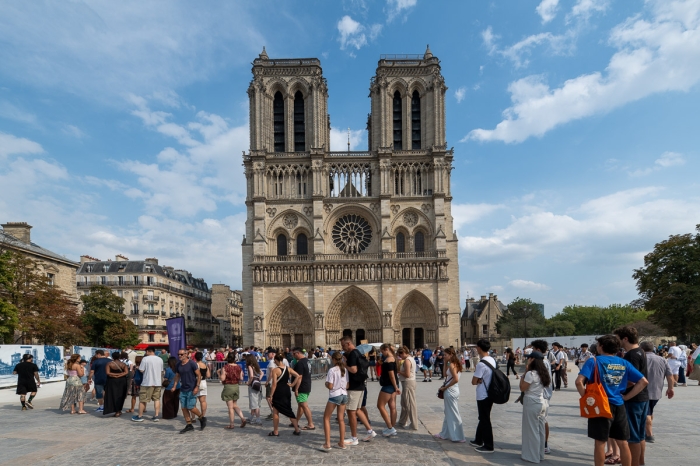
Outside, the queue moves forward between barriers. Inside, the route is controlled and staff ensure that visitors keep moving and respect certain boundaries.
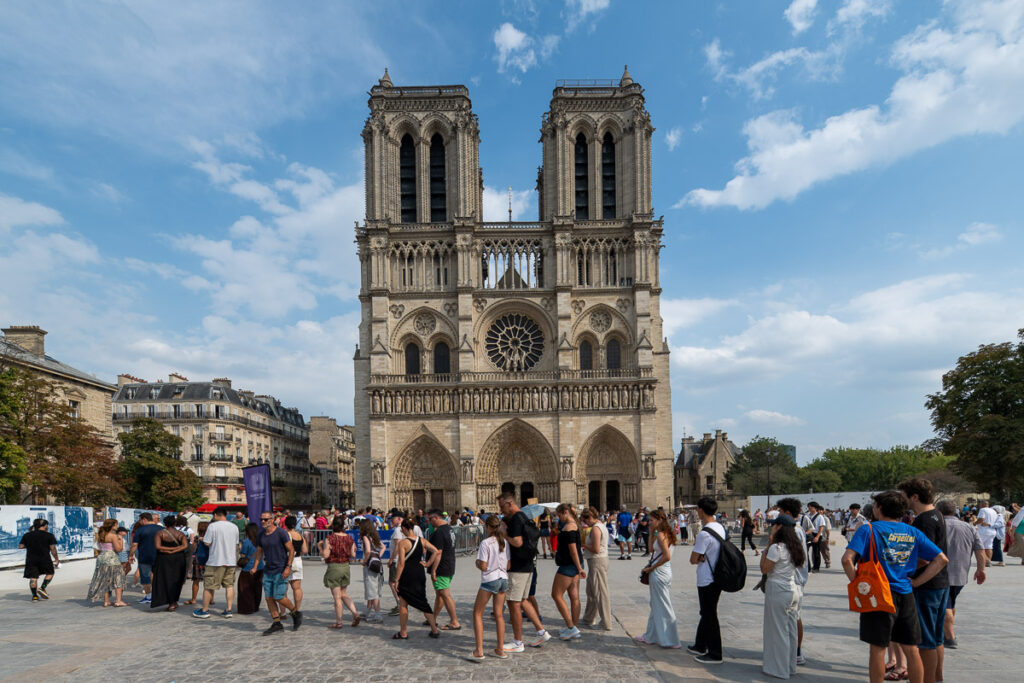 Notre-Dame de Paris after restoration: visit in August 2026 - Photo: © Sebastien Desnoulez
Given the current number of visitors, this organisation is probably essential. It also helps prevent every available space from becoming the setting for poses or dance routines created for social media.
But it also changes the experience. Notre-Dame is now visited as much as a world-famous monument as it is as a church. Surrounded by the crowds, it can sometimes be difficult to forget the machinery of mass tourism that accompanies its rediscovery.
Not the cathedral that impresses me most
I probably expected to be more impressed when returning to Notre-Dame after so many years and after following its reconstruction since the fire.
That was not the case.
In recent years, Bourges Cathedral has left a stronger impression on me, particularly because of the extraordinary sense of height inside. Westminster Abbey also made a greater impression on me. I am equally drawn to much simpler religious buildings such as Pontigny or Bernay, as well as to the exuberant decoration of St John’s Co-Cathedral in Valletta, or certain churches and cathedrals in Venice, Florence and Puglia.
This is obviously not an attempt to rank architectural styles. A simple Romanesque church and a Gothic cathedral are not intended to create the same sensations.
But visiting a building is also a matter of personal perception.
Notre-Dame remains an exceptional monument in the Paris landscape for me. I will certainly continue to photograph it from the outside, where its silhouette, its volumes and its relationship with the Seine continue to fascinate me.
Inside, however, the restored Notre-Dame did not give me the emotion I had expected.
Perhaps it simply needs time to grow old again.
About the author
Sebastien Desnoulez is a photographer, author and image maker based in Paris. His work spans architectural photography, landscape photography and travel photography, with particular attention to composition, lines, light, blur and visual accidents. Trained in photography in the mid-1980s, he covered Formula 1 and reported from around the world before developing a fine art photography practice built around the tension between graphic rigour and visual instability. He also shares his technical experience through practical articles for passionate photographers, drawing on a strong visual culture acquired in both film and digital photography.
Click on the photographs below to view them full screen.
All the photos displayed on this website are copyright protected © Sebastien Desnoulez. No use allowed without written authorization.
Legal notice
Tags