

Beirut and Lebanon in 1991-1992: Photographs After the Civil War

In October 1991, one year after the end of the civil war, I discovered Lebanon while covering the Rallye de la Montagne as a member of the media team supporting Saudi driver Mamdouh Khayat. In Beirut, I photographed the city centre, West Beirut and the destruction that remained highly visible. I returned to the country in June 1992 for another round of the Middle East Rally Championship.
My First Arrival in Lebanon
At the time, I was working for the DPPI press agency and mainly covering motorsport. Sadri Barrage and Yves Aboukhaled, from the Headline News agency in Dubai, contacted me through DPPI to join the media team responsible for promoting Mamdouh Khayat during several rounds of the Middle East and European rally championships.
I travelled to Beirut with other journalists invited by the rally organisers. When we arrived, we went our separate ways at the airport. A driver from the Lebanese magazine Sport Auto was due to collect me, take me to the magazine’s offices and then drive me to the hotel in Jounieh, where the other members of the team were waiting.
Before this first visit, I knew Lebanon mainly through television news reports. My childhood and teenage years had been punctuated by reports about the civil war, bomb attacks and hostage-taking. In my mind, the country remained associated with danger, even though my Lebanese contacts assured me that I could come and cover the rally without any particular concern.
I was therefore not entirely reassured when I left the terminal and saw a crowd waiting behind the barriers. I looked around for the driver. He arrived as planned and everything went smoothly. This first moment sums up my state of mind quite well: apprehension shaped by years of news reports, followed by the gradual discovery of a more nuanced reality.
On the expressway between Jounieh and Beirut, I also discovered traffic that sometimes followed unexpected rules. I remember seeing motorists driving the wrong way along the emergency lane while all three lanes on the opposite side were completely blocked.
My First Photographs in Central Beirut
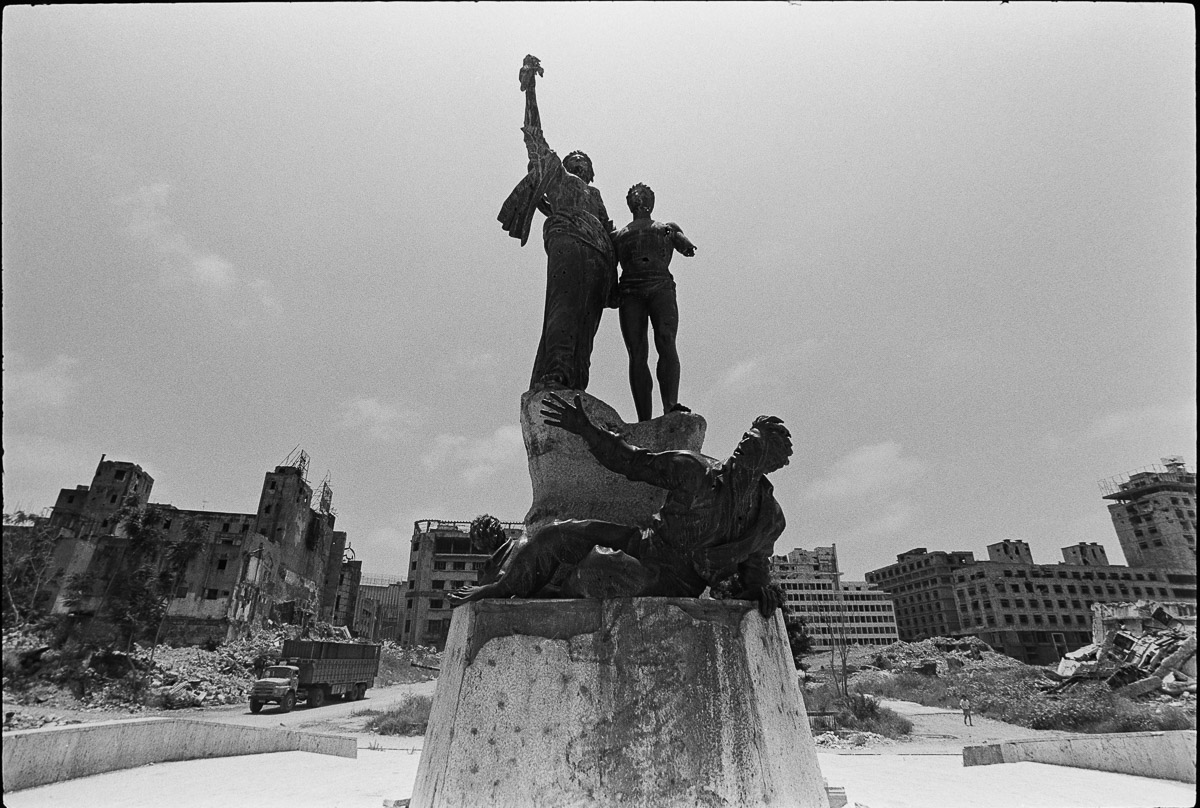
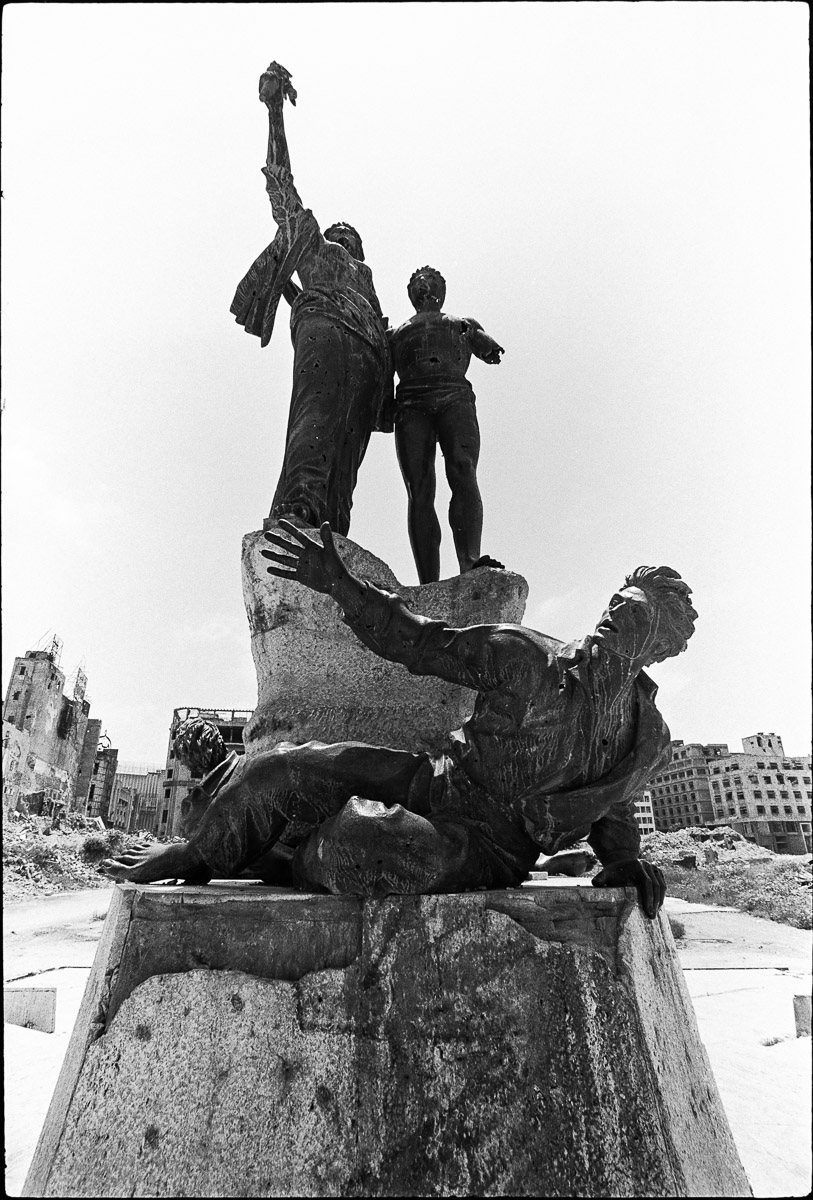
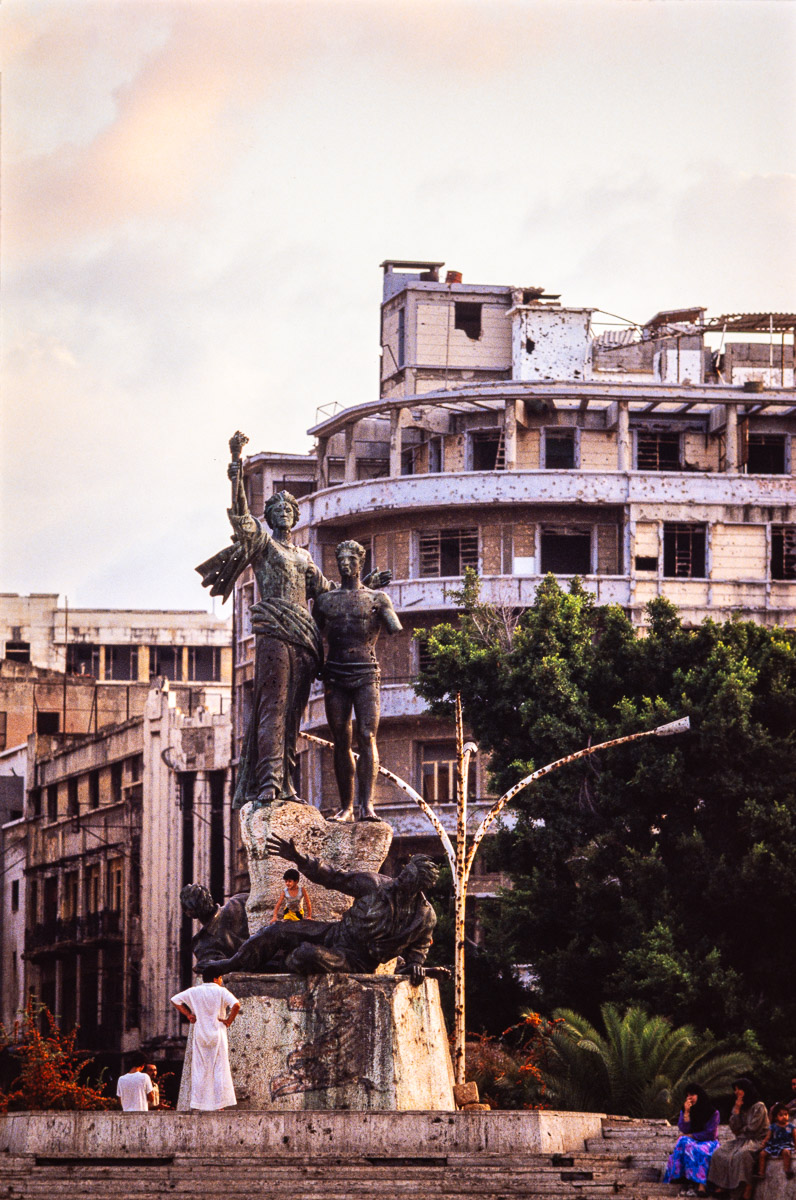
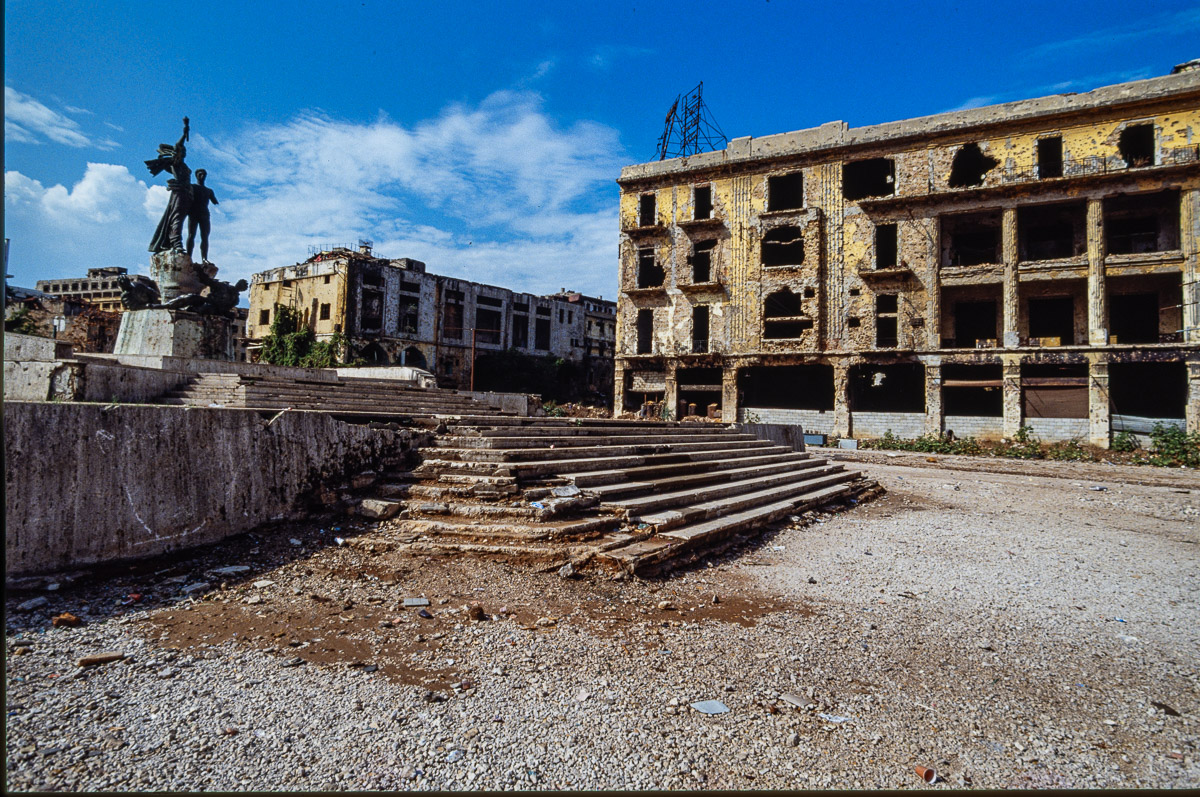
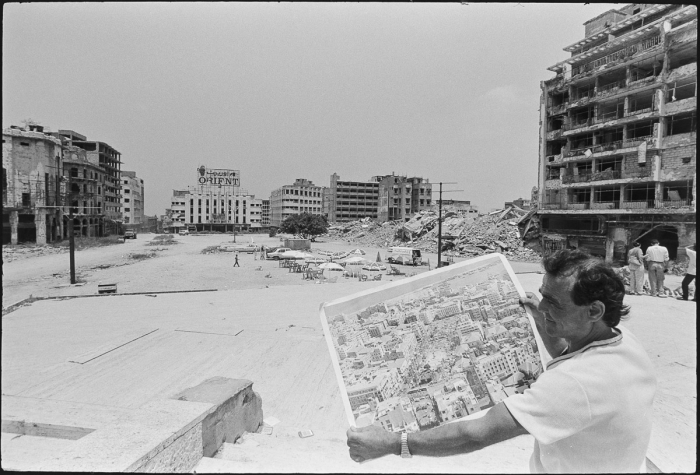
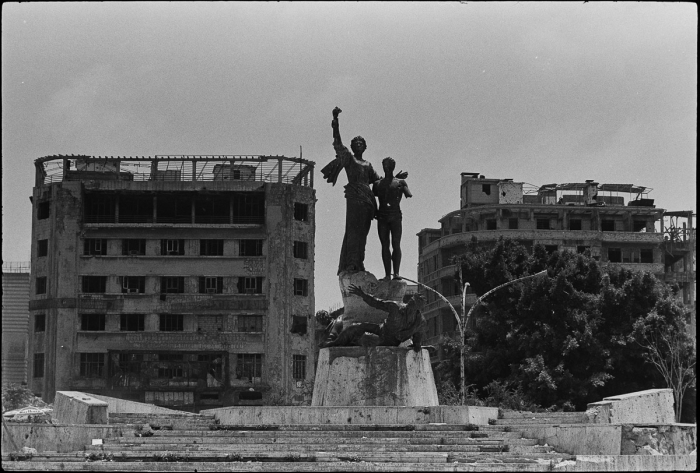
I remember the driver taking me fairly quickly into central Beirut so that I could take a few photographs around Cannon Square, also known as Martyrs’ Square. I later returned with other journalists and members of the media team while attending press conferences or travelling to the rally stages.
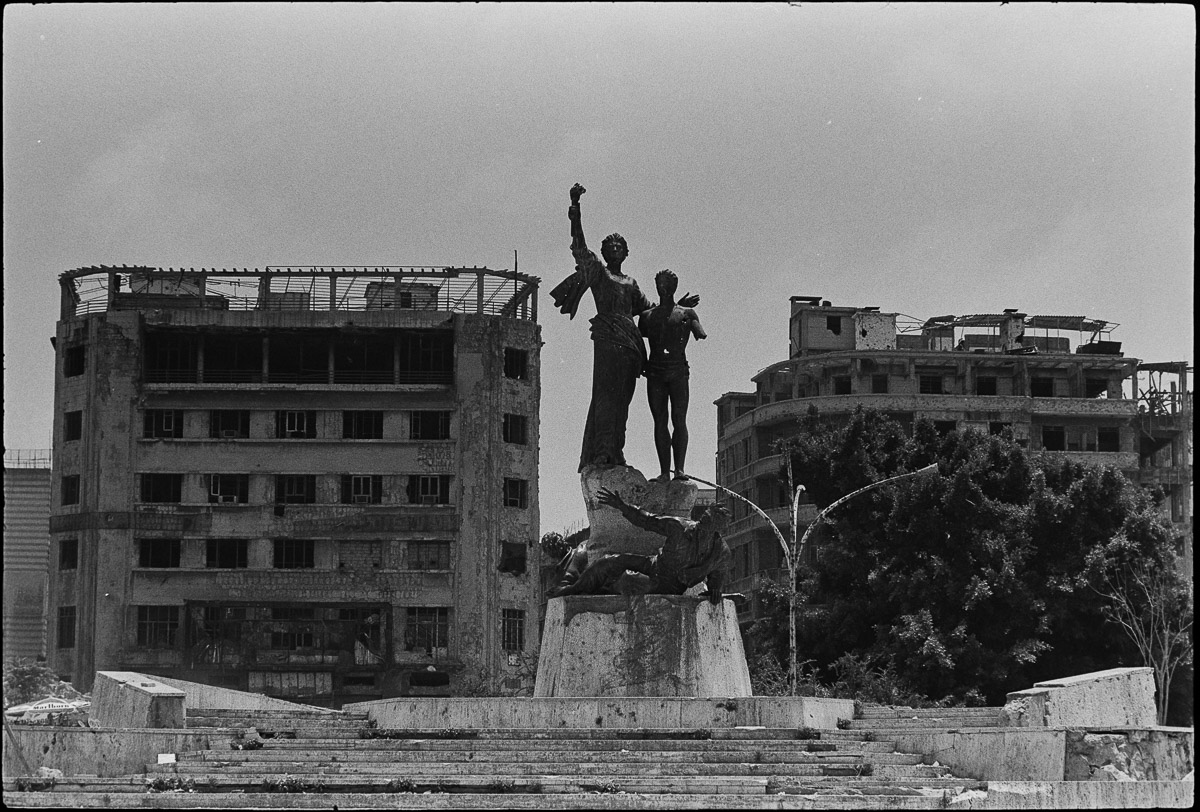
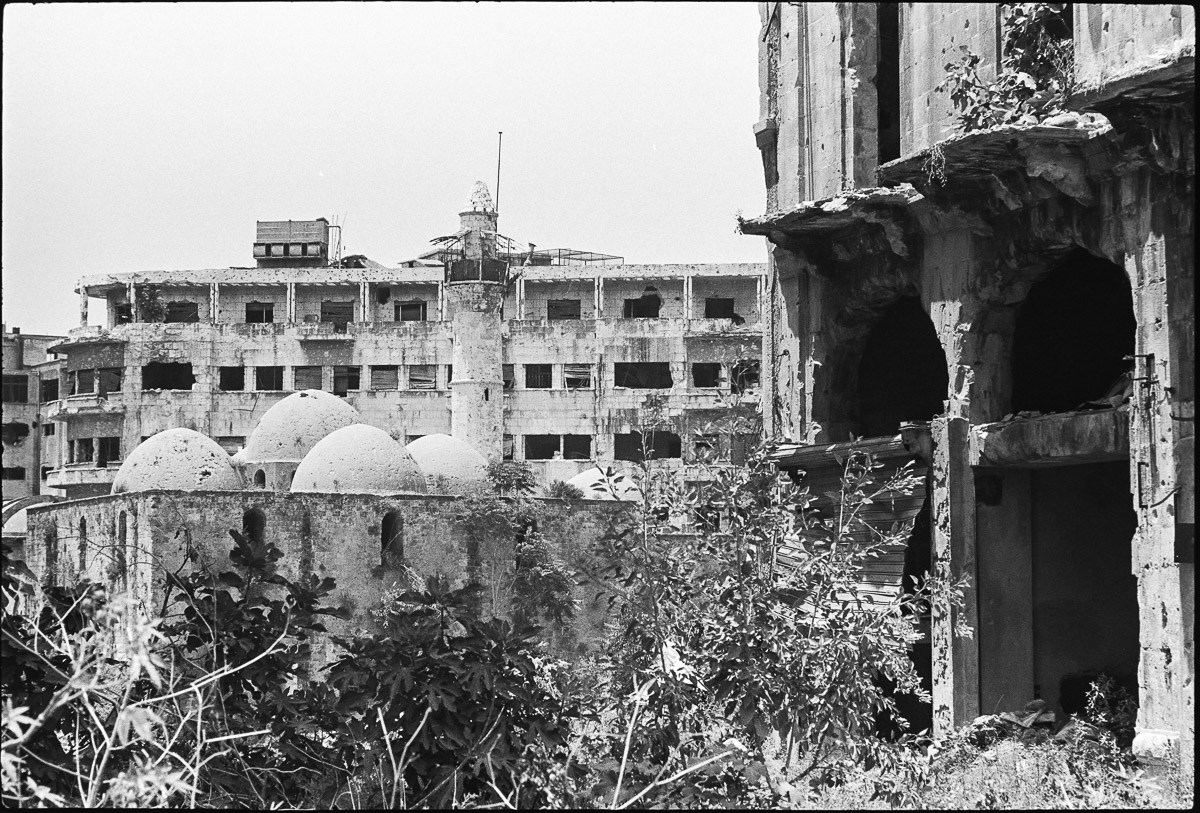
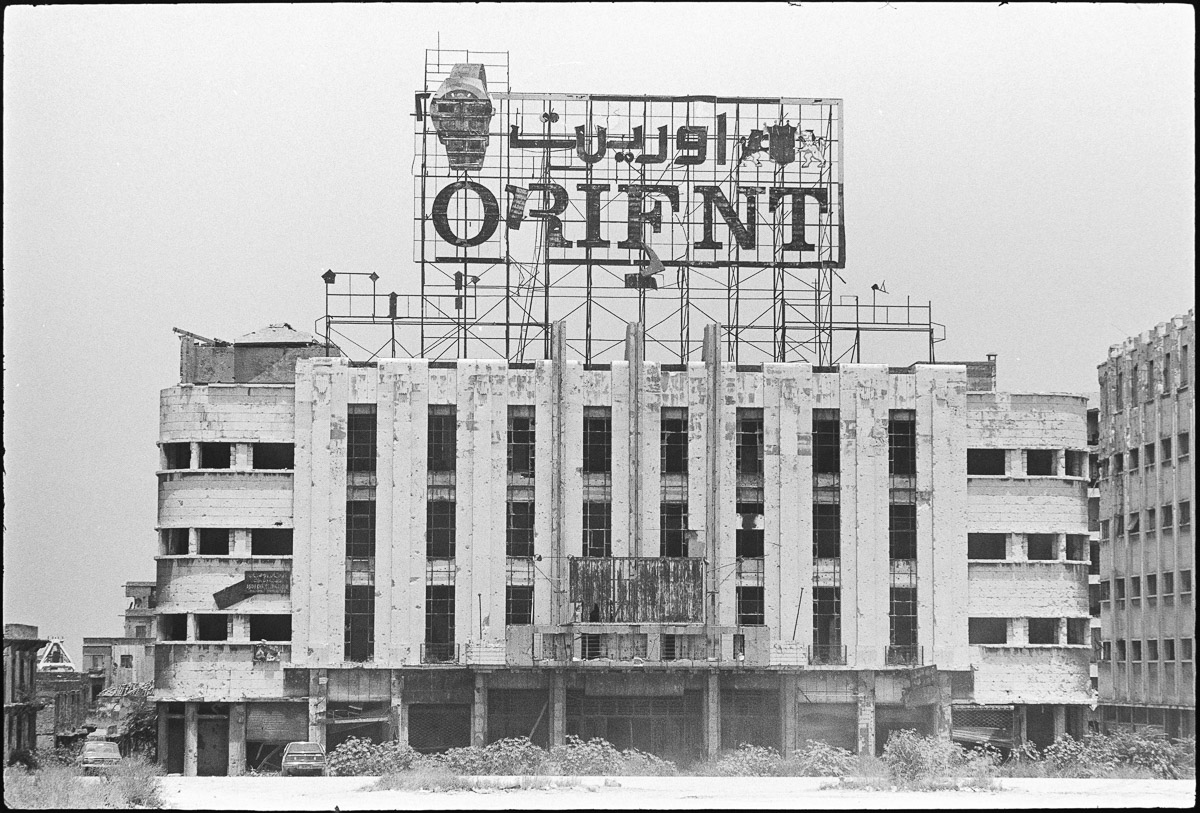
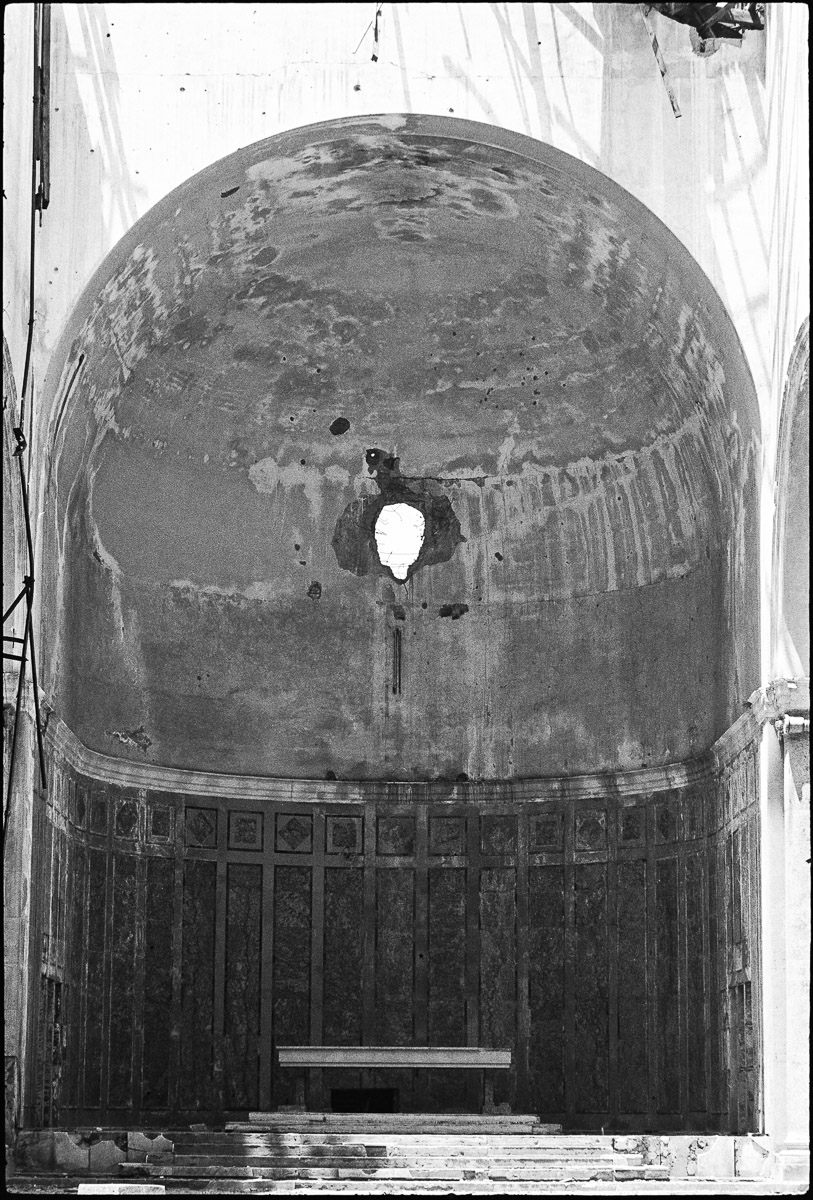
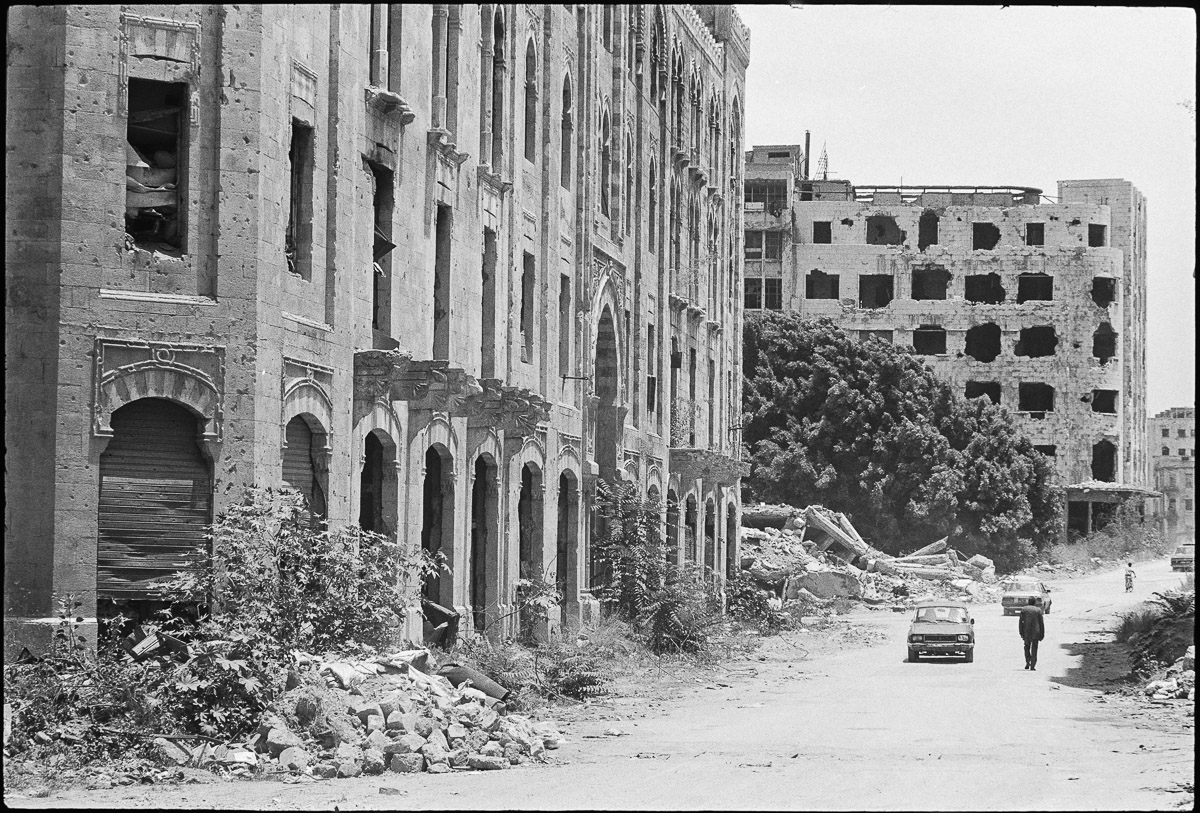
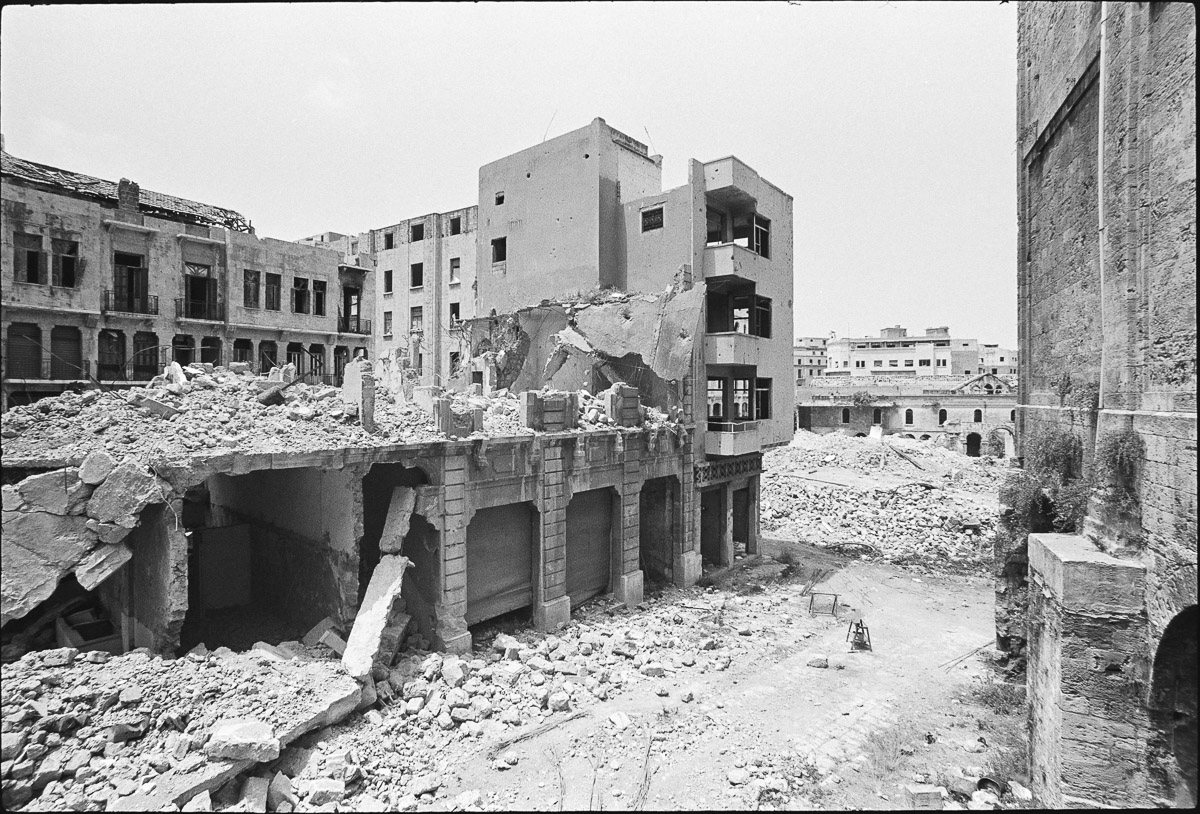
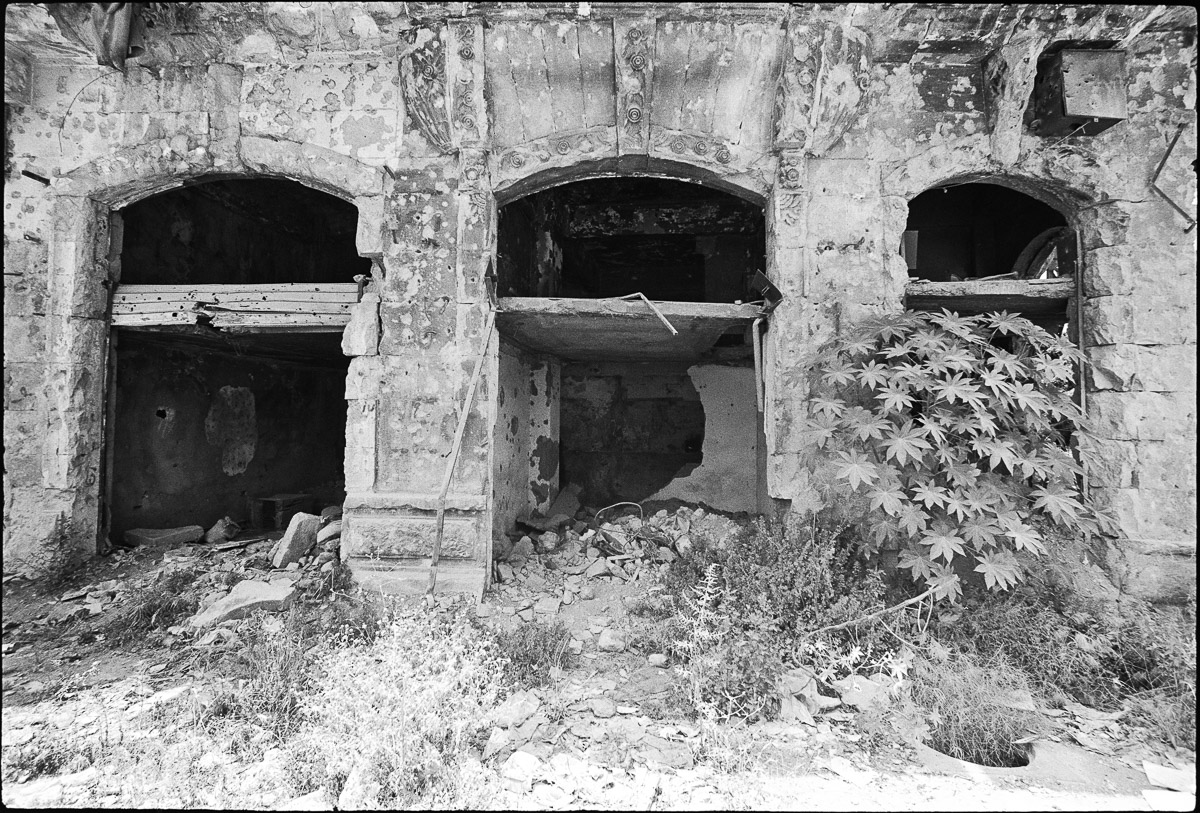
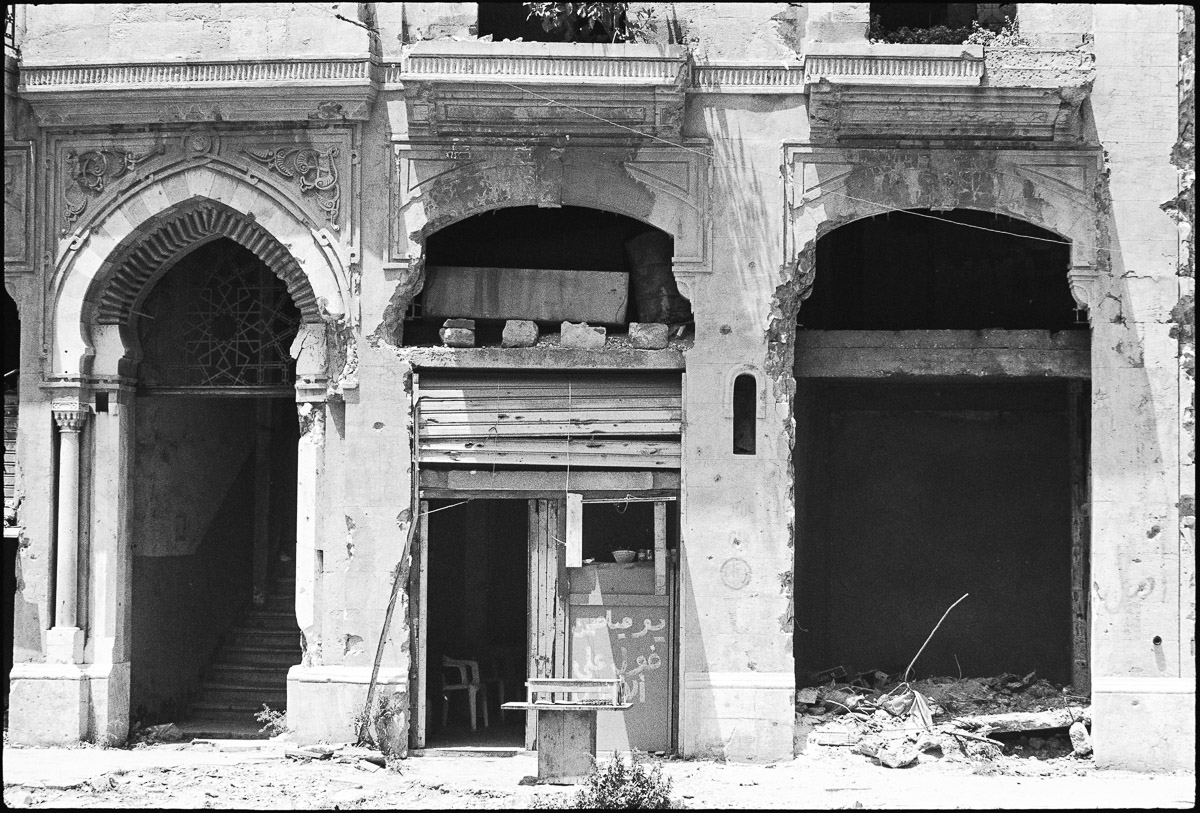
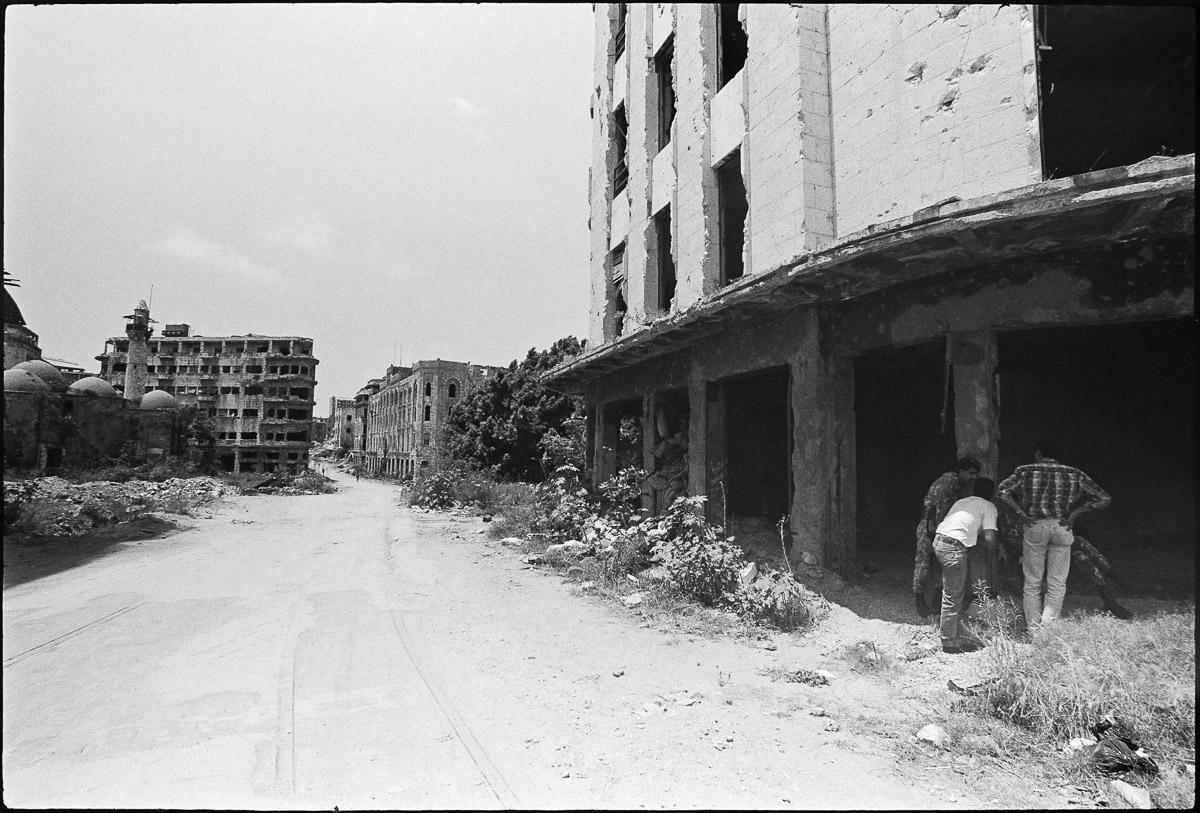
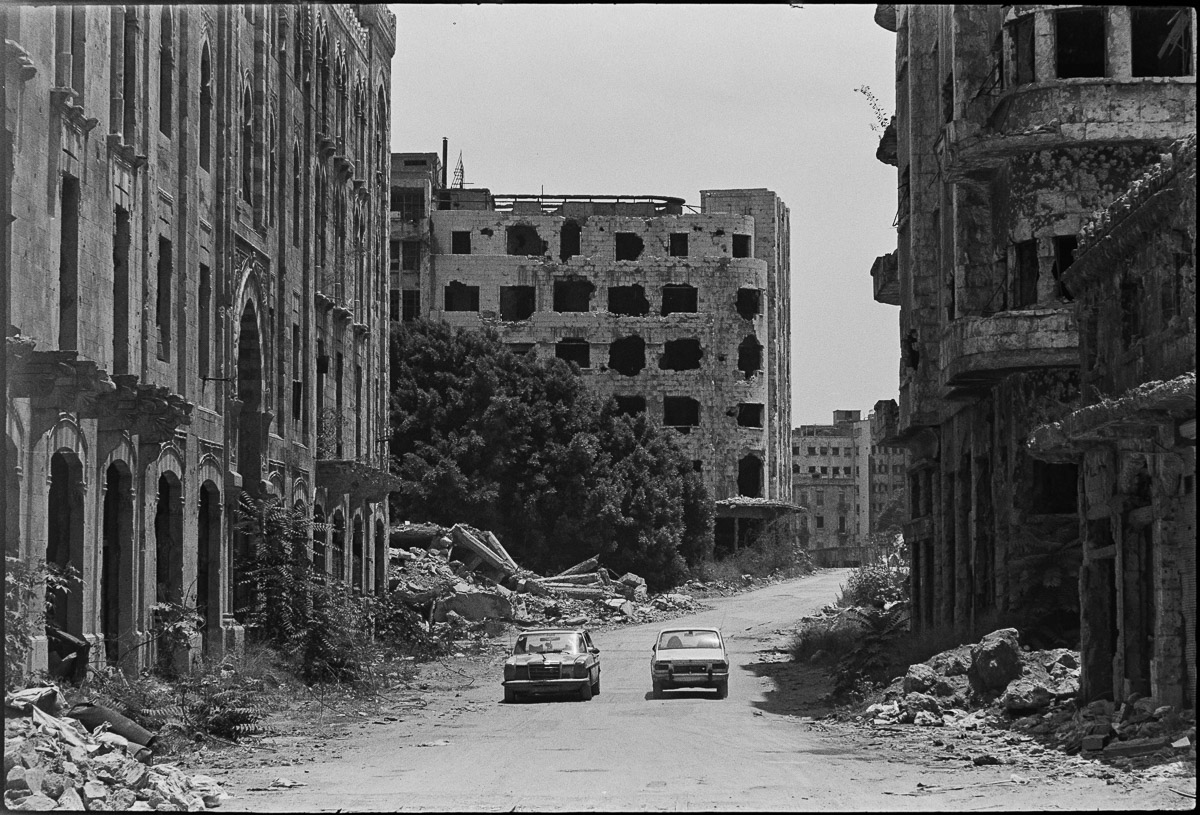
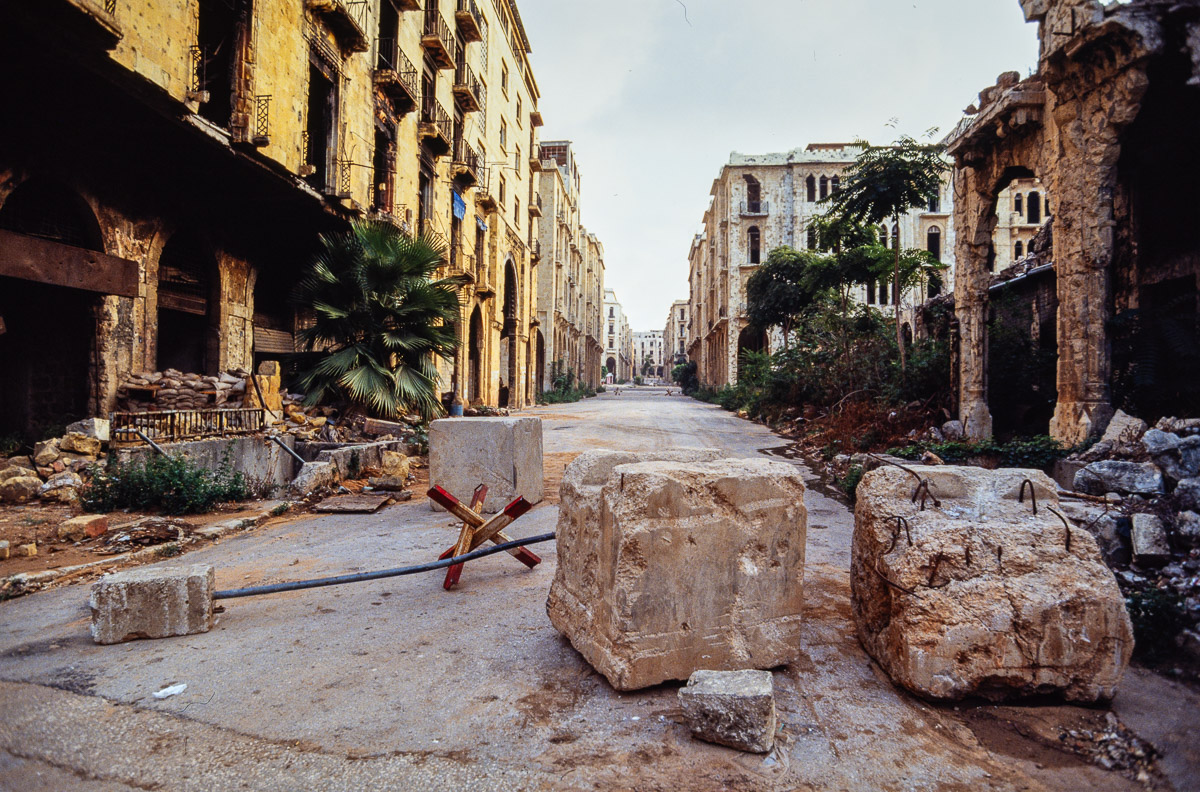
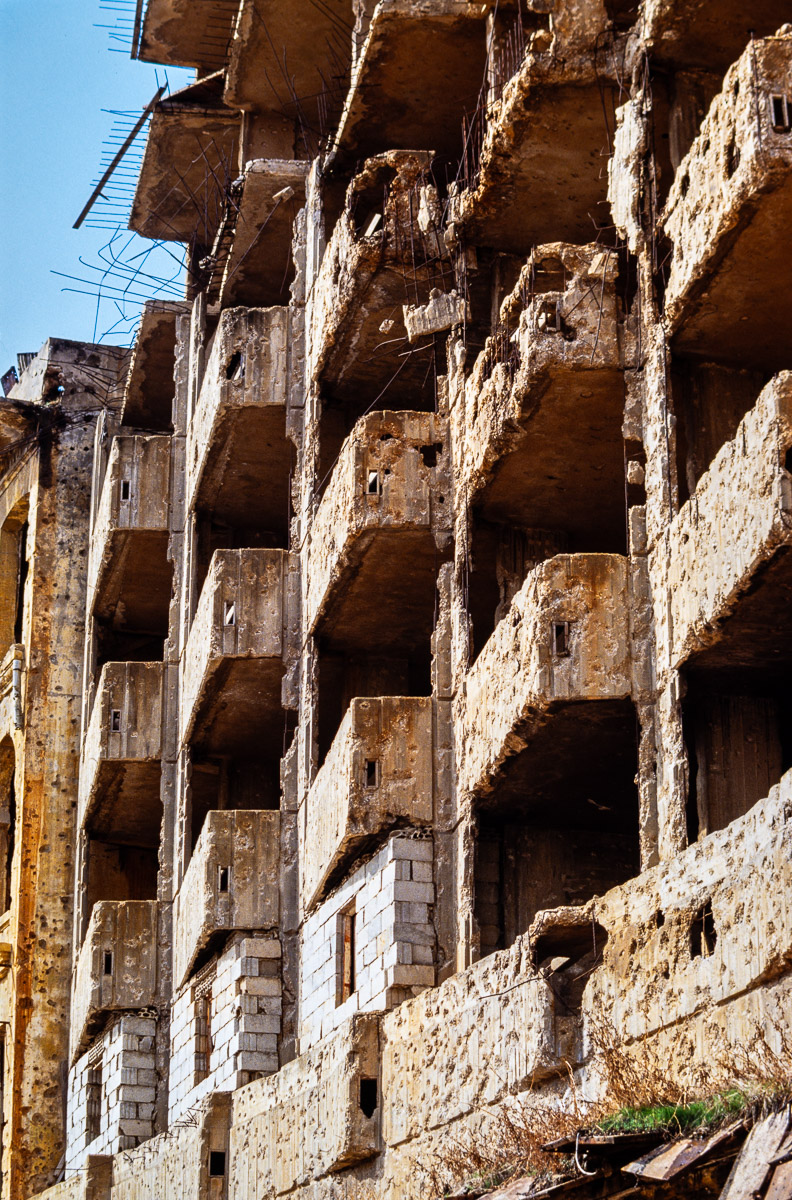
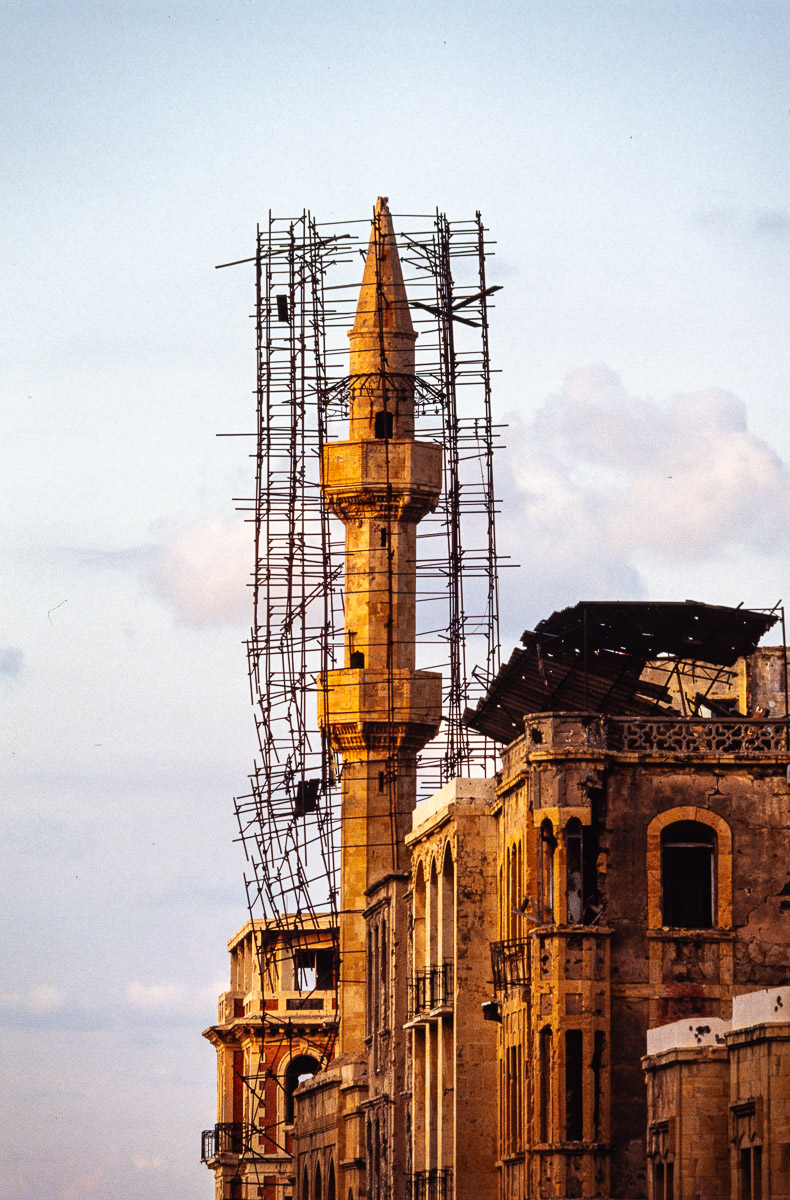
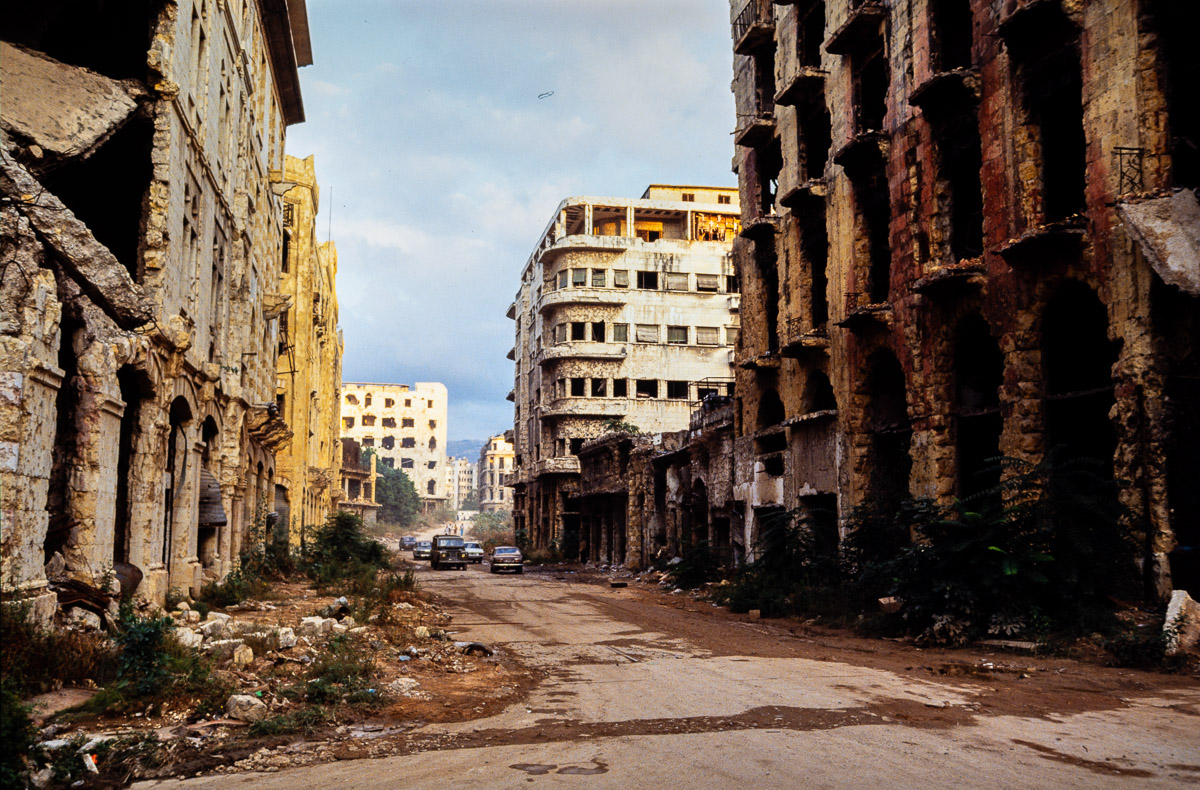
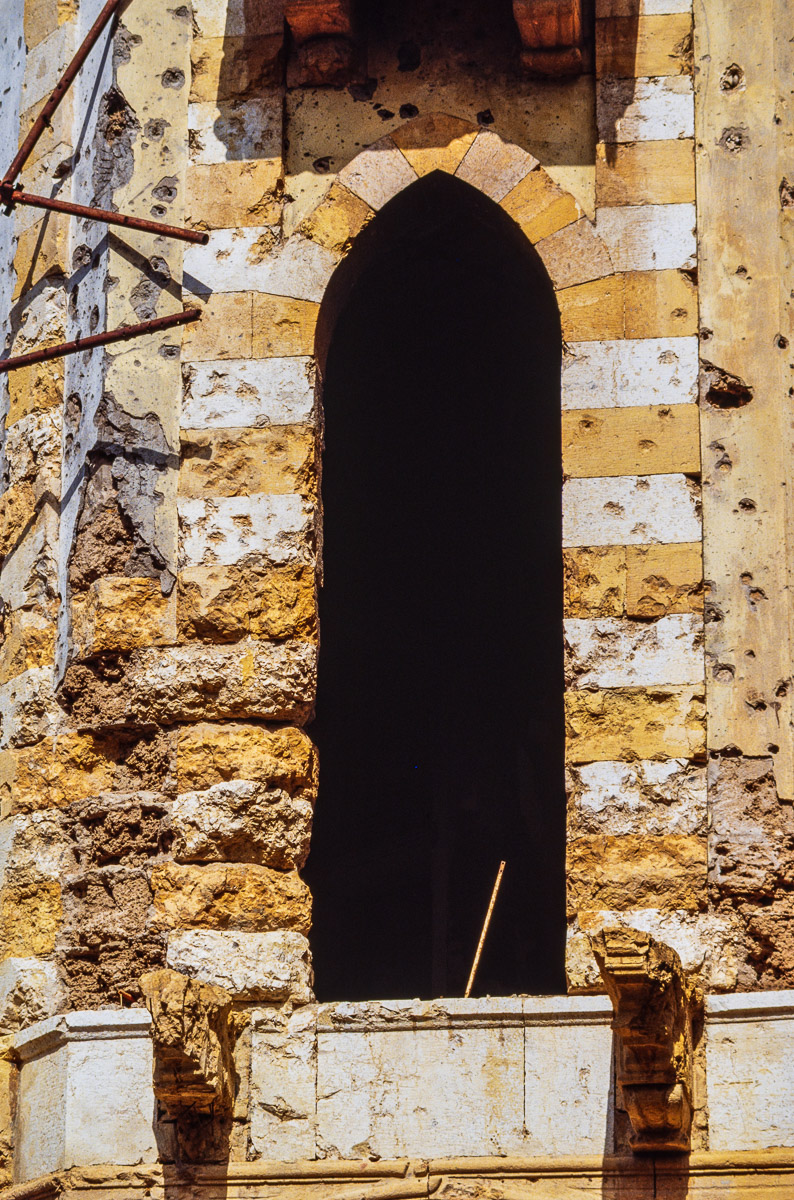
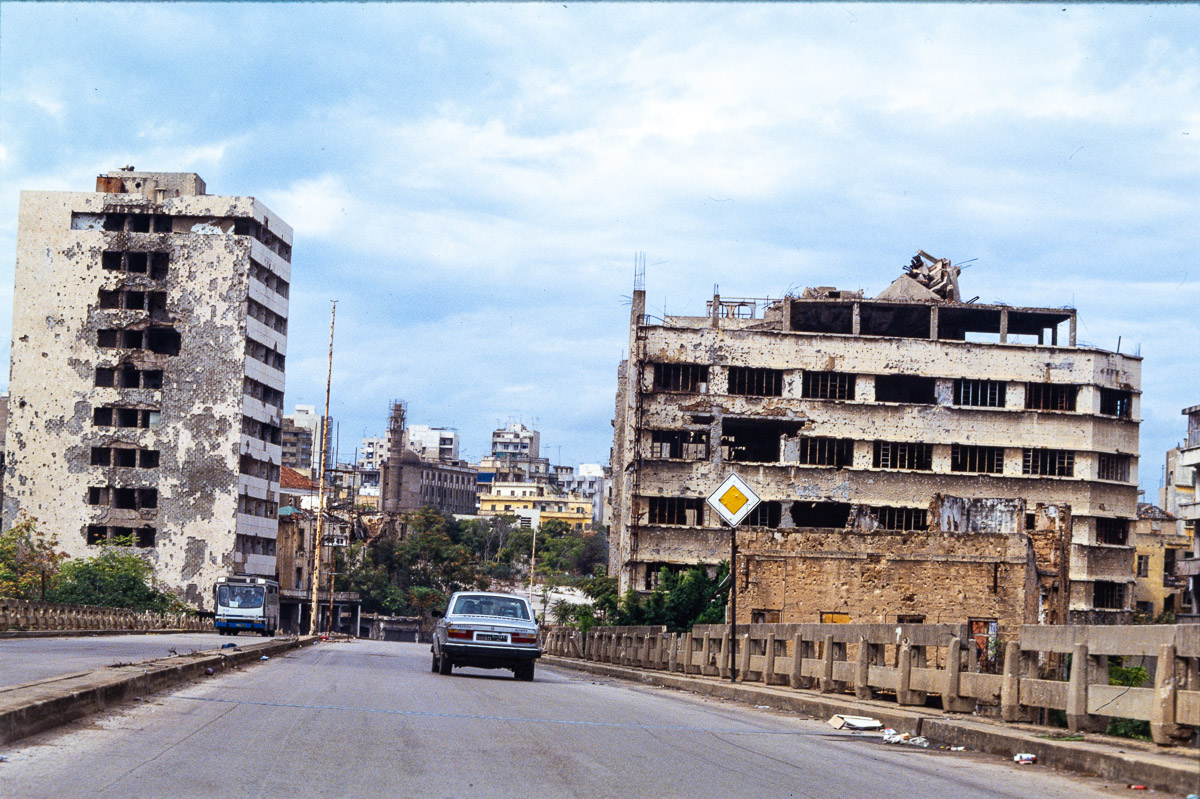
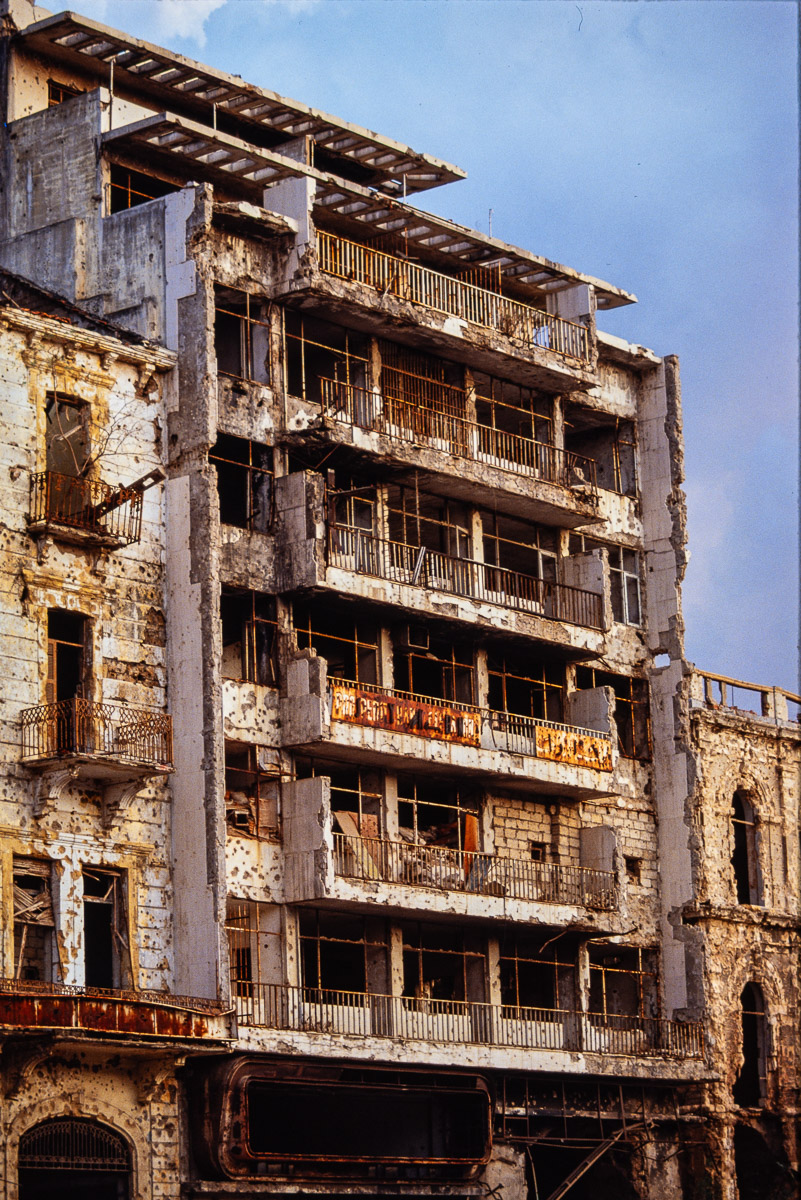
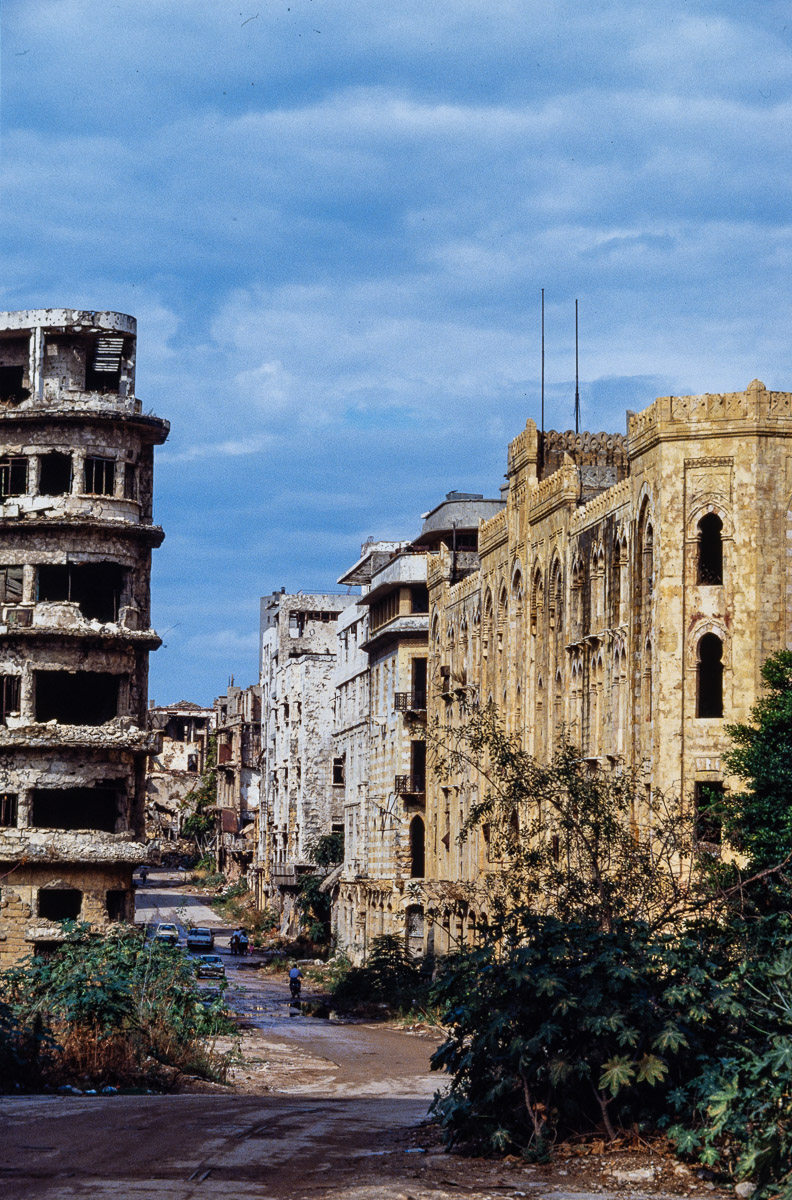
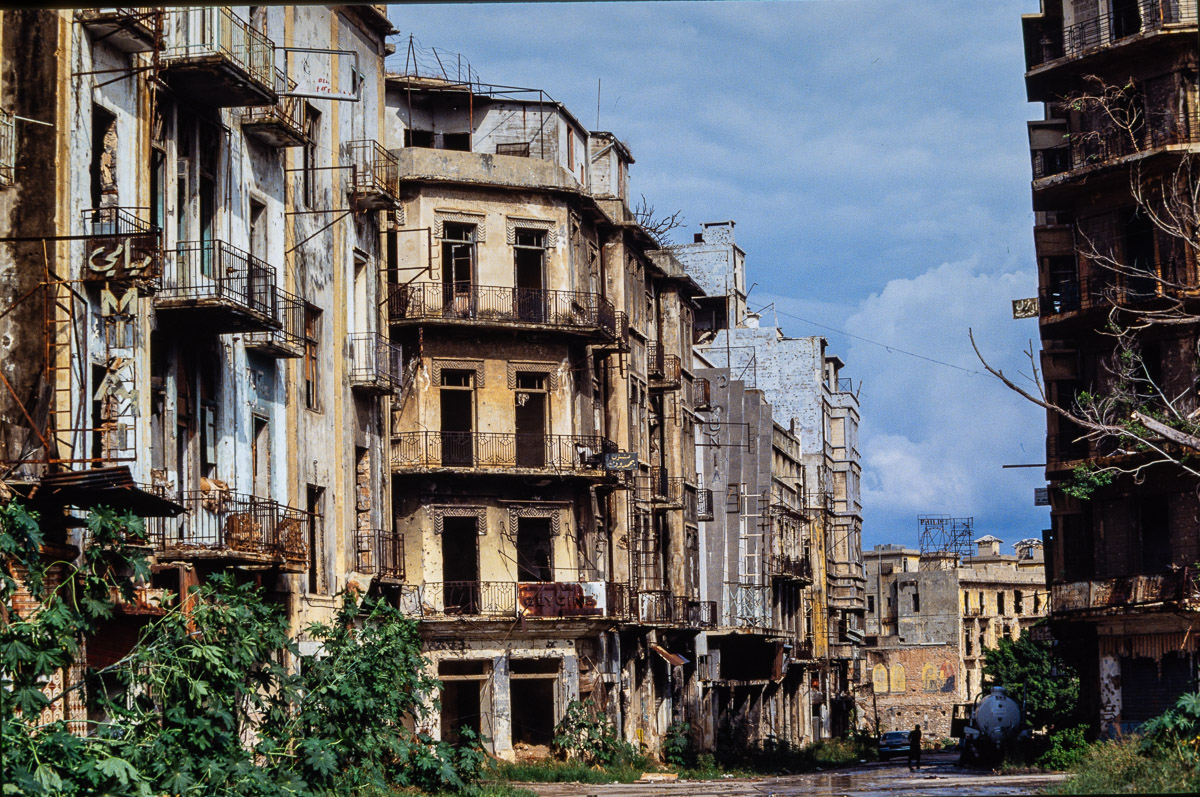
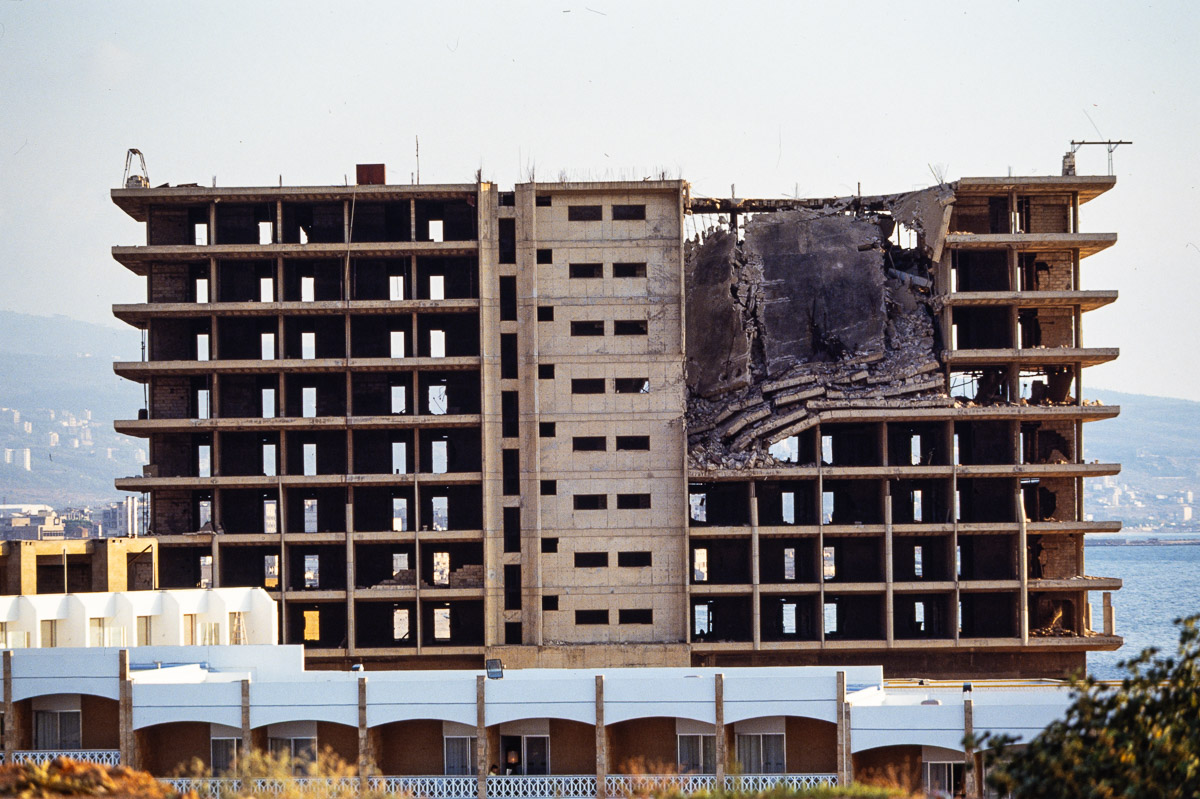
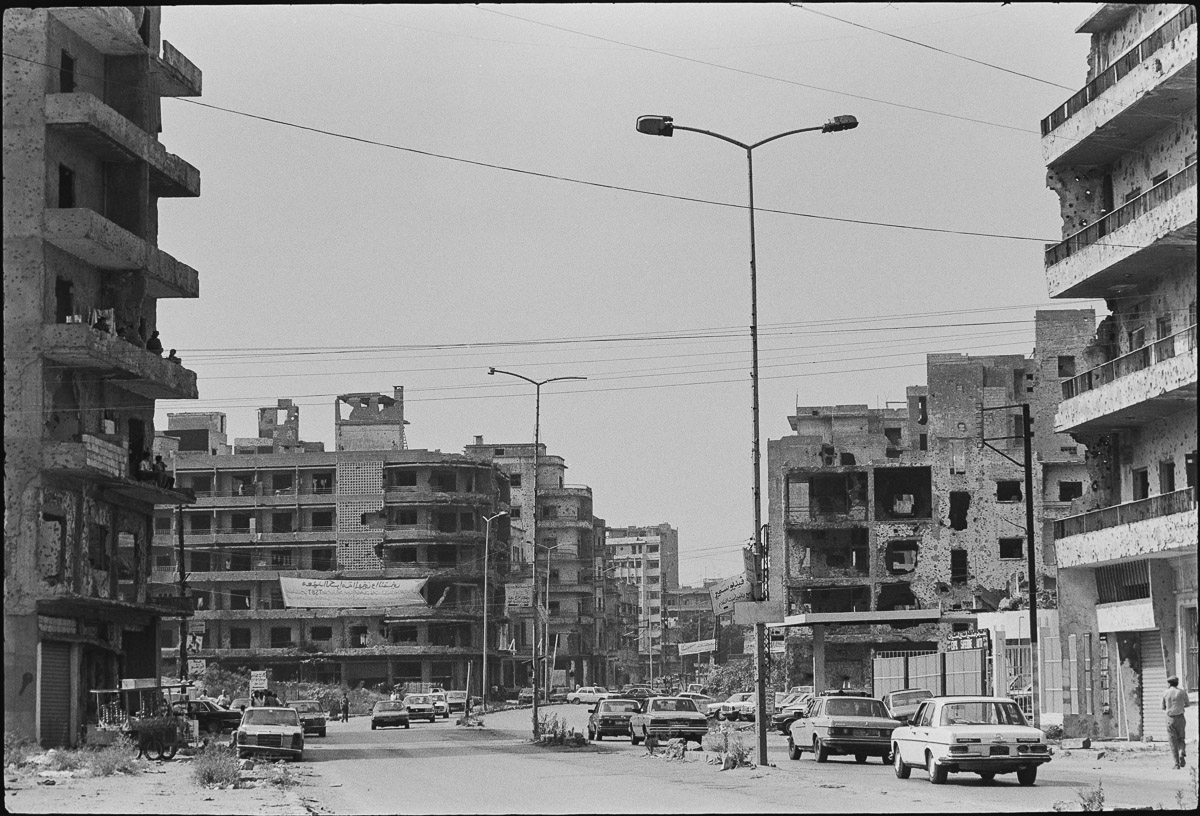
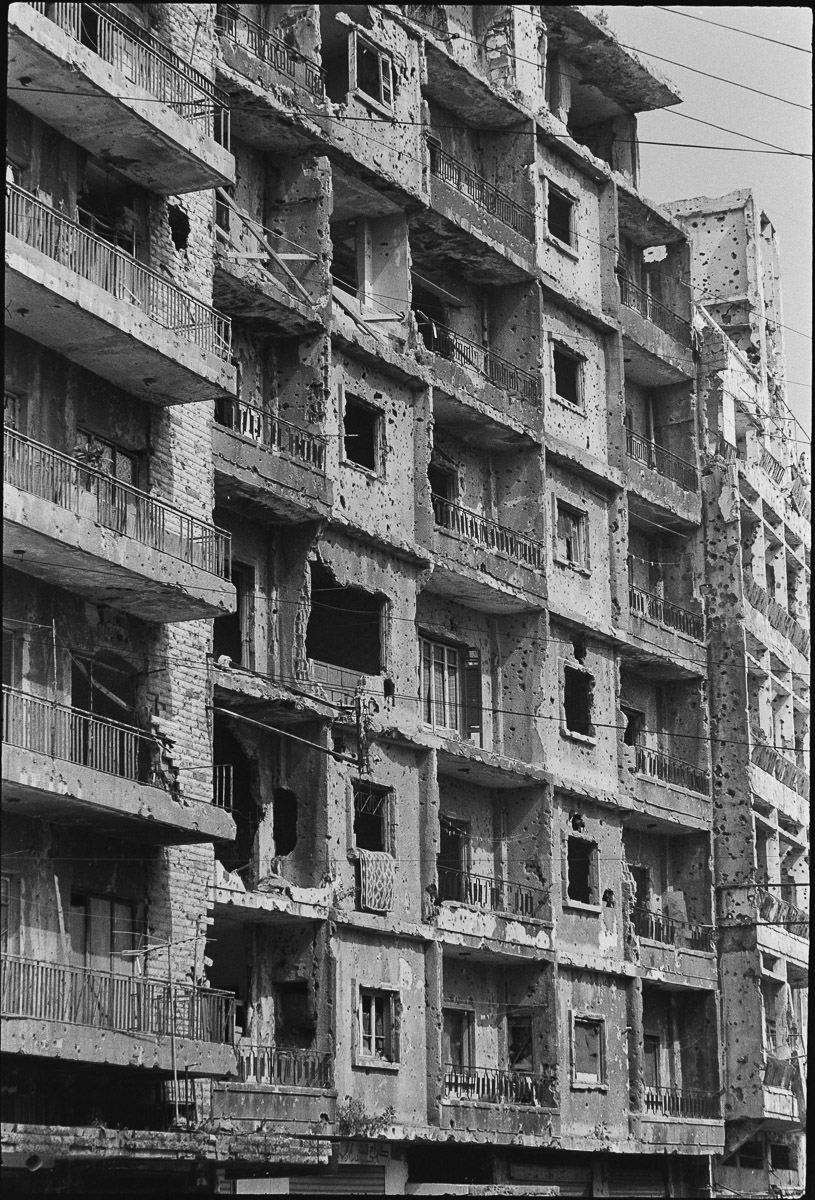
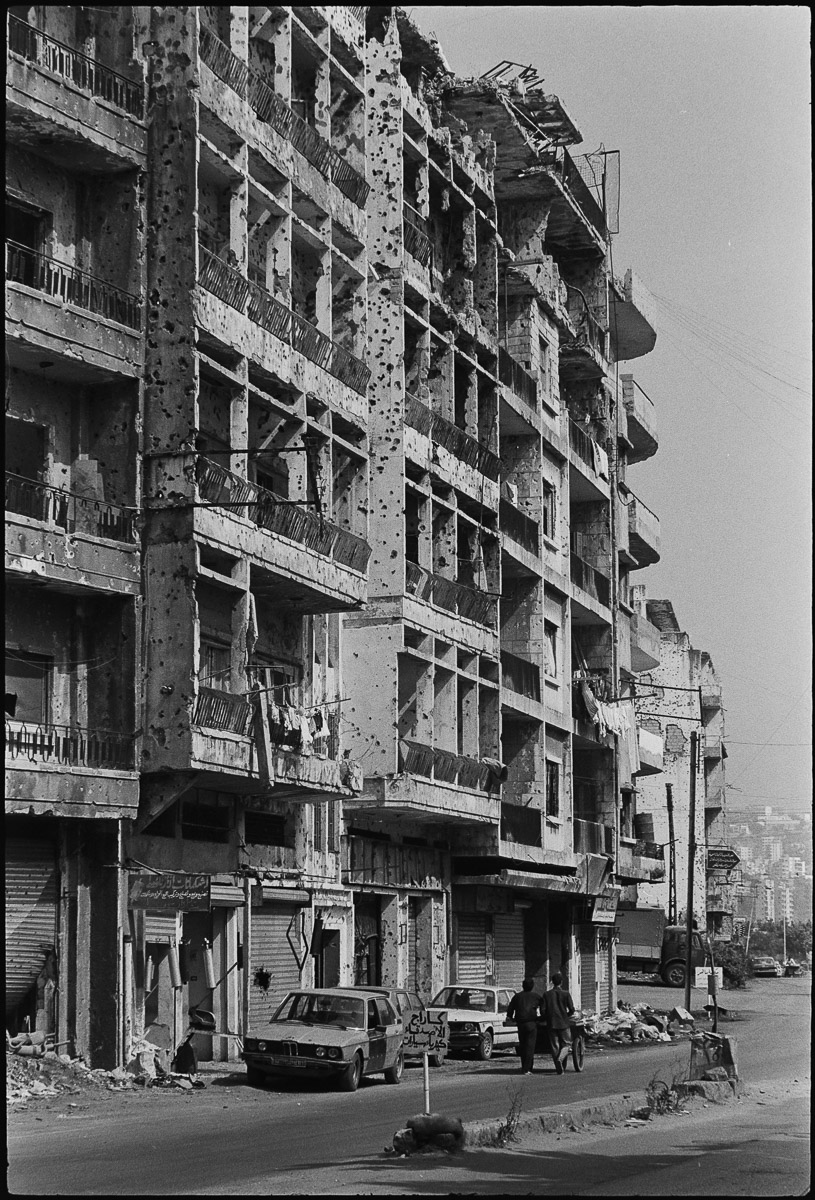
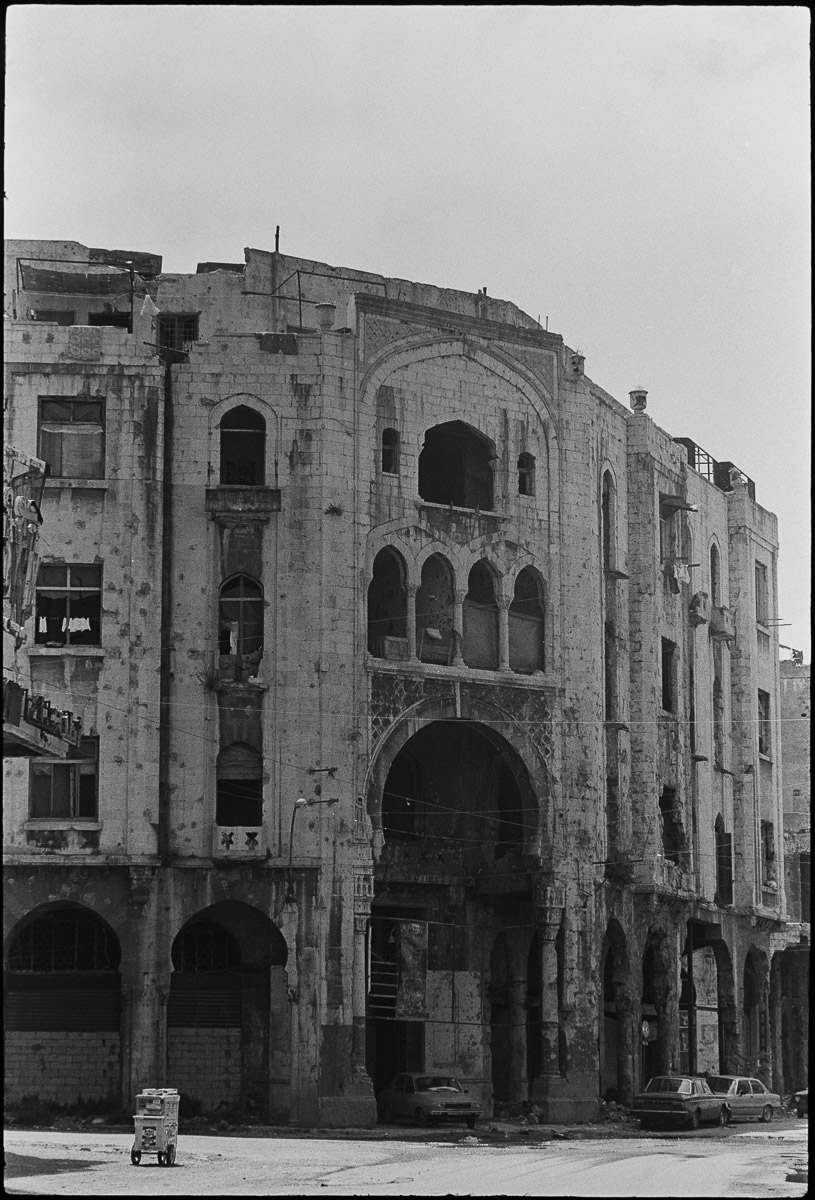
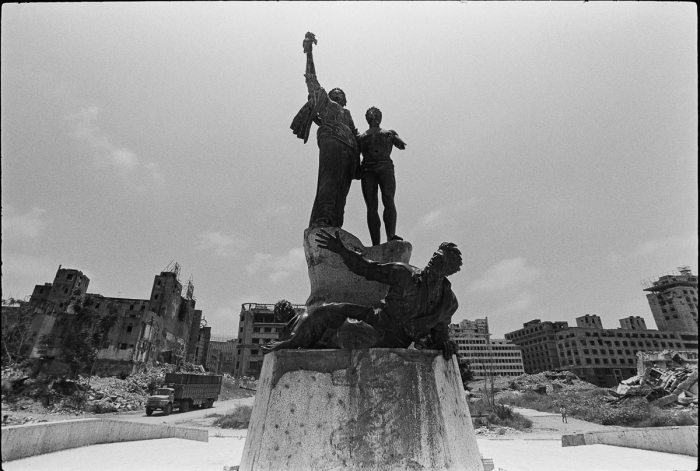
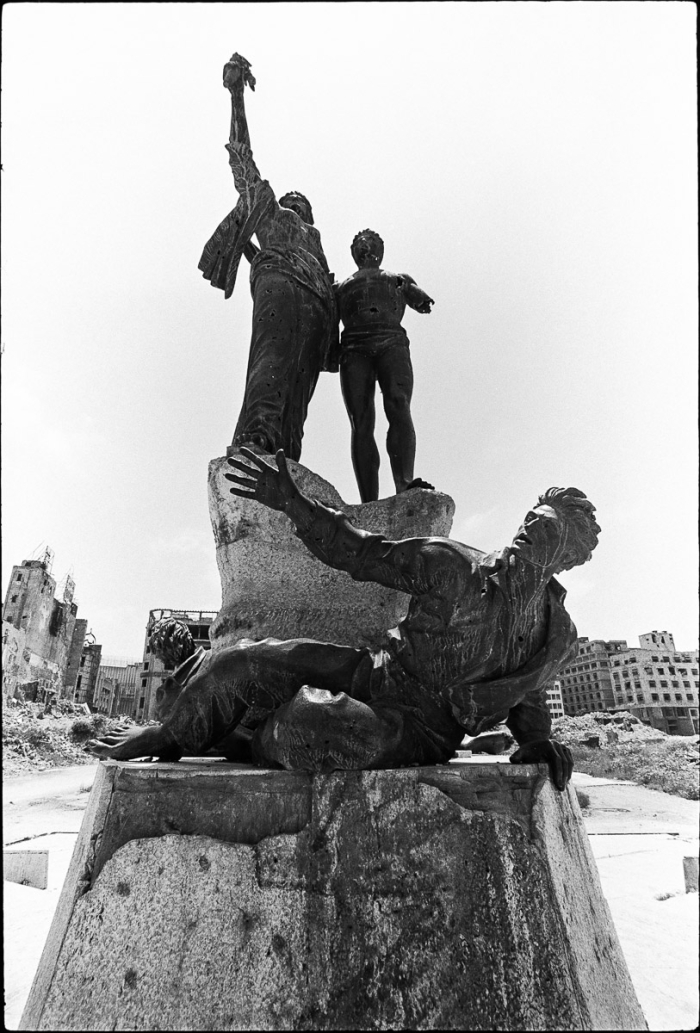
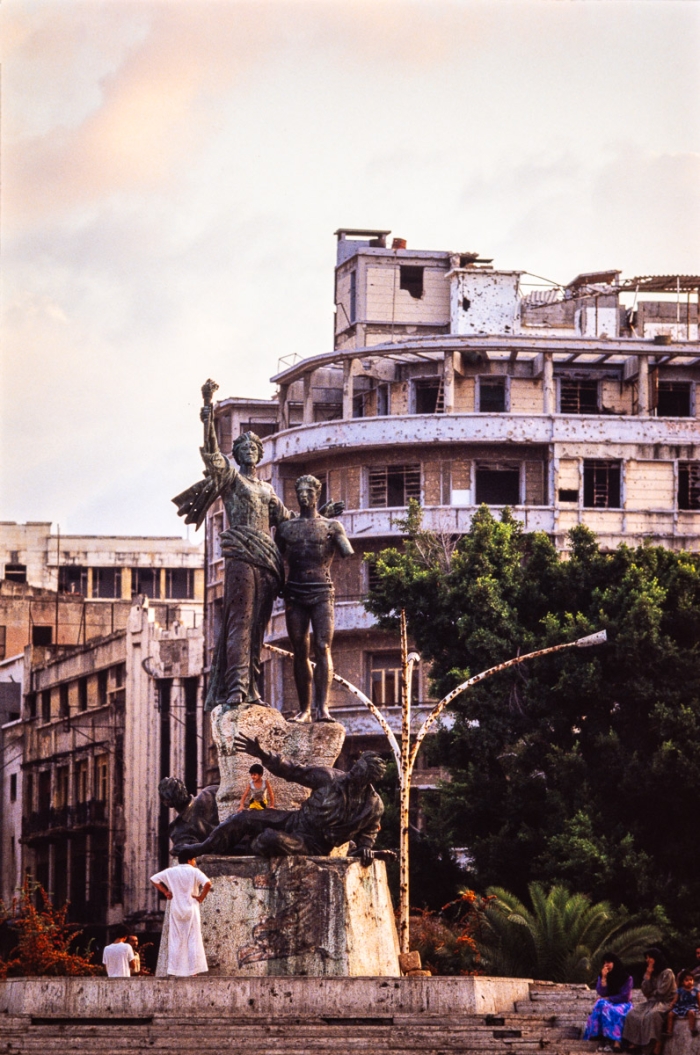
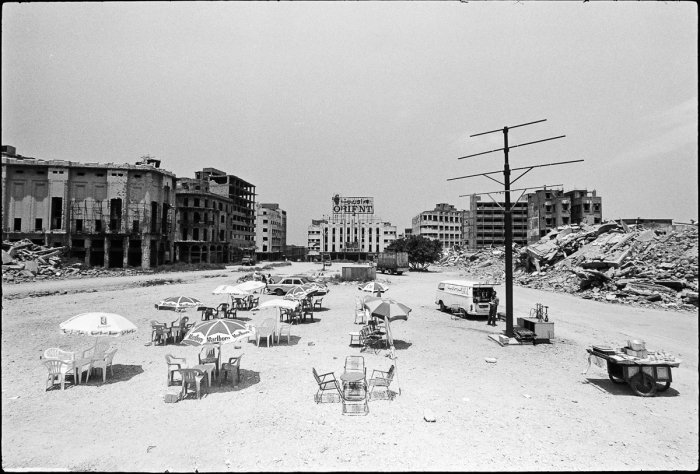
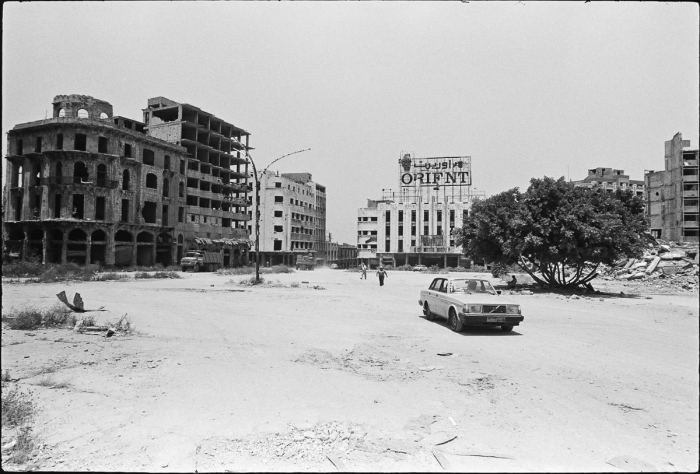
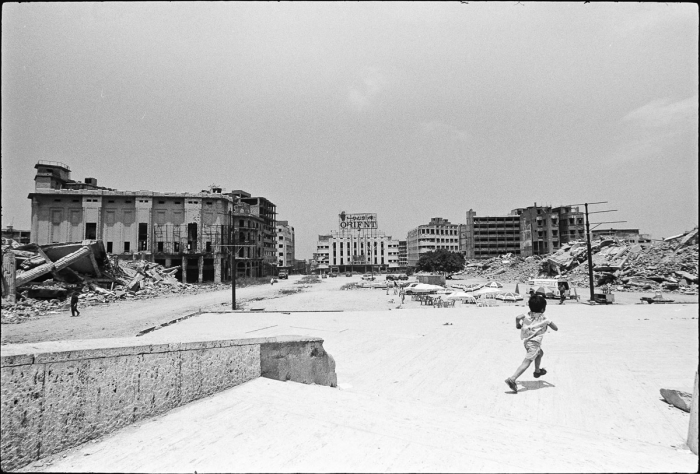
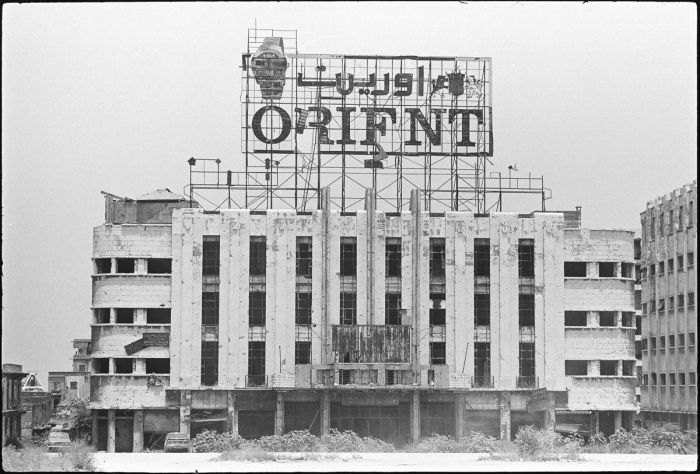
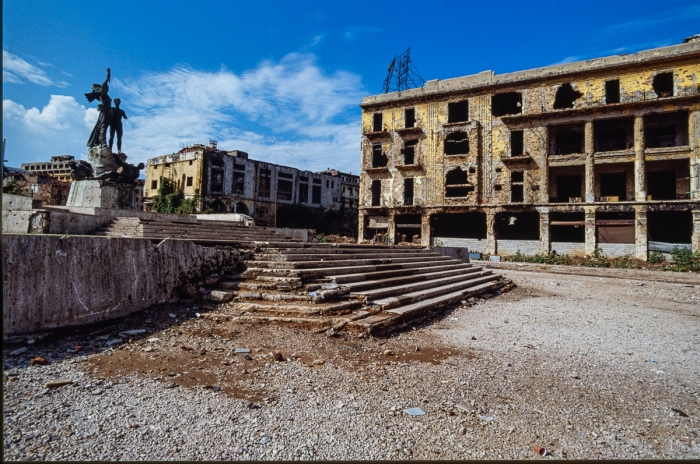
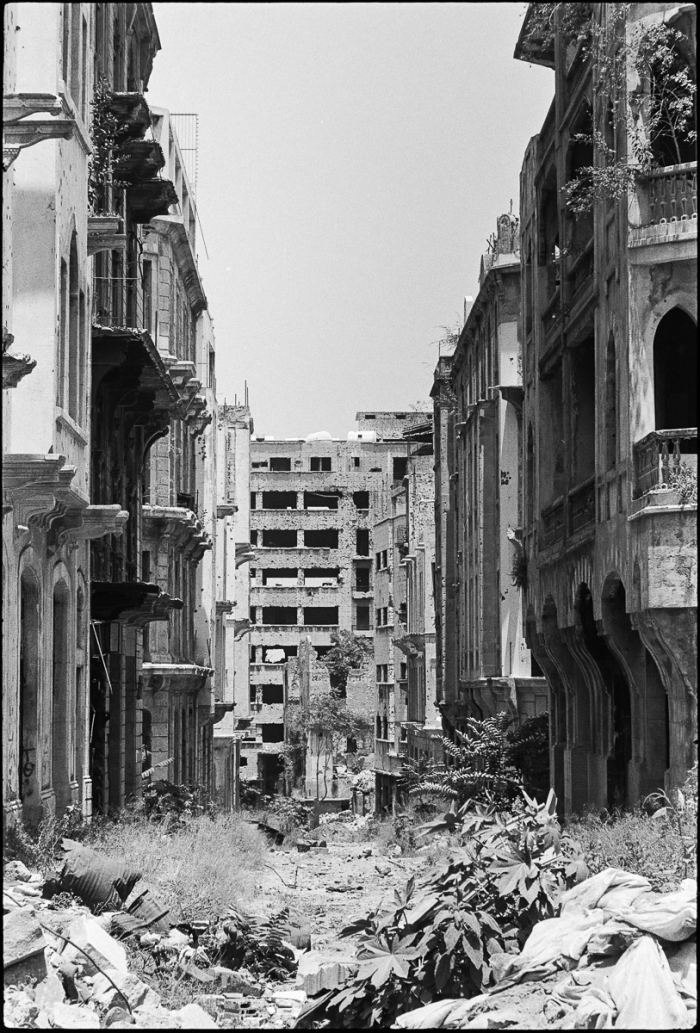
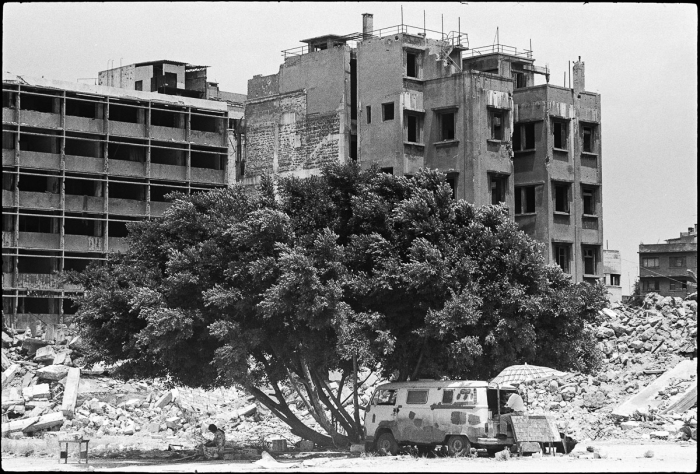
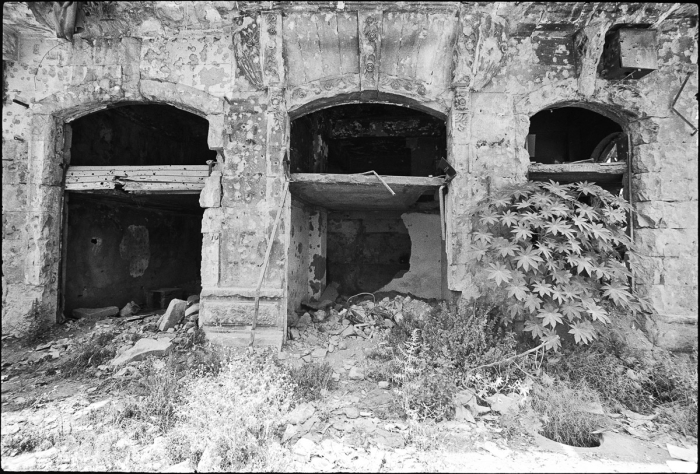
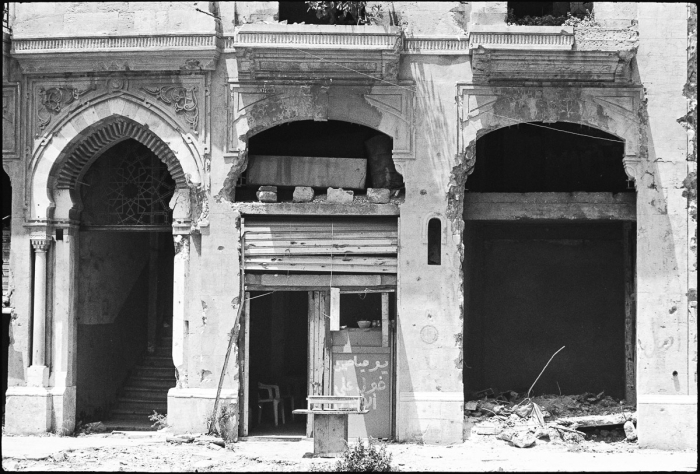
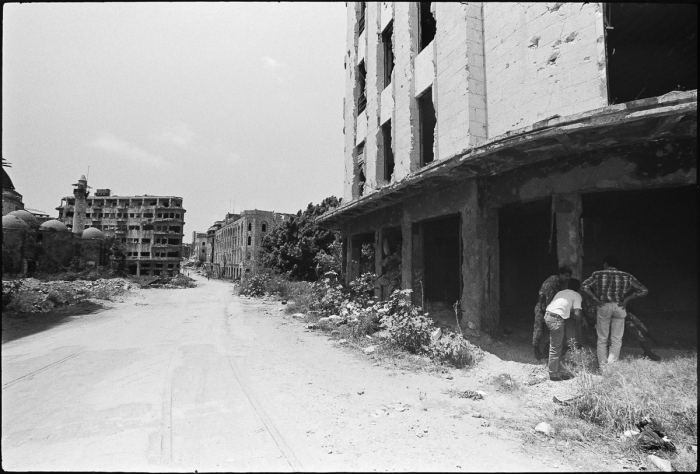
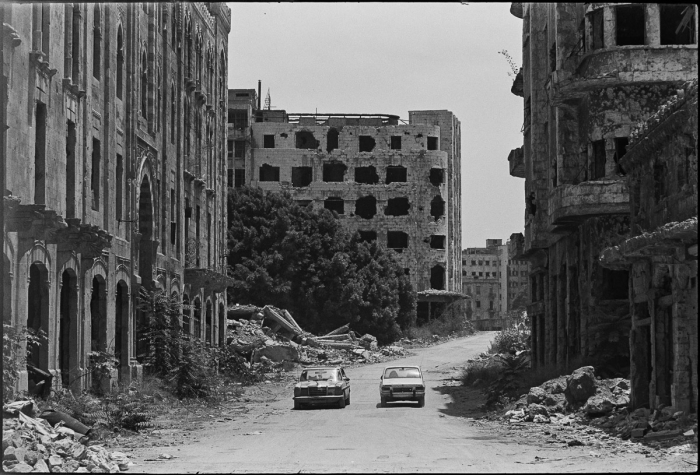
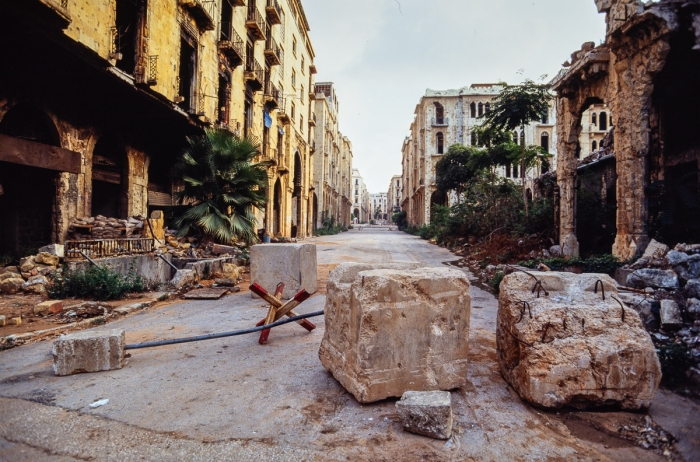
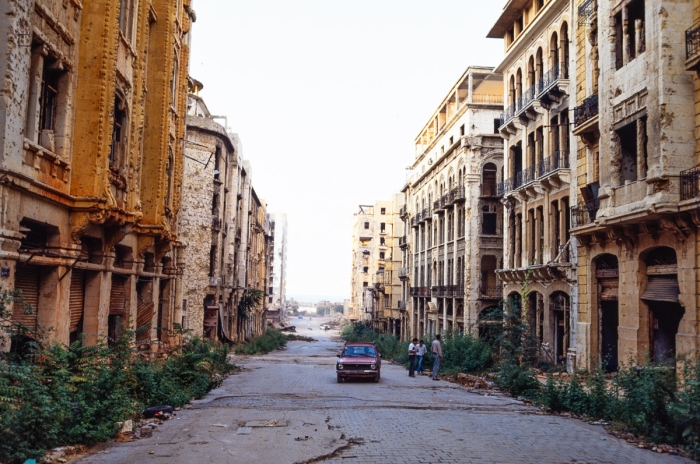
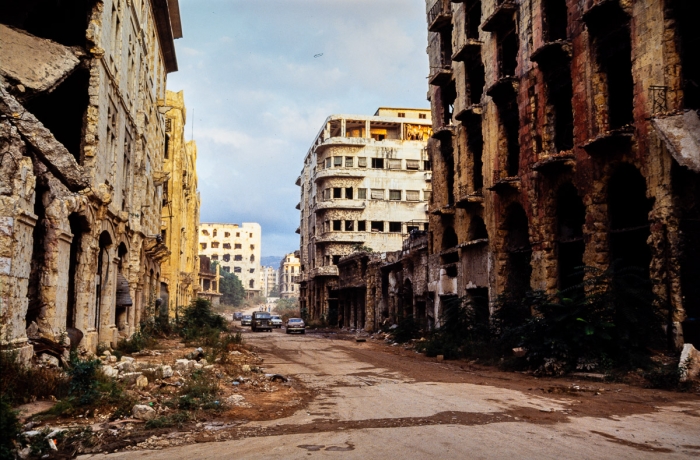
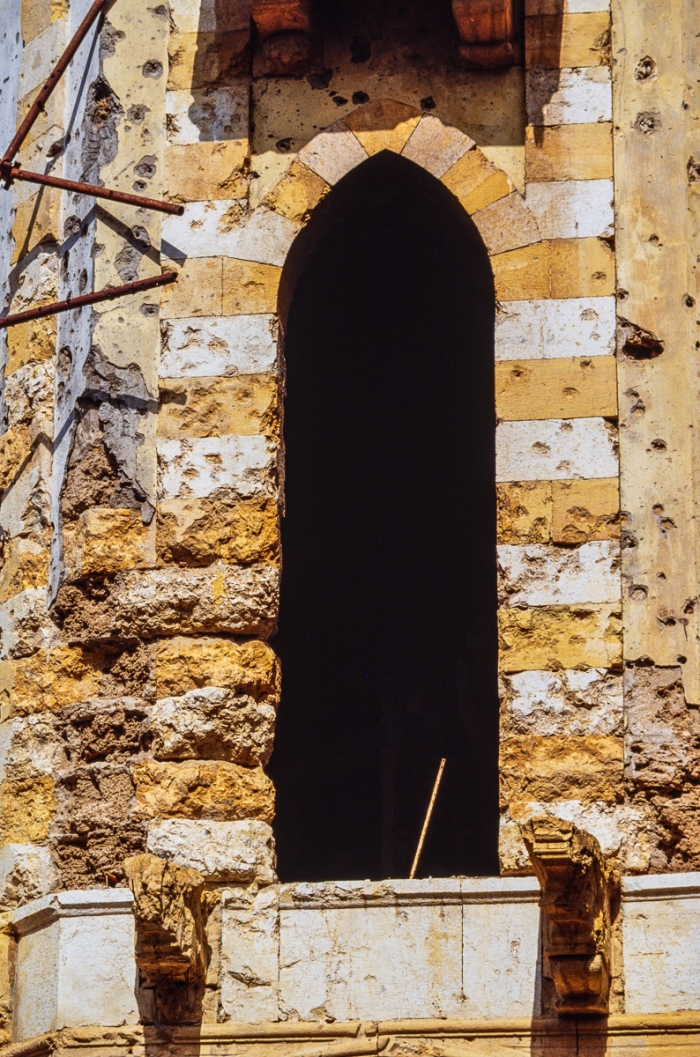
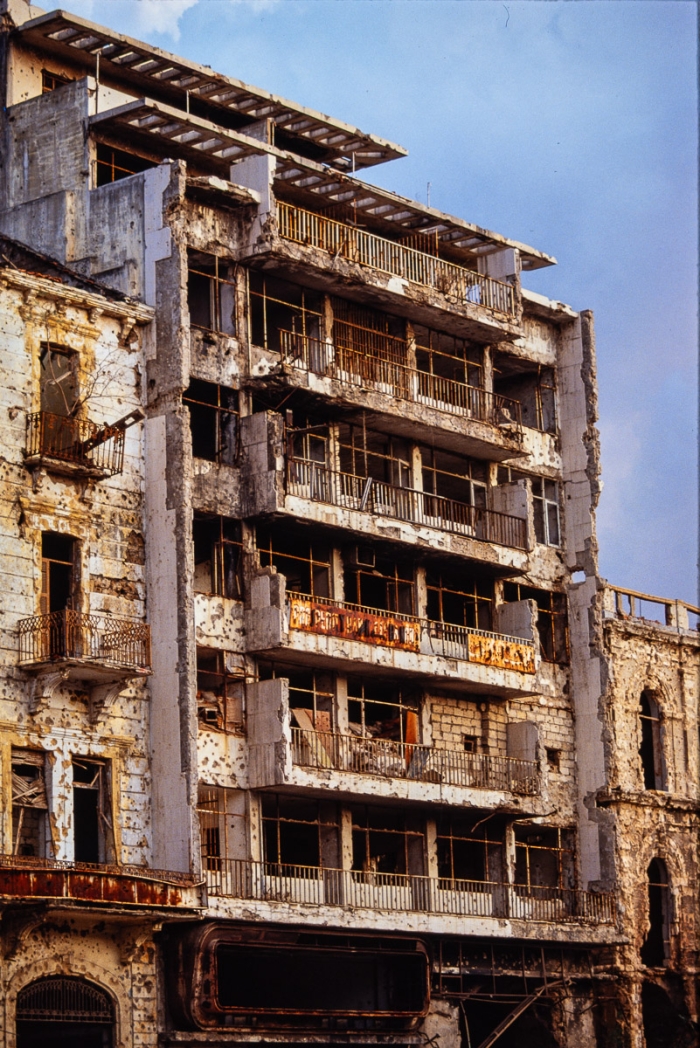
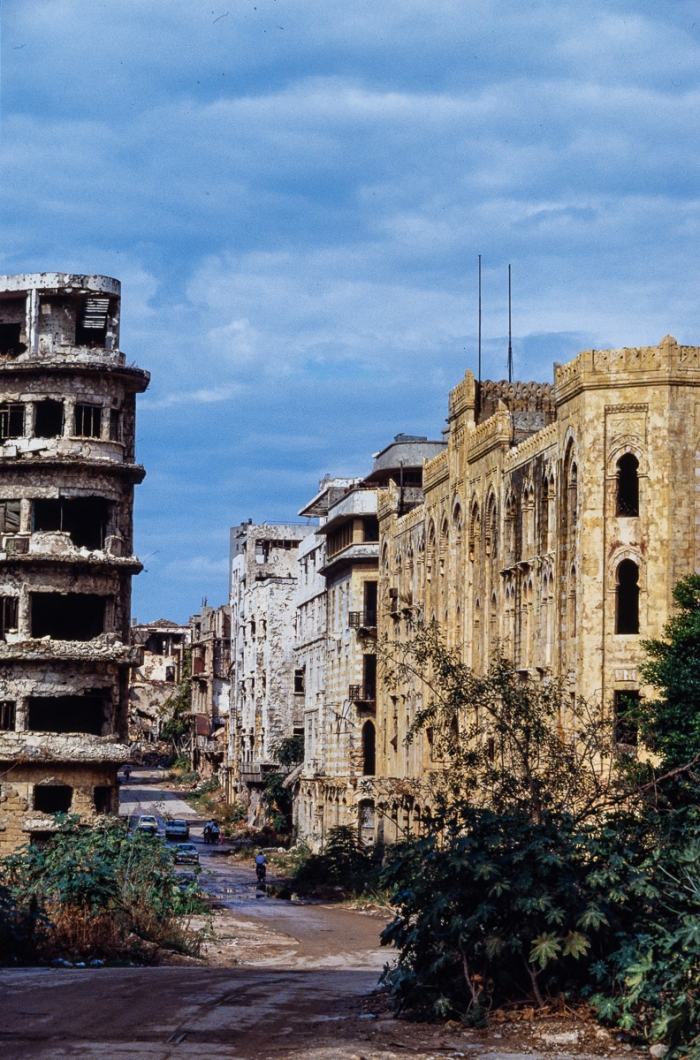
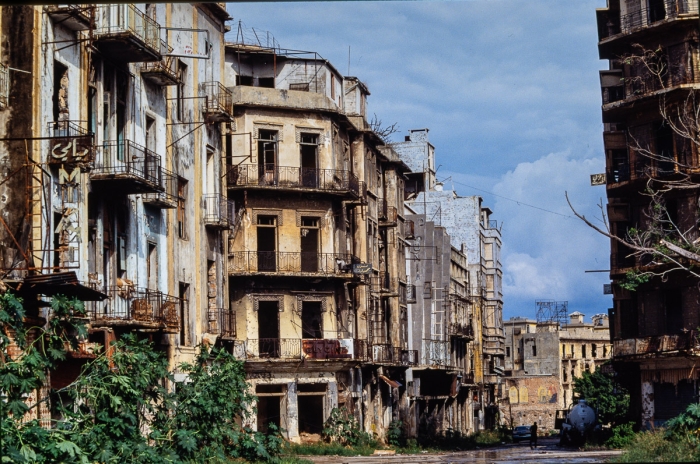
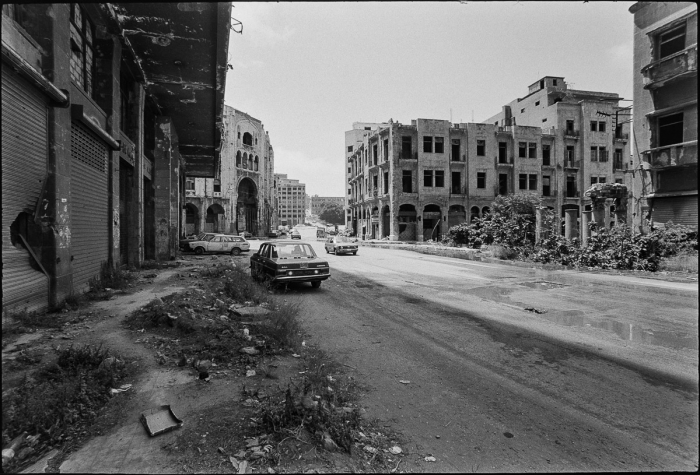
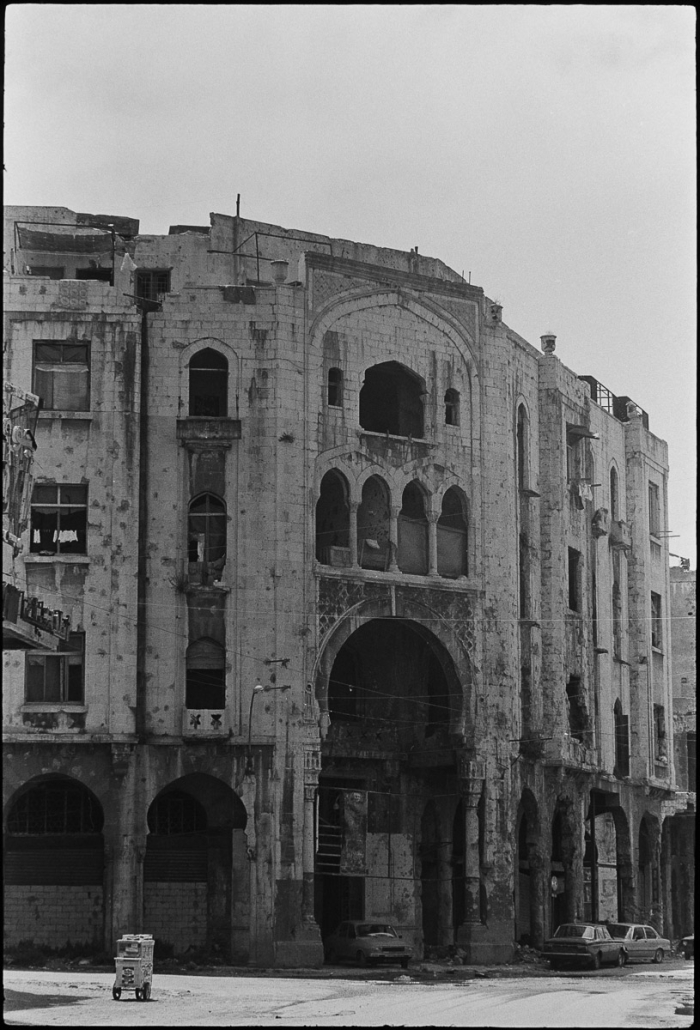
In Cannon Square, I was stunned by the impact of the war on the magnificent yellow and cream-coloured cut-stone façades. Their architecture still suggested the elegance of central Beirut before the conflict, despite the destruction, shell impacts and gutted buildings.
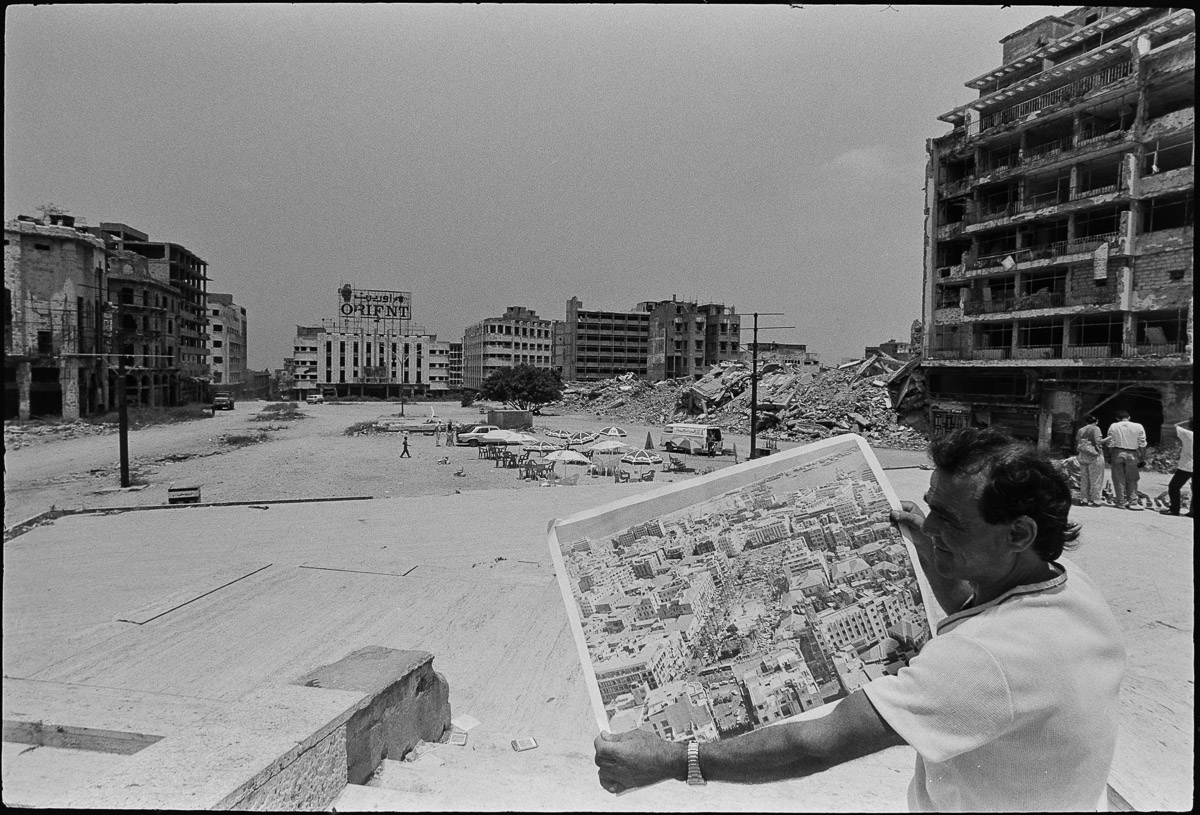 In this photograph, the driver shows me an image of Martyrs’ Square before the war. The intact façades shown in the document contrast directly with the condition of the buildings visible in the background – Photo: © Sebastien Desnoulez
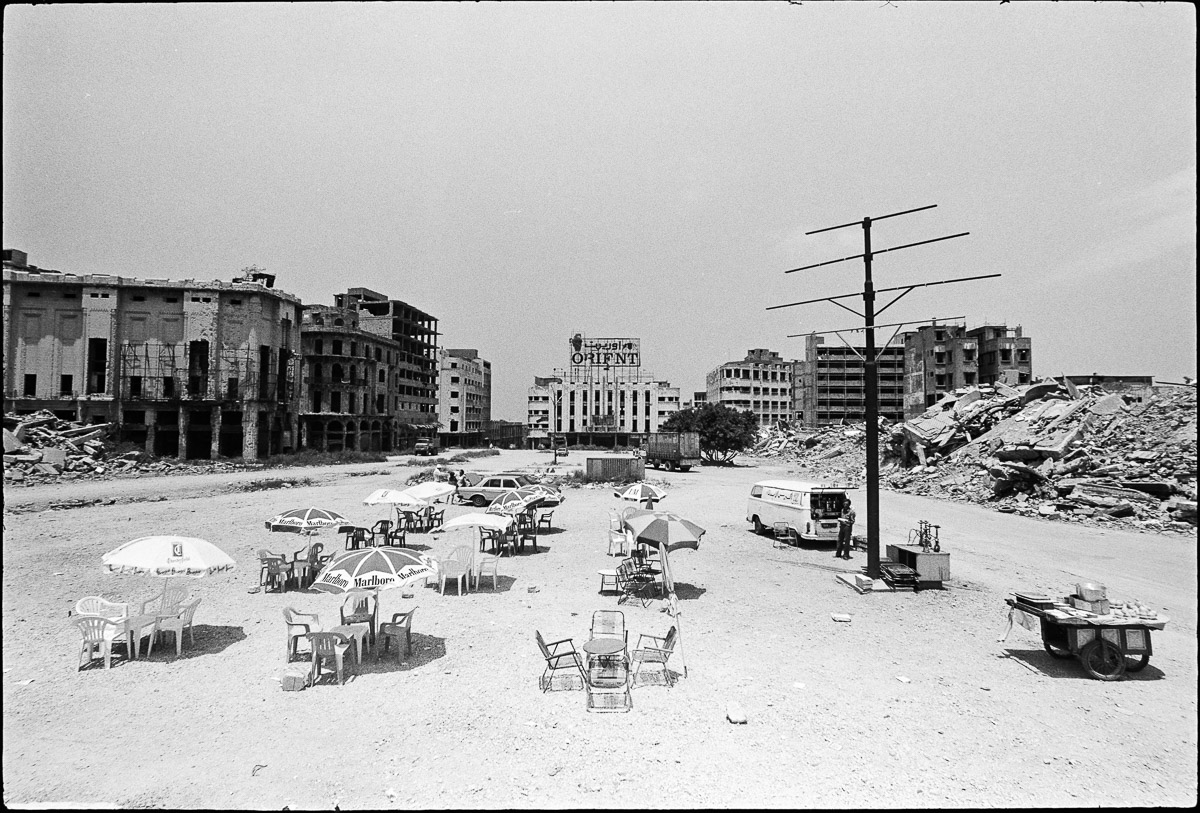
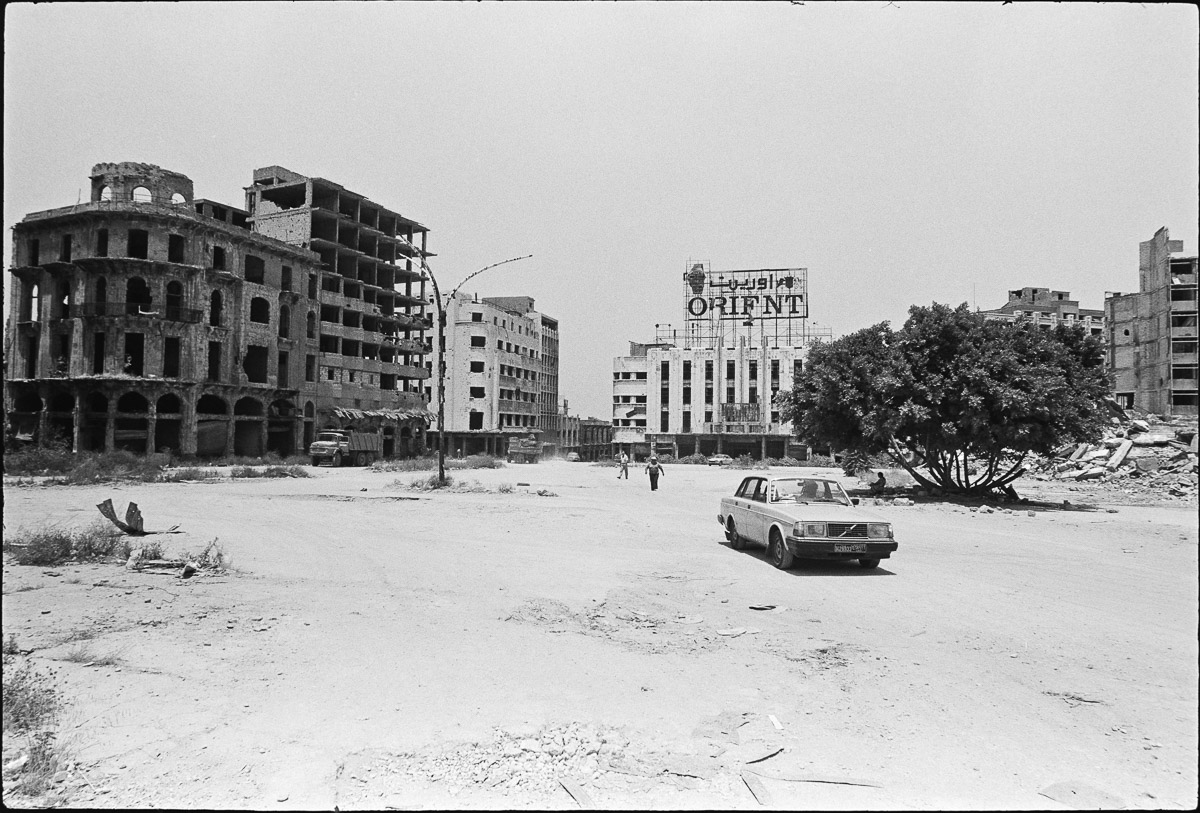
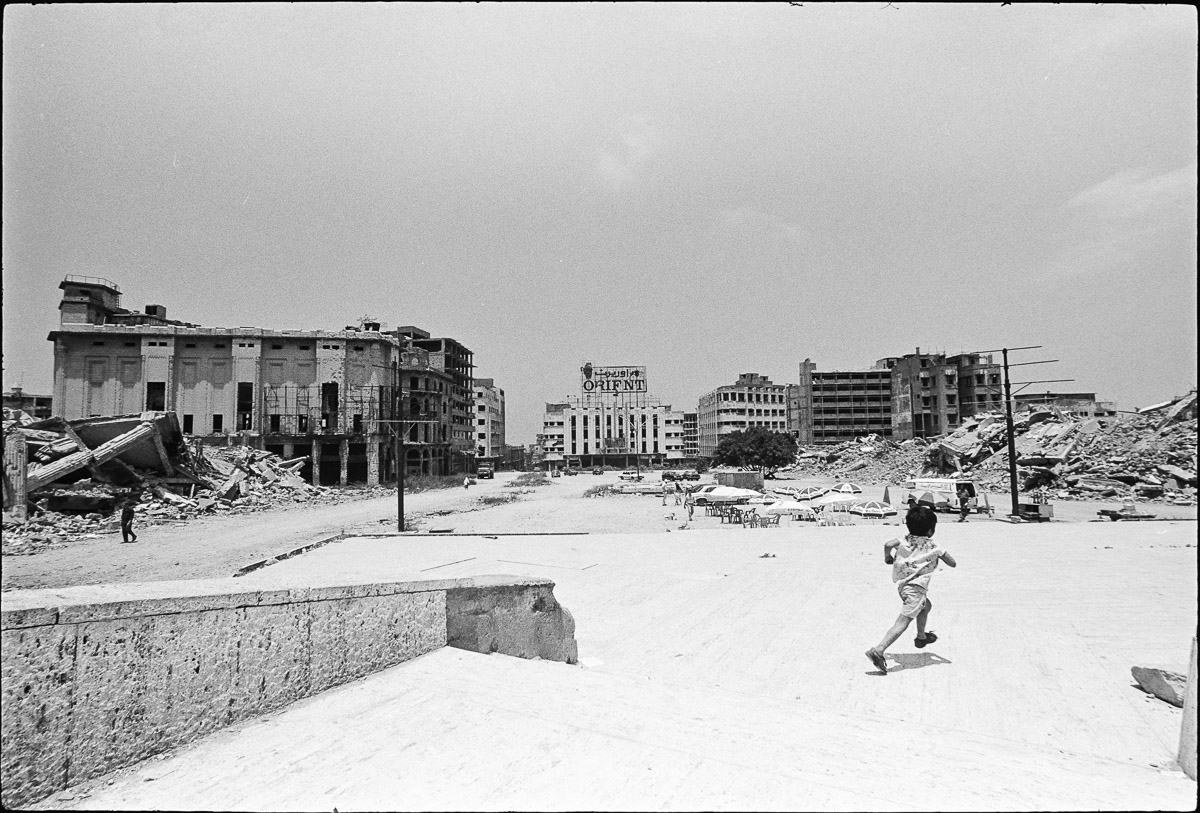
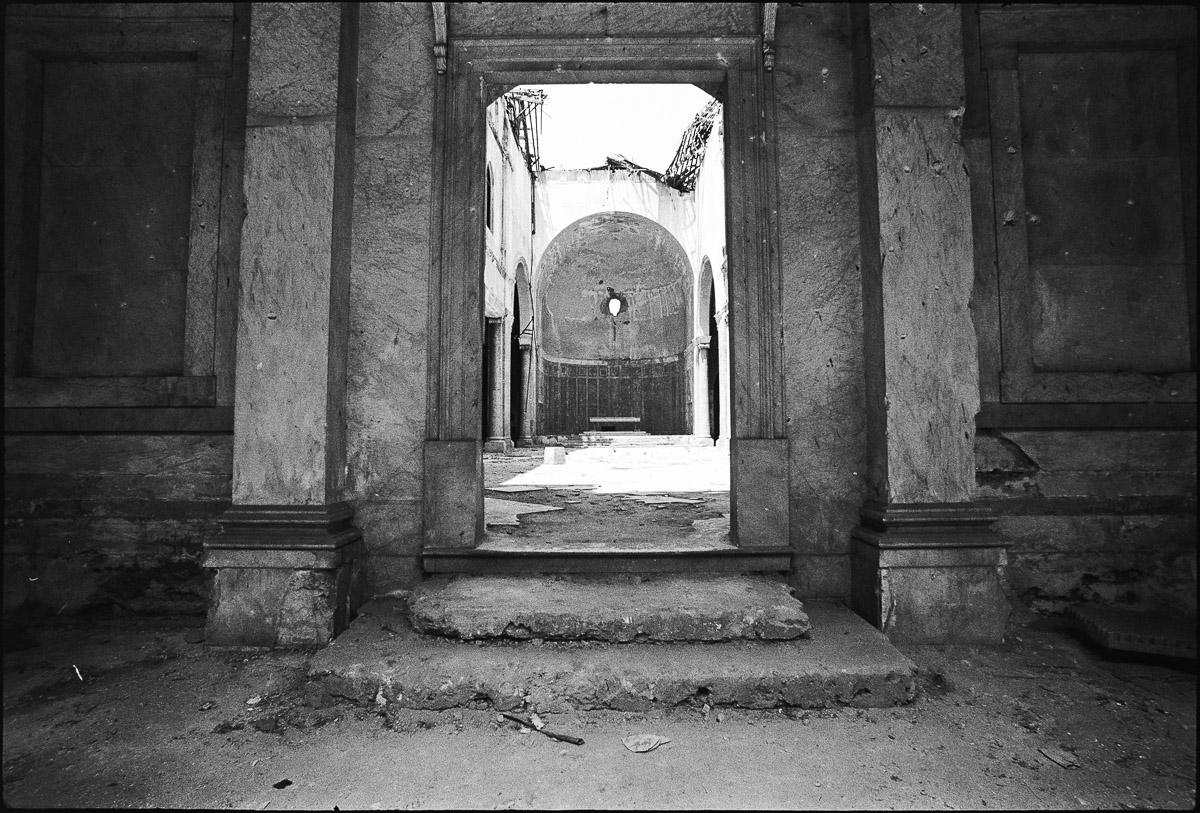
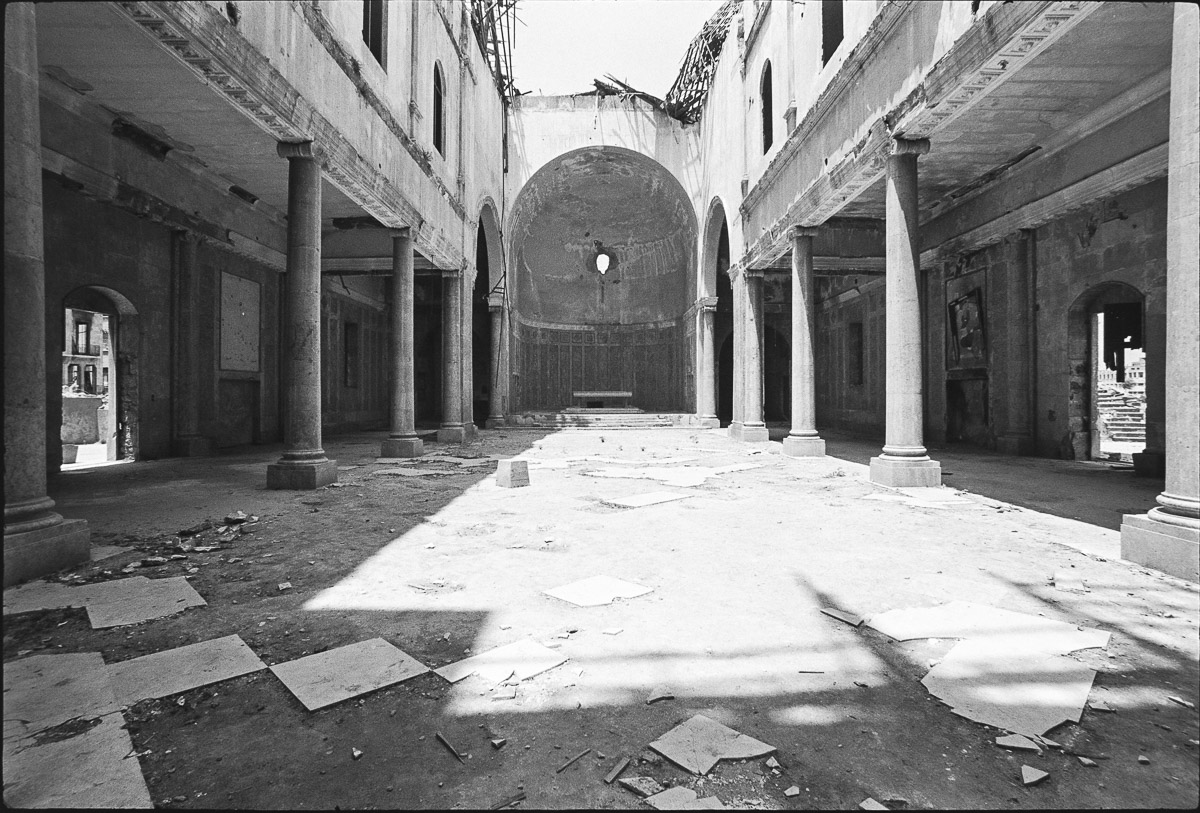
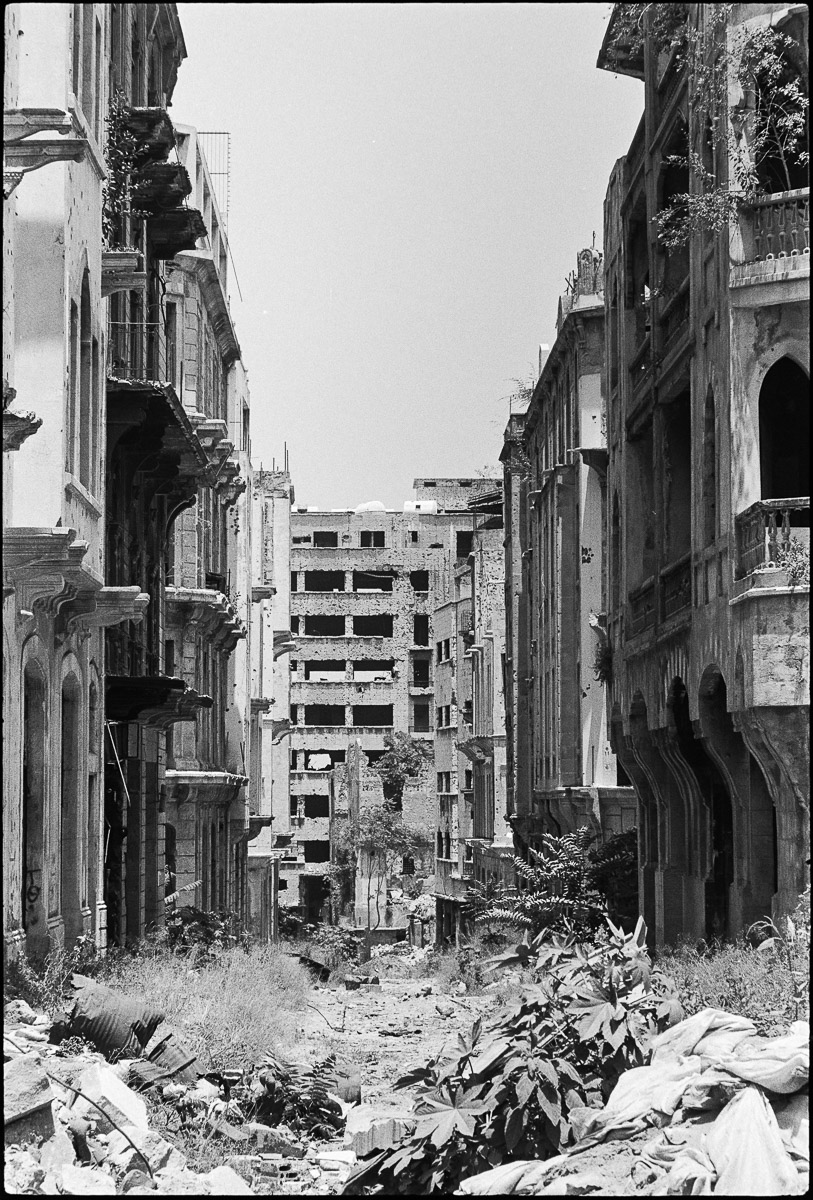
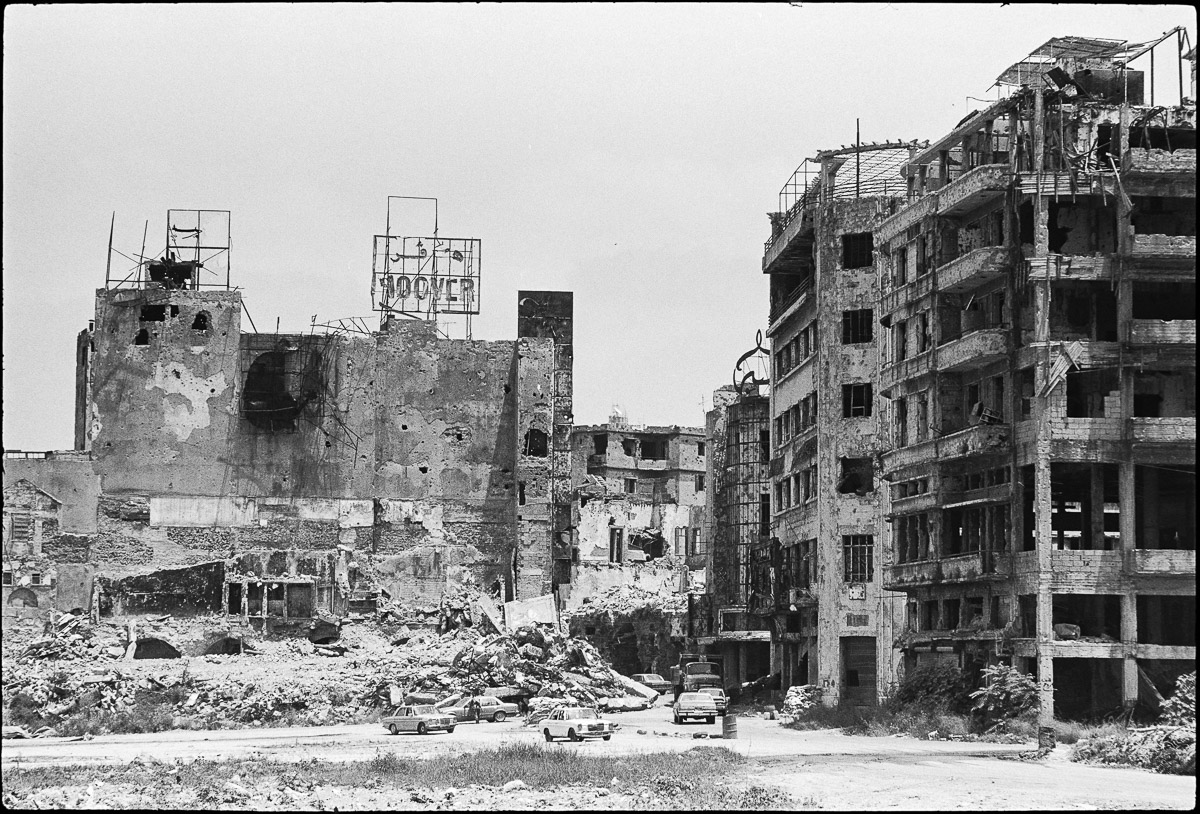
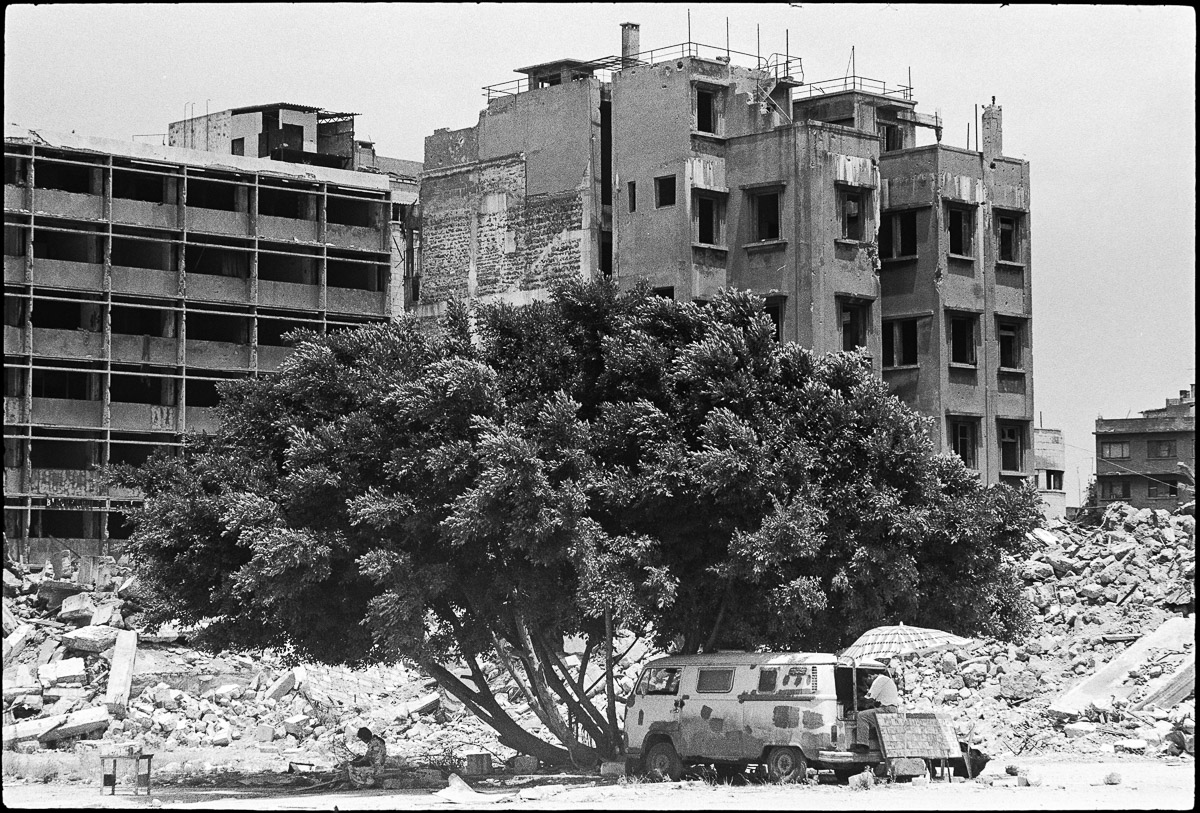
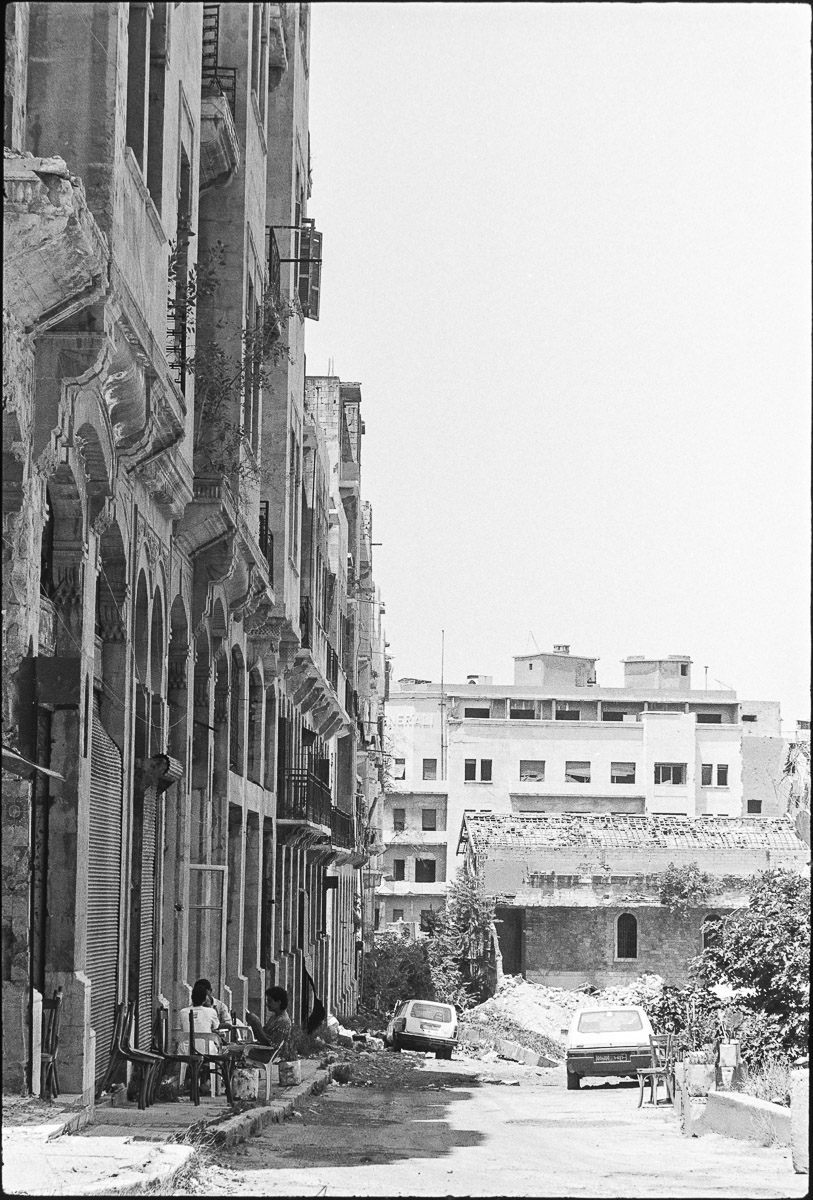
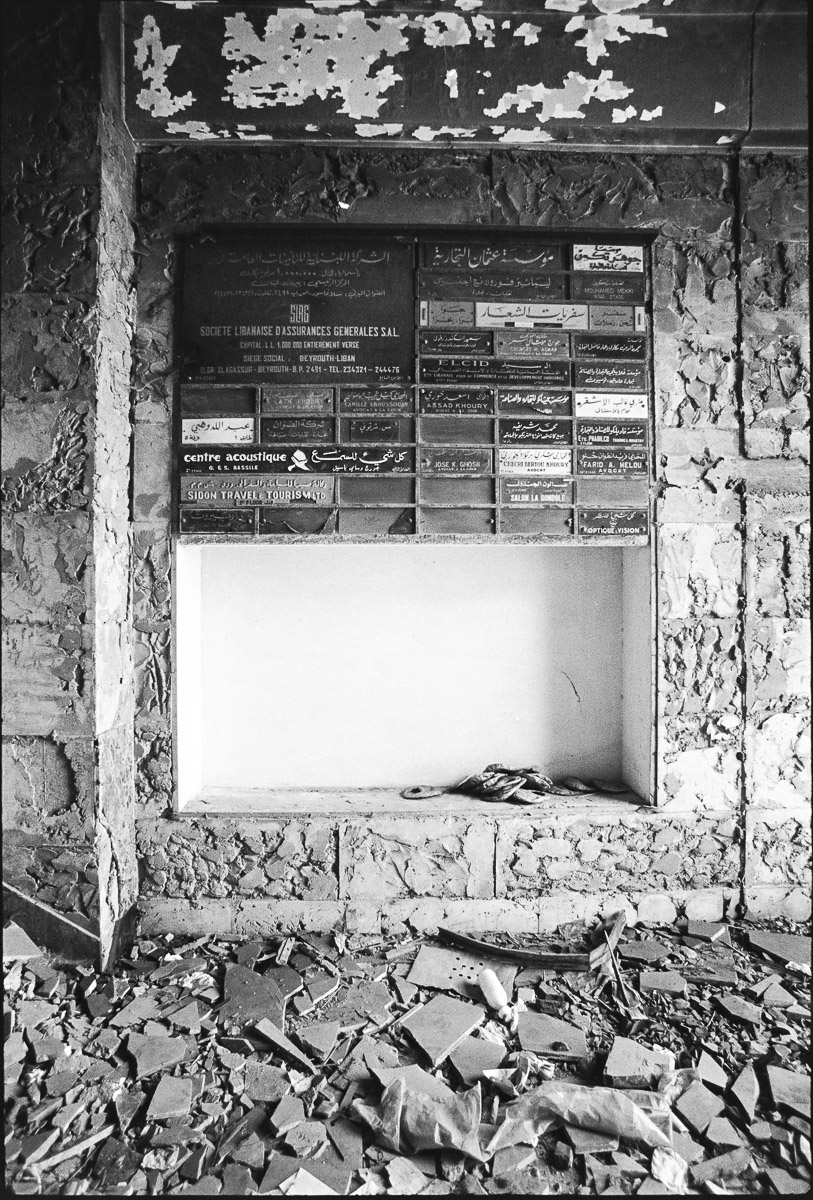
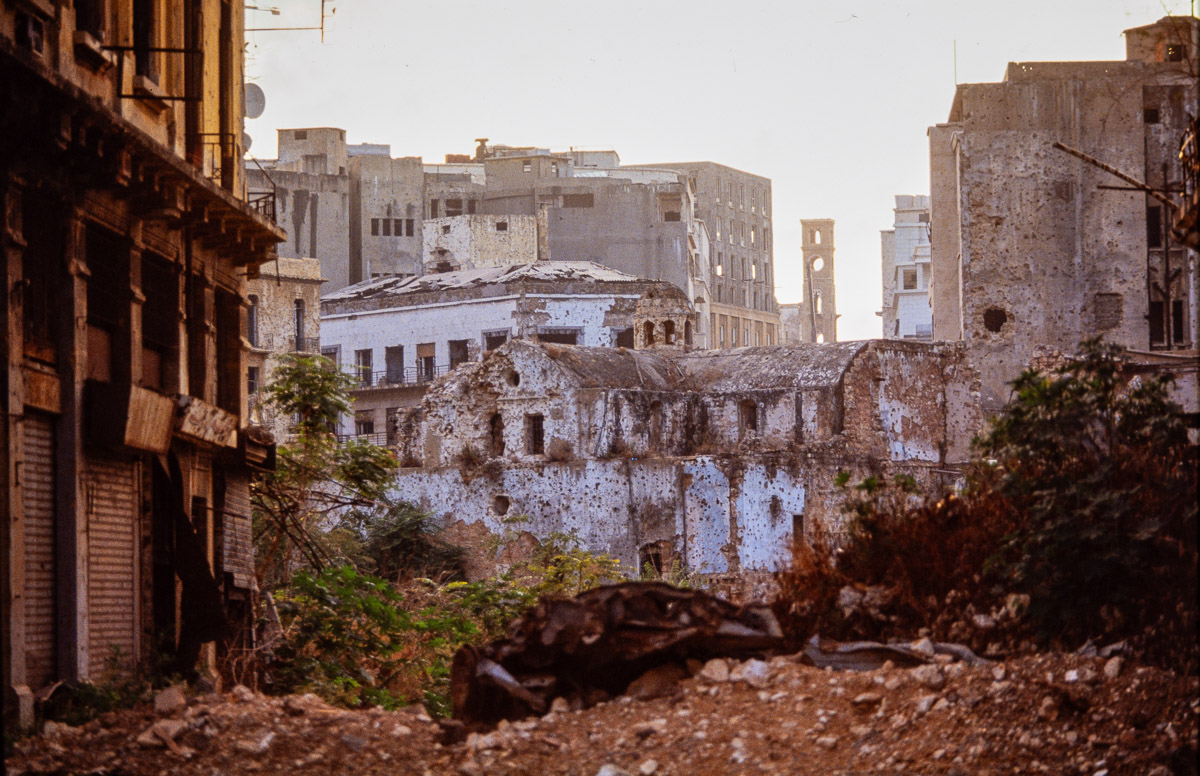
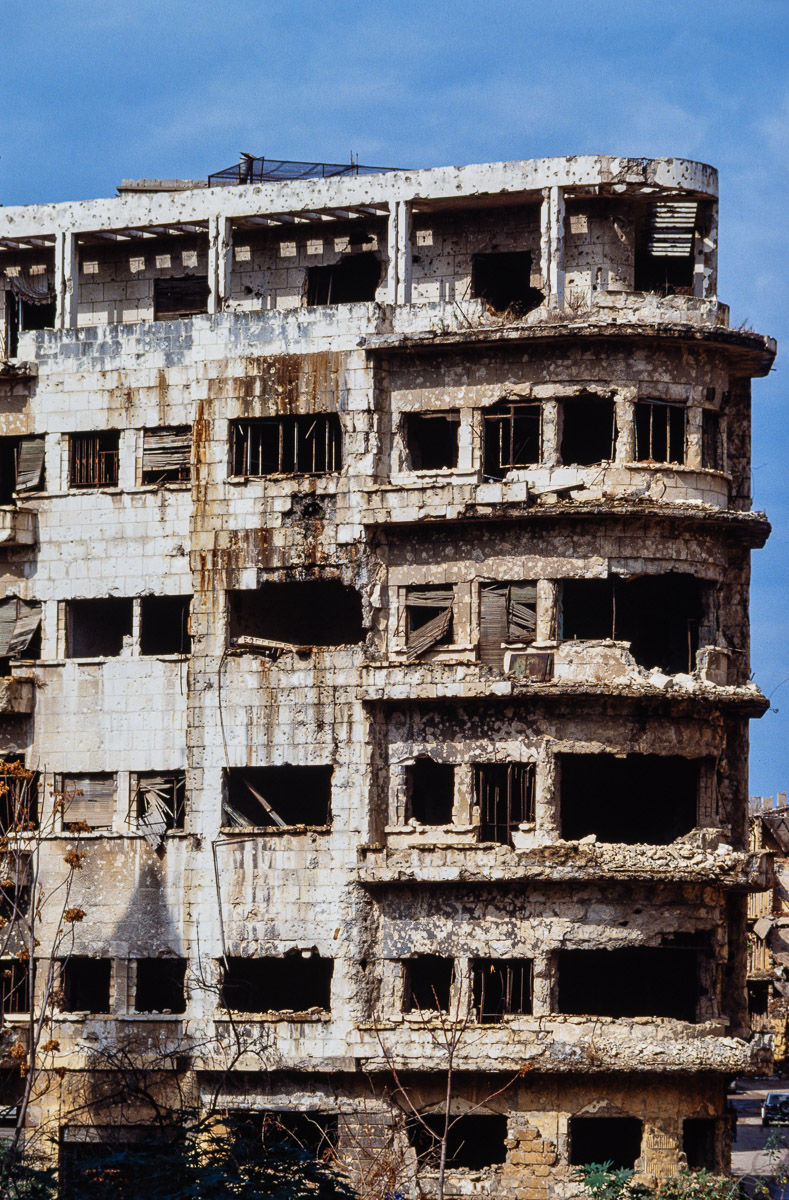
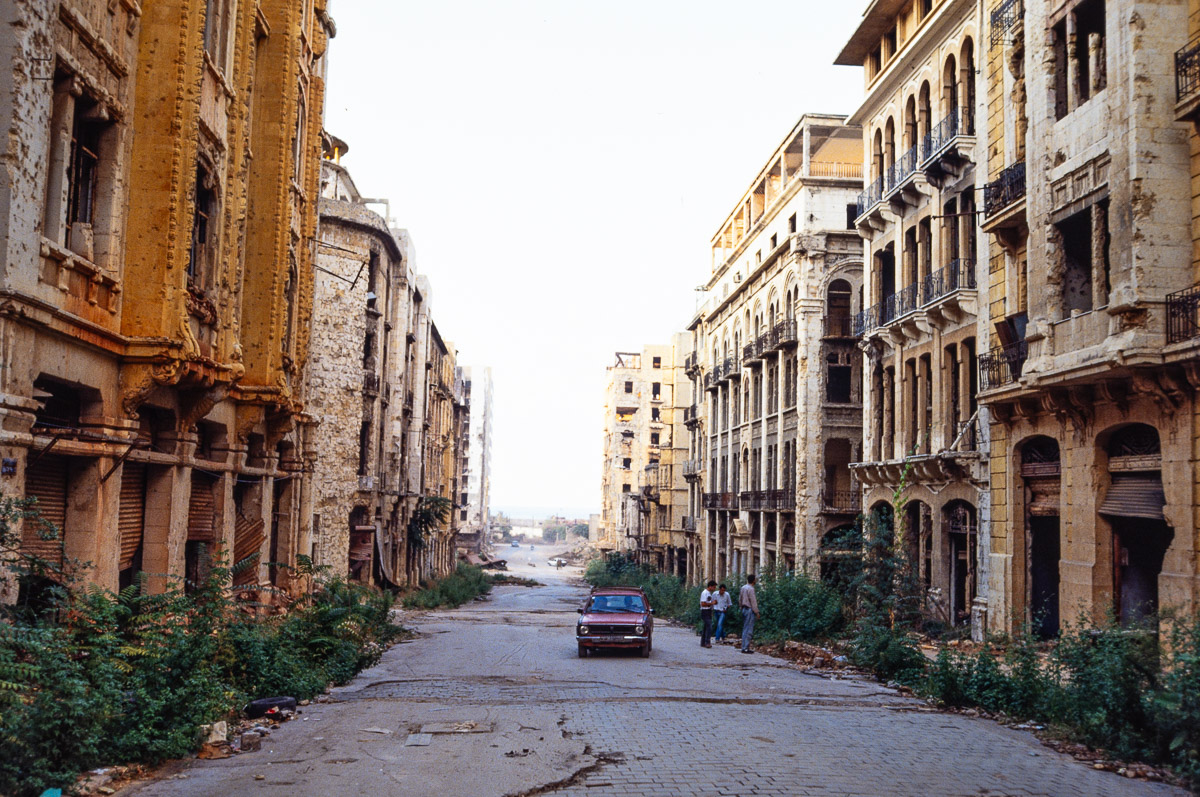
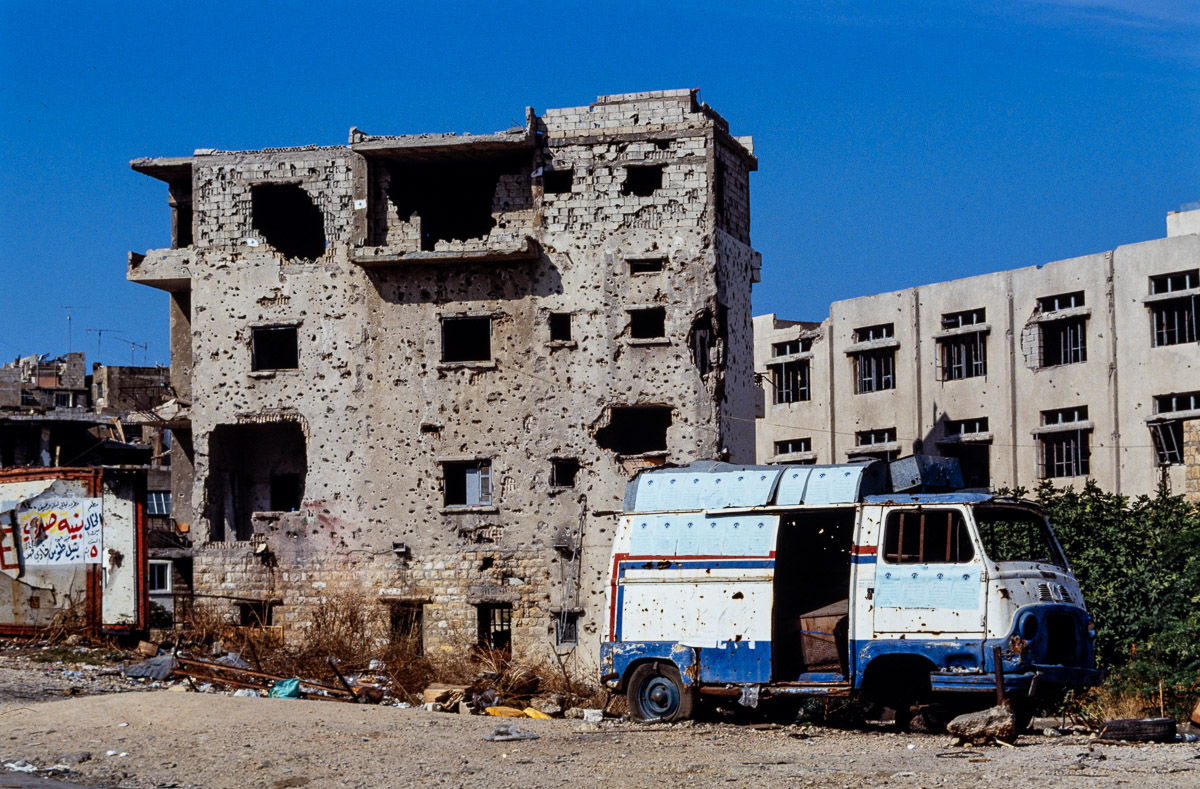
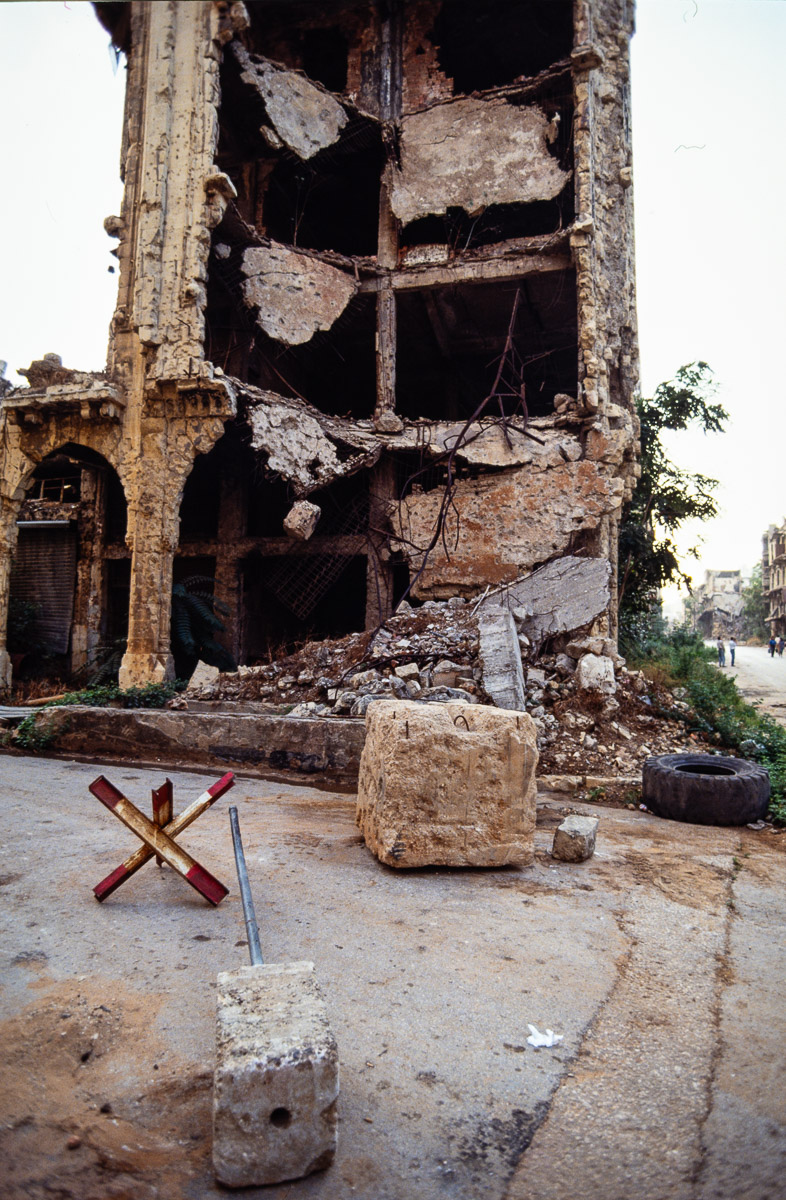
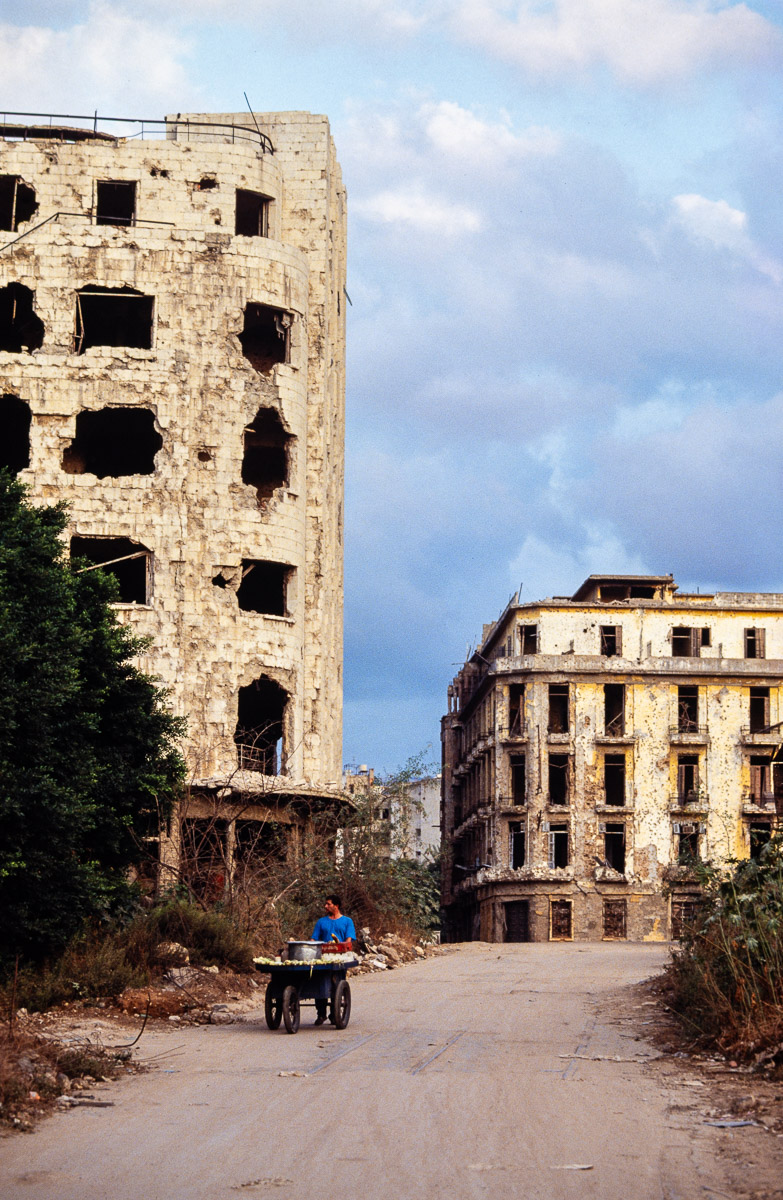
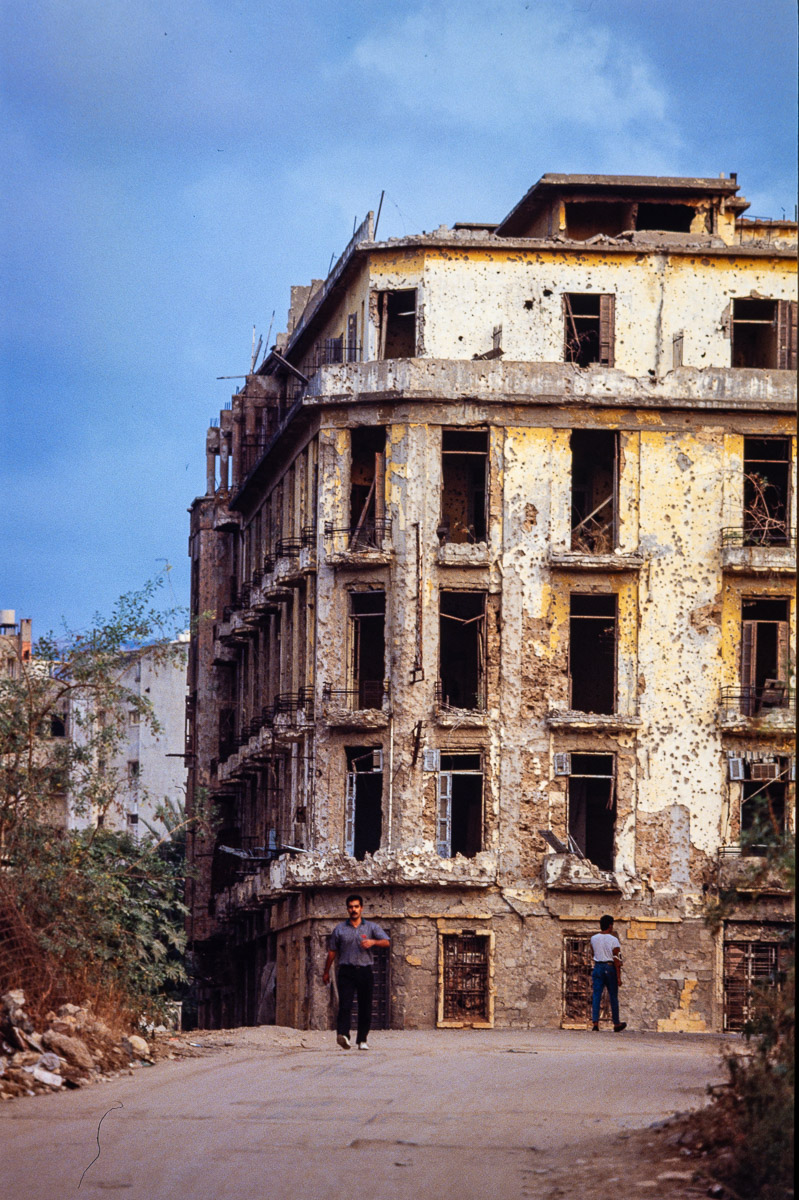
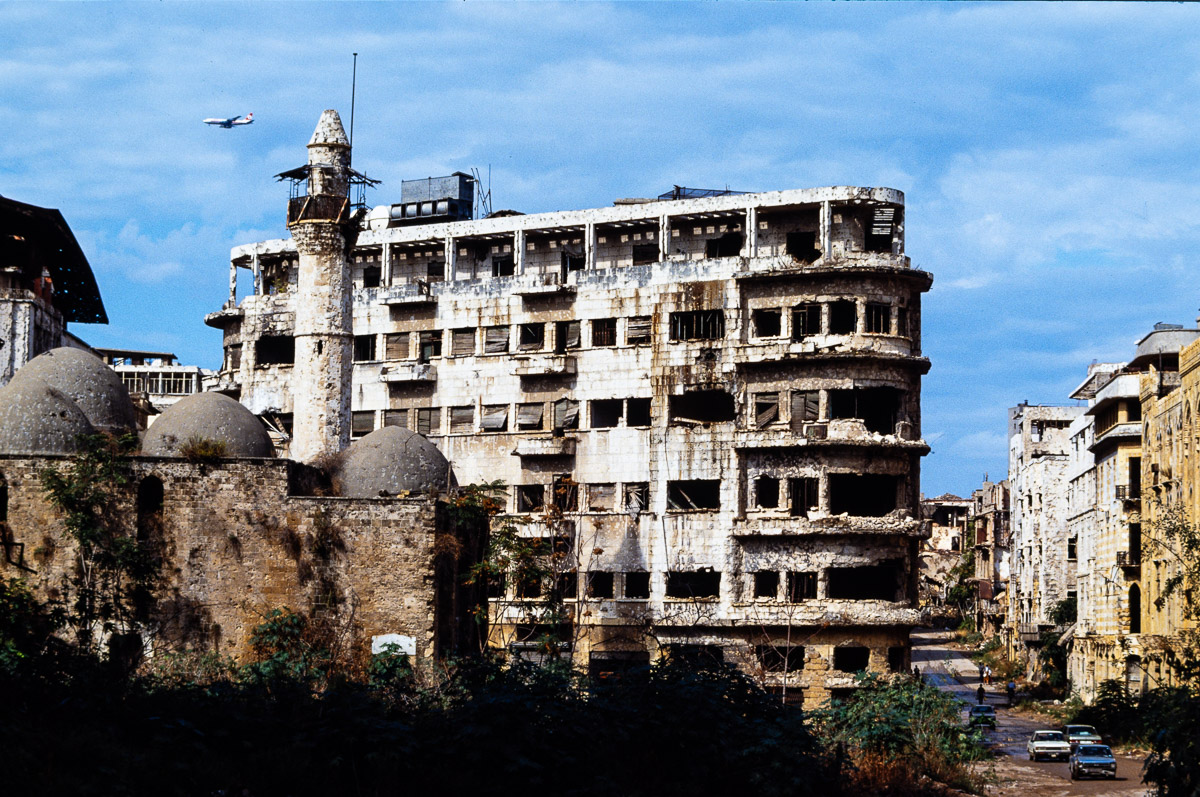
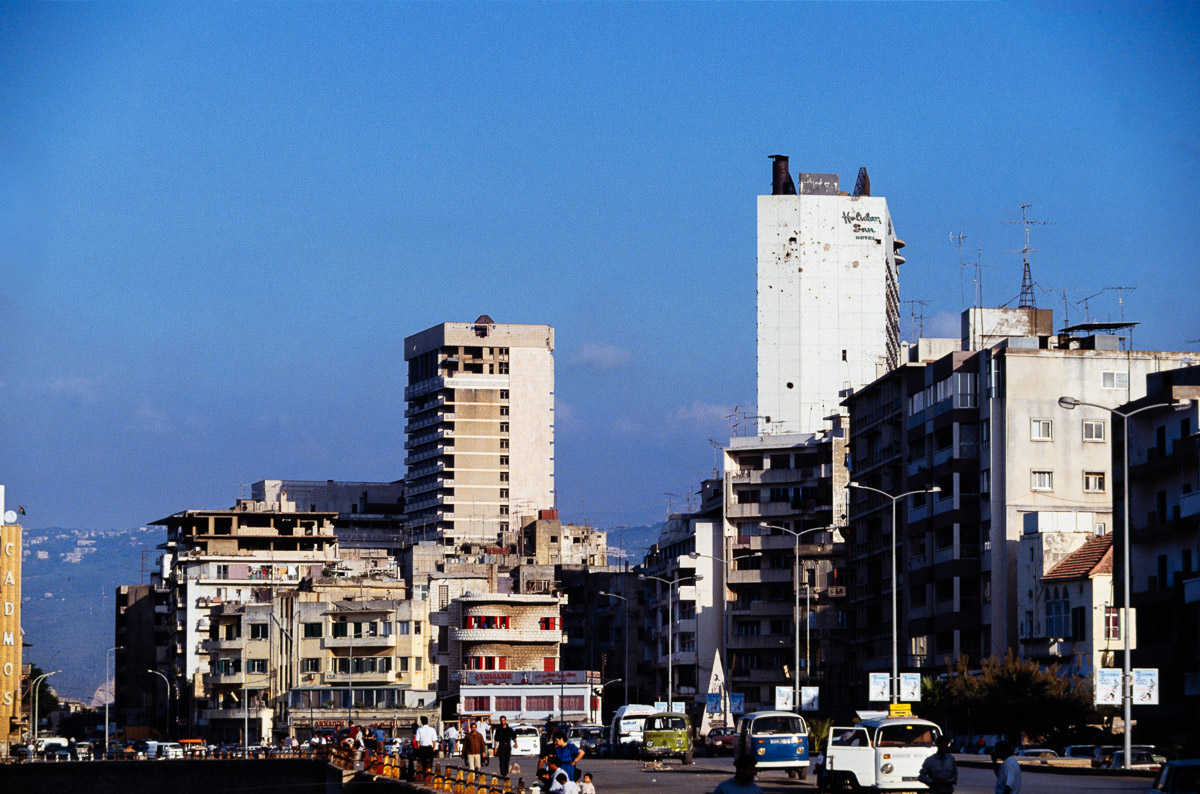
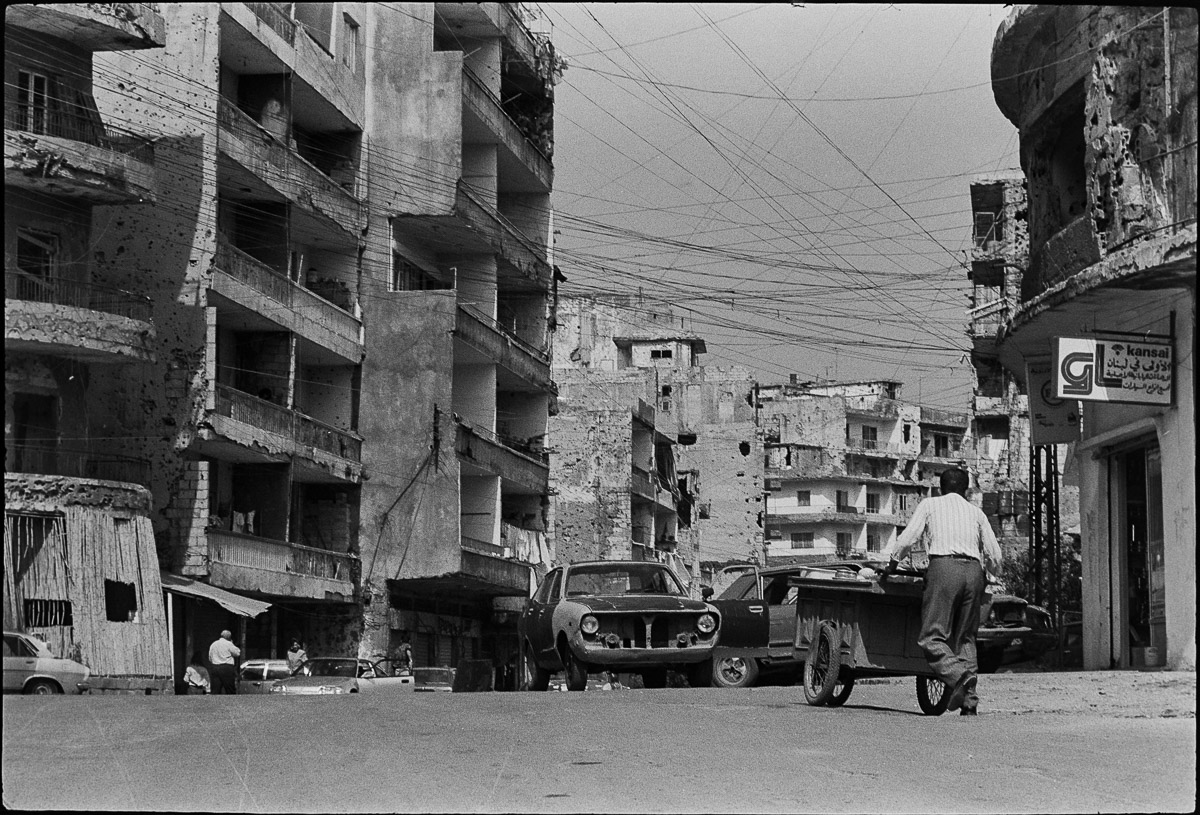
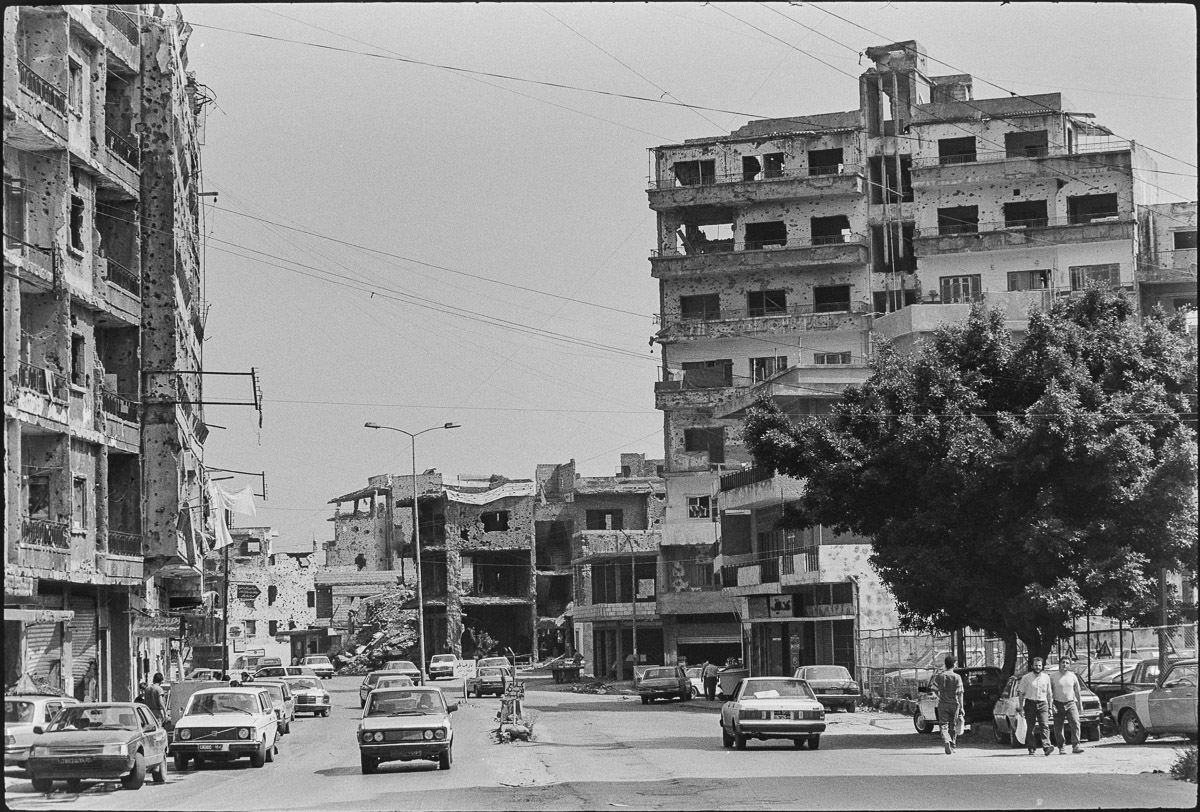
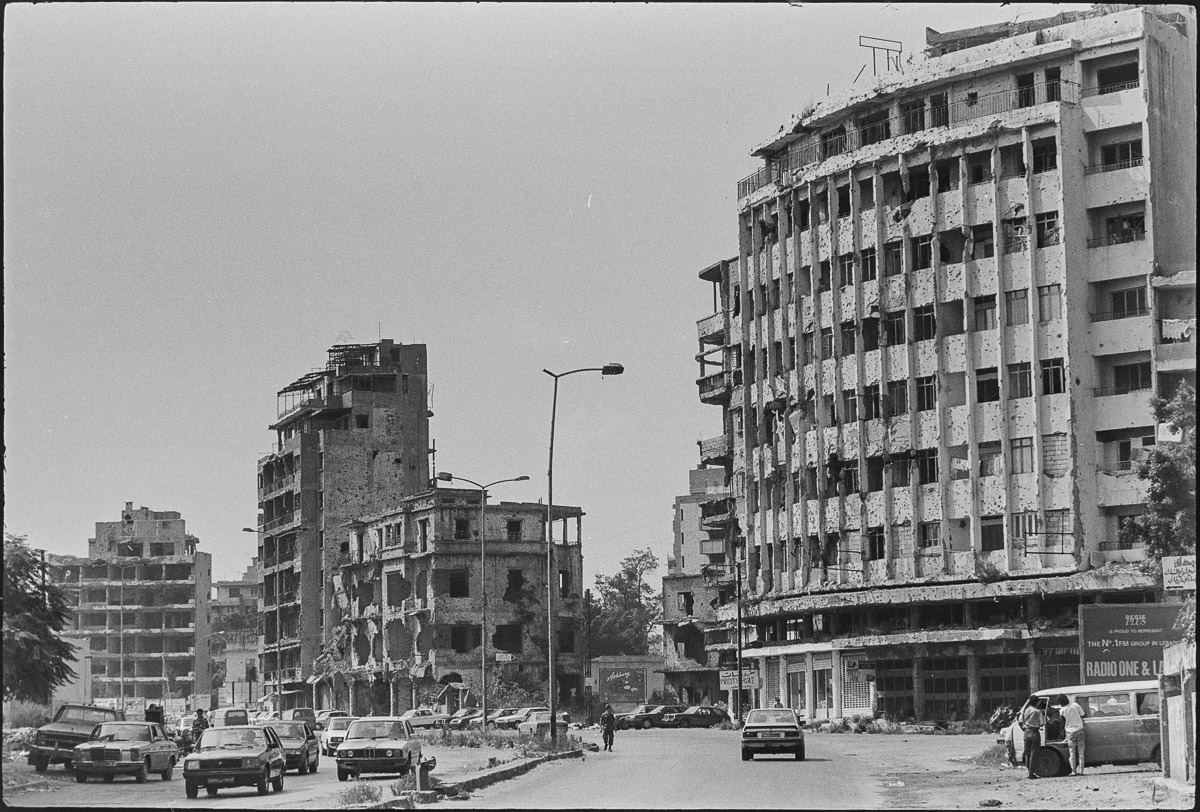
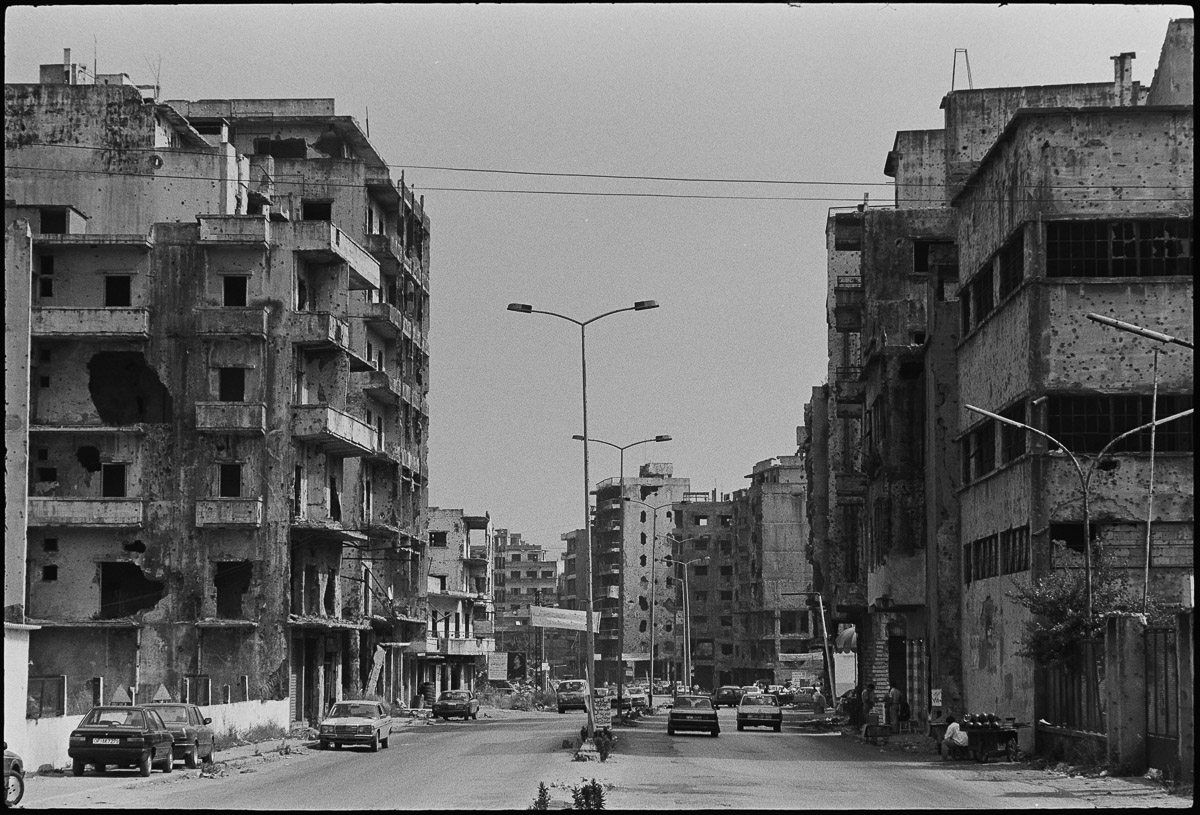
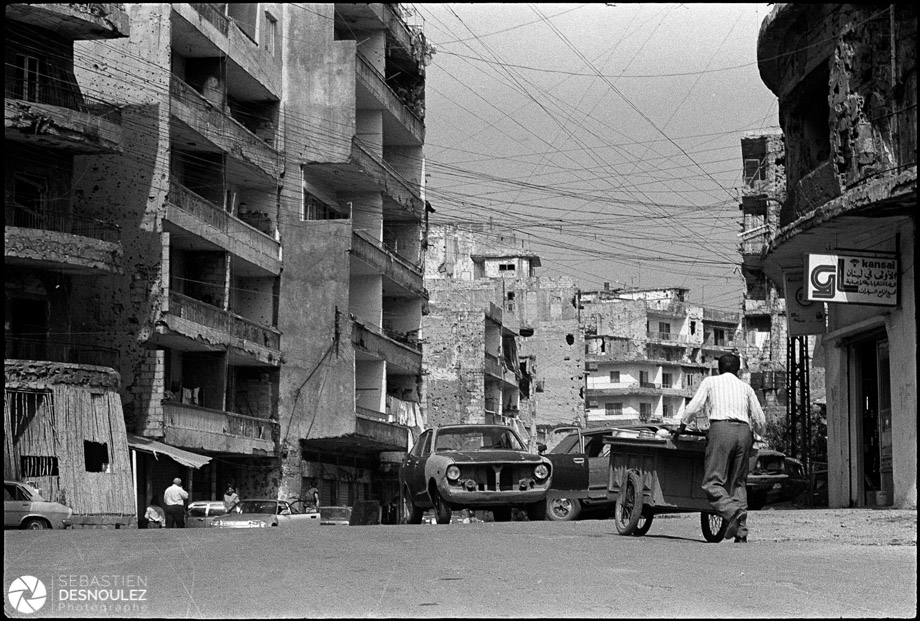
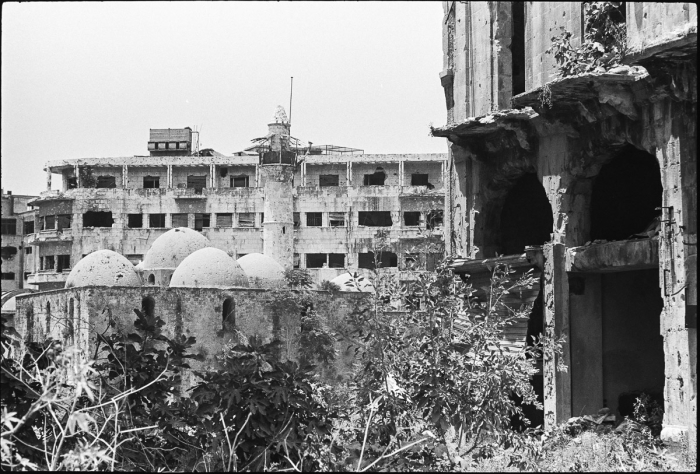
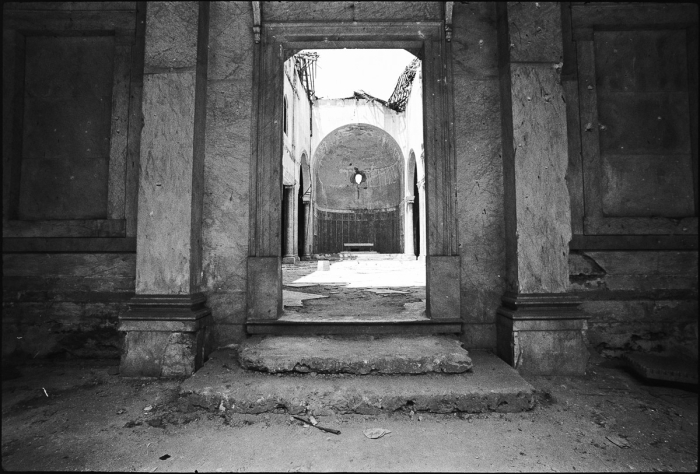
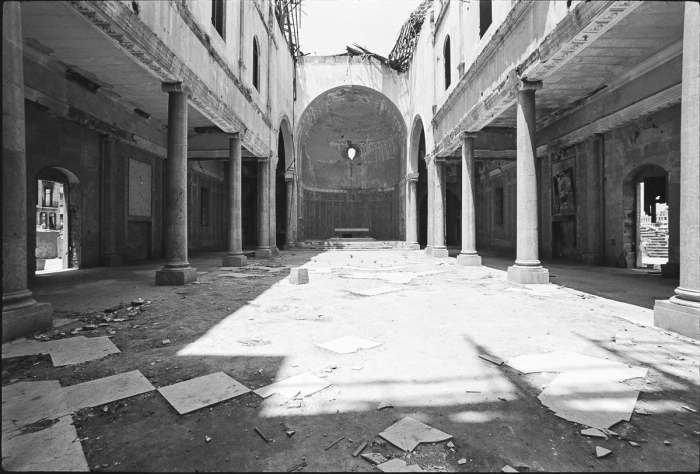
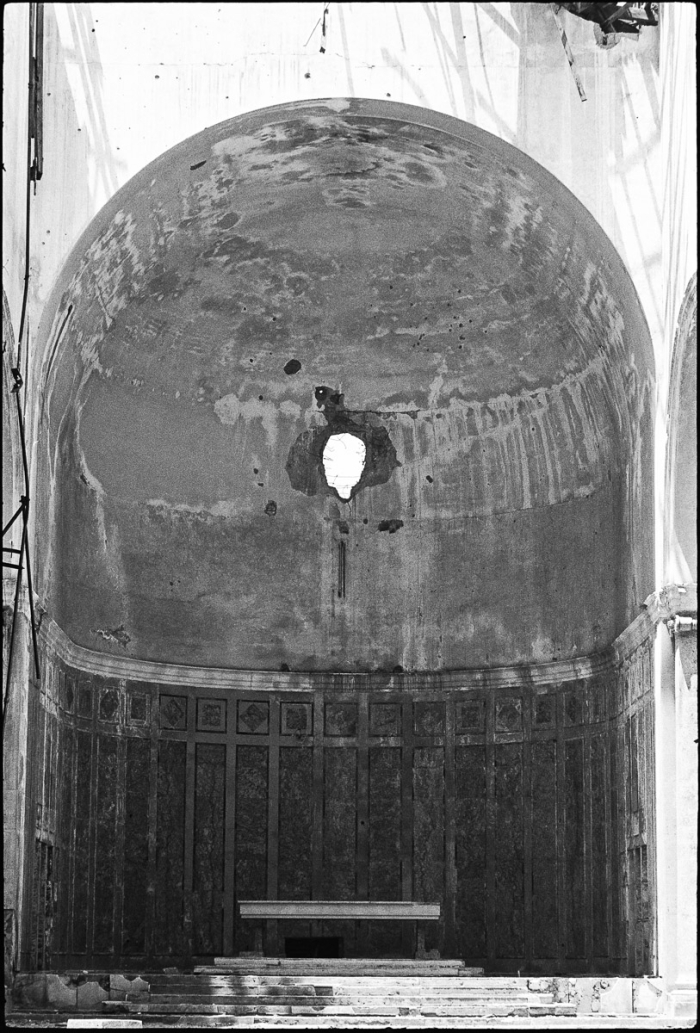
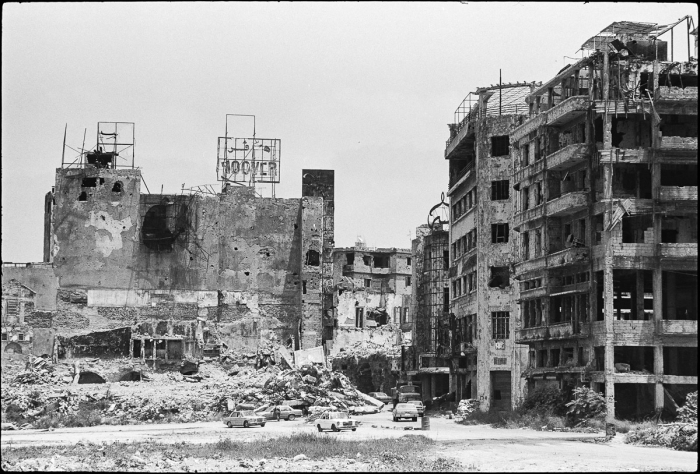
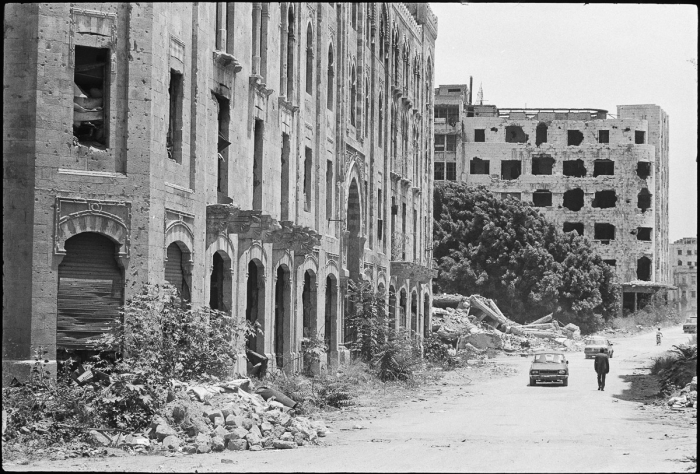
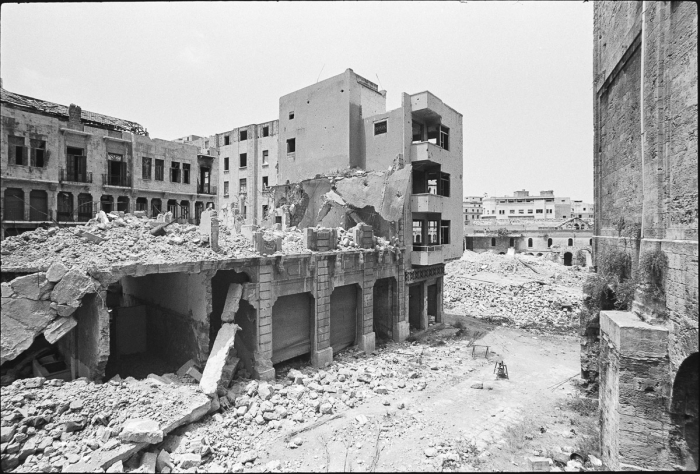
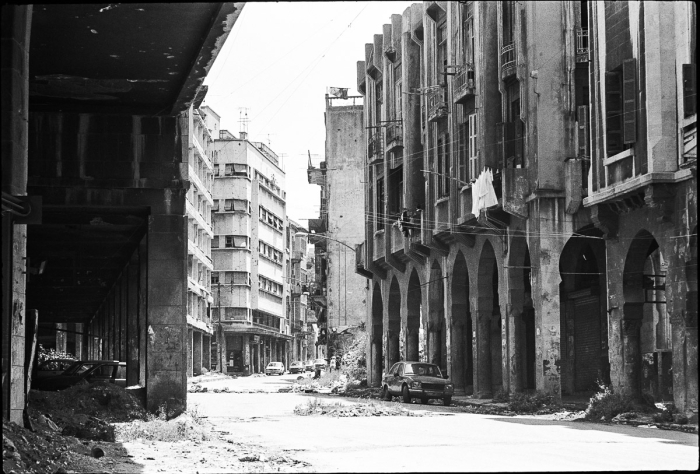
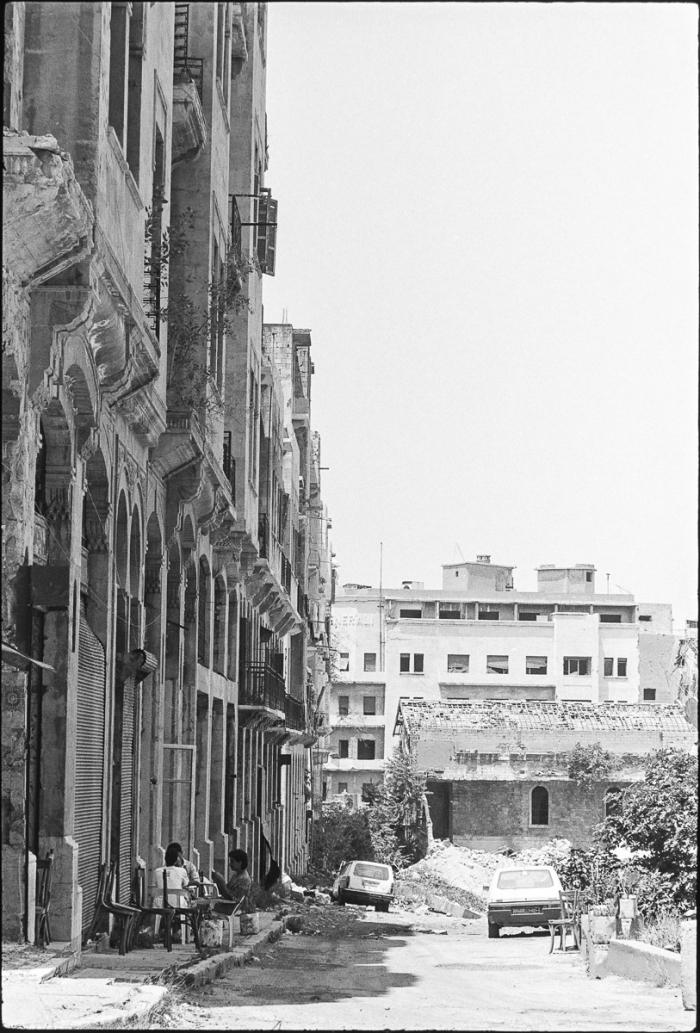
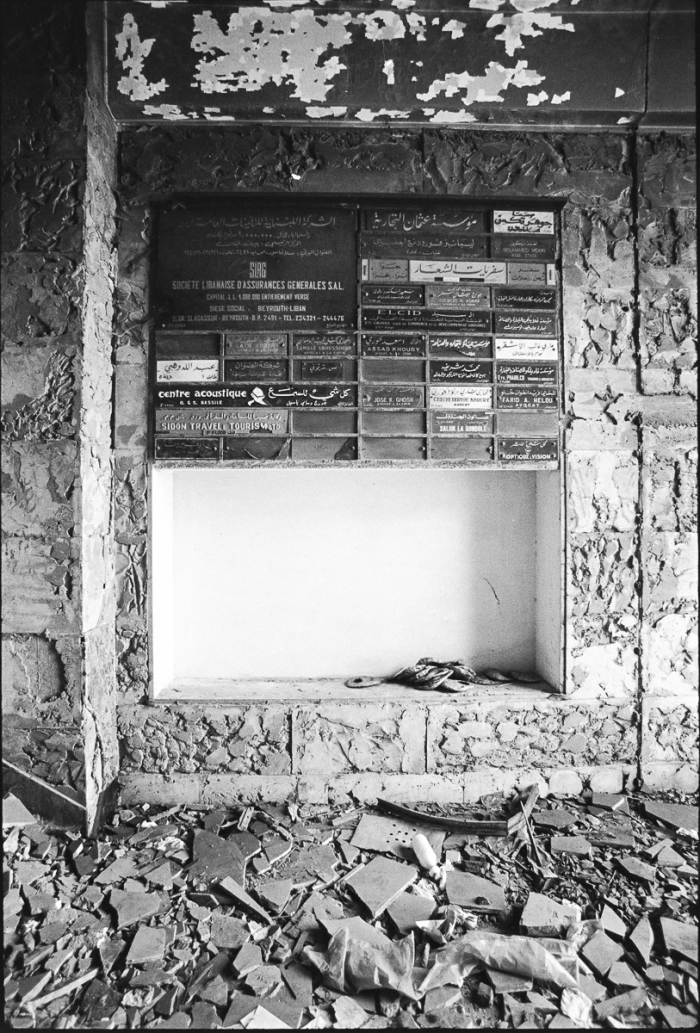
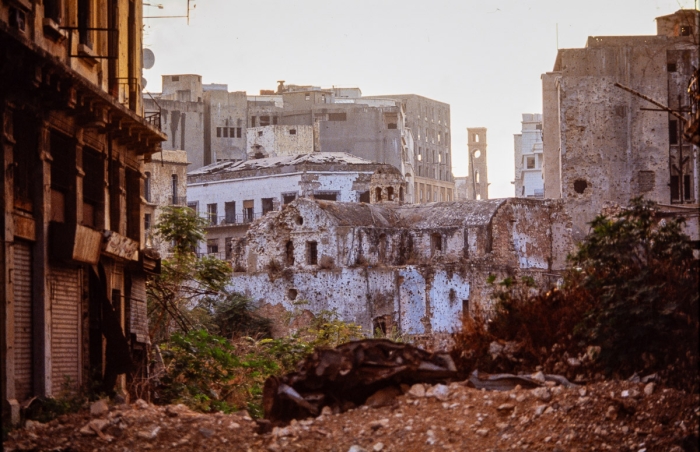
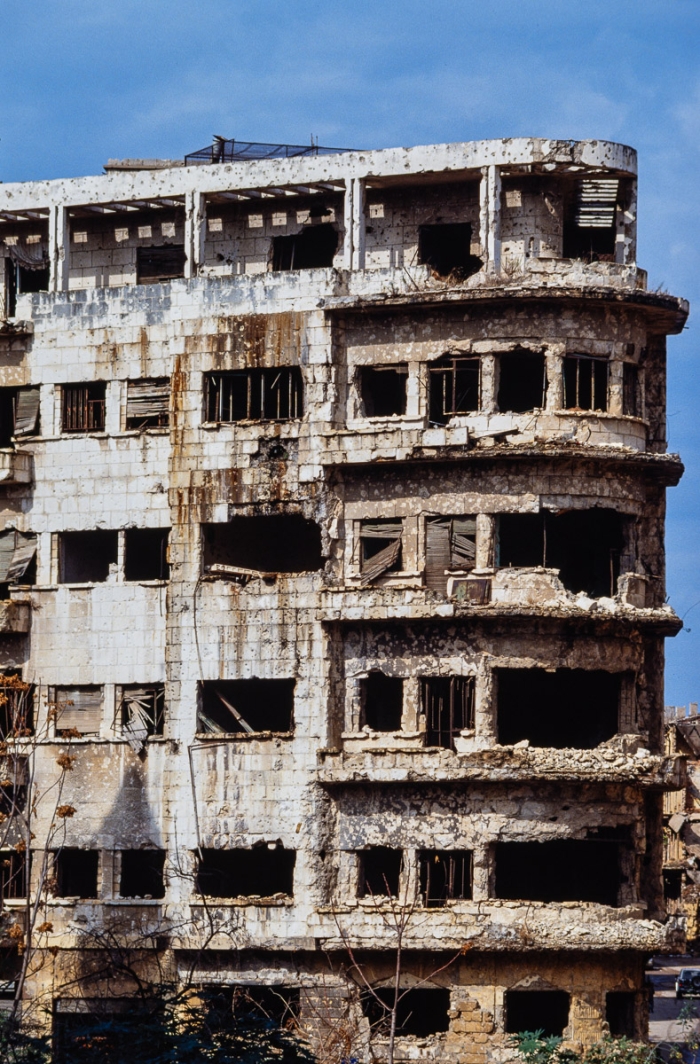
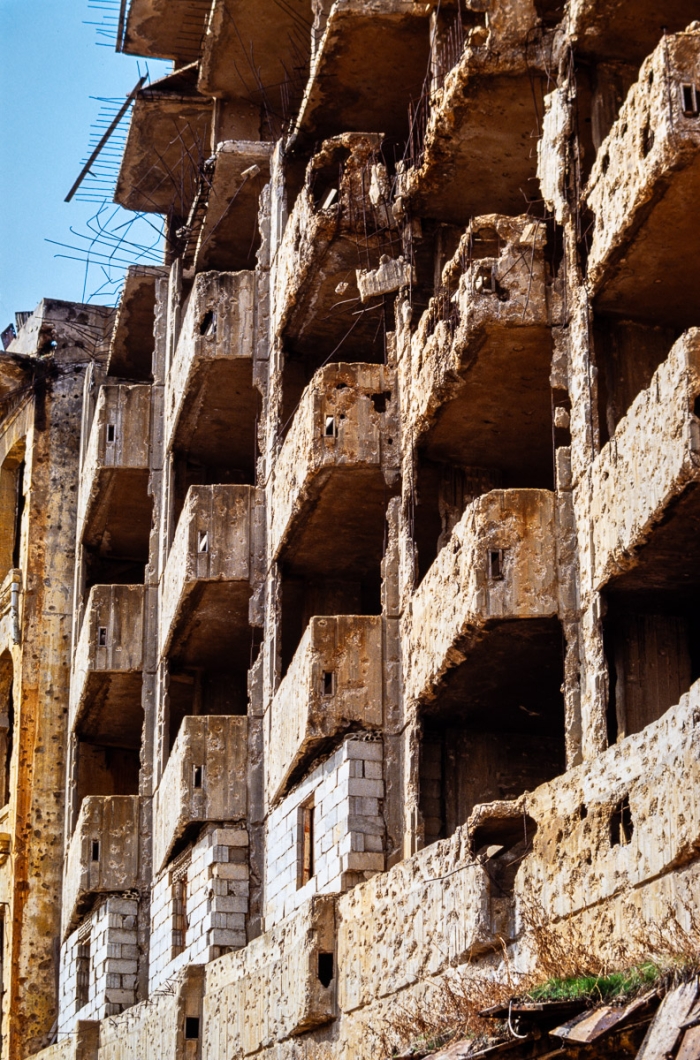
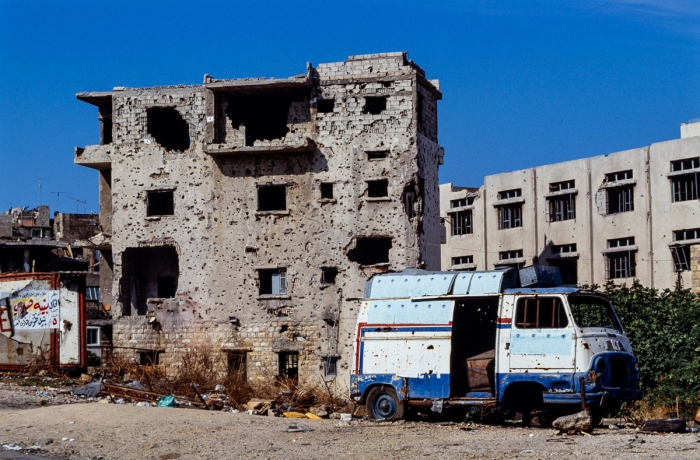
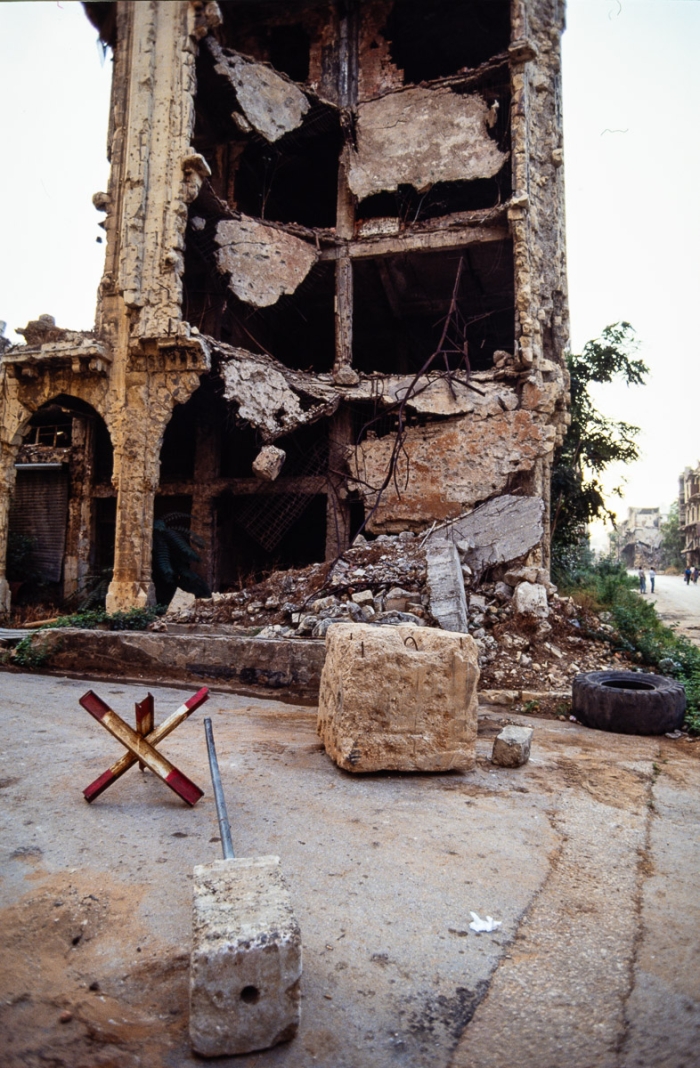
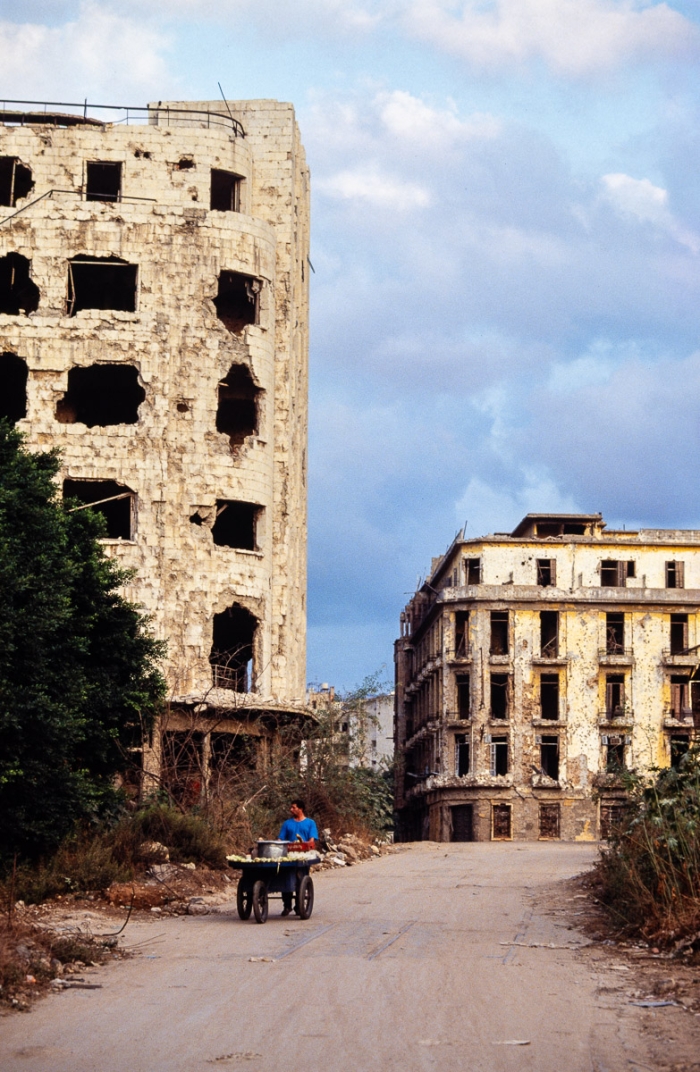
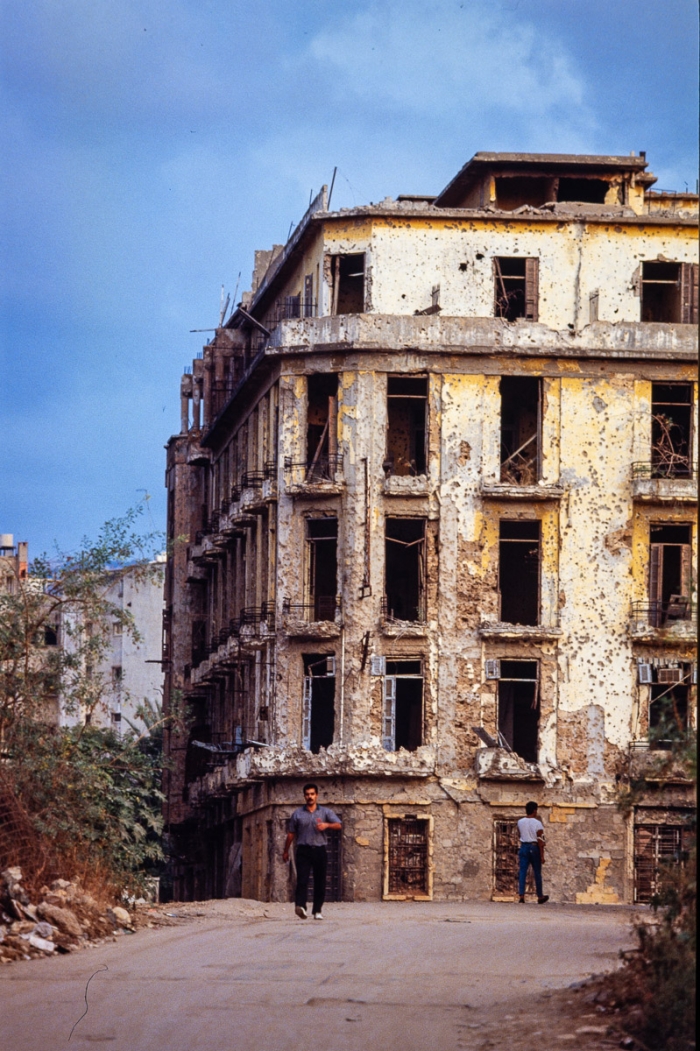
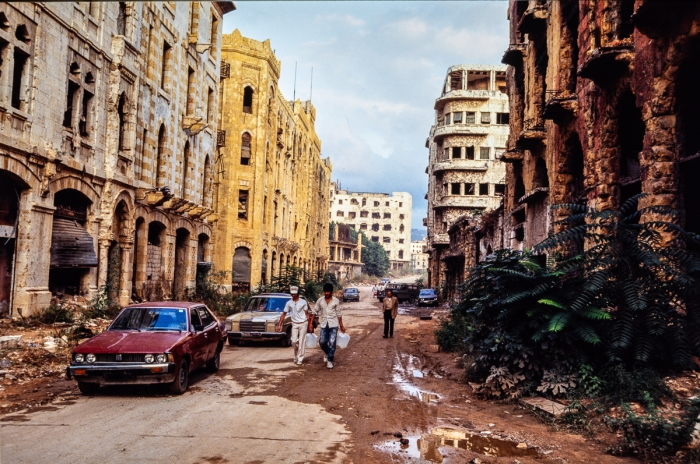
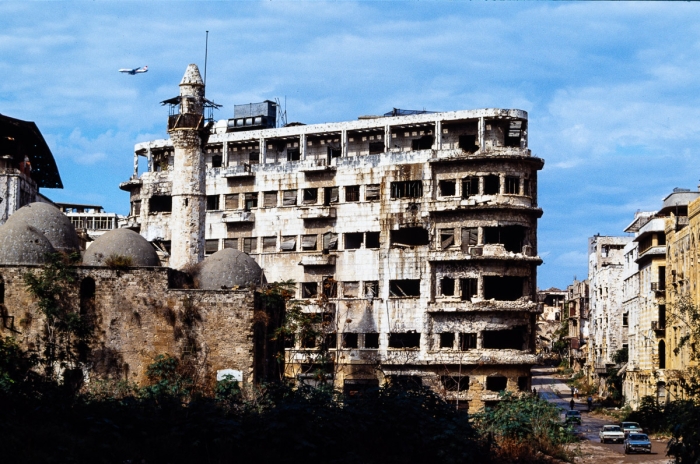
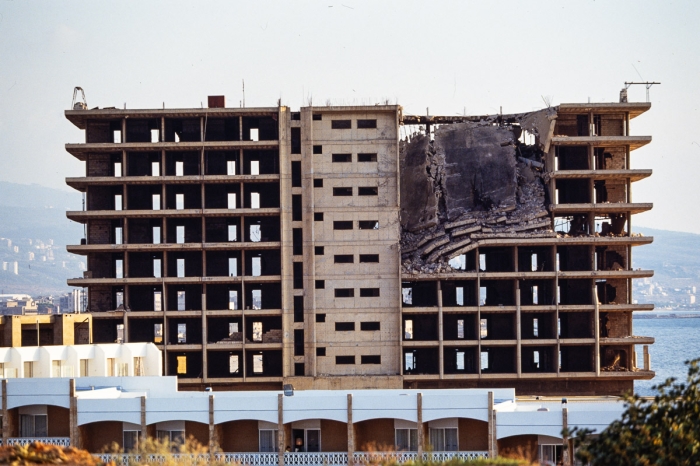
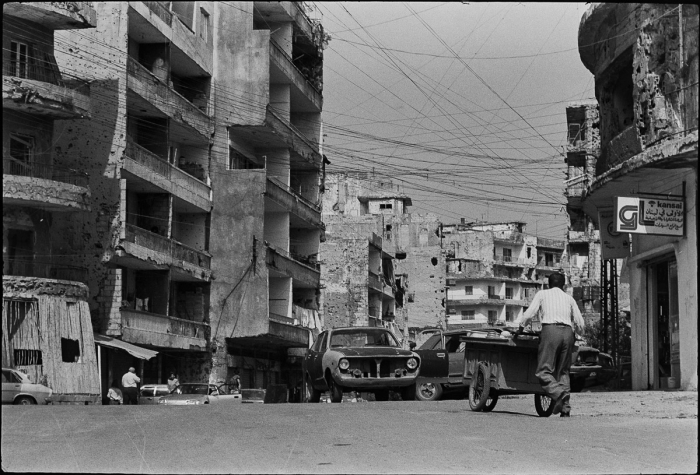
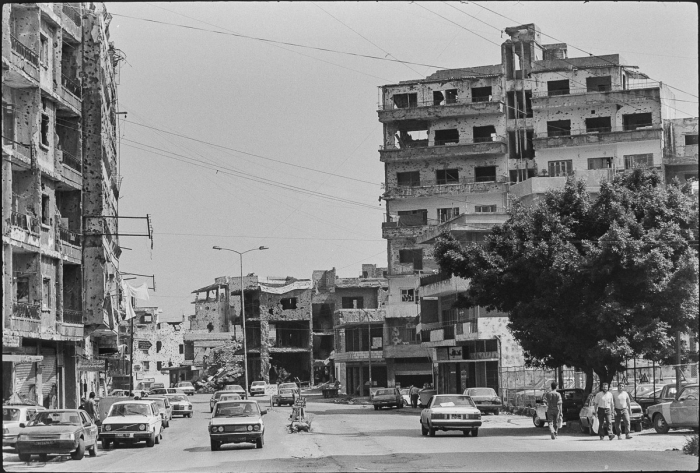
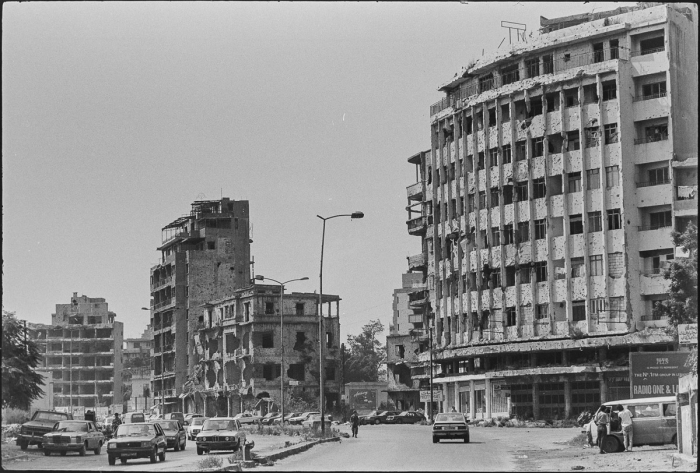
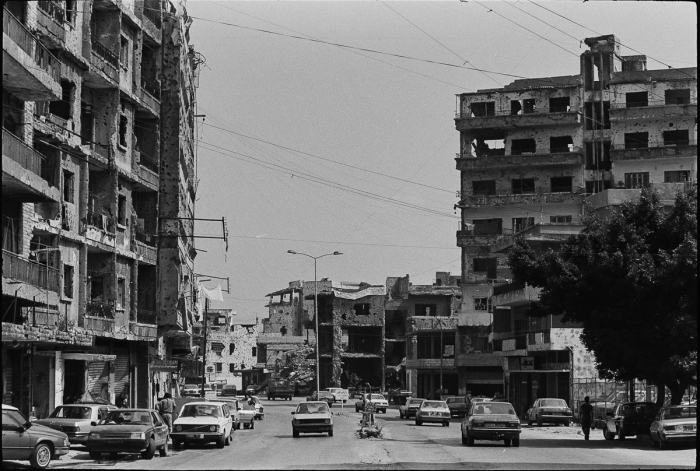
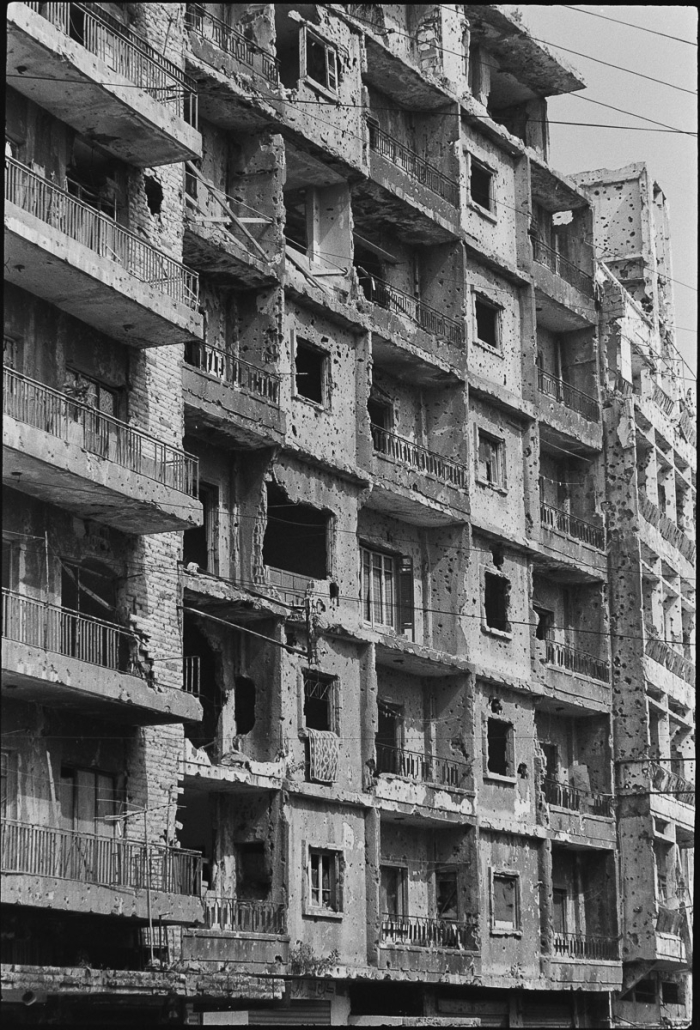
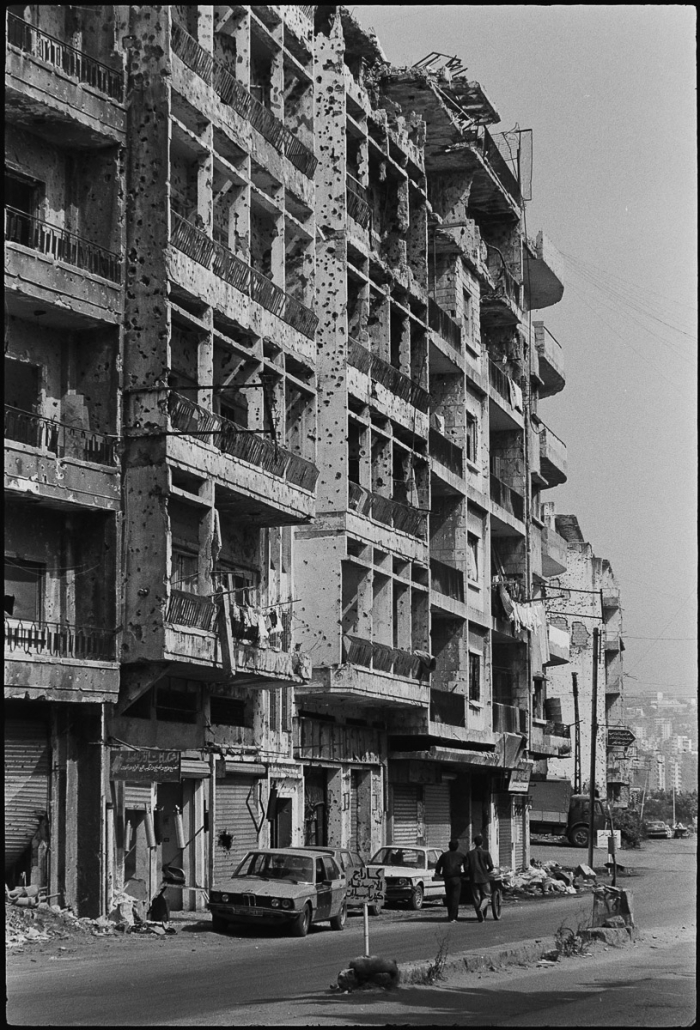
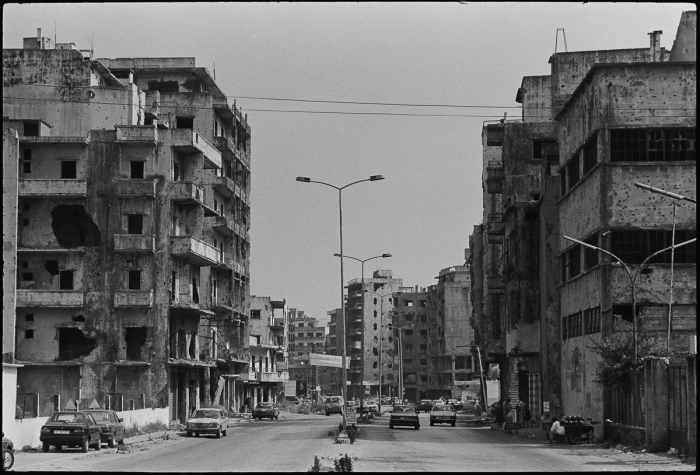
The city centre still bore the direct marks of the war. Some buildings had been gutted, certain streets remained obstructed by rubble and several façades were covered with the impacts of the fighting. Official buildings, closed shops and abandoned structures formed an urban landscape unlike any of the cities I had photographed before.
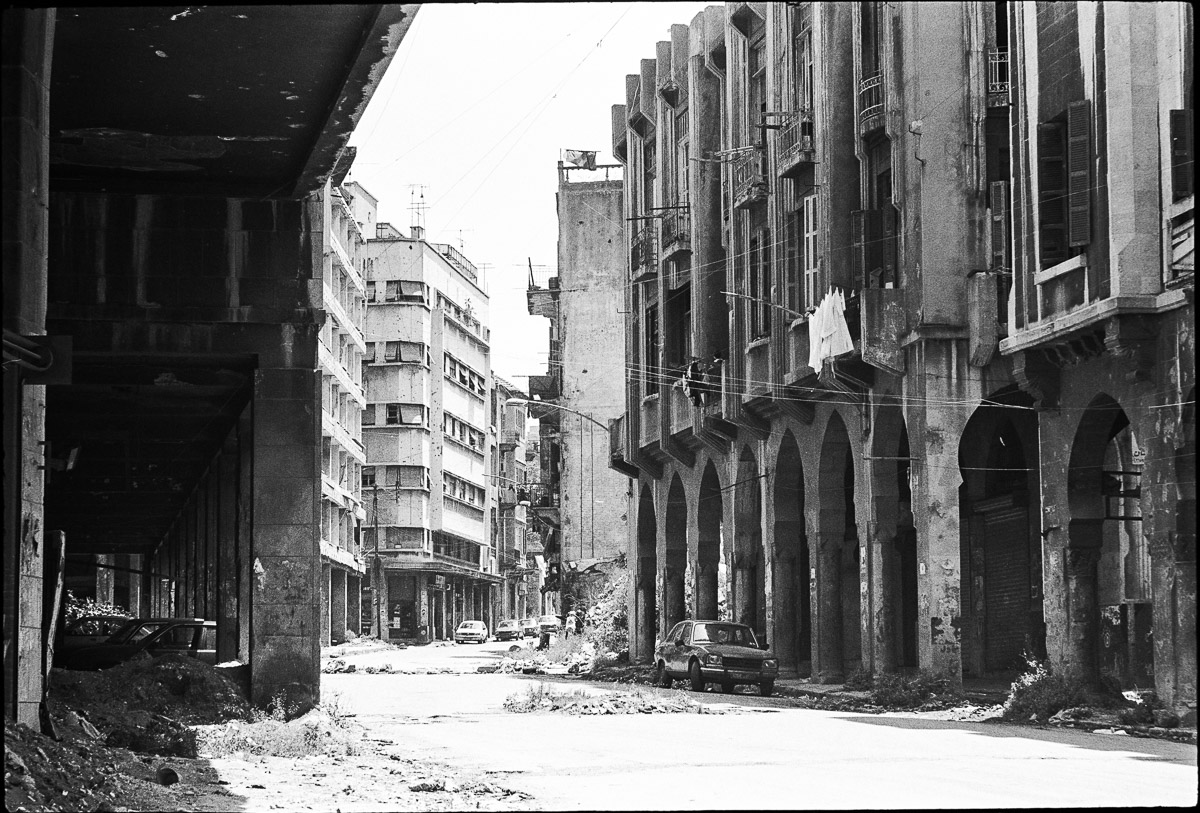
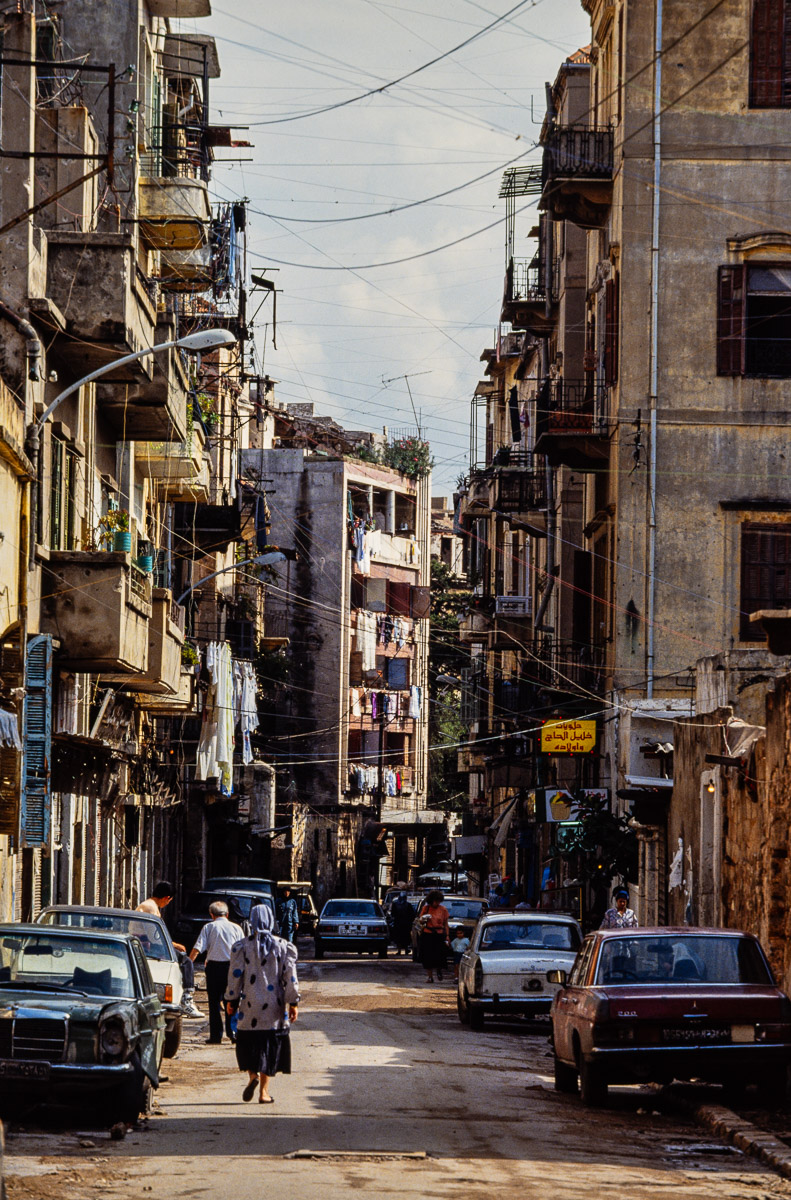
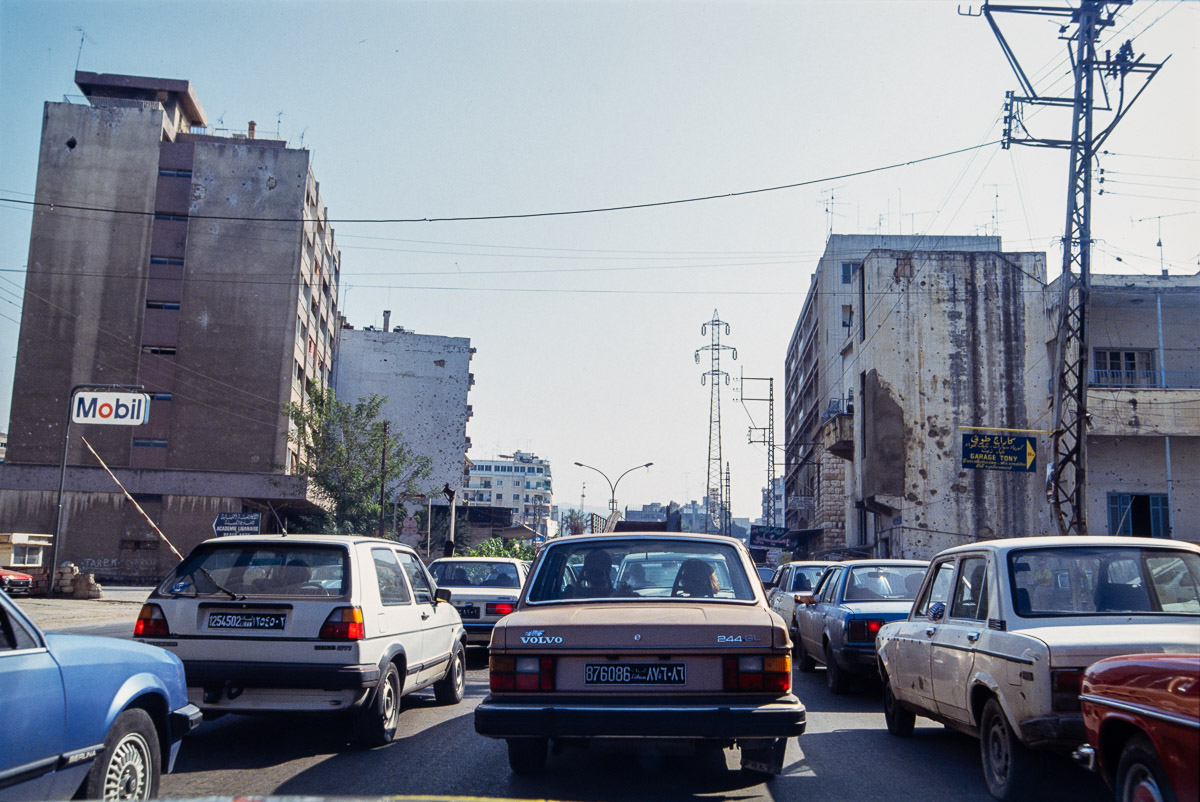
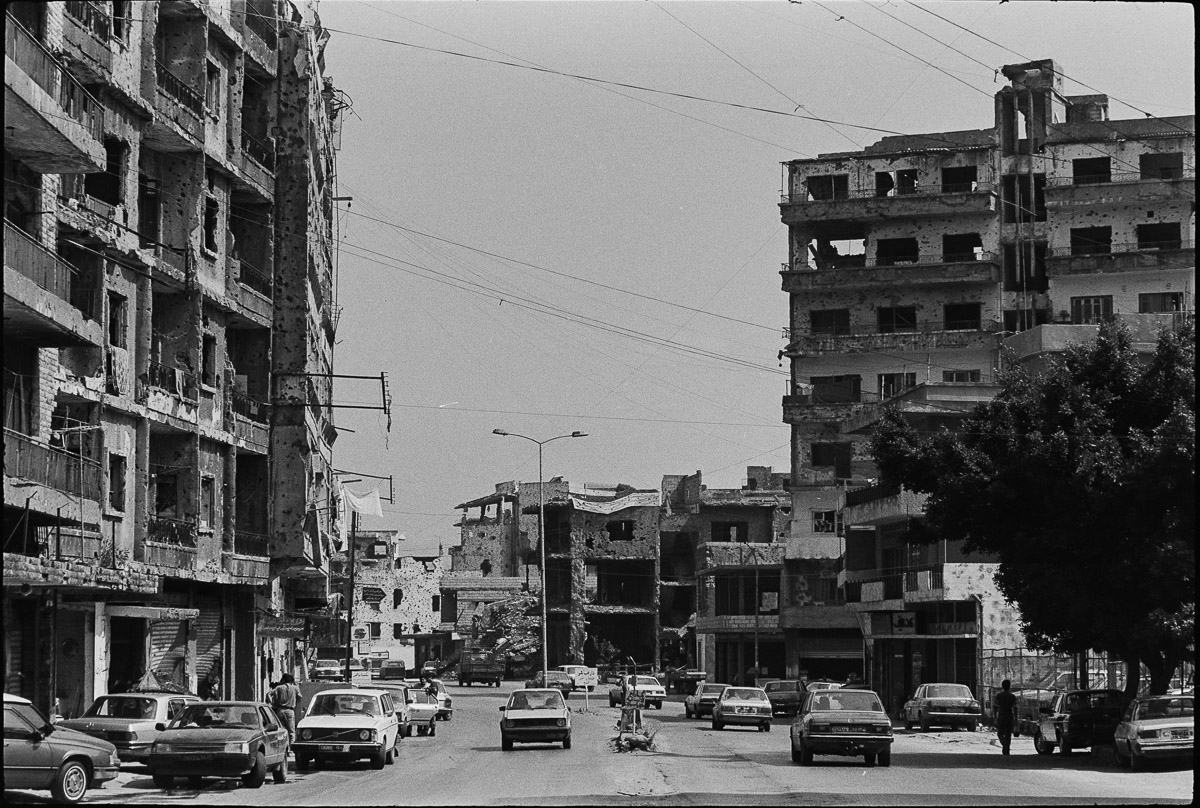
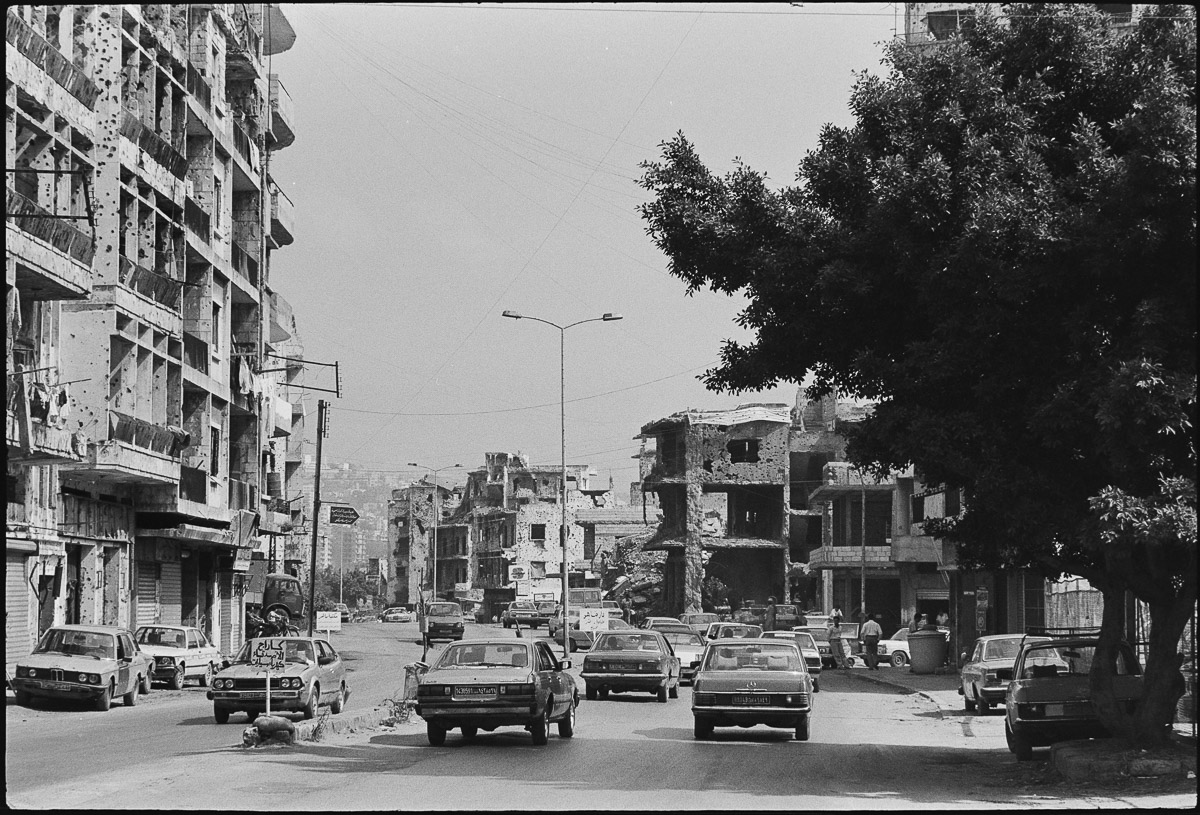
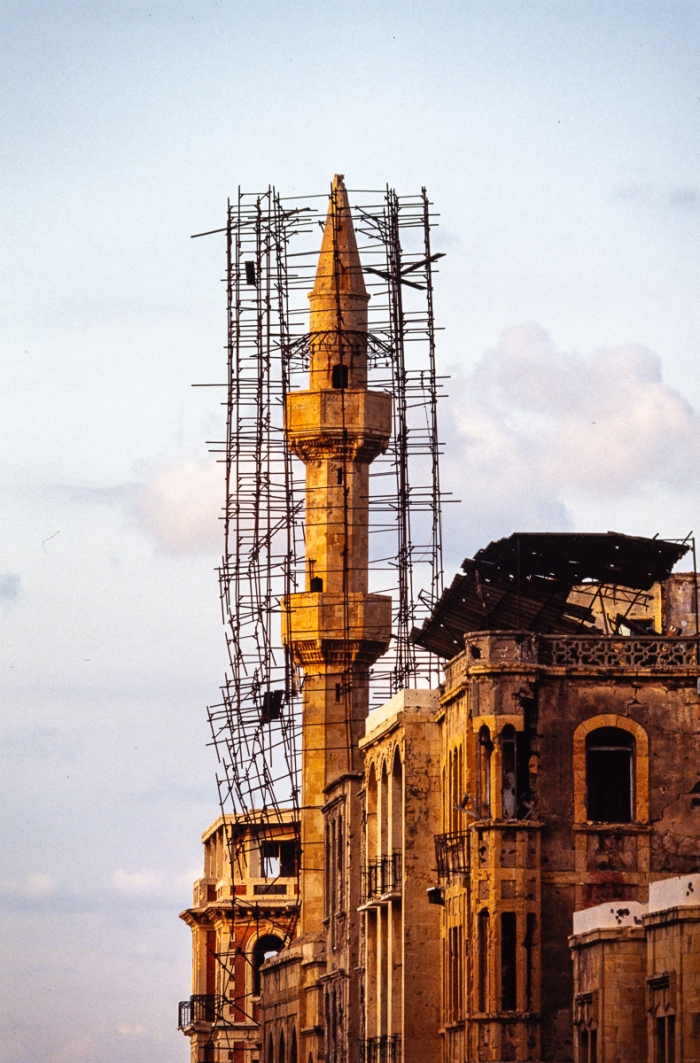
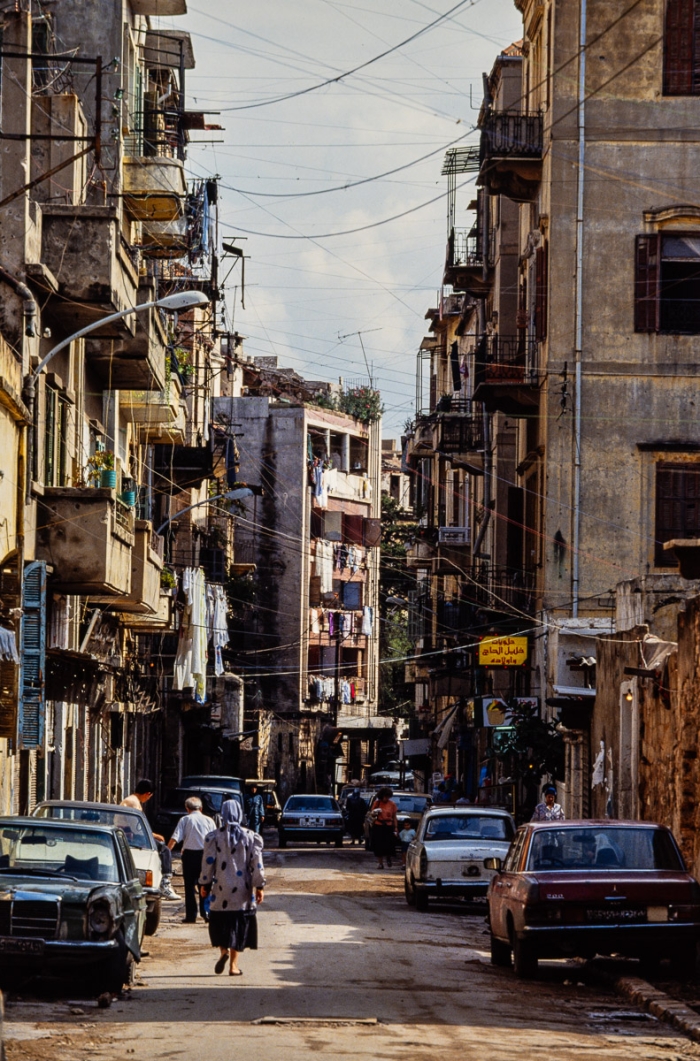
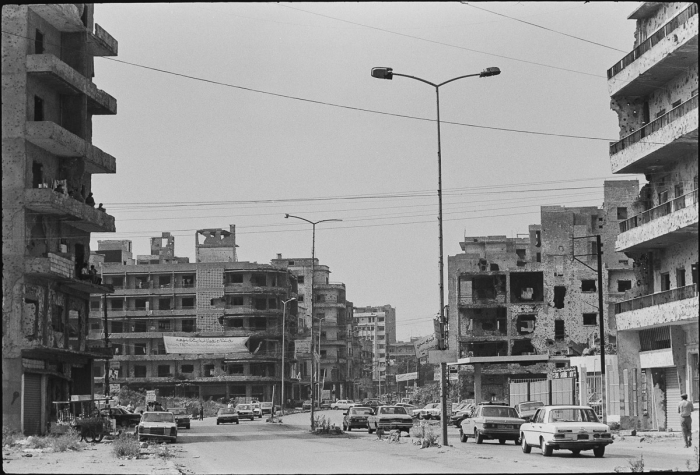
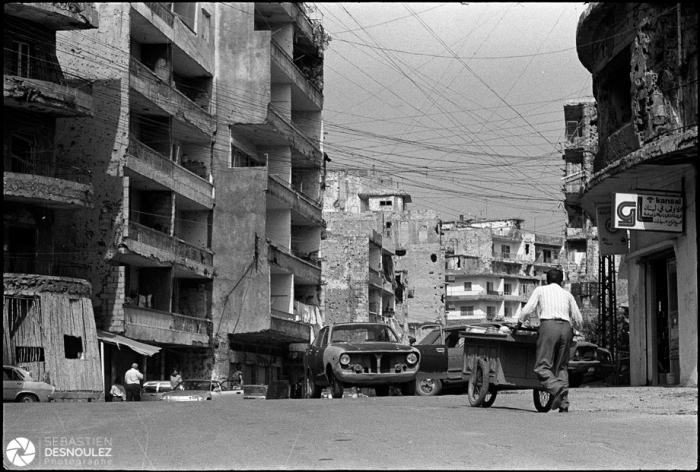
I worked in both black and white and colour. The photographs show the destruction, streets that had partially reopened, moving cars and residents walking through these neighbourhoods. They also record more ordinary details: a building site, a supported façade or a road cleared through damaged buildings.
Throughout the city, tangled networks of electrical wires ran chaotically along the façades and above the streets. They reflected the resourcefulness of the residents as they compensated for failing infrastructure and kept the buildings supplied with electricity.
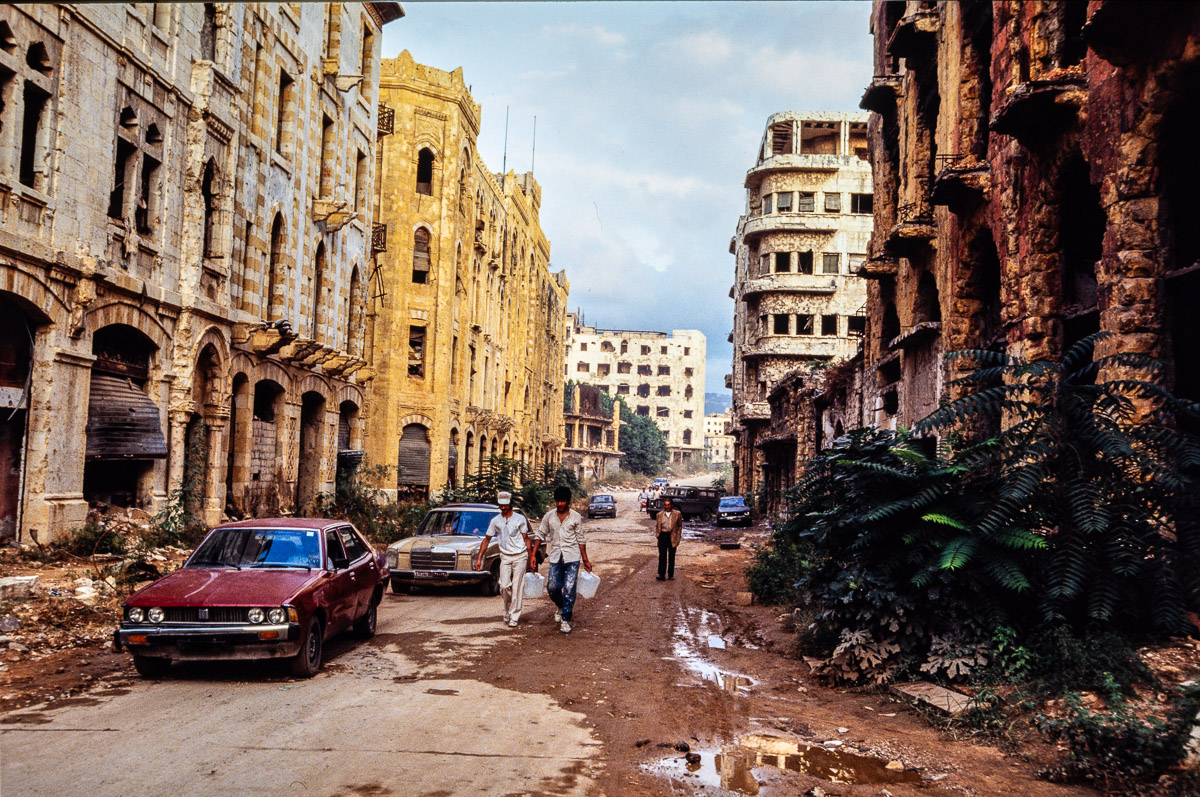 Destroyed buildings in central Beirut in 1991 – Photo: © Sebastien Desnoulez
Photographing with Caution
My Lebanese friends quickly gave me a few simple rules to follow. In some Shia neighbourhoods, they advised me not to photograph the huge portraits of Ayatollah Khomeini or other religious leaders. Doing so could be misinterpreted and provoke an unnecessary reaction.
The Syrian presence was also highly visible. Some unfinished buildings were being used as temporary barracks. They could sometimes be identified by the portraits of Hafez al-Assad hanging from their façades. Soldiers also controlled numerous roadblocks along the routes used by the team.
Before taking out my camera, I regularly asked Sadri or Yves whether a photograph might cause a problem. Looking back, I sometimes think that certain images might have been possible. At the time, however, I did not try to find out. The safety of the team remained the priority, and my assignment was to cover a motorsport event, not to produce a geopolitical report.
I did not come to Lebanon as a war photographer. The fighting had ended by the time I discovered the country. The destroyed buildings, checkpoints and military presence nevertheless formed part of the landscape and the conditions in which I worked.
West Beirut and the Seafront
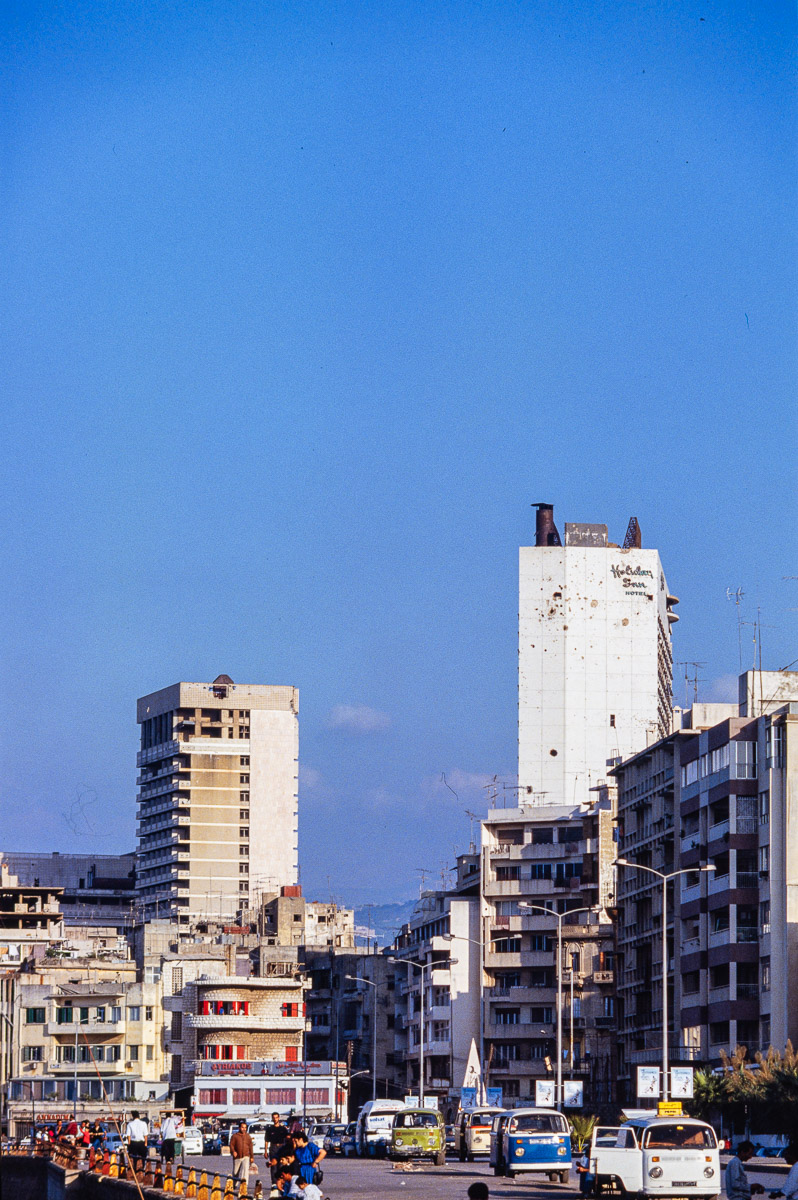
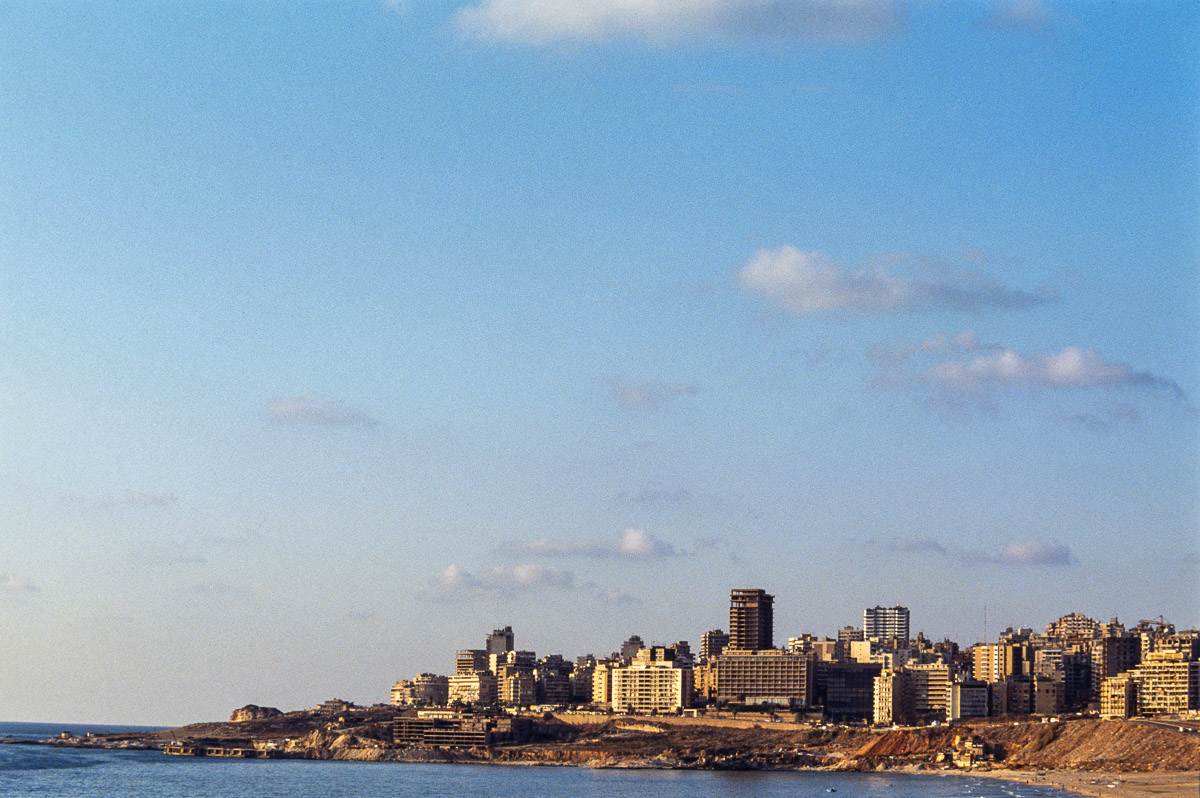
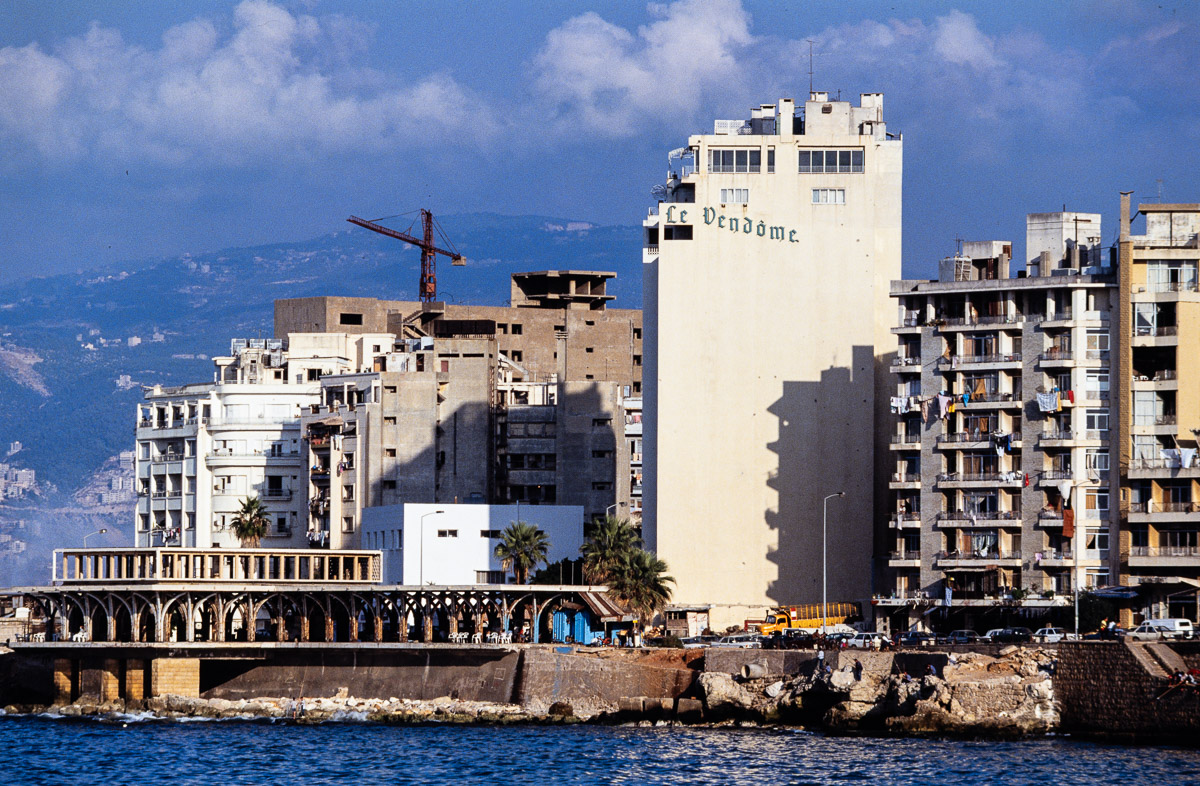
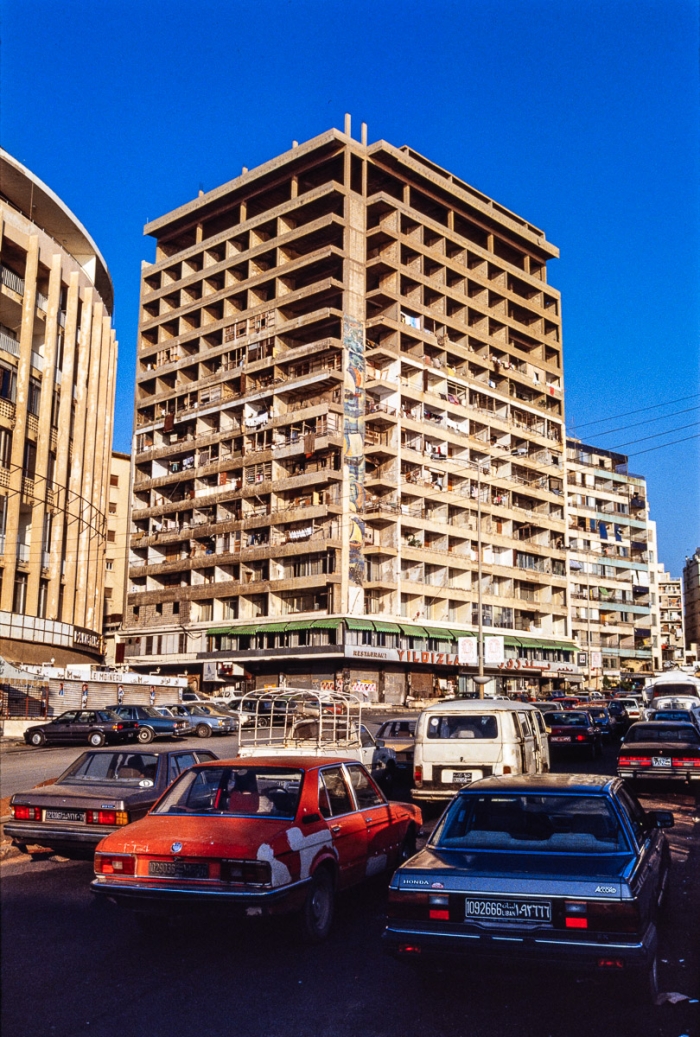
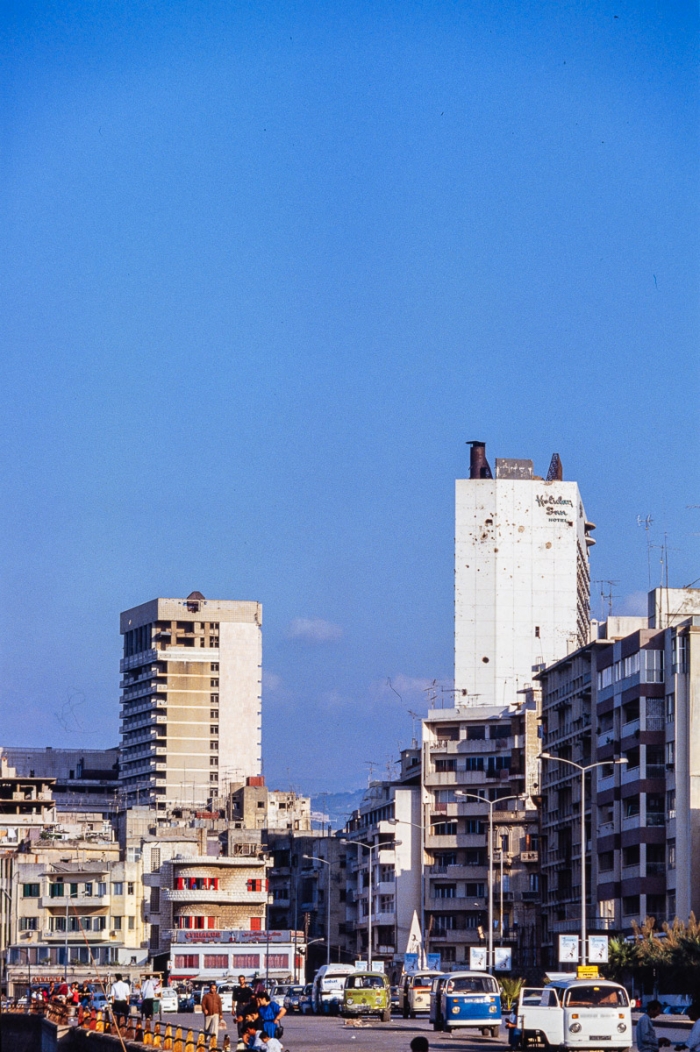
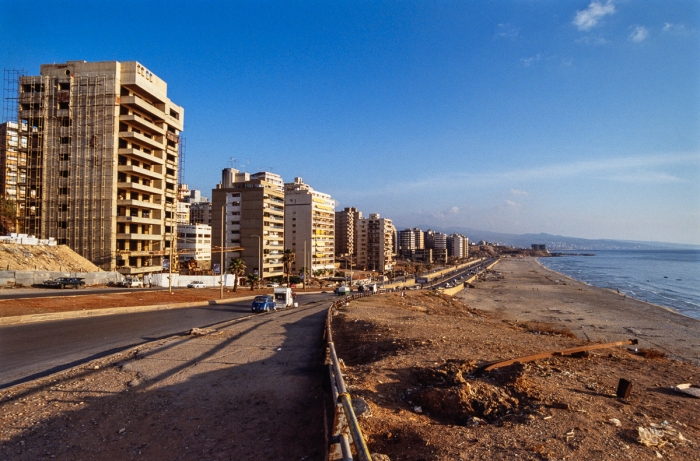
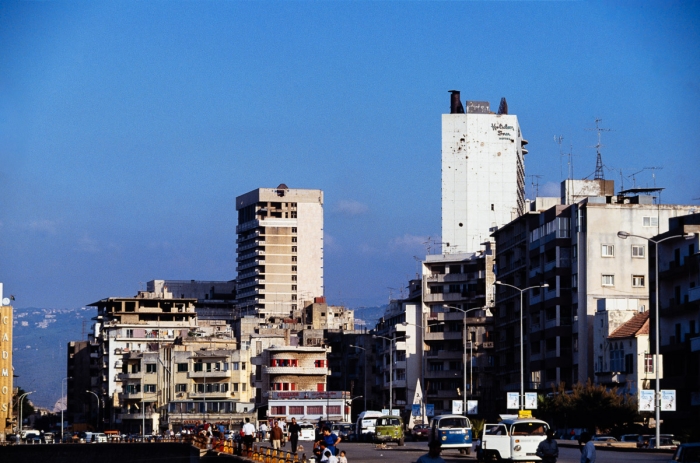
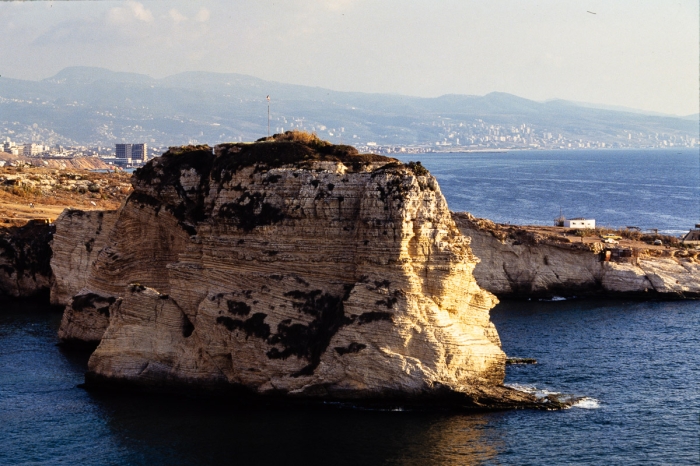
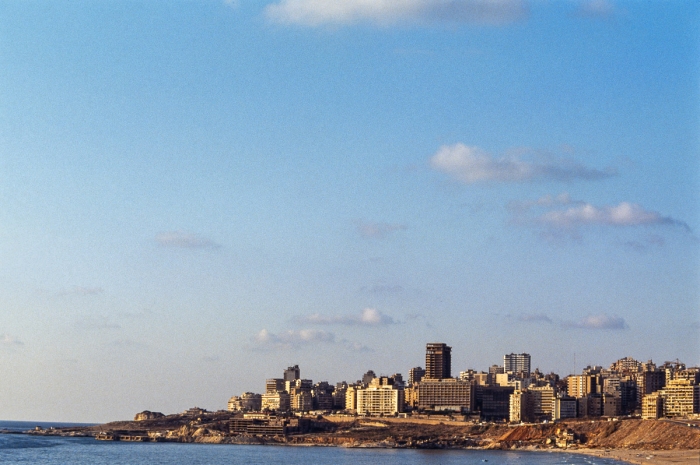
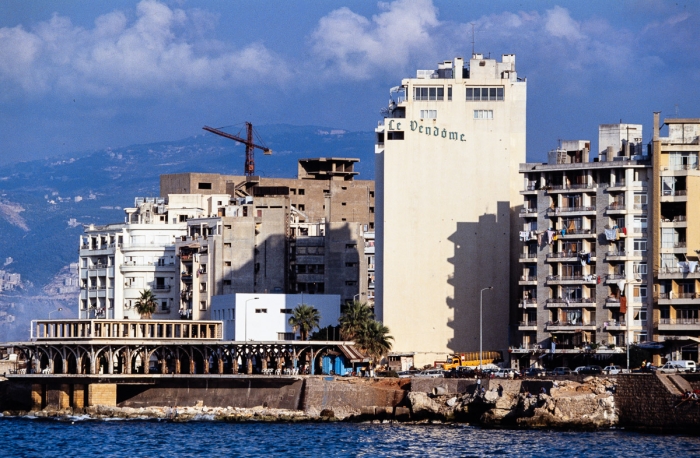
My journeys through Beirut also took me to the western districts and the seafront. The photographs show the Corniche, the waterfront buildings, shopping streets, traffic and the Pigeon Rocks.
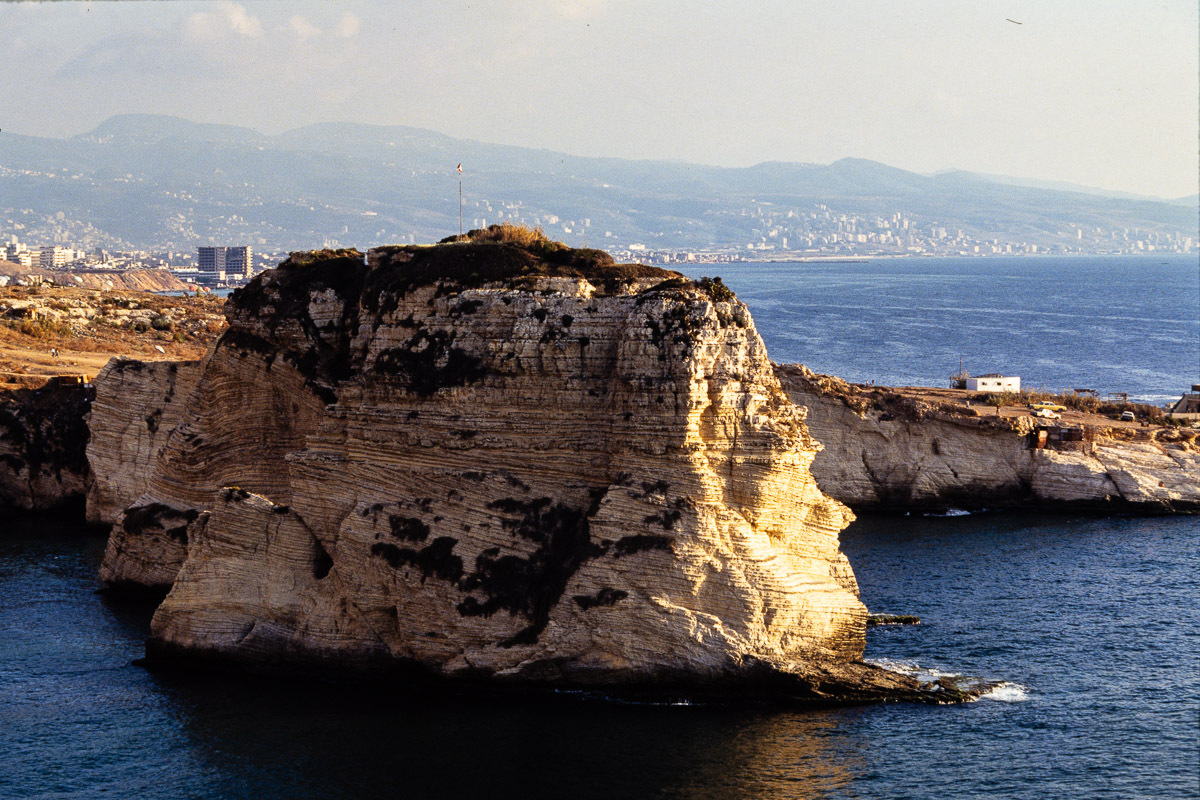 Pigeon Rocks in Beirut in 1991 – Photo: © Sebastien Desnoulez
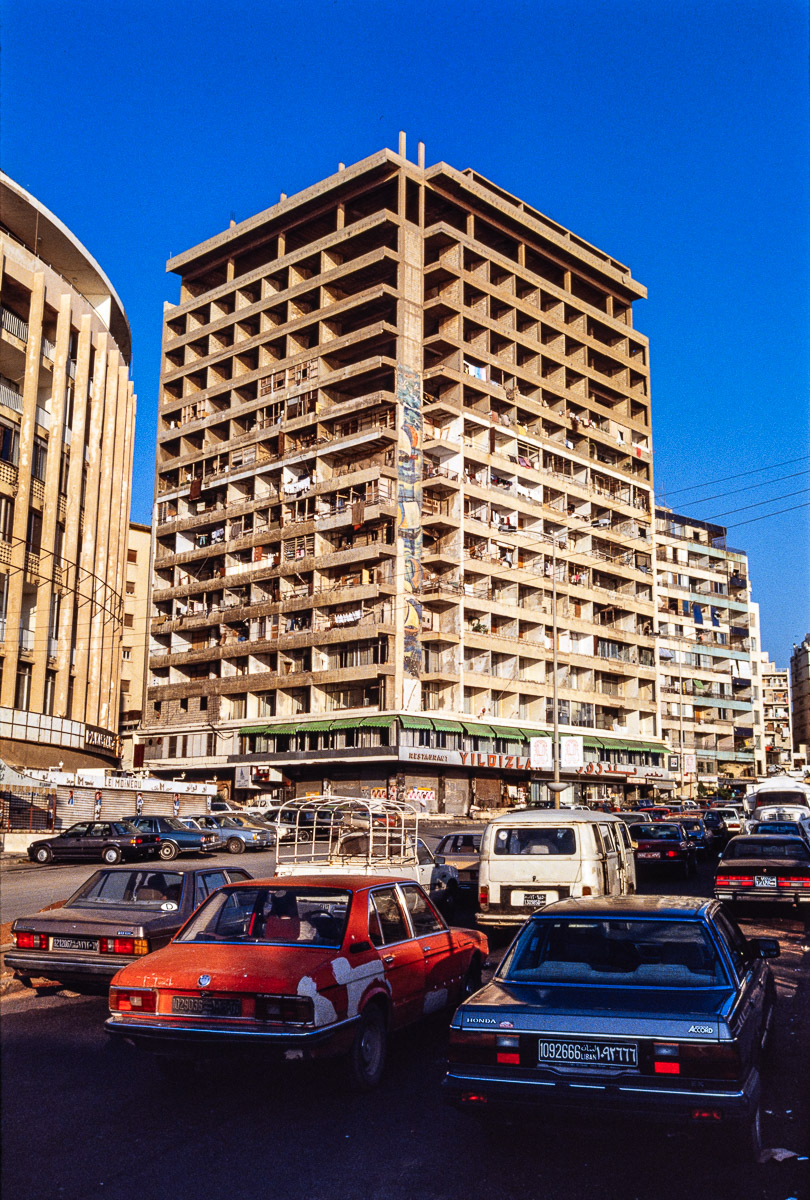
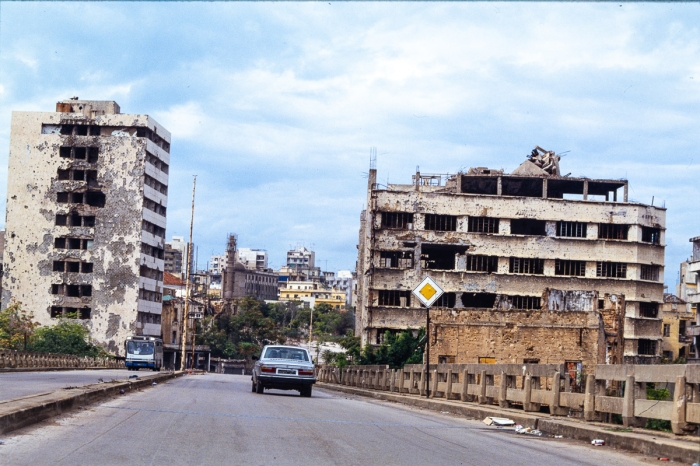
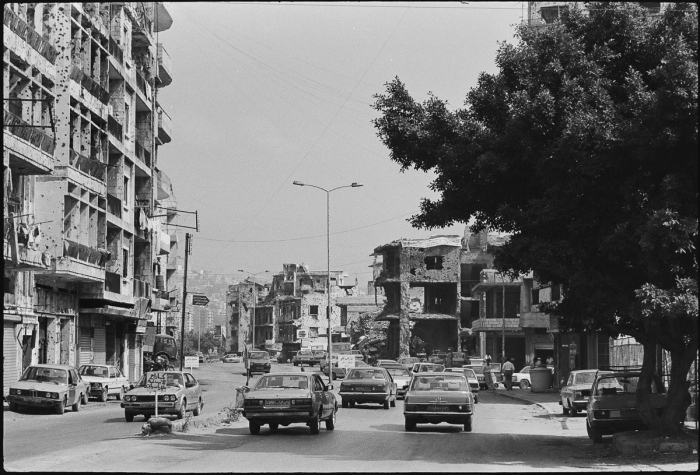
This part of the city presented a different appearance from the historic centre. The scars of the war remained visible on several buildings, while the streets, shops and traffic showed that everyday activity was already well established.
I photographed these neighbourhoods during the team’s various journeys. The images were intended both for the magazine features produced on location and to preserve a record of Beirut and the places I was discovering.
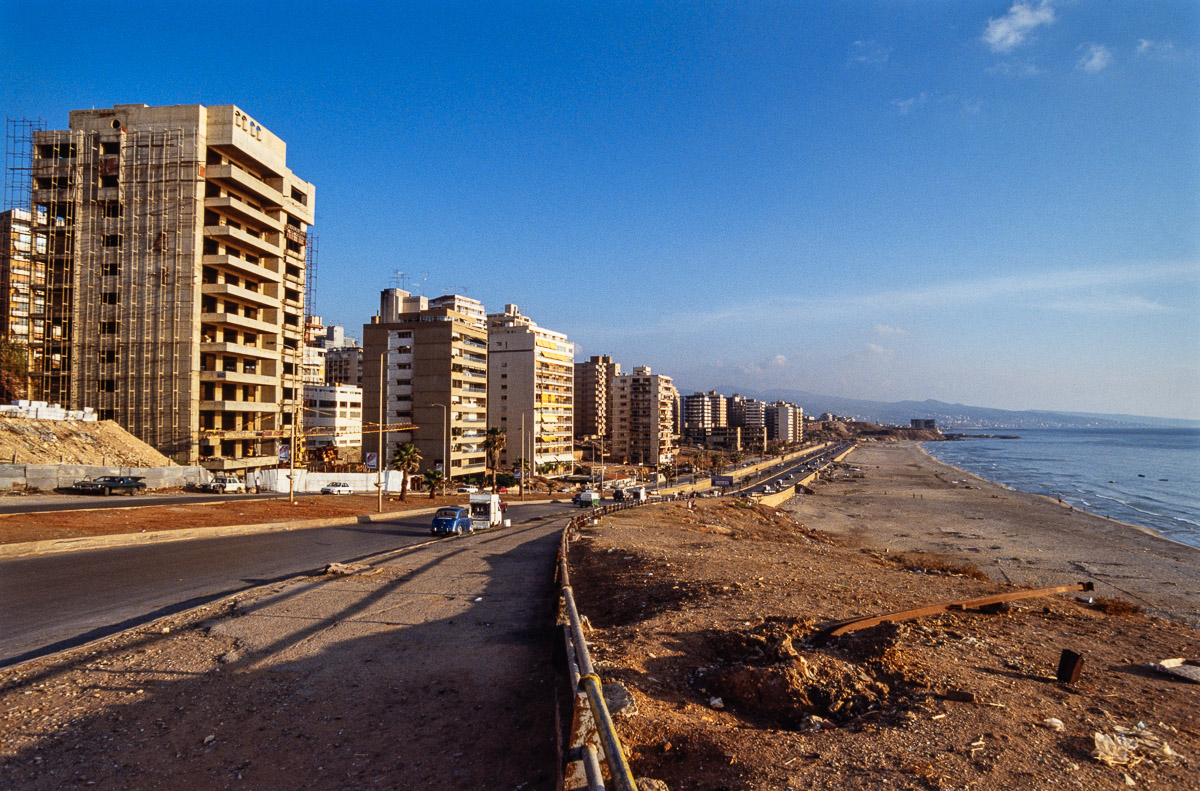 West Beirut and its seafront in 1991 – Photo: © Sebastien Desnoulez
Returning to Lebanon in 1992
I returned to Lebanon in June 1992 to cover another round of the Middle East Rally Championship. I once again travelled through Jounieh, Beirut and the roads used by the event.
I remember that Lebanese soldiers had begun replacing Syrian troops in certain locations. At the time, I did not have the political knowledge required to assess the precise significance of these changes. I simply noticed that some positions and checkpoints were no longer controlled by the same uniforms as the previous year.
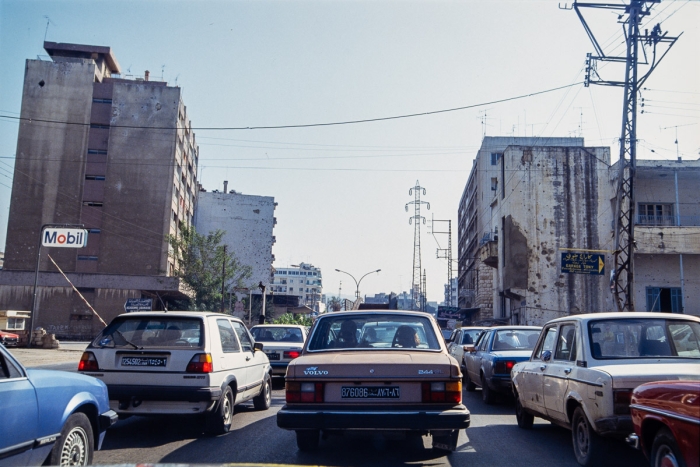
The new photographs of Beirut still show severely damaged buildings, but also heavier traffic and neighbourhoods gradually resuming their activities.
Between my rally-related commitments, I took every opportunity to explore Beirut and photograph the city. This was a deliberate approach: I wanted to discover the places, observe their architecture and preserve a record of the period immediately following the civil war.
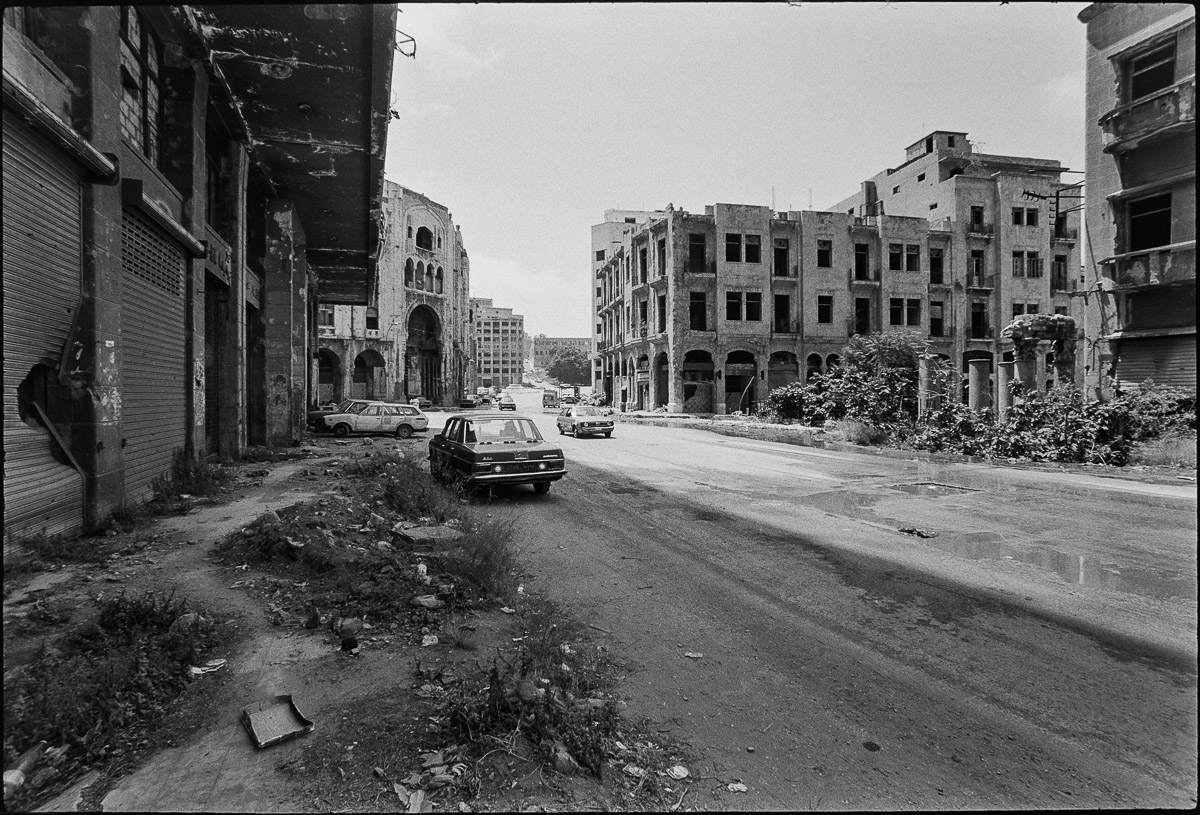 Beirut in 1992 – Photo: © Sebastien Desnoulez
Preserving a Record of Beirut in 1991 and 1992
These photographs were taken alongside my coverage of the rally, with the intention of preserving a record of Beirut in the aftermath of the civil war. The destroyed façades, still-deserted streets, building sites and military presence document a period of transition whose historical value was already clear to me.
These photographs do not claim to recount the civil war or explain the political situation in Lebanon. They provide a record of the country I discovered in 1991 and 1992: the streets of central Beirut, the destroyed buildings, the seafront, the military presence and the signs of a gradual return to urban life.
The circumstances in which they were taken remain essential. I could photograph certain places freely. In others, I relied on the advice of my Lebanese friends and their knowledge of the neighbourhoods, the groups present and the unspoken rules. This caution limited the scope of the report, but allowed me to work without placing the team in difficulty.
A Lasting Attachment to Lebanon
From the years between December 1990 and December 1992, and the fifteen weeks spent alongside Sadri Barrage and Yves Aboukhaled, I retain a deep attachment to Lebanon and its people.
I thank them for the culture they introduced me to, for their friendship and for the countries I was able to visit thanks to them, while following rounds of the Middle East and European rally championships. Without their trust and their knowledge of the region, many of these photographs would never have existed.
The series continues in Jounieh, the Chouf, Byblos, Beiteddine, Zahlé and the Bekaa Valley. These photographs are presented in the article Jounieh and the Chouf in 1991-1992: Photographs During the Lebanon Rally.
Click on the photographs below to view them full screen.
All photographs on this website are protected by copyright © Sebastien Desnoulez. No use is permitted without the author’s written consent.
Legal notice
About the Author
Sebastien Desnoulez is a photographer, author and image-maker based in Paris. His work encompasses architectural, landscape and travel photography, with particular attention to composition, lines, light, blur and visual accidents. Trained in photography in the mid-1980s, he covered Formula One events and produced reports around the world before developing a form of fine art photography based on the tension between graphic precision and visual instability. He also shares his technical experience through practical articles for photography enthusiasts, drawing on a strong visual culture acquired through both film and digital photography.
Tags