

Jounieh and the Chouf in 1991-1992: Photographs During the Lebanon Rally

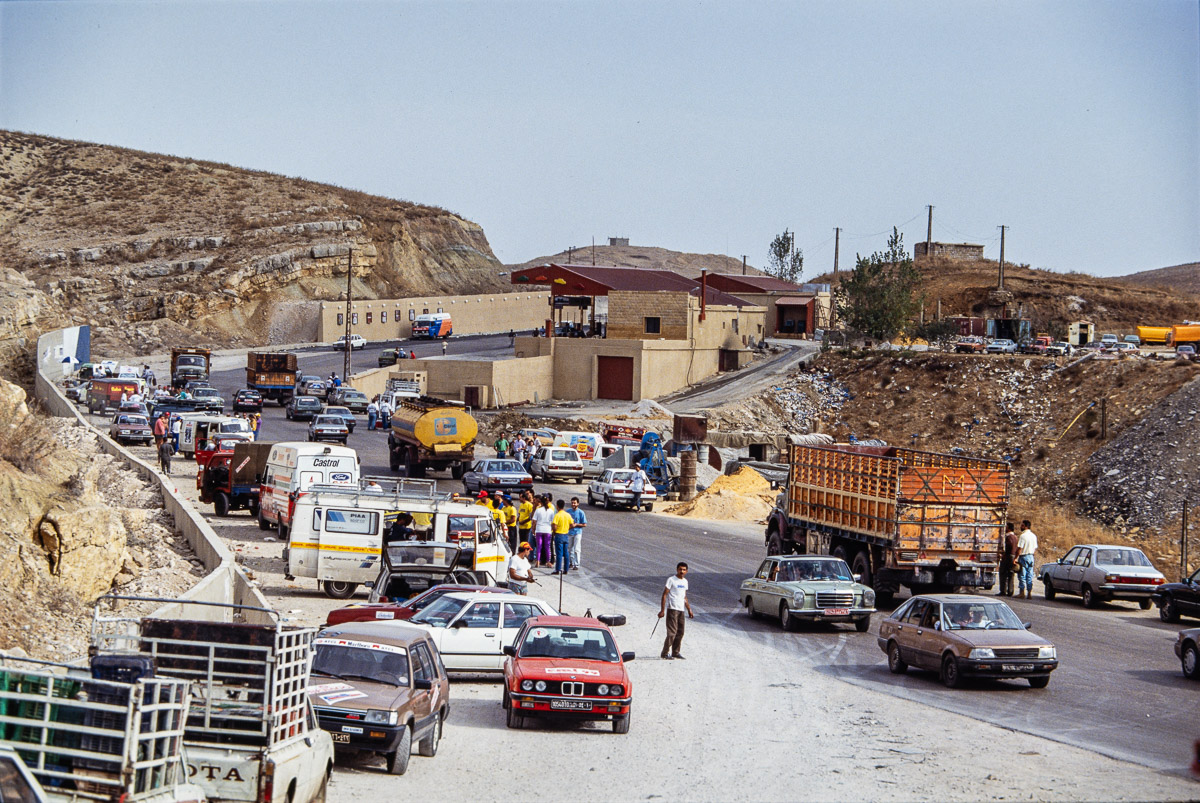
In 1991 and 1992, my assignments for the Middle East Rally Championship took me from Jounieh to the roads of the Chouf, via Byblos, Beiteddine, Zahlé and the heights overlooking the Bekaa Valley. These photographs show the landscapes of Mount Lebanon, the towns crossed by the rally and the military presence that remained visible shortly after the end of the civil war.
These stays followed on from my report on Beirut and Lebanon in 1991 and 1992. At the time, I was part of Saudi driver Mamdouh Khayat’s media team, alongside Sadri Barrage and Yves Aboukhaled, covering his participation in the championship events.
Jounieh
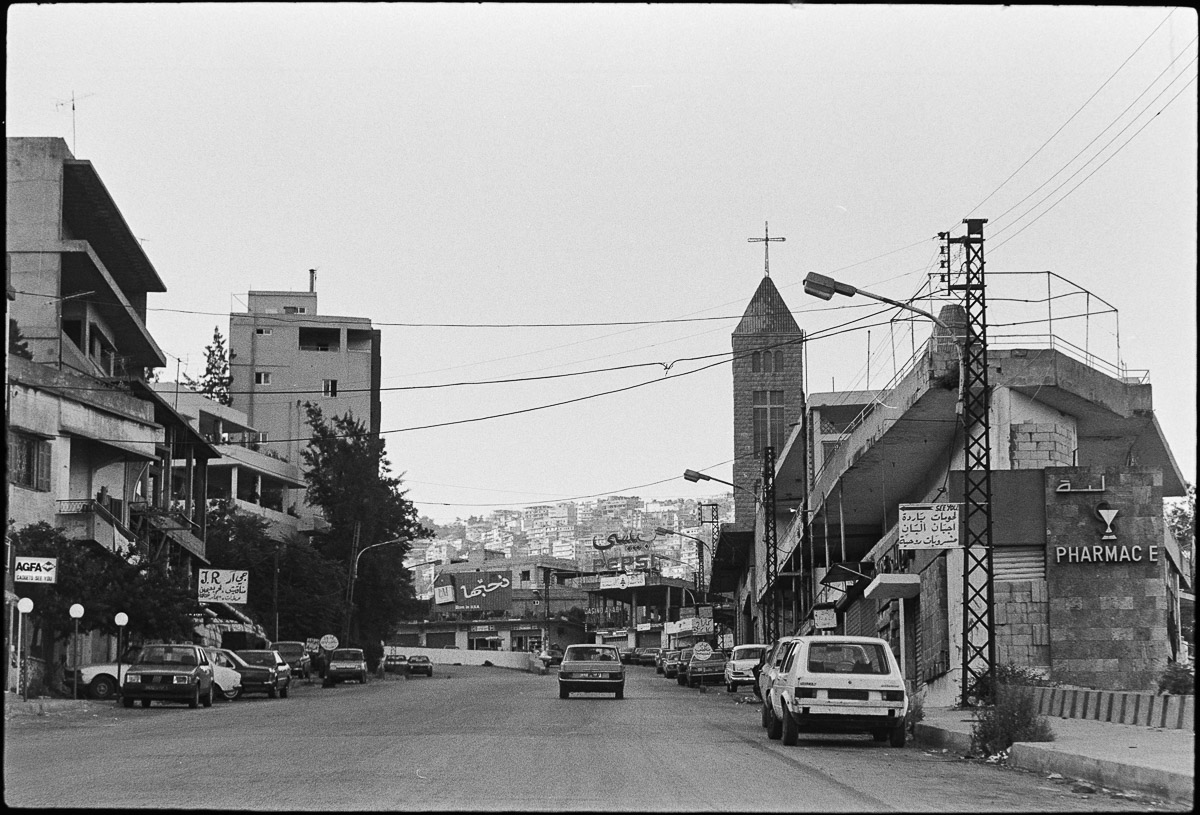
During my stays in Lebanon, the media team was based in Jounieh, a city north of Beirut that was regarded at the time as one of the country’s main Christian strongholds.
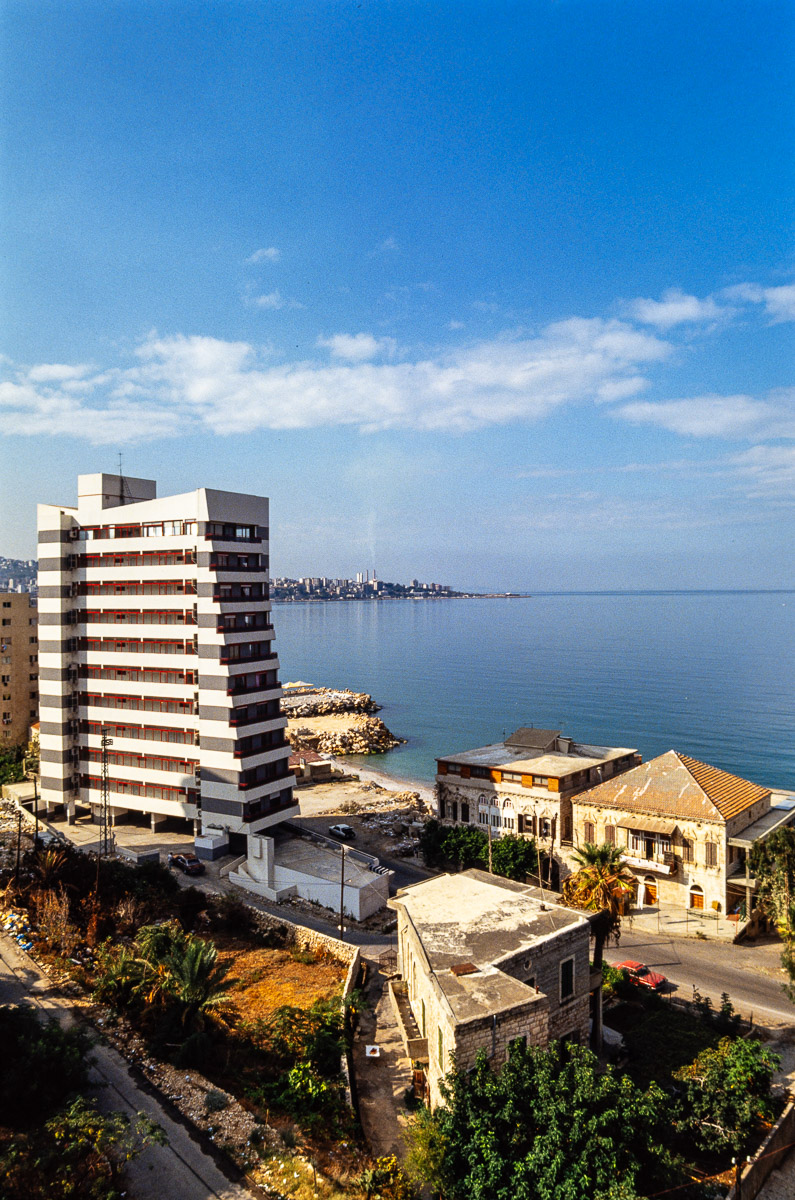
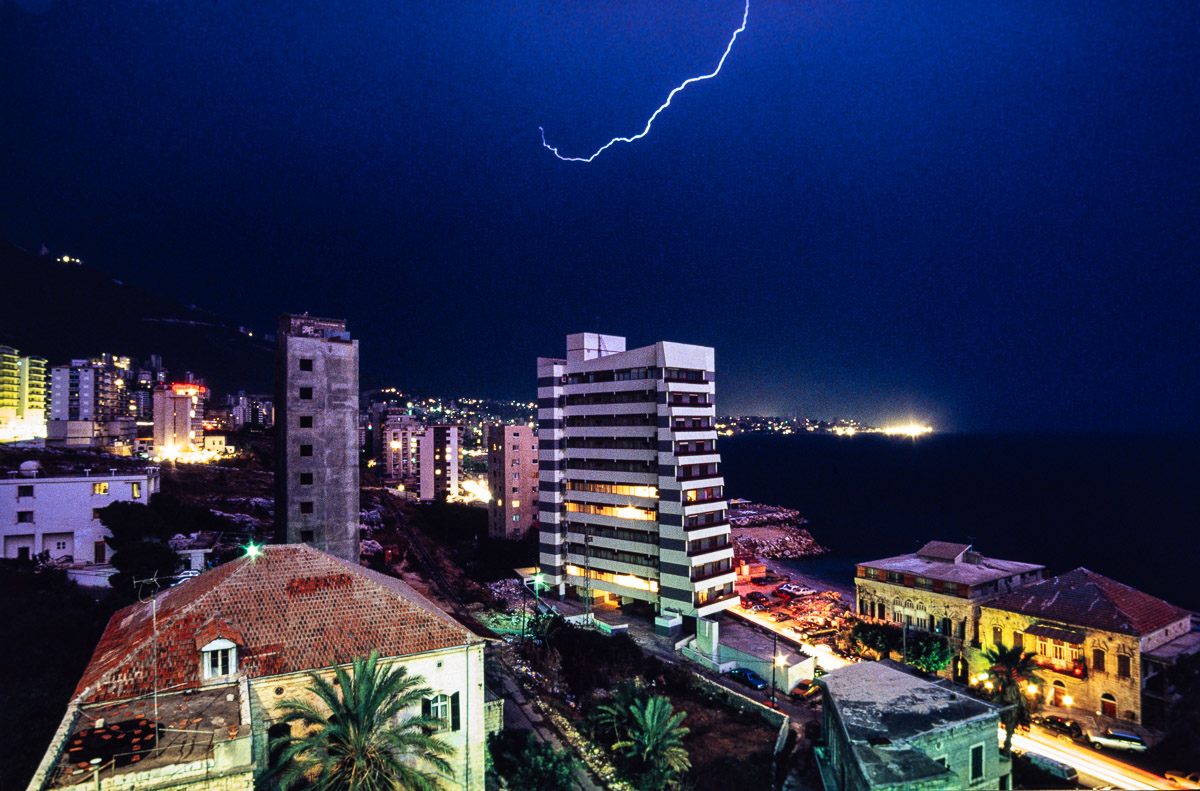
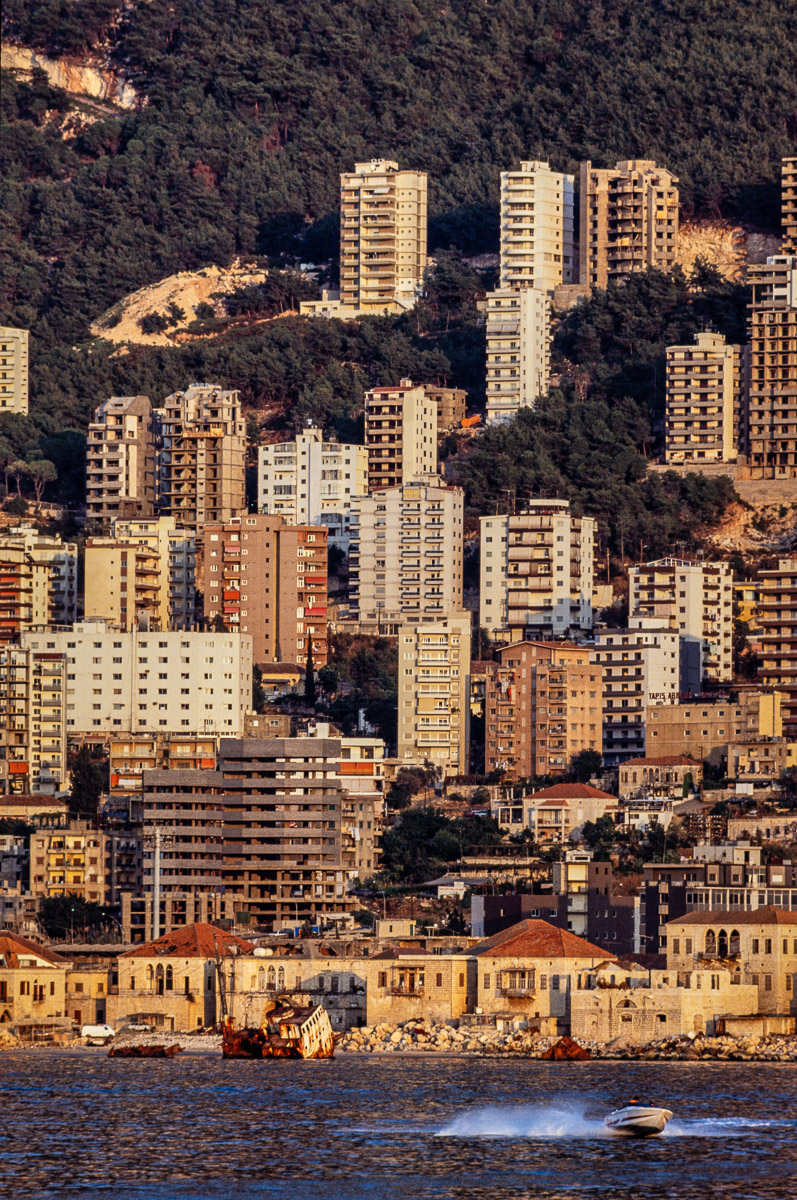
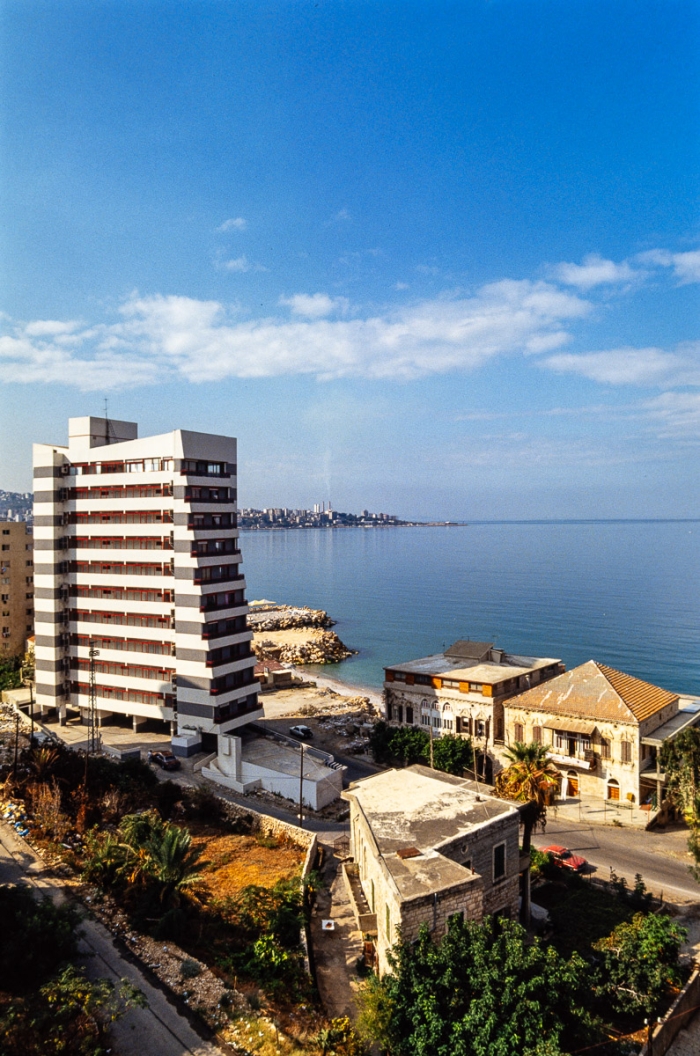
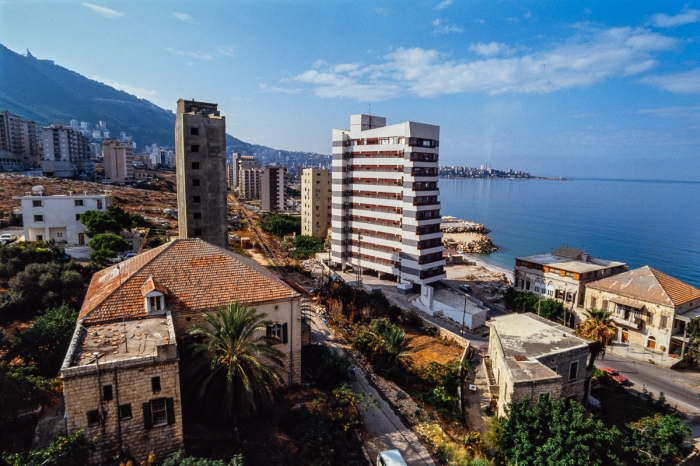
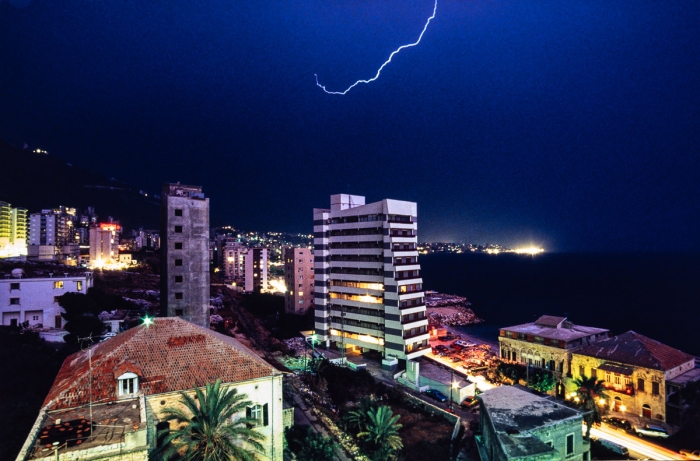
From my hotel room, I photographed the same neighbourhood several times. In the foreground were traditional houses with tiled roofs, overlooked by a recently constructed building that appeared to have escaped the destruction caused by the war.
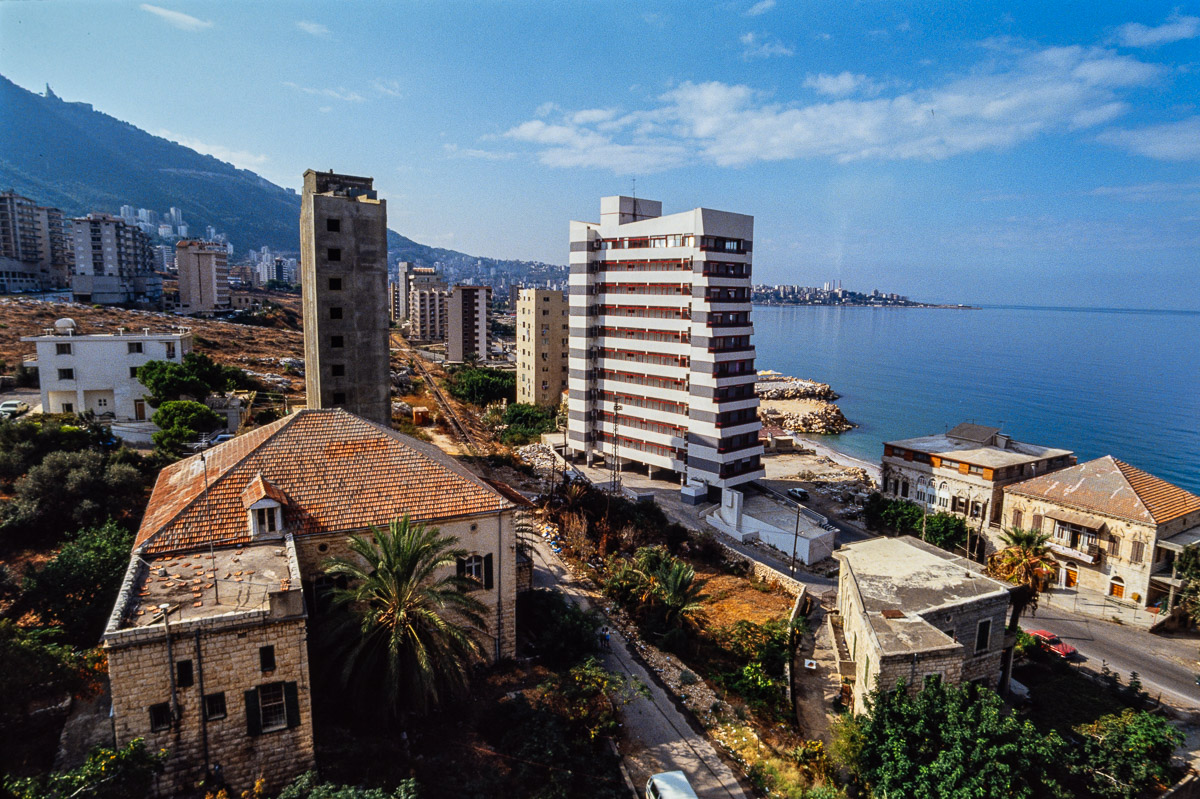 Traditional houses and modern buildings photographed from my hotel room in Jounieh in 1991 – Photo: © Sebastien Desnoulez
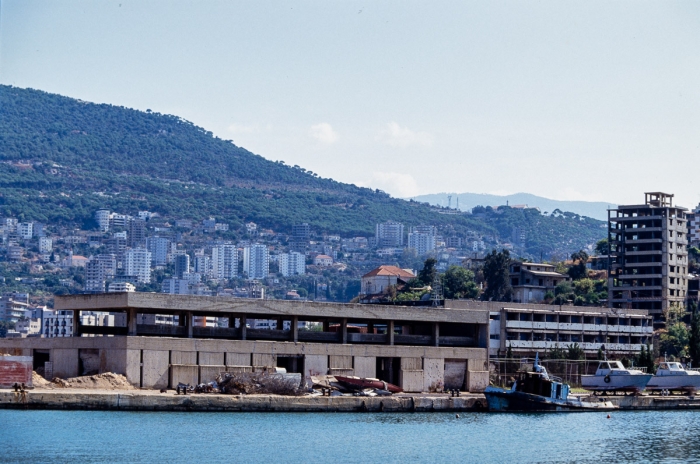
The rally press room was located at the Automobile and Touring Club of Lebanon, the ATCL, in Kaslik-Jounieh. The club had a large complex on the Mediterranean coast, accommodating journalists, organisers and the teams taking part in the event.
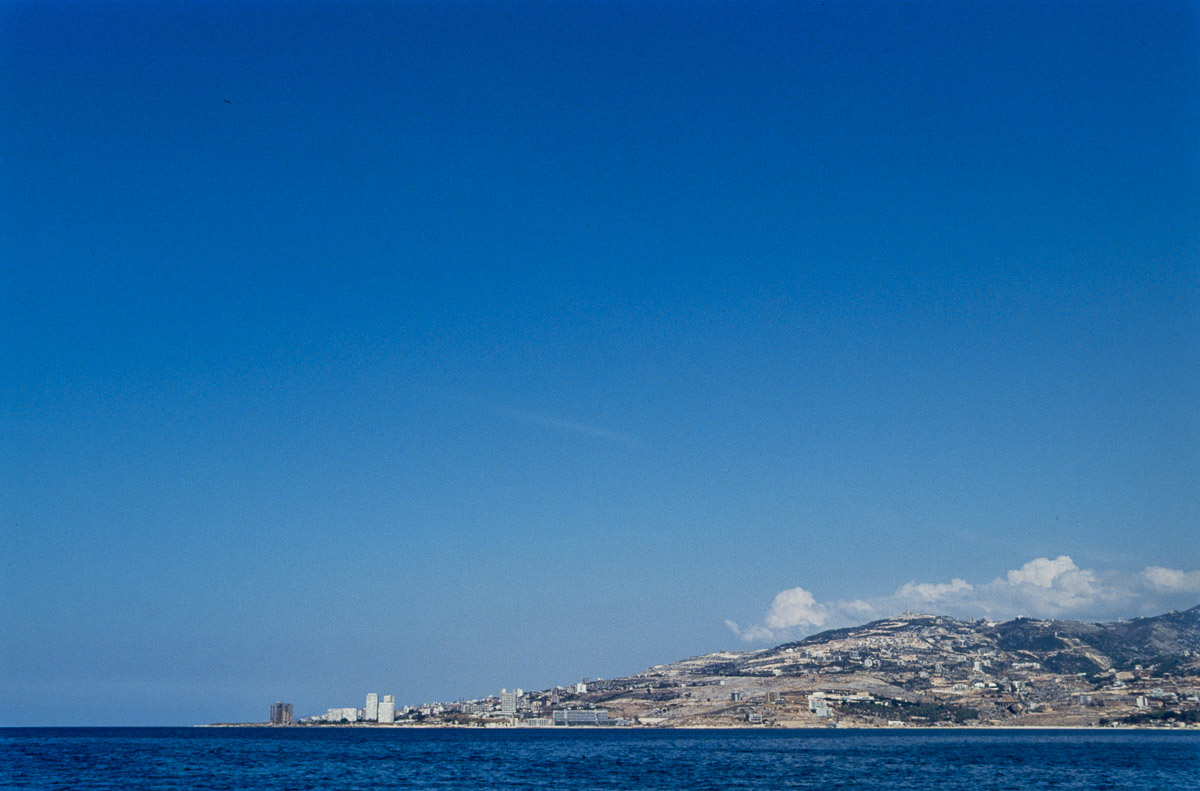
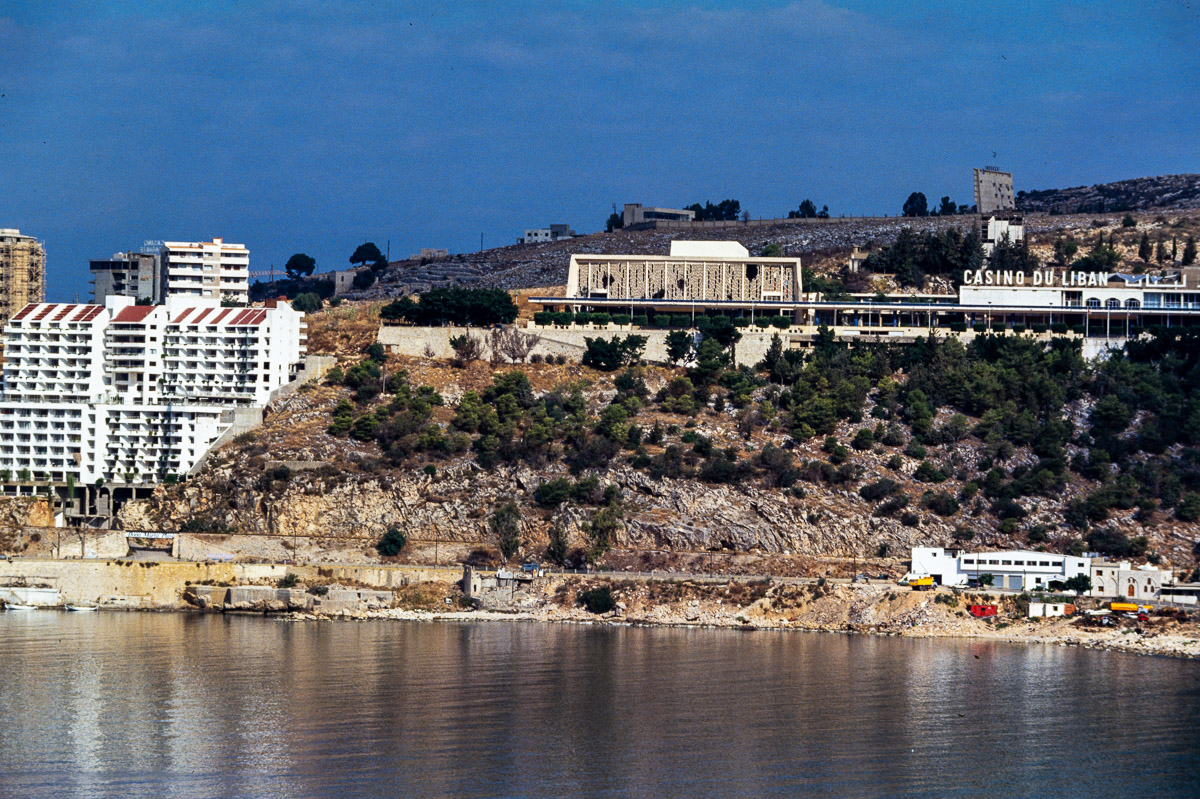
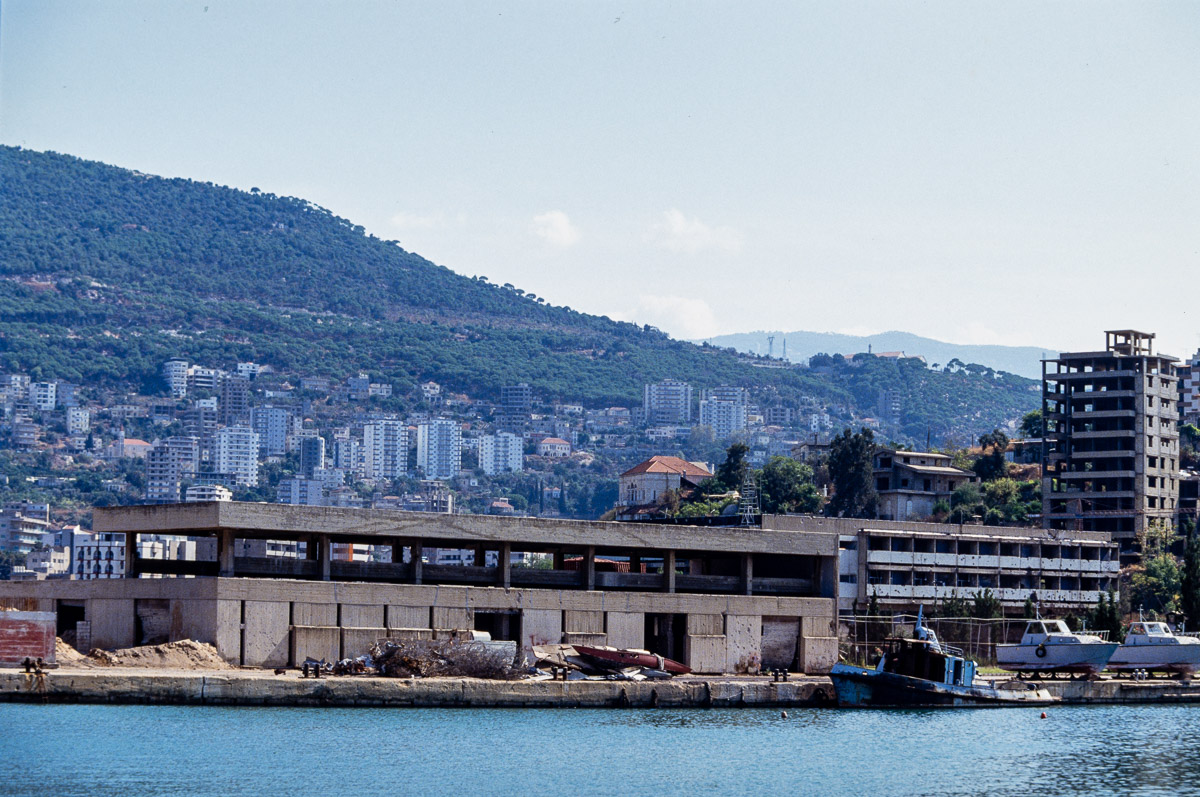
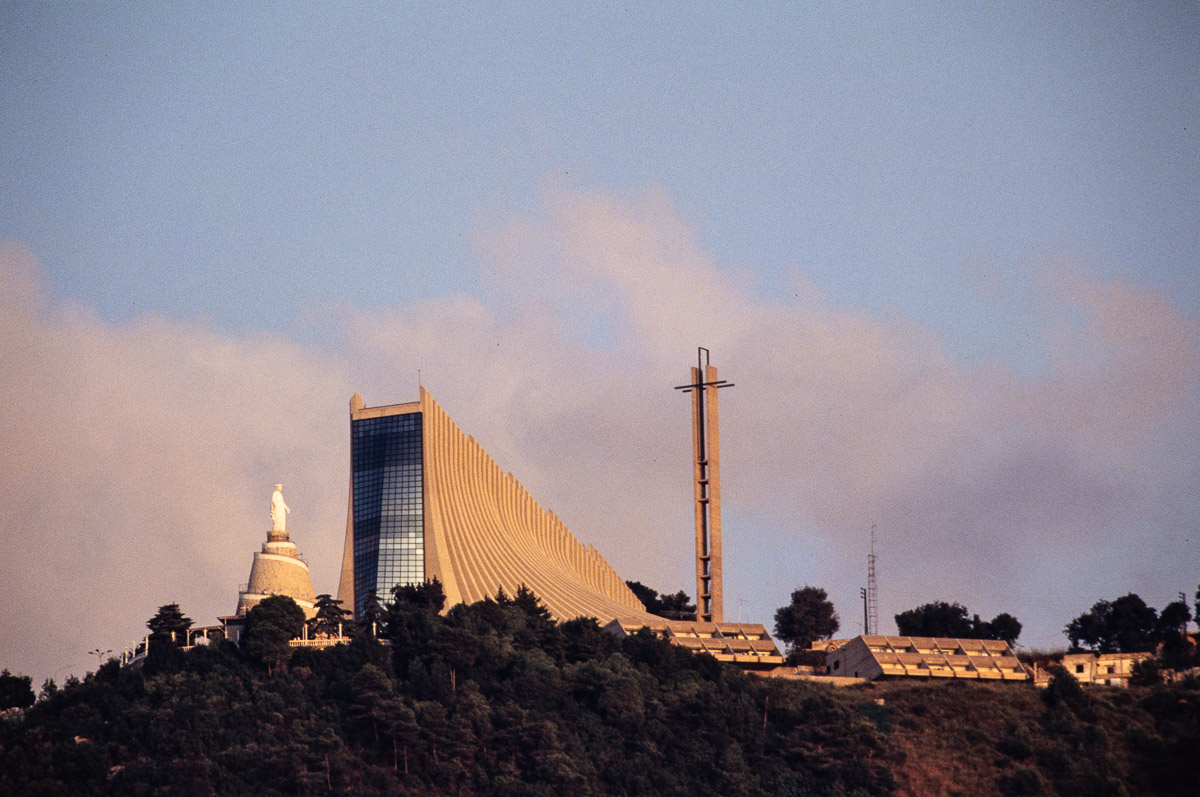
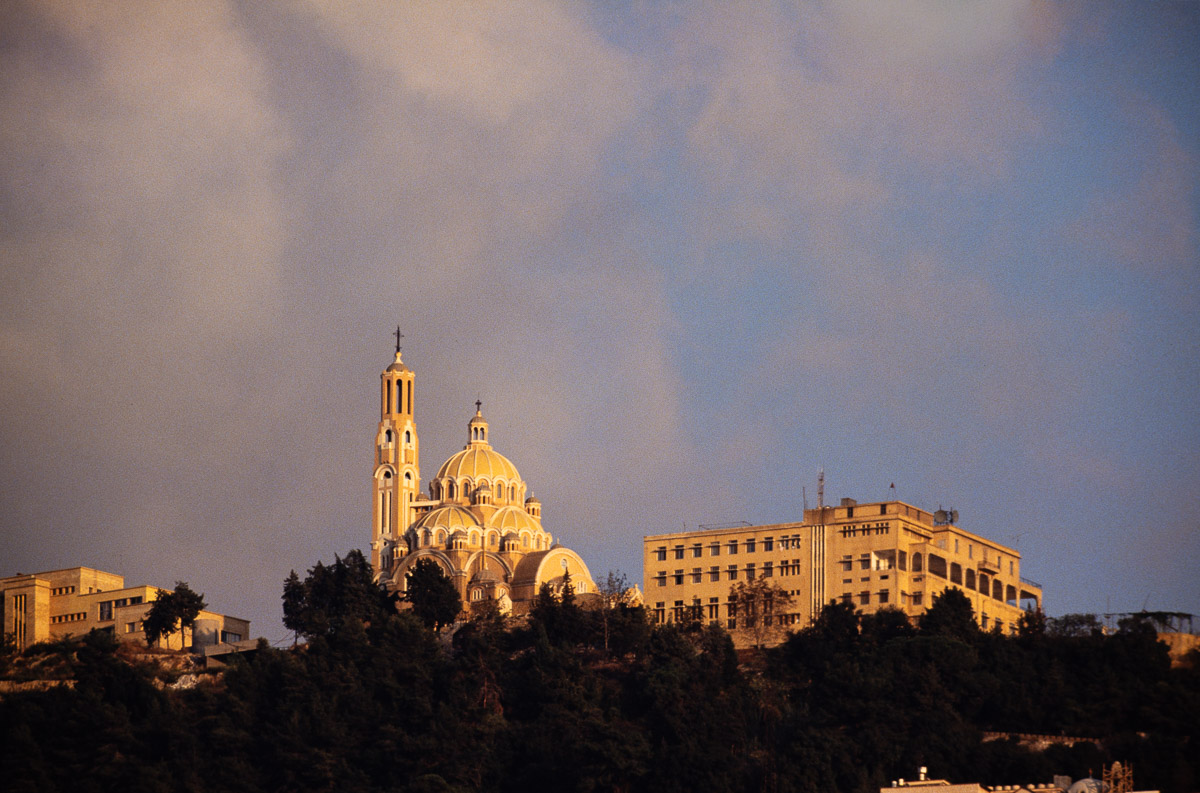
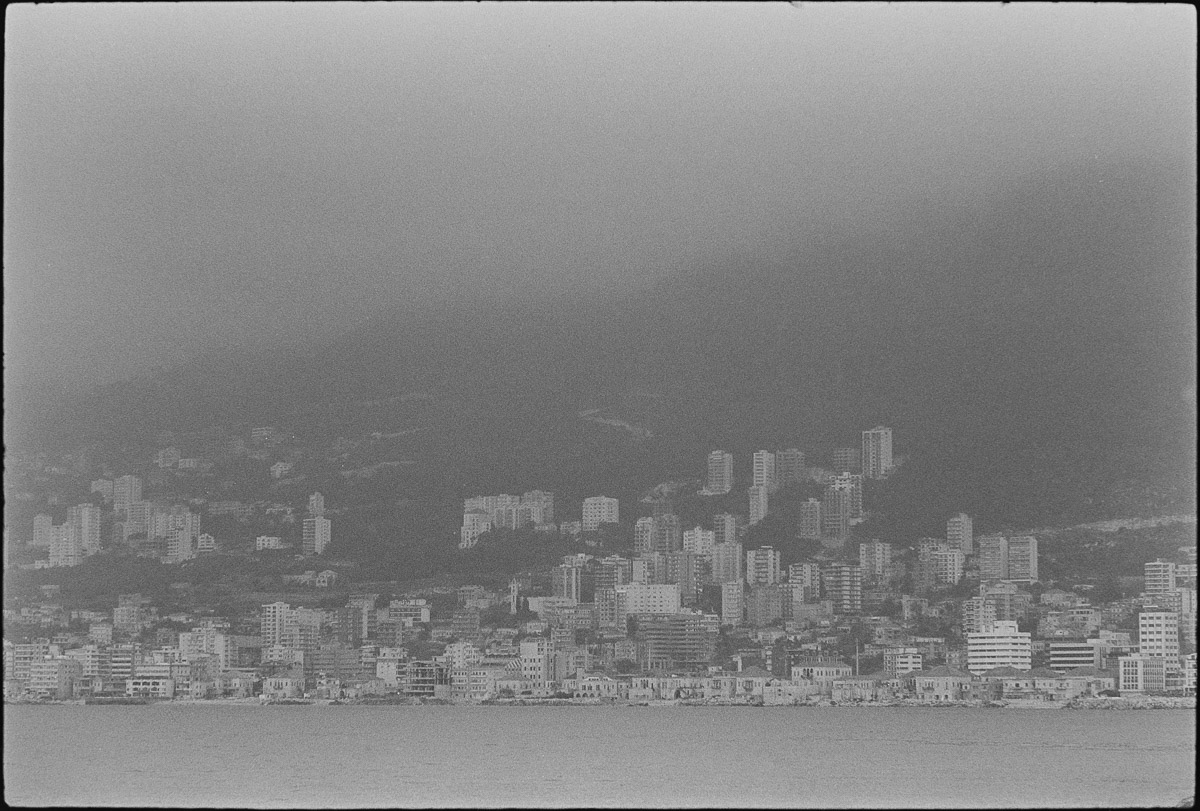
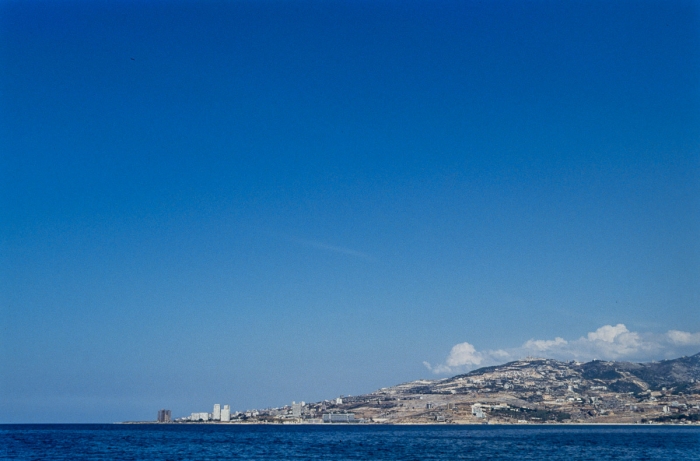
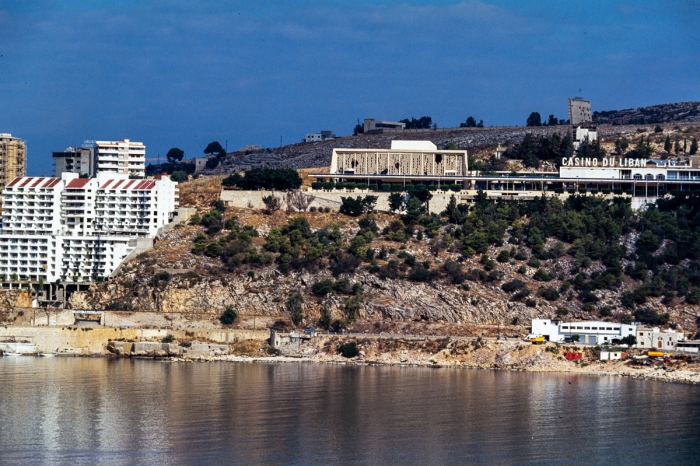
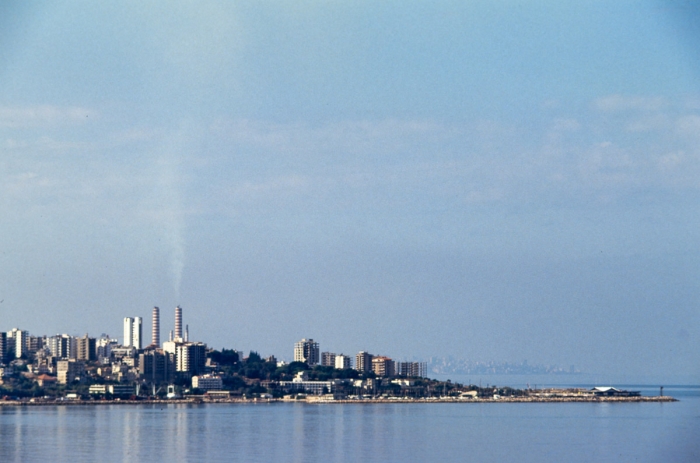
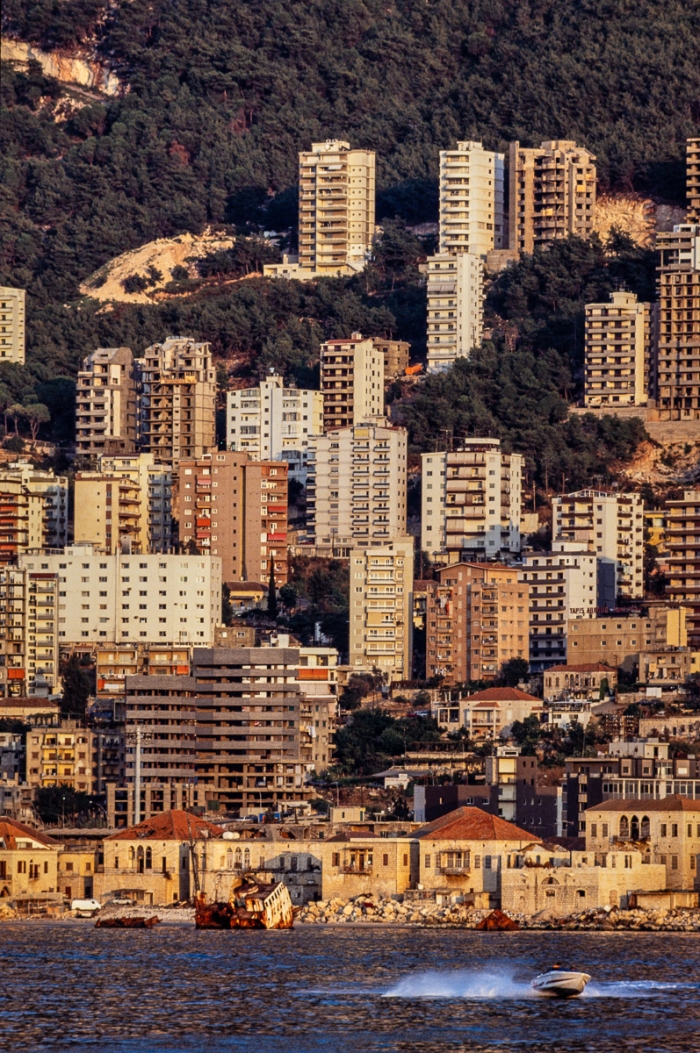
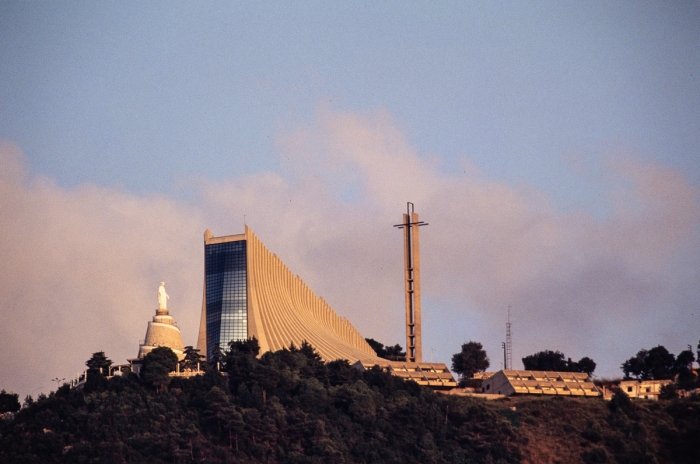
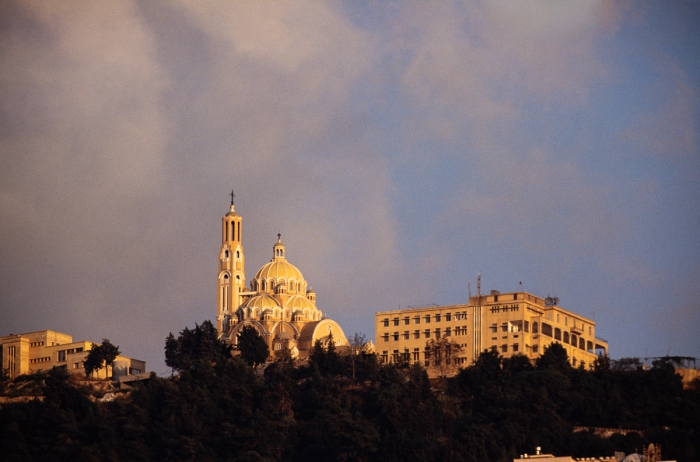
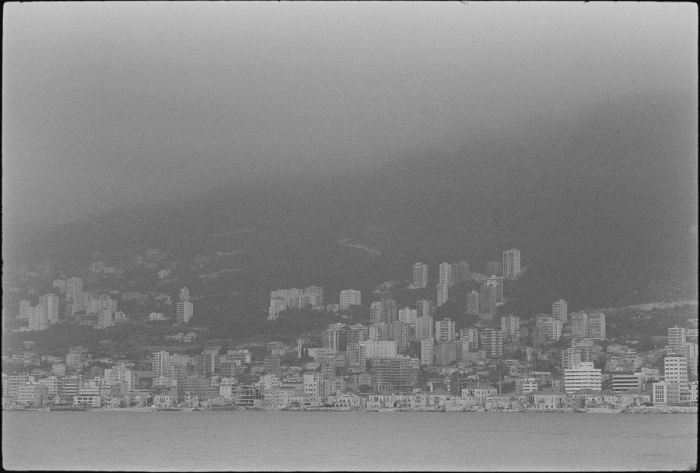
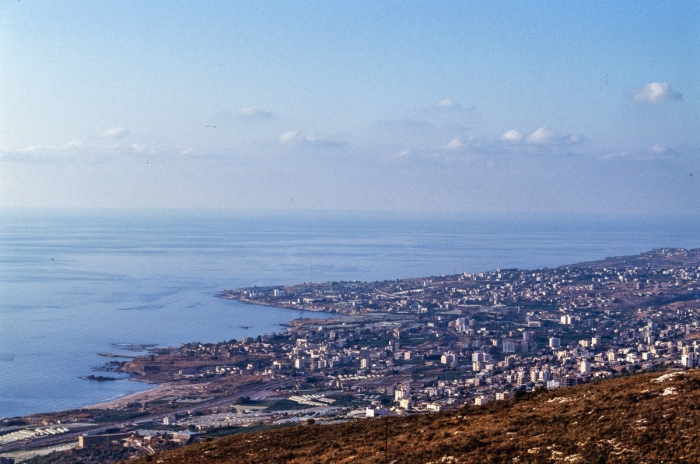
From the ATCL, I photographed the Bay of Jounieh, the buildings constructed along the coast and the hills surrounding the city. On the heights above were Our Lady of Lebanon and the Basilica of Saint Paul in Harissa.
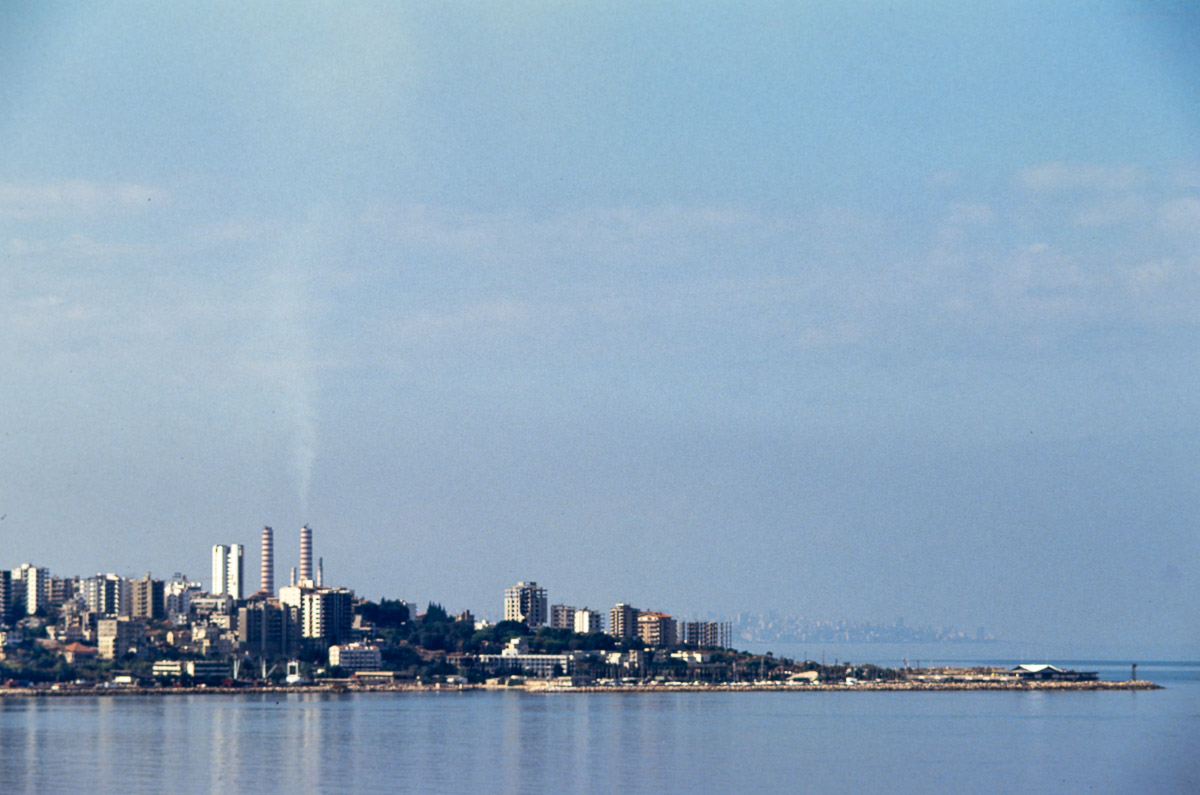 The Bay of Jounieh and the chimneys of the Zouk thermal power station in 1991 – Photo: © Sebastien Desnoulez
The two large striped chimneys visible south of the bay belonged to the Zouk thermal power station. Their smoke dominated part of the coastline and recalled the importance of electricity generation in a country where power cuts remained frequent.
Power Cuts
For a visitor arriving from a country at peace, interruptions to the electricity supply were another discovery. Street lighting did not work everywhere, particularly in the villages we crossed at night between two special stages.
The darkness complicated our journeys and sometimes made it impossible to take photographs documenting the places we passed through. Roads, villages and landscapes disappeared as soon as daylight faded.
In Jounieh, our hotel had a generator, so we were generally spared. When we went out, however, particularly for dinner at a restaurant, the electricity could suddenly be cut off. The residents seemed accustomed to these interruptions and continued their activities as soon as emergency lighting or a generator took over.
The Bay of Jounieh at Sunset
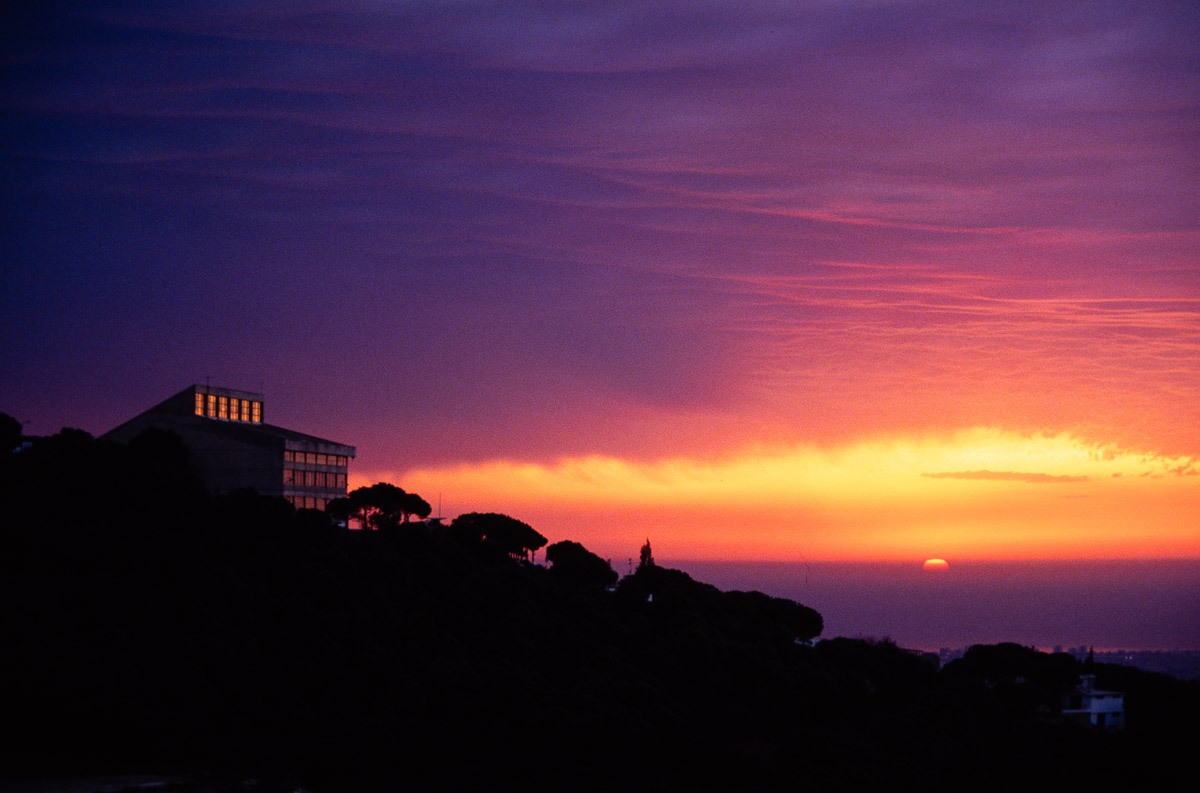
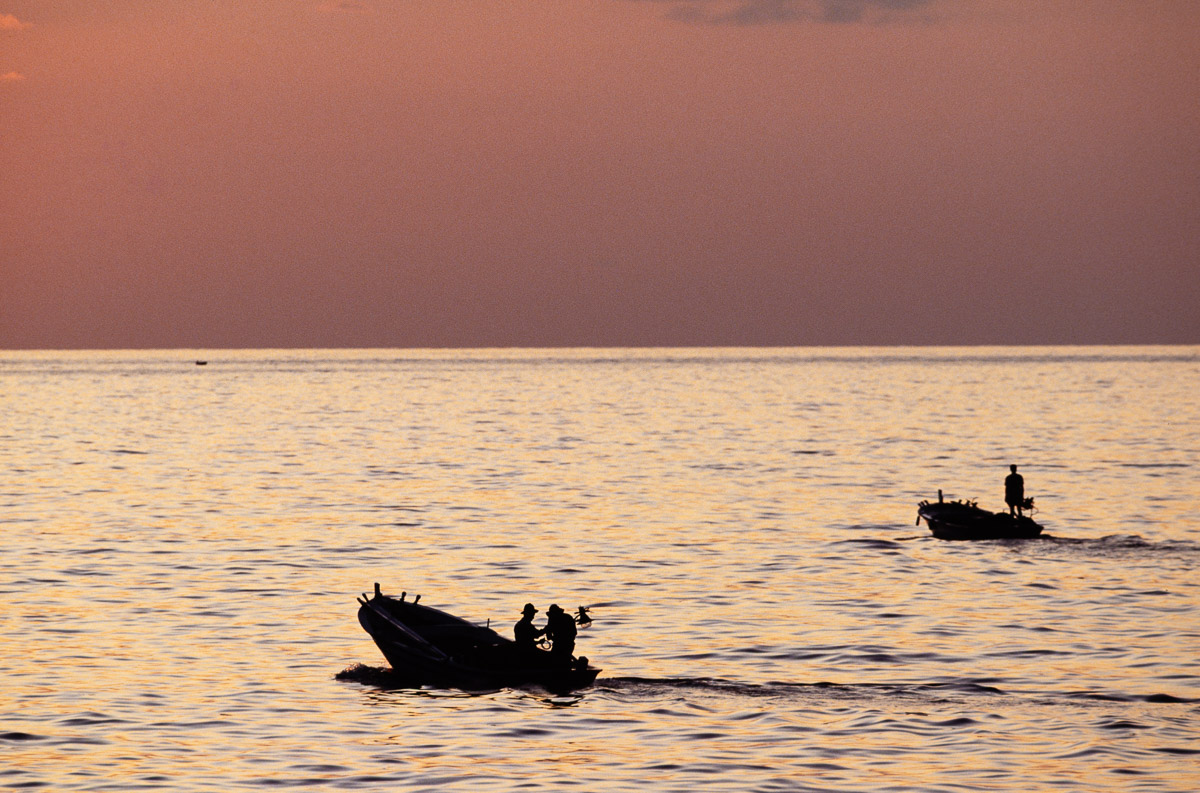
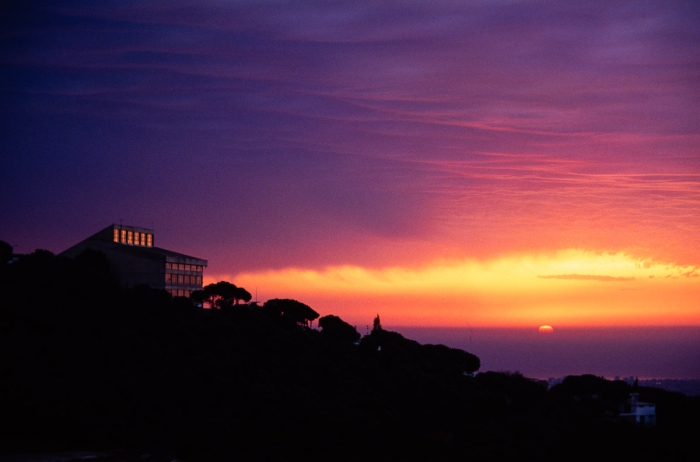
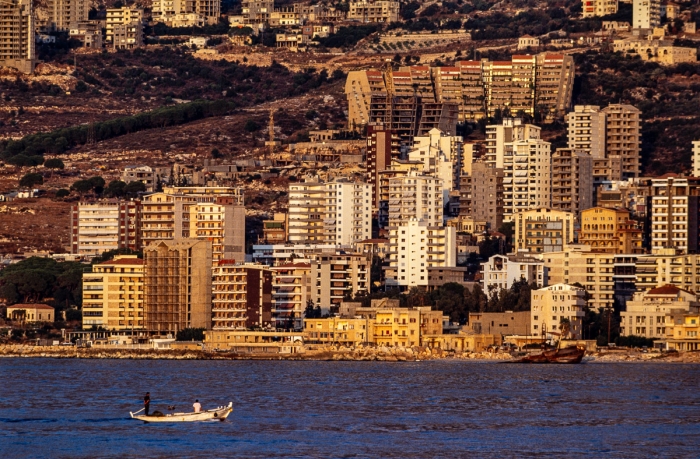
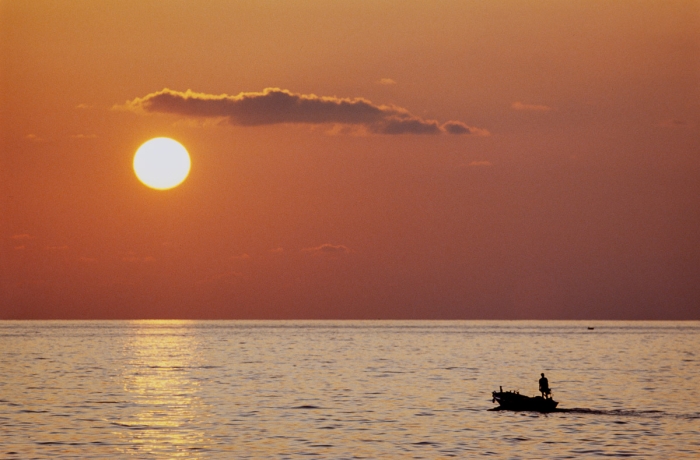
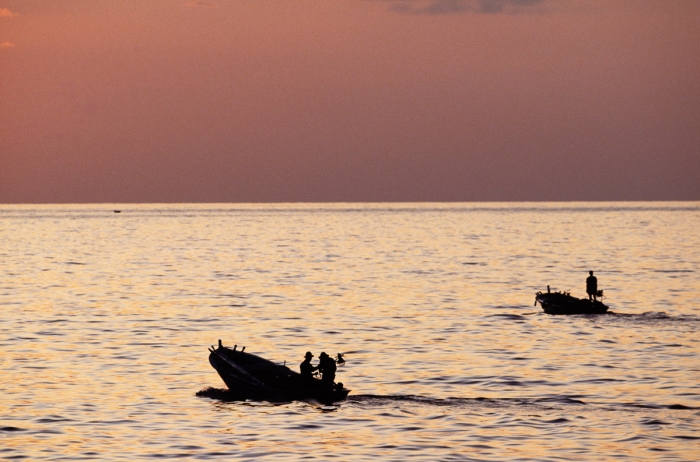
At the end of the rally days, I sometimes returned to the waterfront. From the ATCL complex, I photographed small boats passing in front of the setting sun. These images show another side of Jounieh, away from the dusty roads and activity of the special stages.
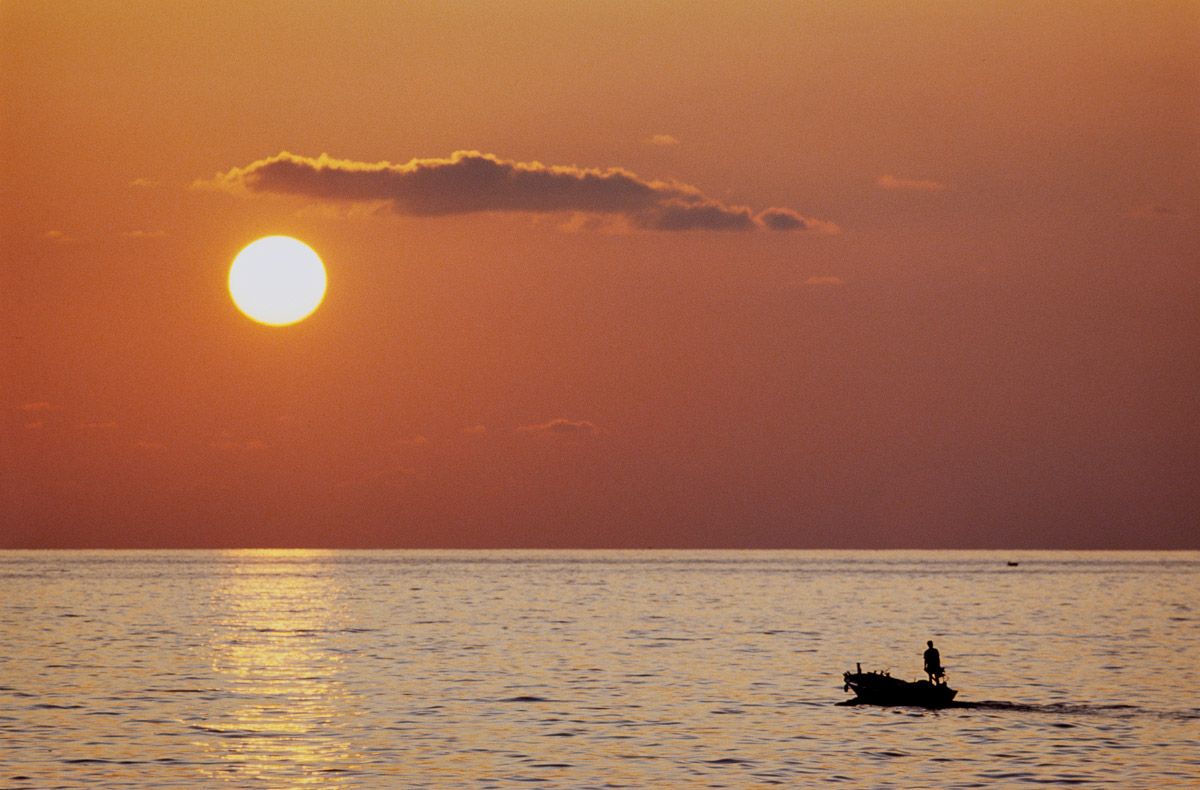 A boat at sunset in the Bay of Jounieh in 1991 – Photo: © Sebastien Desnoulez
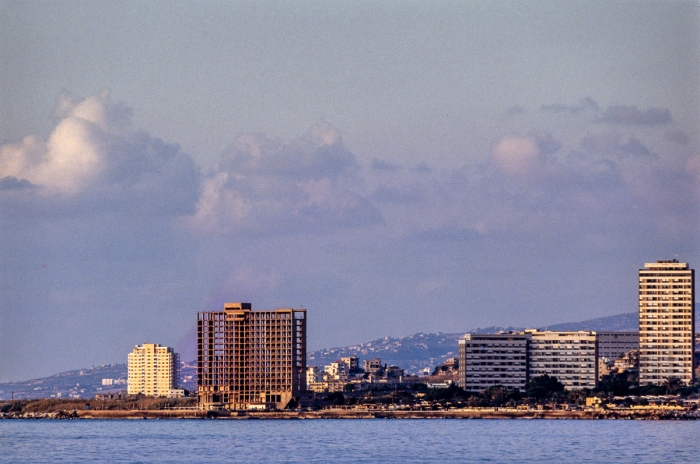
At the bottom of two photographs of the densely built-up seafront, the silhouettes of grounded or sunken cargo ships can also be seen. I was told at the time that they had sunk while delivering weapons during the war.
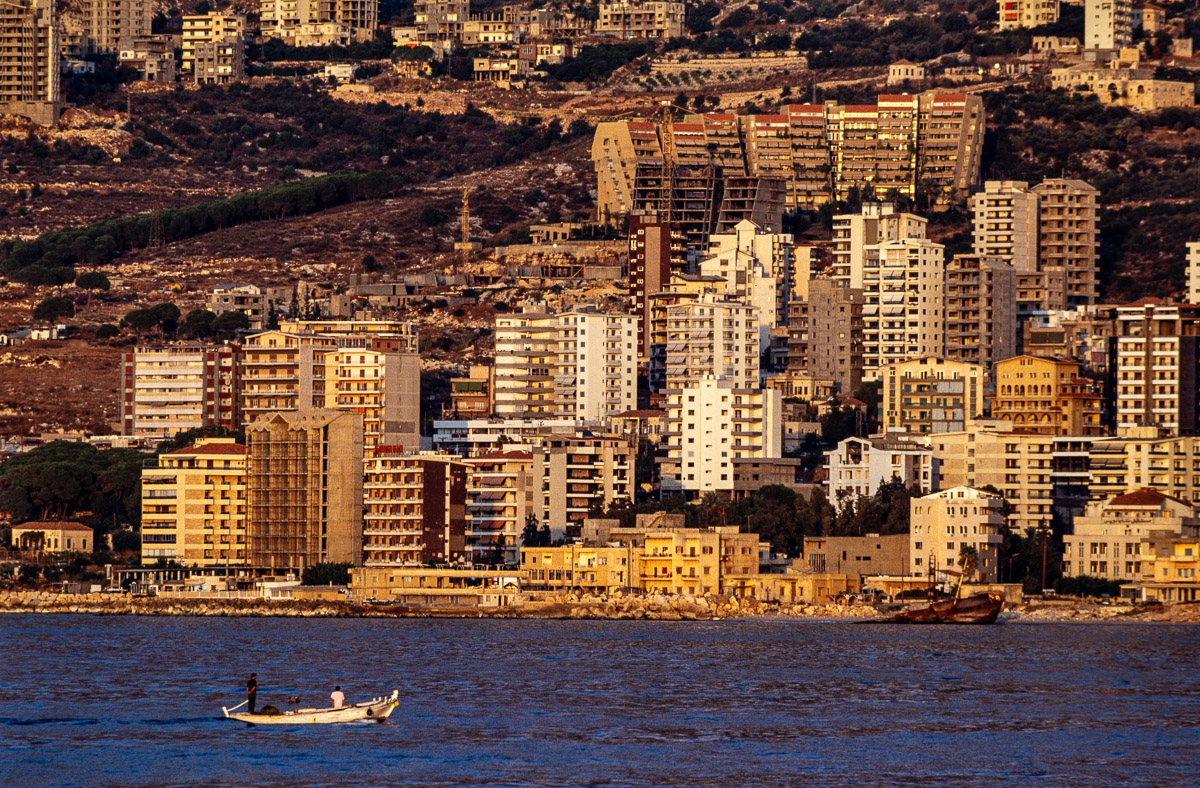 Grounded cargo ship in the Bay of Jounieh in 1991 – Photo: © Sebastien Desnoulez
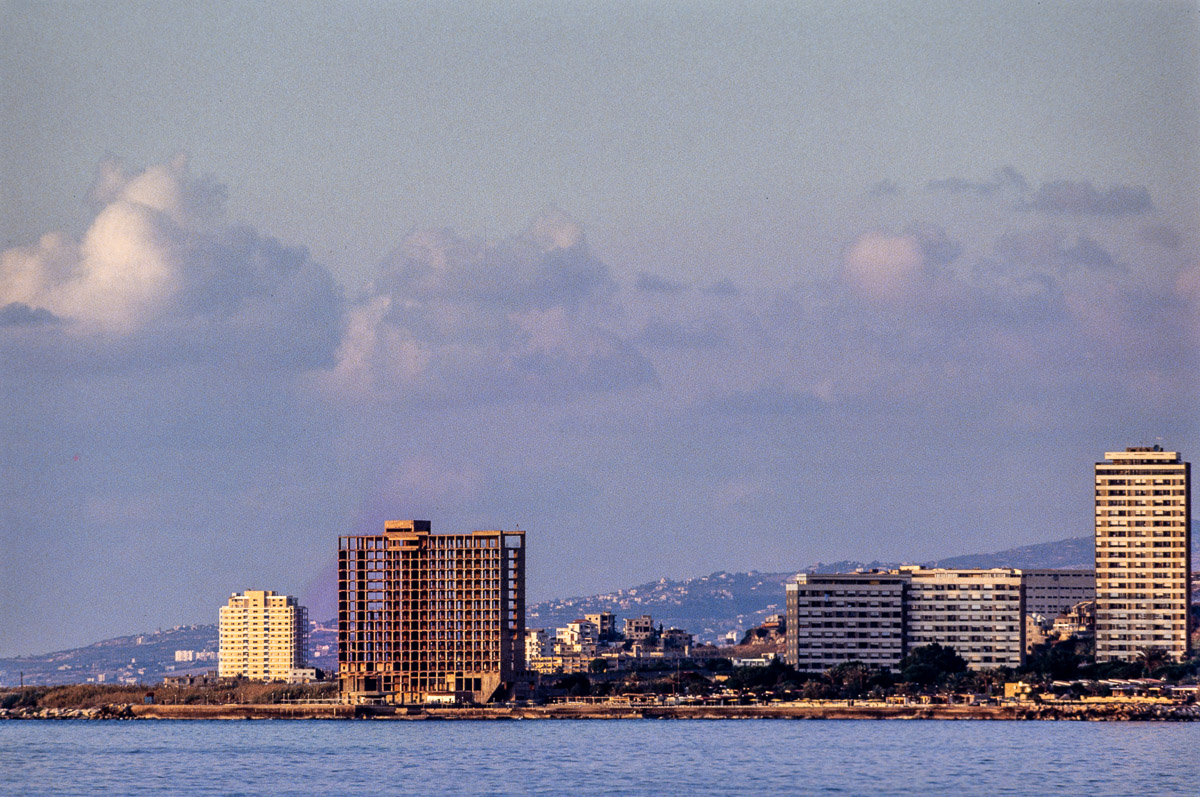
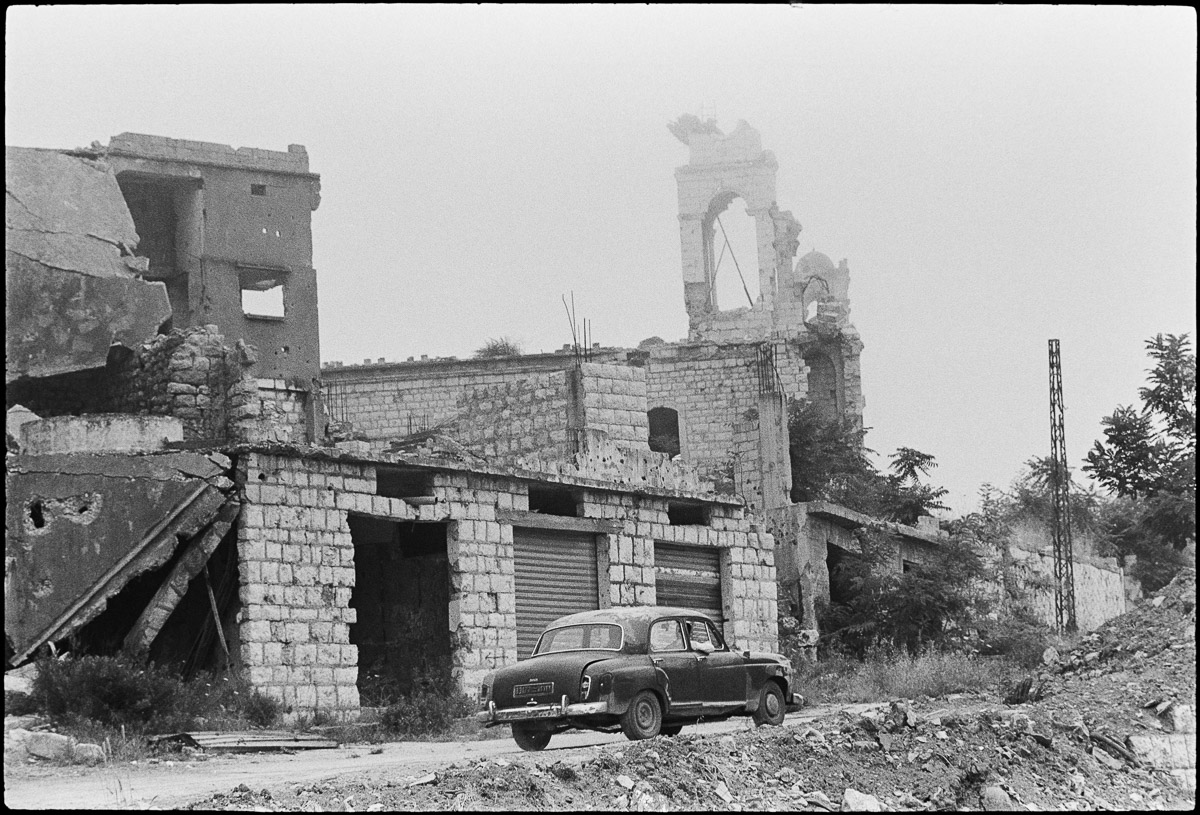
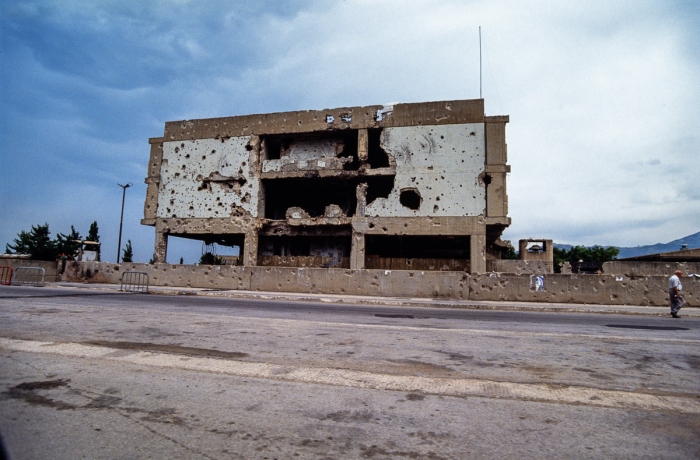
A severely damaged building located near the coast had been described to me as one of the last strongholds of the Lebanese Forces.
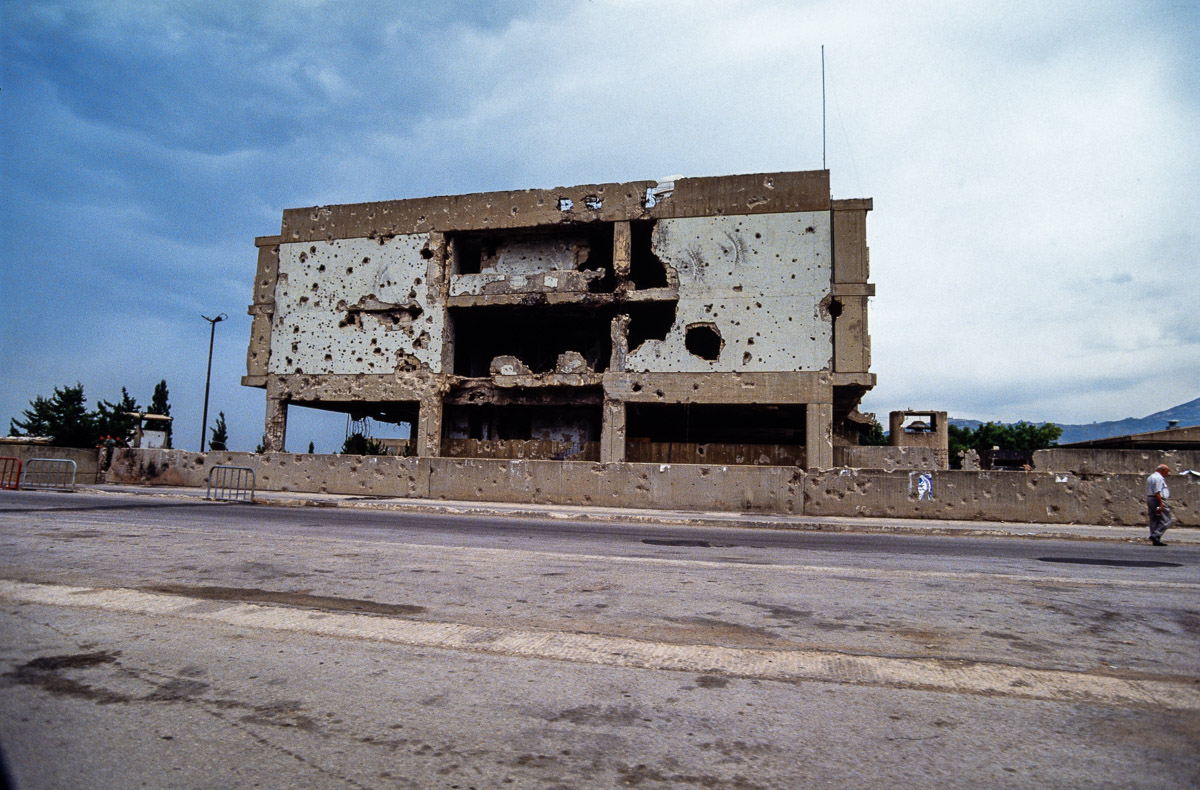 This severely damaged building had been described to me as one of the last strongholds of the Lebanese Forces – Jounieh, 1991. Photo: © Sebastien Desnoulez
A Visit to Tracy Chamoun
Near Jounieh, I accompanied Yves Aboukhaled on a visit to his friend Tracy Chamoun. At the entrance to the residence, I was struck by the presence of a man in his sixties carrying an M16 rifle.
Yves explained that the man was responsible for protecting the property. For someone arriving from a country at peace, seeing an armed guard at the entrance to a private residence was an unusual sight.
I later learned that Tracy Chamoun was the daughter of Dany Chamoun and the granddaughter of Camille Chamoun, a former president of the Lebanese Republic. In 1980, she and her mother had been abducted by Phalangist militiamen during the attack on the National Liberal Party.
A Stop in Byblos, or Jbeil
Another journey took us to Byblos, also known as Jbeil, where we were due to have lunch at the harbour. Shortly before arriving, I photographed the city and the coastline from the hills above.
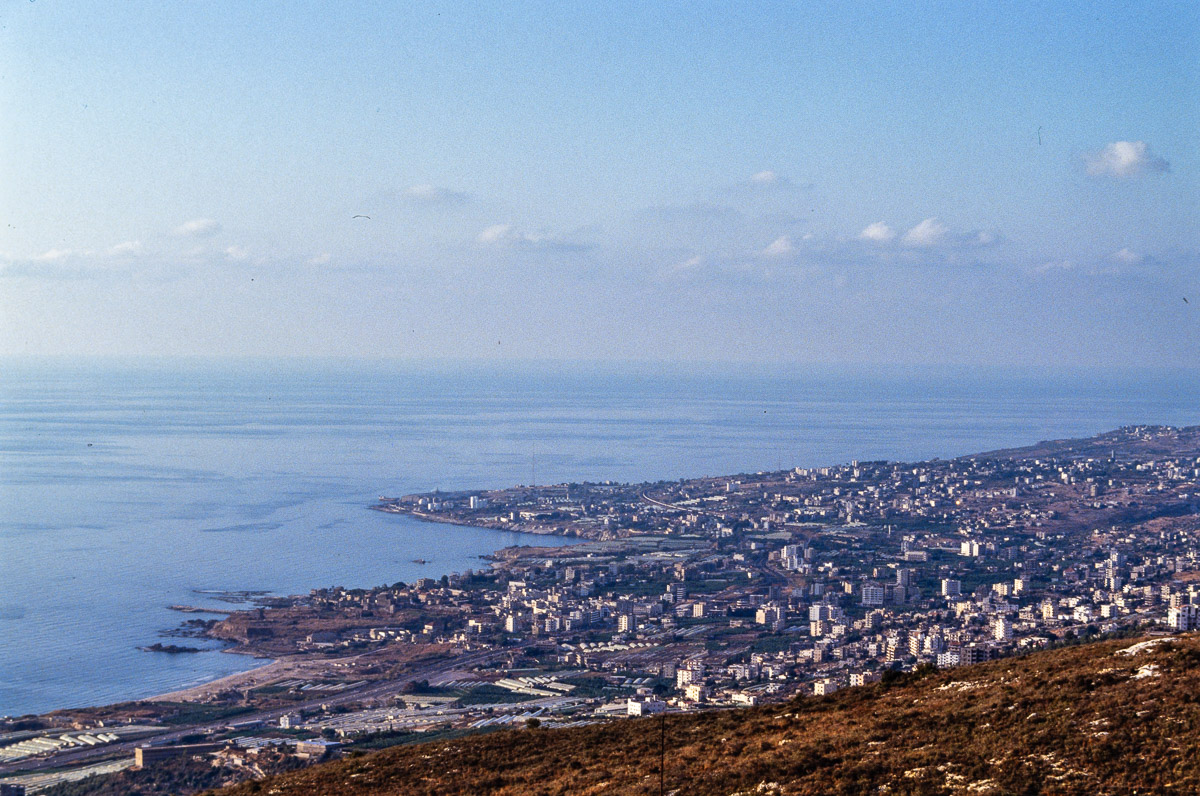 Byblos, or Jbeil, photographed before our arrival at the harbour in 1991 – Photo: © Sebastien Desnoulez
To reach the city, we travelled along a road with a long section that had been converted into an airstrip during the war. Halat airfield made it possible to maintain an air connection when Beirut Airport was closed, unusable or inaccessible to residents of the Christian-controlled areas.
The Roads and Landscapes of the Chouf
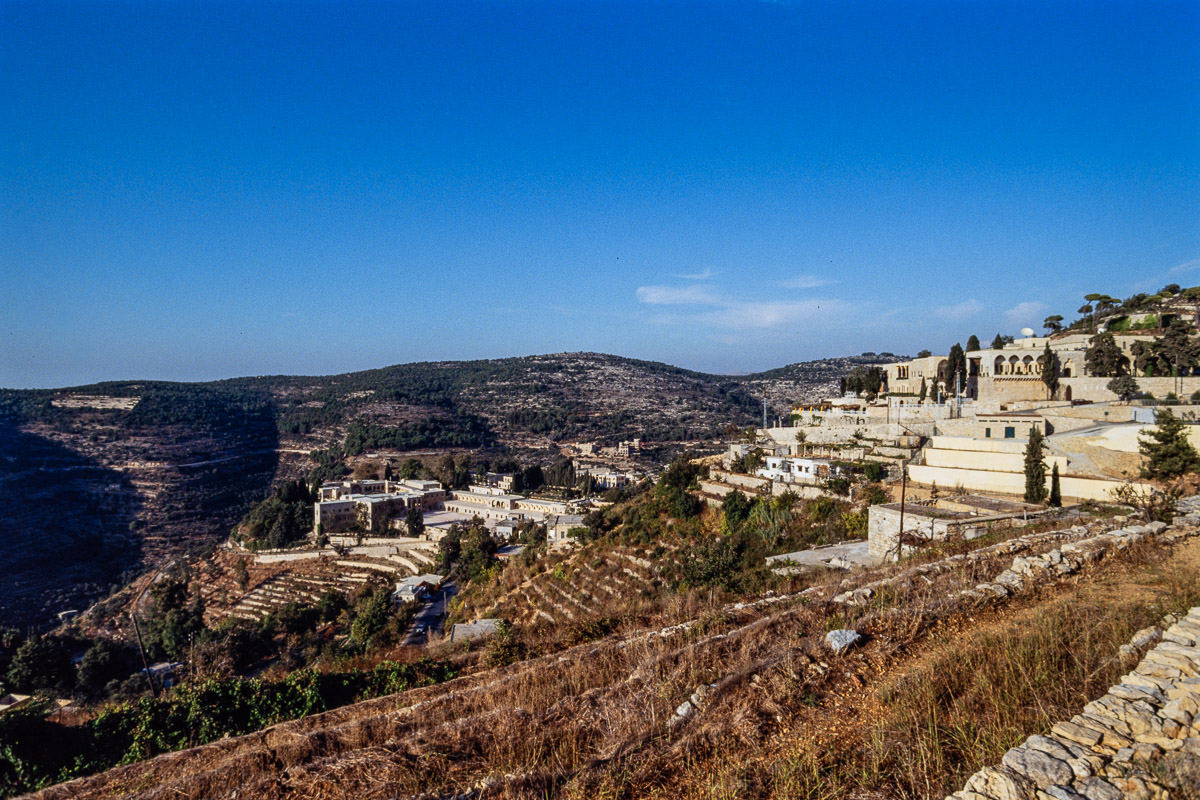
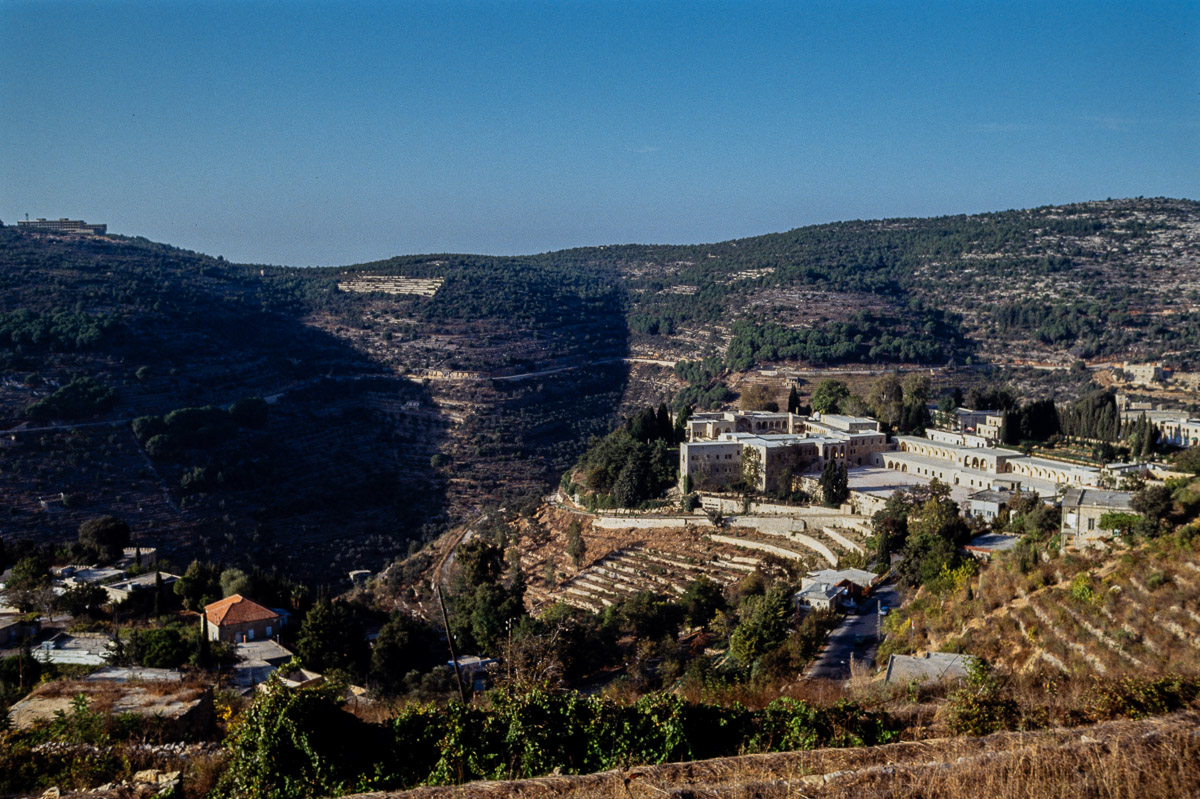
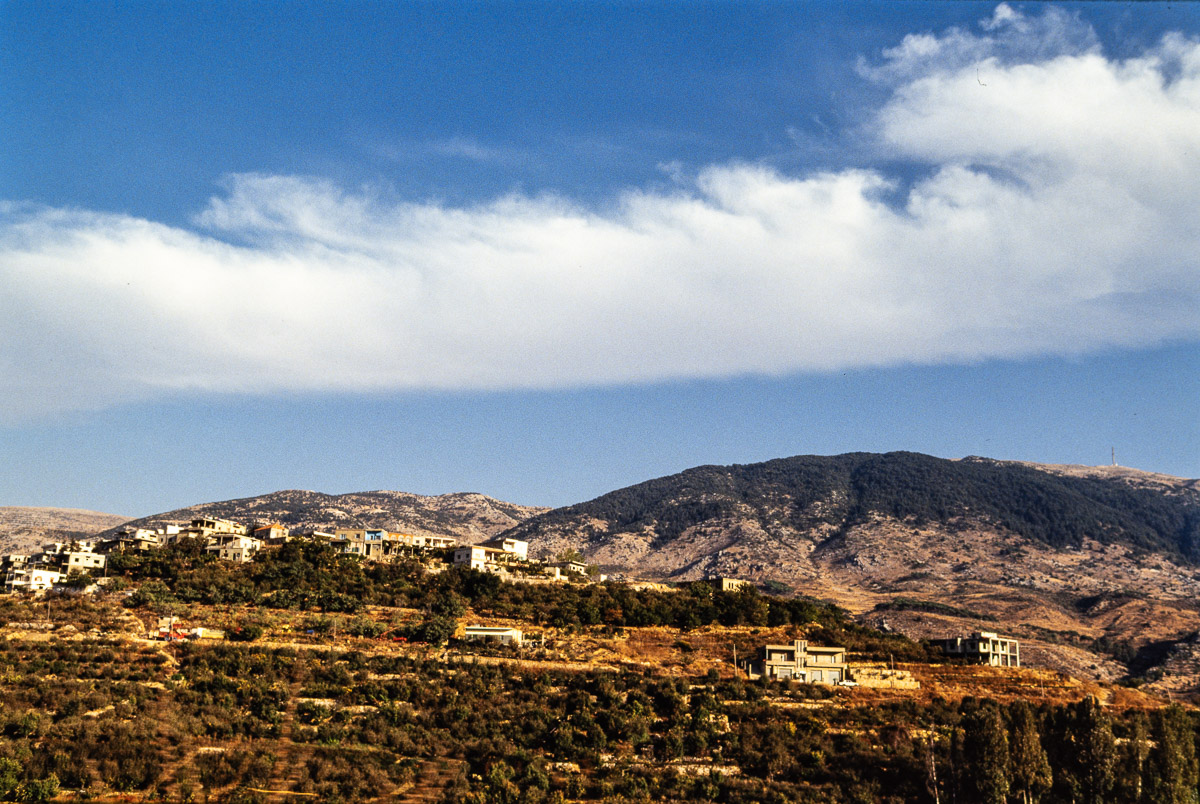
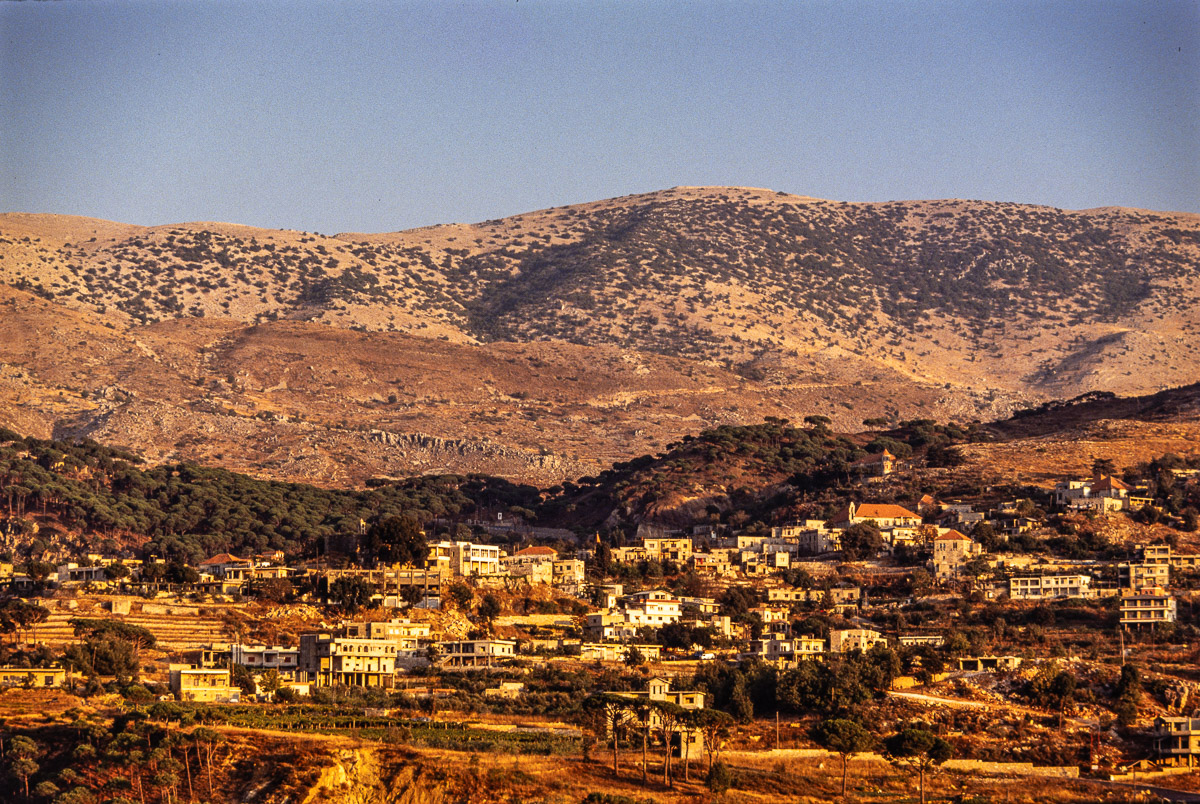
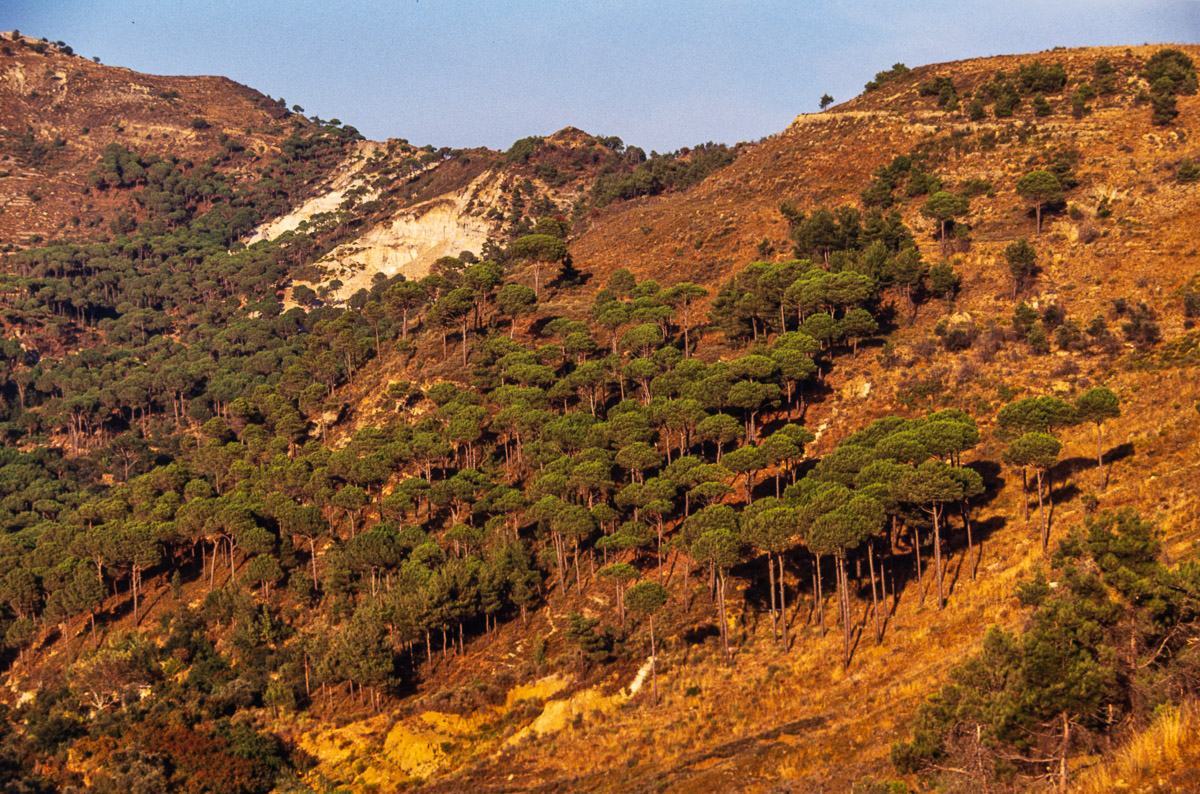
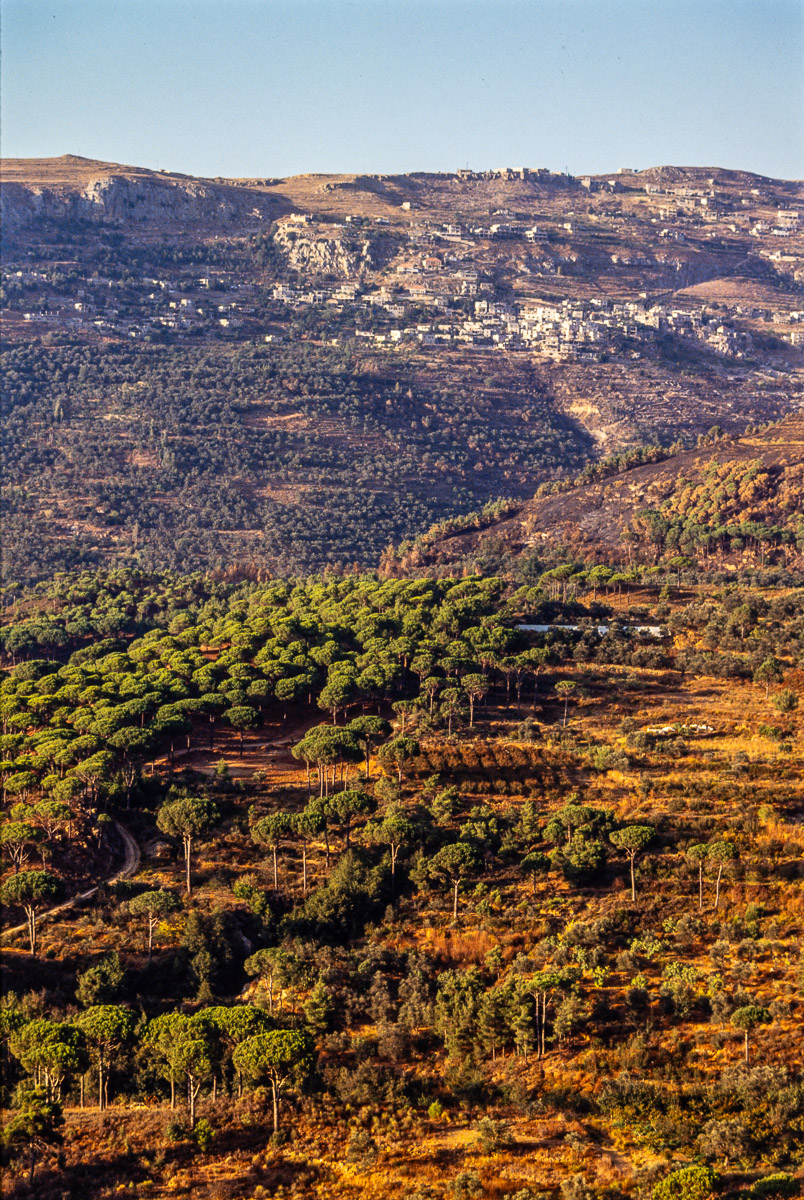
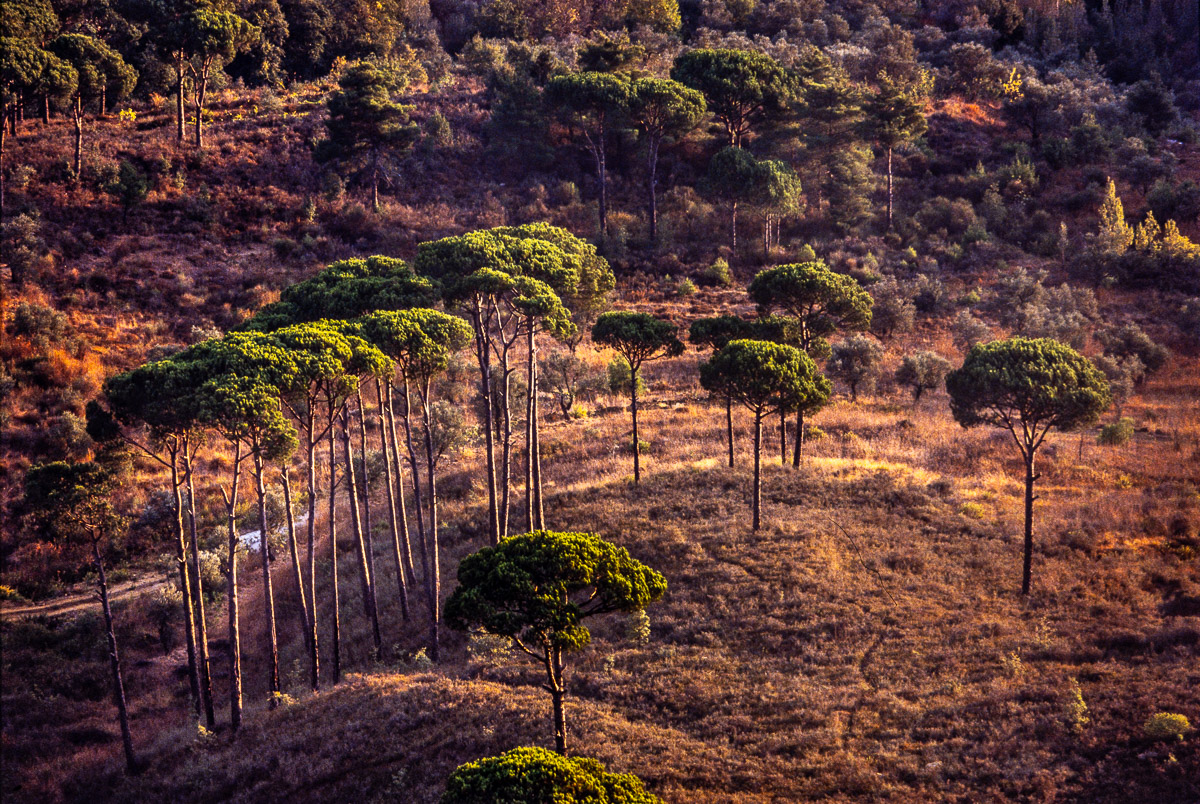
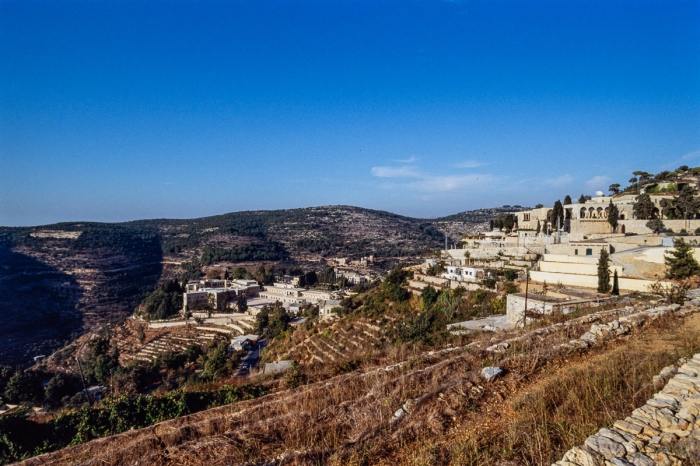
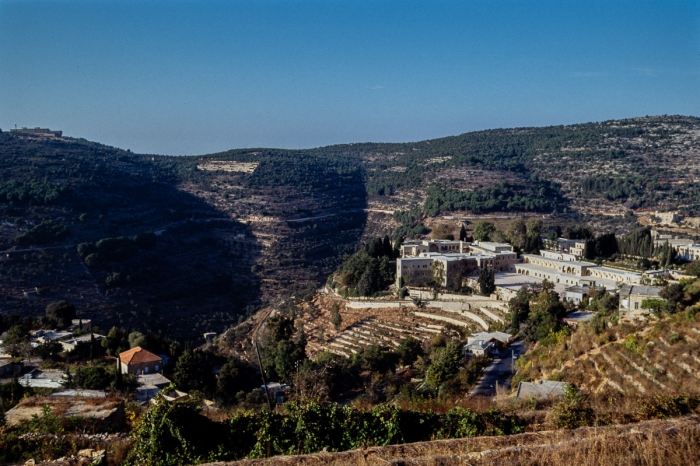
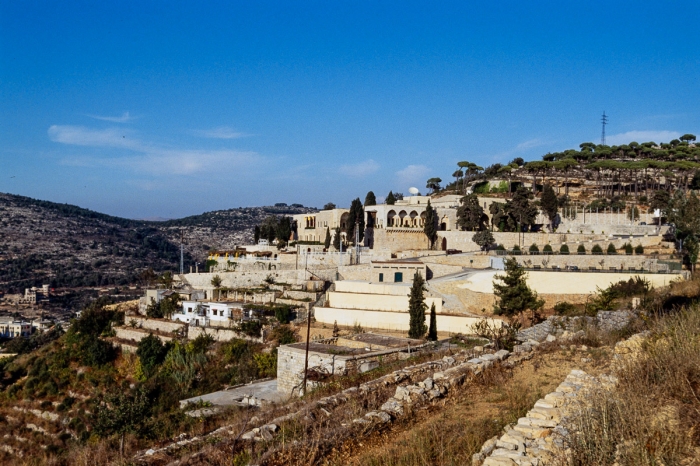
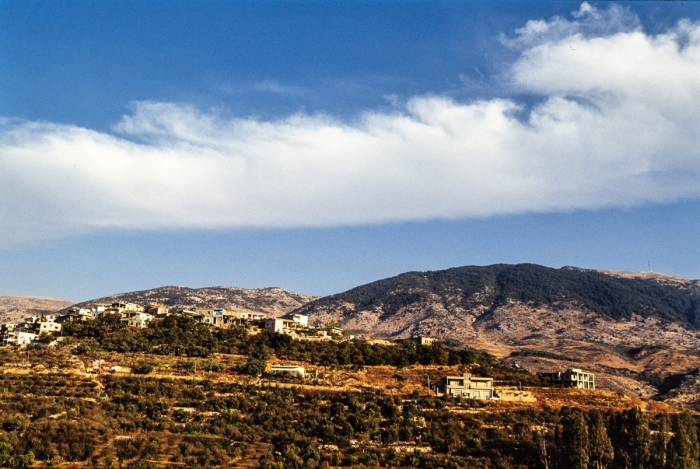
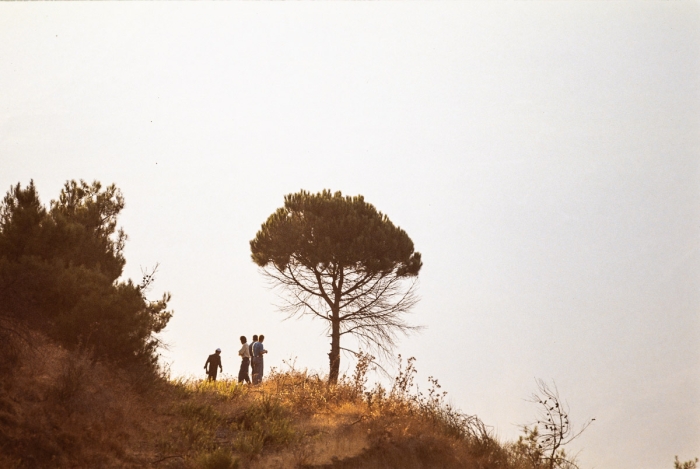
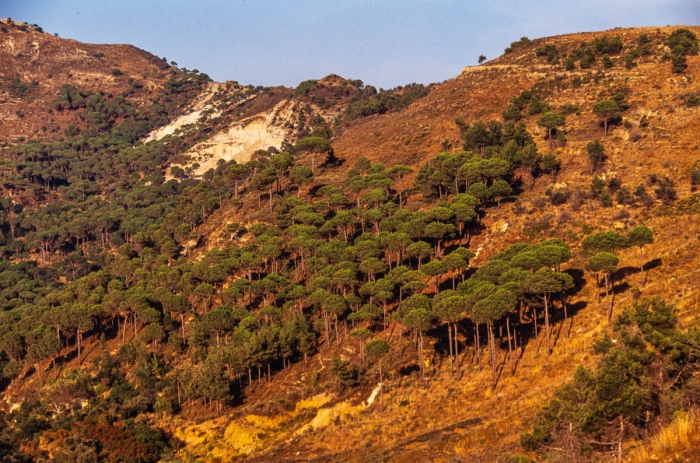
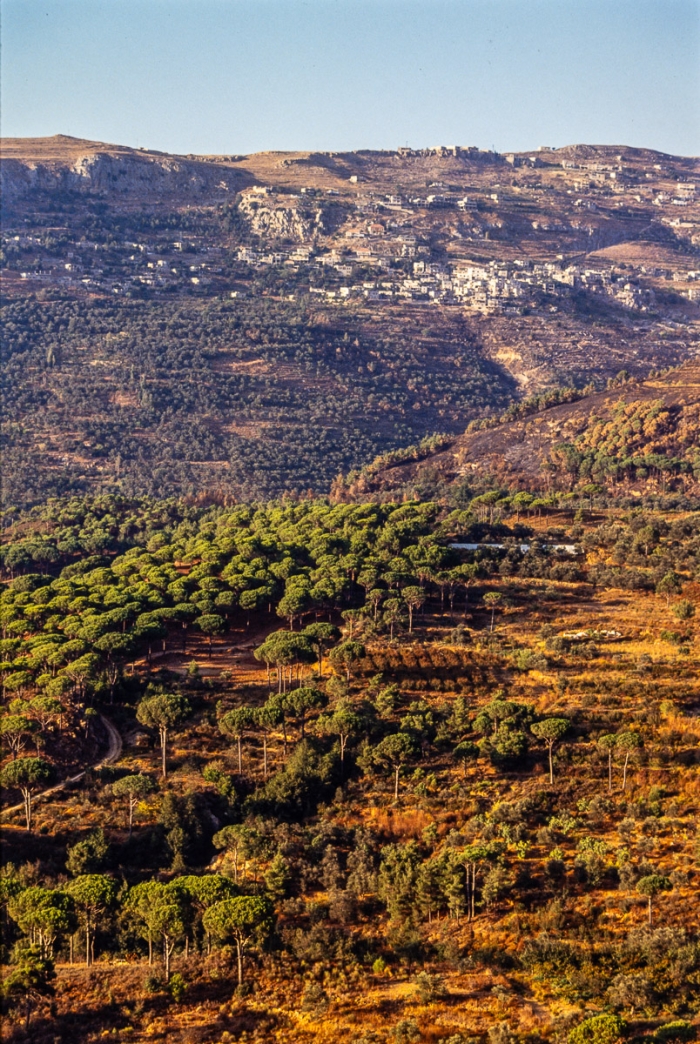
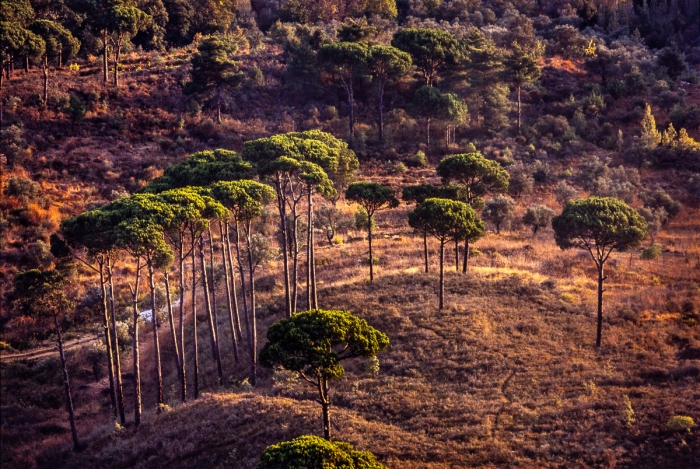
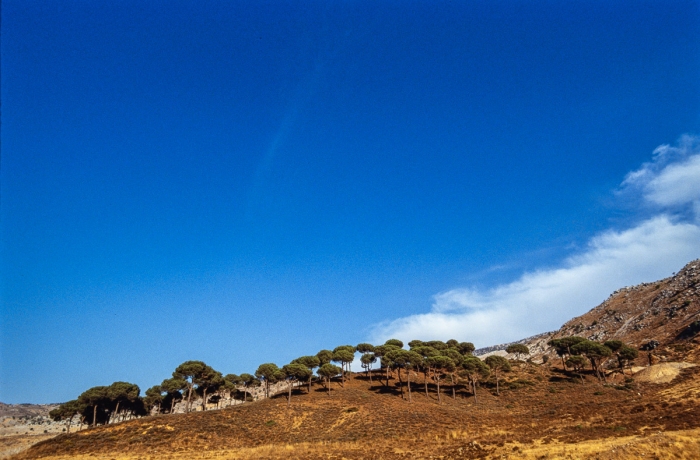
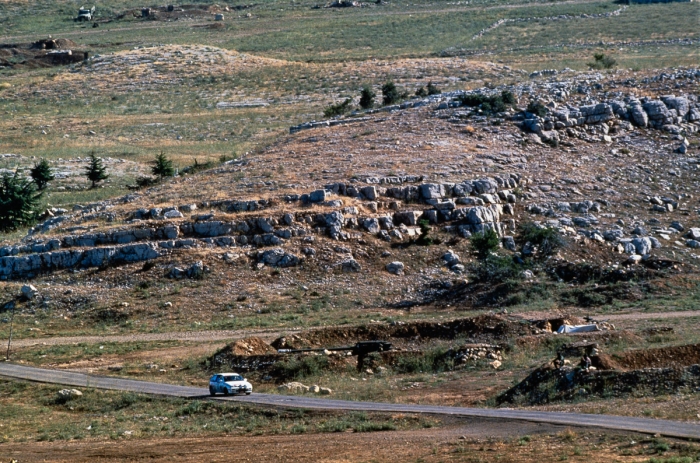
The rally routes took us through the hills of Mount Lebanon and the Chouf. I photographed the villages, roads, mountains and pine forests encountered during reconnaissance runs or while travelling between the special stages.
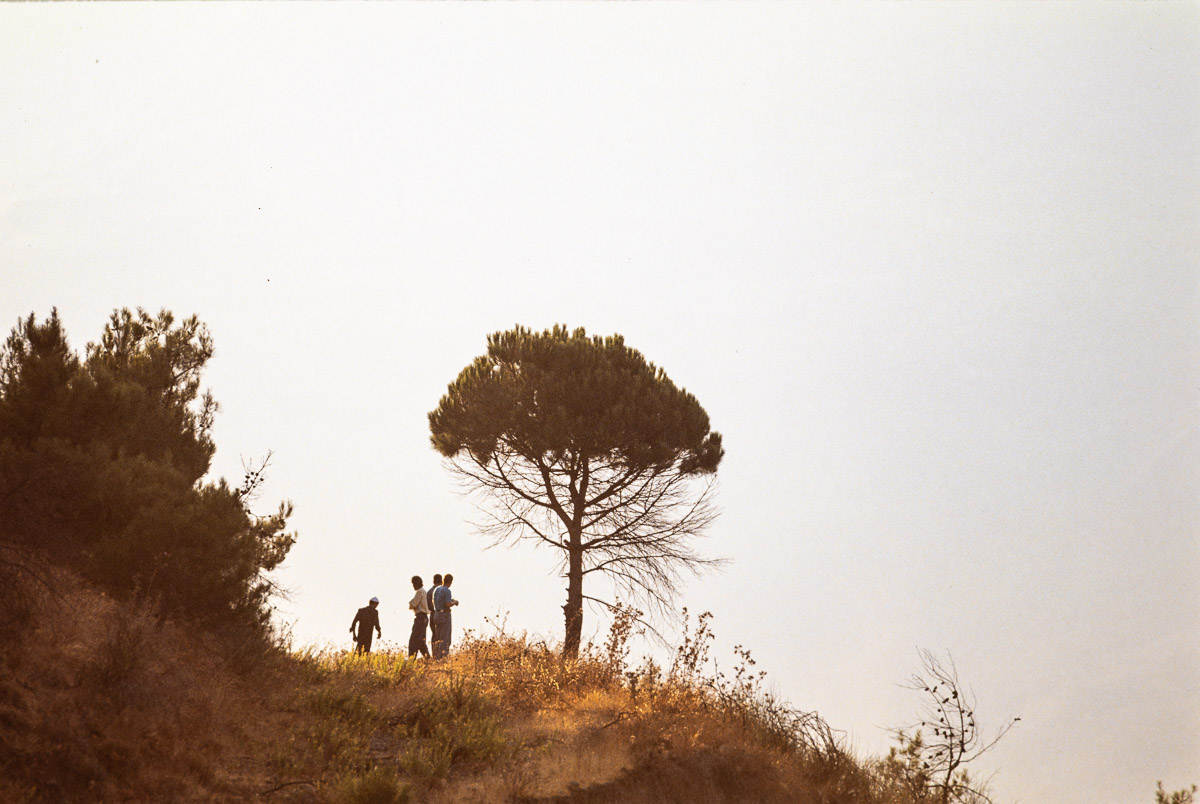
The colour photographs taken in 1991 show hills in warm tones, slopes covered with vegetation and isolated trees. Some views were taken quickly from the roadside, while others were made during a stop by the team.
In some of the colour photographs, strong vignetting darkens the corners of the image. It was mainly caused by the Canon EF 80-200mm f/2.8 I was using at the time, whose principal weakness was vignetting, made even more noticeable by the use of a polarising filter. I chose to retain this appearance during digitisation, as it forms part of the technical characteristics of the original photographs.
The Canon EF 70-200mm f/2.8 that replaced it was considerably better. Compatible with the 1.4x Extender, it became a 98-280mm f/4 and perfectly complemented the Canon EF 300mm f/2.8 L USM non-IS. Combined with the 2x Extender, the latter became a 600mm f/5.6, a combination particularly well suited to racetracks and sports photography.
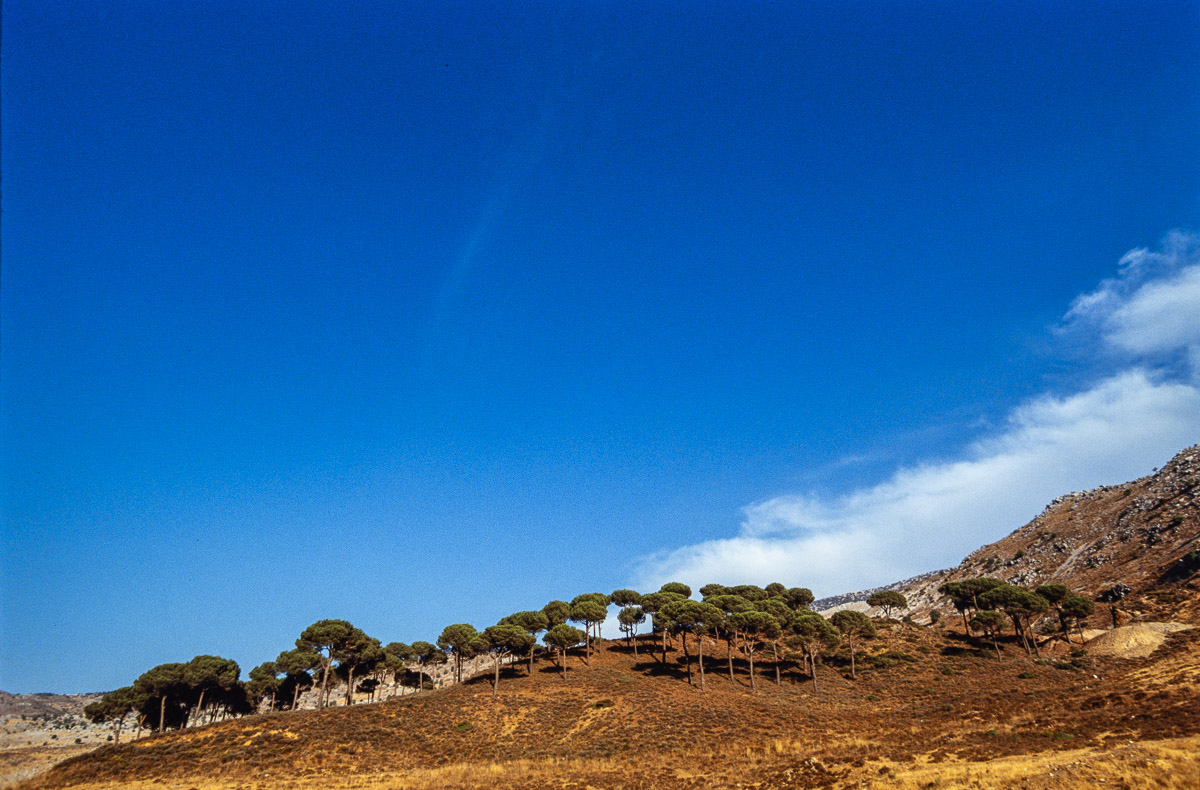 Landscape of Mount Lebanon photographed during the rally in 1991 – Photo: © Sebastien Desnoulez
I can no longer identify the precise locations of all the landscape photographs. The routes covered a large part of Mount Lebanon, and some of the views of pine trees and mountains may have been taken outside the administrative boundaries of the Chouf.
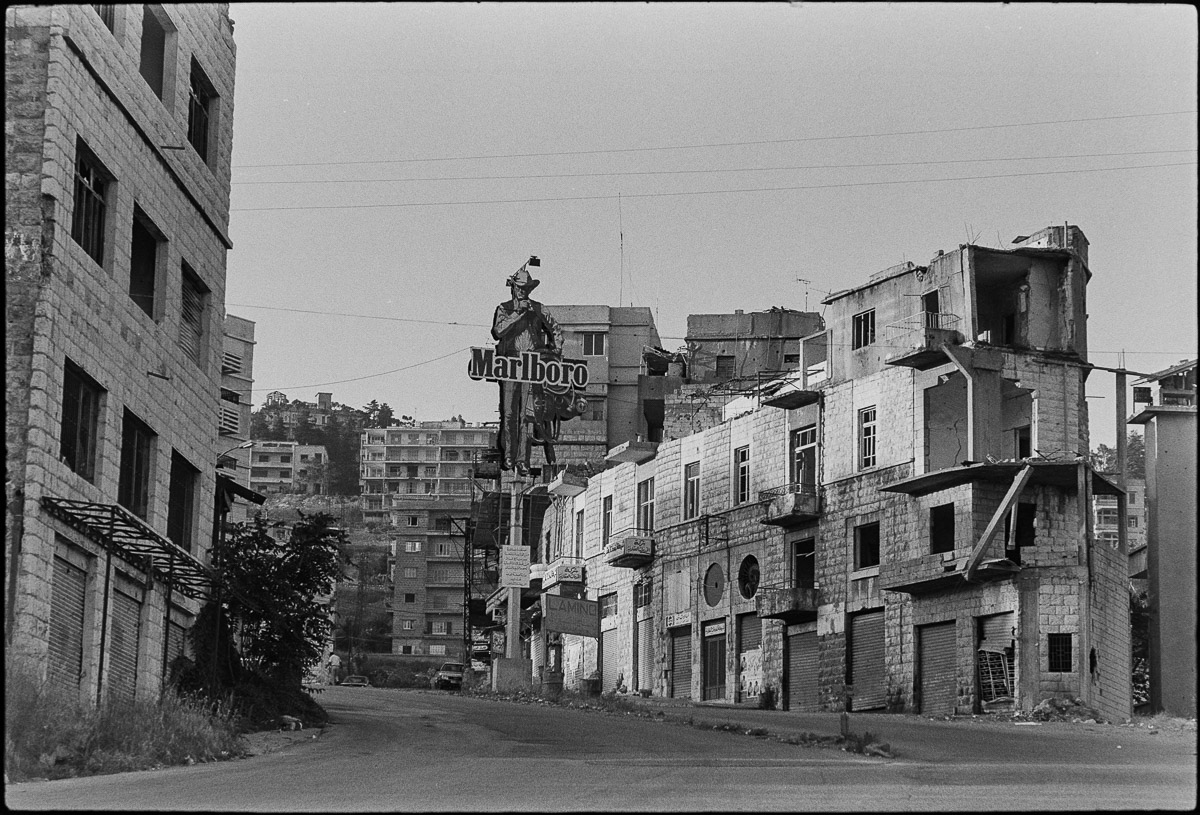
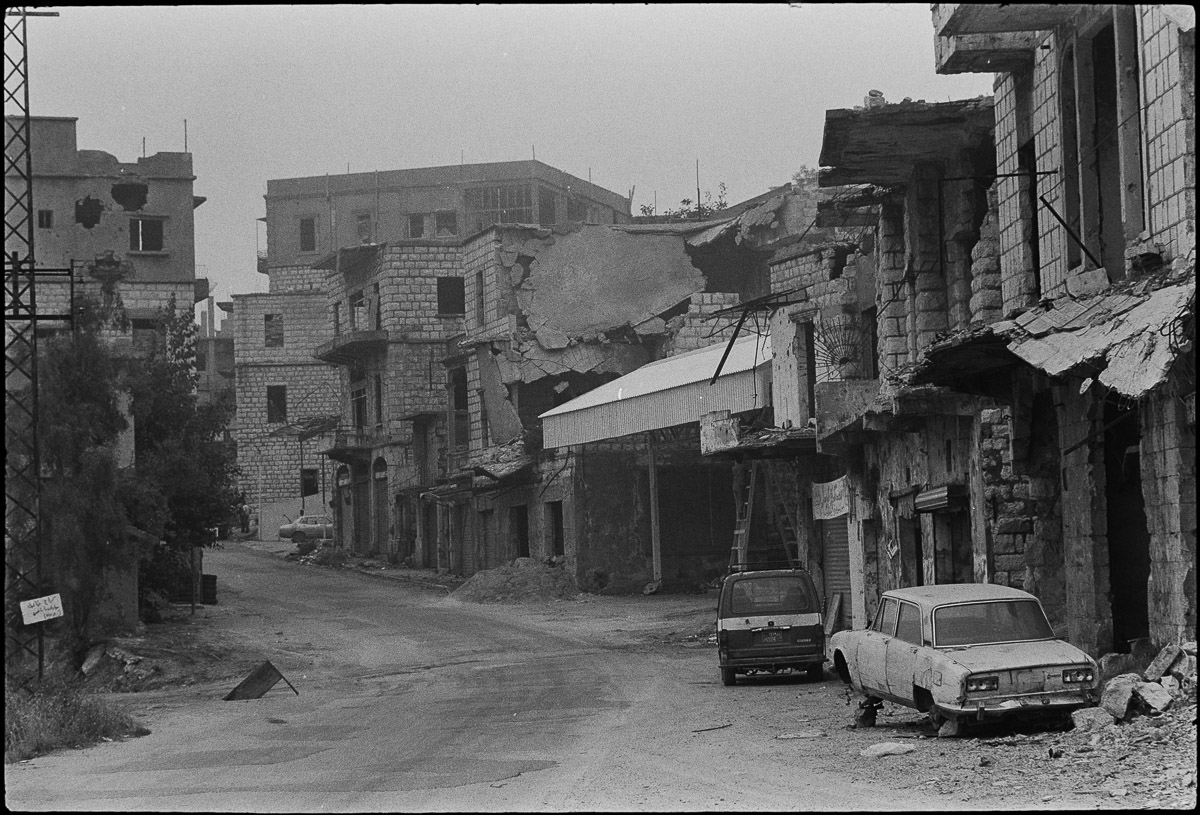
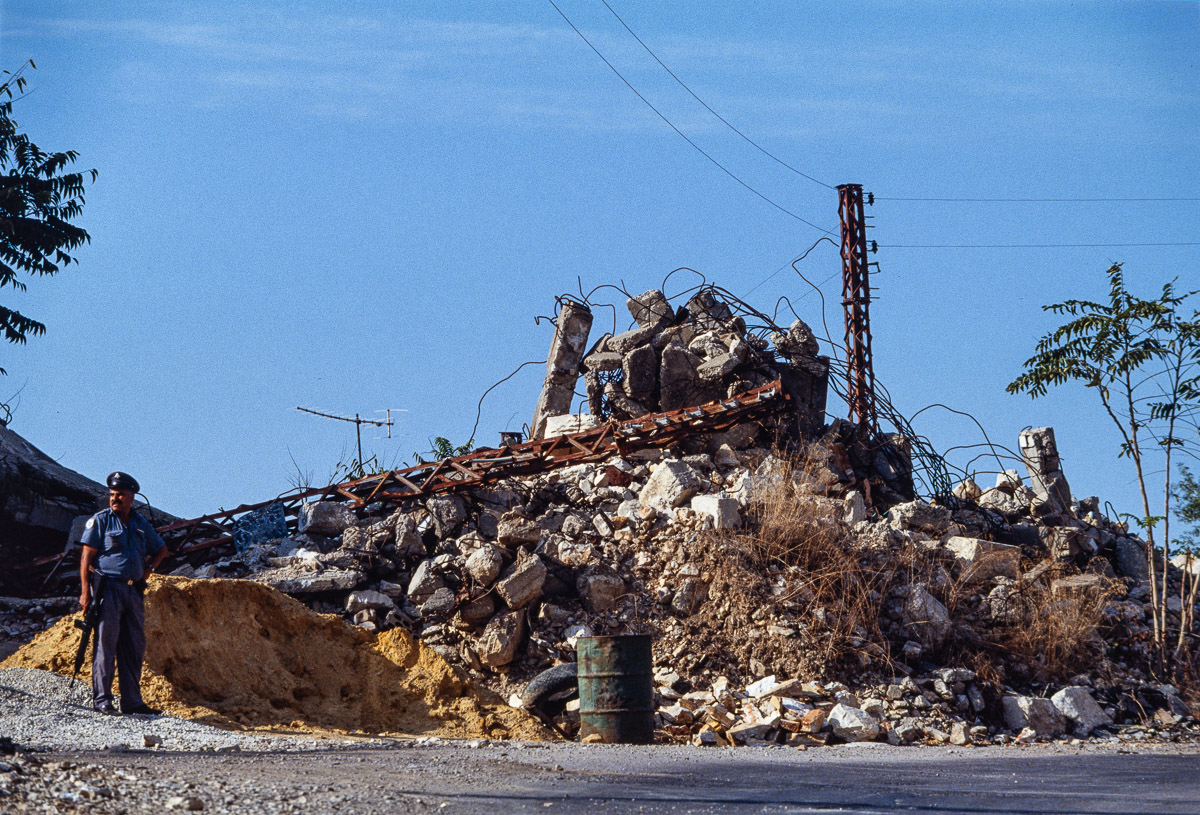
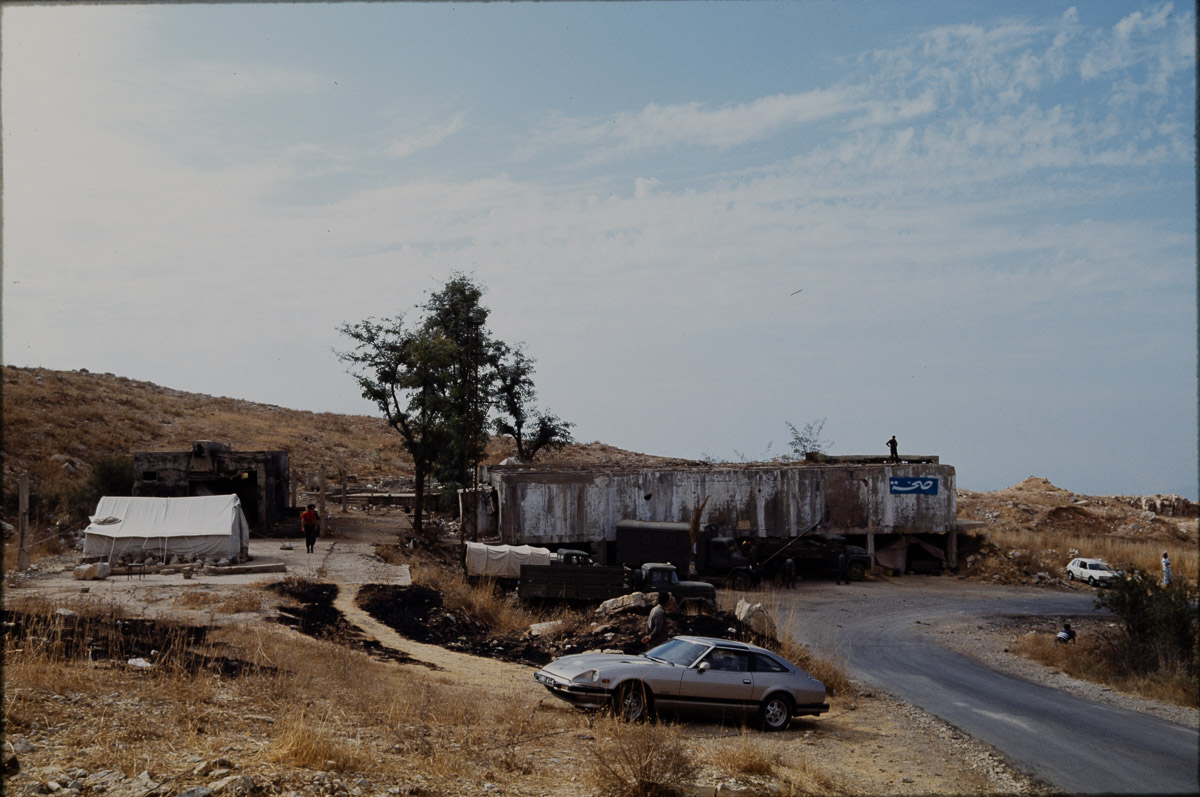
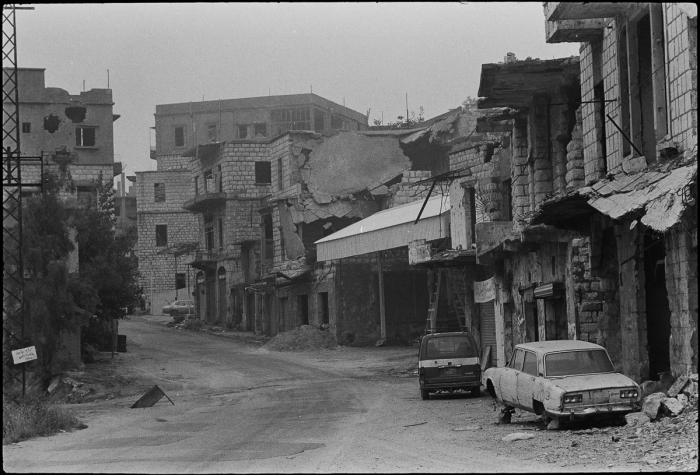
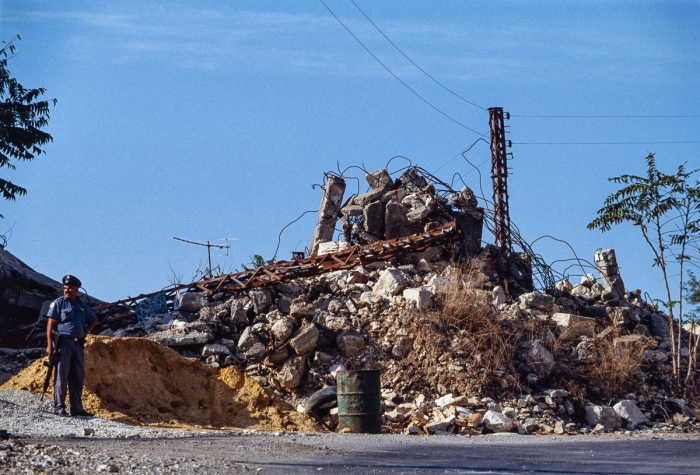
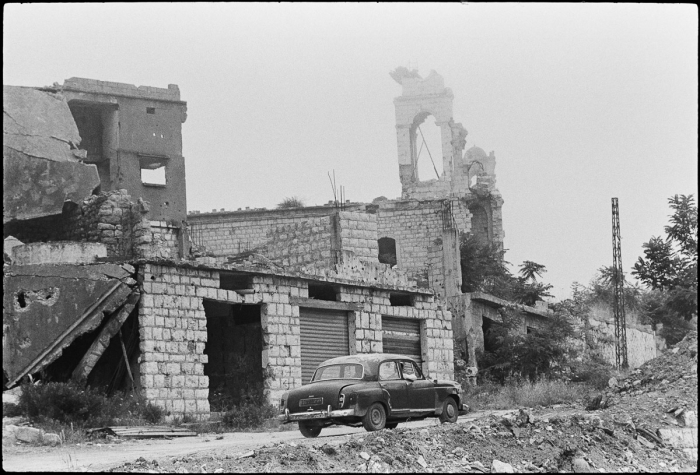
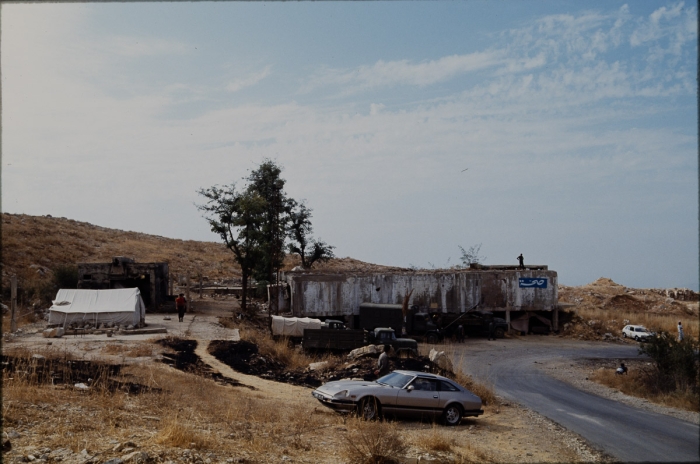
The roads also crossed areas where the destruction remained visible. Gutted houses, collapsed buildings and piles of rubble appeared among the landscapes.
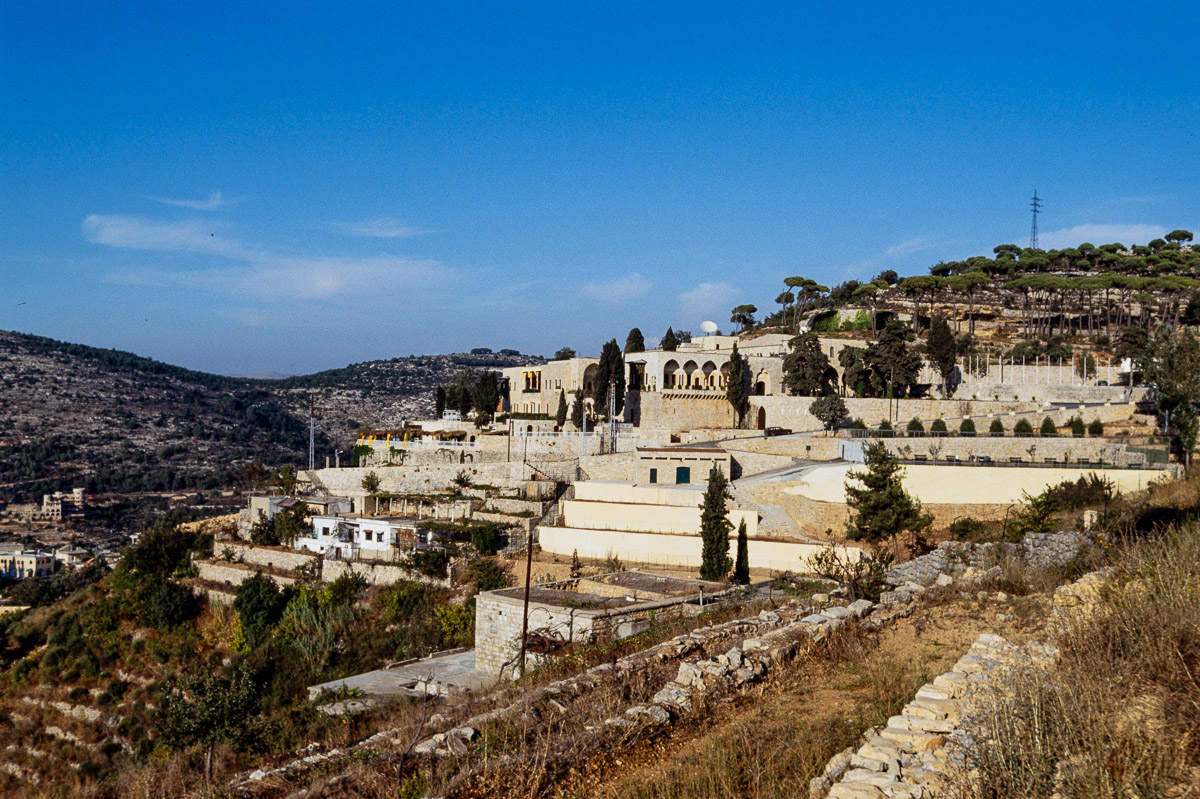
Beiteddine and Mir Amin Palace
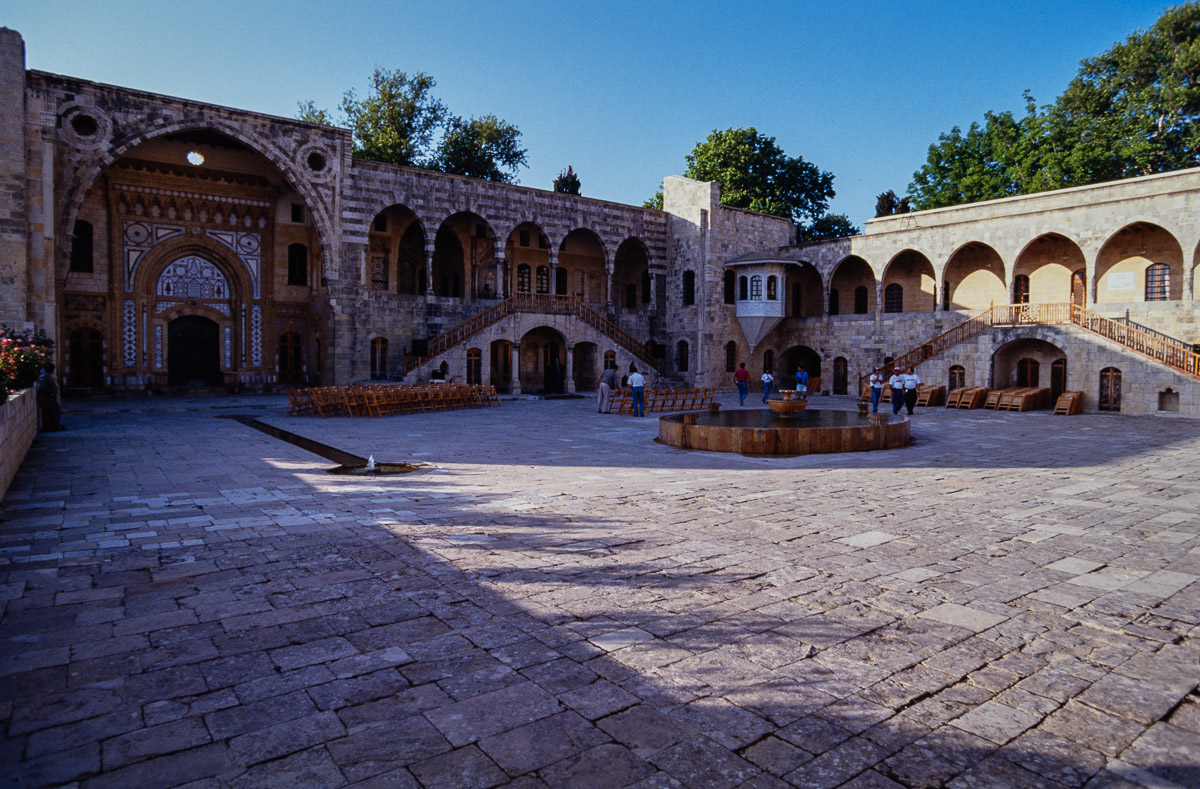
A midday break between two special stages gave us an opportunity to visit Beiteddine and Mir Amin Palace, located in the Chouf, south-east of Beirut.
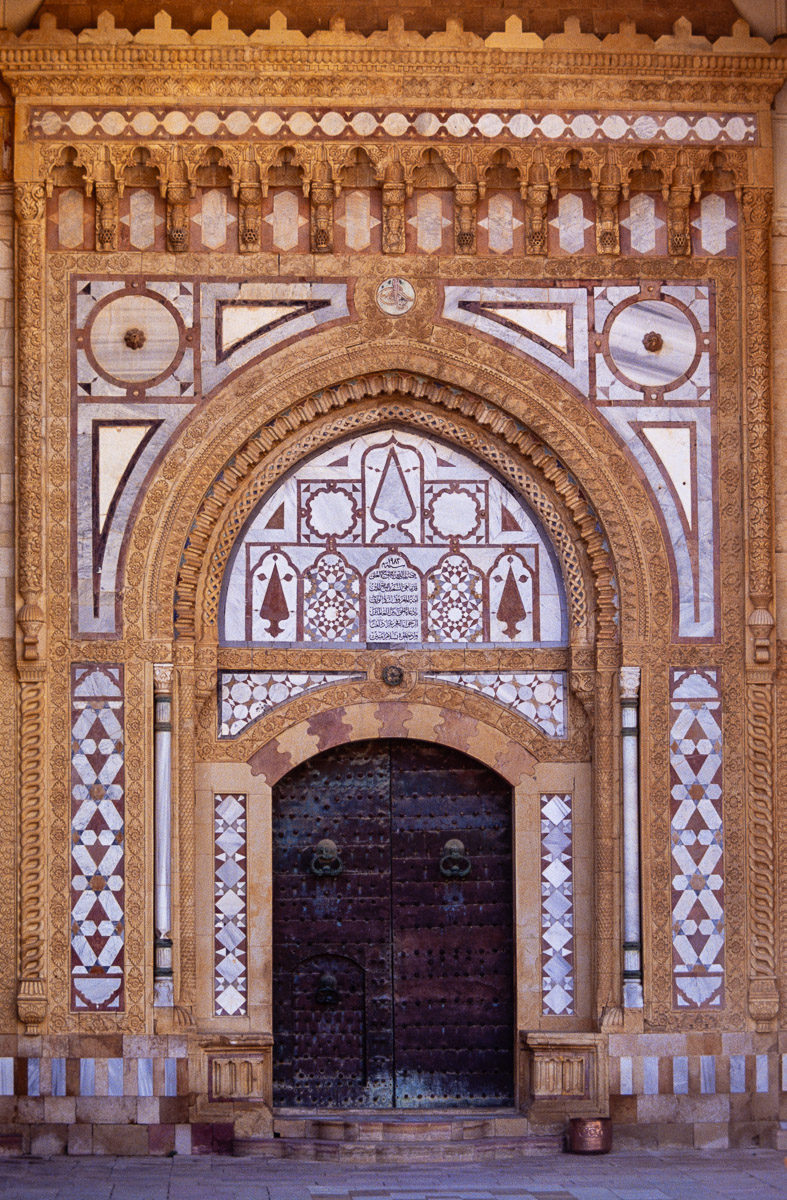
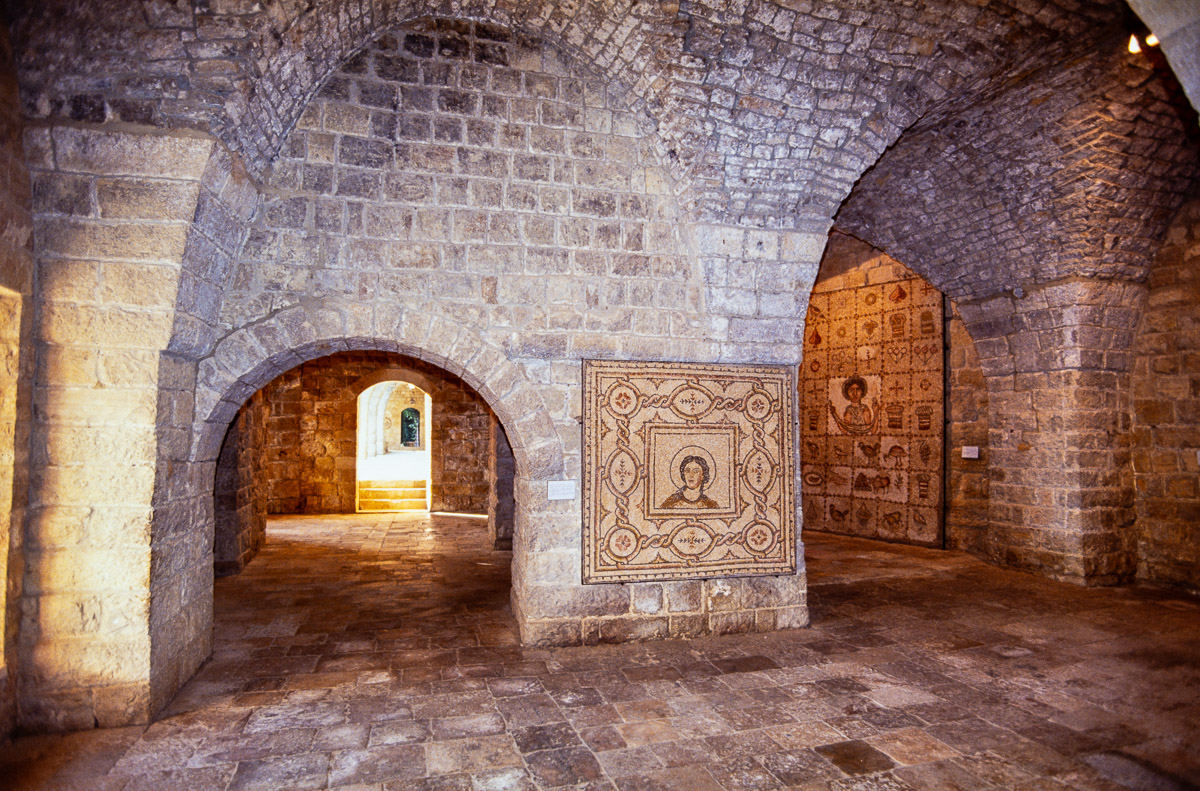
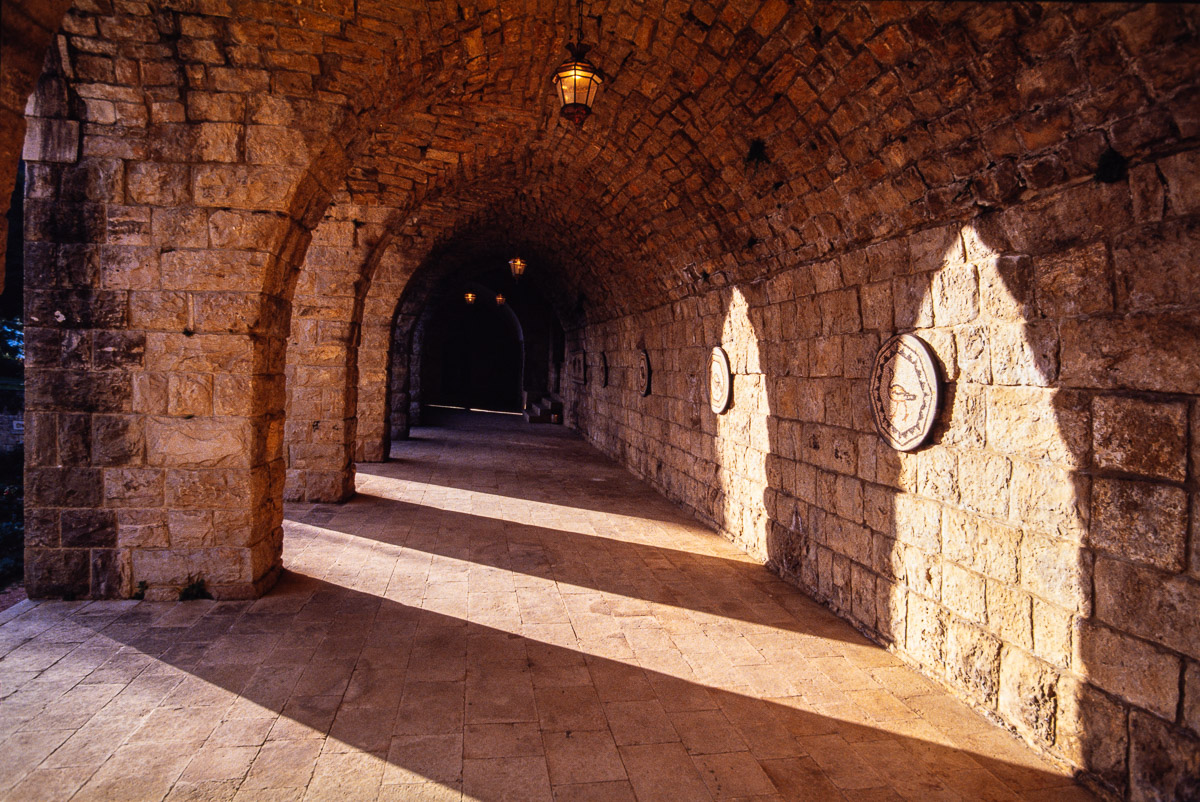
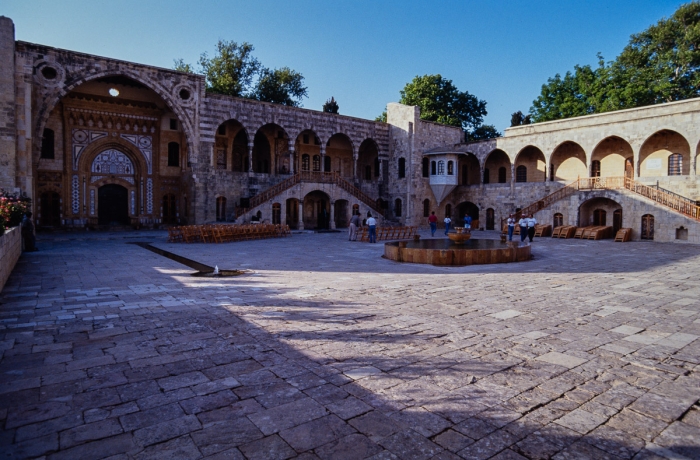
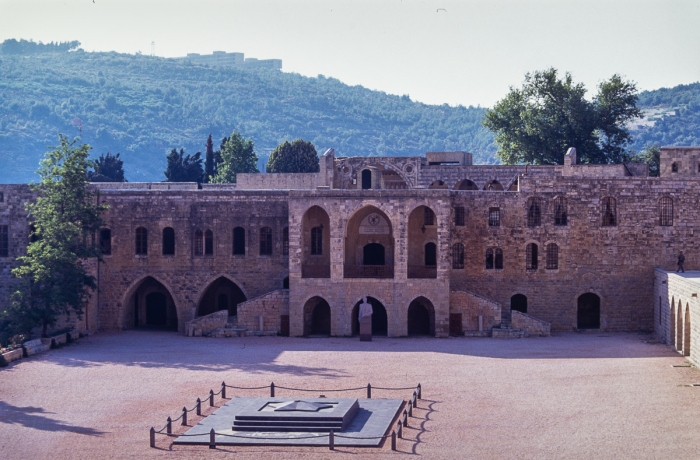
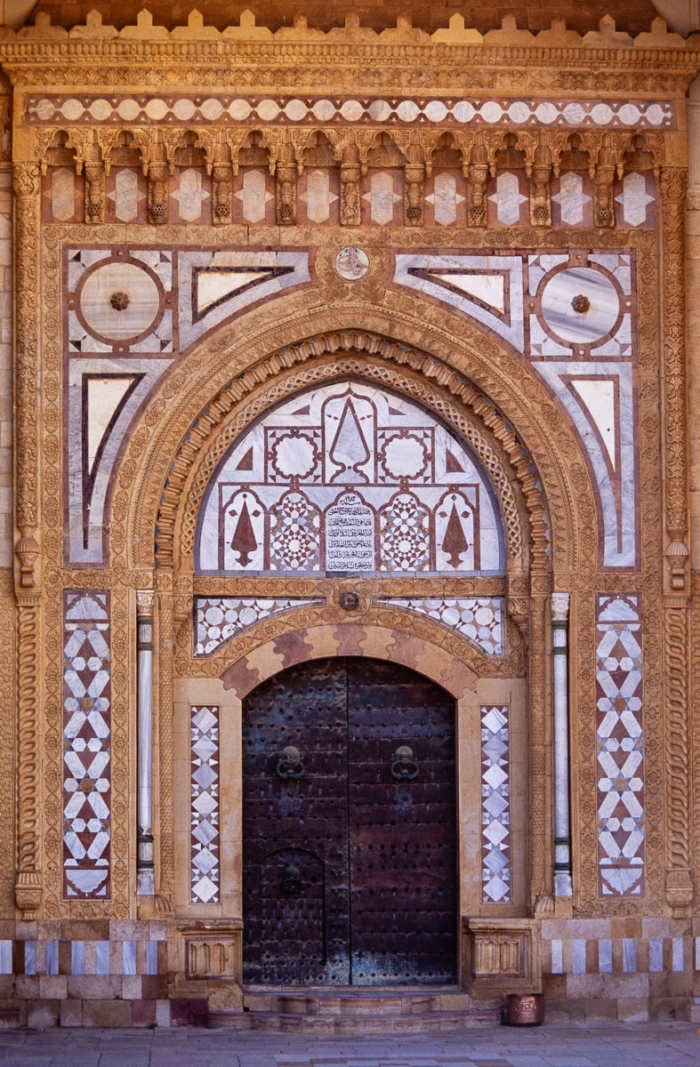
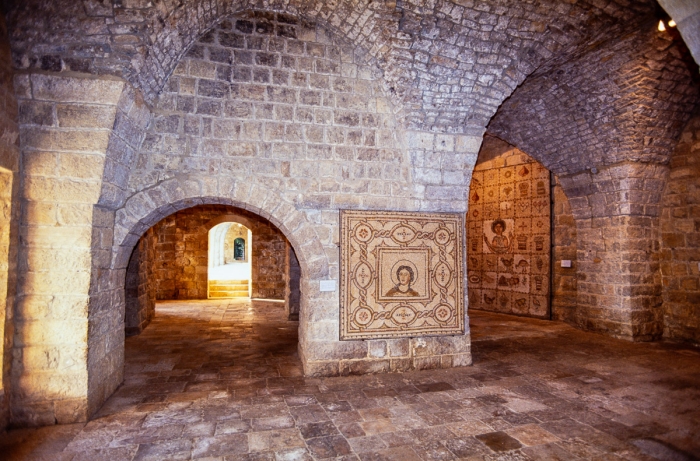
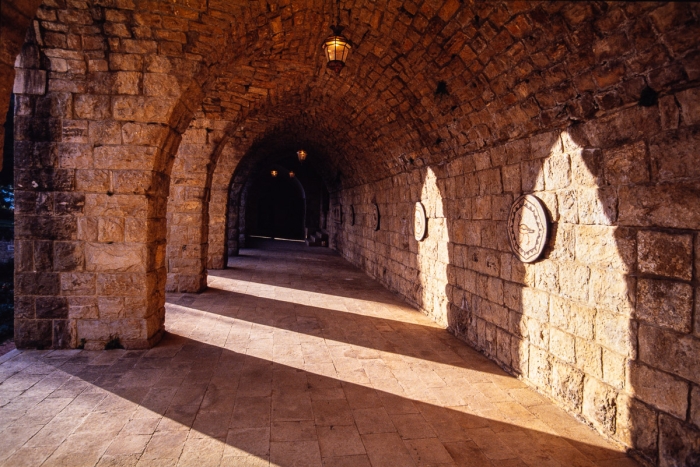
At Beiteddine Palace, I photographed the large courtyards, stone façades, decorated doorways and several vaulted rooms. The light passing through the openings emphasised the volumes and texture of the walls.
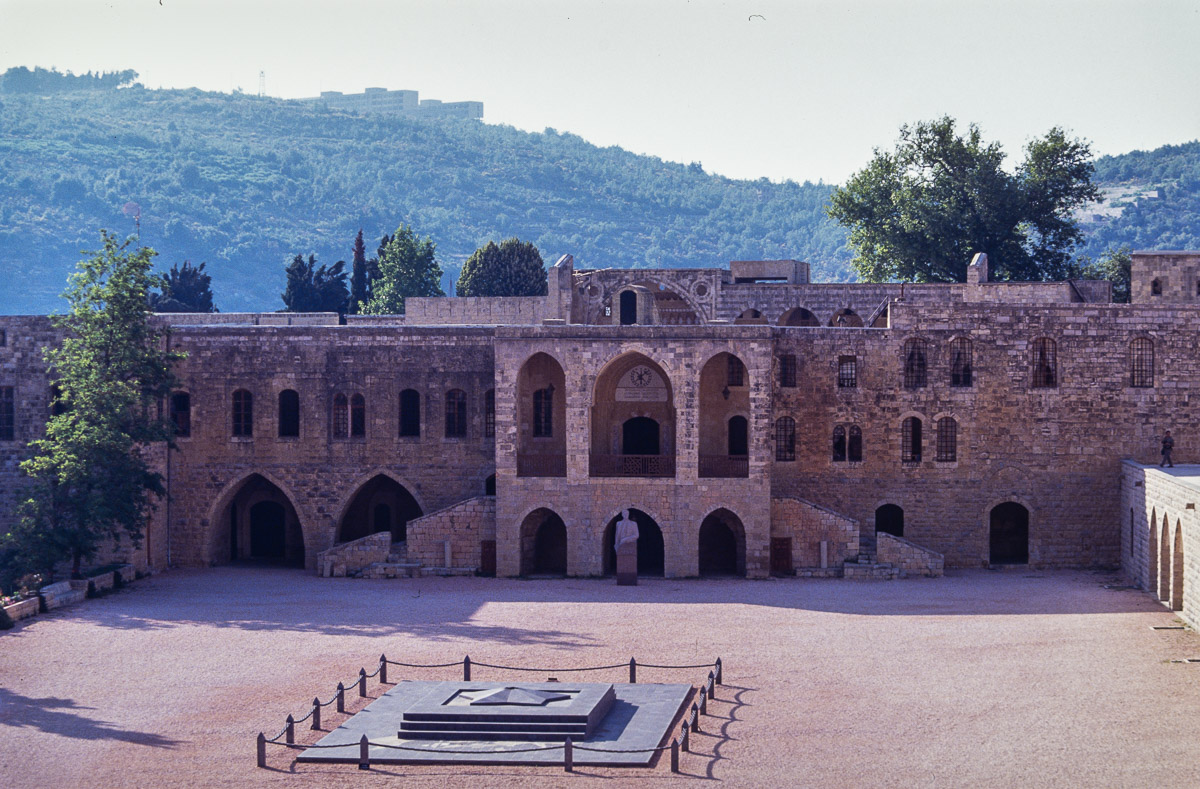 Beiteddine Palace in the Chouf in 1992 – Photo: © Sebastien Desnoulez
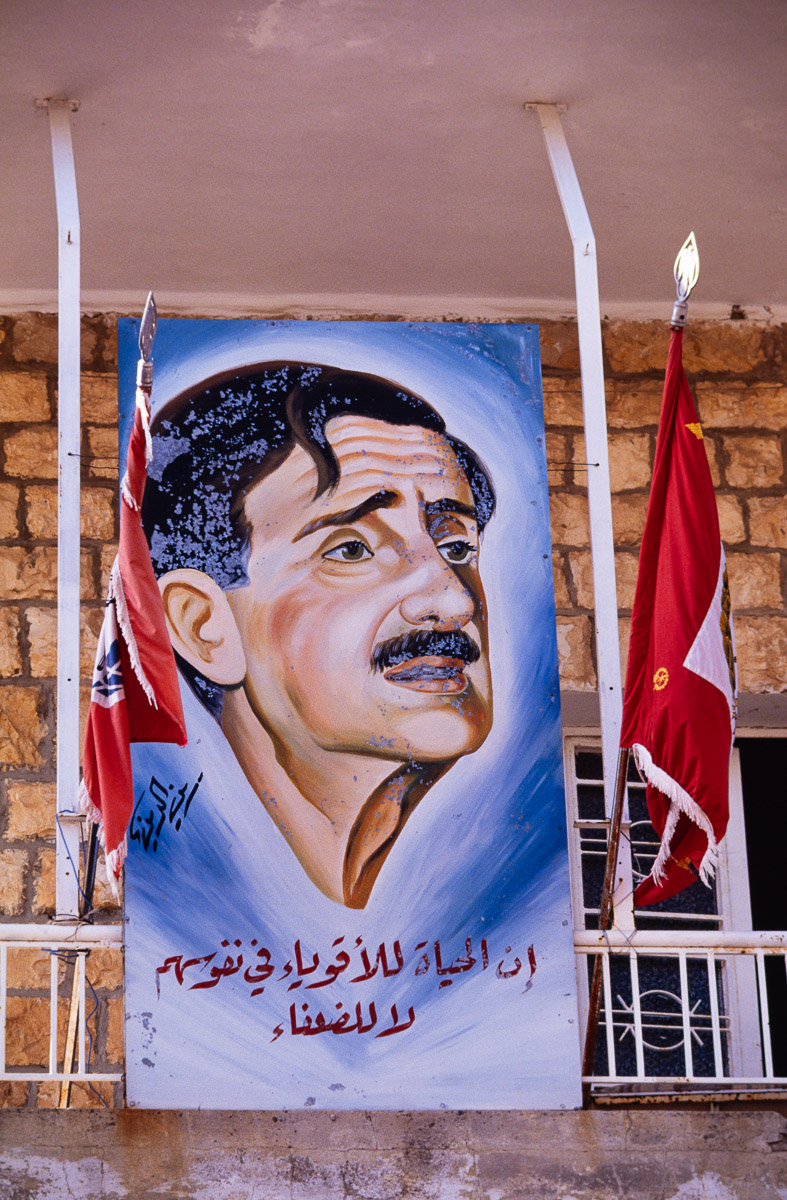
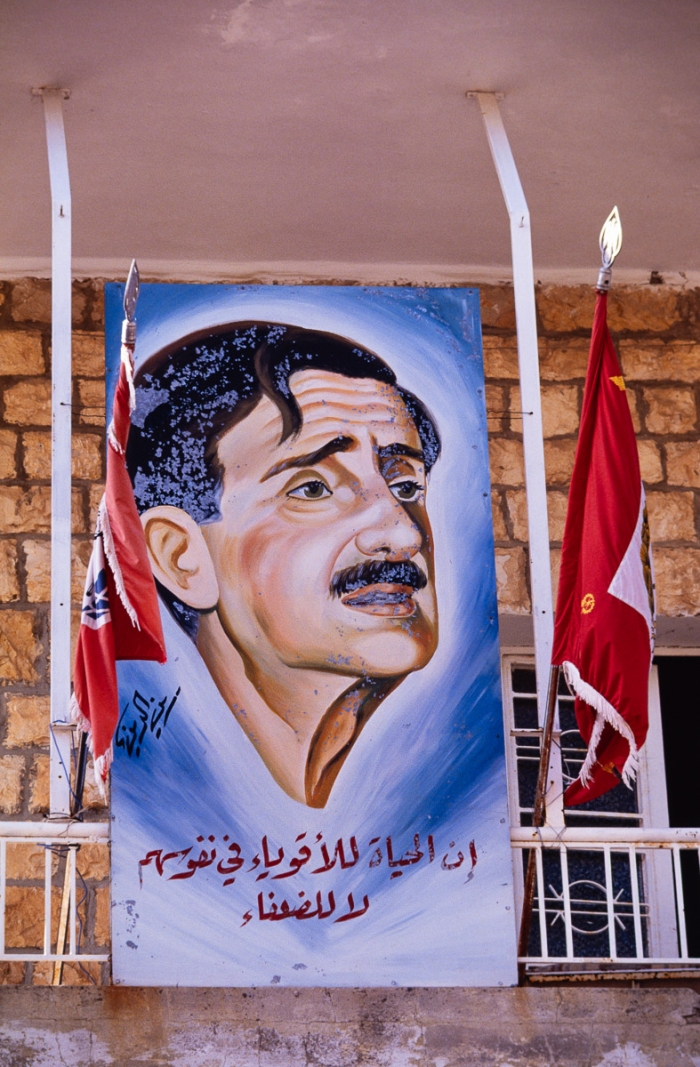
I also photographed a banner featuring Kamal Jumblatt. His portrait recalled the role played by the Jumblatt family in the political history of the Chouf.
Mir Amin Palace stood within a mountainous landscape. The views taken from the road show its position on the hills close to Beiteddine.
The Chouf in the fog in 1992
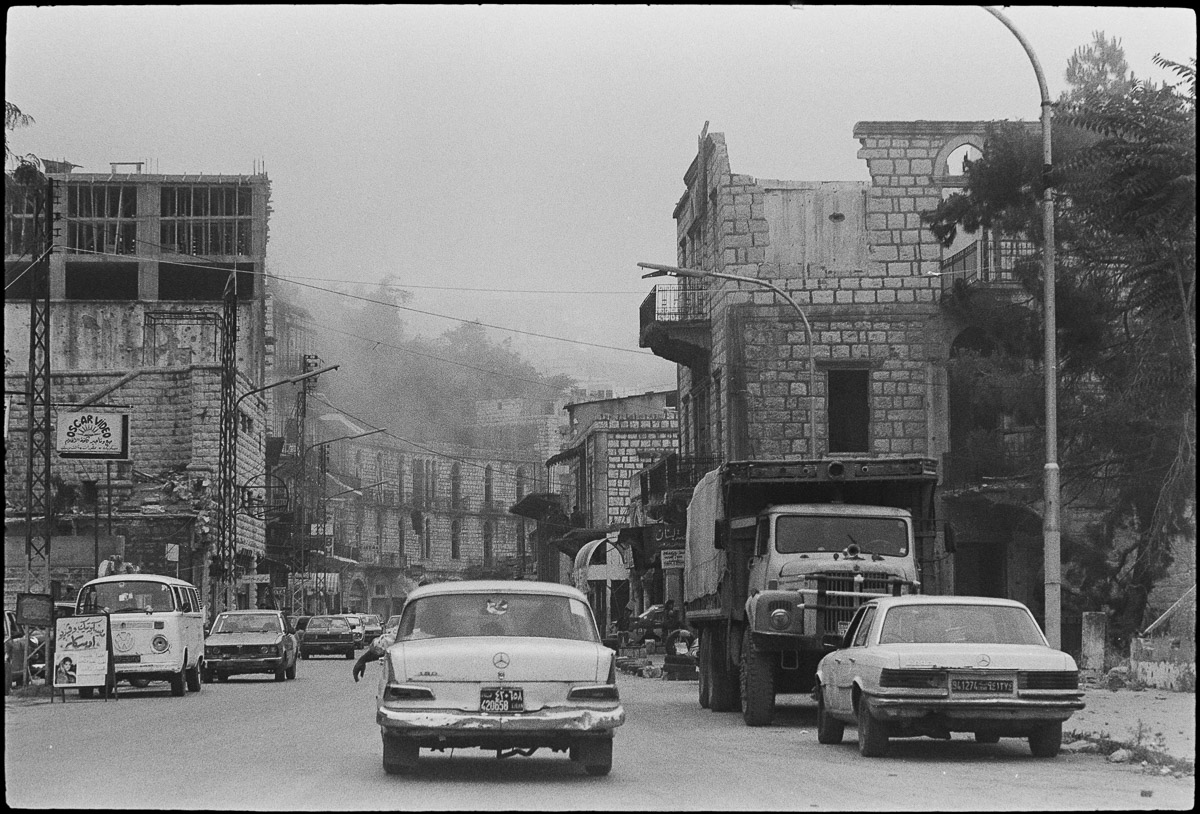
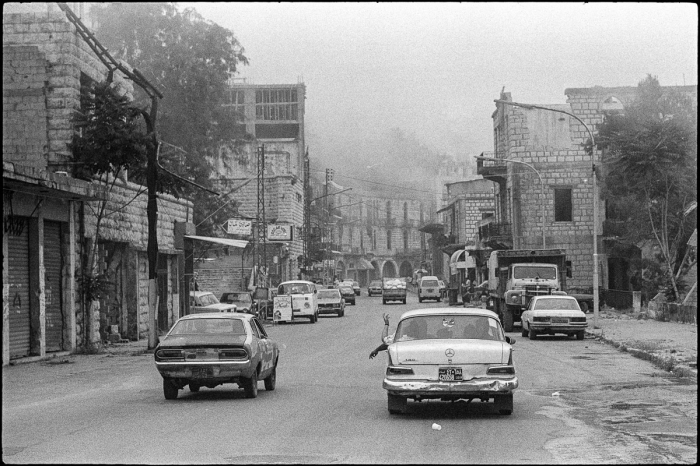
When I returned to Lebanon in June 1992, I worked more extensively in black and white. One morning, we drove through several villages in the Chouf in dense fog that obscured much of the surrounding relief.
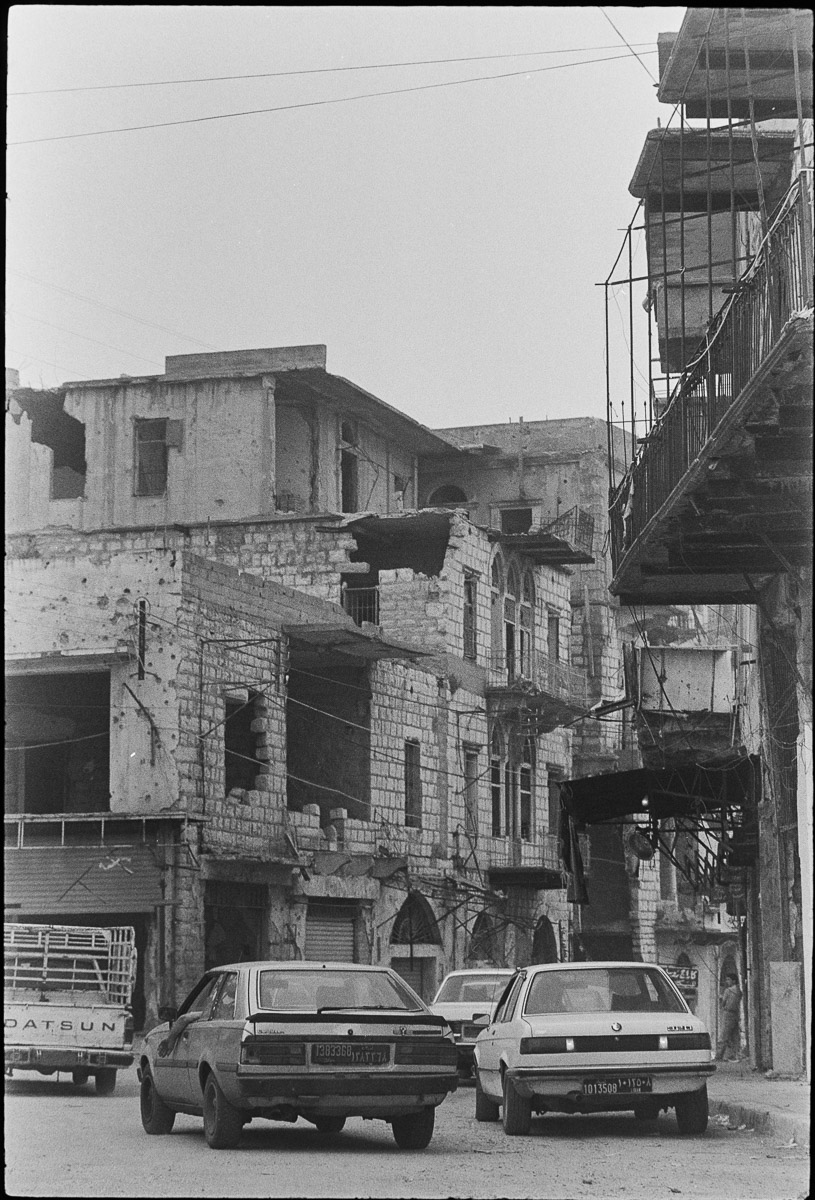
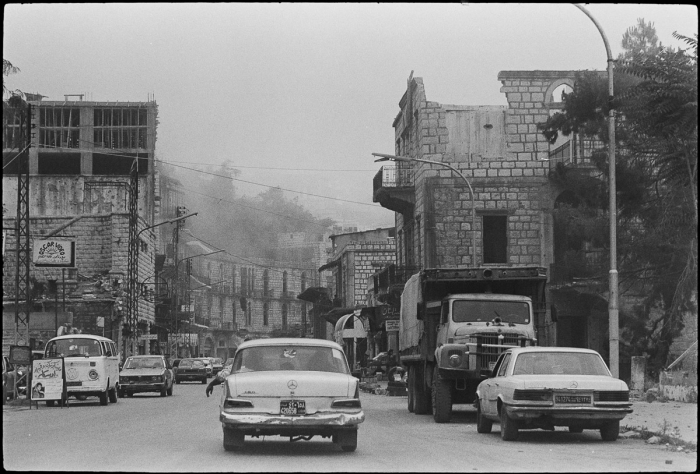
Of the photographs I took during my two trips to Lebanon in 1991 and 1992, this is probably the one that best represents, for me, the situation in the country as it emerged from the war. It shows neither spectacular ruins nor obvious traces of fighting, but an ordinary traffic scene in which many small details reflect the context of the time.
At the centre of the image is an old Mercedes with a dented bumper. Several occupants can be seen in both the front and rear seats, their arms resting outside the open windows. The rear left passenger raises his hand, as if punctuating the conversation. The Mercedes is positioned slightly to the left while a car from the 1970s overtakes it. Its paintwork is worn and its bonnet, a different colour from the rest of the bodywork, appears to have been replaced with a salvaged part.
The position of the Mercedes and the relaxed attitude of its occupants make it look almost like a living room on wheels. This is also one of the memories I retain of Lebanon at the time: a rather free-flowing approach to driving, with behaviour far less regulated than what I was accustomed to in Europe.
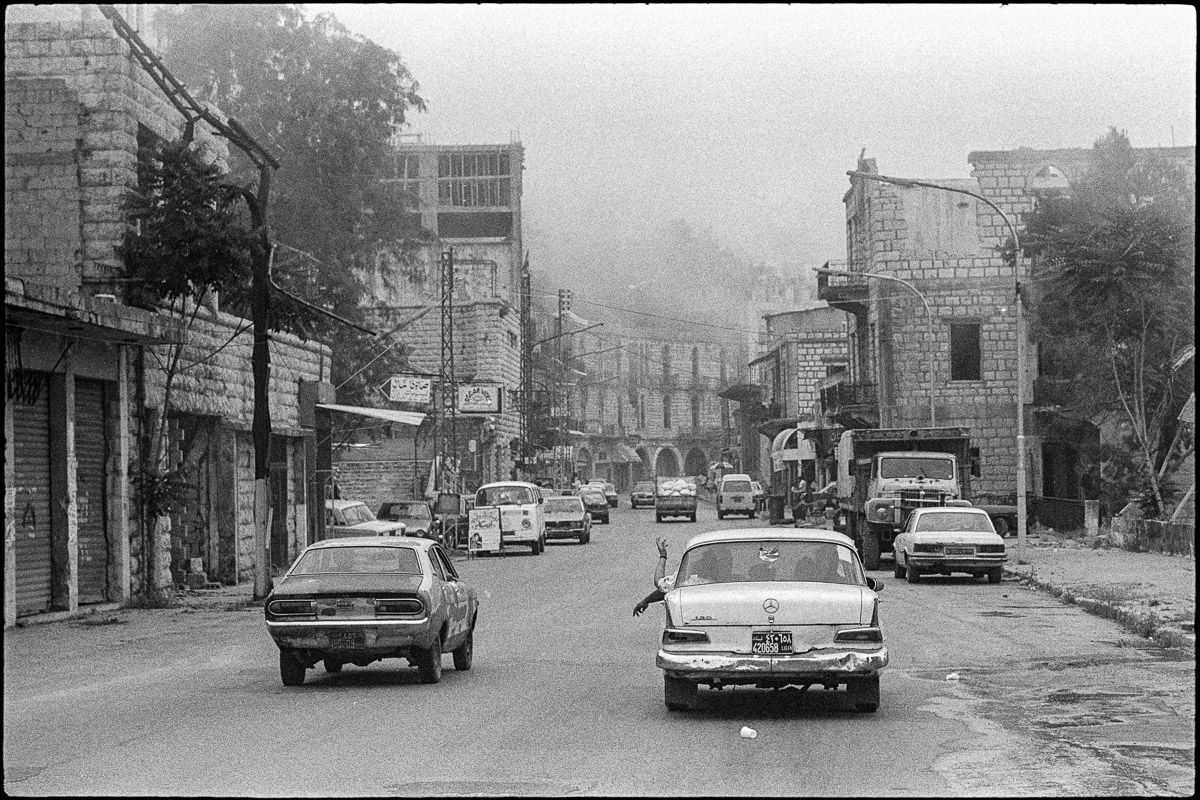 Driving through a village in the Chouf in the morning fog, 1992 – Photo: © Sebastien Desnoulez
Signs that can be directly attributed to the war are much less visible here than in my photographs of Beirut. On the left, an electricity pole is leaning at a sharp angle and a metal shutter appears to be dented. On the right, the upper floor of a building shows fairly rough repairs, although there is no way of knowing whether they were the result of fighting.
I no longer remember exactly where in the Chouf this photograph was taken, nor whether this particular street had been affected by fighting. The photograph itself does not tell us, and it would be misleading to make it say more than it actually shows.
Other details offer a more straightforward indication of the state of the country at the time. On the right, vegetation is growing in the gutter and, in places, spilling over above the pavement. Farther along, a few pieces of debris or stones can be seen near the roadway. On the left, a shrub has grown up against a façade. A few pieces of litter are also visible on the road. The cars are old, sometimes dented or repaired with mismatched parts.
Daily life had nevertheless resumed: cars move along the road and overtake one another while the passengers talk. In the fog of the Chouf, this ordinary scene perhaps conveys more about what Lebanon was like in 1992 than spectacular ruins would have done, two years after the official end of fifteen years of civil war.
Zahlé at the End of the Day
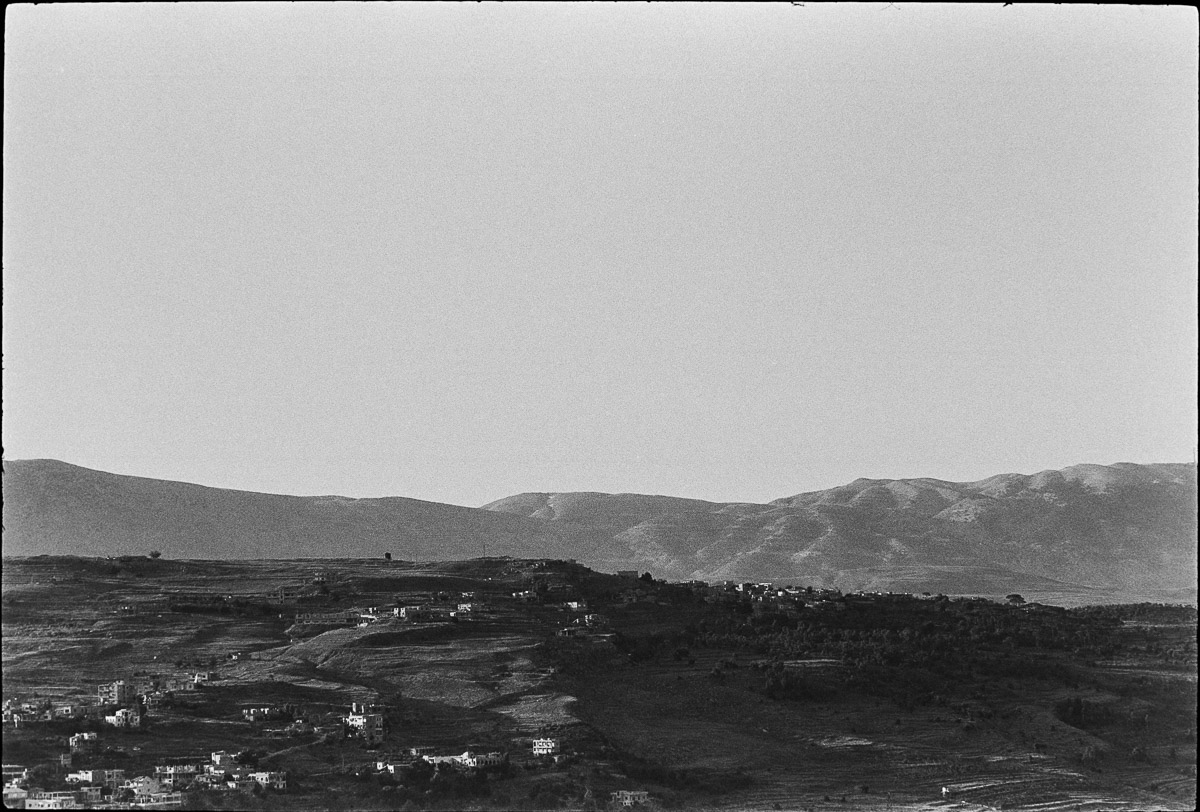
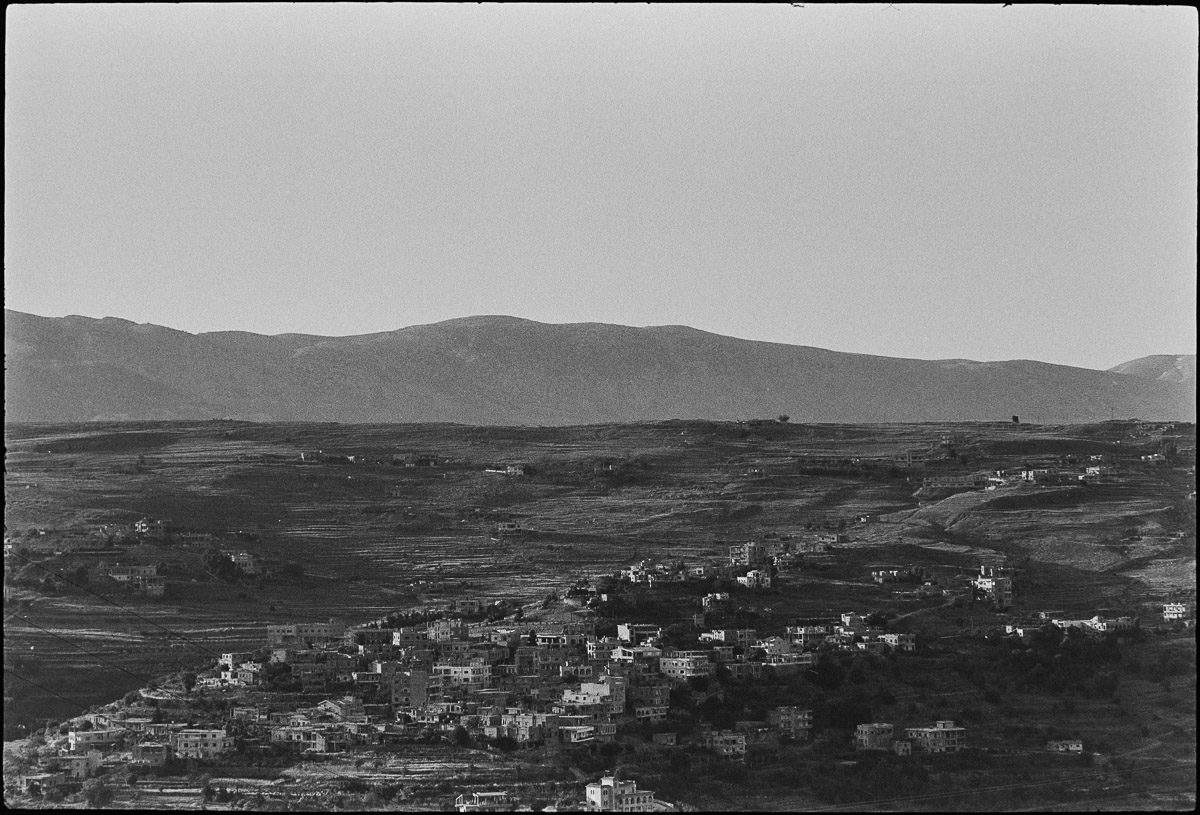
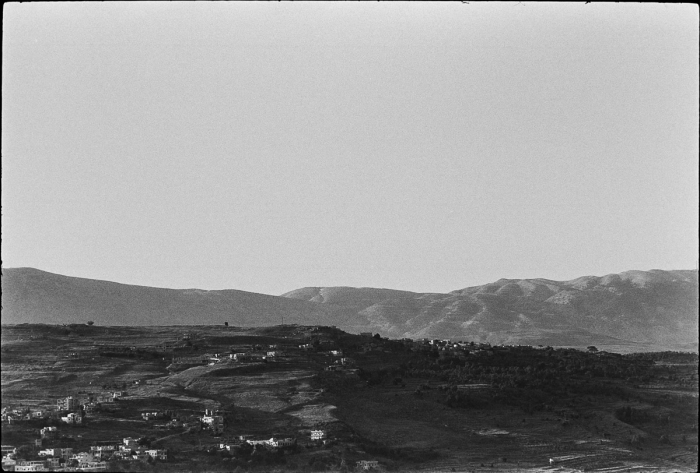
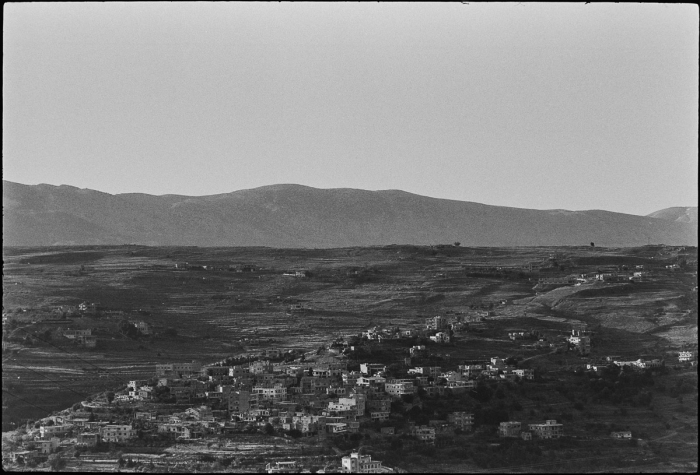
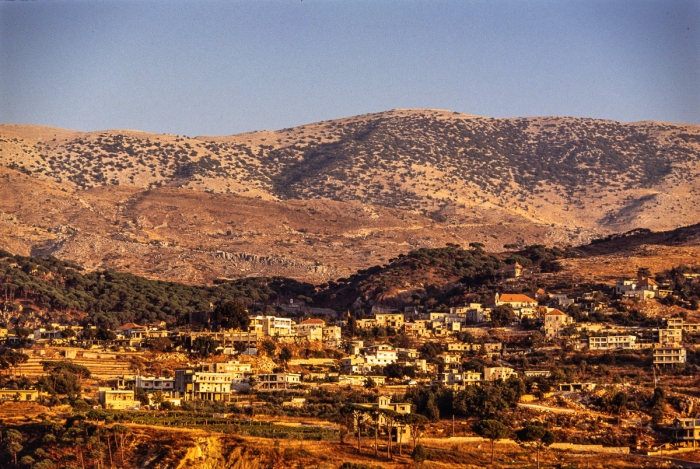
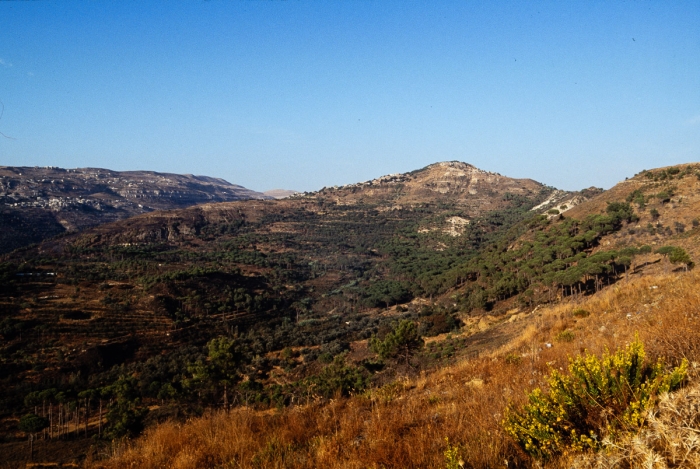
We also stopped in Zahlé, where I remember that we had dinner after the day’s stages. From the heights above the city, I photographed the surrounding hills and villages in the late evening.
The light was already fading and the hills were barely visible through the haze. Terraces cut into the slopes and scattered houses gradually appeared across the landscape.
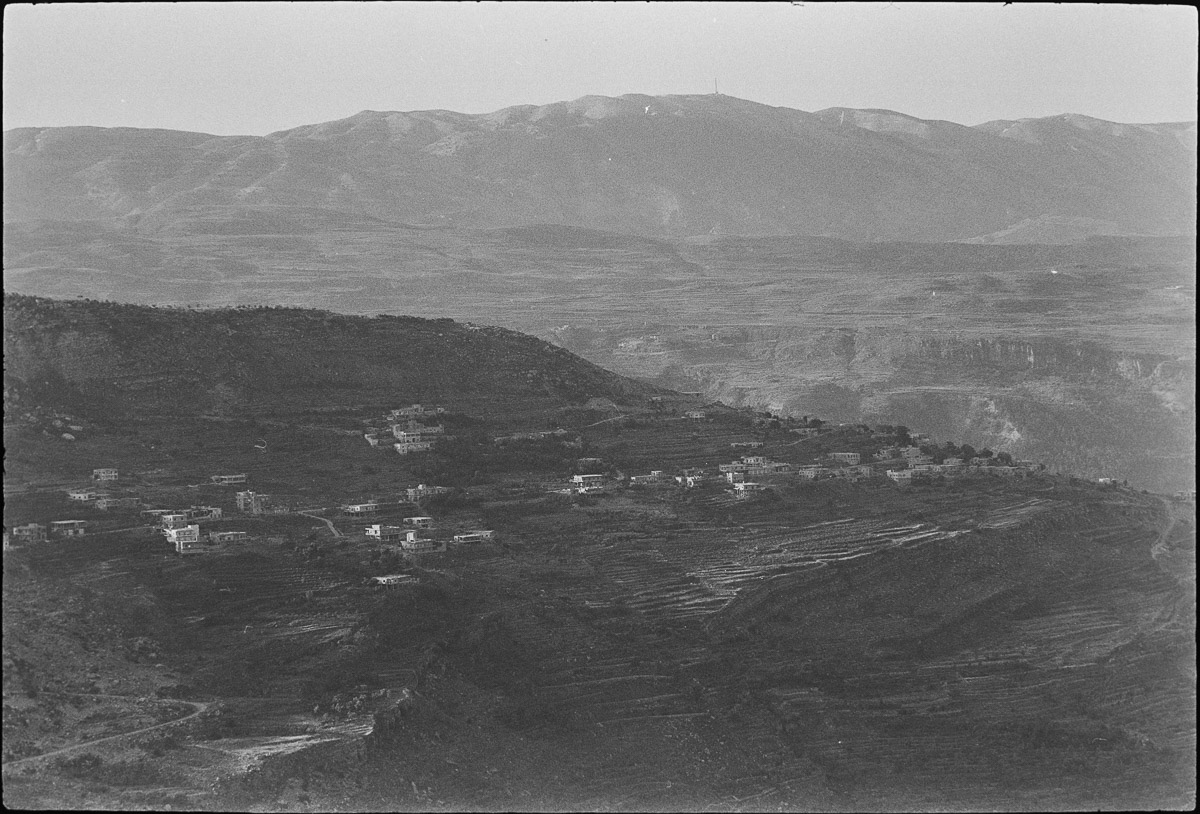 Hills photographed from above Zahlé in the late evening in 1992 – Photo: © Sebastien Desnoulez
The Bekaa Valley
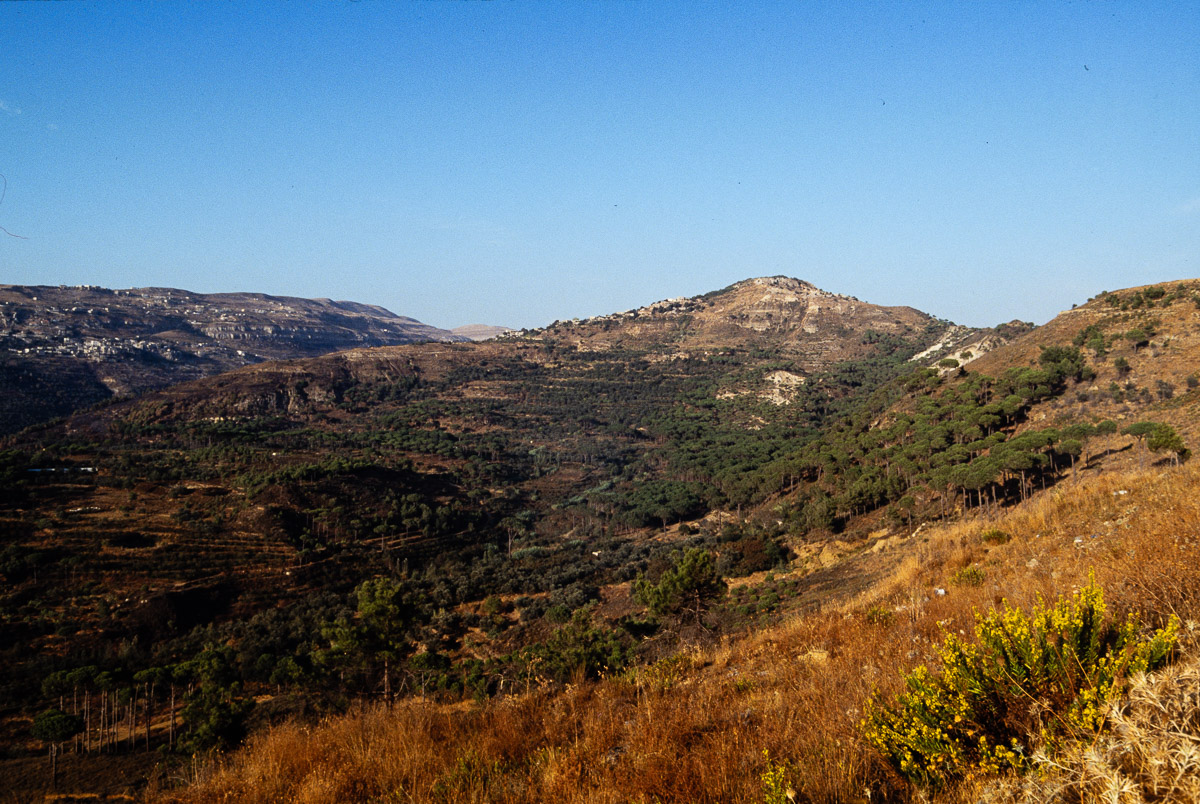
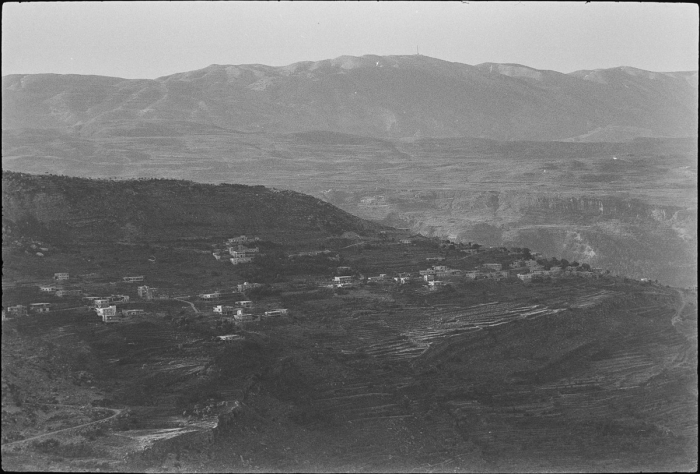
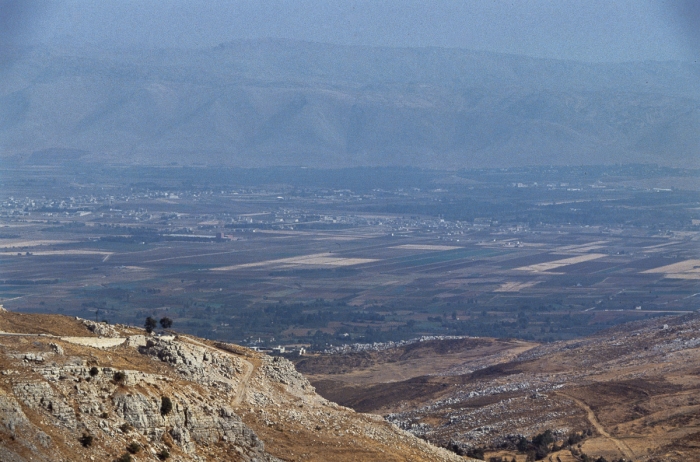
I photographed the Bekaa Valley from the surrounding heights during a stop between two special stages. The rally itinerary included Zahlé and Kefraya, although certain areas were carefully avoided because of the presence of militias and the risks faced by the drivers, teams and journalists.
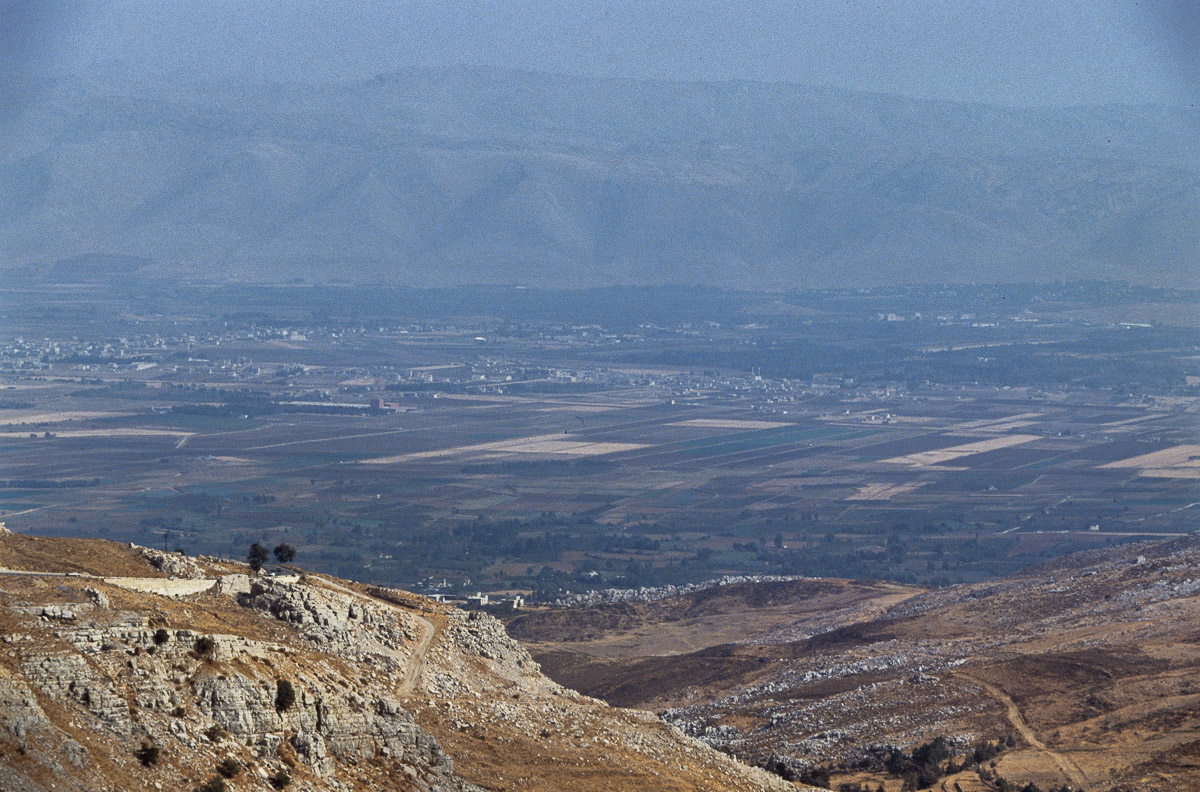 The Bekaa Valley photographed from the surrounding heights during a stop between two special stages – Photo: © Sebastien Desnoulez
A Military Presence That Remained Visible
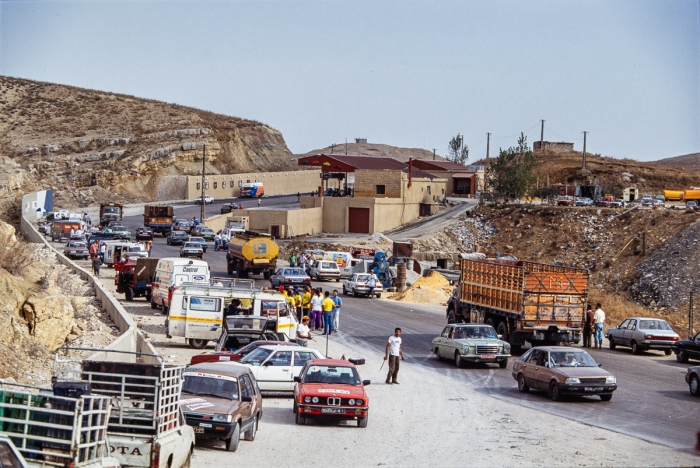
The military presence regularly accompanied our journeys. At the same location, I photographed Syrian soldiers positioned near their artillery pieces, followed by French driver Carole Vergnaud passing close by in her rally car.
The scene summarises the unusual context of the event: a sporting competition taking place in a country where the consequences of the war and the presence of foreign troops remained visible along the roads.
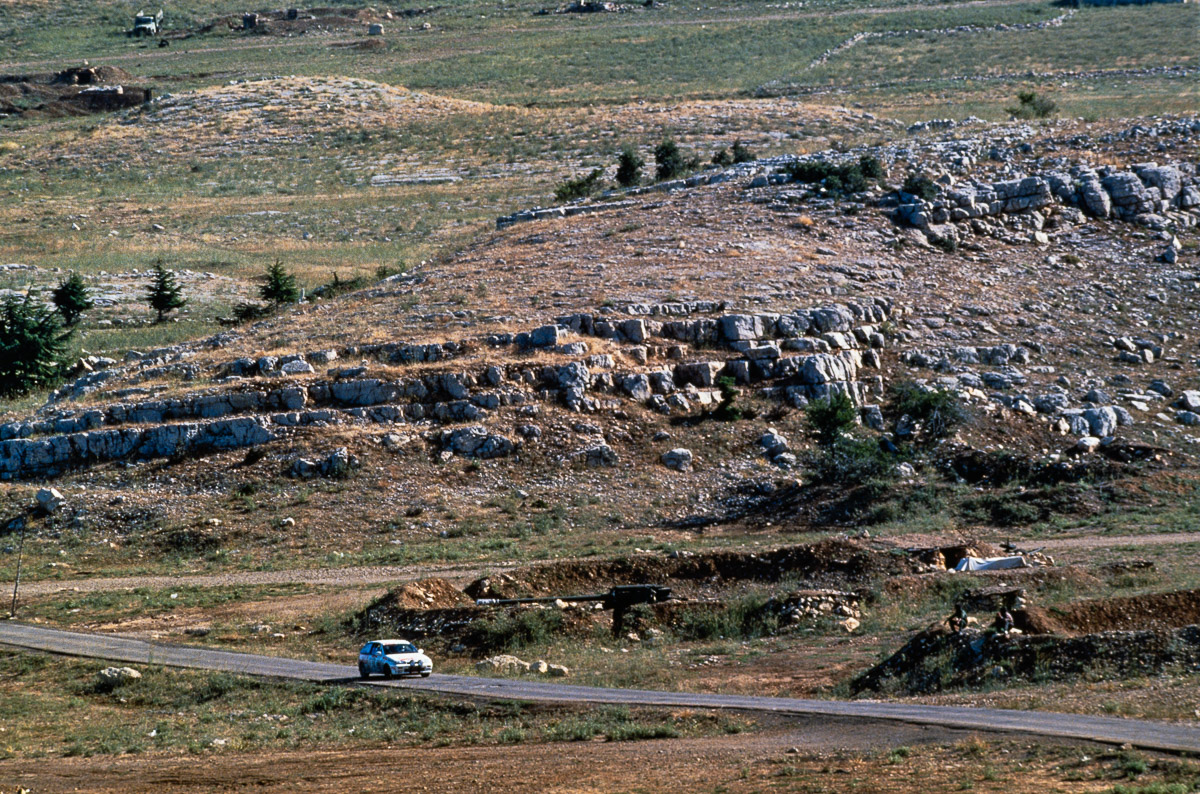 French driver Carole Vergnaud passes near Syrian artillery during the rally – Photo: © Sebastien Desnoulez
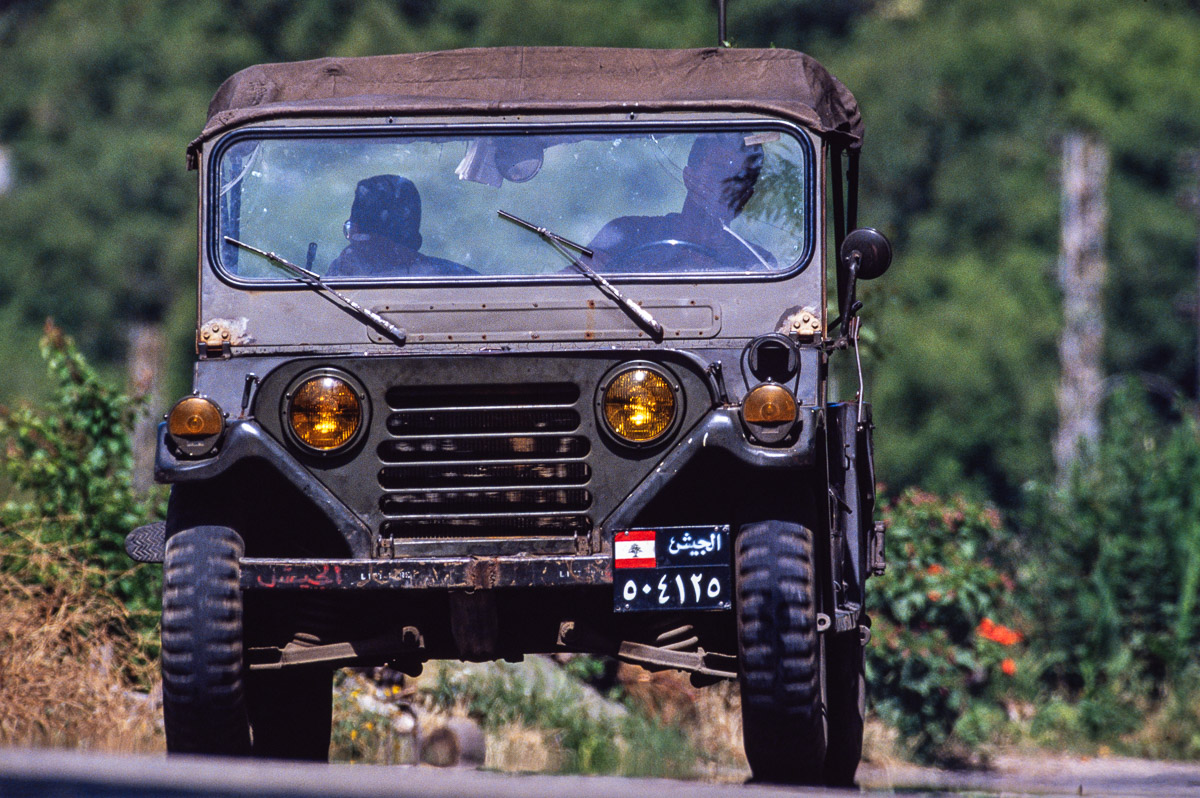
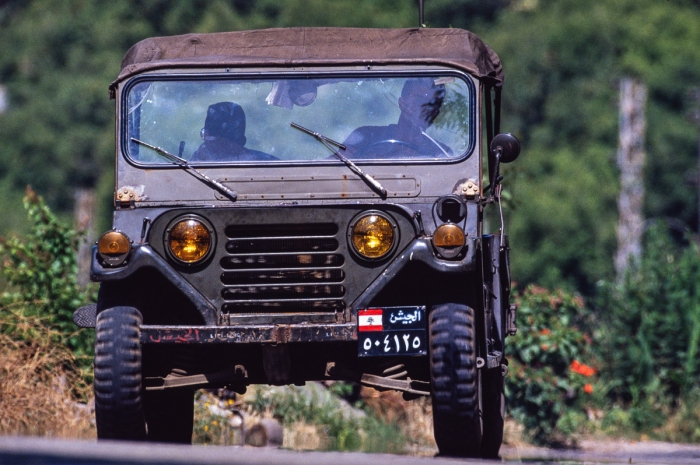
Another photograph shows a Lebanese Army Jeep. The vehicle drove along the special stage before the competition cars in order to inspect and check the route.
The Official Programme of the 1991 Rallye de la Montagne
I kept the official programme of the Marlboro Rallye de Montagne, organised on 11, 12 and 13 October 1991 by the Automobile and Touring Club of Lebanon.
The document contains the entry list, schedules and detailed maps of the special stages. The routes connected the ATCL in Jounieh with several areas of Mount Lebanon, the Chouf and the Bekaa Valley, including Zahlé and Kefraya.
Download the official programme of the 1991 Rallye de la Montagne in PDF format
These rally-related journeys allowed me to discover a part of Lebanon that I would probably not have explored under the same conditions during an ordinary trip. The photographs presented here complement those taken in Beirut and preserve a record of the landscapes, roads and towns crossed in 1991 and 1992.
Click on the photographs below to view them full screen.
All photographs on this website are protected by copyright © Sebastien Desnoulez. No use is permitted without the author’s written consent.
Legal notice
About the author
Sebastien Desnoulez is a photographer, author and image maker based in Paris. His work spans architectural photography, landscape photography and travel photography, with particular attention to composition, lines, light, blur and visual accidents. Trained in photography in the mid-1980s, he covered Formula 1 and reported from around the world before developing a fine art photography practice built around the tension between graphic rigour and visual instability. He also shares his technical experience through practical articles for passionate photographers, drawing on a strong visual culture acquired in both film and digital photography.
Tags