

Nikon DL: the 1-inch premium compact cameras that never launched

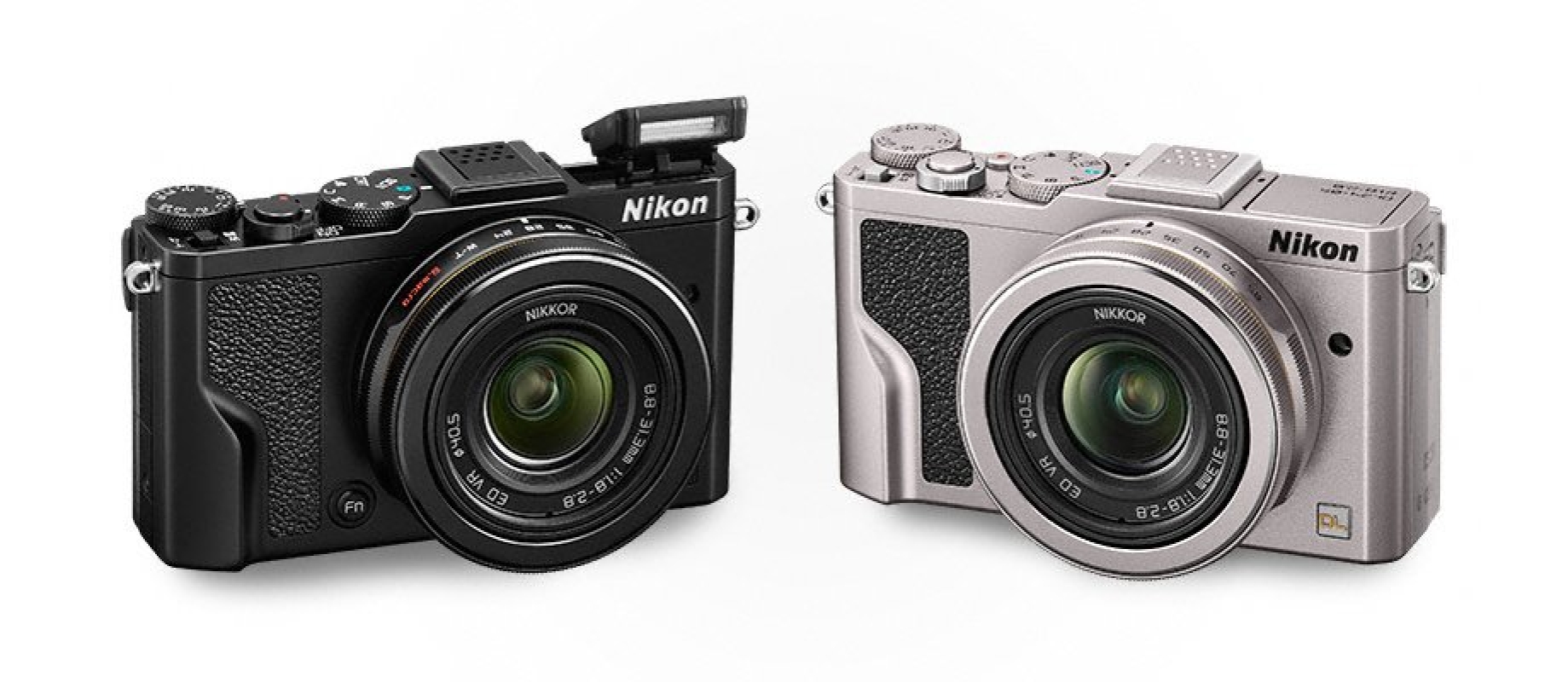
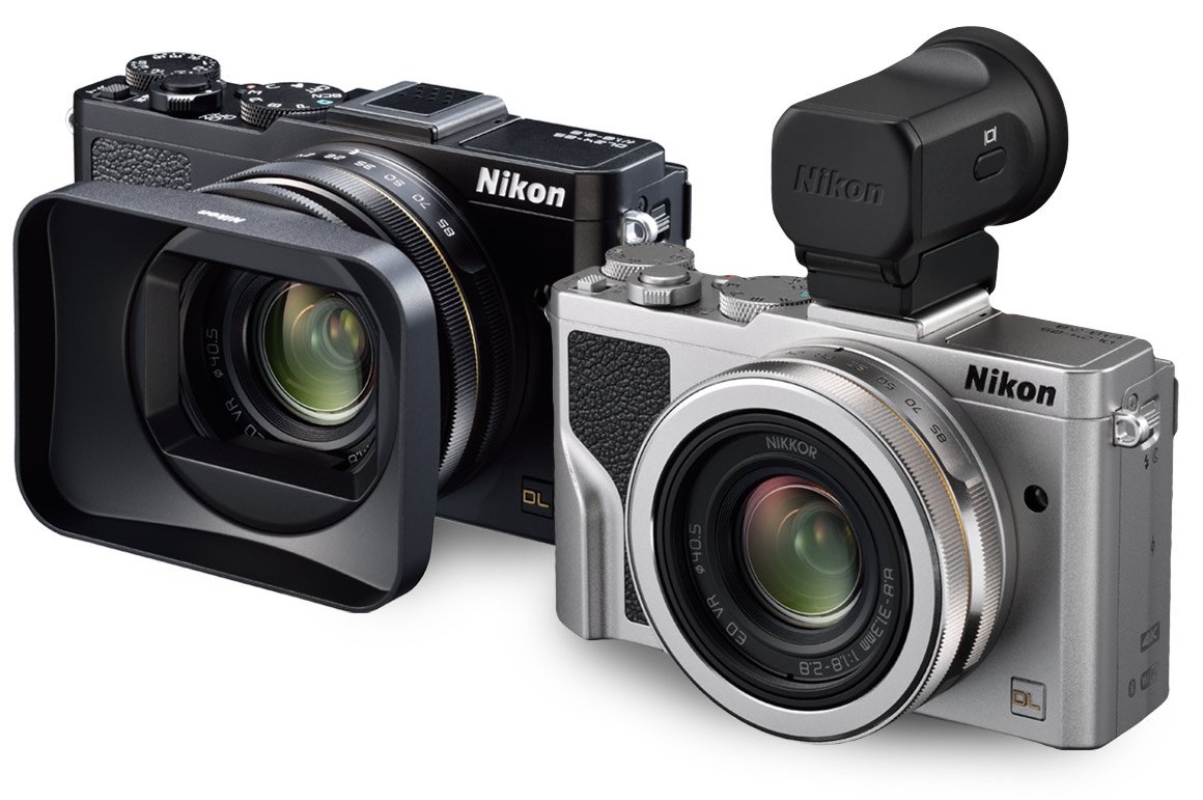
In February 2016, Nikon introduced a particularly ambitious range of premium compact cameras: the Nikon DL18-50, Nikon DL24-85 and Nikon DL24-500. All three were built around a 1-inch sensor, bright NIKKOR lenses and an ergonomic approach aimed at demanding photographers.
At the time, this series was intended to allow Nikon to compete with high-end premium compact cameras such as the Sony RX100 and the Canon G series, while bringing a true NIKKOR optical signature to the segment. The DL cameras promised an appealing compromise: expert-level image quality in a body lighter than a DSLR or mirrorless camera.
The Nikon DL series was ultimately never released. Nearly ten years later, however, interest in these cameras remains surprisingly strong. Recent rumors about a possible return of premium Nikon compact cameras have renewed searches around this now almost mythical range.
Table of contents
- Nikon DL range presentation
- Nikon DL18-50
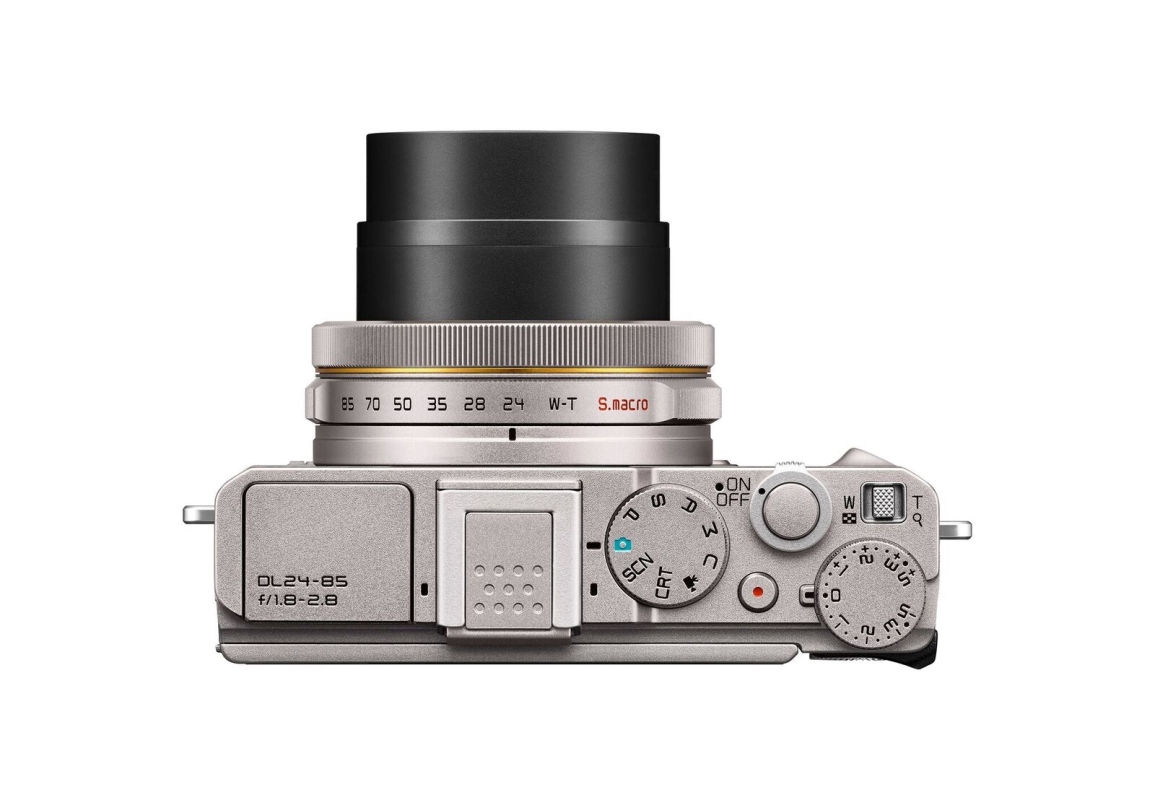
- Nikon DL24-85
- Nikon DL24-500
- Comparison of the three Nikon DL cameras
- Cancellation of the project in 2017
- 2026 rumors around Nikon compact cameras
- Sources
Nikon DL range presentation
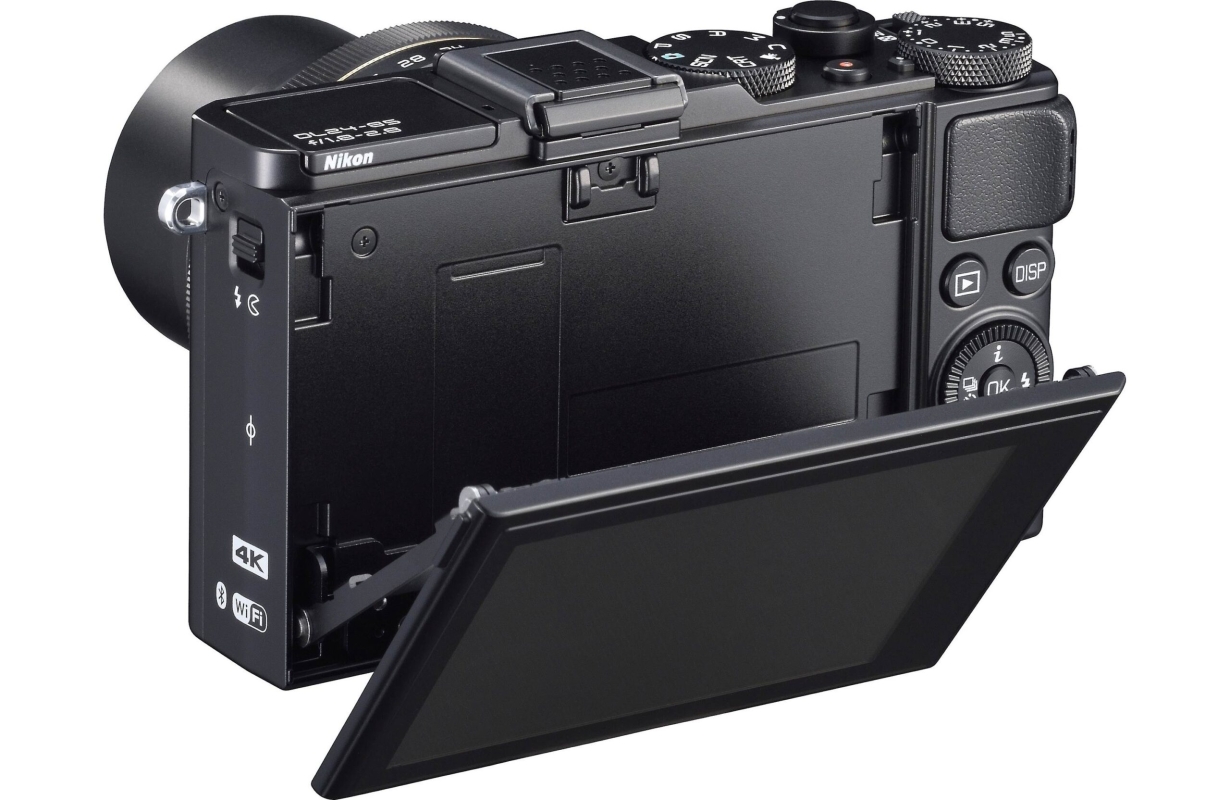
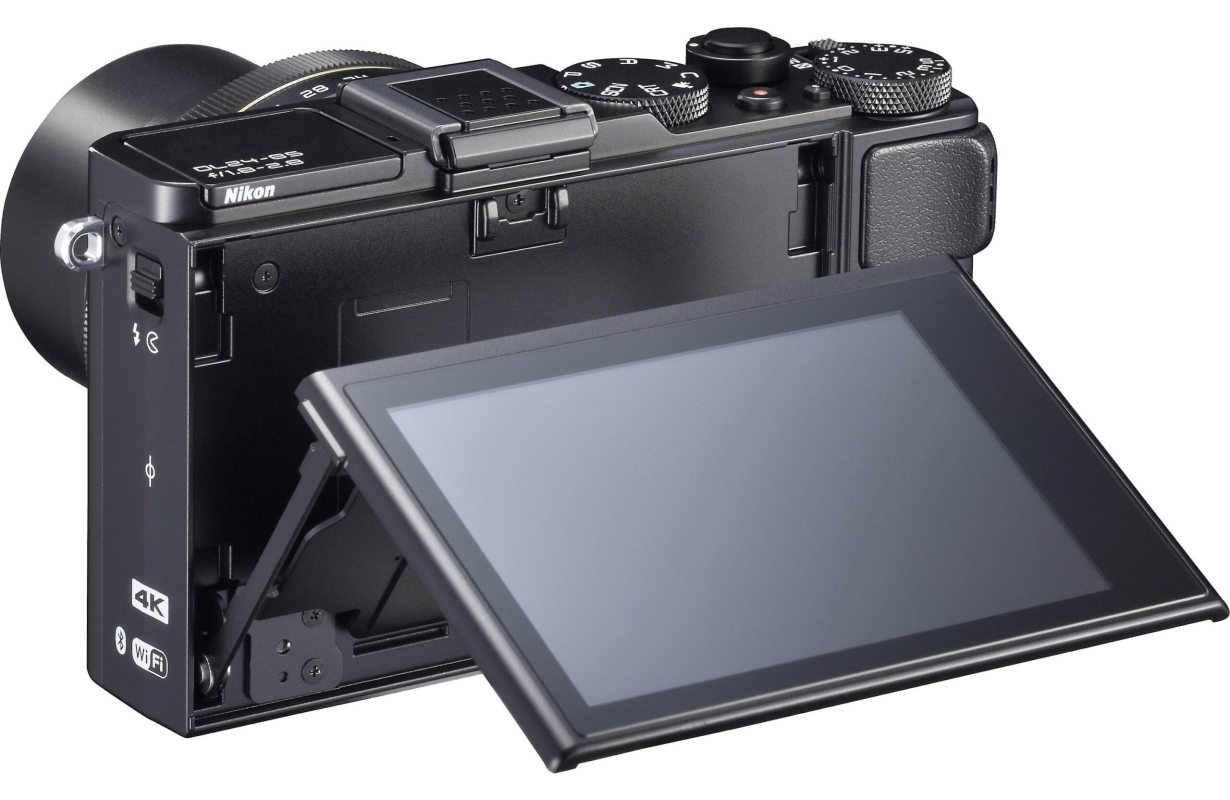
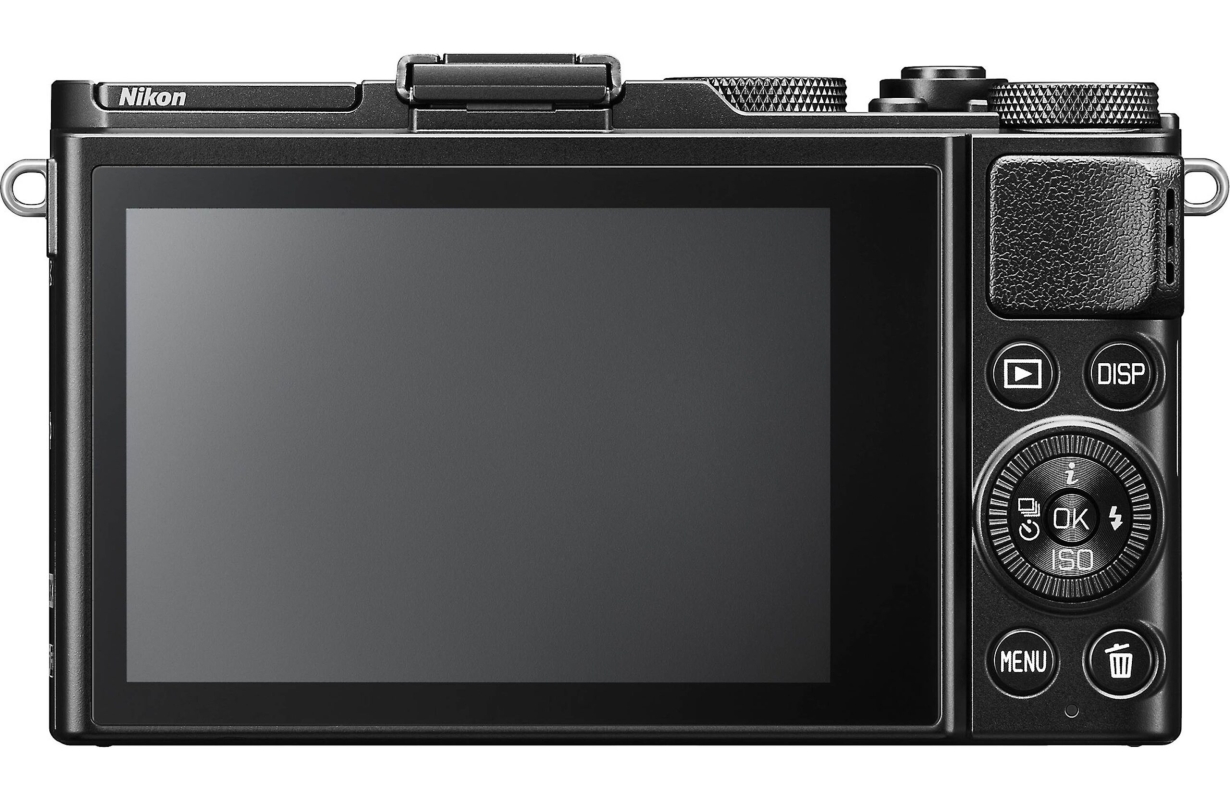
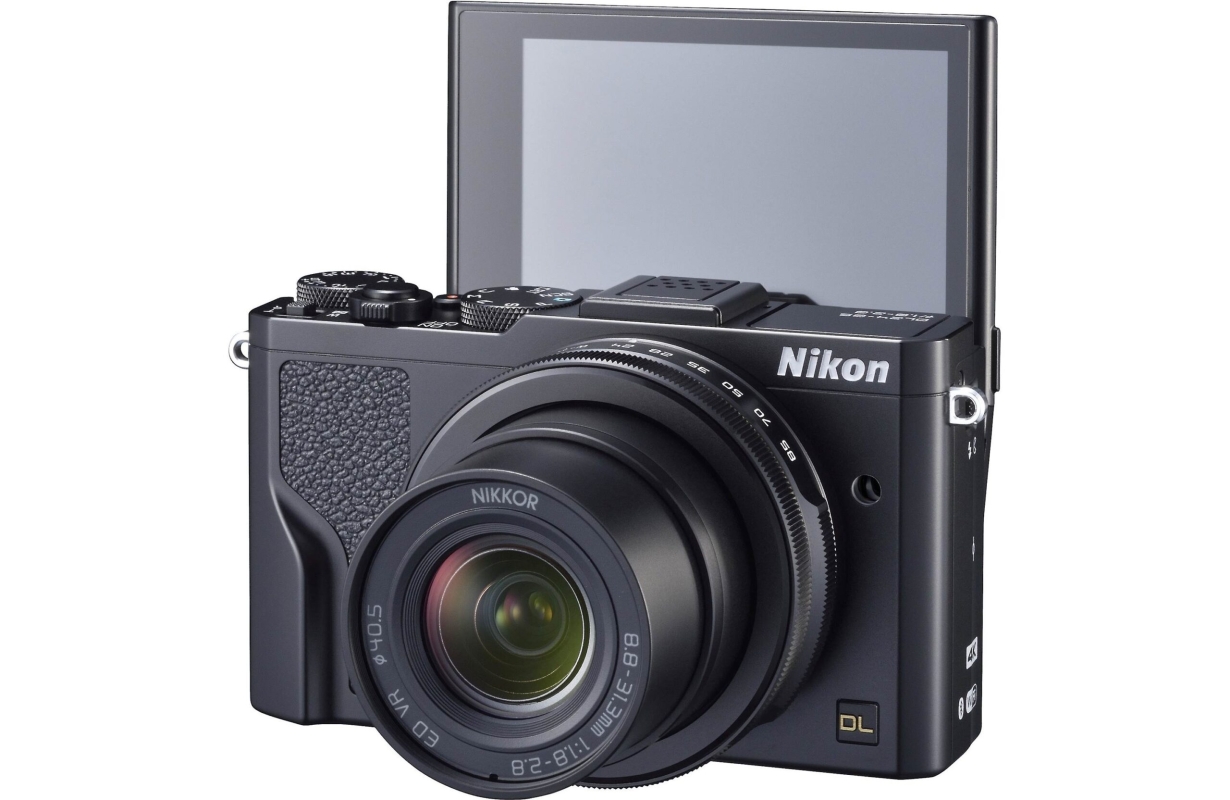
Officially announced by Nikon on February 23, 2016, the DL range included three premium compact cameras: the DL18-50 f/1.8-2.8, the DL24-85 f/1.8-2.8 and the DL24-500 f/2.8-5.6. Nikon wanted to offer a high-end alternative to the premium compact cameras of the time, with bodies smaller than a DSLR, ambitious lenses and controls designed for advanced photographers.
The three models used a 1-inch backside-illuminated CMOS sensor, paired with the EXPEED 6A processor. They also offered hybrid autofocus, high-speed continuous shooting, 4K/UHD video recording, RAW NEF files and SnapBridge connectivity.
Each camera, however, addressed a different use. The DL18-50 focused on ultra-wide-angle photography and architecture. The DL24-85 aimed to be more versatile, with a Super Macro function. The larger DL24-500 covered long focal lengths for sports, wildlife, aircraft or distant subjects.
It is important, however, to distinguish between the real aperture, which determines exposure, and aperture equivalence for depth of field. On a 1-inch sensor, the actual focal lengths are much shorter than on a full-frame camera. For the same framing, depth of field is therefore greater than with a 35mm full-frame lens used at the same nominal aperture. The equivalences below refer only to depth-of-field rendering, not exposure. Further explanation: Focal length and aperture equivalence according to sensor size.
Nikon DL18-50: the ultra-wide-angle premium compact
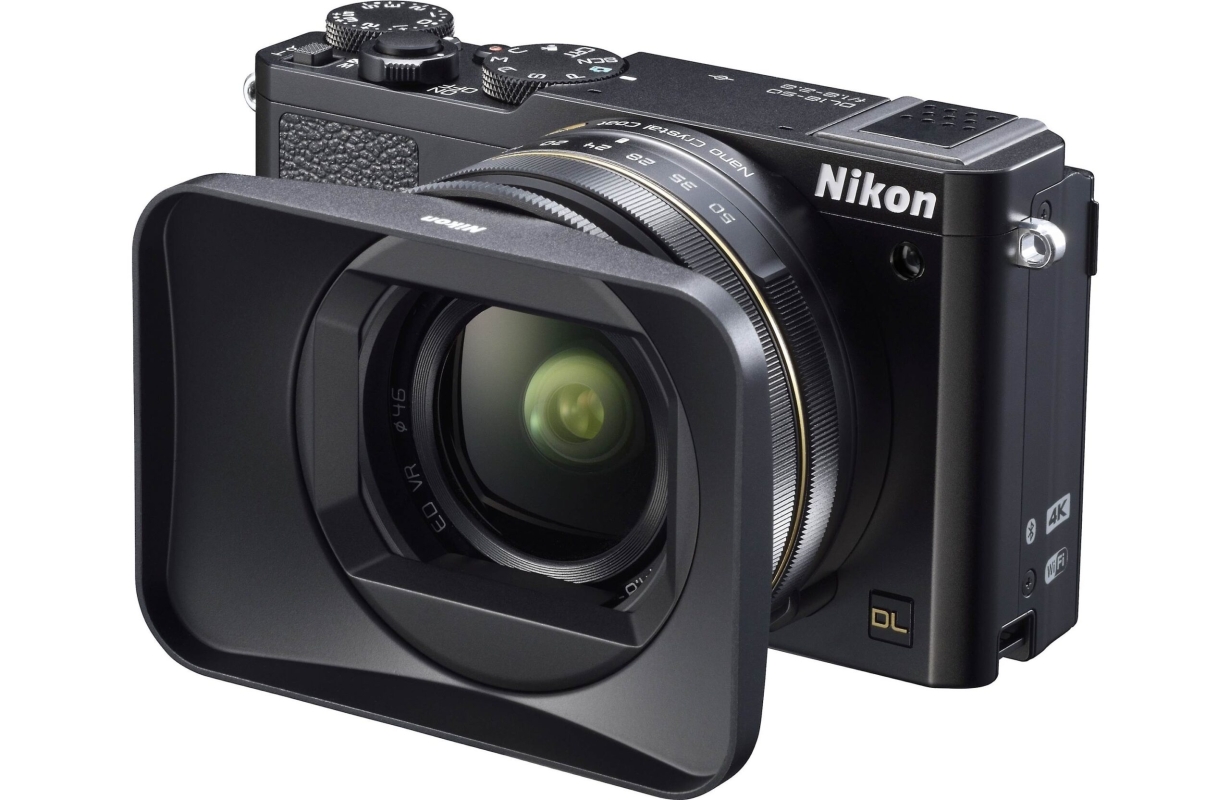
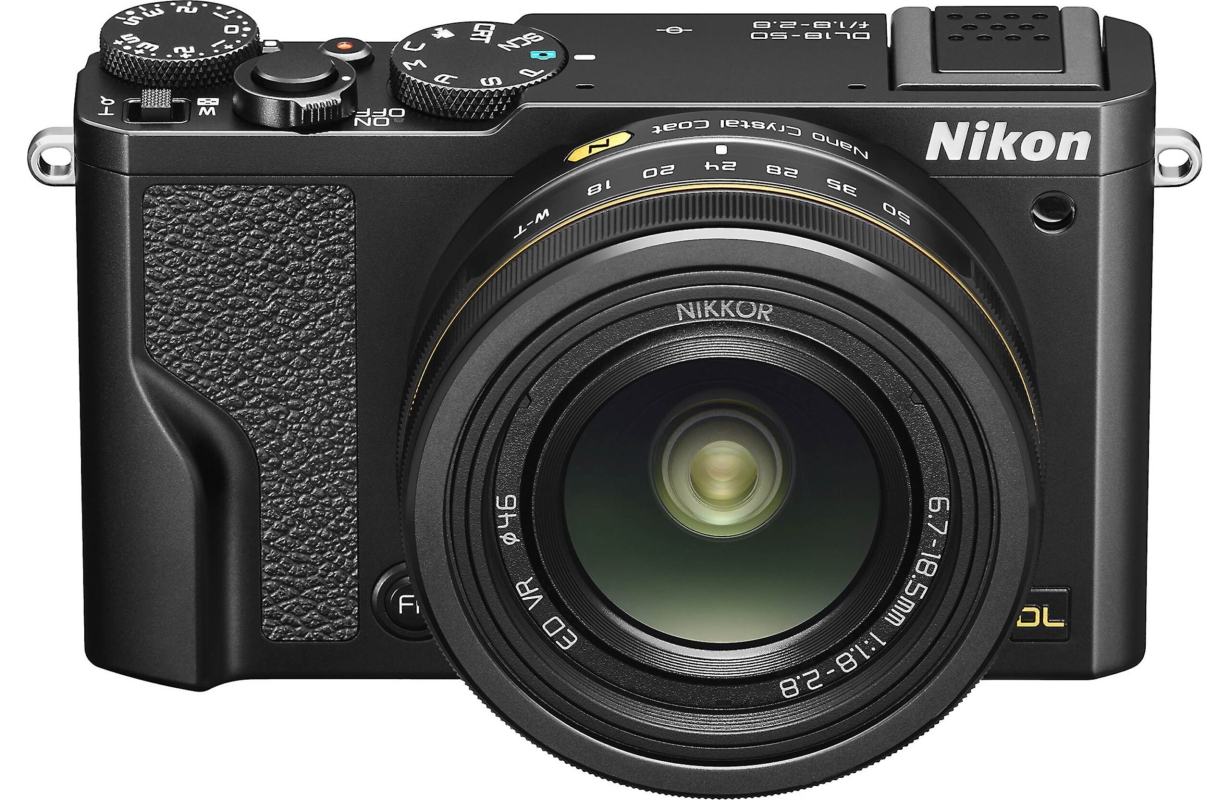
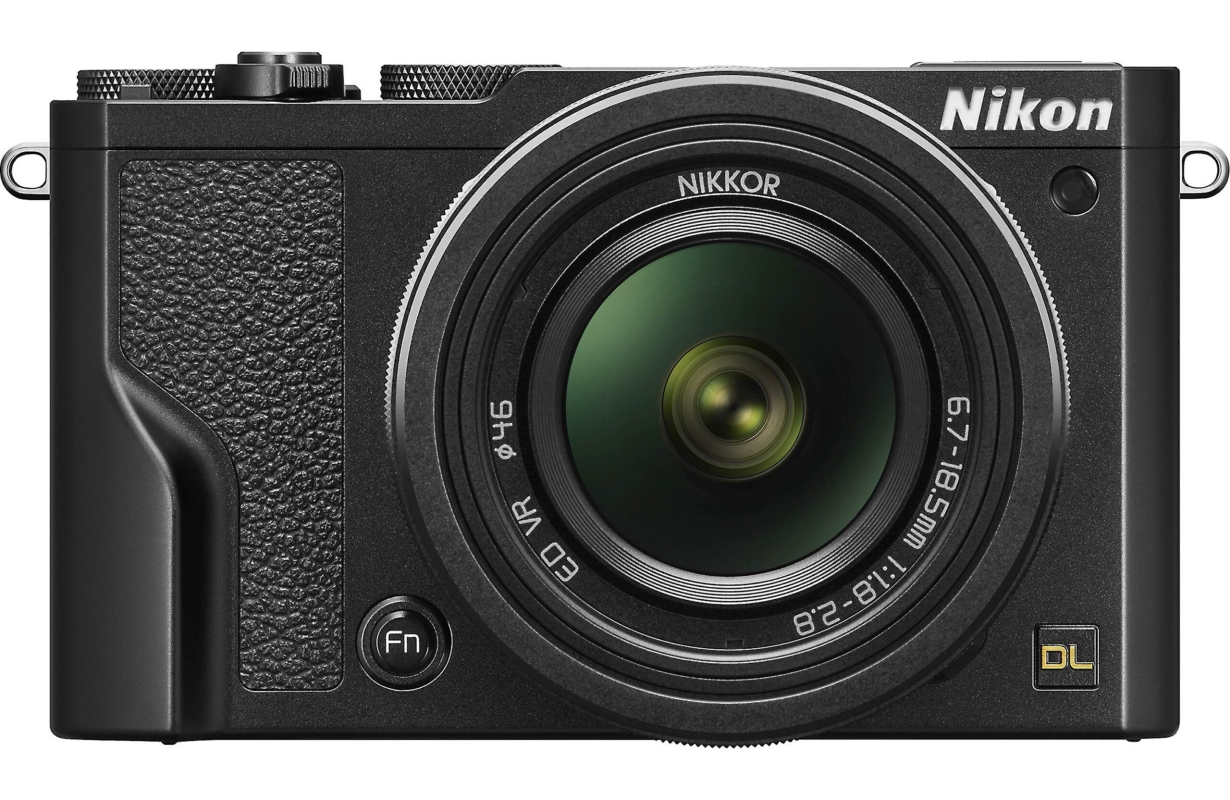
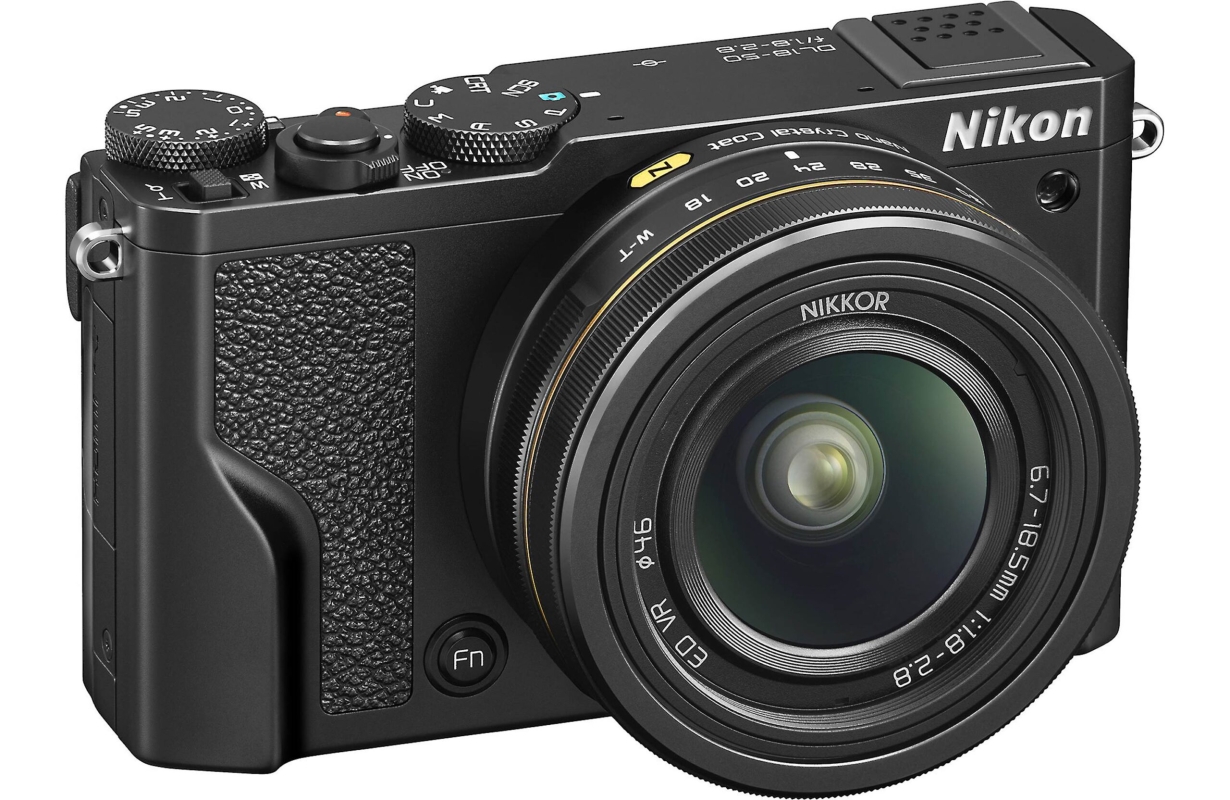
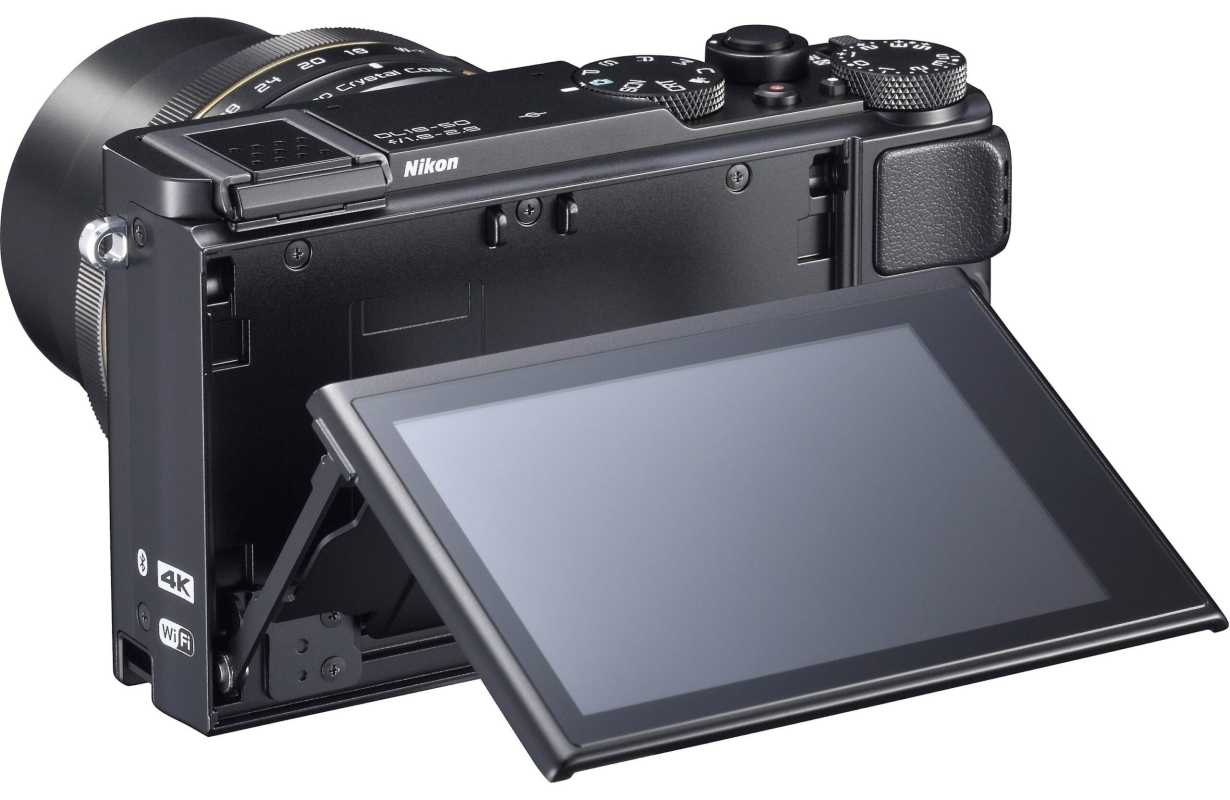
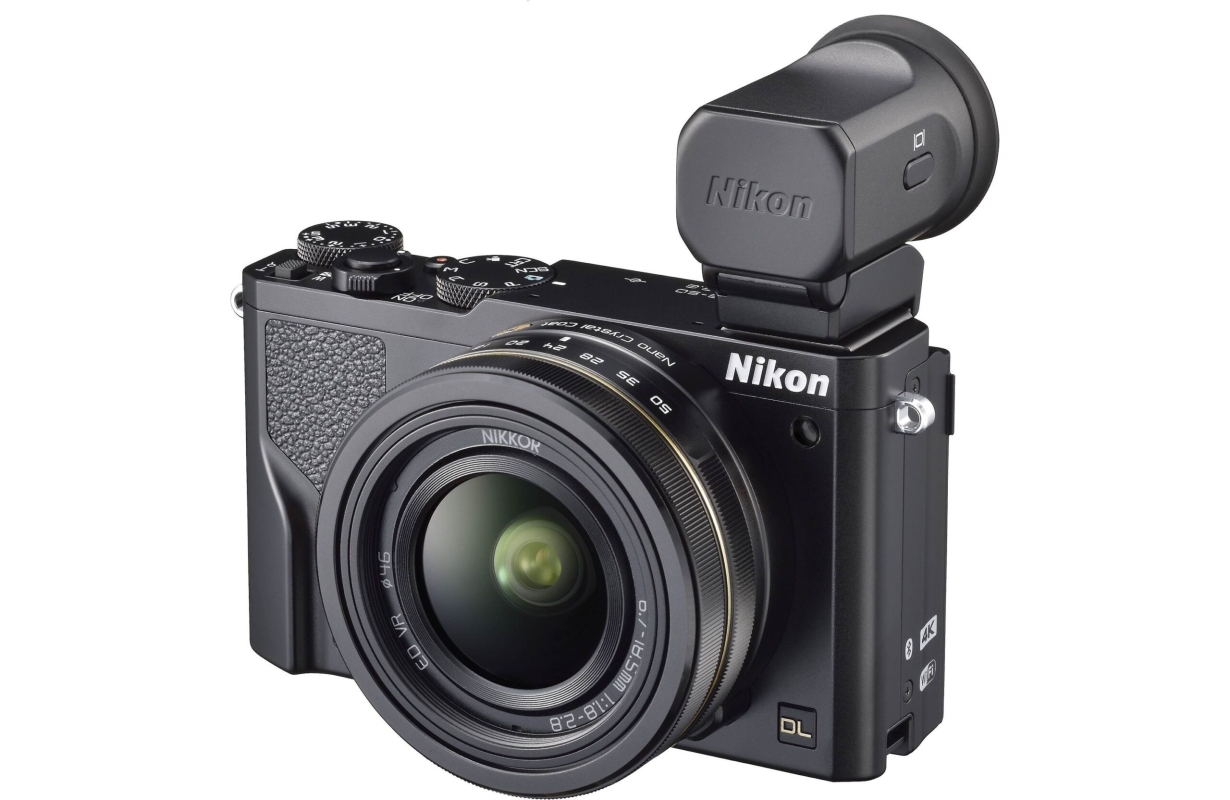
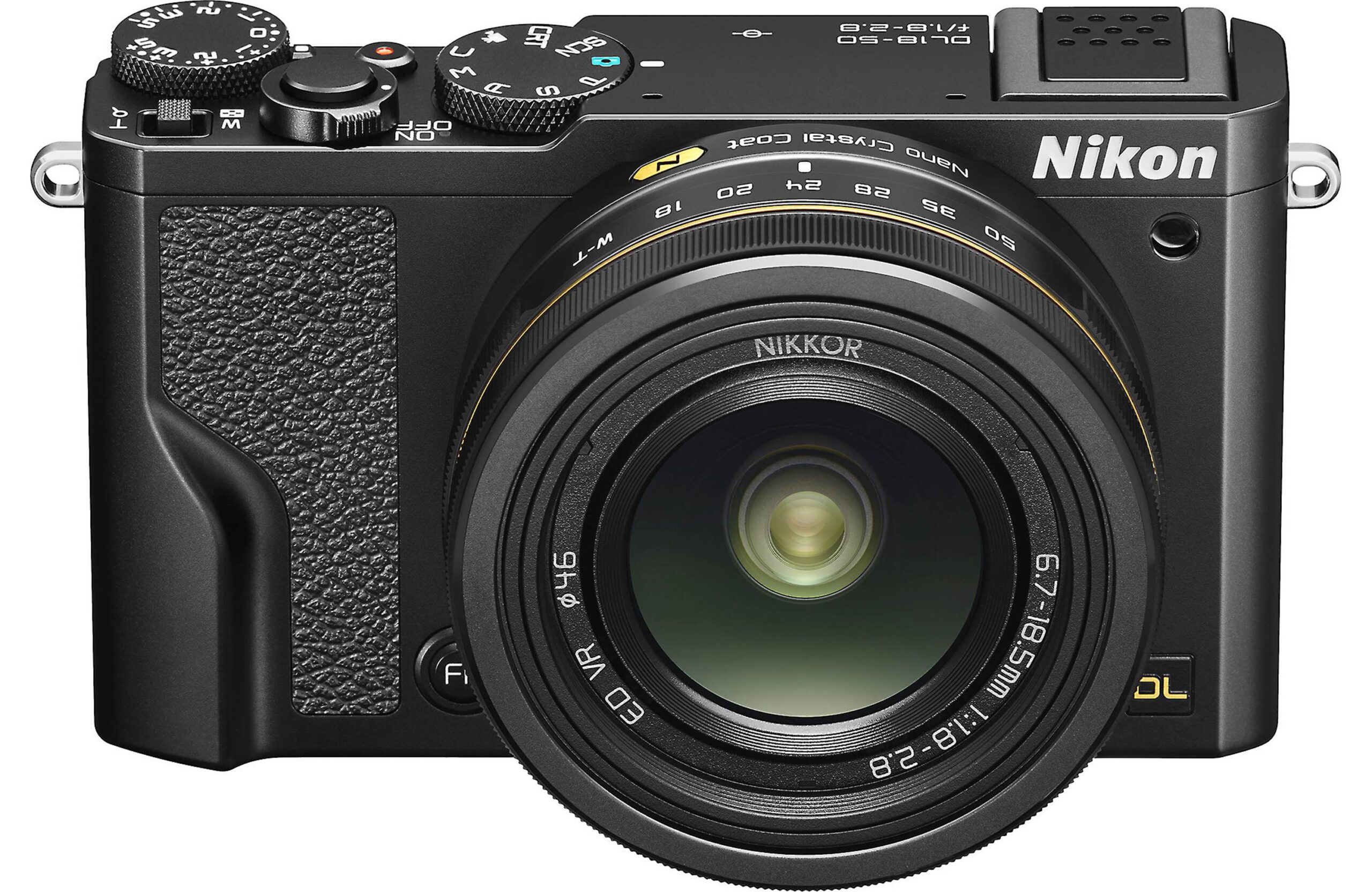 DL18-50 f/1.8-2.8
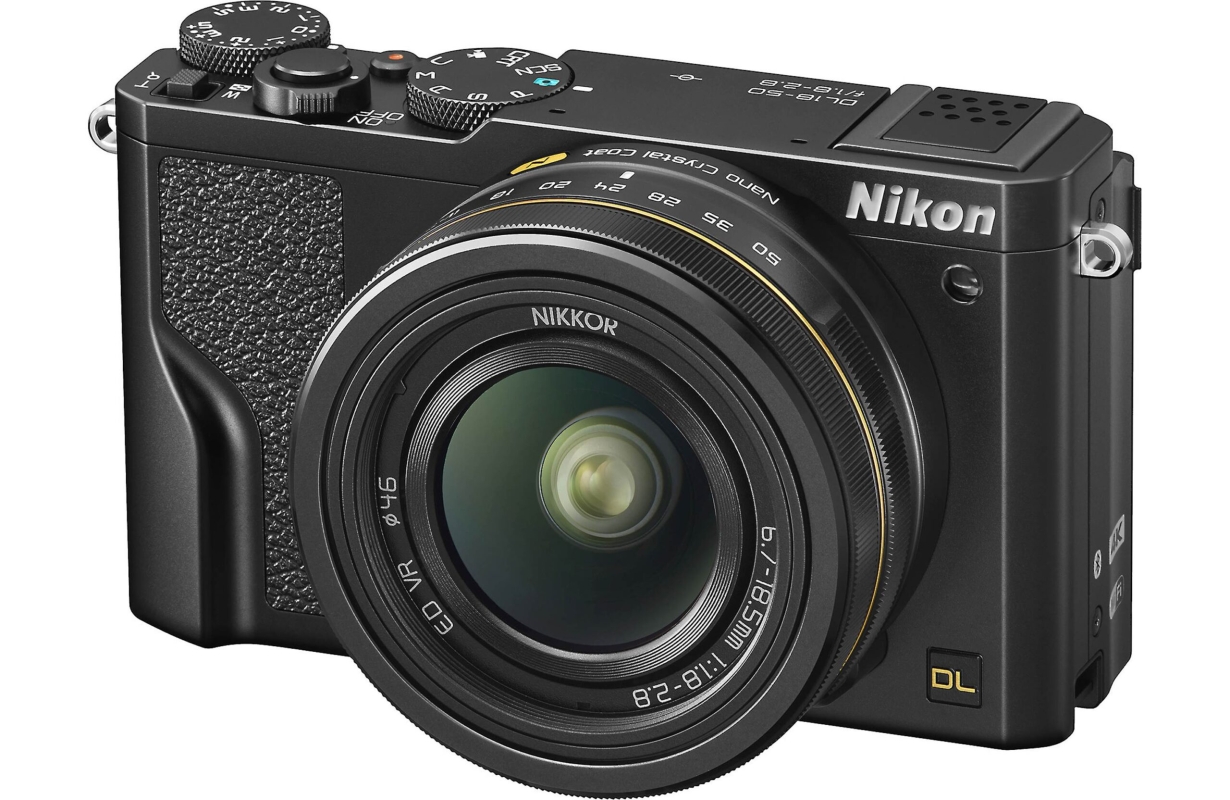
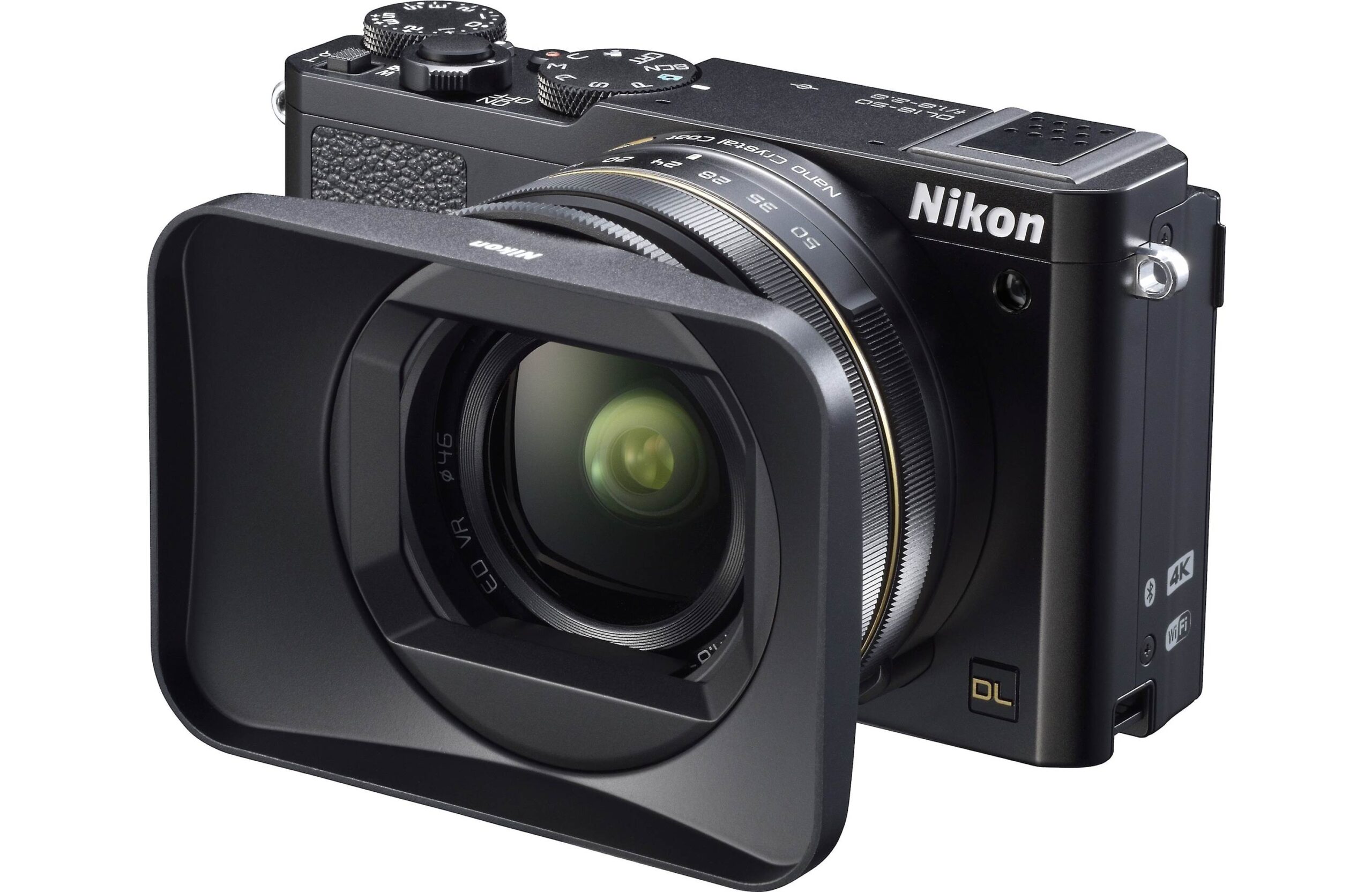
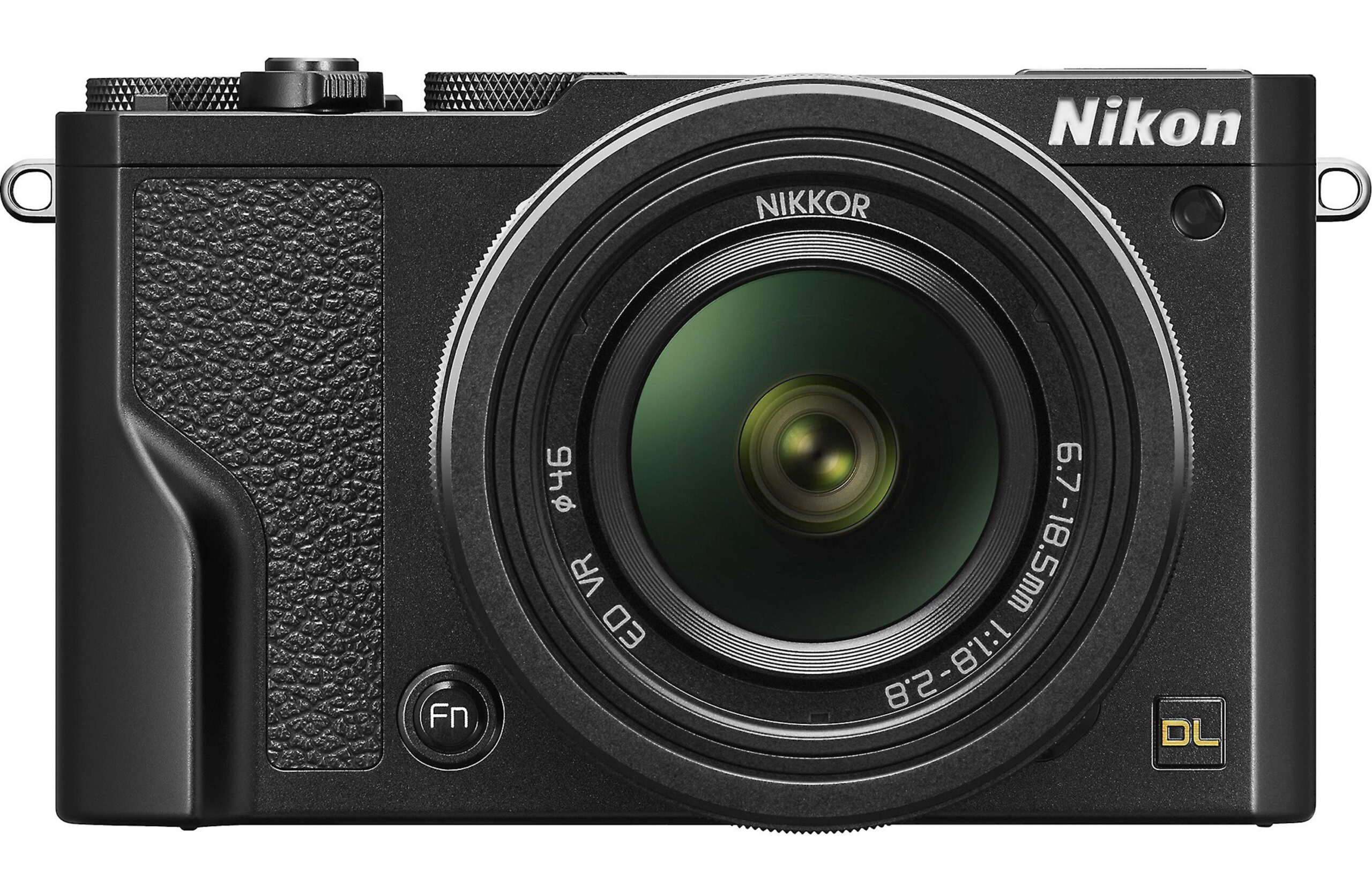
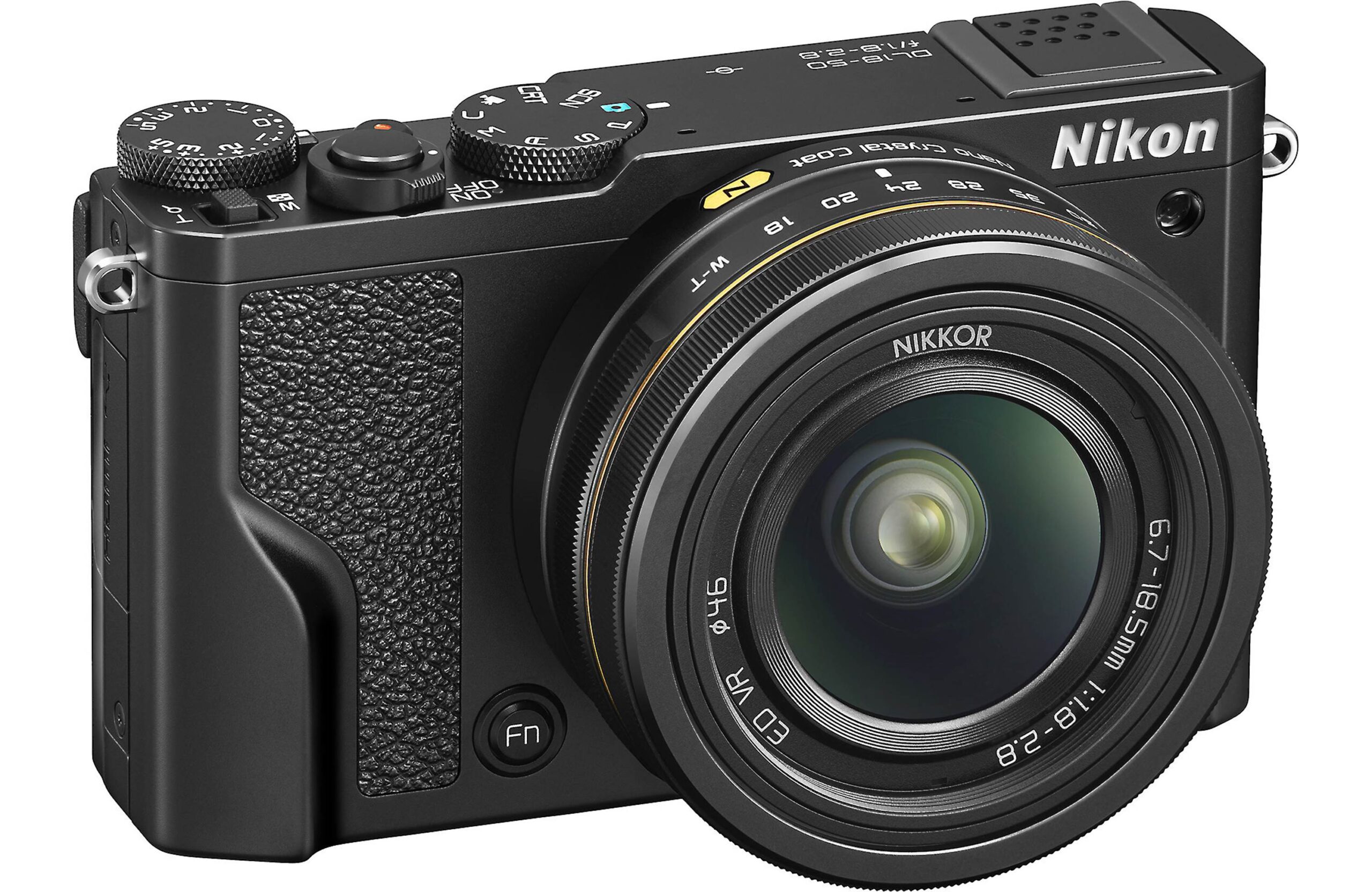
The Nikon DL18-50 featured an ultra-wide-angle 18-50 mm zoom equivalent in 35mm/full-frame format, with a maximum aperture of f/1.8 at 18 mm and f/2.8 at 50 mm. It was the most original model in the range, designed for architecture, landscapes, urban reportage and dynamic compositions.
This very appealing aperture was fully meaningful for exposure: it helped maintain a comfortable shutter speed or limit ISO increase. For depth of field, however, the rendering was not equivalent to that of a full-frame lens used at f/1.8 or f/2.8. The 1-inch sensor and the actual focal lengths of 6.7 to 18.5 mm naturally produced greater depth of field.
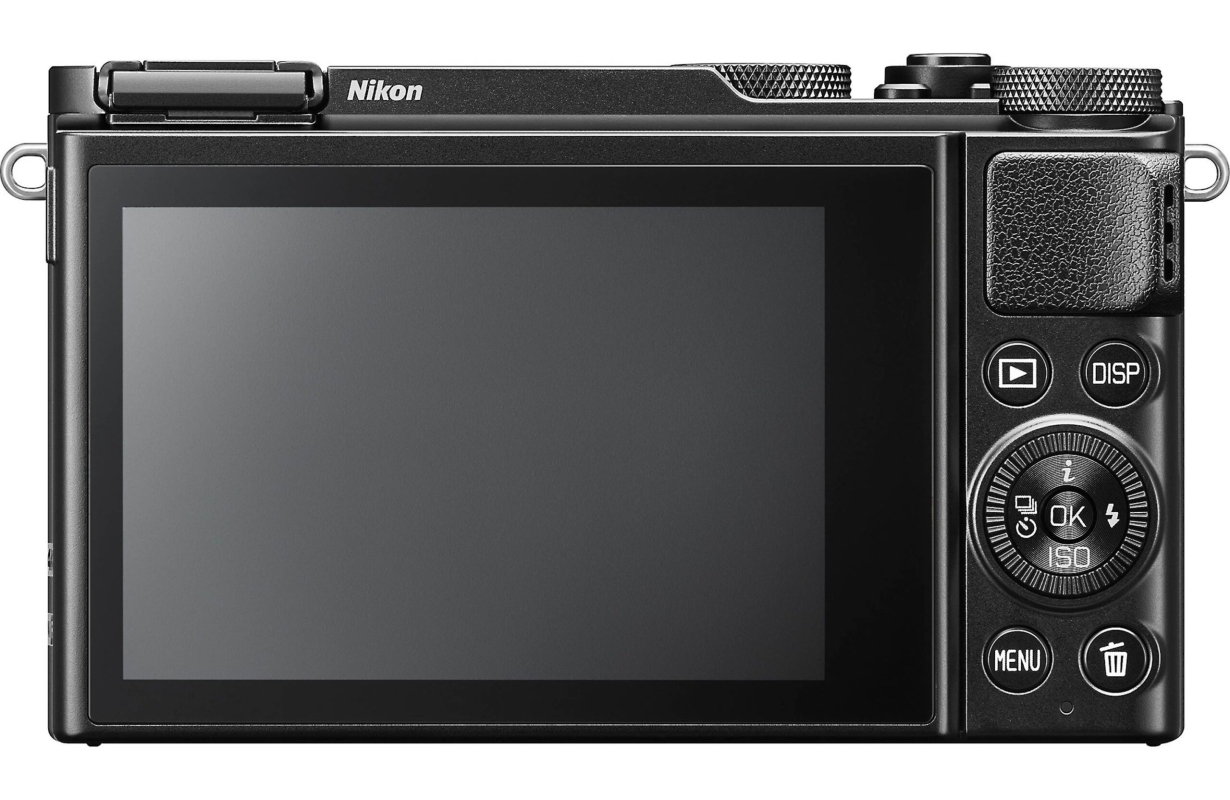
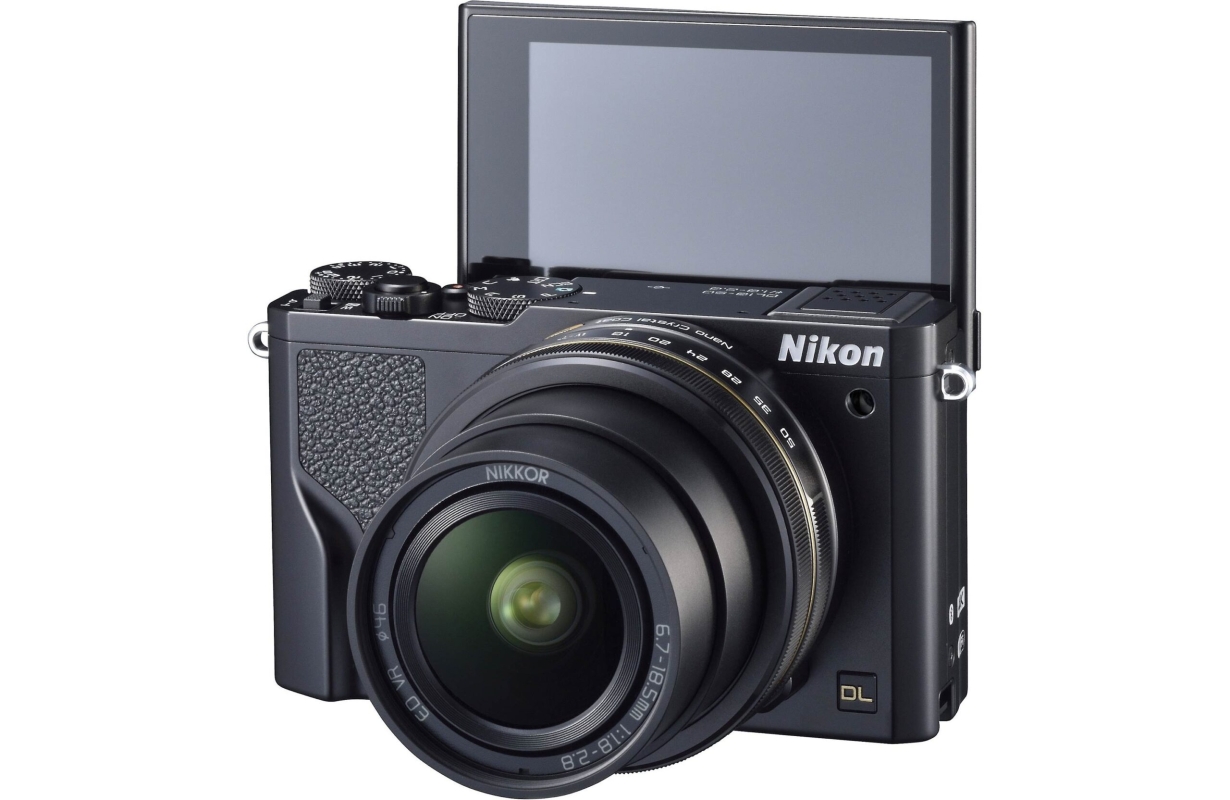
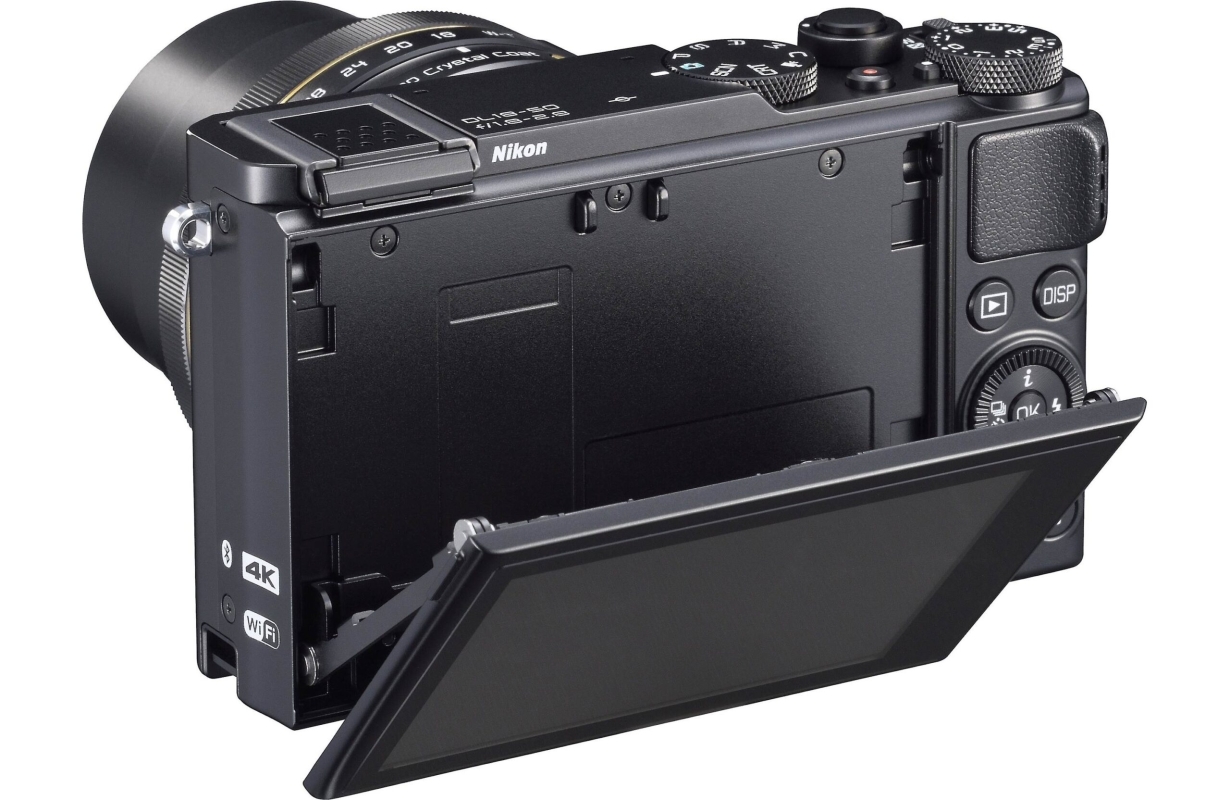
Its 1-inch CX-format 20.8-megapixel sensor was intended to deliver good image quality in a compact body, with a more refined rendering than small-sensor compact cameras. An integrated Perspective Control function allowed distortions to be corrected directly in-camera, an obvious advantage for photographers working with architectural subjects. Video was also included, with the ability to record in 4K/UHD at 30/25p.
Nikon also emphasized the quality of the DL18-50’s NIKKOR lens. Its optical formula included aspherical lens elements, an aspherical ED glass element, an HRI element and Nano Crystal Coat, a technology usually associated with high-end NIKKOR lenses.

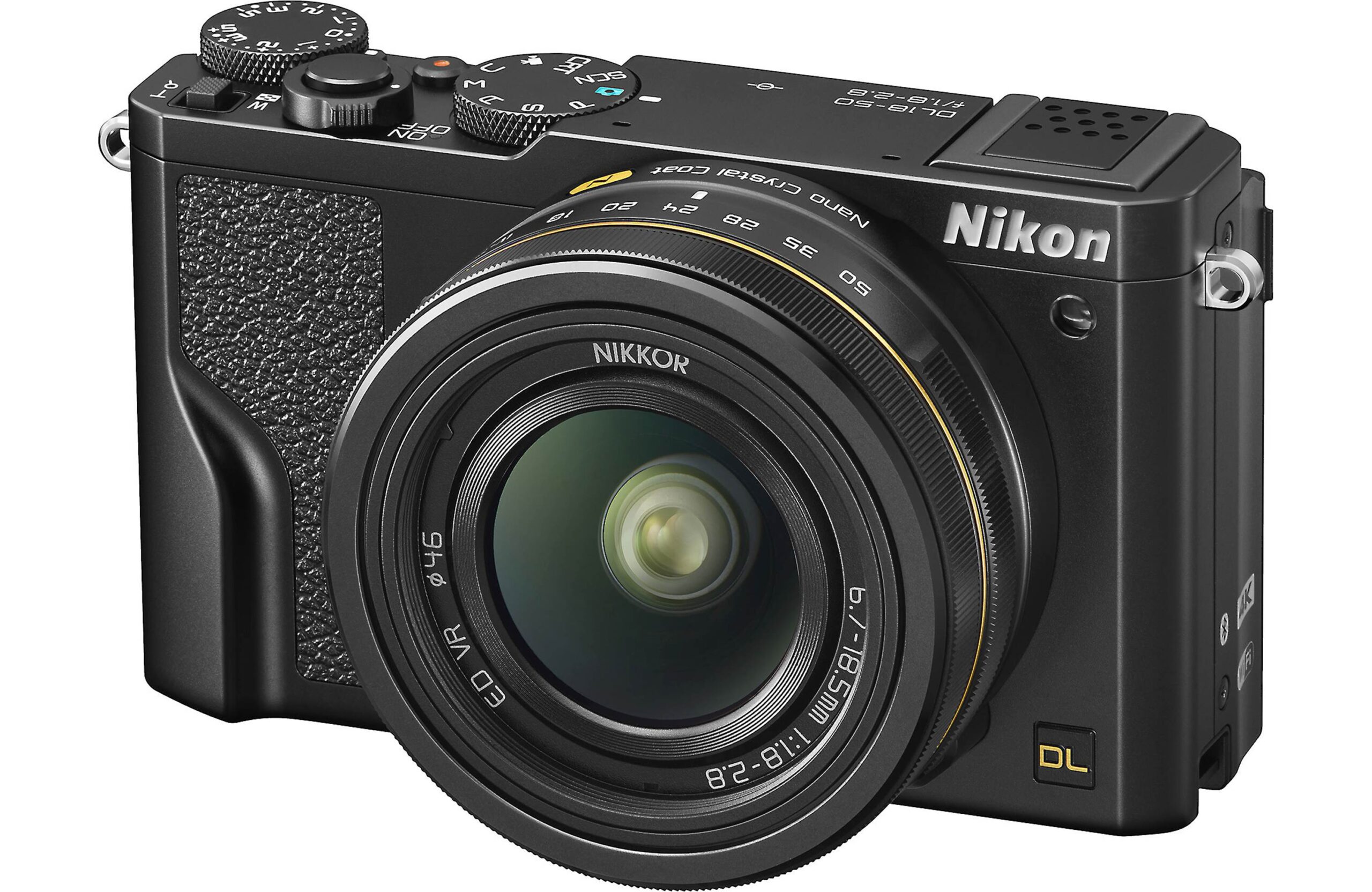
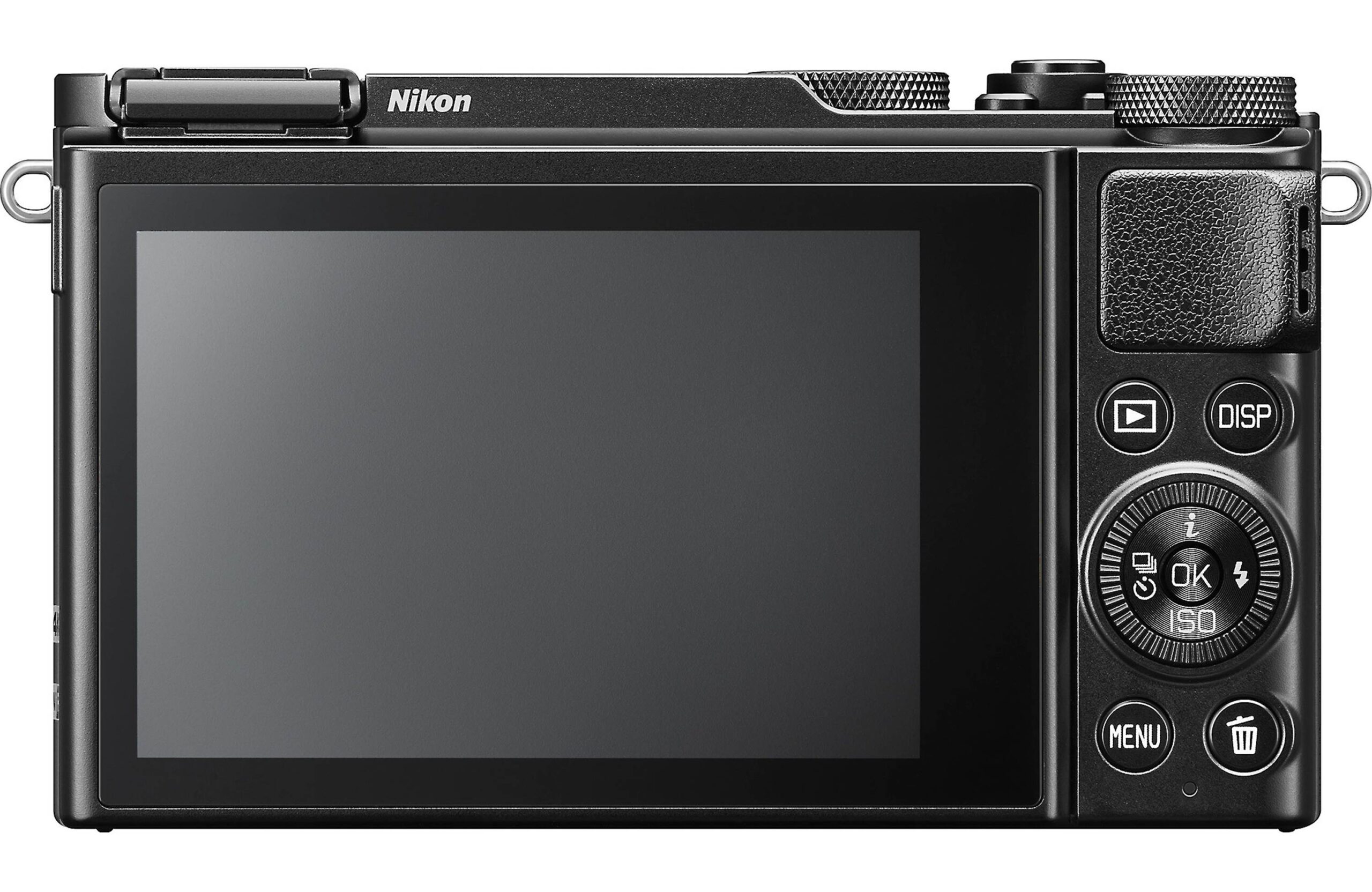
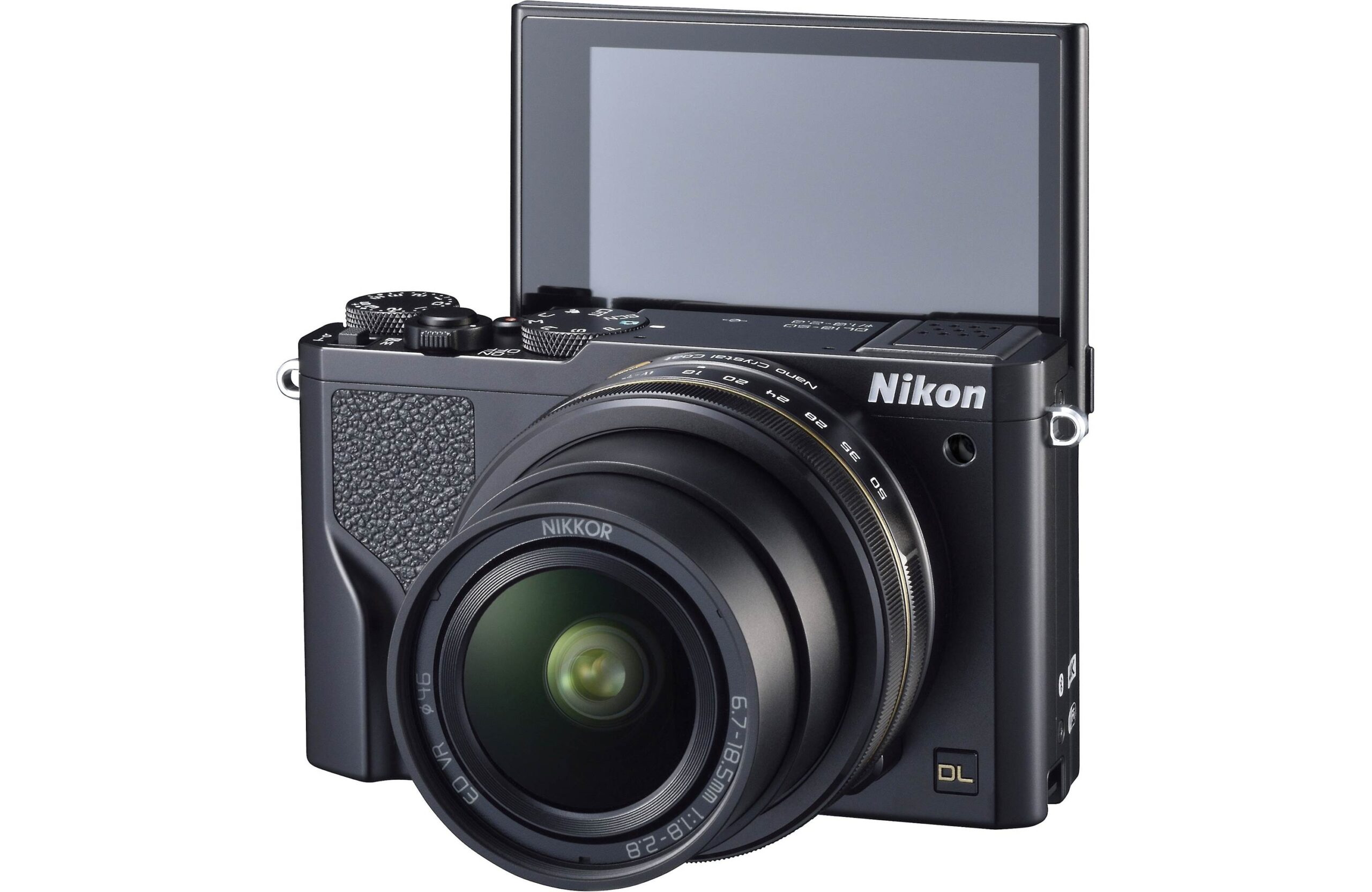
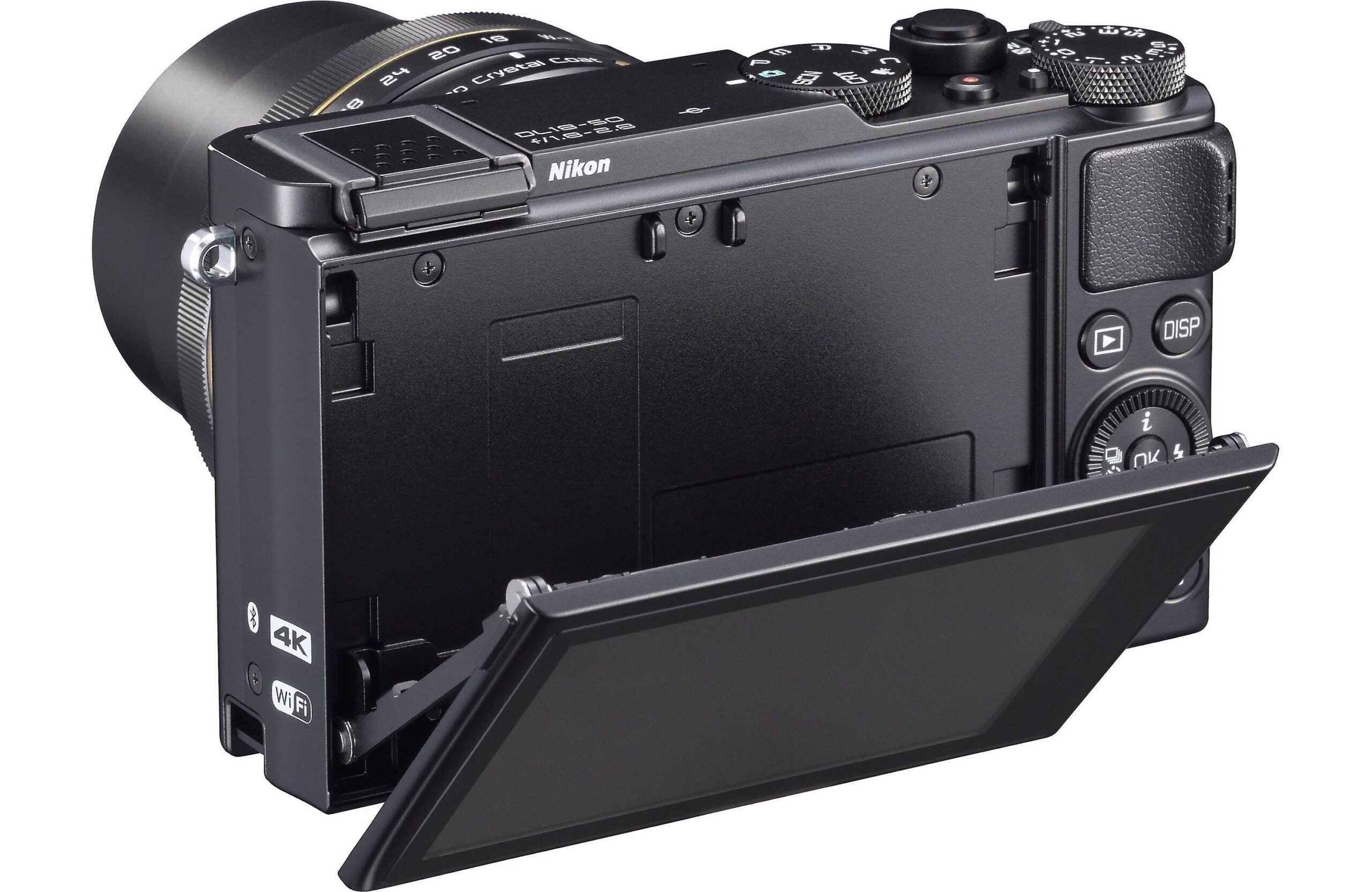
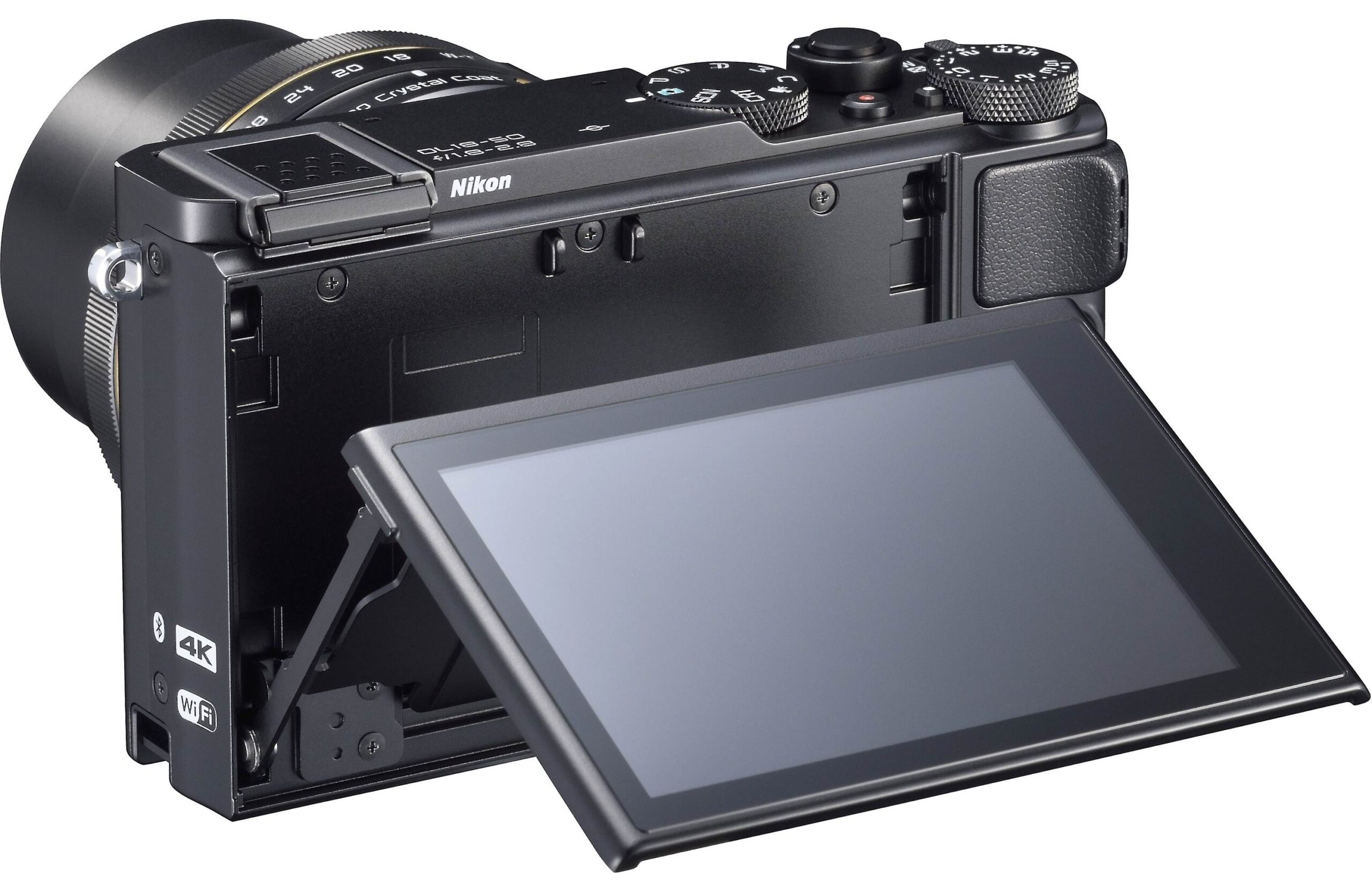
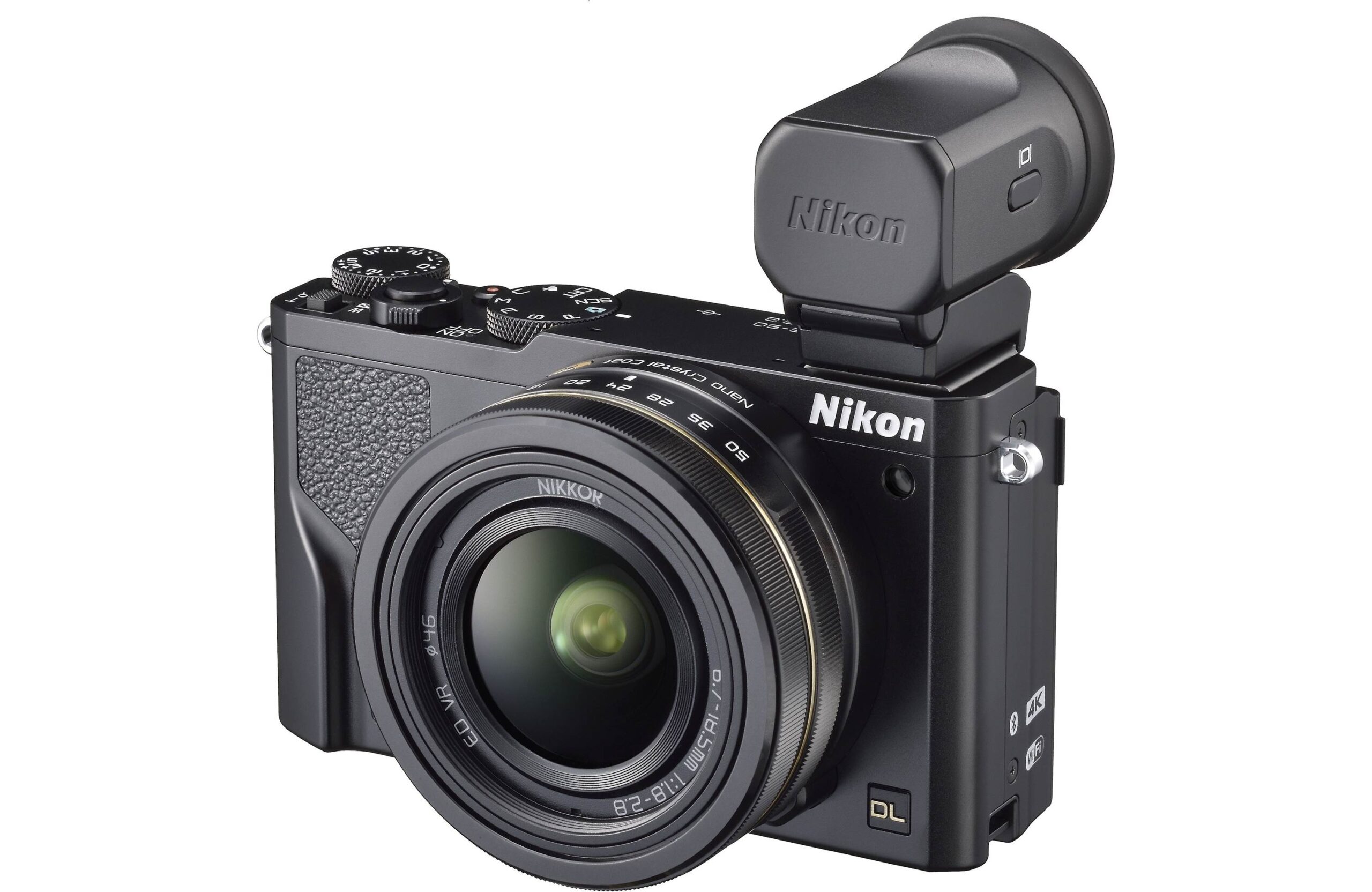
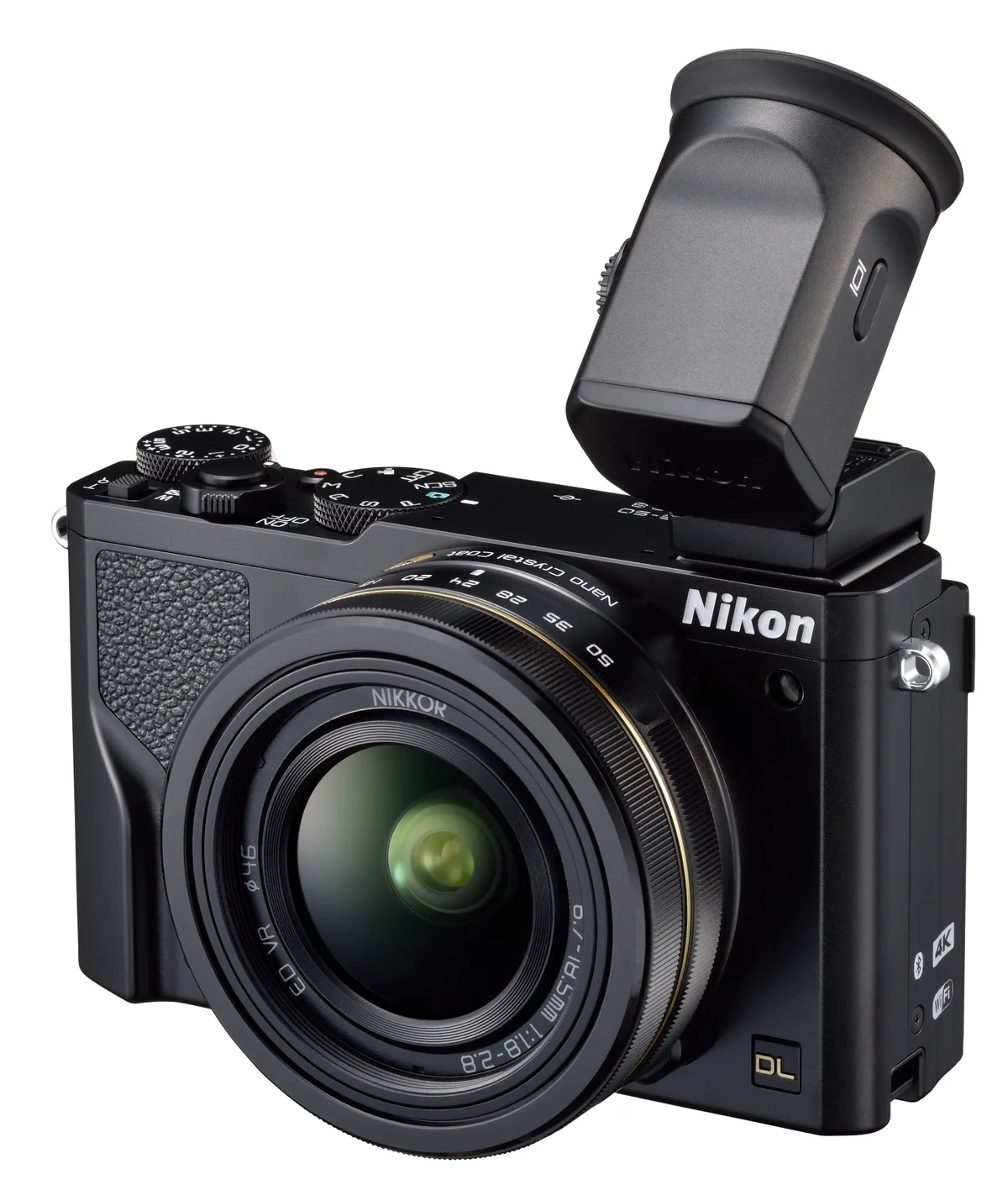
Nikon DL18-50 technical specifications
| Type | Compact digital camera |
| Effective pixels | 20.8 million |
| Sensor | 1-inch backside-illuminated CMOS sensor, 13.2 x 8.8 mm, Nikon CX format |
| Lens | NIKKOR lens with 2.8x optical zoom |
| Focal length | 6.7 to 18.5 mm, equivalent to 18-50 mm in 35mm/full-frame format |
| Real aperture | f/1.8-2.8 |
| 35mm depth-of-field equivalence | Approx. f/4.9 at 18 mm equivalent, and f/7.6 at 50 mm equivalent. Explanation: Focal length and aperture equivalence according to sensor size. |
| Optical construction | 11 elements in 8 groups, including ED and aspherical elements |
| Stabilization | Lens-shift optical VR for still images, optical and electronic VR for video |
| Autofocus | Hybrid autofocus with phase-detection and contrast-detection AF |
| Minimum focus distance | Approx. 15 cm at wide-angle, approx. 16 cm at telephoto, approx. 2 cm in macro mode at wide-angle |
| Monitor | 7.5 cm tilting OLED touchscreen, approx. 1,037,000 dots |
| Image formats | JPEG and RAW NEF |
| Video | 4K/UHD 3840 x 2160 at 30p/25p |
| ISO sensitivity | ISO 160 to 6400, expandable depending on mode |
| Shutter | Mechanical and CMOS electronic shutter, up to 1/16000 s |
| Connectivity | Wi-Fi, Bluetooth, SnapBridge, micro-HDMI, micro-USB |
| Storage media | SD, SDHC, SDXC cards |
| Battery | EN-EL24, approx. 260 shots announced |
| Dimensions | Approx. 106 x 63 x 57.5 mm |
| Weight | Approx. 359 g including battery and memory card |
Nikon DL24-85: the versatile premium compact
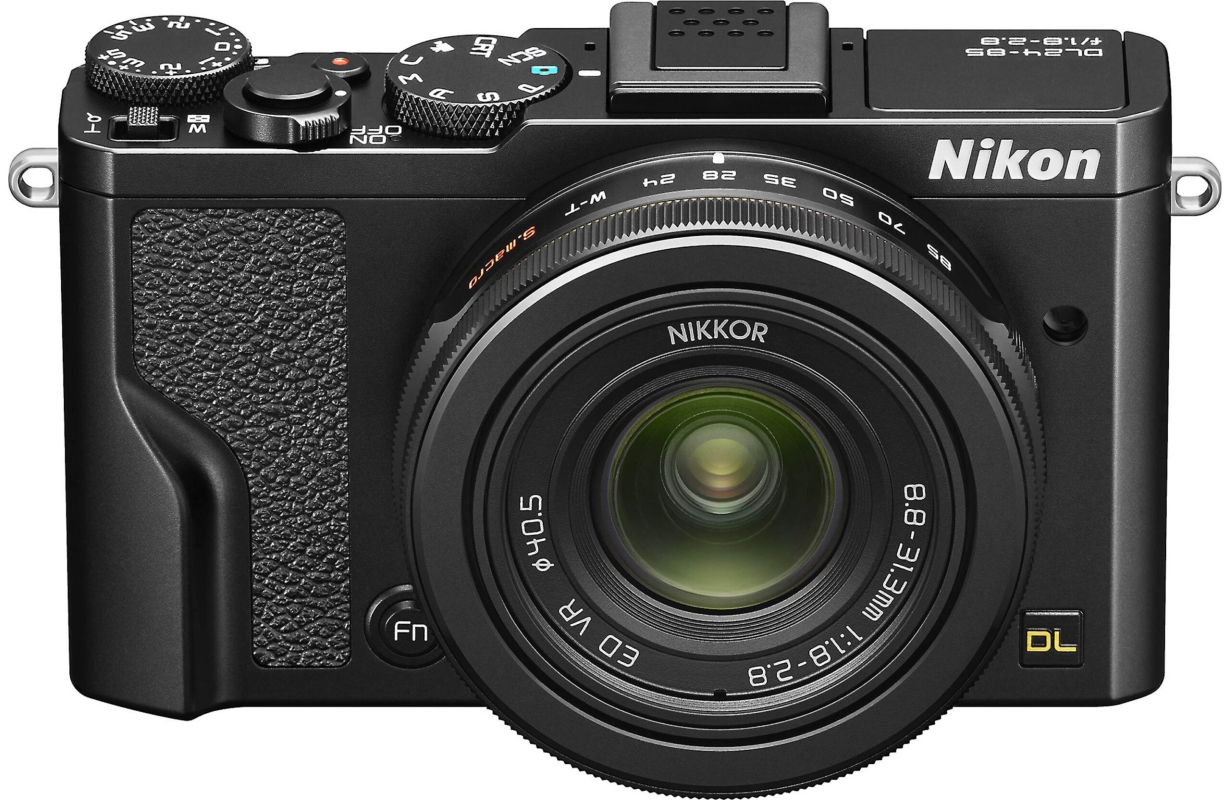
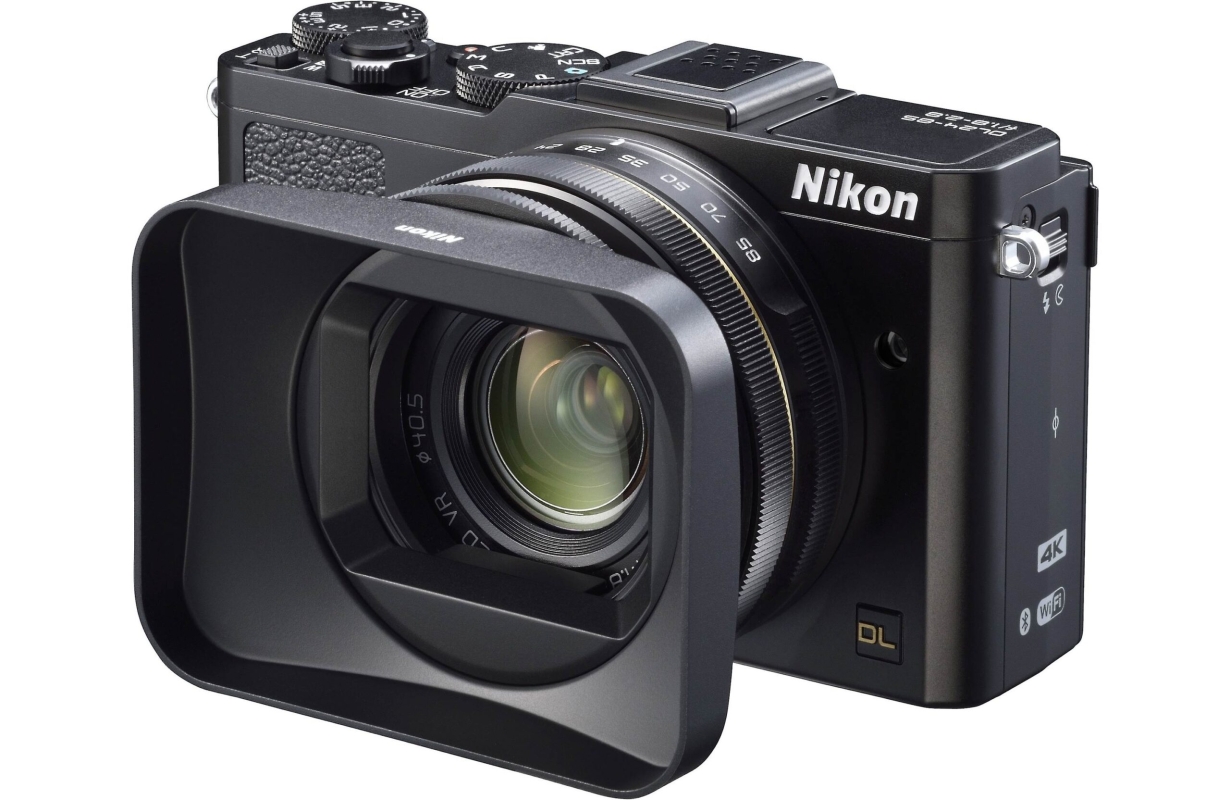
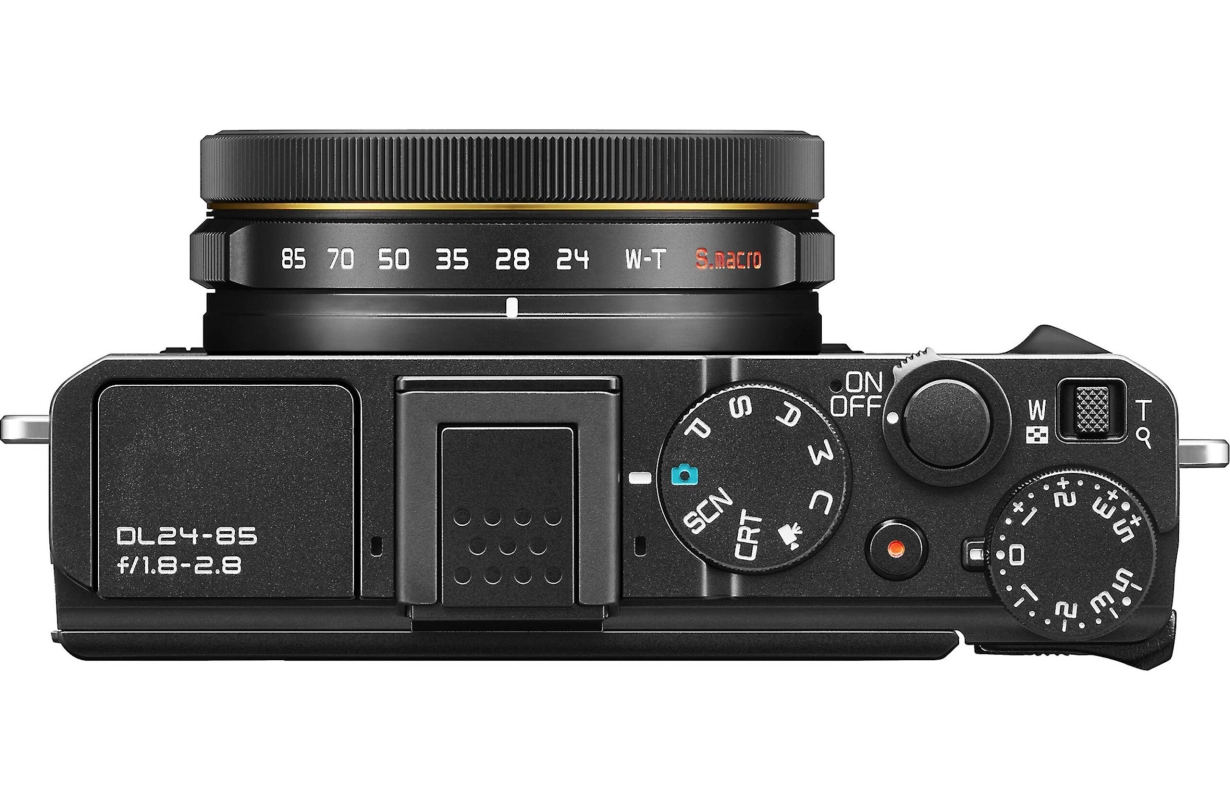
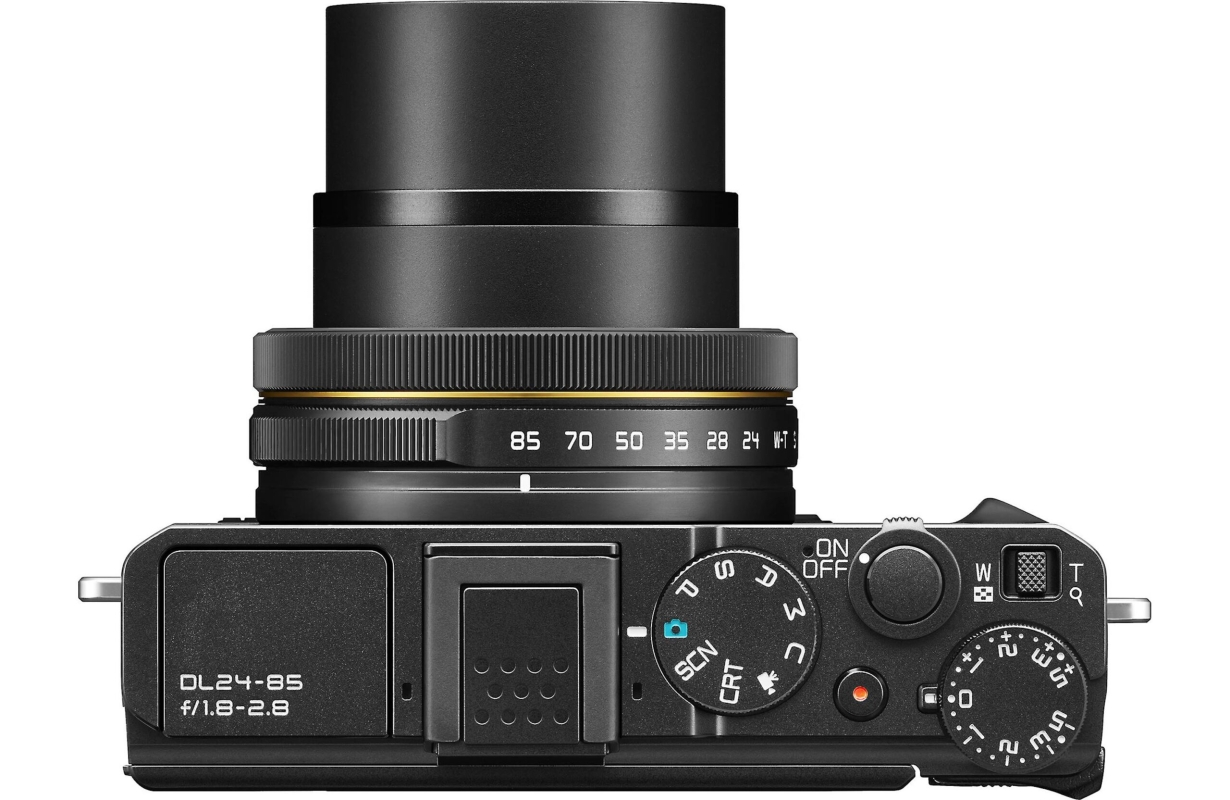
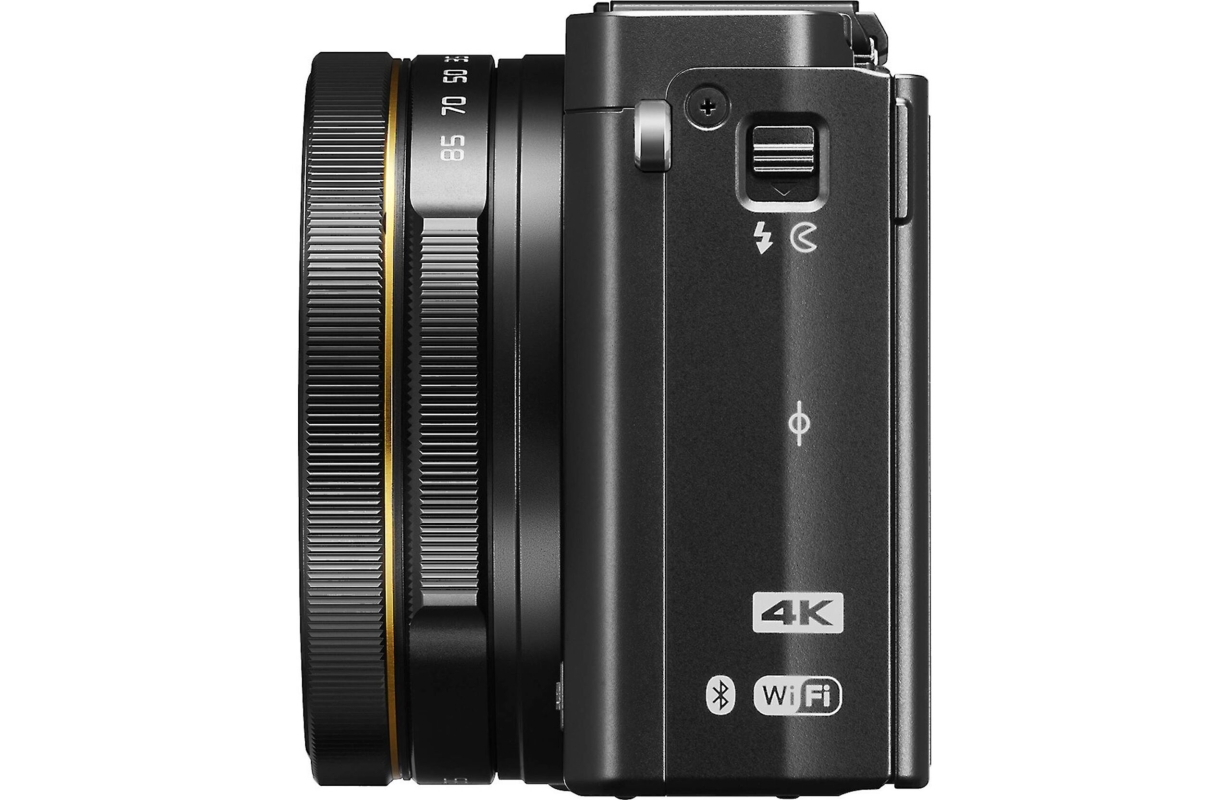
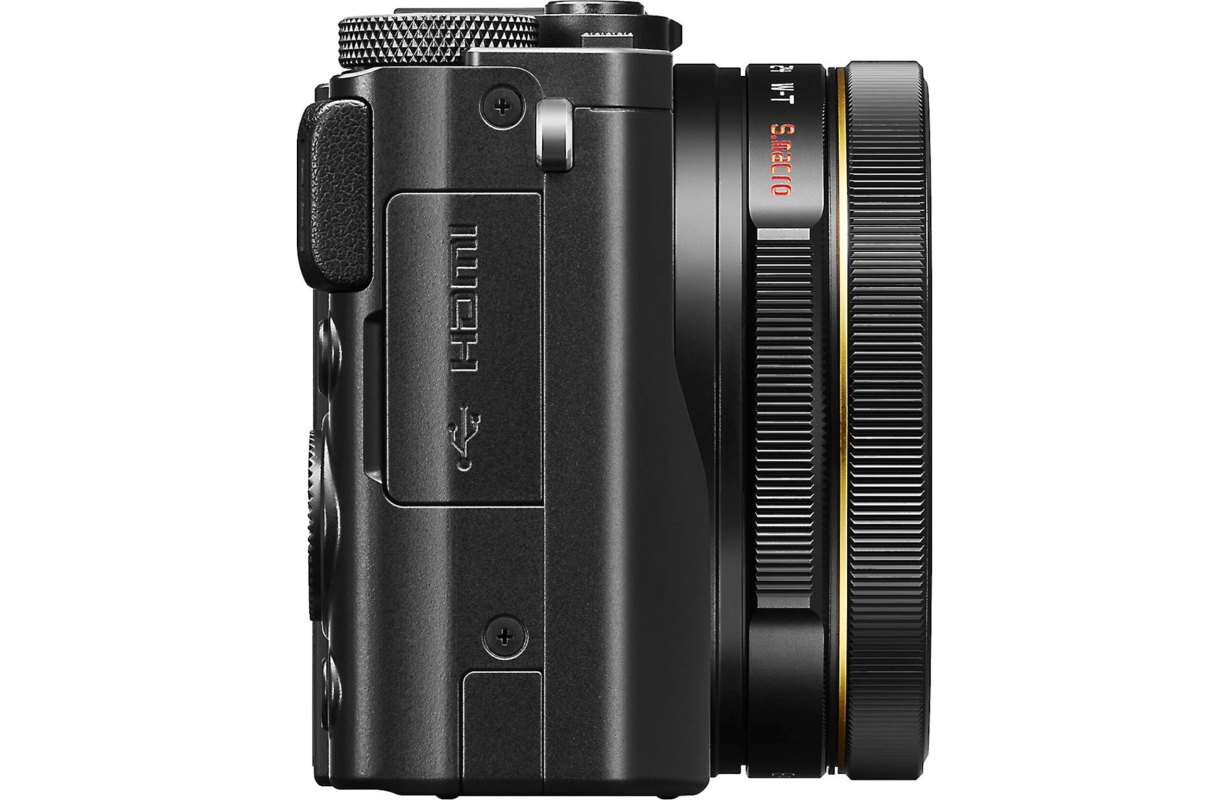
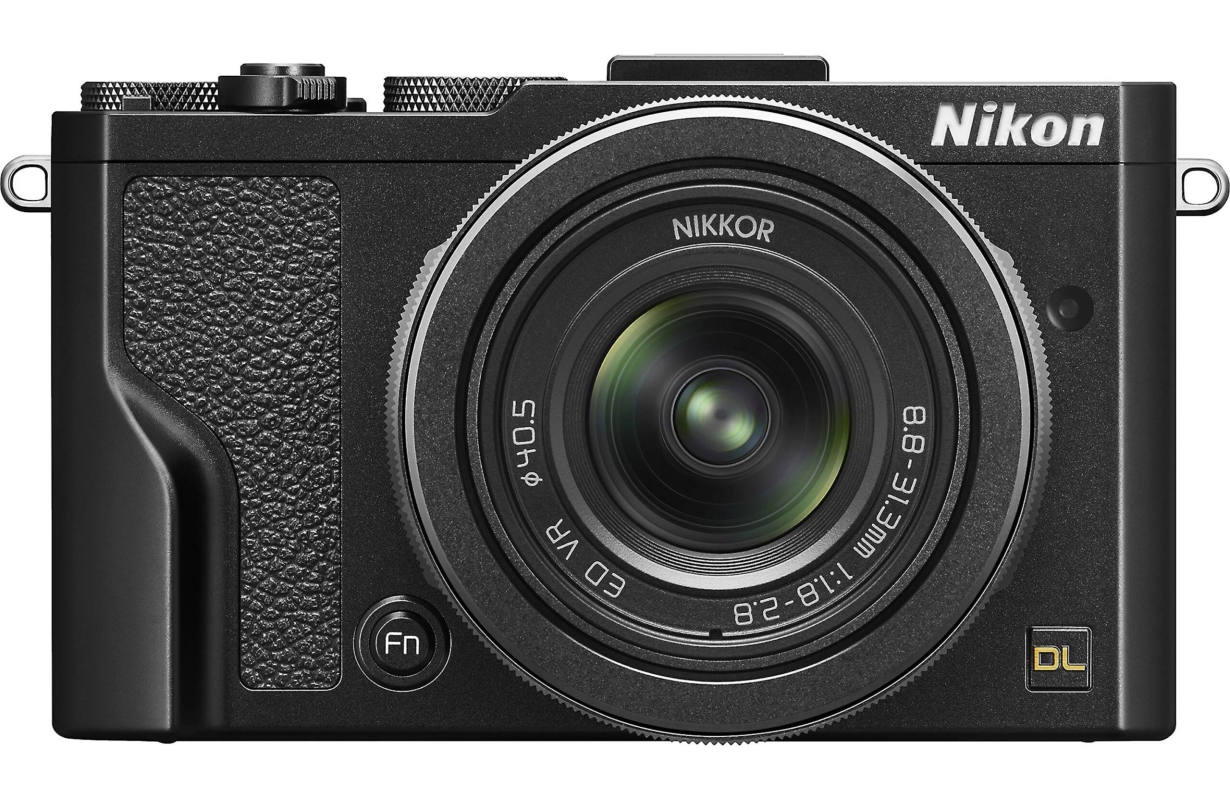
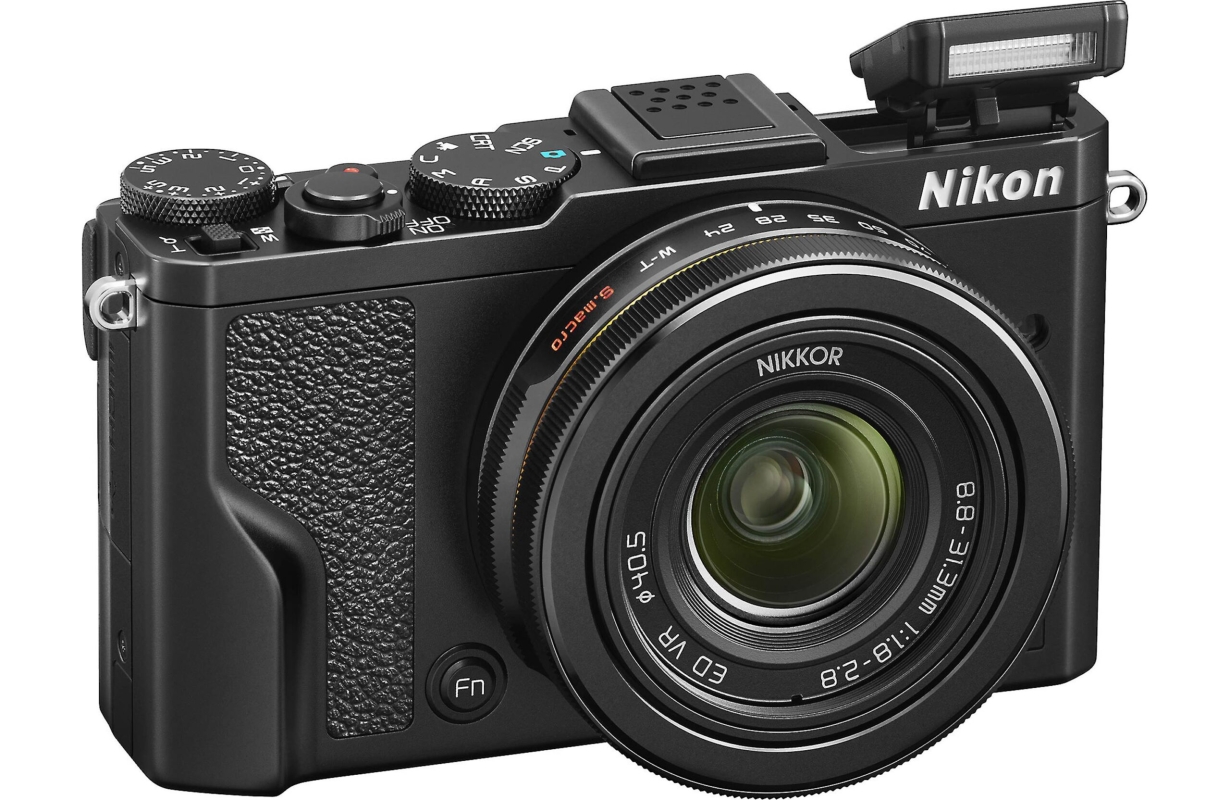
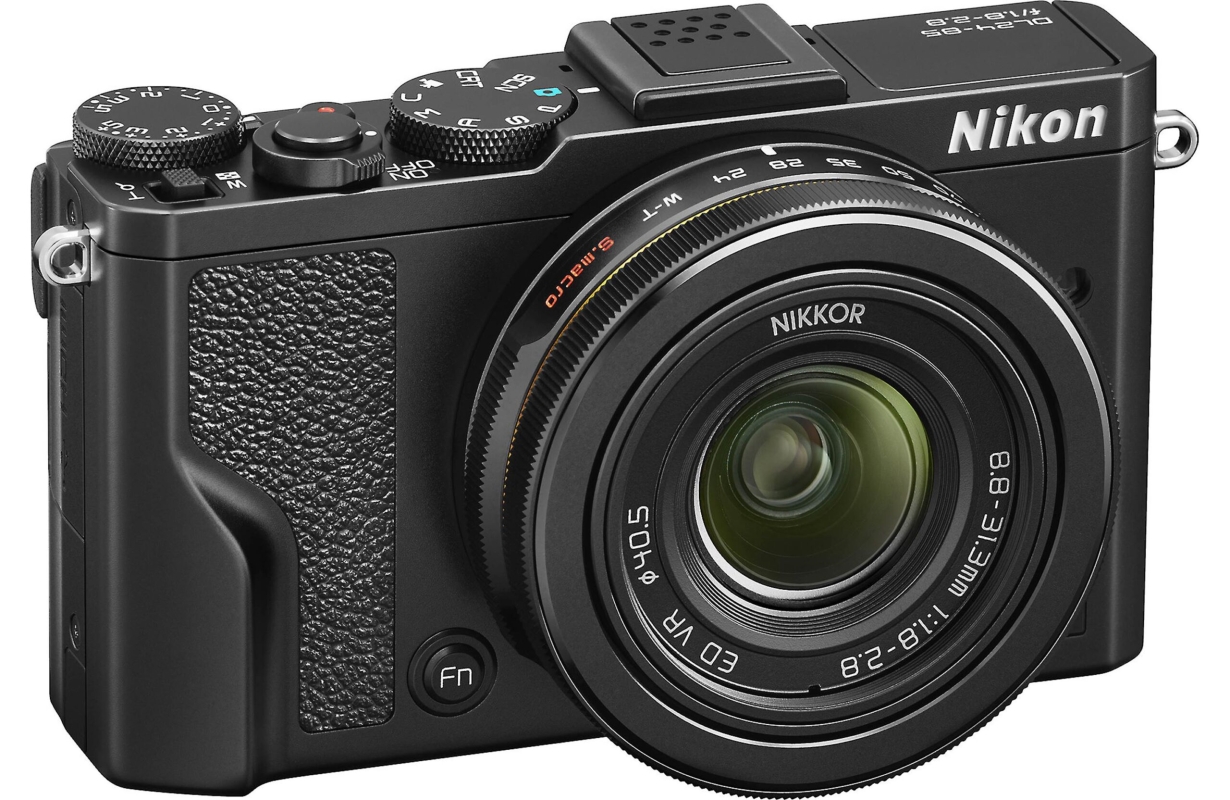
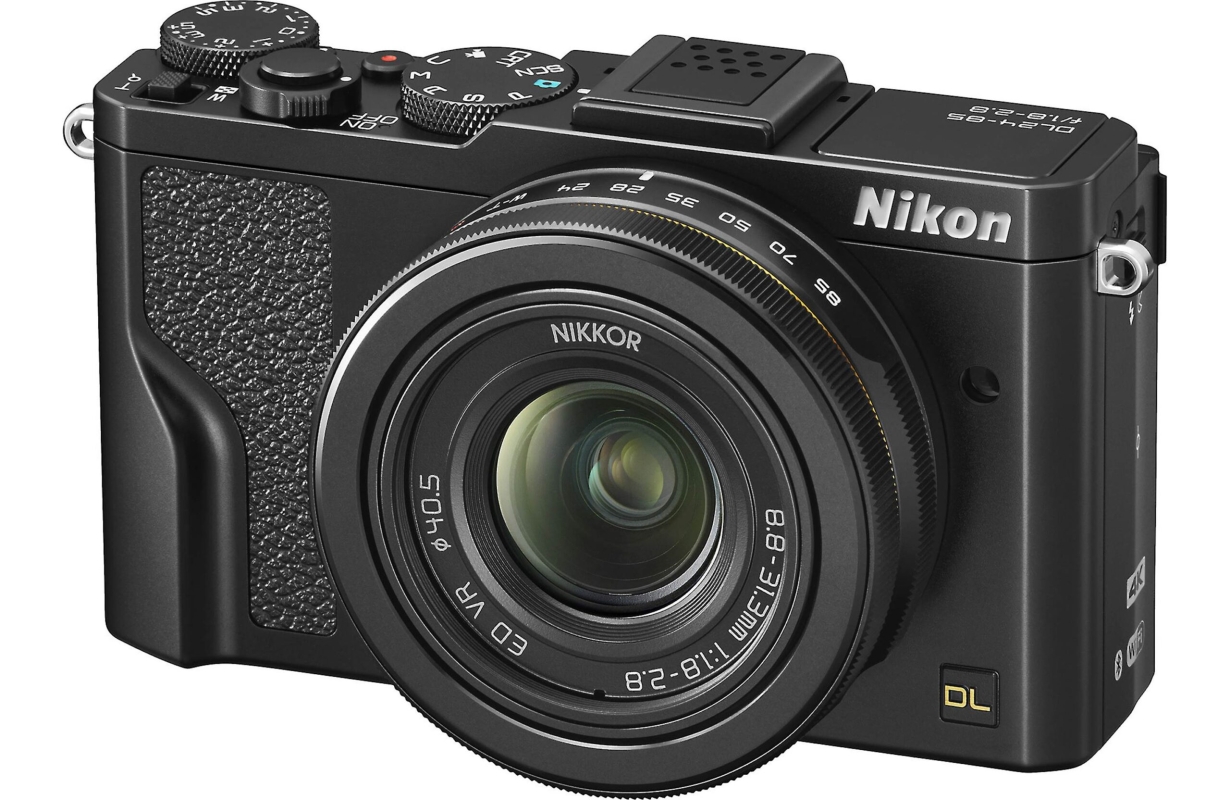
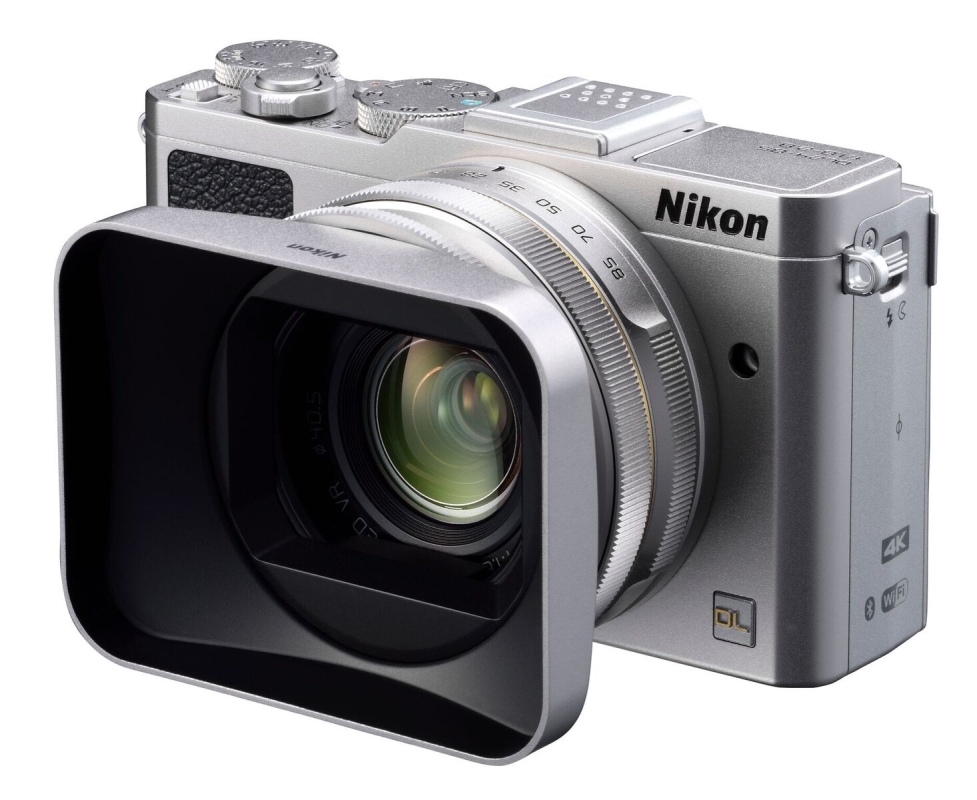
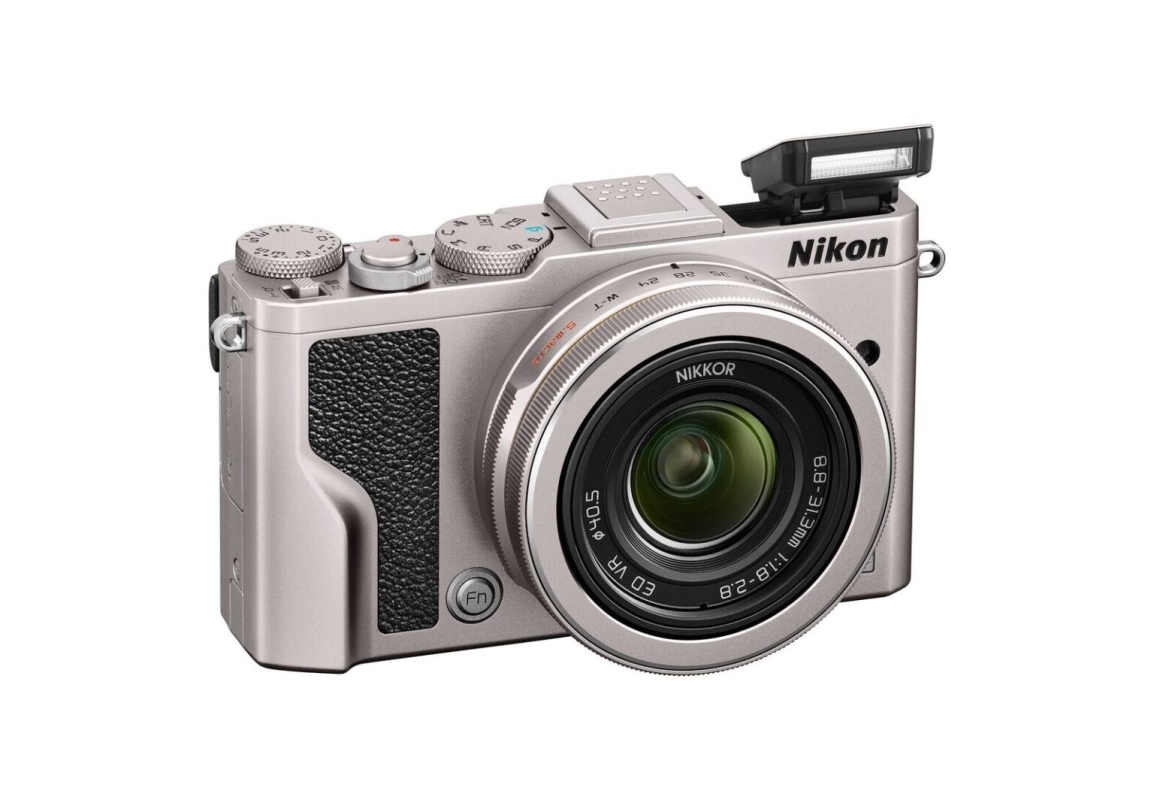
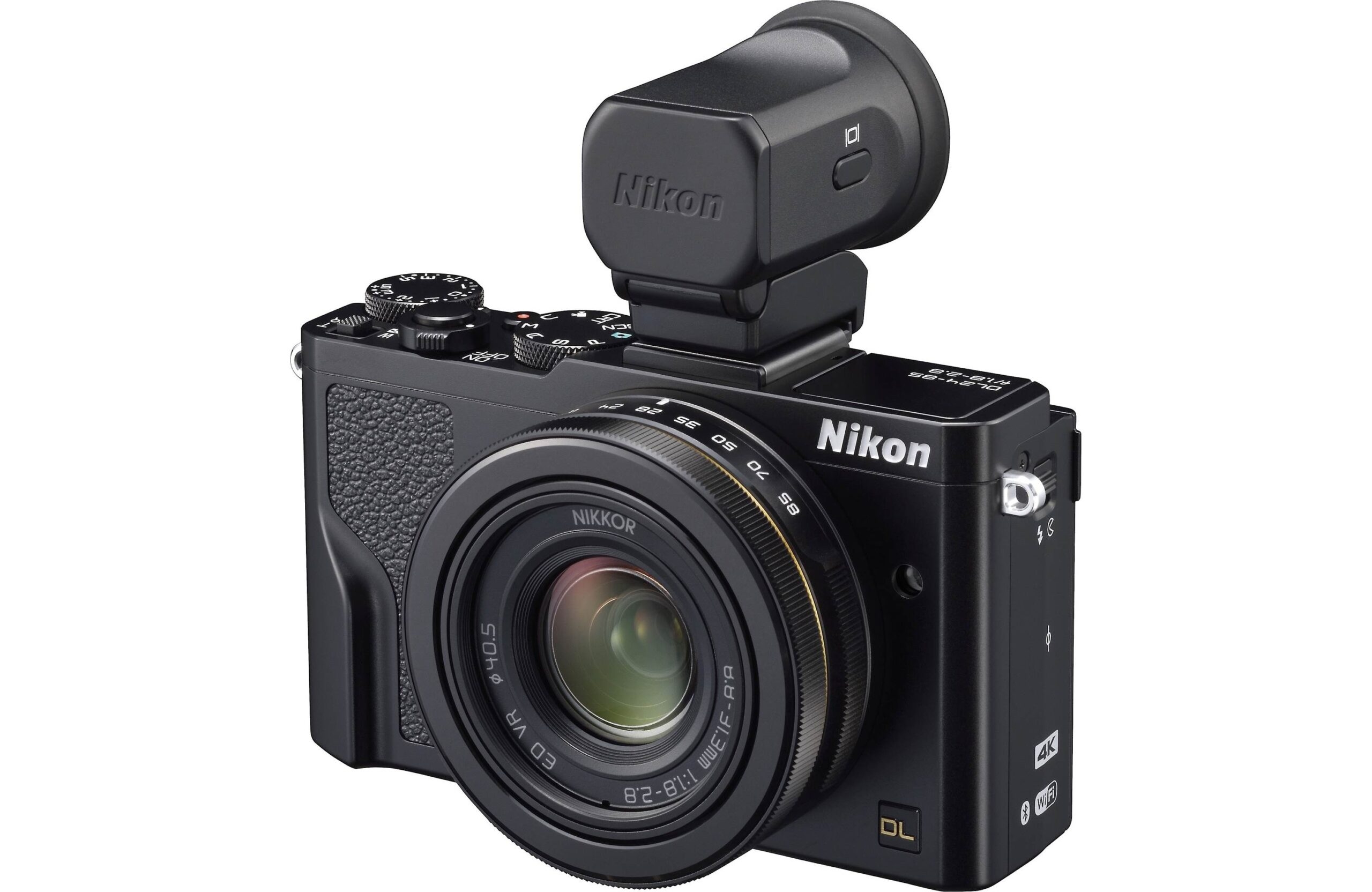
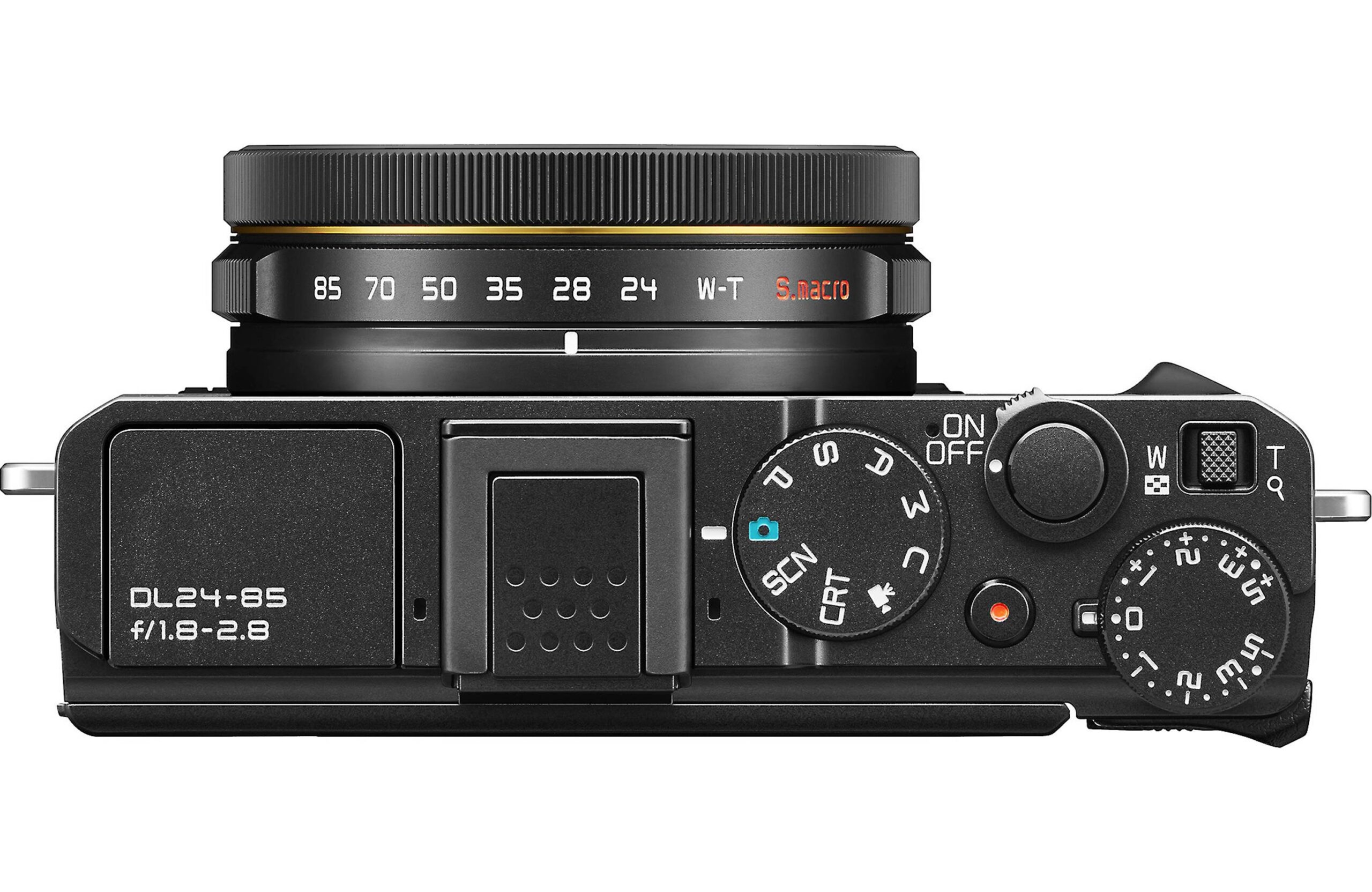
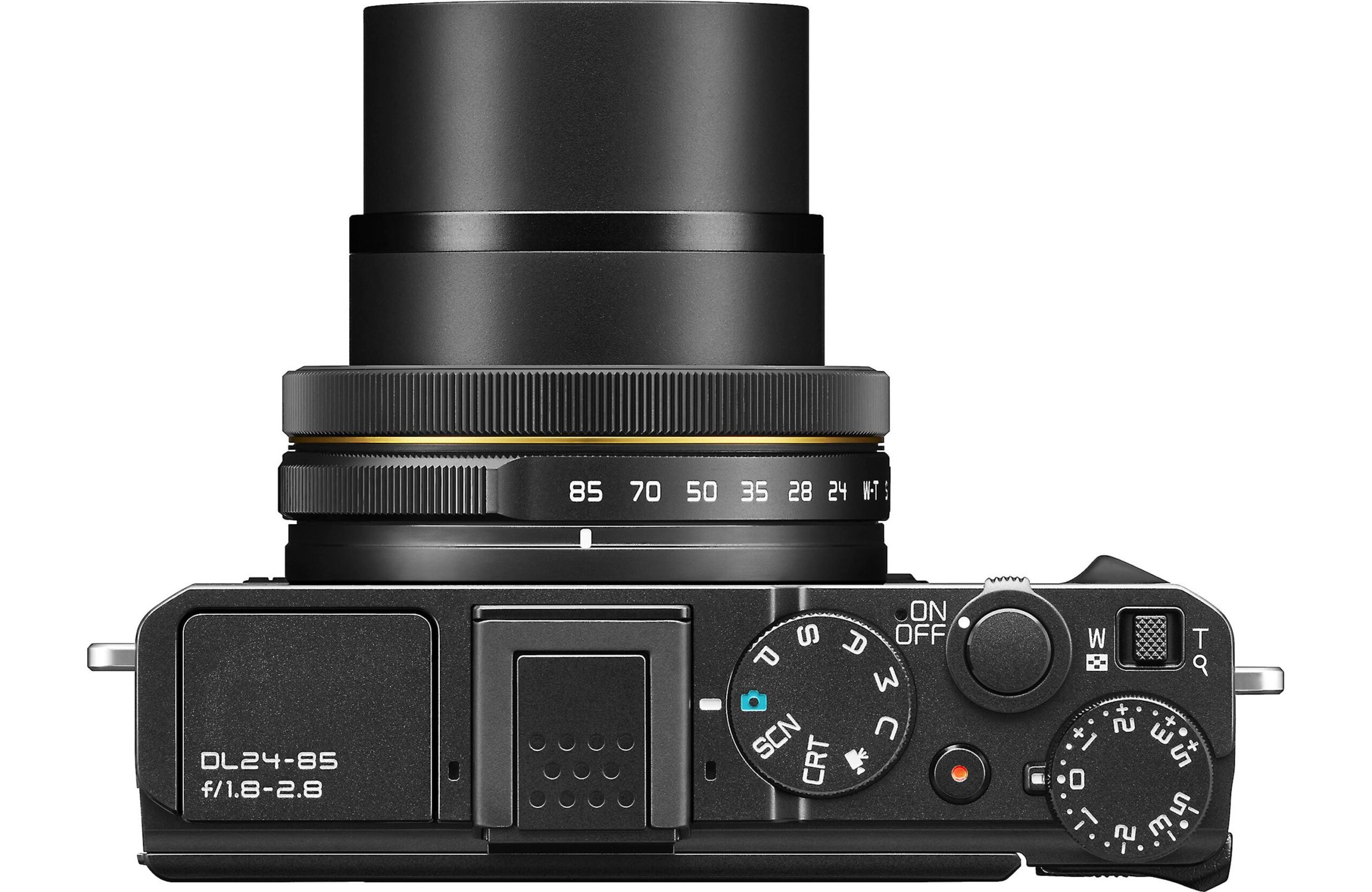
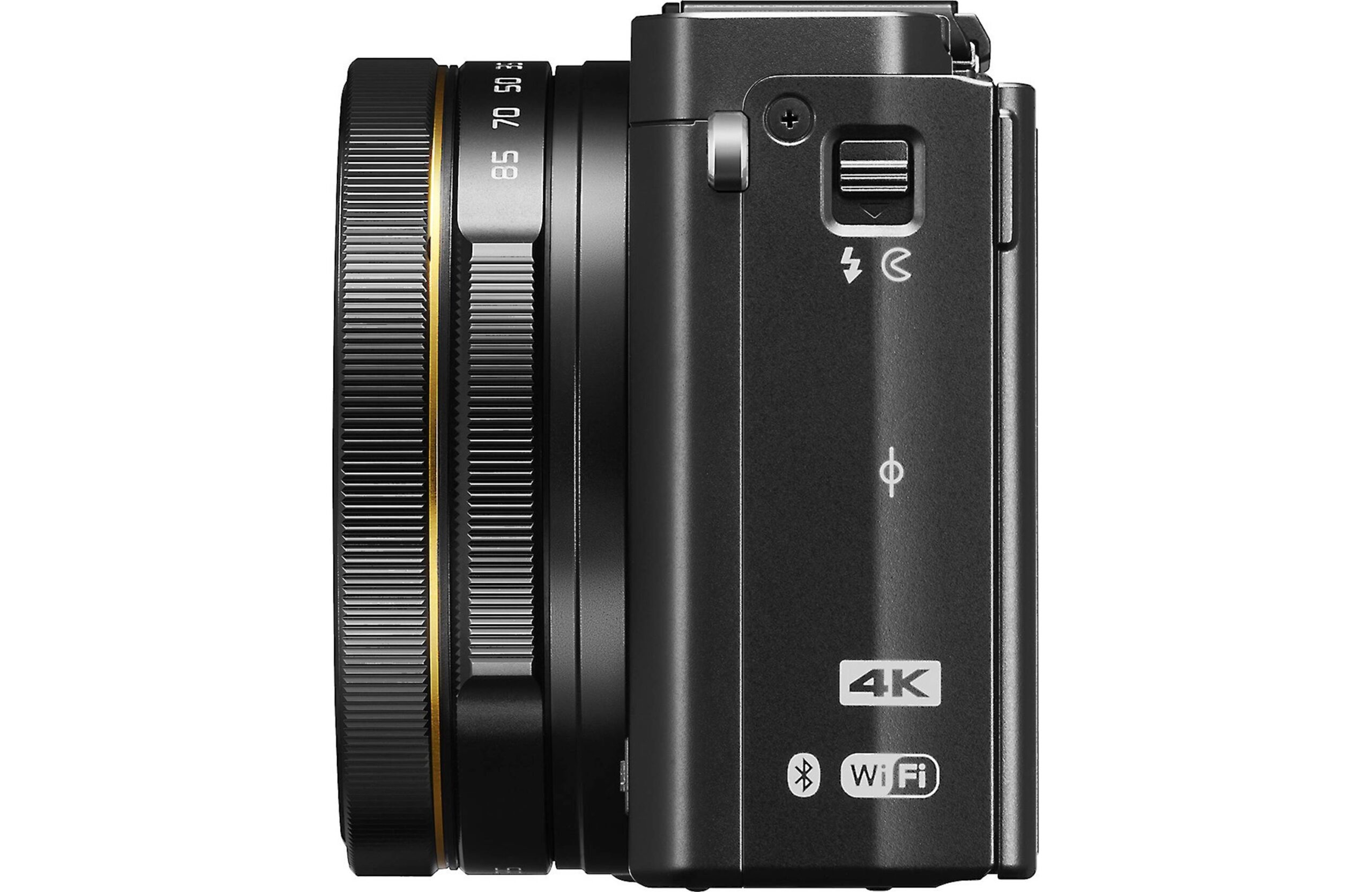
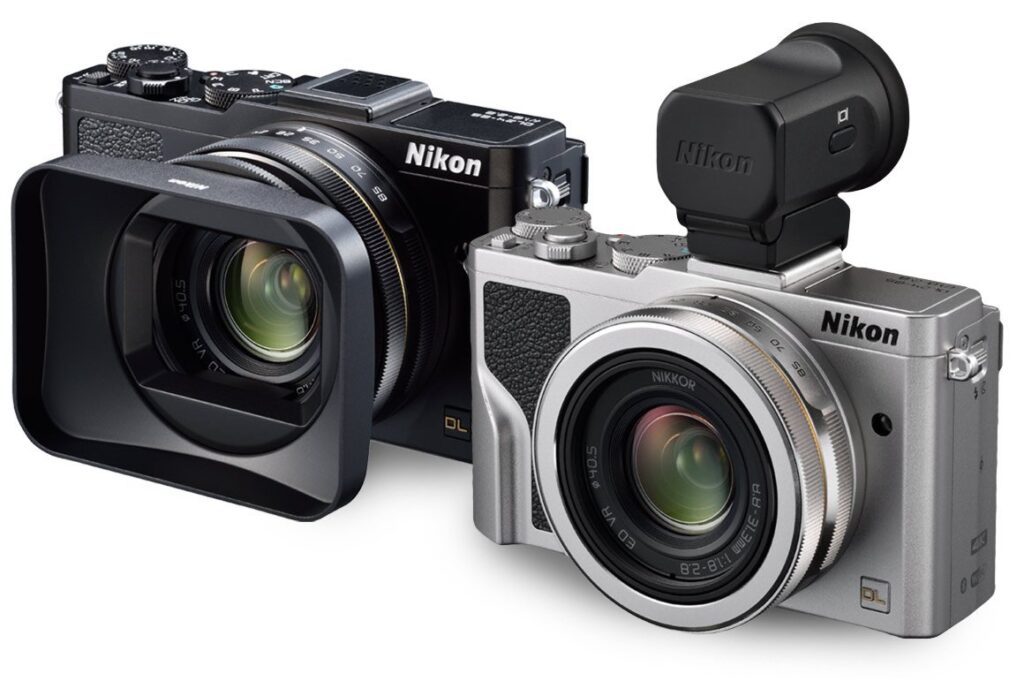 Nikon DL24-85 f/1.8-2.8
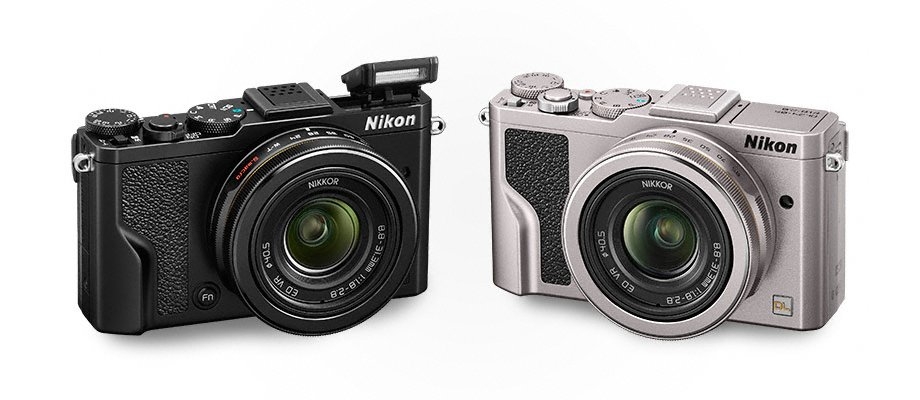
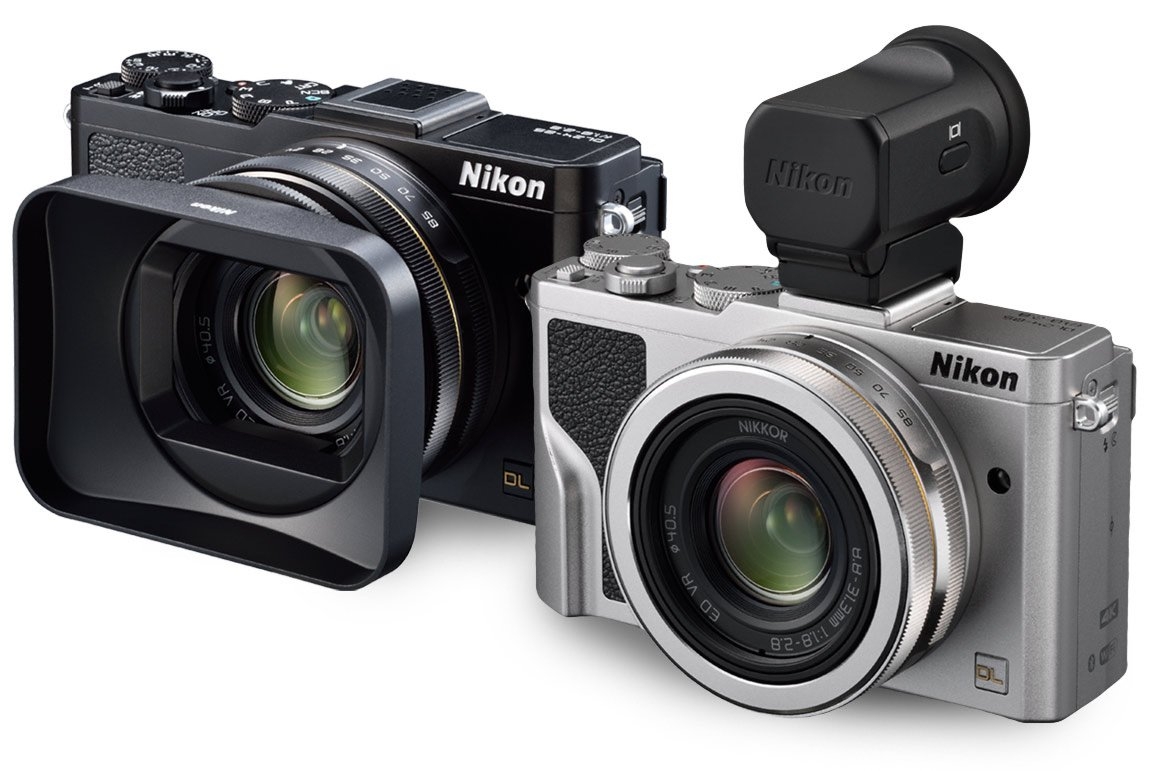
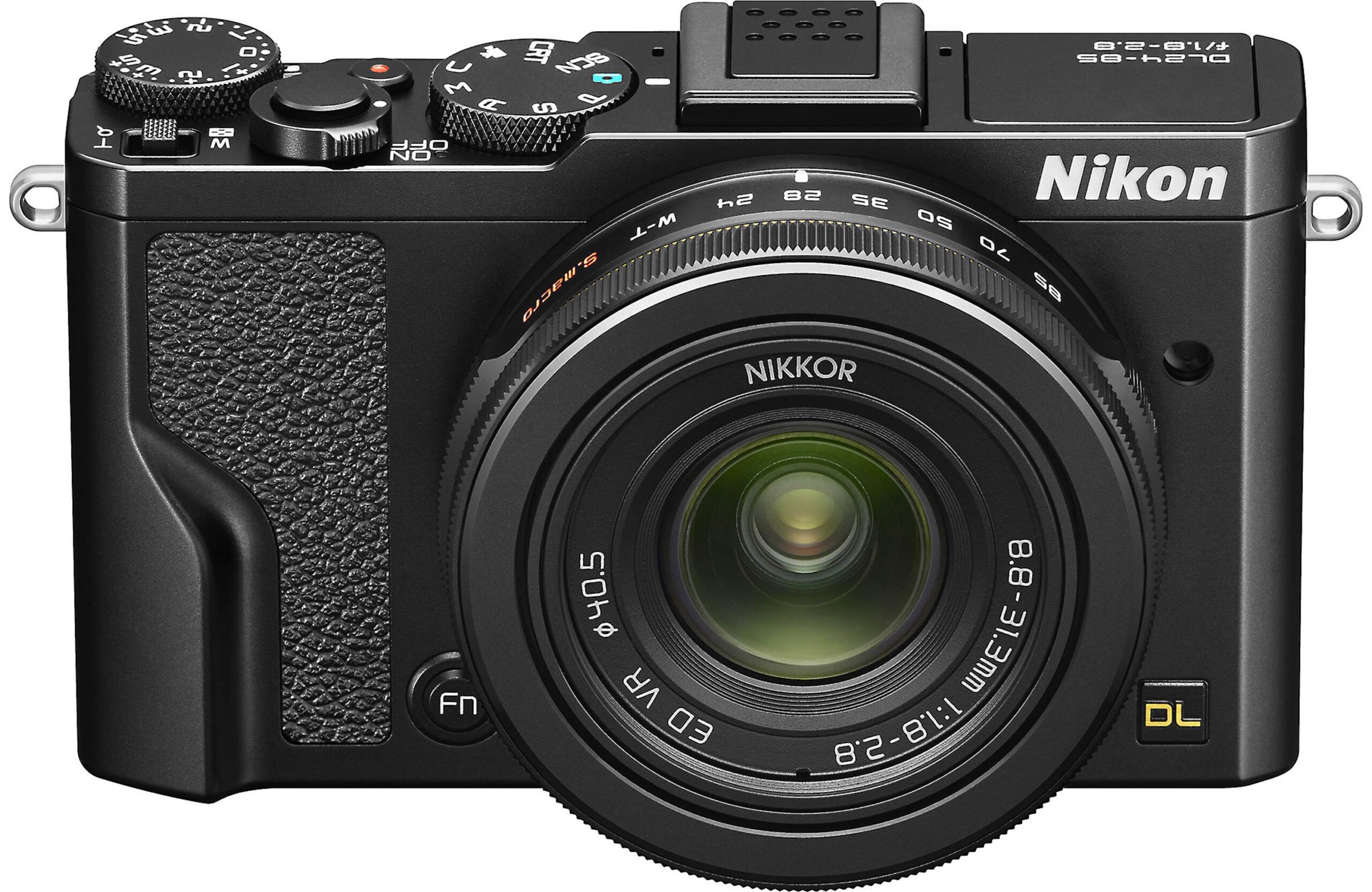
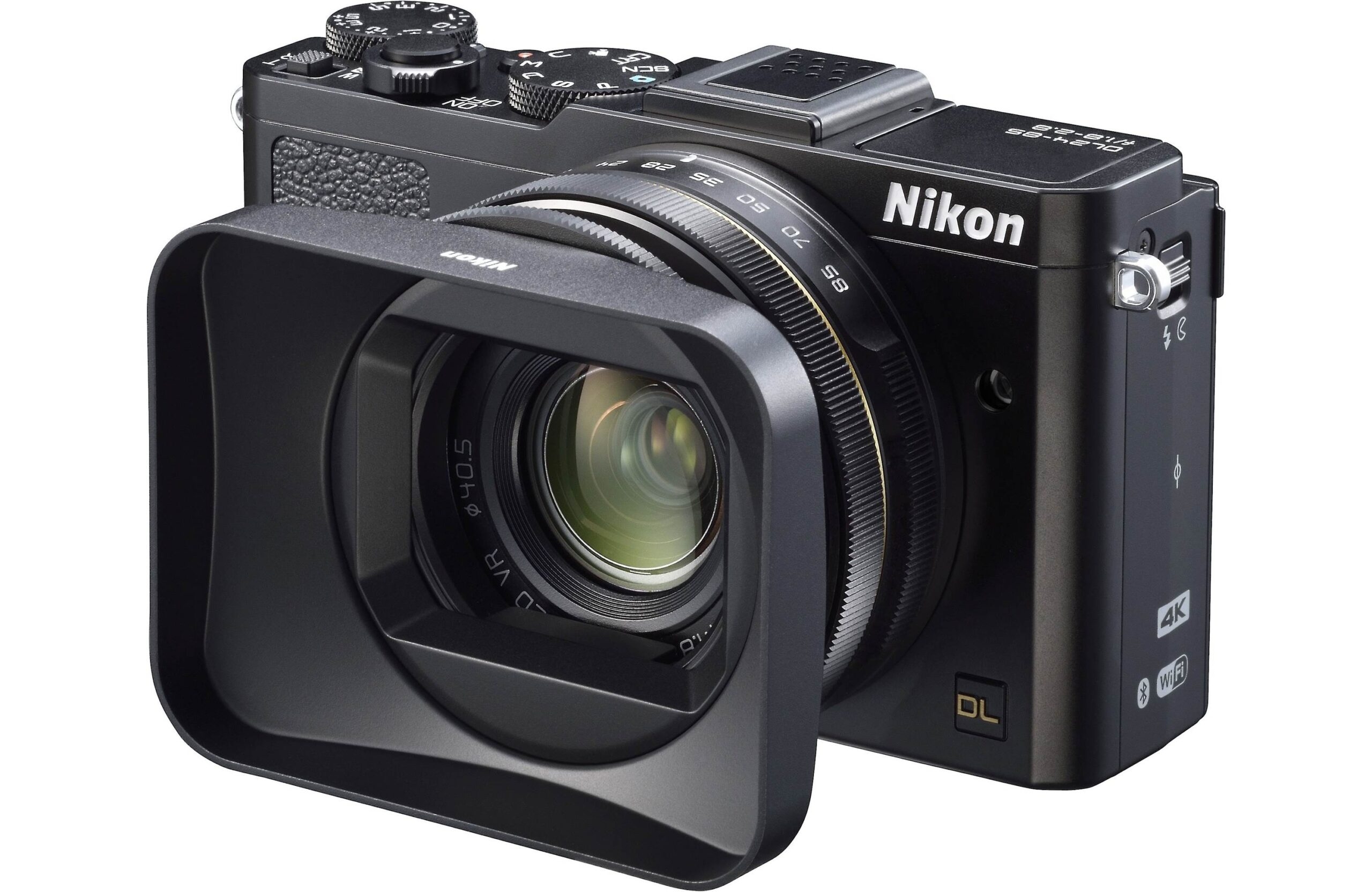
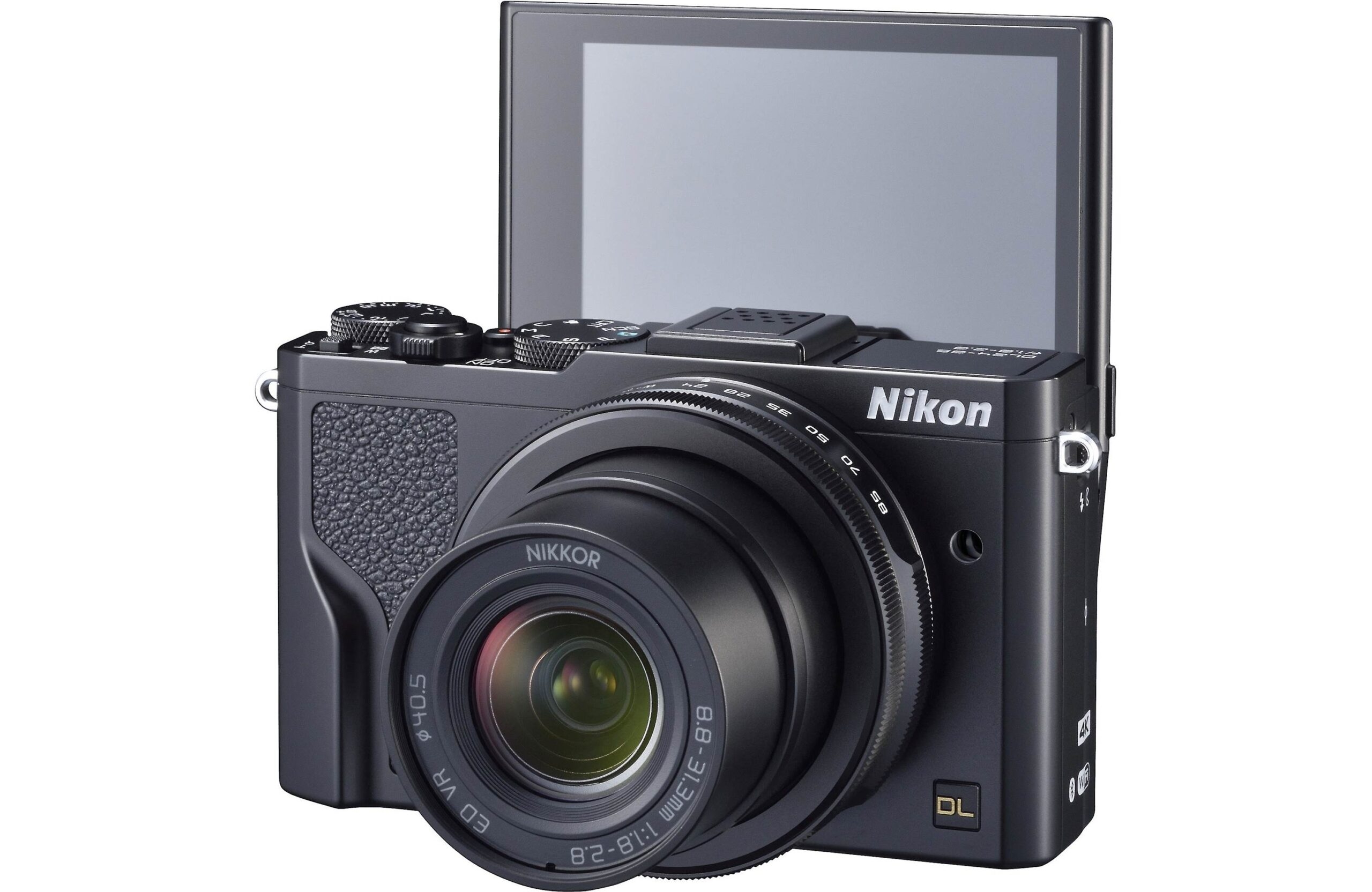
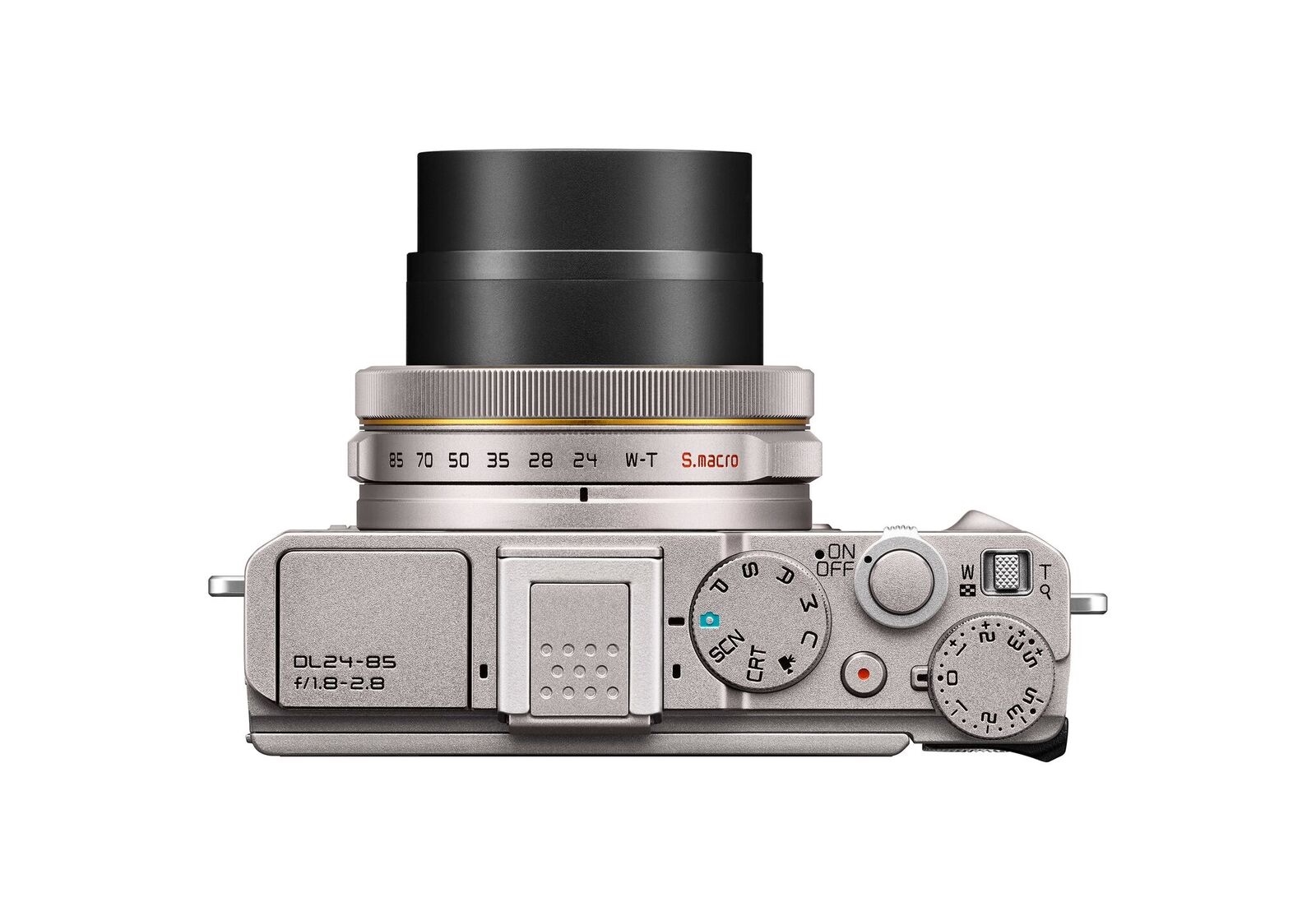
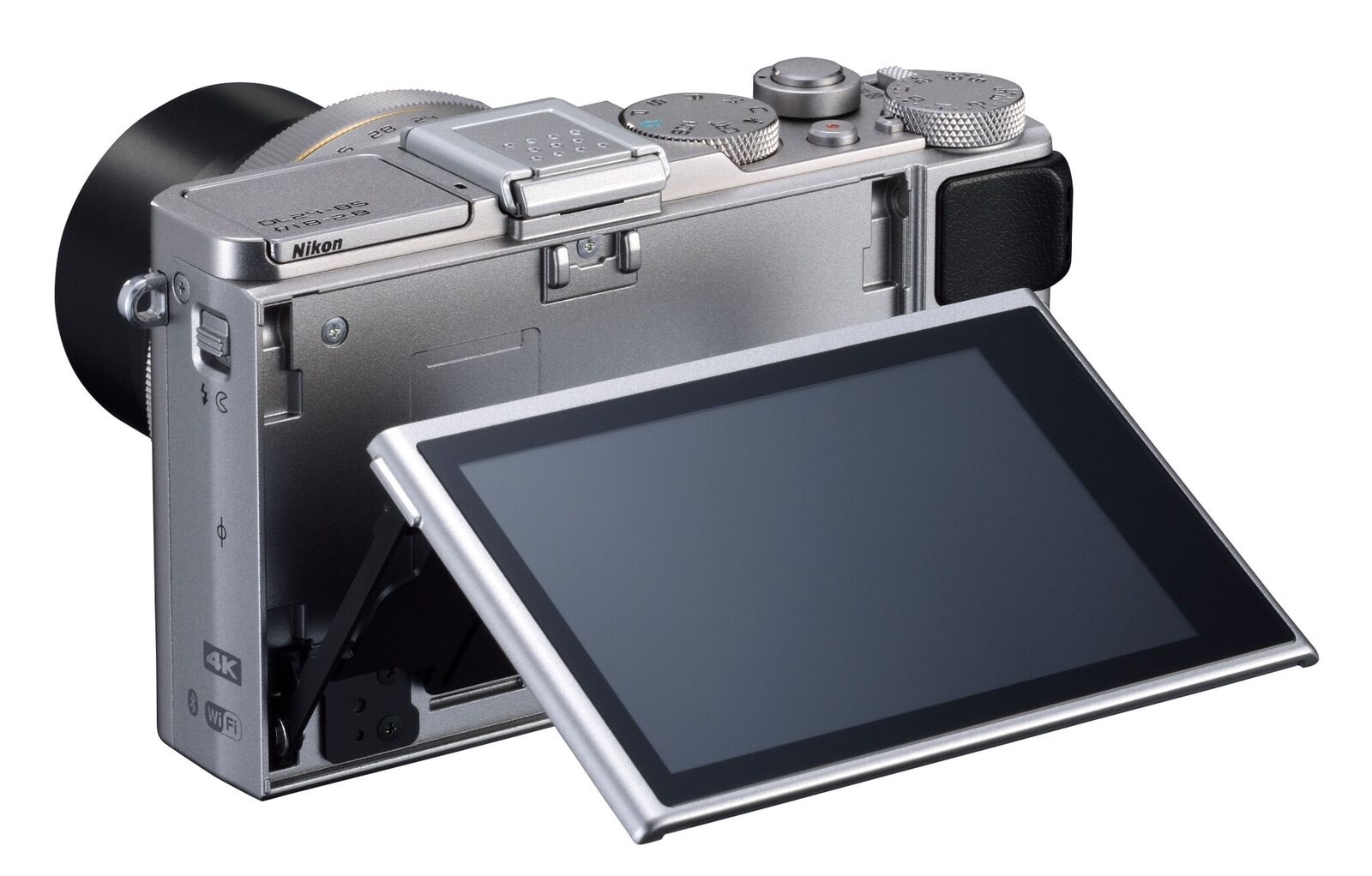
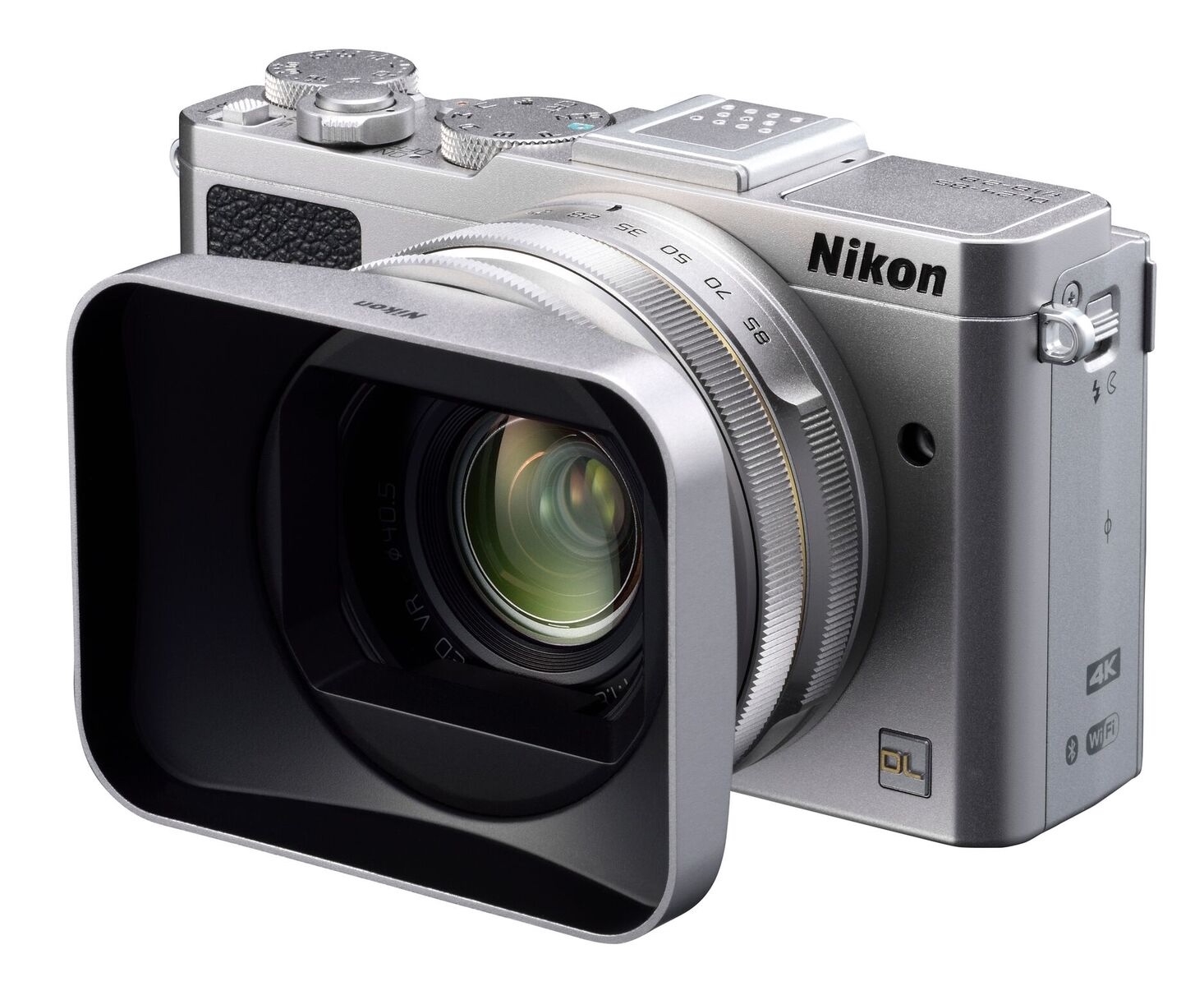
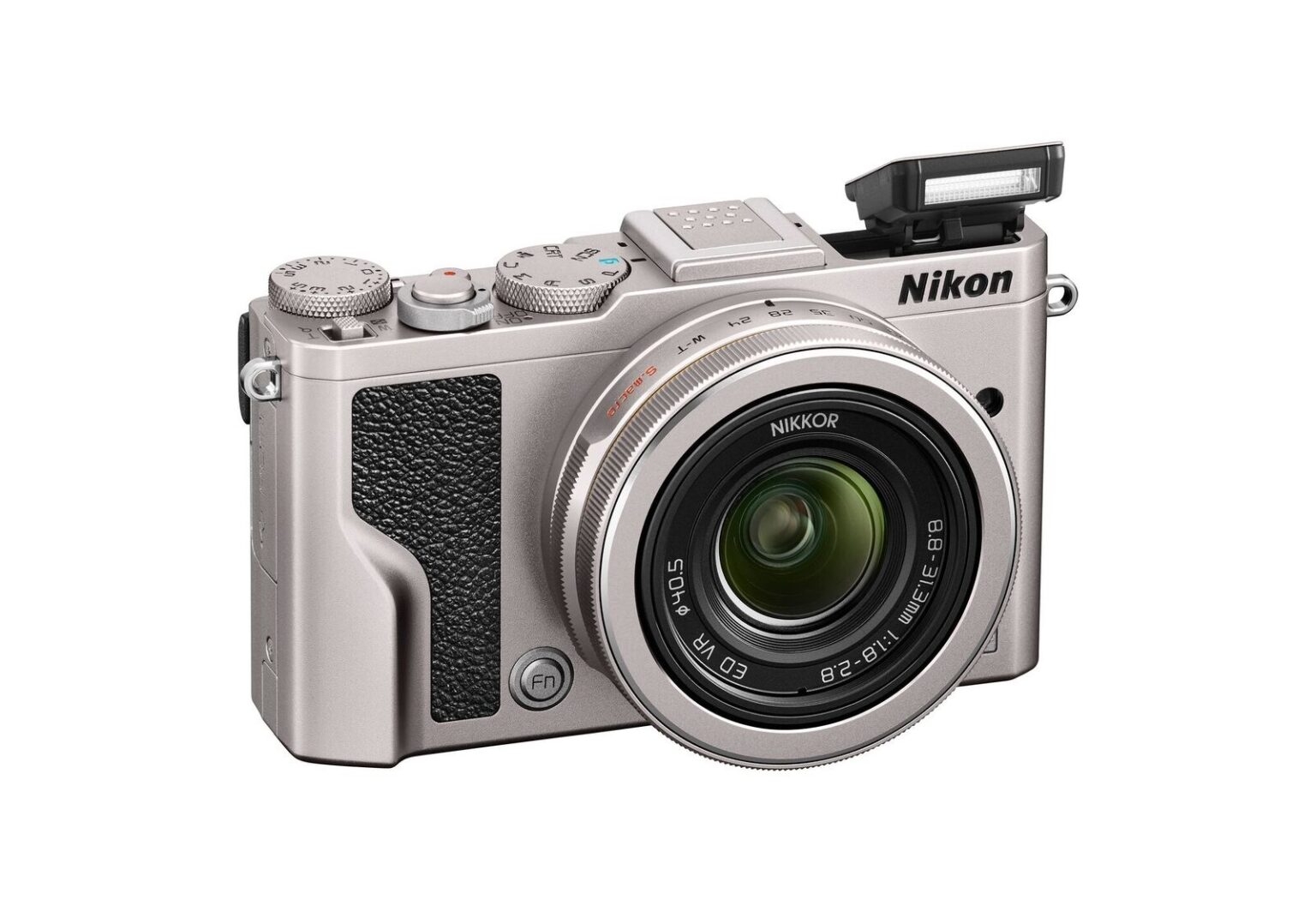
The Nikon DL24-85 f/1.8-2.8 was the most versatile model in the series. Its 24-85 mm equivalent zoom covered the classic focal lengths used for reportage, travel, portraiture and everyday photography.
It offered the same bright f/1.8-2.8 aperture range as the DL18-50, but with a more conventional focal range. Here again, the aperture was very useful for exposure, while producing a depth-of-field rendering equivalent to approximately f/4.9-f/7.6 on full frame for comparable framing.
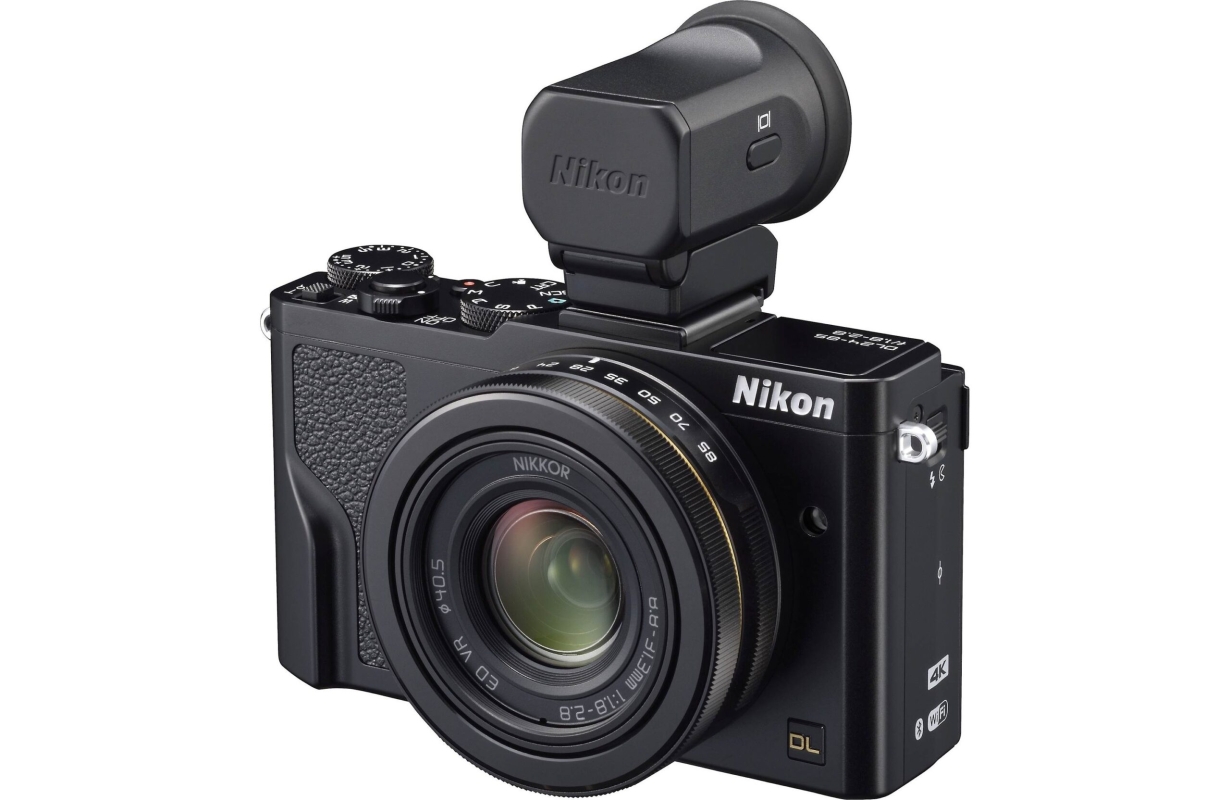
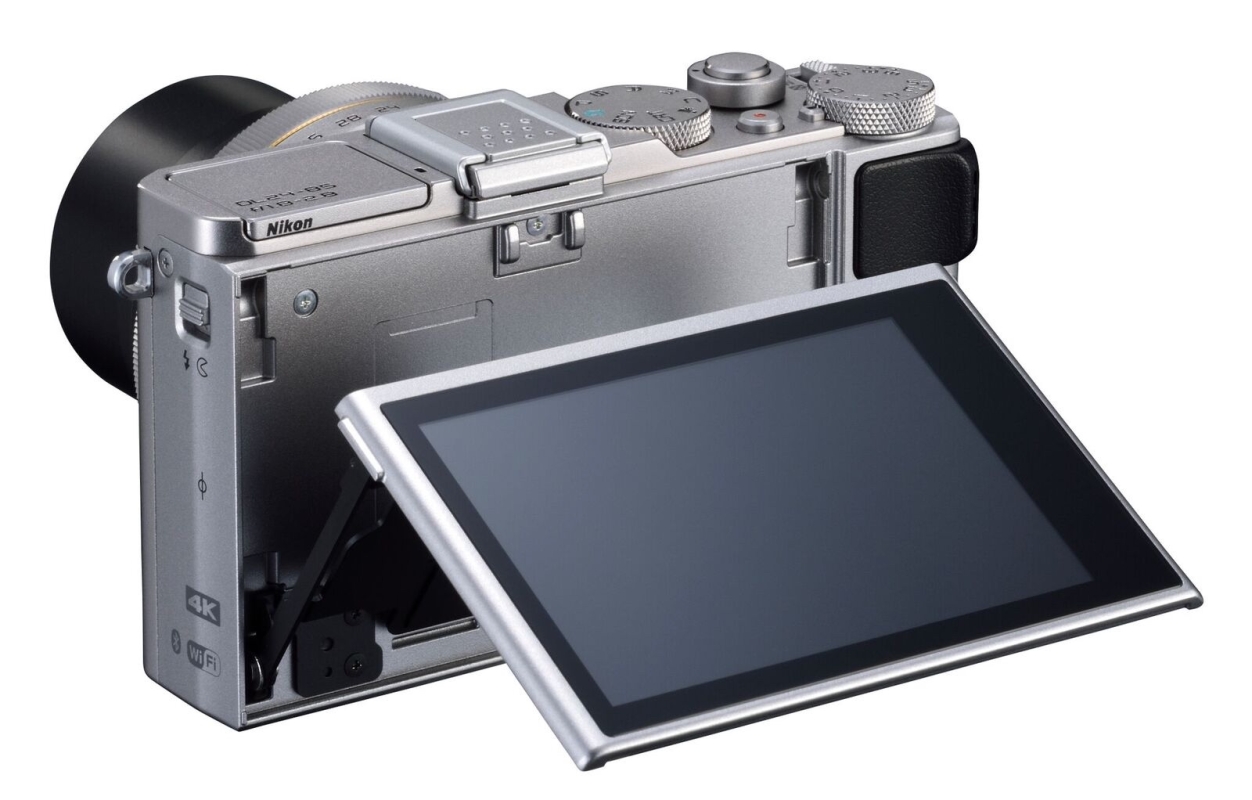
Nikon also highlighted its Super Macro function, designed to photograph details, textures and small subjects at close range. With its bright lens, 1-inch sensor, tilting OLED touchscreen and accessory shoe, the DL24-85 appeared to be the most balanced of the three models. It could have become Nikon’s premium everyday expert compact: easy to carry, yet advanced enough for demanding photographic use.
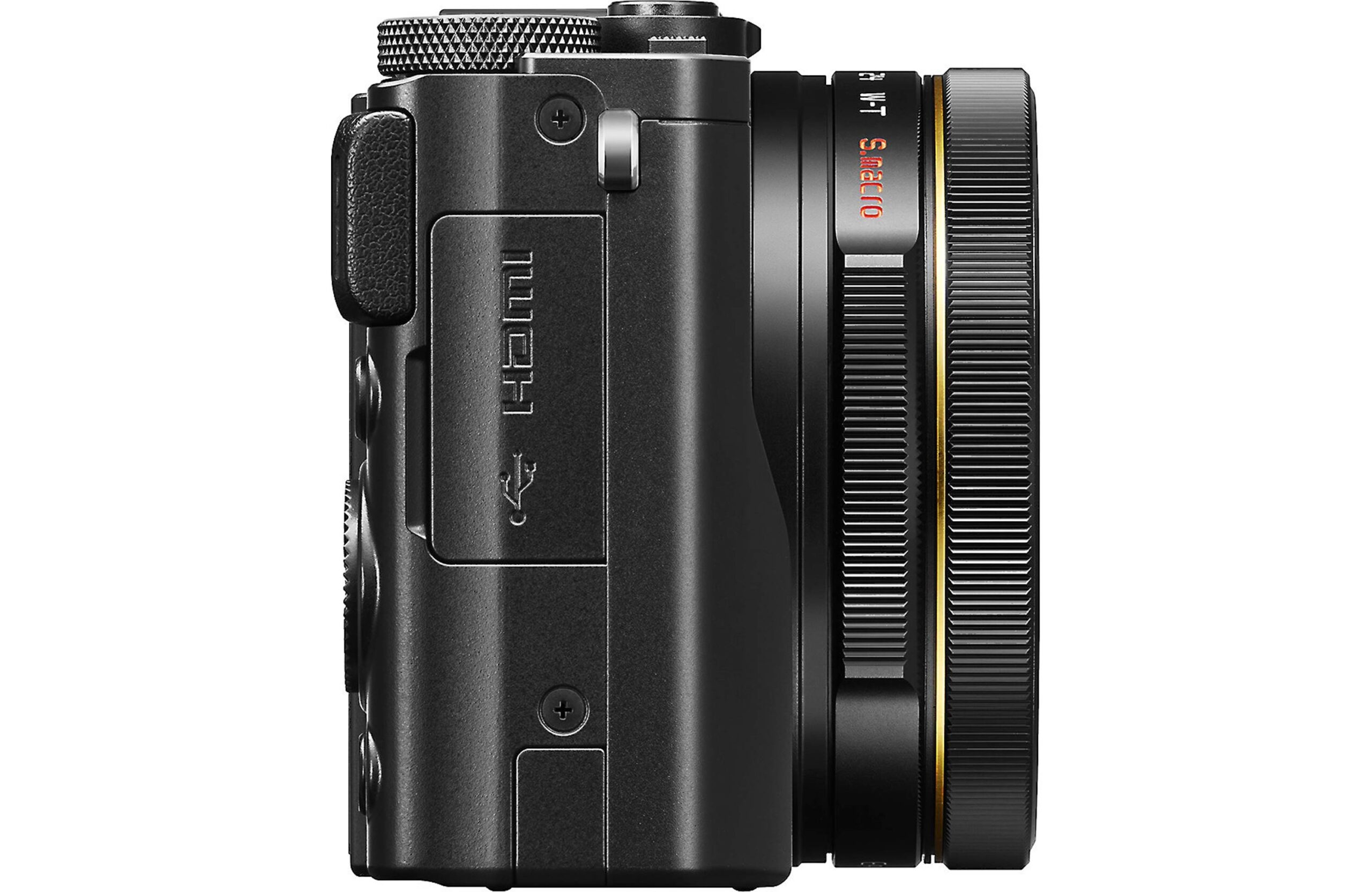
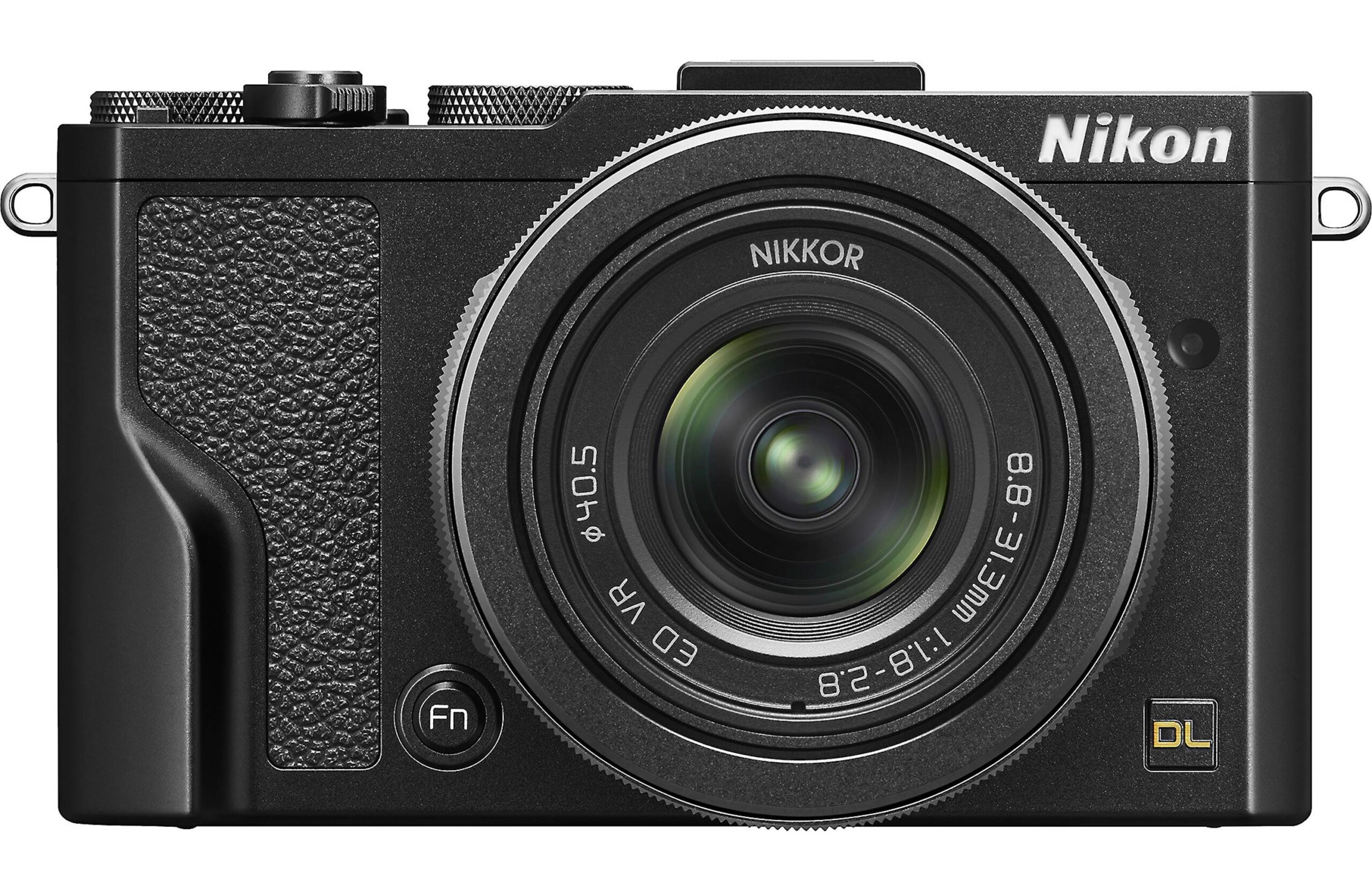
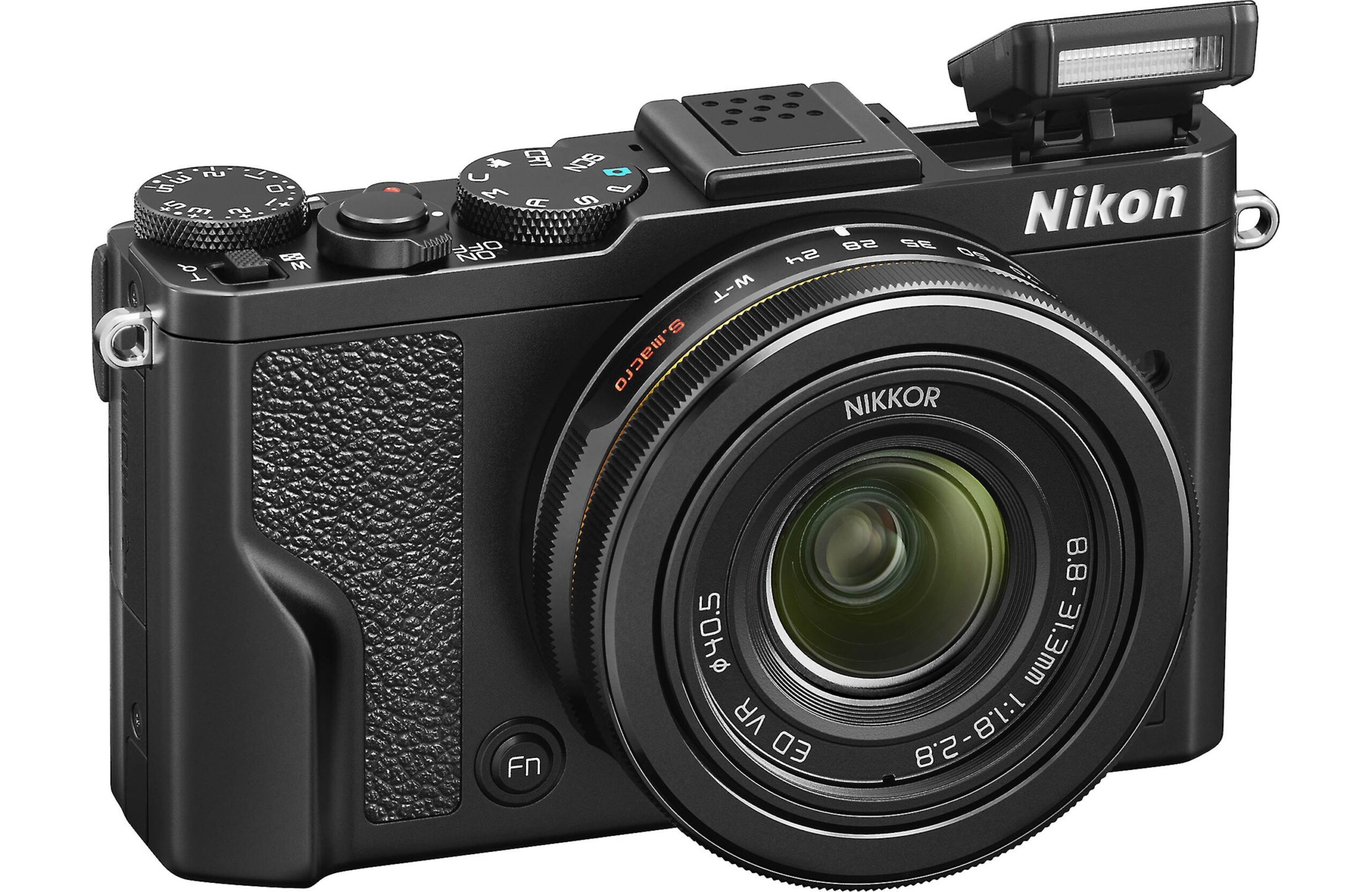
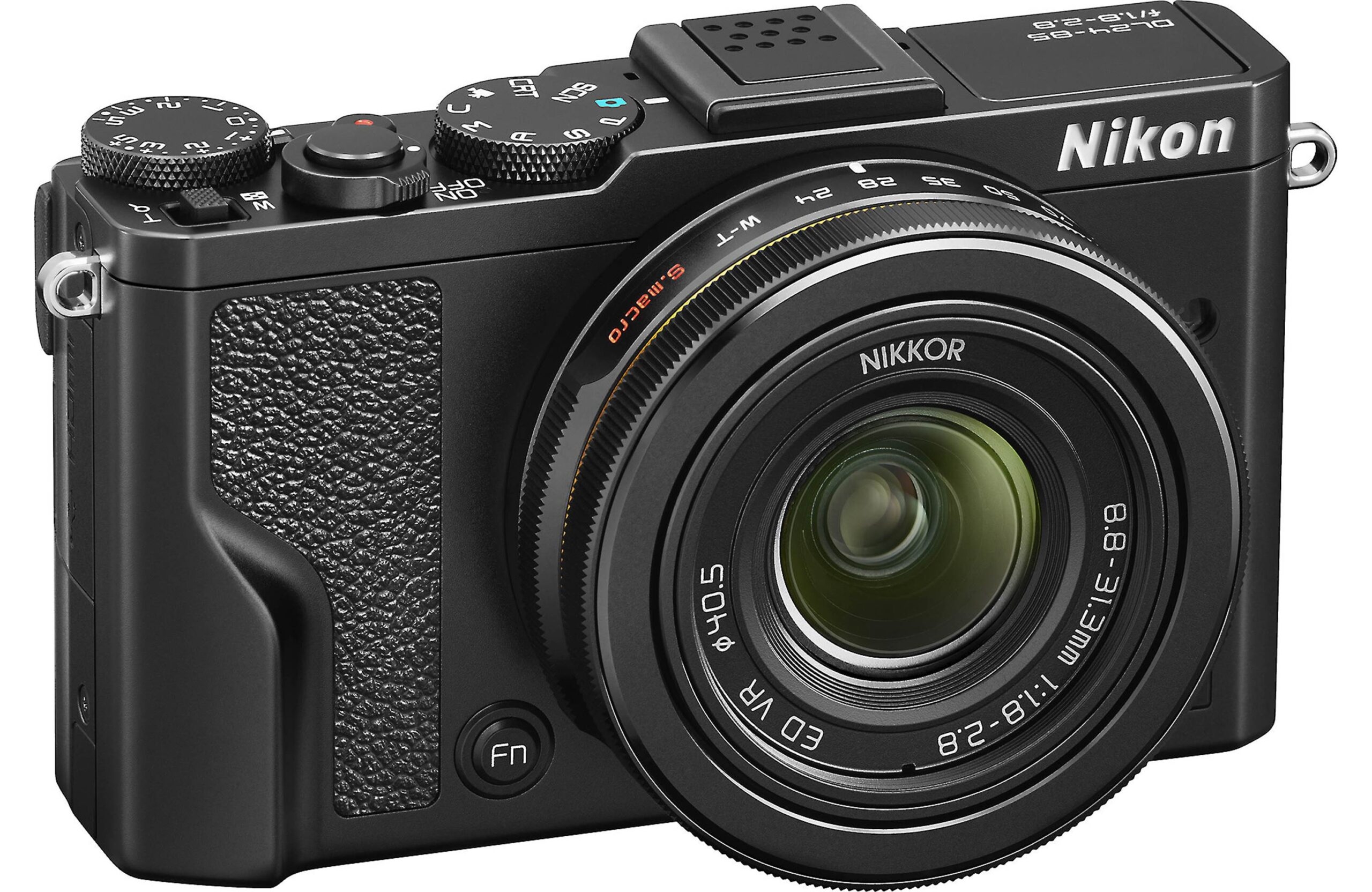
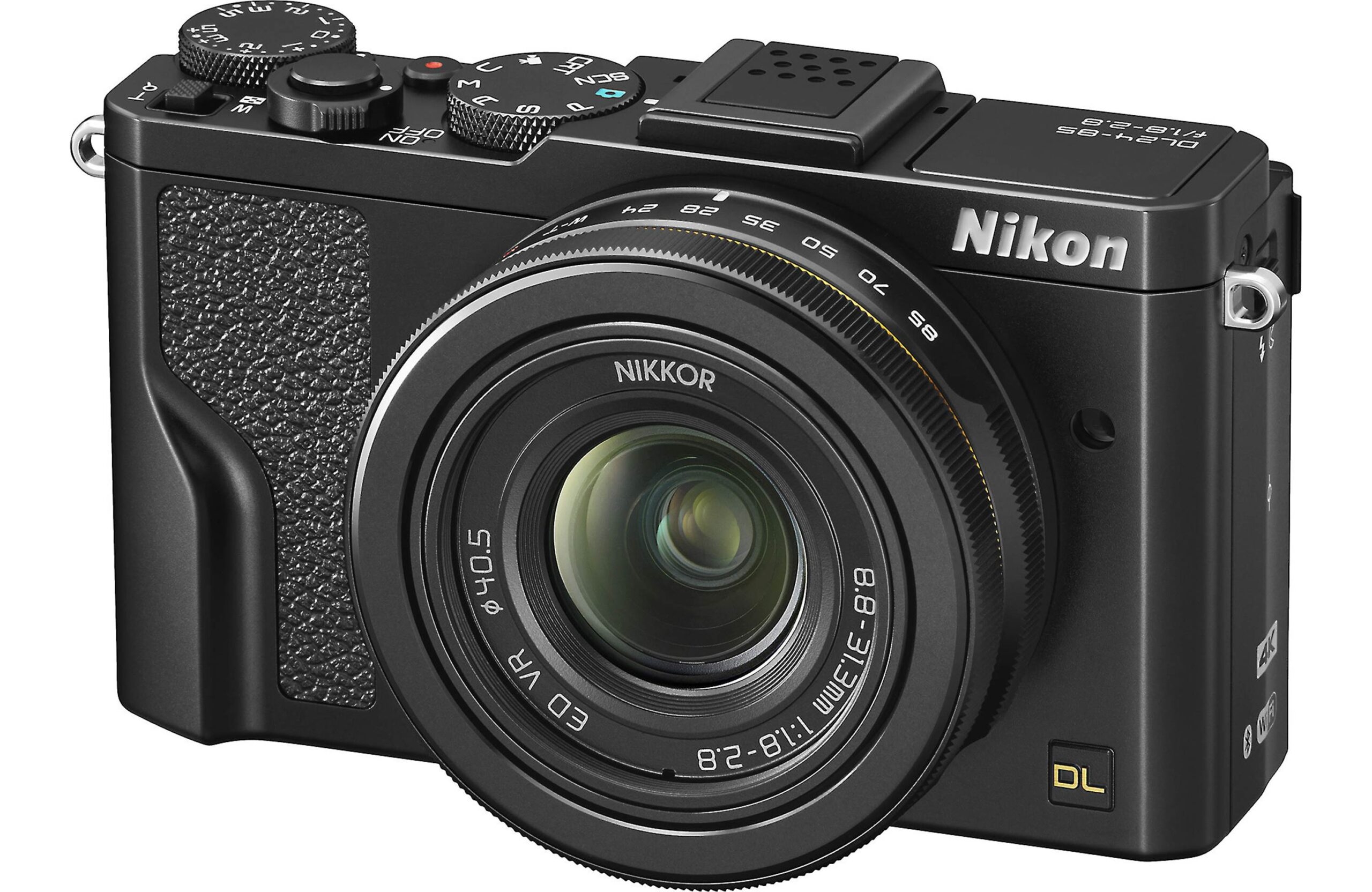
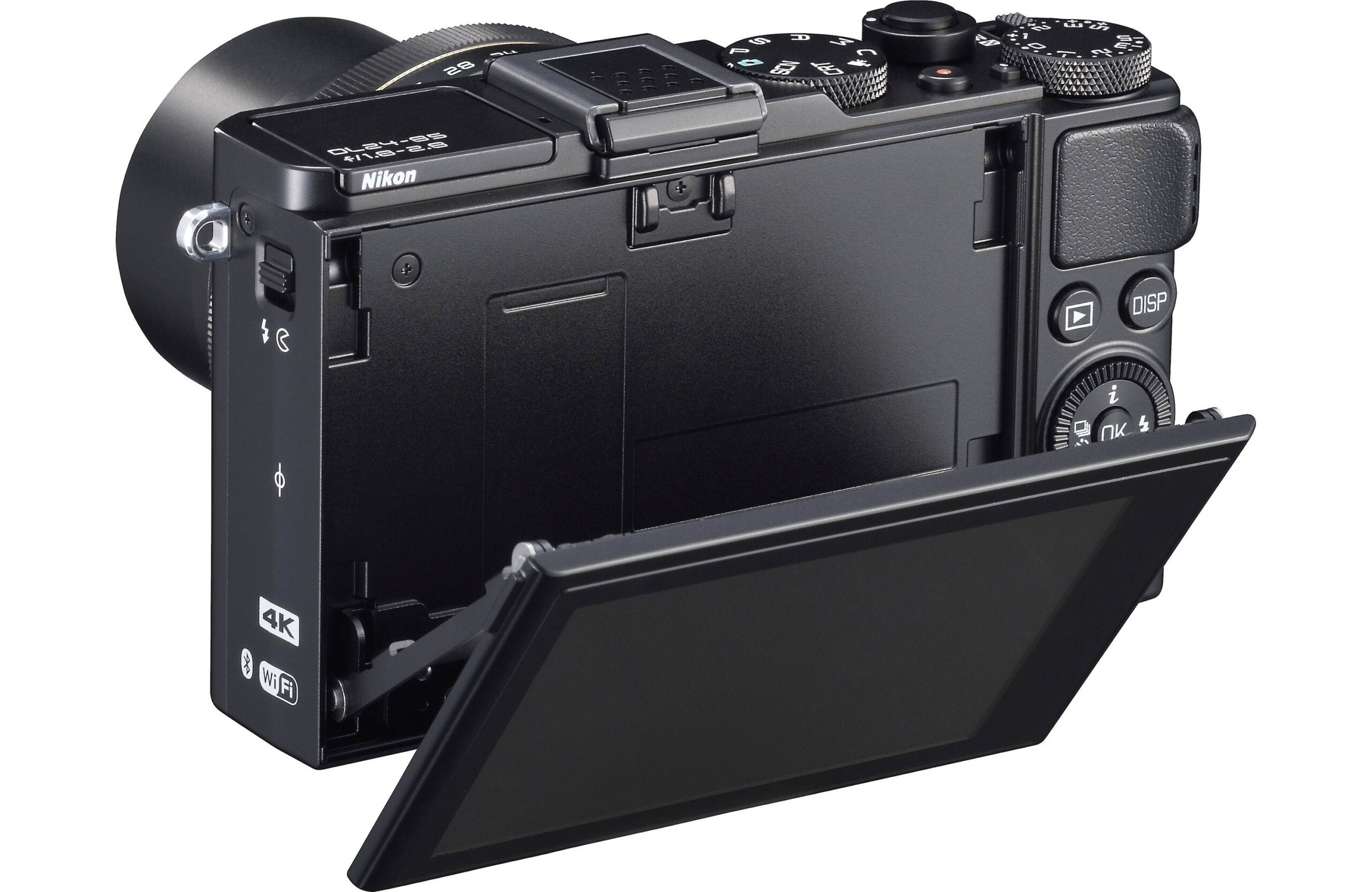
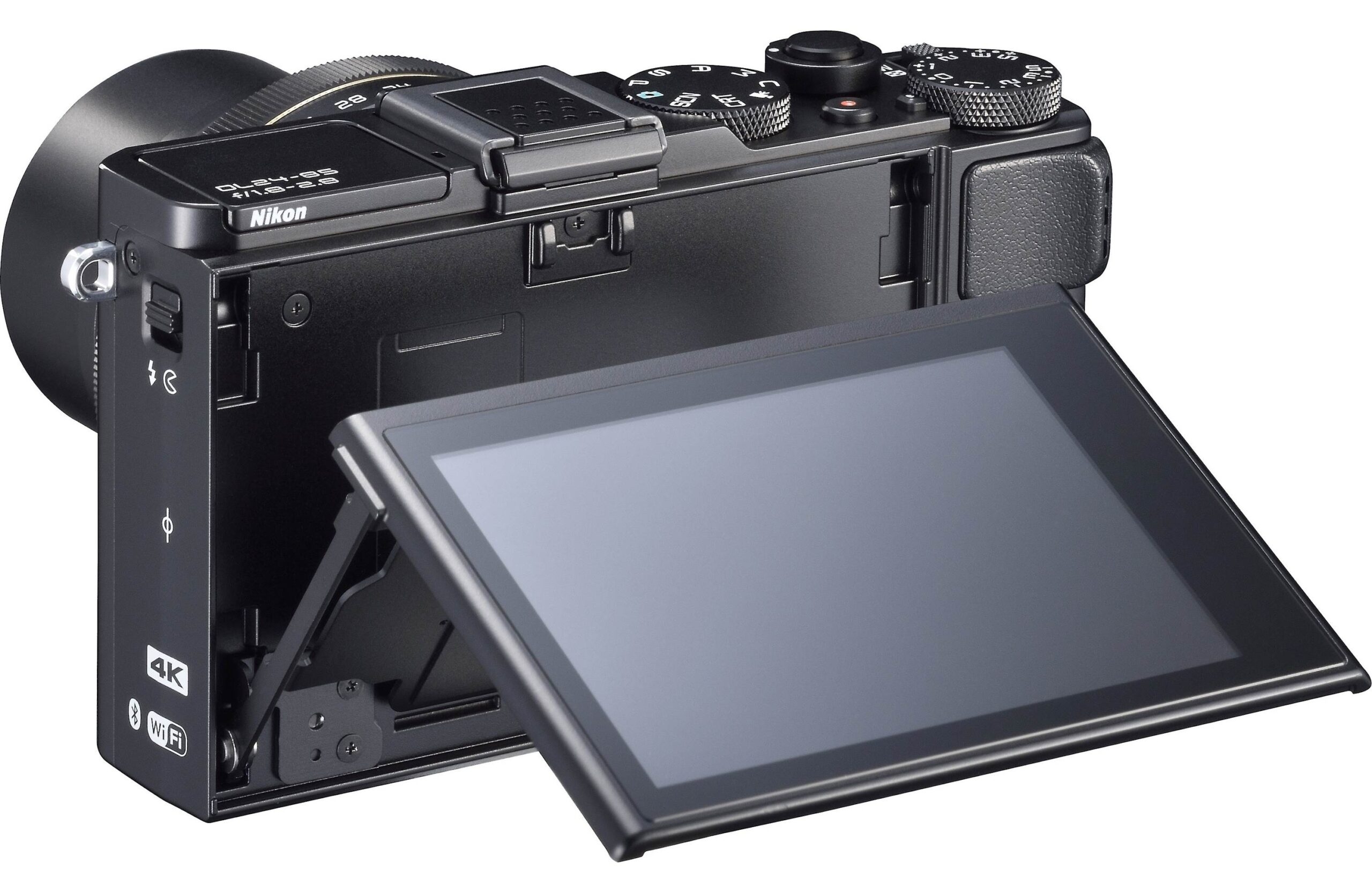
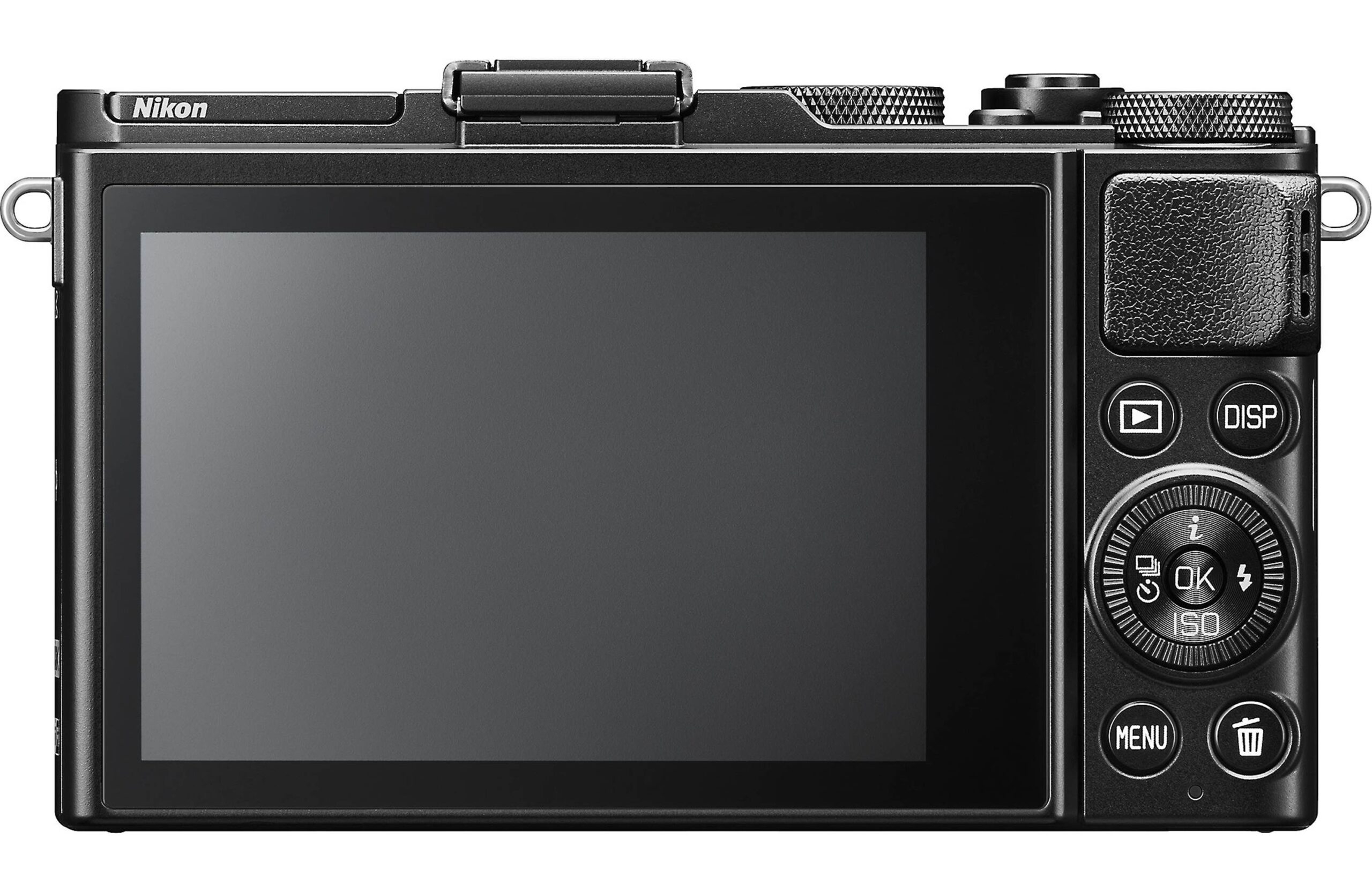
Main Nikon DL24-85 specifications
| Type | Compact digital camera |
| Effective pixels | 20.8 million |
| Sensor | 1-inch backside-illuminated CMOS sensor, Nikon CX format |
| Focal length | 8.8 to 31.3 mm, equivalent to 24-85 mm in 35mm/full-frame format |
| Real aperture | f/1.8-2.8 |
| 35mm depth-of-field equivalence | Approx. f/4.9 at 24 mm equivalent, and f/7.6 at 85 mm equivalent. Explanation: Focal length and aperture equivalence according to sensor size. |
| Specific function | Super Macro, with focus bracketing |
| Stabilization | Optical VR stabilization |
| Monitor | 7.5 cm tilting OLED touchscreen, approx. 1,037,000 dots |
| Electronic viewfinder | Optional DF-E1 electronic viewfinder |
Nikon DL24-500: the big zoom of the DL family
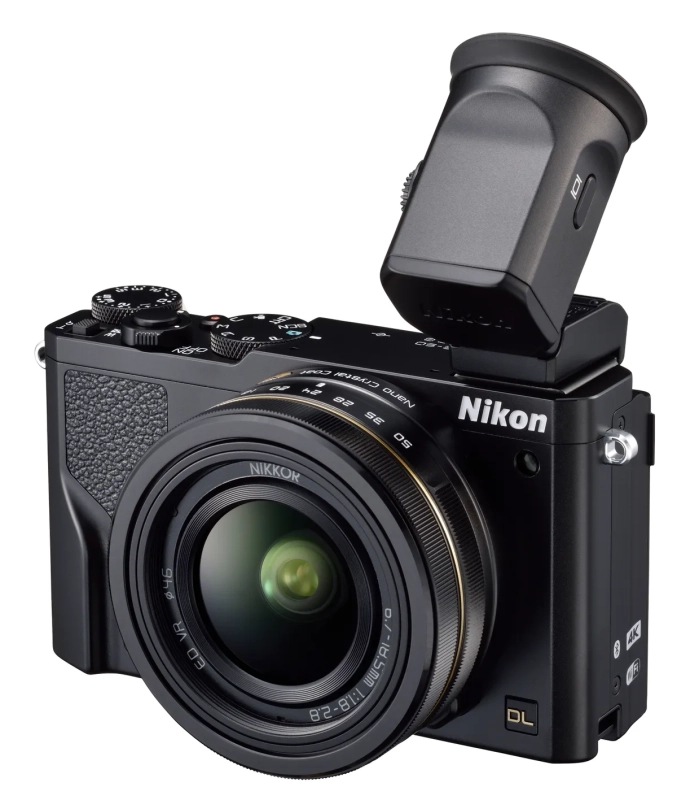
 Nikon DL24-500 f/2.8-5.6
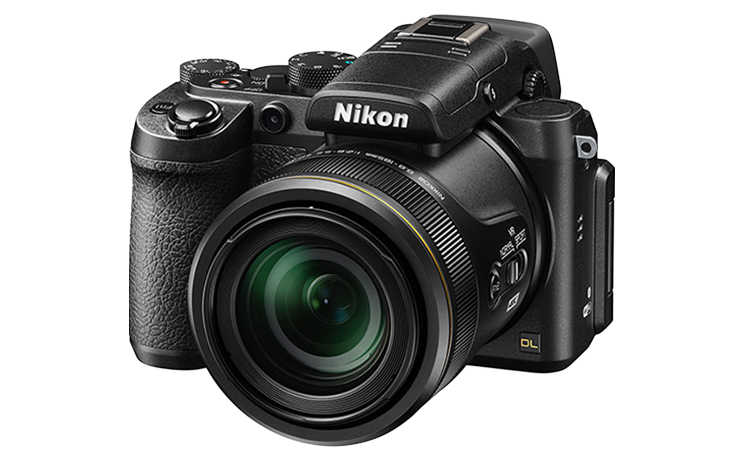
A third model completed the range announced by Nikon in February 2016: the Nikon DL24-500 f/2.8-5.6. Unlike the DL18-50 and DL24-85, which were more compact and more oriented toward reportage, architecture or everyday use, the DL24-500 targeted photographers looking for a single camera capable of covering a very wide focal range.
Its NIKKOR lens offered a zoom equivalent to 24-500 mm in 35mm/full-frame format, with a real maximum aperture of f/2.8-5.6. For exposure, this remained appealing considering the zoom range. For depth of field, the rendering was closer to approximately f/7.6-f/15.2 on full frame, for equivalent framing.
Nikon clearly intended it for distant subjects, sports, wildlife, aircraft or landscapes, with the promise of strong optical quality across the entire zoom range.
The references to NIKKOR optical know-how were clearly present: gold ring, complex optical formula, ED glass, aspherical ED element, optical stabilization and fluorine coating on the front lens element. Nano Crystal Coat, however, appears to have been reserved for the DL18-50 in Nikon’s official communication.
The DL24-500 also stood apart through its equipment. It was the only model in the range to feature a built-in OLED electronic viewfinder with an eye sensor. This was a real advantage for shooting in bright sunlight or following a subject at long focal lengths. It also featured a vari-angle OLED touchscreen, better suited to video, low-angle compositions and shots taken over obstacles.
Main Nikon DL24-500 specifications
| Type | Compact digital camera |
| Effective pixels | 20.8 million |
| Sensor | 1-inch backside-illuminated CMOS sensor, Nikon CX format |
| Focal length | Approx. 8.8 to 183 mm, equivalent to 24-500 mm in 35mm/full-frame format |
| Real aperture | f/2.8-5.6 |
| 35mm depth-of-field equivalence | Approx. f/7.6 at 24 mm equivalent, and f/15.2 at 500 mm equivalent. Explanation: Focal length and aperture equivalence according to sensor size. |
| Optical construction | Optical formula with ED elements, aspherical elements and an aspherical ED element |
| Stabilization | Dual Detect Optical VR with SPORT VR |
| Electronic viewfinder | Built-in OLED electronic viewfinder with eye sensor |
| Monitor | 7.5 cm vari-angle OLED touchscreen, approx. 1,037,000 dots |
| Main use | Sports, wildlife, aircraft, landscapes and distant subjects |
Comparison of the three Nikon DL cameras
The three Nikon DL cameras shared the same philosophy, but their lenses were designed for very different uses. The DL18-50 focused on a bright ultra-wide-angle zoom, the DL24-85 on versatility and macro, while the DL24-500 emphasized zoom range and a built-in electronic viewfinder.
The depth-of-field equivalences below are provided as a reference to compare rendering with a full-frame camera. They do not change exposure: f/1.8 remains f/1.8 for the amount of light transmitted.
| Technical elements | DL18-50 | DL24-85 | DL24-500 |
|---|---|---|---|
| 35mm/full-frame equivalent focal range | 18-50 mm | 24-85 mm | 24-500 mm |
| Real aperture | f/1.8-2.8 | f/1.8-2.8 | f/2.8-5.6 |
| 35mm depth-of-field equivalence | Approx. f/4.9-f/7.6 | Approx. f/4.9-f/7.6 | Approx. f/7.6-f/15.2 |
| Aspherical lens elements | 4 | 4 | 4 |
| ED glass elements | 1 | 1 | 3 |
| Aspherical ED element | 1 | - | 1 |
| HRI element | 1 | 1 | - |
| Nano Crystal Coat | Yes | - | - |
| Fluorine coating | Yes | Yes | Yes |
| Optical stabilization | Yes | Yes | Yes, Dual Detect Optical VR with SPORT VR |
| Built-in electronic viewfinder | No | No | Yes, OLED with eye sensor |
| Optional electronic viewfinder | Yes, DF-E1 | Yes, DF-E1 | Not required, built-in viewfinder |
| Monitor | Tilting OLED touchscreen | Tilting OLED touchscreen | Vari-angle OLED touchscreen |
| Main use | Architecture, landscapes, ultra-wide-angle photography | Reportage, travel, portraiture, macro | Sports, wildlife, aircraft, distant subjects |
The depth-of-field equivalence values are rounded using a crop factor of approximately 2.7, corresponding to the 1-inch / Nikon CX sensor. They provide an approximate idea of rendering compared with 35mm full frame.
Cancellation of the project in 2017
Despite the interest generated by their announcement, the Nikon DL cameras were ultimately never released. Their launch was originally scheduled for June 2016, but Nikon first postponed it due to issues related to the integrated circuit for image processing.
On February 13, 2017, Nikon officially announced the cancellation of all three models: the DL18-50 f/1.8-2.8, DL24-85 f/1.8-2.8 and DL24-500 f/2.8-5.6. The company cited increased development costs, lower expected sales in the compact camera market and concerns about the profitability of the project.
This decision turned the Nikon DL cameras into almost mythical devices. They never reached store shelves, yet they continue to interest photography gear enthusiasts precisely because they represented a path Nikon never fully explored.
July 2026 update: new rumors around Nikon compact cameras
In July 2026, NikonRumors renewed interest in this range by mentioning a possible return of the Nikon DL spirit. This is not an official Nikon announcement, but a rumor around a premium compact camera that could borrow some ideas from the former DL series.
The article mentions a high-end compact camera, potentially equipped with a 24-megapixel stacked 1-inch sensor, a premium finish and an optional external electronic viewfinder. These points remain unconfirmed, but they probably explain the renewed curiosity around the old Nikon DL cameras.
This rumor should therefore be treated with caution. It does show, however, that interest in high-end premium compact cameras remains real, especially among photographers looking for a camera lighter than a mirrorless system but more qualitative than a smartphone.
The renewed traffic to this article confirms that curiosity: the Nikon DL cameras were never released, but their promise still resonates with photographers.
Sources
- Nikon - Premium Compact Cameras Nikon DL18-50 f/1.8-2.8, Nikon DL24-85 f/1.8-2.8, Nikon DL24-500 f/2.8-5.6
- Nikon - Cancellation of release of the DL series of premium compact cameras
- NikonRumors - Is Nikon resurrecting the canceled DL compact cameras?
- Focal length and aperture equivalence according to sensor size
About the author
Sebastien Desnoulez is a photographer, author and image maker based in Paris. His work spans architectural photography, landscape photography and travel photography, with particular attention to composition, lines, light, blur and visual accidents. Trained in photography in the mid-1980s, he covered Formula 1 and reported from around the world before developing a fine art photography practice built around the tension between graphic rigour and visual instability. He also shares his technical experience through practical articles for passionate photographers, drawing on a strong visual culture acquired in both film and digital photography.
Tags