

White Sands, New Mexico’s White Sand Dunes

In southern New Mexico, White Sands stretches across a vast landscape of white sand dunes made of gypsum. I photographed two series there, in 1989 and 1993. In bright sunlight, beneath passing clouds or in the final light of the day, this desert reveals very different faces.
White Sands, a white sand desert
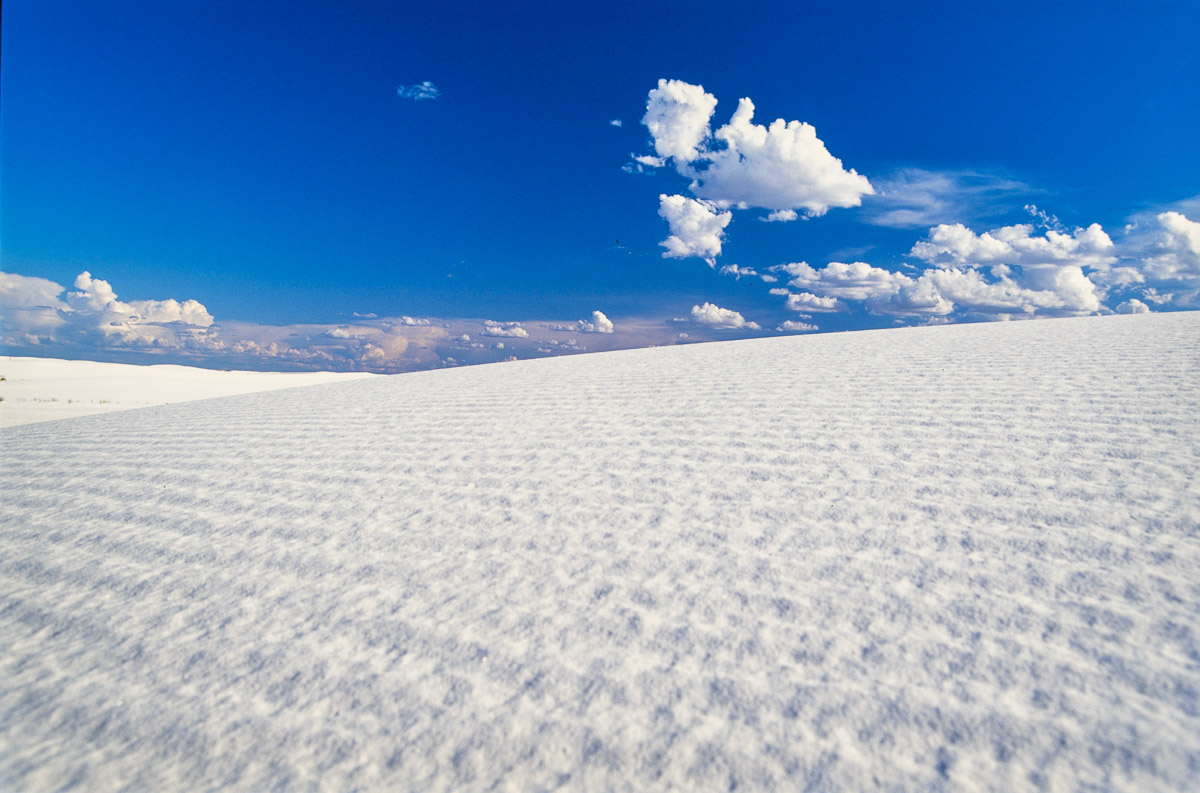
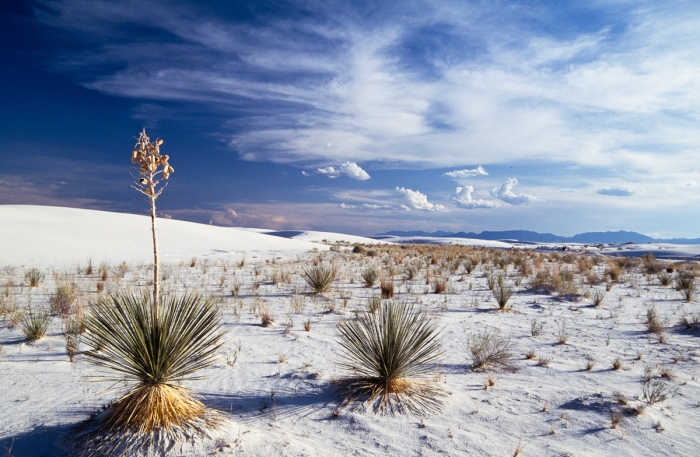
Unlike the quartz dunes found in many deserts, those at White Sands are formed from grains of gypsum. This mineral gives them their distinctive whiteness. At first glance, the landscape can resemble an expanse of snow, but the heat, desert vegetation and ripples across the ground quickly remind us that we are in the heart of an arid environment.
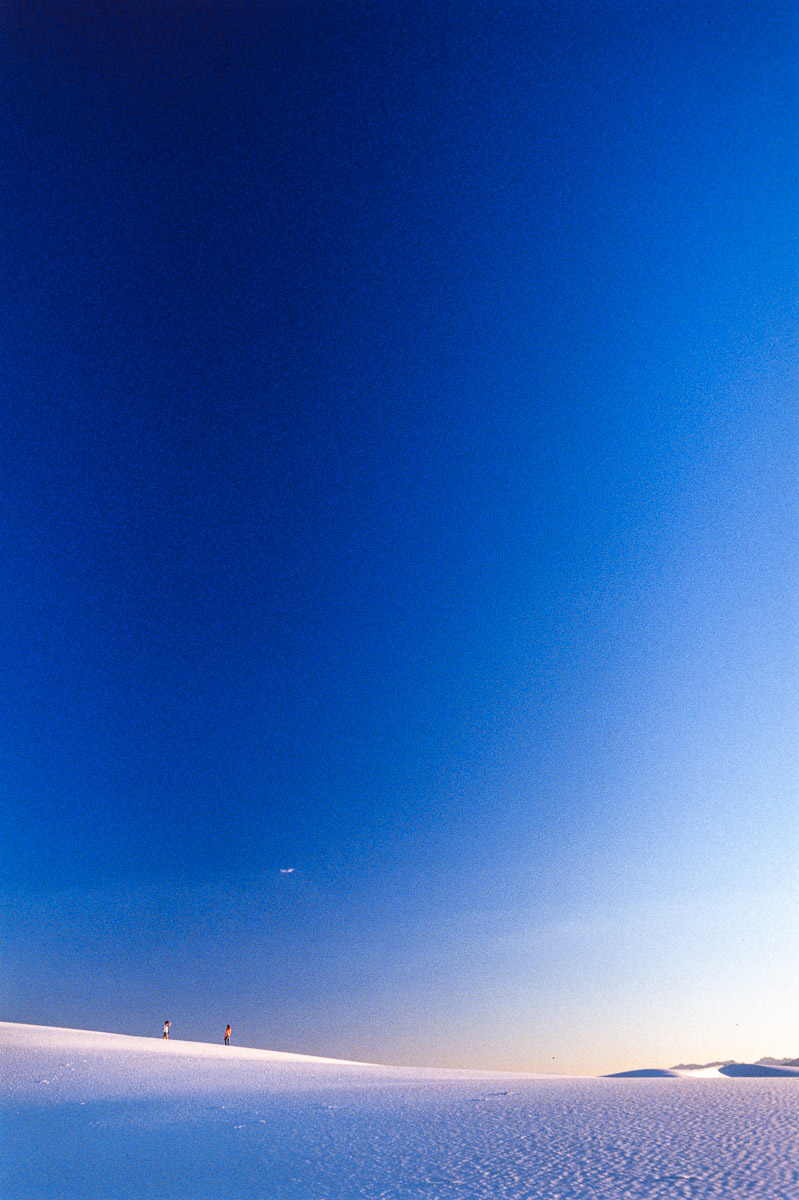
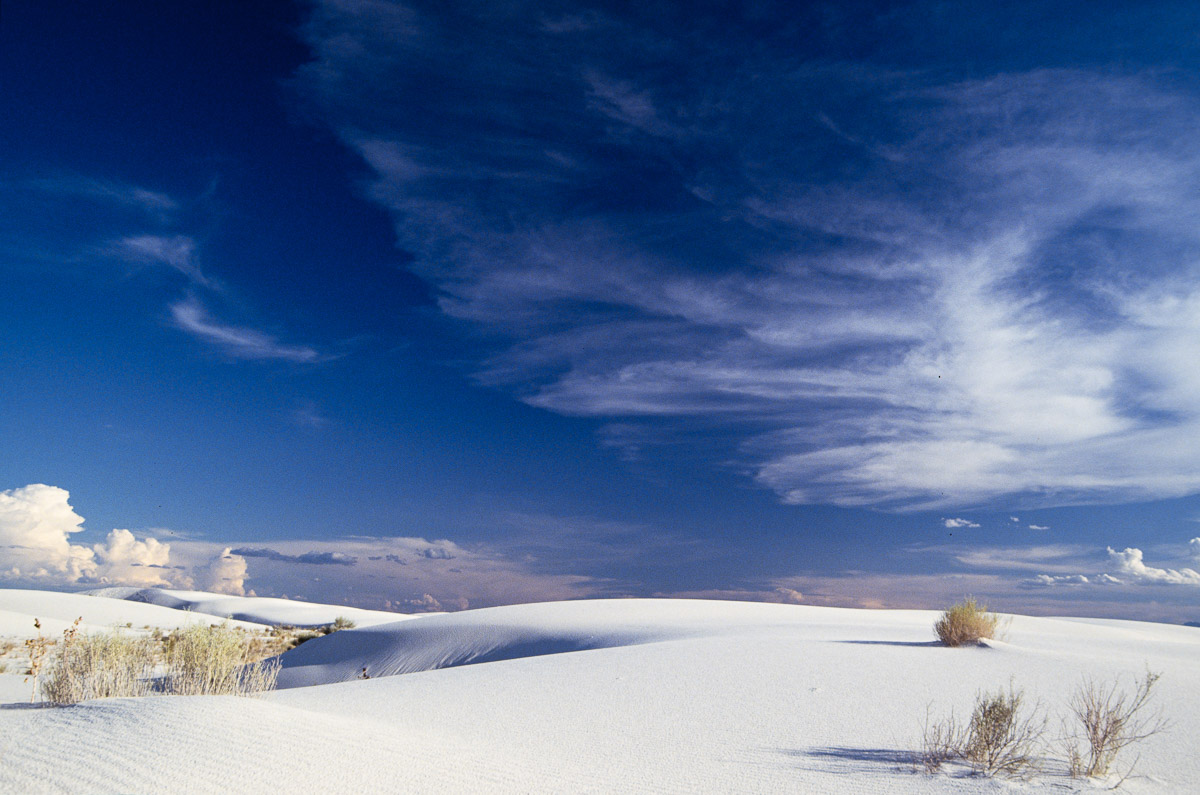
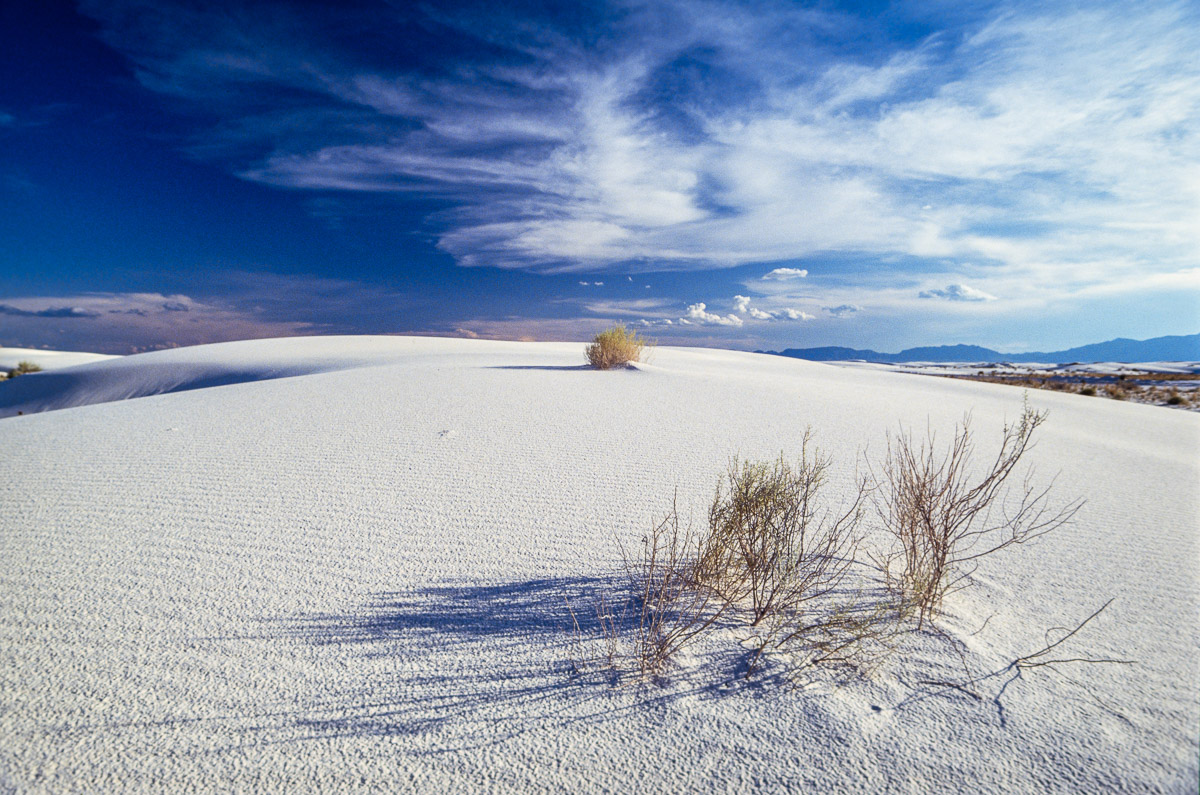
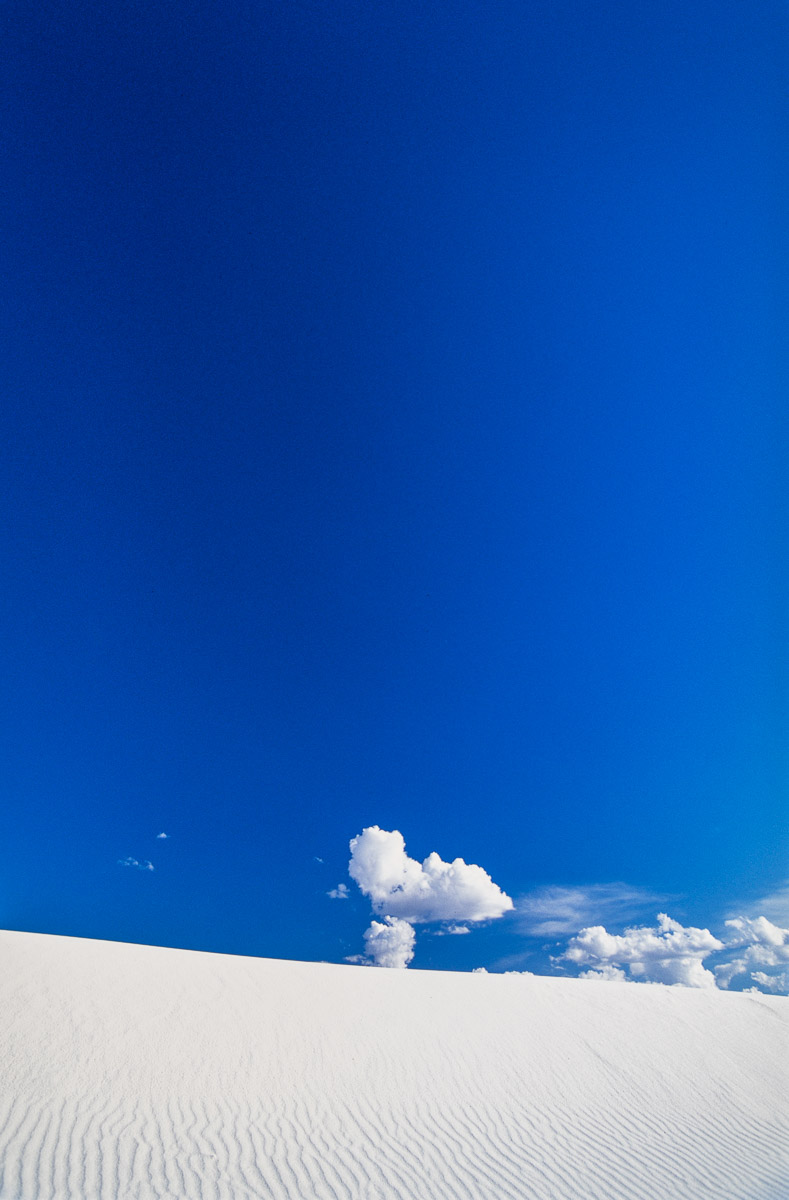
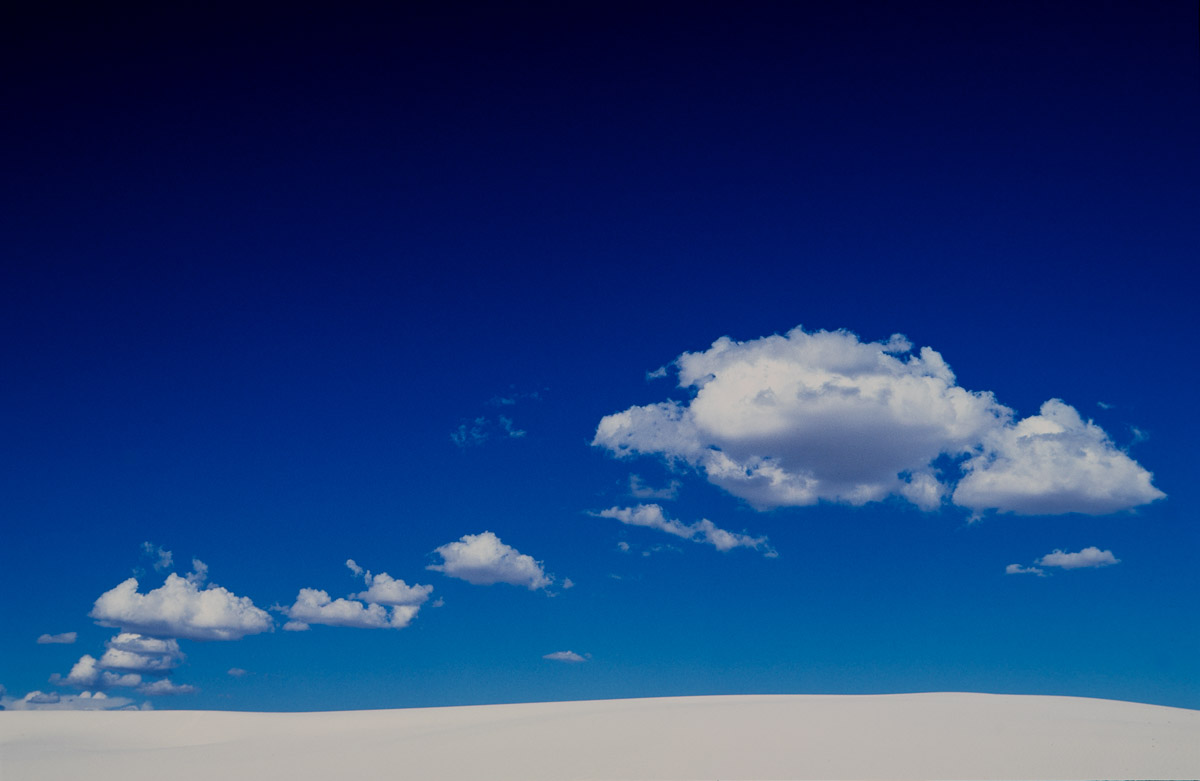
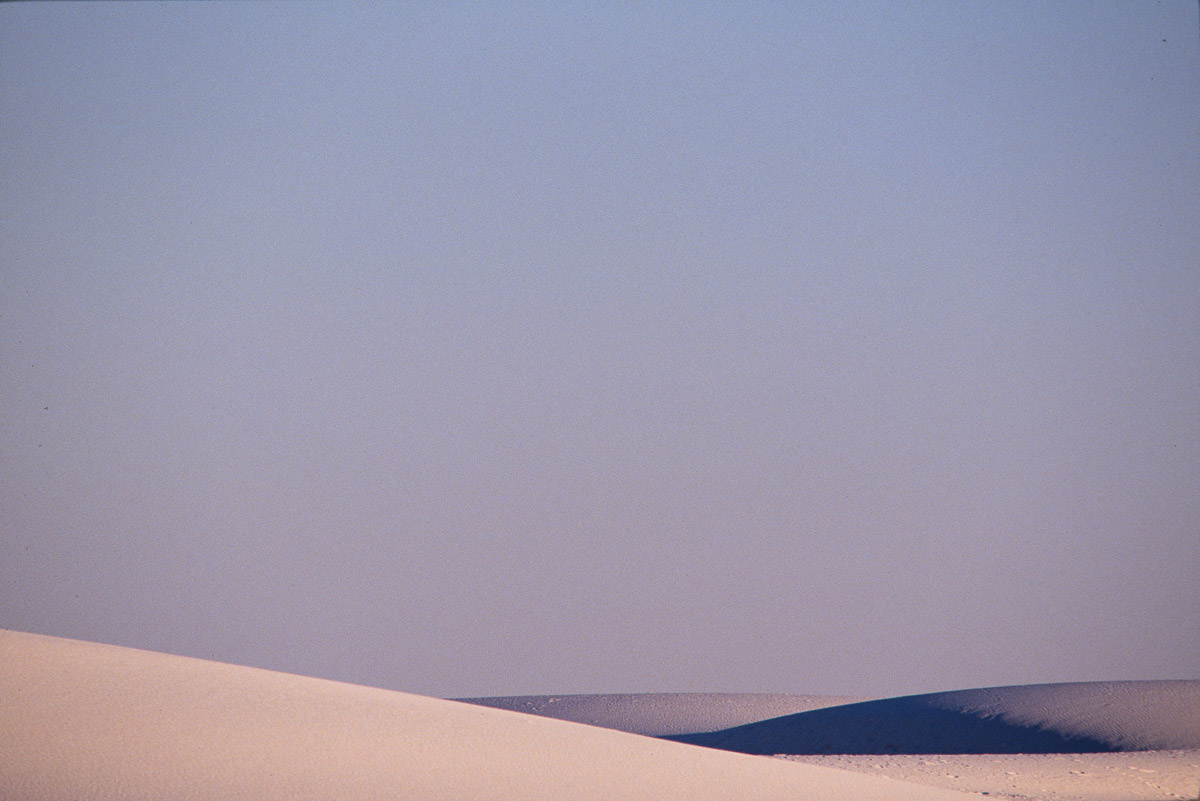
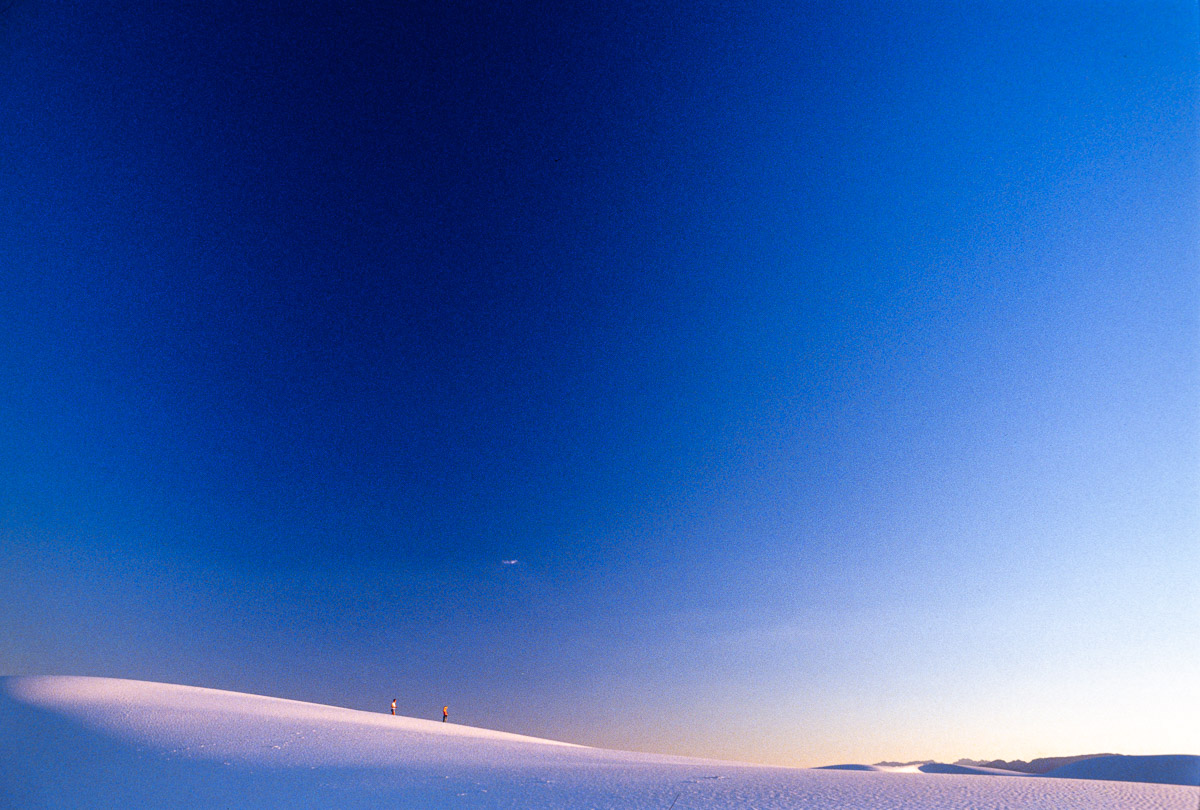
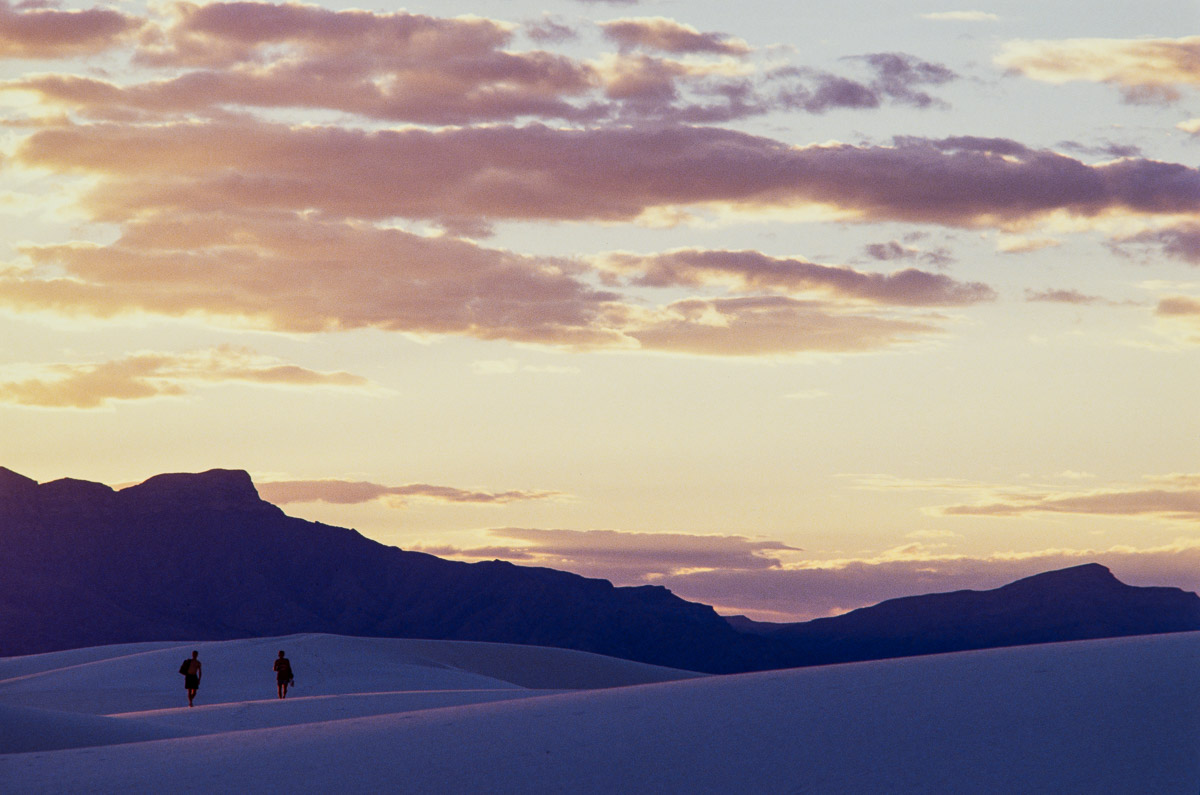
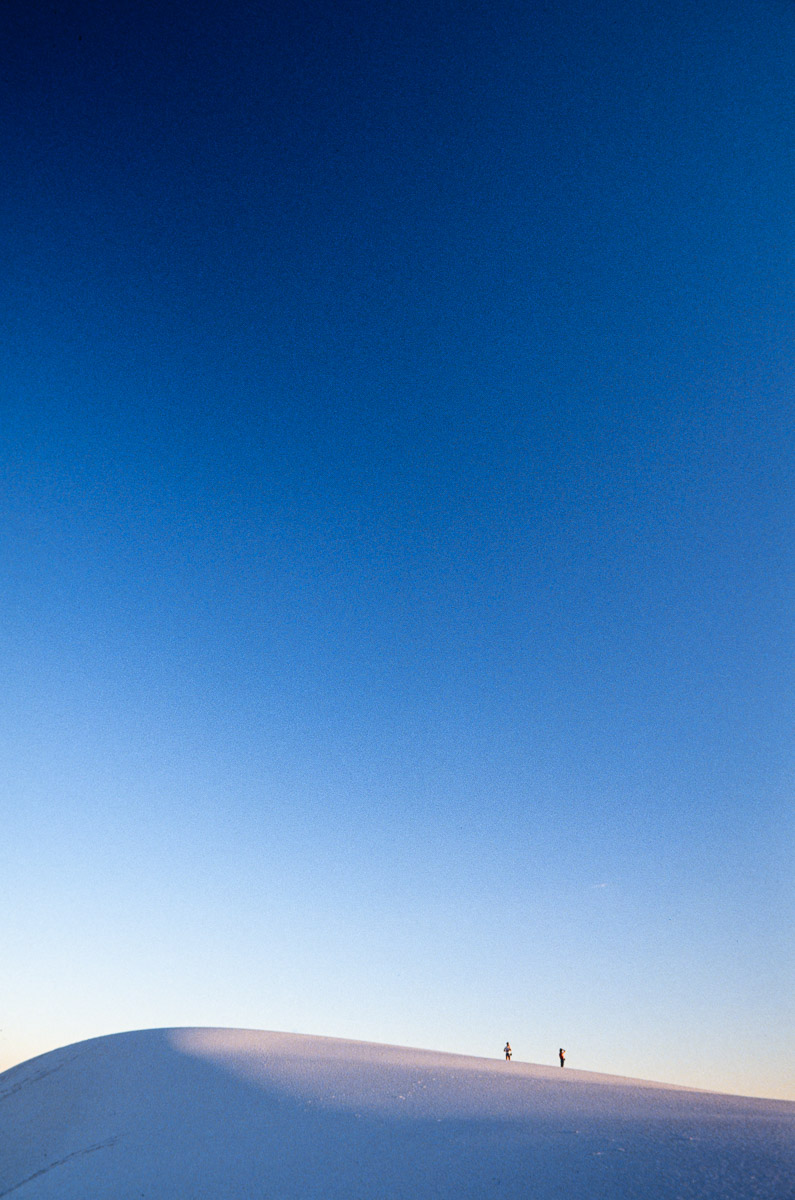
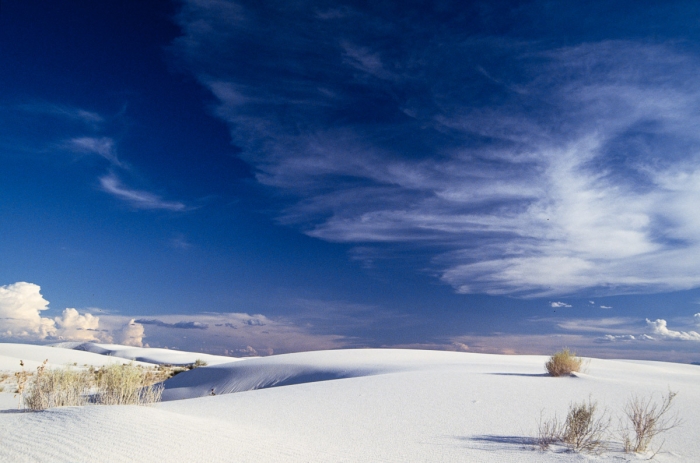
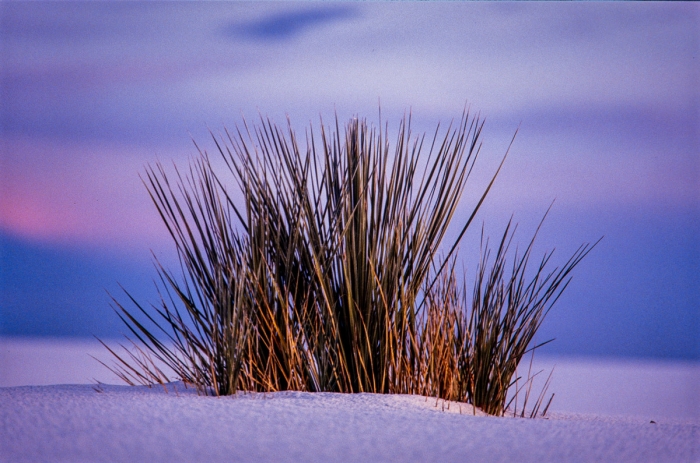
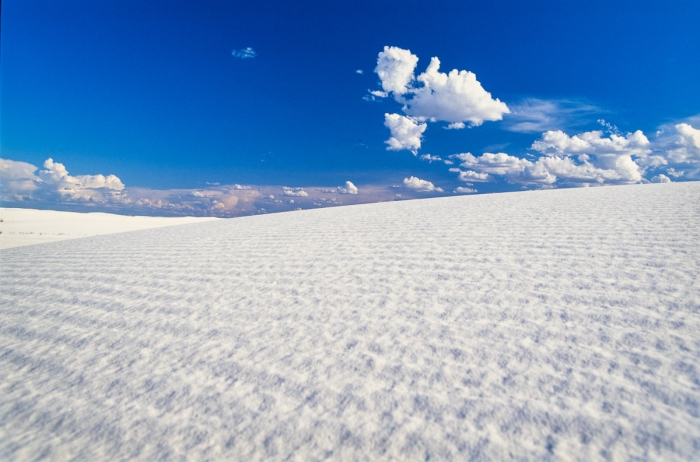
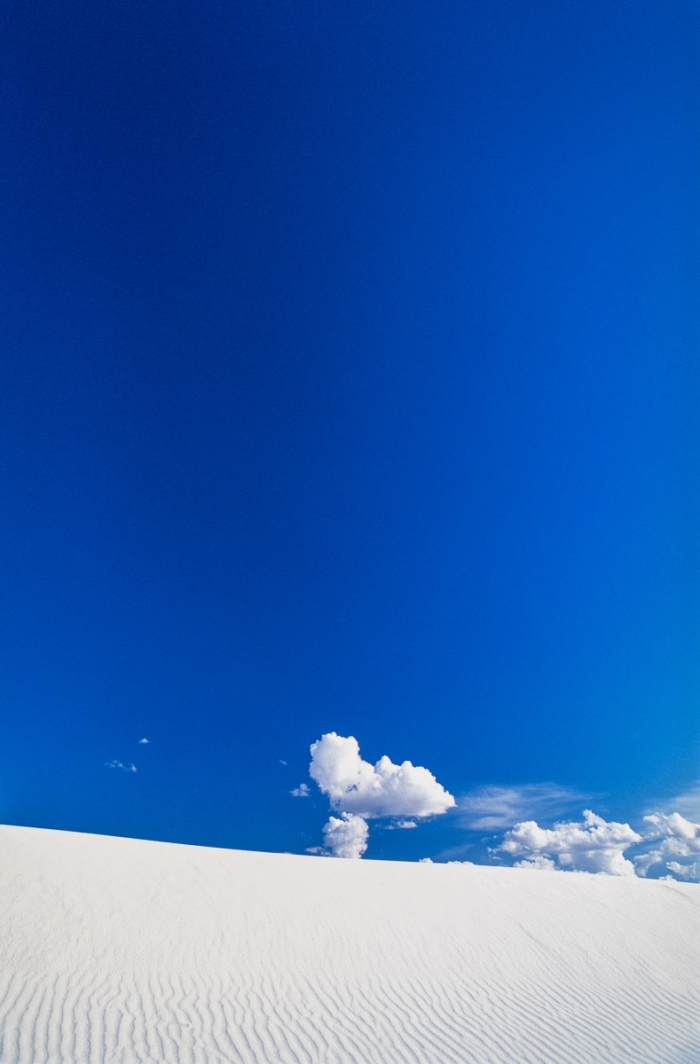
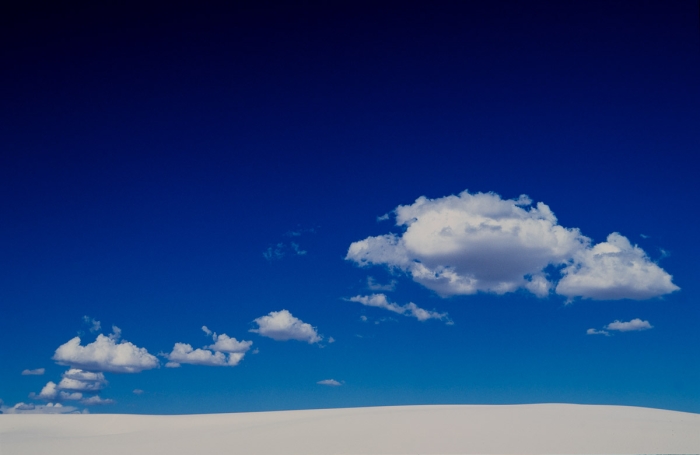
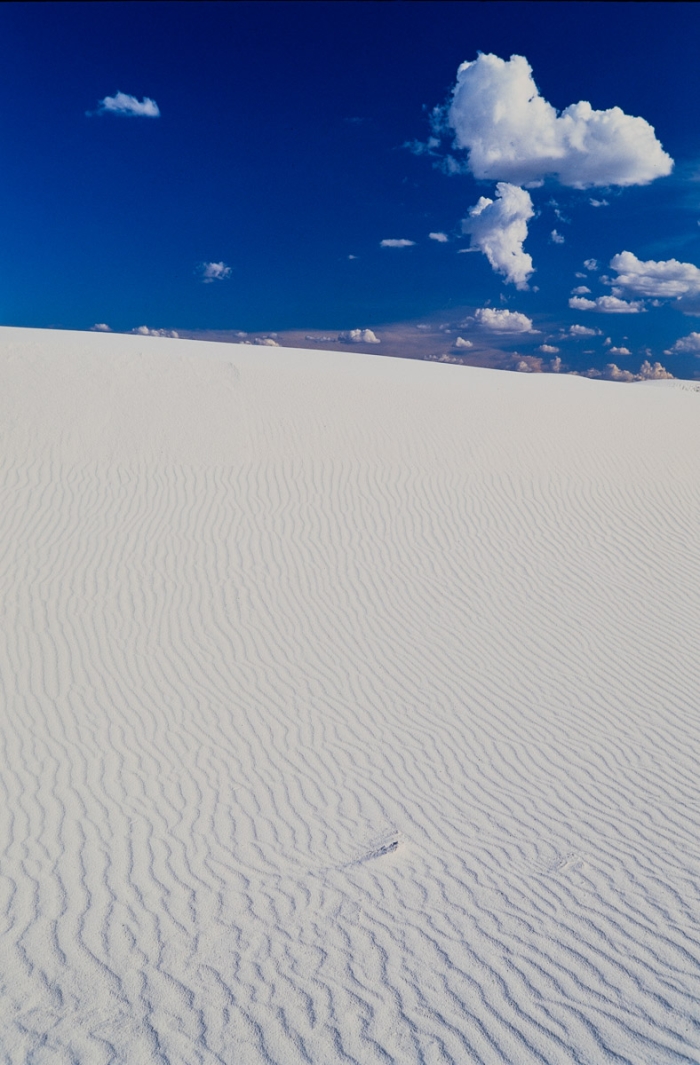
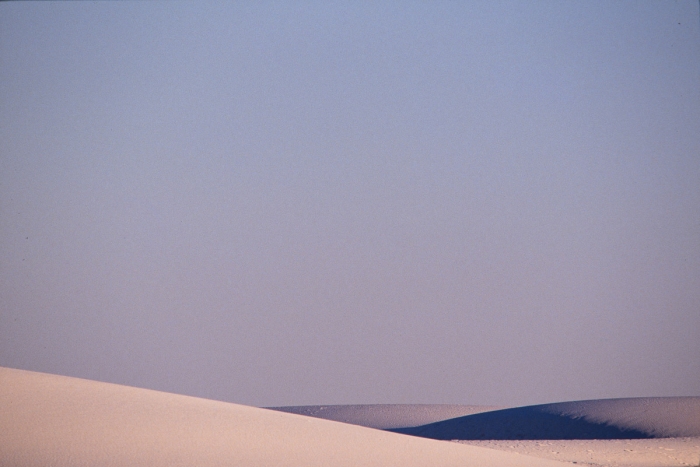
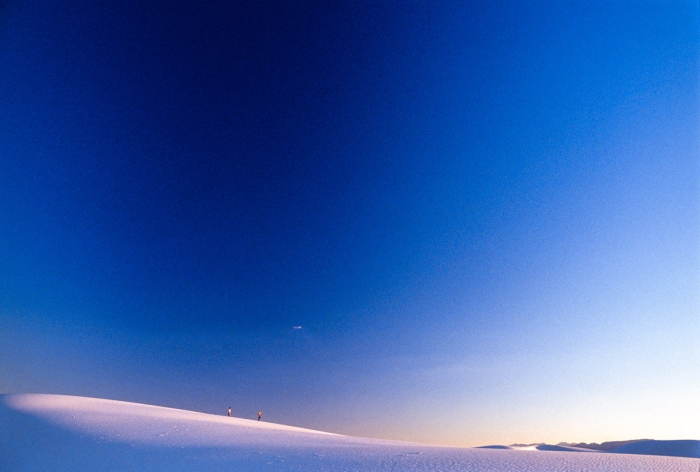
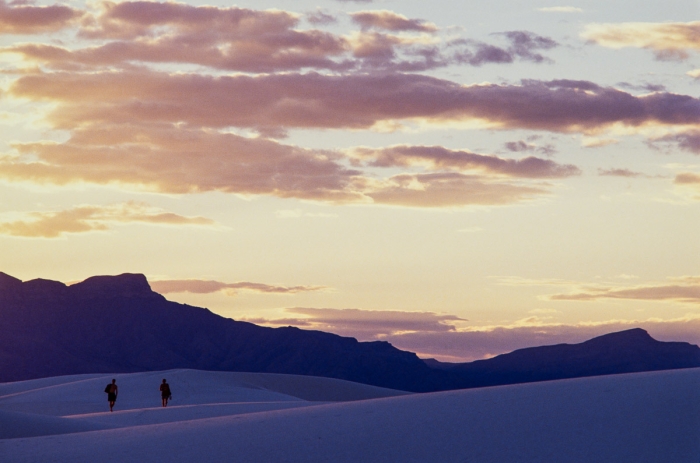
When the sun is high, the dunes appear almost dazzling beneath the deep blue New Mexico sky. Clouds cast broad shadows that emphasize the curves of the landscape. As the sun begins to set, the white gypsum gradually takes on shades of blue, pink and mauve.
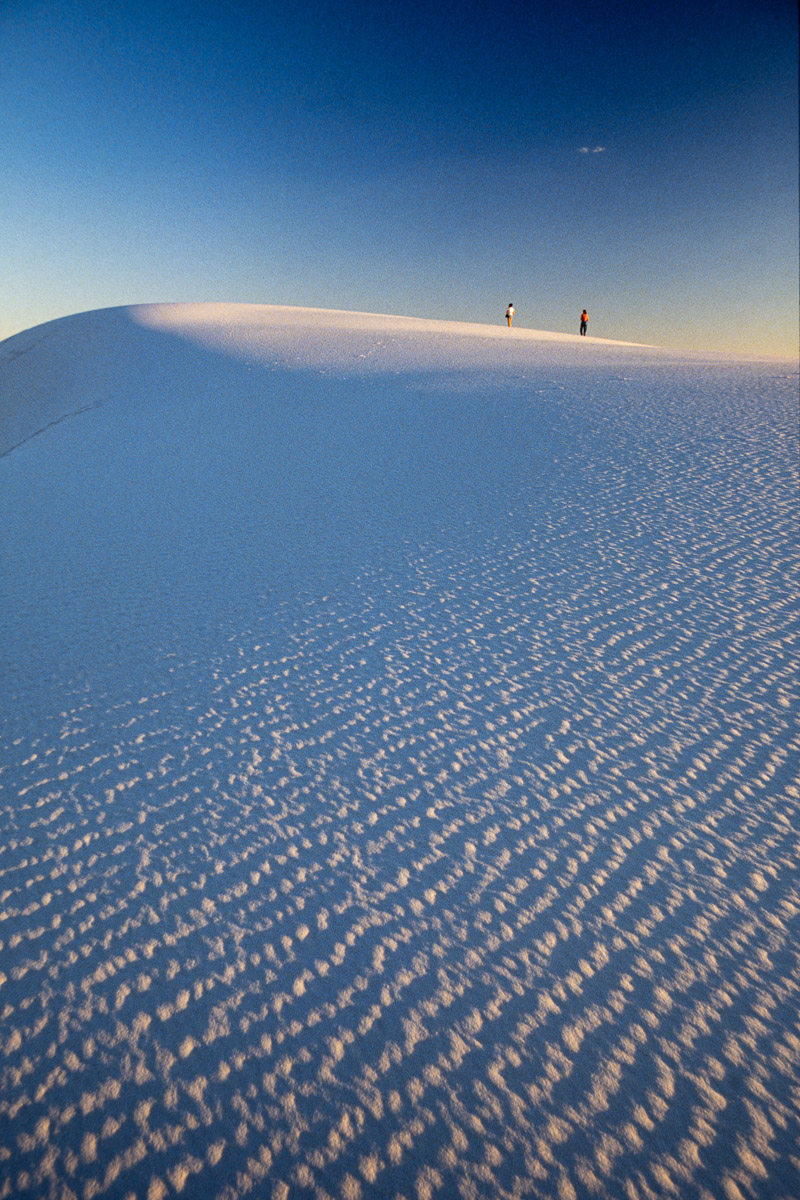
Over the course of one or two hours, the same viewpoint can change dramatically. Low-angle light enhances the sense of volume, while the ridges of the dunes become more clearly defined.
From Texas to White Sands, an American road trip in 1989
In 1989, I was visiting Texas for the fourth time, following three earlier trips in 1985, 1986 and 1987, the year in which I had produced a photo report on the Dallas Police Department. Until then, I mainly knew Nacogdoches, where I had attended university, as well as Dallas and Houston.
I had recently obtained my driving licence, allowing me for the first time to explore Texas more freely, a state larger than metropolitan France, of which I had previously known only the eastern part.
After visiting San Antonio, I continued towards Big Bend National Park, on the Mexican border, and then El Paso. From there, I travelled to the white dunes of White Sands in New Mexico before heading north to Santa Fe. I returned to Dallas through the Texas Panhandle and Palo Duro Canyon.
White Sands was one of the most remarkable stops on this journey. After the rocky terrain and vast desert expanses of Big Bend, I discovered an almost entirely white landscape, very different from those I had crossed before.
Two series photographed four years apart
I returned to White Sands in 1993. These two visits, four years apart, allowed me to photograph the dunes in very different light and weather conditions.
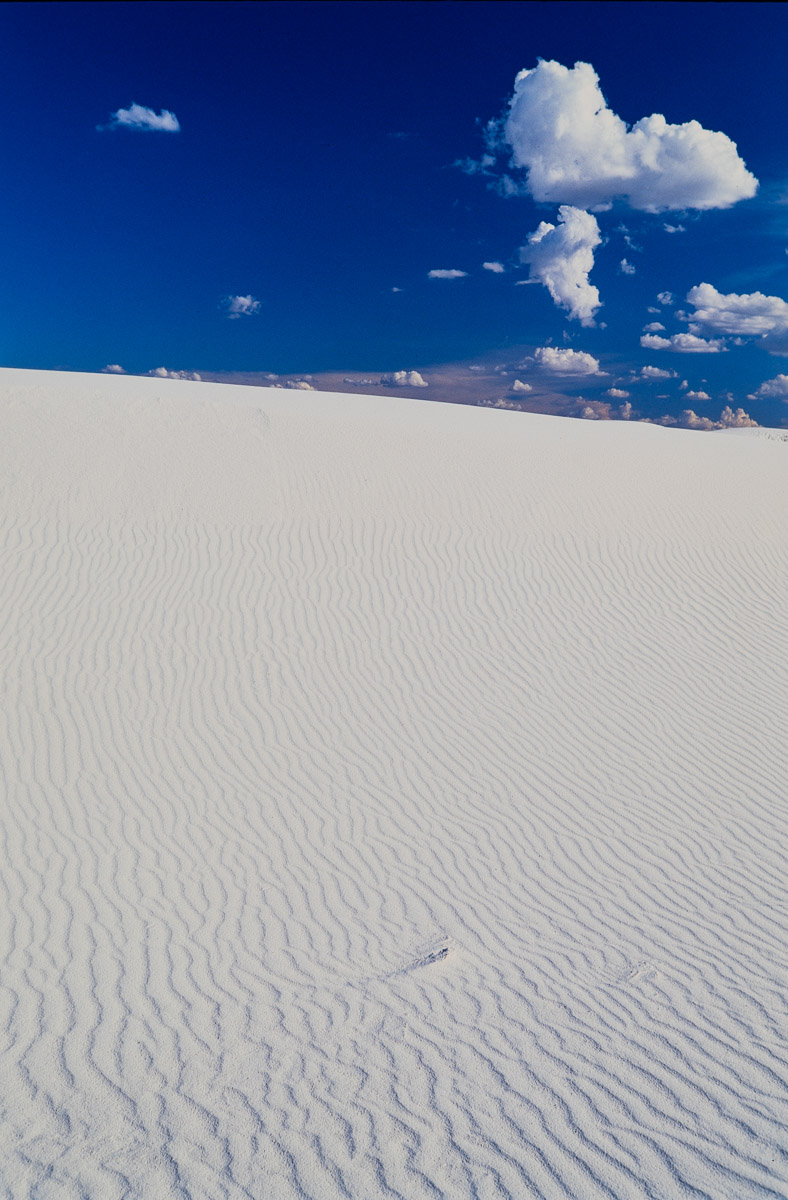
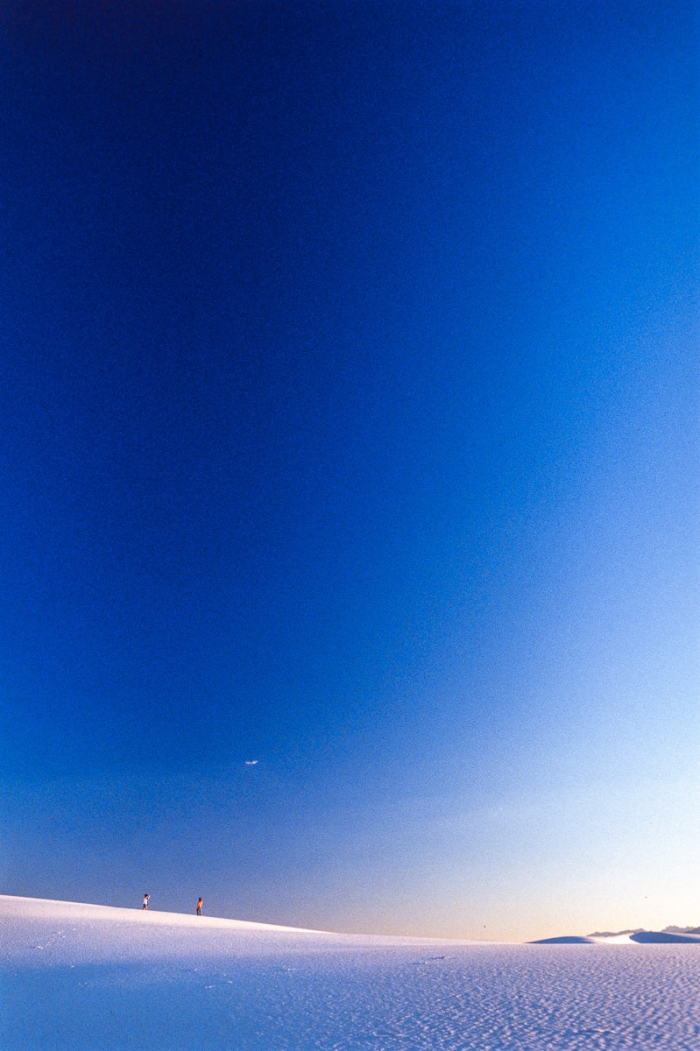
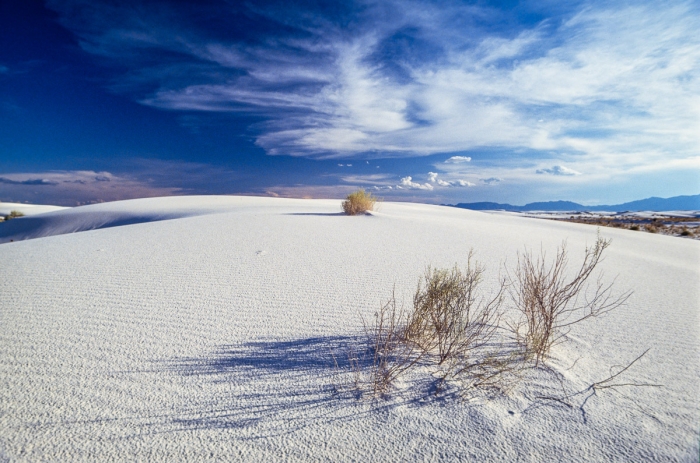
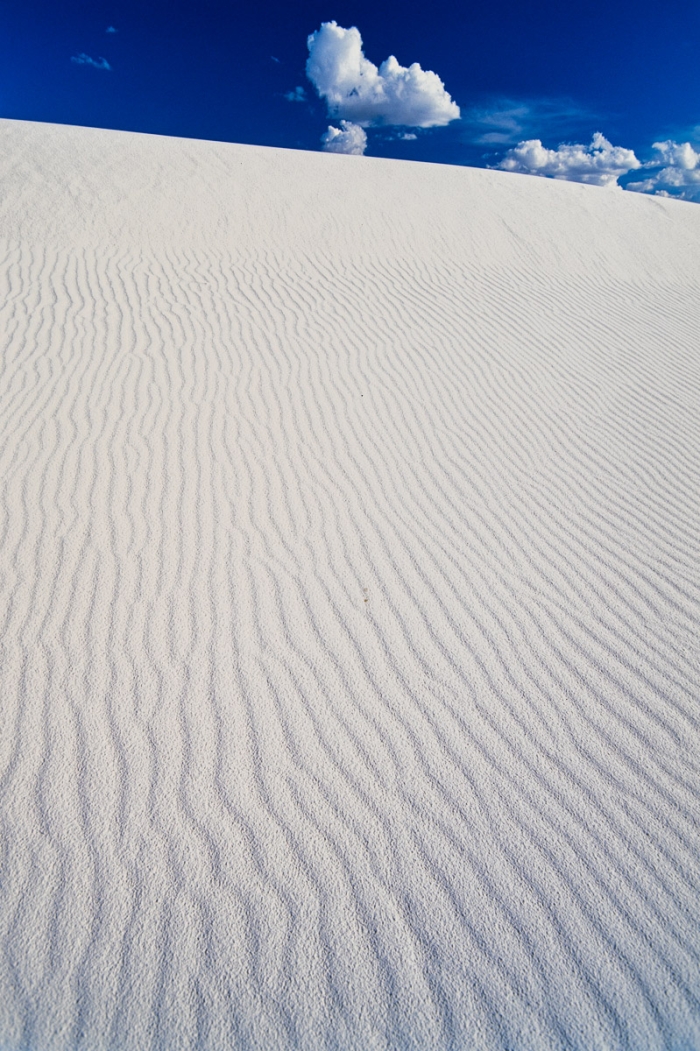
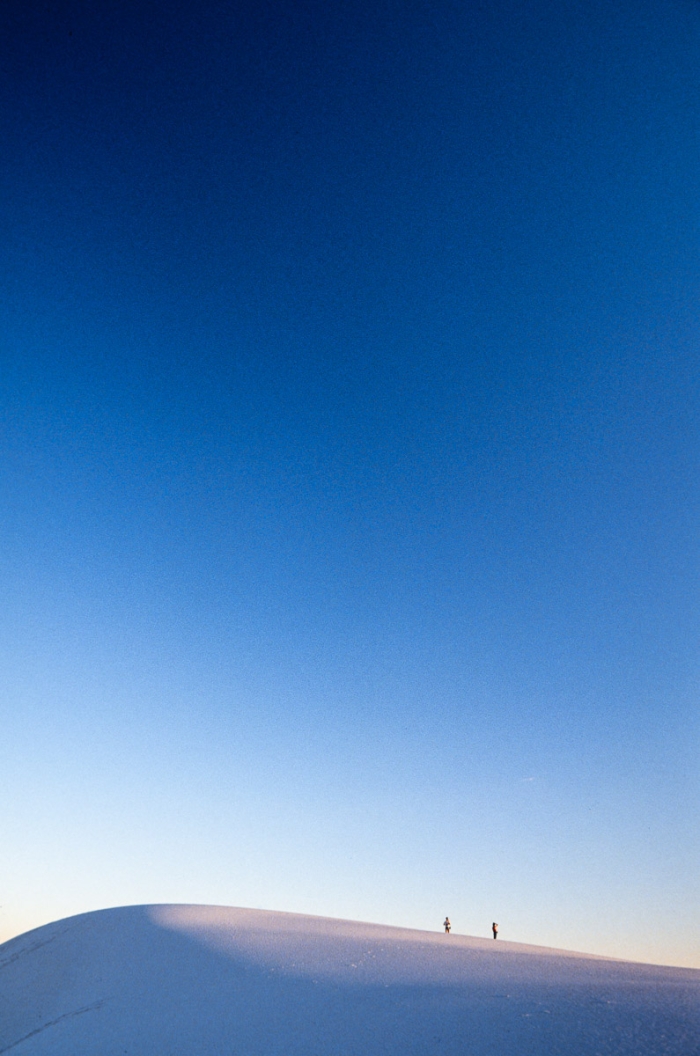
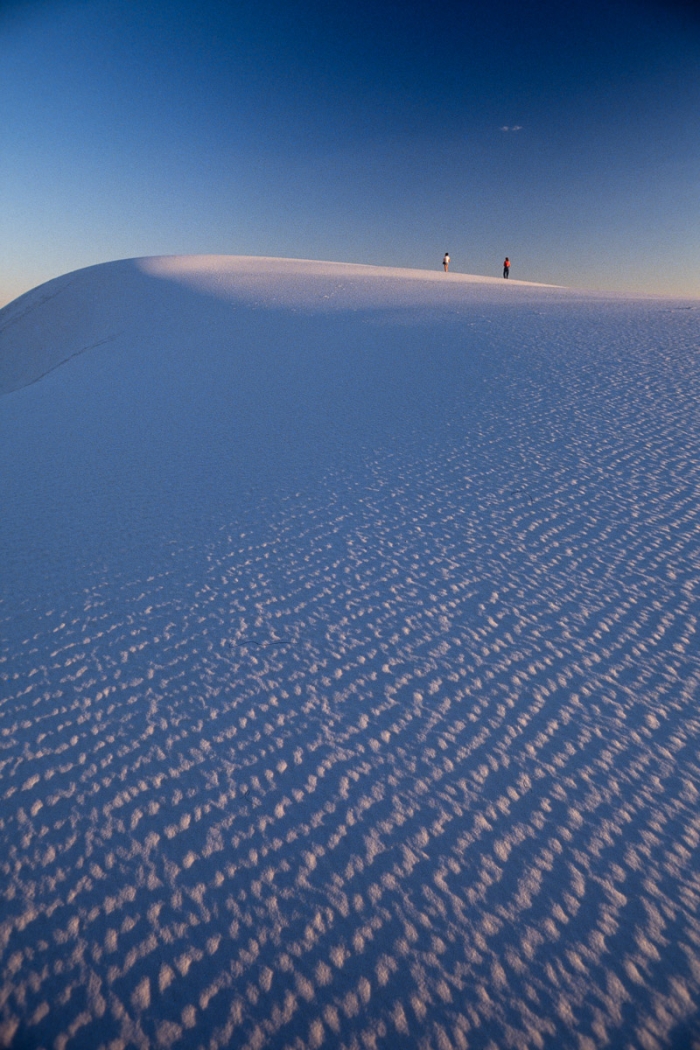
The 1989 photographs are mainly defined by the light at the end of the day, the blue and mauve gradients of the sky and the presence of tiny human figures within the landscape. The 1993 series shows White Sands more often in daylight, beneath deep blue skies, prominent cloud formations and more visible desert vegetation.
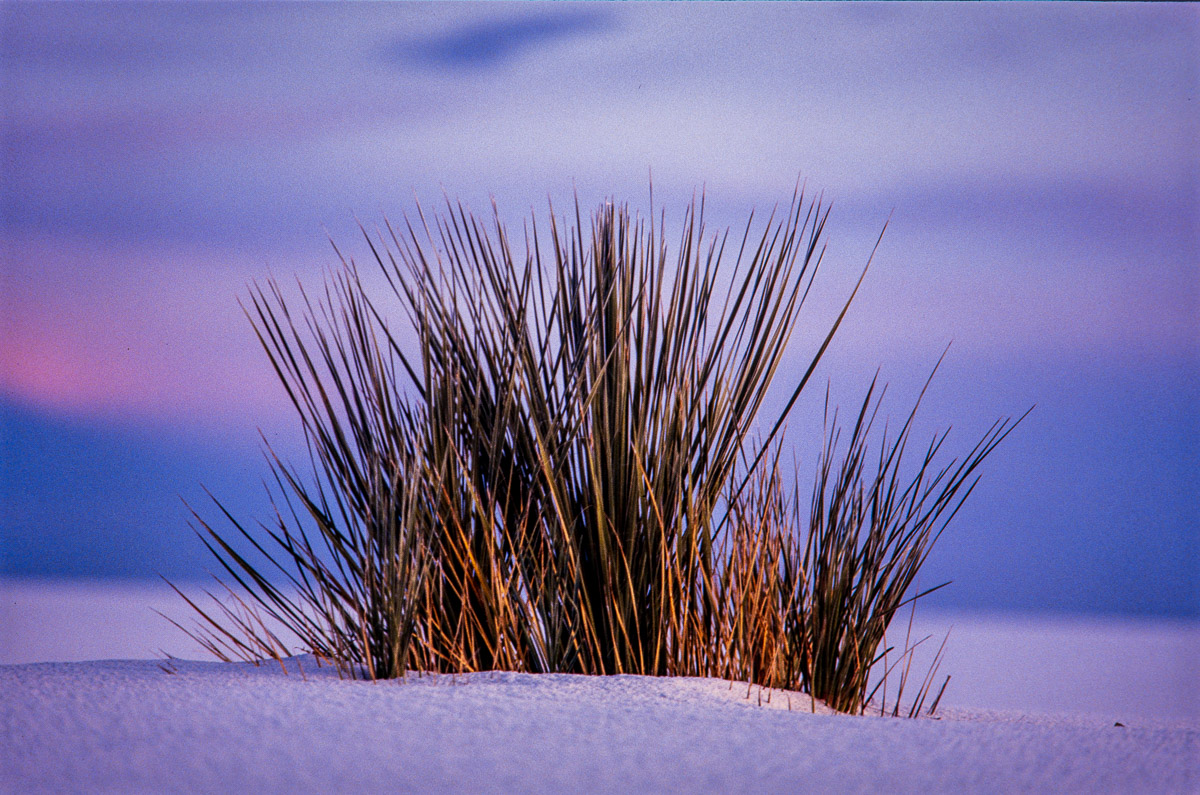
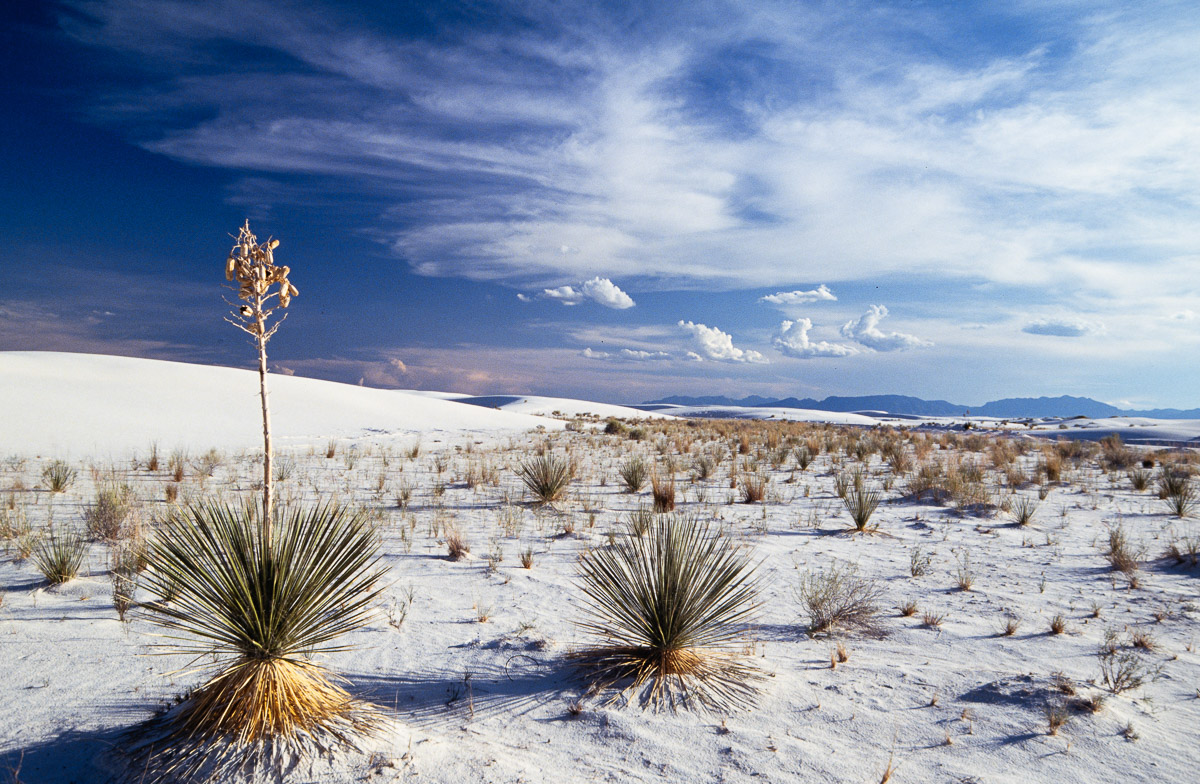
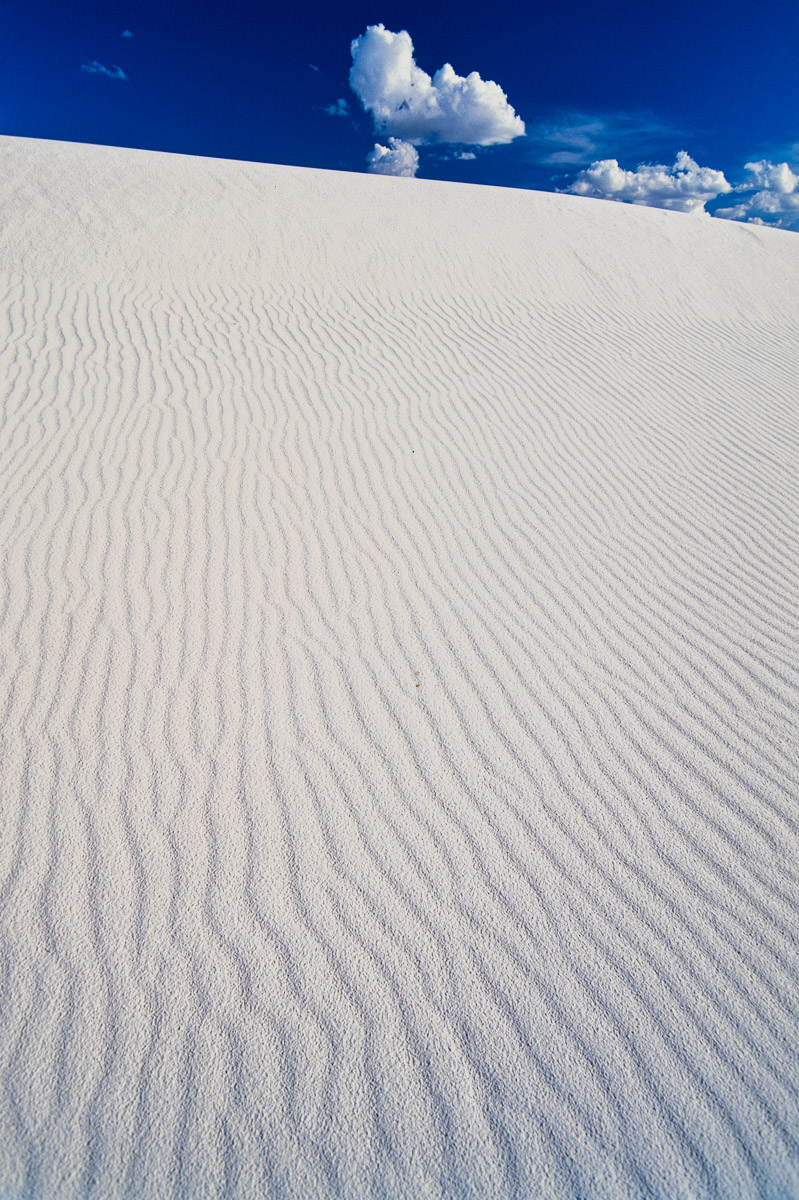
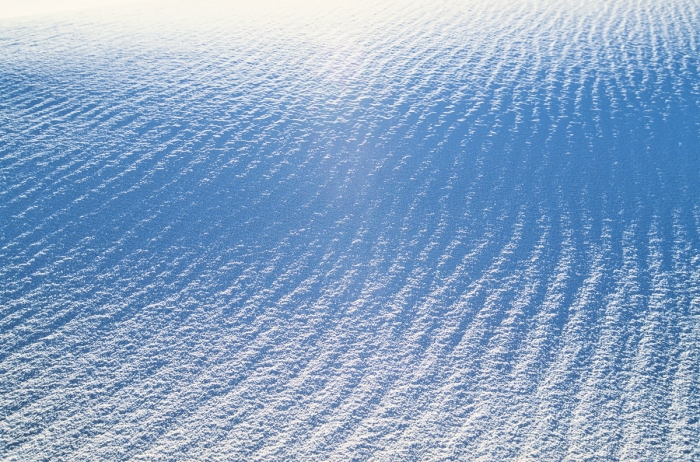
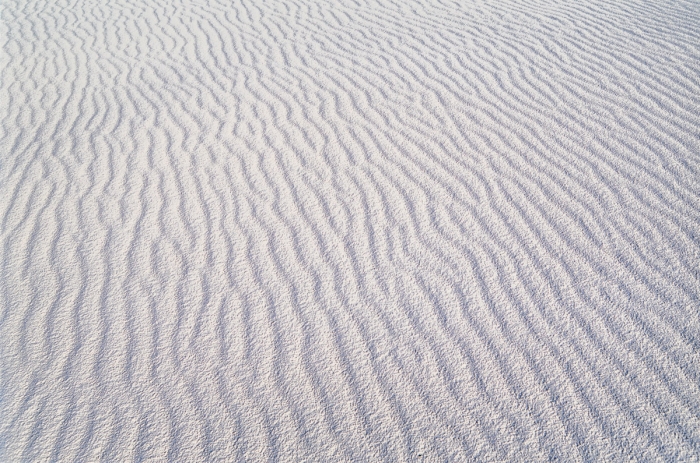
The compositions alternate between expansive views, in which the sky occupies a dominant place, and tighter images focusing on the lines of the dunes, footprints, yuccas and isolated shrubs.
One of the photographs taken at sunset in 1989 is presented in a separate article: White Sands, New Mexico, sunset over the gypsum dunes.
Ripples, footprints and abstract forms
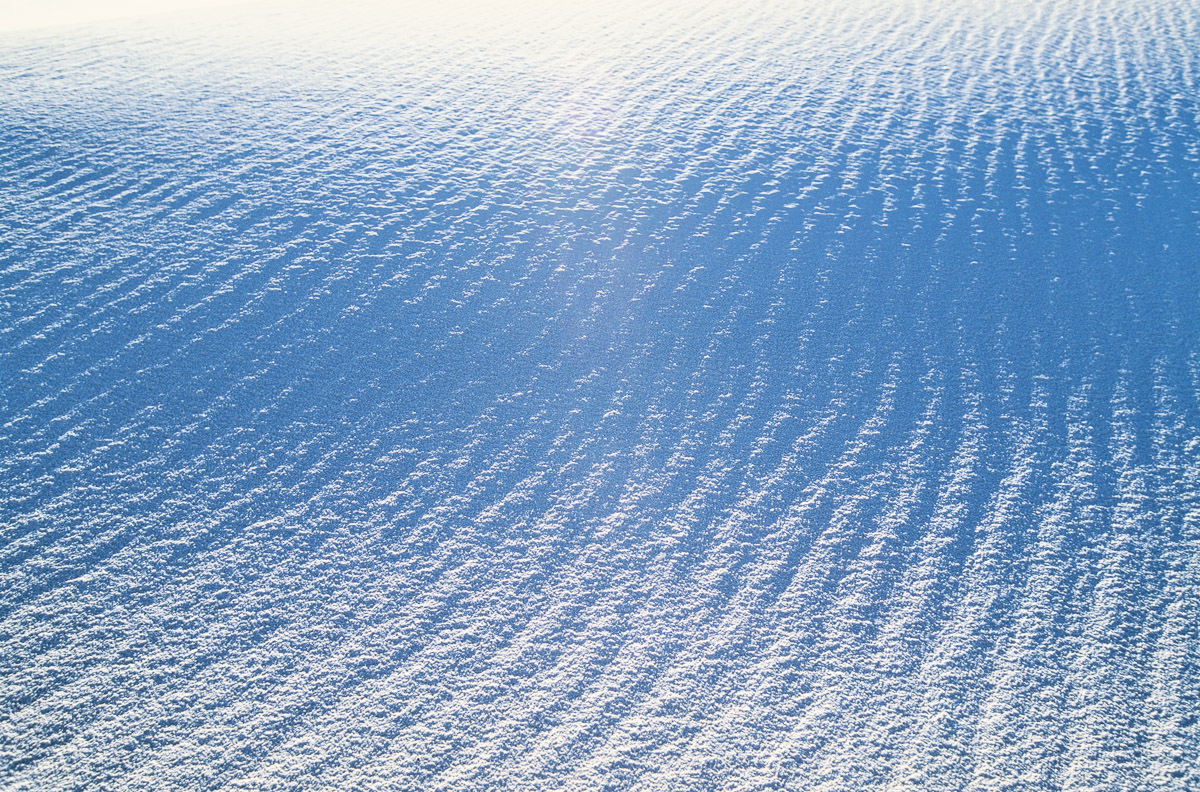
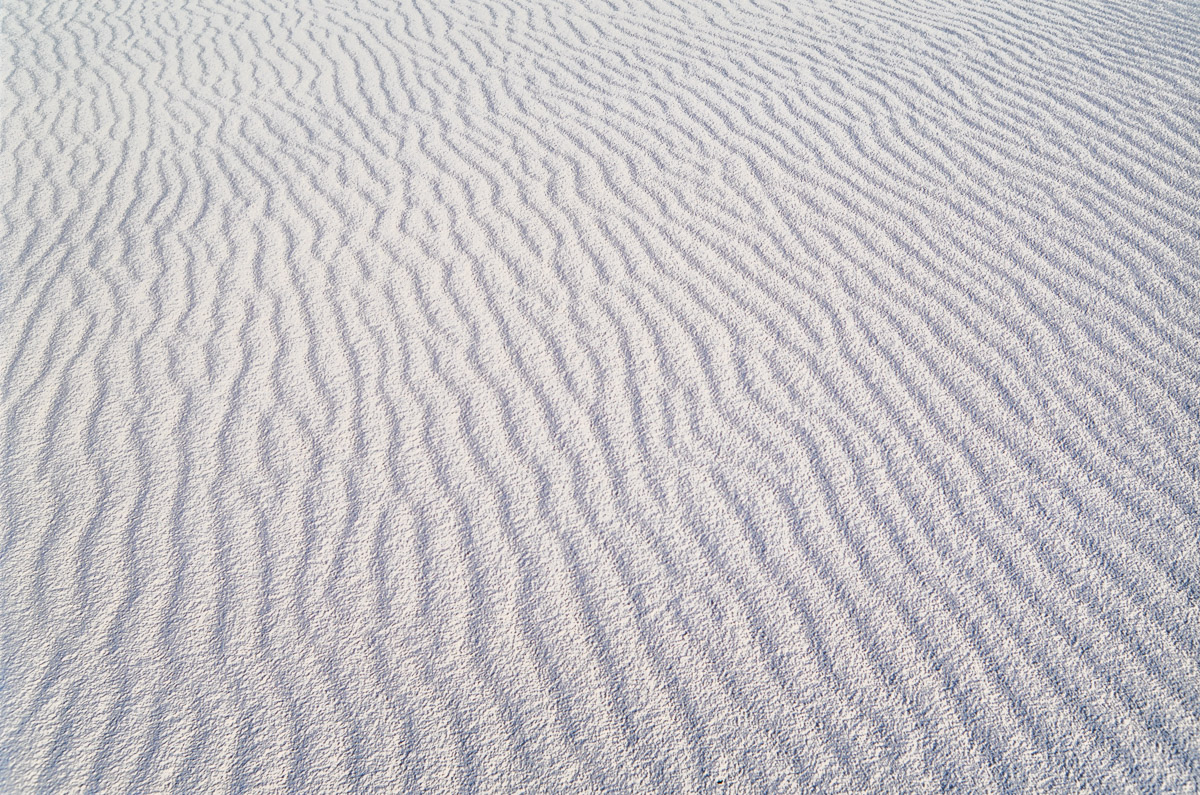
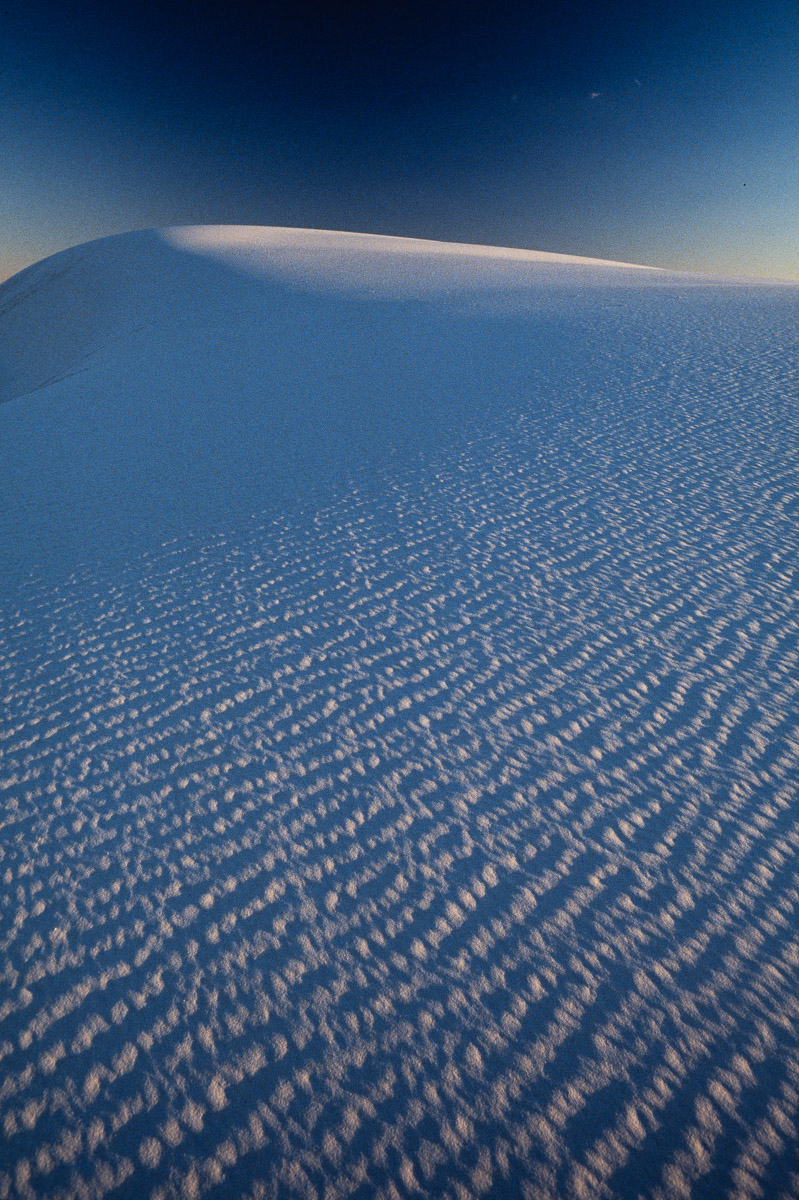
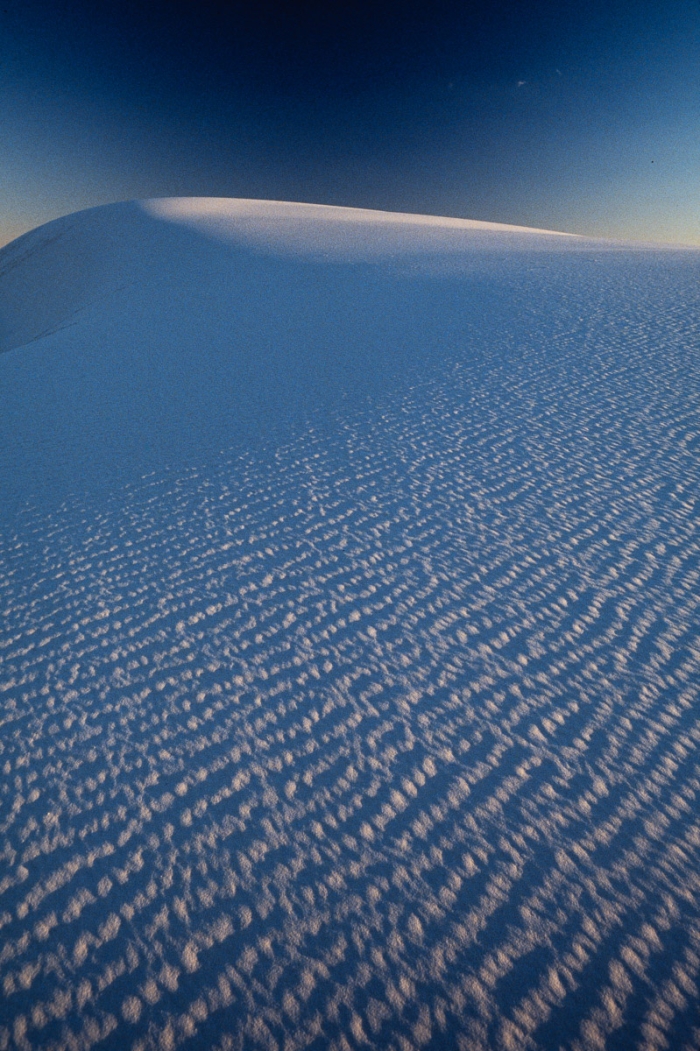
White Sands lends itself to more than expansive landscapes. With a tighter composition, the dunes reveal the regular patterns shaped by the wind. Each ripple catches the light differently: one side remains bright while the other is covered by a bluish shadow. When the frame no longer contains any visual reference with which to judge scale, the landscape becomes almost abstract.
Footprints occasionally interrupt this regularity and suggest a presence outside the frame. Clumps of grass, yuccas and isolated shrubs contrast with the apparent uniformity of the dunes, reminding us that this white desert is also a living environment.
White Sands in Thierry Mugler’s photographic world
White Sands also provided the setting for one of the most memorable advertising campaigns for the Angel fragrance. In 1995, Manfred Thierry Mugler photographed Jerry Hall there, dressed in a pearlescent creation amid the white dunes of New Mexico.
I have great respect for his work as a photographer and for the precision of his compositions. In this campaign, the model, the clothing, the landscape and the light all contribute to a meticulously constructed mise-en-scène. White Sands is more than a simple backdrop: the lines of the dunes extend Jerry Hall’s silhouette and reinforce the dreamlike quality of the image.
This photograph demonstrates how a seemingly sparse landscape can acquire great visual power when the light, viewpoint and position of the body within the frame have been precisely considered.
The cameras and lenses used at White Sands
In 1989, the photographs were taken with a Nikon FM2 and three Nikkor lenses: a 24mm f/2.8 AI-s, a 180mm f/2.8 IF-ED and a 400mm f/3.5 IF-ED. The wide-angle lens gave full prominence to the sky and the expanses of white sand. The longer focal lengths compressed the perspective, isolated a dune ridge or incorporated distant elements into a tighter composition.
In 1993, I used a Canon EOS-1 with a Canon EF 20-35mm f/2.8 L, a Canon EF 80-200mm f/2.8 L and a Canon EF 300mm f/2.8 L, in its original non-stabilized version. This range of focal lengths also allowed me to alternate between very wide views, landscapes structured by successive planes and graphic details of the dunes’ surface.
Exposure was determined using a handheld Minolta Autometer IIIF light meter, independently of the camera’s TTL metering system. Taking a reading directly from the white surface of the dunes could have caused the camera to darken the image excessively. The separate light meter allowed me to preserve the brightness of the landscape and the subtle tones of the sky.
Rediscovering the White Sands photographs
The recent digitization of these archives allowed me to bring together images that had not all been revisited since they were taken. Viewed as a whole, they now form a more complete body of work, combining expansive landscapes, human silhouettes, details of texture and desert vegetation.
Photographed four years apart, these images reveal the diversity of a place that can appear immense or almost abstract depending on the composition, the time of day and the atmospheric conditions.
About the author
Sebastien Desnoulez is a photographer, author and image maker based in Paris. His work spans architectural photography, landscape photography and travel photography, with particular attention to composition, lines, light, blur and visual accidents. Trained in photography in the mid-1980s, he covered Formula 1 and reported from around the world before developing a fine art photography practice built around the tension between graphic rigour and visual instability. He also shares his technical experience through practical articles for passionate photographers, drawing on a strong visual culture acquired in both film and digital photography.
Click on the photographs below to view them full screen.
Fine Art prints
A Fine Art print of the photograph White Sands, sunset over the gypsum dunes, is available in a limited edition. It is numbered, signed and accompanied by a certificate of authenticity. Discover it in the Une image pour rêver Fine Art photography gallery.
All the photographs displayed on this website are copyright protected © Sebastien Desnoulez. No use is permitted without the author’s written authorization.
Legal notice
Tags