

Nikon PC-E Micro NIKKOR 85mm f/2.8D: Test and Review

The Nikon PC-E Micro NIKKOR 85mm f/2.8D combines close-up photography with tilt and shift movements. I bought a used copy in 2015 to control the plane of focus directly at the time of shooting, before also using it for product photography, studio portraits and creative blur effects.
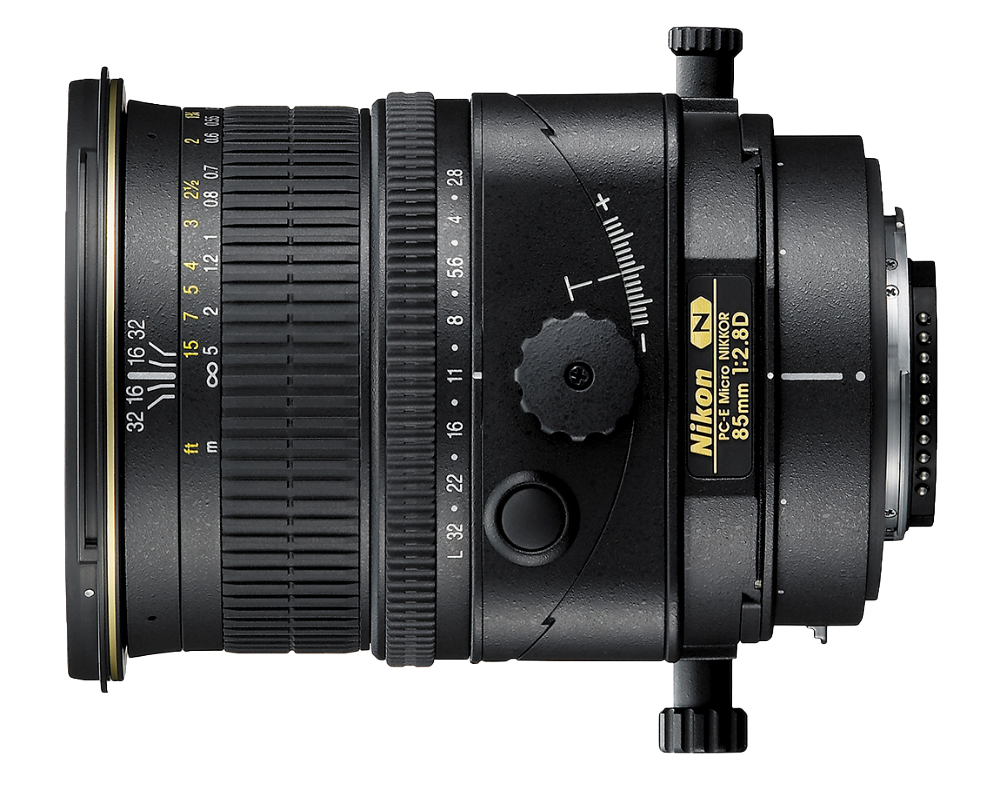 Nikon PC-E Micro NIKKOR 85mm f/2.8D – Nikon document
Overview
Introduced by Nikon in 2008, the PC-E Micro NIKKOR 85mm f/2.8D is a Nikon F-mount lens combining three functions that are usually offered by different types of lenses:
- an 85mm focal length suitable for portraits and product photography;
- close focusing with a maximum reproduction ratio of 1:2, or 0.50×;
- tilt and shift movements that can alter the plane of focus or correct perspective.
The term Micro used by Nikon refers here to a maximum reproduction ratio of 1:2 rather than 1:1. On a 24 × 36mm sensor, a subject measuring approximately 72 × 48mm can therefore fill the entire frame.
The 85mm focal length provides a more comfortable working distance than a shorter macro lens. It also makes it easier to light small objects by leaving more space between the front element, the subject and the light sources.
Why use a tilt lens for macro photography?
In macro photography, depth of field quickly becomes extremely shallow. Stopping down increases the area that appears sharp, but this solution soon reaches its limits when the subject is small, deep or photographed at an angle.
It is possible to stop down to f/22 or f/32, but diffraction progressively reduces contrast and the rendering of the finest details. The Nikon PC-E Micro NIKKOR 85mm f/2.8D offers another solution: rather than relying solely on greater depth of field, its tilt movement allows the plane of focus to be angled so that it more closely follows the main plane of the subject.
This was precisely the function that first interested me in this lens. I wanted to create photographs in which an object viewed in perspective appeared sharp across a larger part of its surface directly at the time of shooting, without systematically having to use focus stacking.
I bought a used copy in 2015.
Construction and handling
The PC-E Micro NIKKOR 85mm f/2.8D is a manual-focus lens. It has neither autofocus nor optical stabilisation. Its construction is based around a relatively complex mechanical assembly, with several knobs and locks used to control the movements.
Handling the lens requires a more methodical approach than using a conventional prime lens:
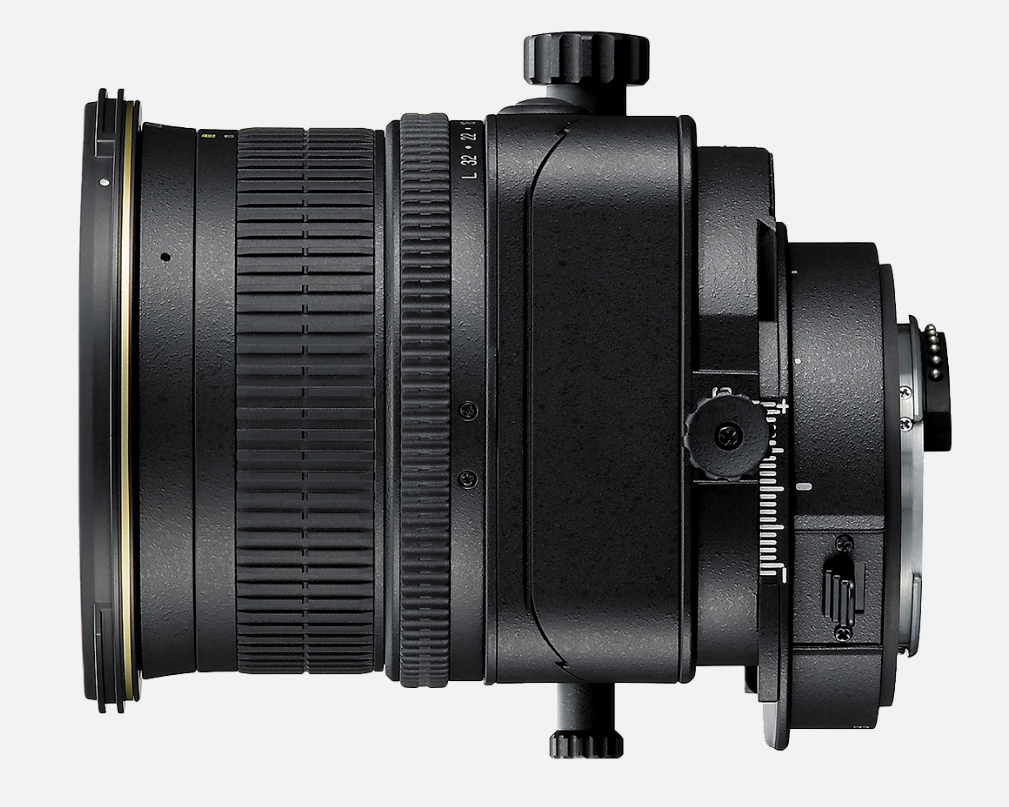
- one knob controls the shift movement;
- a second knob controls the tilt movement;
- two smaller knobs allow the movements to be tightened or locked;
- a lever allows the entire mechanism to rotate around the axis of the mount.
The lens offers ±11.5mm of shift and ±8.5° of tilt. It can rotate by 90° to either the right or the left, with click stops every 30°. In its original configuration, the tilt and shift axes are perpendicular to each other.
At 635g, the lens is not excessively heavy, but its mechanism makes it bulkier and slower to adjust than a conventional 85mm lens. The movements must be returned to their neutral positions before rotating the assembly, otherwise there is a risk of trapping your fingers between the lens and the camera body.
The focusing ring is wide and sufficiently well geared to make precise adjustments on a static subject. A tripod quickly becomes essential when close focusing and the lens movements are used simultaneously.
Tilt and the Scheimpflug principle
Tilt changes the angle between the optical axis of the lens and the sensor plane. This makes it possible to rotate the plane of focus.
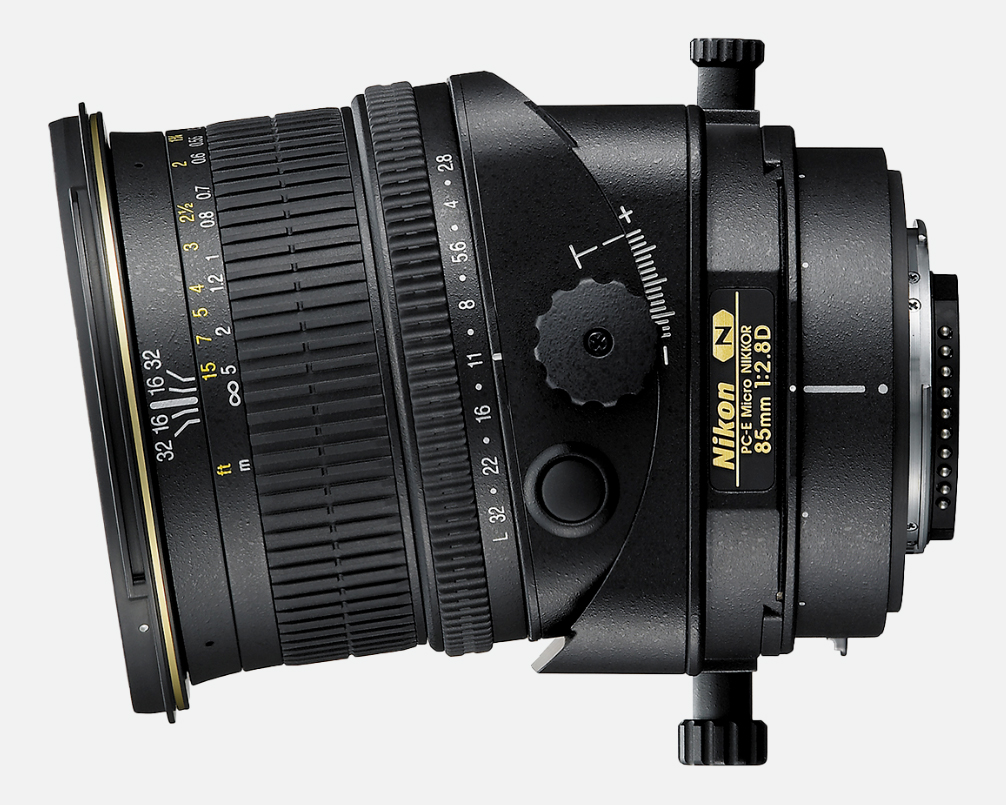 Tilt principle of the Nikon PC-E Micro NIKKOR 85mm f/2.8D – Nikon document
This use is based on the Scheimpflug principle. When extended, the sensor plane, the lens plane and the subject plane should intersect along the same line. By angling the lens correctly, the plane of focus can therefore follow a surface that is not parallel to the sensor.
Tilt does not truly increase depth of field in the optical sense. Instead, it changes its orientation. A limited depth of field still extends on either side of the plane of focus, but that plane can be aligned with the main surface of an object.
For a product placed on a table and photographed from a three-quarter angle, a slight downward tilt can, for example, render both its front and rear sections sharp without having to stop the lens down excessively.
Adjusting the lens requires several successive steps:
- position the camera and compose the image;
- set an initial focus point;
- apply a small amount of tilt;
- refocus;
- check the near and far areas of the subject;
- gradually refine the tilt angle.
Changing the tilt setting almost always requires the focus to be adjusted again. A tripod, magnified Live View and a vibration-free shutter release are therefore particularly useful.
Macro, packshot and product photography
Shortly after buying it, I used this lens to photograph a catalogue for a manufacturer of access-control keypads, switches and electronic components. A temporary studio was set up directly on the company’s premises.
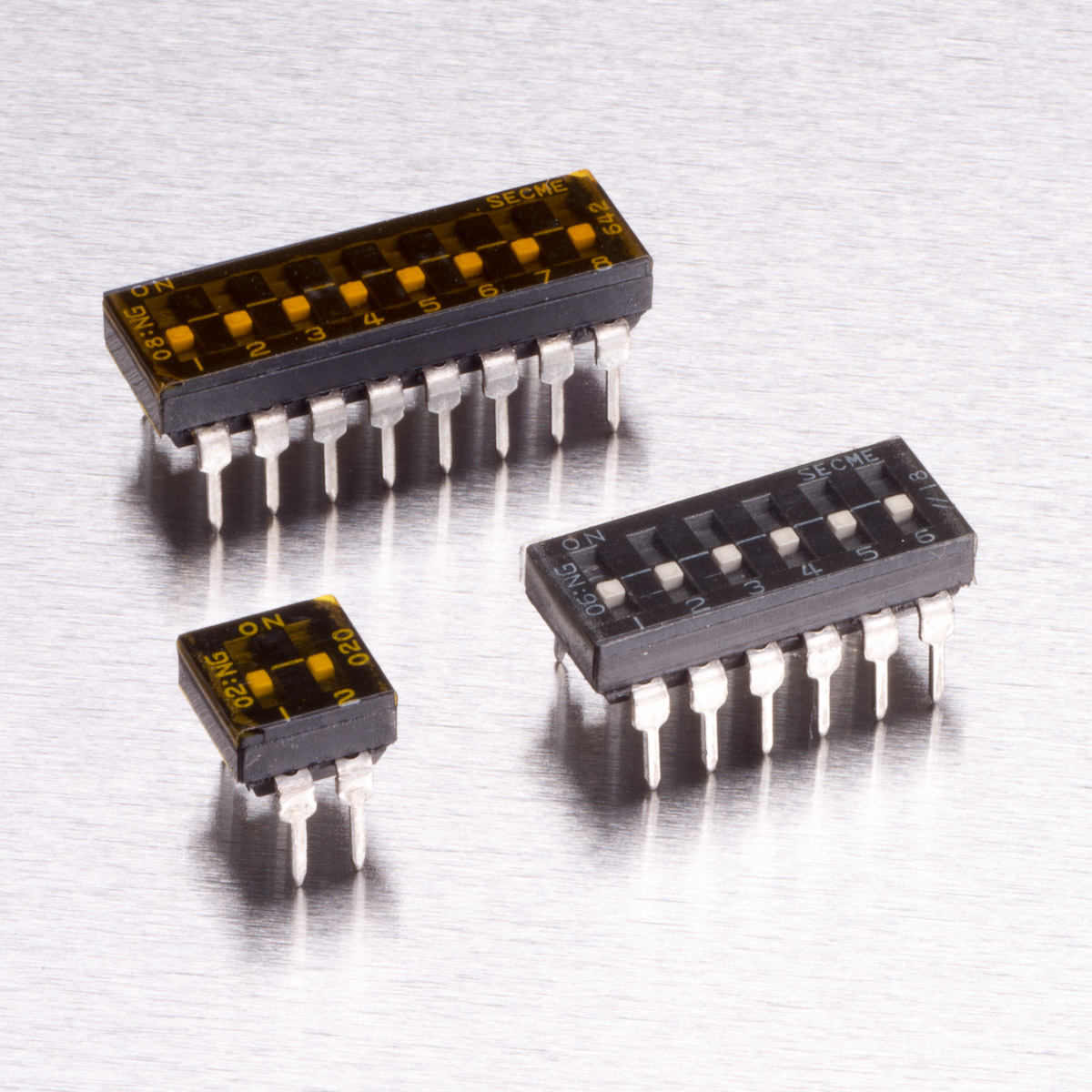 Electronic components photographed with the Nikon PC-E Micro NIKKOR 85mm f/2.8D – Photo: © Sebastien Desnoulez
The 85mm focal length was well suited to this type of work. It allowed me to frame small objects precisely while leaving enough room to position the lighting. Tilt helped distribute sharpness across components photographed in perspective, particularly when their contacts, switches or markings were located on different planes.
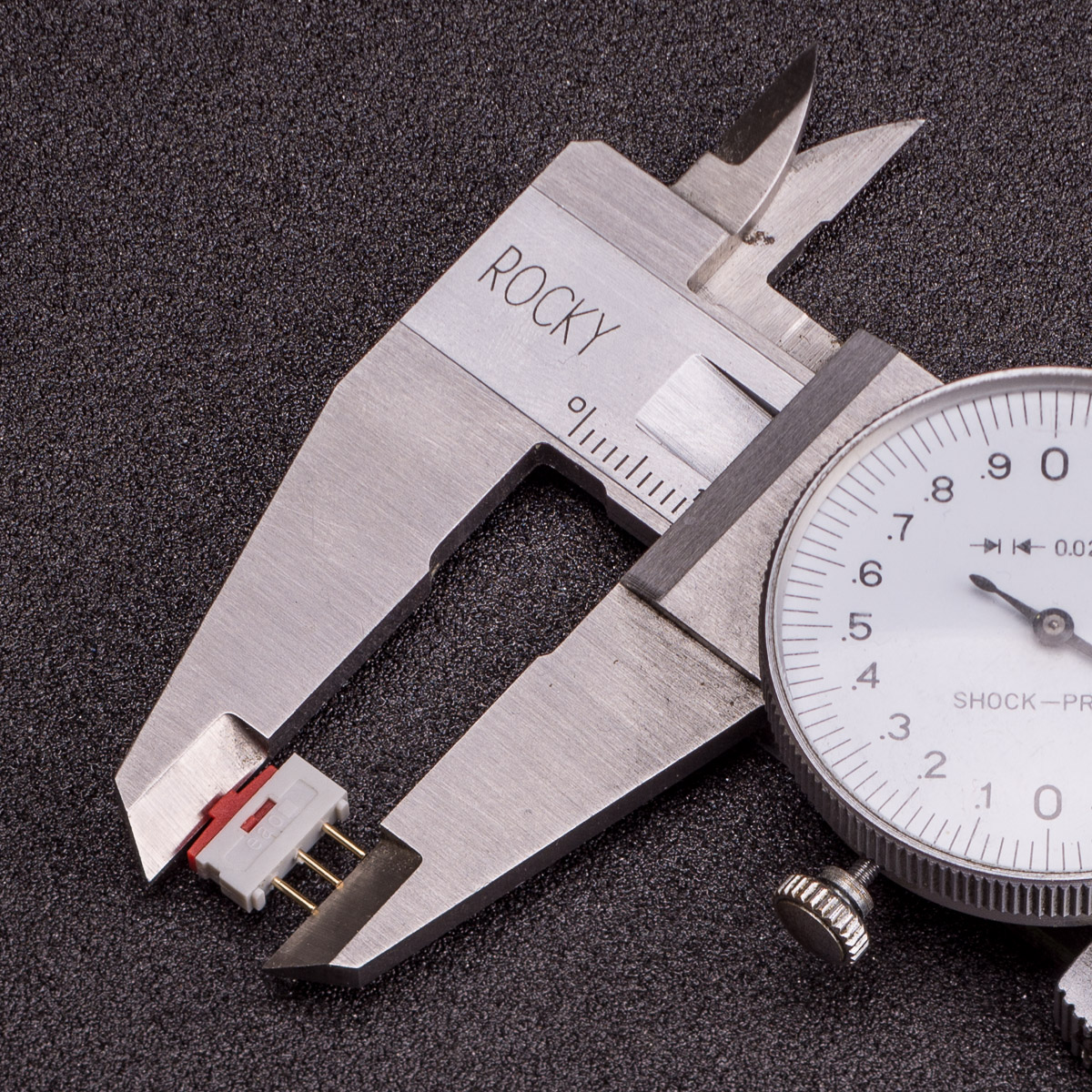 Electronic switches photographed in the studio with the Nikon PC-E Micro NIKKOR 85mm f/2.8D – Photo: © Sebastien Desnoulez
The maximum reproduction ratio of 1:2 was sufficient for most of these products. It allowed small components to be photographed without encountering all the additional constraints of 1:1 reproduction, particularly in terms of depth of field, lighting and camera shake.
 Access-control keypad photographed for an electronic product catalogue – Photo: © Sebastien Desnoulez
For this type of photography, the lens delivers a particularly coherent result: natural perspective, excellent detail reproduction, no autofocus to alter the focus position unintentionally and precise control over the plane of focus.
These photographs are almost straight out of the camera: the RAW files were simply processed and then cropped to a square format. Because the lighting had been constructed and balanced before the shutter was released, no local retouching, cut-outs or lighting corrections were required. This is one of the habits inherited from my training in film photography, particularly from working with slide film, where exposure, lighting and framing had to be correct at the time of shooting.
Tilt cannot, however, completely replace focus stacking. When a subject contains several important volumes positioned on very different planes, no single plane of focus can render every part perfectly sharp. Combining several photographs focused at different distances remains more effective in such situations.
Shift and perspective correction
Shift moves the lens parallel to the sensor without changing the orientation of the camera body.
 Shift principle of the Nikon PC-E Micro NIKKOR 85mm f/2.8D – Nikon document
In architectural photography, this function allows the sensor to remain vertical while the framing is moved upwards. It avoids tilting the camera and producing converging vertical lines, as explained in my article Architectural photography: why use a shift lens?
In practice, an 85mm focal length is rarely the most suitable choice for photographing an entire building. A considerable amount of working distance is required, which is statistically much less common than when using a Canon TS-E 17mm f/4L, a 19mm or a 24mm lens.
The 85mm shift movement can nevertheless be useful for photographing an architectural detail, a façade from an opposite building or an object whose position within the frame needs to be adjusted without changing the orientation of the sensor.
 La Défense – Close focusing with the Grande Arche in the background – Photo: © Sebastien Desnoulez
In product photography, shift can also be used to refine a composition without moving the tripod or to prevent the camera’s reflection from appearing directly in a glossy surface.
Image quality, bokeh and flare resistance
Sharpness and contrast
The Nikon PC-E Micro NIKKOR 85mm f/2.8D immediately impressed me with its resolving power. Small lettering, metallic surfaces and the fine details of electronic components were reproduced with great precision.
Its optical quality was not limited to macro photography. Used without tilt or shift, it behaved like an excellent manual-focus 85mm lens. It produced contrasty, detailed images at wide apertures, with good uniformity when stopped down slightly.
When a large amount of shift is applied, the edges of the image use a more peripheral area of the lens’s image circle. Stopping down is therefore advisable to improve uniformity and maintain consistent rendering into the corners.
Nano Crystal Coat and backlighting
The letter N on the lens plate indicates the presence of Nikon’s Nano Crystal Coat. This coating helps reduce internal reflections, ghosting and the loss of contrast caused by light sources positioned within or close to the frame.
 Bokeh and flare resistance of the Nikon PC-E Micro NIKKOR 85mm f/2.8D – Photo: © Sebastien Desnoulez
This resistance to flare was particularly useful in the studio when light sources were illuminating shiny or transparent objects directly. The nine rounded diaphragm blades also helped produce smooth and pleasant out-of-focus areas.
 Product photography and the management of light sources with the Nikon PC-E Micro NIKKOR 85mm f/2.8D – Photo: © Sebastien Desnoulez
Using the lens for portraits
I also used this lens during studio portrait sessions. Its sharpness, contrast and the natural rendering of the 85mm focal length sometimes led me to choose it instead of my Nikon AF-S Zoom-Nikkor 80-200mm f/2.8D IF-ED.
 Studio portrait photographed with the Nikon PC-E Micro NIKKOR 85mm f/2.8D – Photo: © Sebastien Desnoulez
These sessions were lit with Profoto flash heads powered by a Pro-7b generator. Given the power of the flashes, I generally worked between f/5.6 and f/8. The background was positioned far enough behind the model to remain blurred despite these apertures, so there was no need to shoot at f/2.8.
The focal length and perspective remained well suited to tight portraits and half-length compositions. At these apertures, the lens produced highly detailed results without becoming unnaturally harsh when the lighting was correctly adjusted.
Manual focusing was nevertheless a genuine constraint. Under the relatively dim light produced by the modelling lamps, it was not always easy to assess precise focus on the eyes. The subject also had to remain sufficiently still between focusing and releasing the shutter.
For a more dynamic session, the autofocus 80-200mm remained more practical. The PC-E 85mm was better suited to carefully lit, posed portraits.
Creative use of tilt
Outside product and portrait photography, I mainly used this lens in Tilt mode to reduce the area of apparent sharpness deliberately.
By tilting the plane of focus in the opposite direction to that used to extend sharpness, it is possible to keep only a narrow band of the image in focus. The remaining areas quickly become blurred.
 La Défense – Miniature effect created by tilting the plane of focus – Photo: © Sebastien Desnoulez
When a photograph is taken from an elevated viewpoint, this effect can make an urban scene look like a scale model. The result is produced by the contrast between a sharp central area and heavily blurred foreground and background areas.
 La Villette – Creative use of tilt on an installation of chairs – Photo: © Sebastien Desnoulez
Tilt can also isolate an element within a complex scene without necessarily creating a miniature effect. Depending on the rotation of the lens and the orientation of the movement, the sharp area can be vertical, horizontal or diagonal.
 Versailles – Using tilt to concentrate sharpness on the fountain – Photo: © Sebastien Desnoulez
For a purely creative approach, however, I preferred freelensing. By completely detaching the lens from the mount, this technique allows for greater angles and movements, at the cost of less controlled handling and additional risks for the sensor. The PC-E 85mm remains more precise and repeatable, but its effects are also more restricted.
Limitations and why I sold it
The Nikon PC-E Micro NIKKOR 85mm f/2.8D is a highly specialised lens. Its main strengths also become its main limitations as soon as the shooting process needs to be fast or the lens is used outside its preferred applications.
- Manual focusing: precise on a tripod, but less practical for portraits or moving subjects.
- Relatively slow adjustments: every change to the tilt setting requires the focus to be checked again.
- Limited use of shift at 85mm: the focal length often requires too much working distance to photograph an entire building.
- Maximum reproduction ratio of 1:2: sufficient for product photography, but too limited for certain extreme close-ups.
I remember buying Kenko extension tubes that maintained electronic communication between the lens and camera in order to exceed a 1:1 reproduction ratio. When used with the PC-E 85mm, however, they produced vignetting at the highest magnifications.
As I wanted, among other things, to photograph flower pistils at very high magnification, this limitation also contributed to my decision to sell the lens.
By the time my product photography work began to decrease, the lens had already become much less essential. Its main remaining use was a handful of creative tilt experiments, for which freelensing gave me greater freedom.
Technical specifications
| Mount | Nikon F |
| Format | FX / 24 × 36mm |
| Focal length | 85mm |
| Maximum aperture | f/2.8 |
| Minimum aperture | f/32 |
| Optical construction | 6 elements in 5 groups, with Nano Crystal Coat |
| Angle of view in FX format | 28°30’ |
| Maximum angle of view with shift | 37°50’ |
| Focusing | Manual |
| Minimum focusing distance | 0.39m from the focal plane |
| Maximum reproduction ratio | 1:2, or 0.50× |
| Diaphragm blades | 9, rounded |
| Maximum shift | ±11.5mm |
| Maximum tilt | ±8.5° |
| Rotation | ±90°, with click stops every 30° |
| Movement configuration | Tilt and shift perpendicular in the original configuration |
| Stabilisation | No |
| Filter diameter | 77mm |
| Lens hood | Nikon HB-22 |
| Dimensions | Approximately 83.5 × 107mm |
| Weight | Approximately 635g |
MTF curves and optical construction
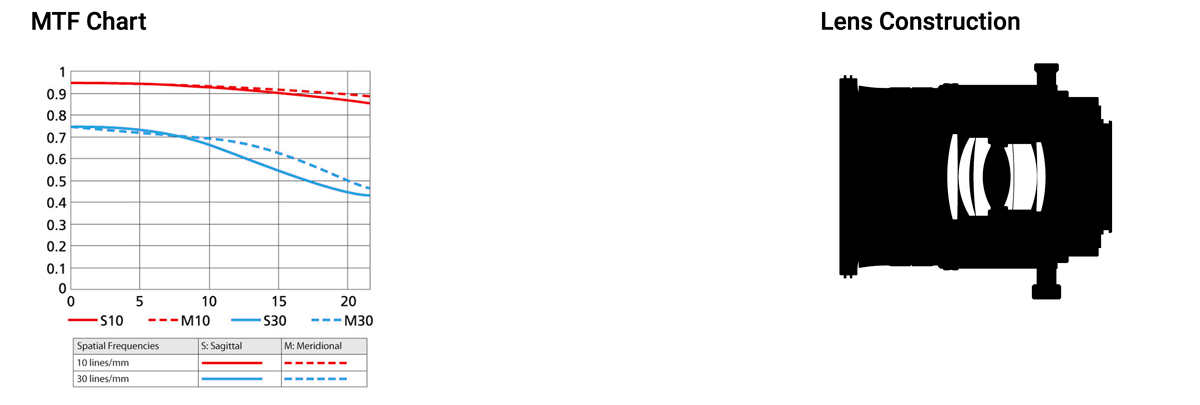 MTF curves and optical construction of the Nikon PC-E Micro NIKKOR 85mm f/2.8D – Nikon document
The optical design of the Nikon PC-E Micro NIKKOR 85mm f/2.8D consists of six elements arranged in five groups. Nikon’s published MTF curves show very high contrast at 10 lines per millimetre, with the sagittal and meridional curves remaining close across the image field. At 30 lines per millimetre, resolution remains high in the centre before progressively decreasing towards the edges, with a greater decline in the sagittal direction. This reduction is consistent with the lens’s specialised design, as its image circle must be large enough to accommodate tilt and shift movements. In centred use, particularly for portraits or product photography, the sensor mainly uses the highest-performing part of the image circle, while a large amount of shift makes greater use of its peripheral areas.
Conclusion and review
The Nikon PC-E Micro NIKKOR 85mm f/2.8D is a specialised lens that is particularly well suited to product photography, packshots and close-up work carried out on a tripod.
Its main strength lies in its ability to orient the plane of focus directly at the time of shooting. Its sharpness, Nano Crystal Coat and the natural perspective of its focal length also make it an excellent lens for posed portraits.
Manual focusing, slow adjustments, a maximum reproduction ratio limited to 1:2 and the relatively occasional usefulness of shift at this focal length nevertheless reduce its versatility. For a photographer who regularly produces catalogues, still lifes or photographs of technical objects, it remains a very interesting tool. For more occasional use, an autofocus macro lens will often be easier to operate.
My review is based exclusively on using this lens with full-frame Nikon DSLRs, mainly the Nikon D610 and D800. I have never used it on a Nikon Z mirrorless camera with an FTZ adapter and therefore cannot offer a practical opinion on its handling or performance in that configuration.
I remember it as an optically excellent and technically fascinating lens, but its usefulness depends closely on the subjects being photographed and on how frequently its movements are genuinely required.
FAQ
Is the Nikon PC-E Micro NIKKOR 85mm f/2.8D a true macro lens?
It offers close focusing with a maximum reproduction ratio of 1:2, or 0.50×. It therefore does not reproduce the subject at life size on the sensor like a 1:1 macro lens, but its magnification is sufficient for many products, electronic components and still-life subjects.
Does tilt increase depth of field?
It mainly changes the orientation of the plane of focus. By applying the Scheimpflug principle, this plane can be aligned with a surface that is not parallel to the sensor. The subject can therefore appear sharp across a greater depth without stopping the lens down excessively.
Is the Nikon PC-E Micro NIKKOR 85mm f/2.8D suitable for portraits?
Yes. Its 85mm focal length and excellent sharpness are very well suited to posed studio portraits. During my sessions with Profoto flashes, I generally used it between f/5.6 and f/8. Manual focusing nevertheless makes it less practical than an autofocus lens when the subject moves or when the modelling lights are dim.
Can the shift movement of the PC-E 85mm be used for architectural photography?
Yes, but the 85mm focal length generally requires a considerable amount of working distance. It is better suited to architectural details, façades photographed from a distance and tightly framed compositions than to general views of an entire building. For the latter, a 17mm, 19mm or 24mm shift lens is usually more appropriate.
Can the Nikon PC-E Micro NIKKOR 85mm f/2.8D replace focus stacking?
Not in every situation. Tilt can align the plane of focus with the main surface of a subject. When several important elements are located on very different planes, combining several photographs focused at different distances remains more effective.
All the photos displayed on this website are copyright protected © Sebastien Desnoulez. No use is permitted without the author’s written permission. Legal notice
Read also: discover a selection of my main articles in the photography gear guide: lenses, field tests and photographic workflow.
About the author
Sebastien Desnoulez is a photographer, author and image maker based in Paris. His work spans architectural photography, landscape photography and travel photography, with particular attention to composition, lines, light, blur and visual accidents. Trained in photography in the mid-1980s, he covered Formula 1 and reported from around the world before developing a fine art photography practice built around the tension between graphic rigour and visual instability. He also shares his technical experience through practical articles for passionate photographers, drawing on a strong visual culture acquired in both film and digital photography.
Tags