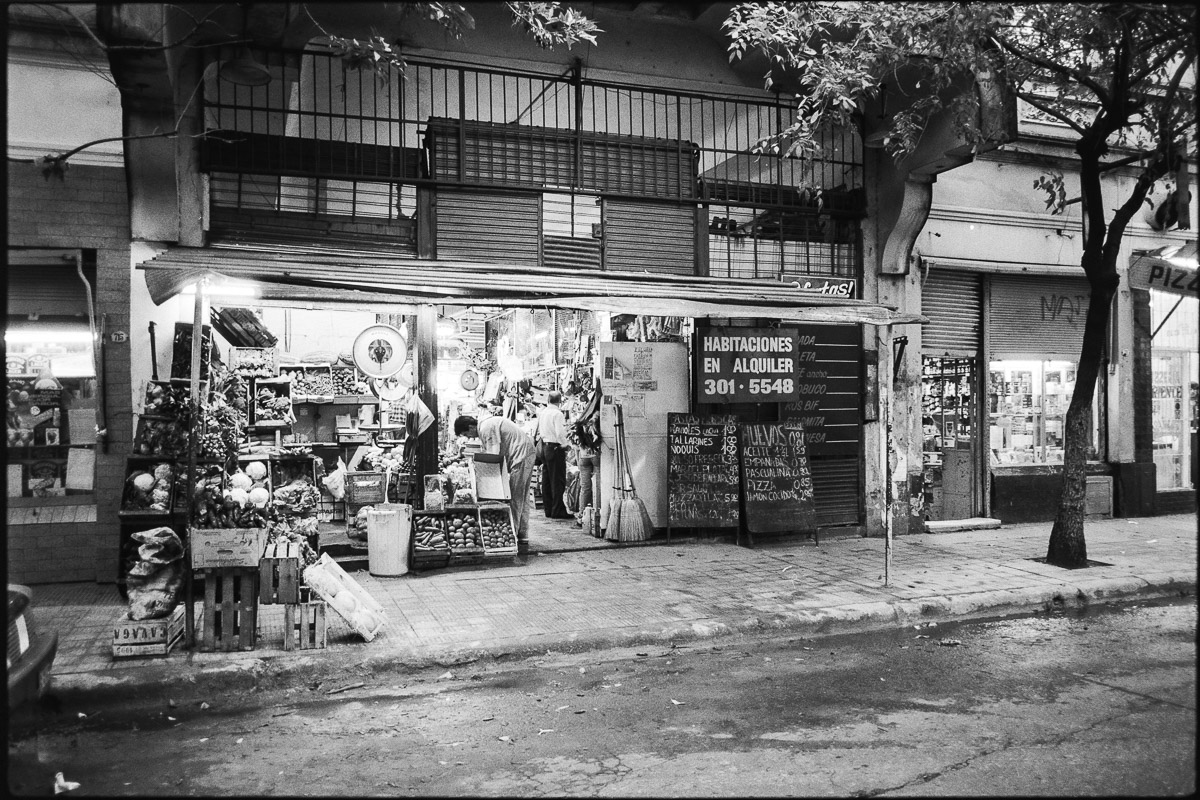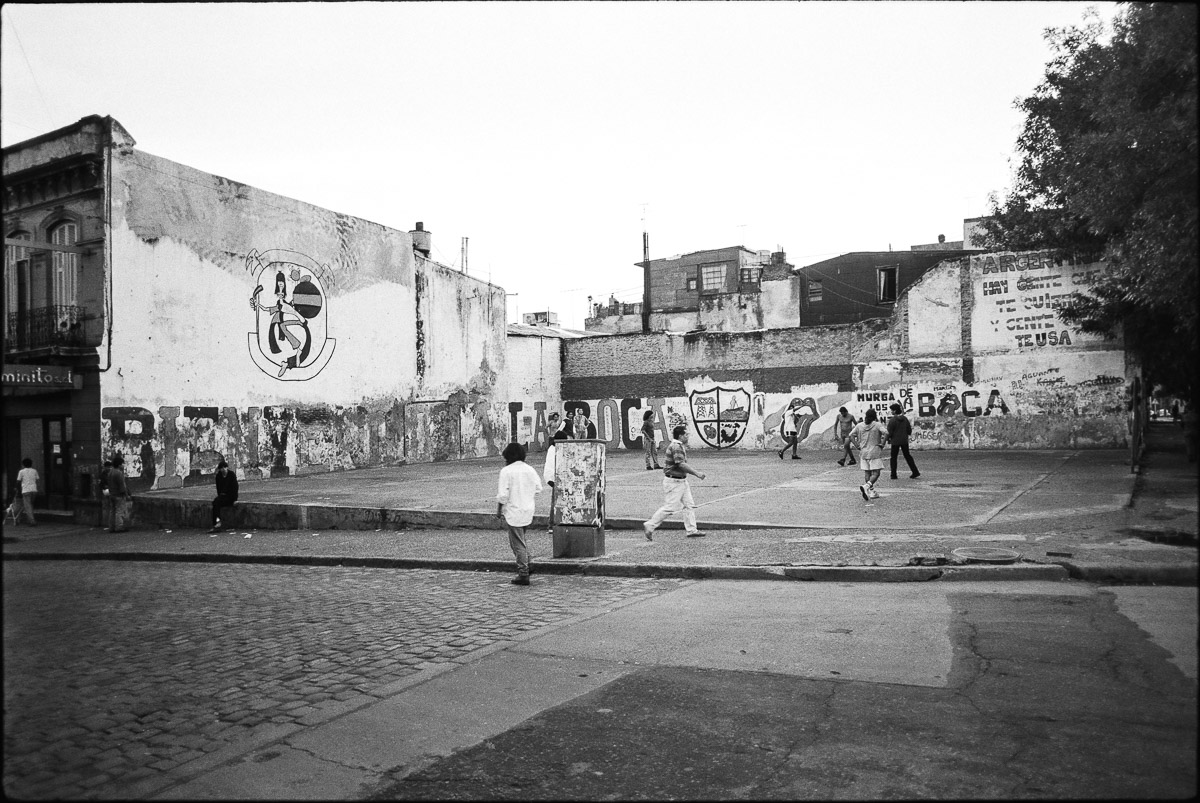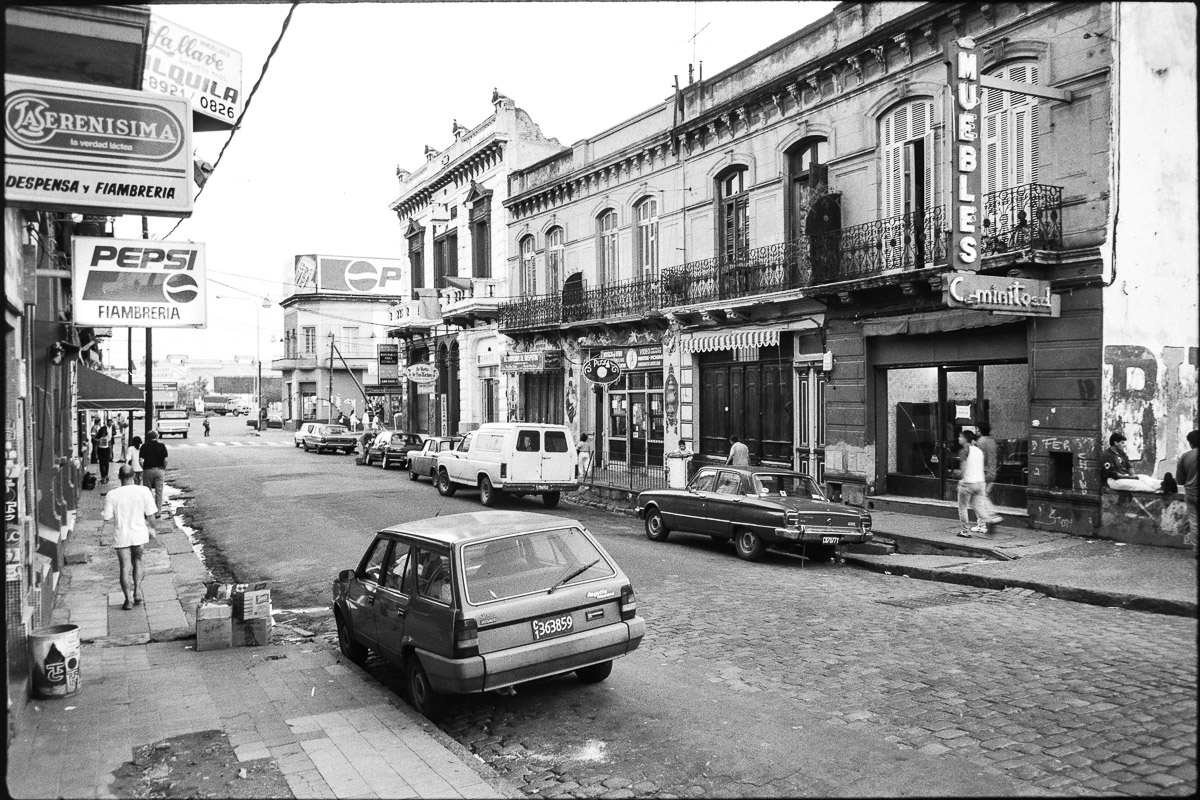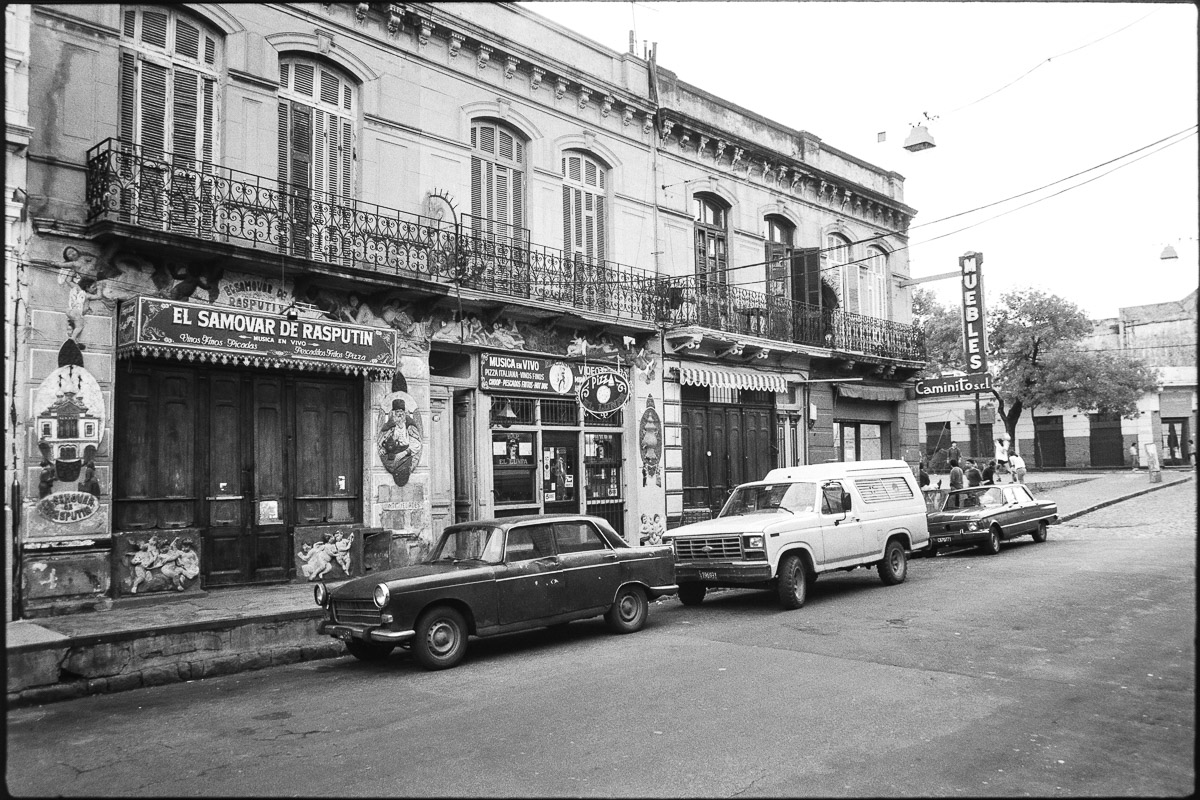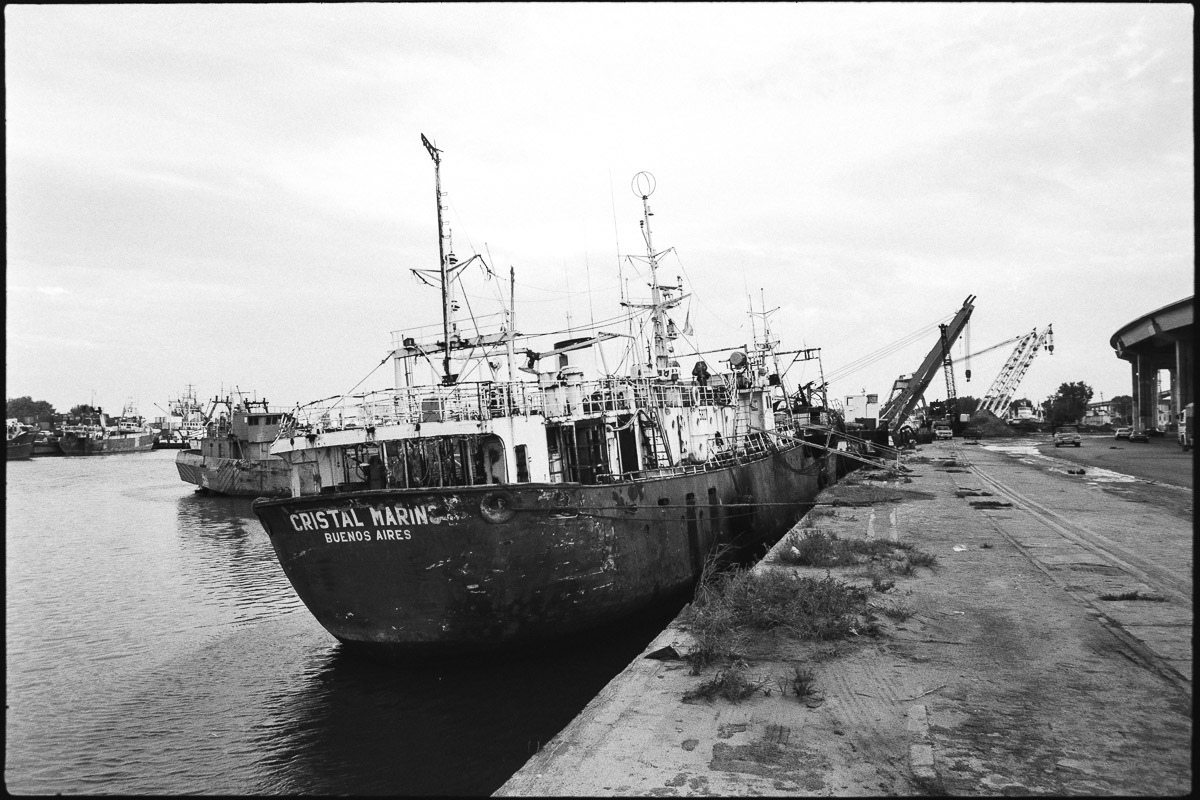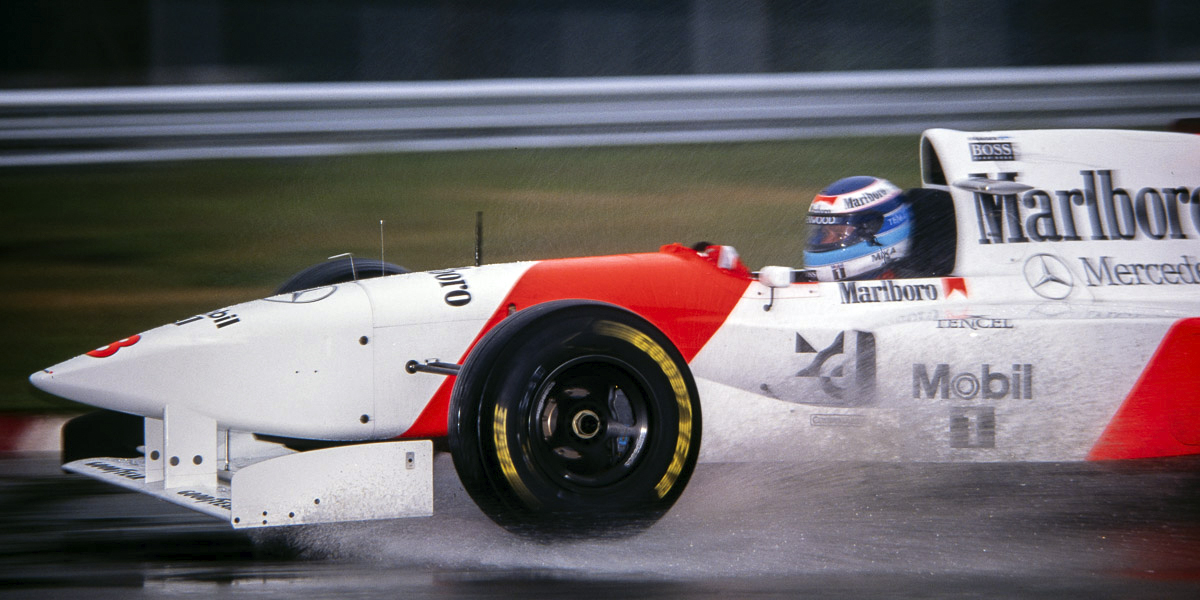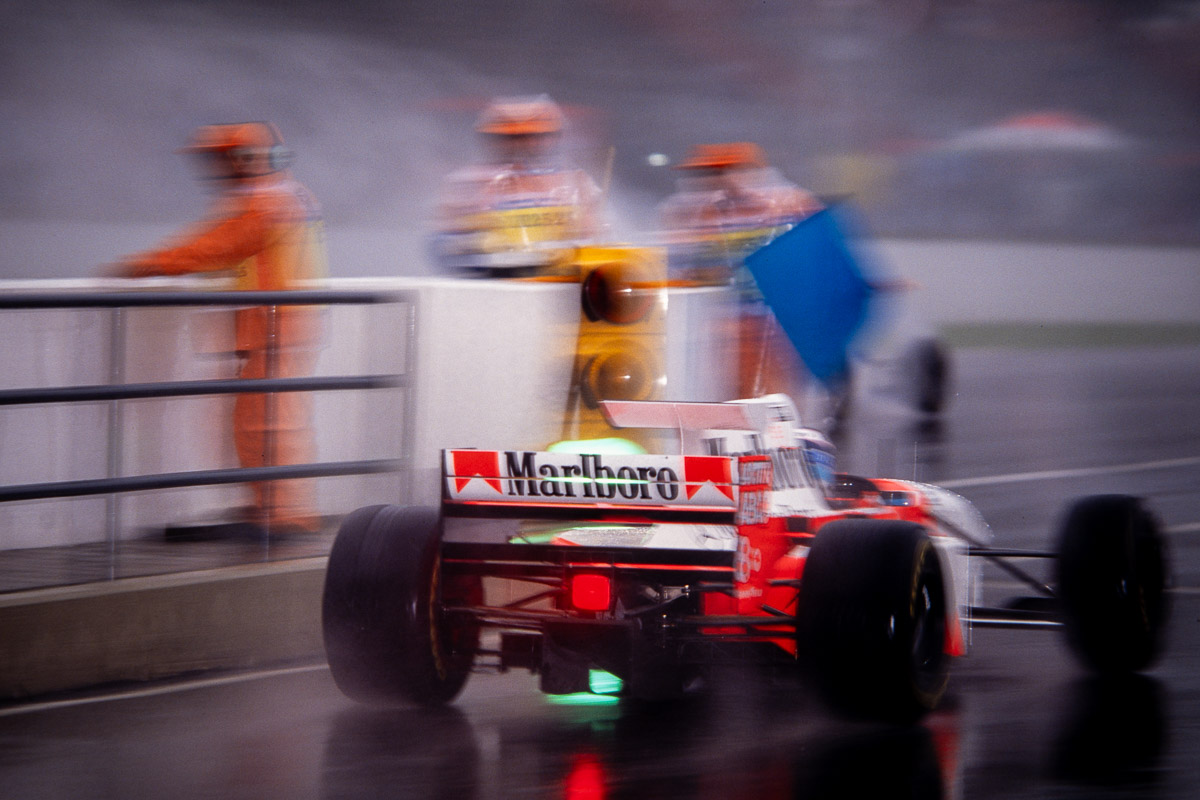


Buenos Aires in 1995 with a Leica M6, during the Argentine Grand Prix

In April 1995, I travelled to Buenos Aires to cover the return of the Formula 1 Argentine Grand Prix for the DPPI agency. Between two working days at the circuit, I photographed the city with a Leica M6 and an Elmarit-M 28mm f/2.8 that I had just bought in the United States. These few rolls of film are both a record of Buenos Aires more than thirty years ago and a reminder of my brief experience with a camera that, despite its qualities, ultimately did not suit the way I photograph.
From Phoenix to Buenos Aires
At the beginning of April 1995, DPPI had sent me to cover two successive races on the American continent.
The first was the IndyCar race in Phoenix, Arizona, held on Sunday April 2. One week later, on April 9, Formula 1 returned to Argentina after a fourteen-year absence.
I flew back from the United States on Tuesday morning and went straight to the agency to drop off the Phoenix films for processing. I then went home to completely repack my bag, moving from a desert environment that was beginning to warm up with spring in Arizona to the much cooler and wetter southern-hemisphere autumn in Buenos Aires. I left again for Argentina late that afternoon.
I could probably have found a route from the United States to Buenos Aires without returning to France, but in 1995 physically delivering the films to the agency was unavoidable. Digital photography was not yet part of our daily work, and the photographs from the Phoenix race had to return to Paris with the photographer.
That brief stopover had another consequence: I had not had time to process even a single test roll from the Leica M6 I had just bought.
A Leica M6 bought in Phoenix
During my stay in Arizona, I had bought by mail order a Leica M6 with an Elmarit-M 28mm f/2.8 III, reference 11804.
The set had cost me around $2,500, equivalent to approximately 12,500 FF at the time.
It was already no longer the latest version of Leica's 28mm. The more compact version IV had just replaced it. Mine belonged to the previous generation, relatively long and fitted with a substantial lens hood.
At the time, I mainly worked with Canon EOS-1 cameras. I had also used a Nikon 24mm extensively in previous years and was then regularly using the Canon 20-35mm f/2.8 zoom. The 28mm was therefore already something of a compromise compared with the very wide focal lengths I was accustomed to.
The M6 was not intended to replace my Canons. I was looking for a compact, discreet and lightweight personal camera that I could carry alongside my professional equipment.
Buenos Aires would be its first real test.
Three DPPI photographers at the Argentine Grand Prix
There were three DPPI photographers in Buenos Aires: Gilles Levent, François Baudin and myself.
We naturally covered the Grand Prix for the international press, but a significant part of our work concerned the agency's commercial clients: Renault, Peugeot Sport, Total and Rothmans, the main sponsor of Williams-Renault.
When Ayrton Senna joined Williams in 1994, Rothmans had established a substantial media operation. The company worked in particular with DPPI, a British agency, a video team and a Reuters journalist.
We arrived in Buenos Aires on Wednesday. Between the promotional operations organised before the start of the race weekend, we still had some time to discover the city.
A few hours in Buenos Aires
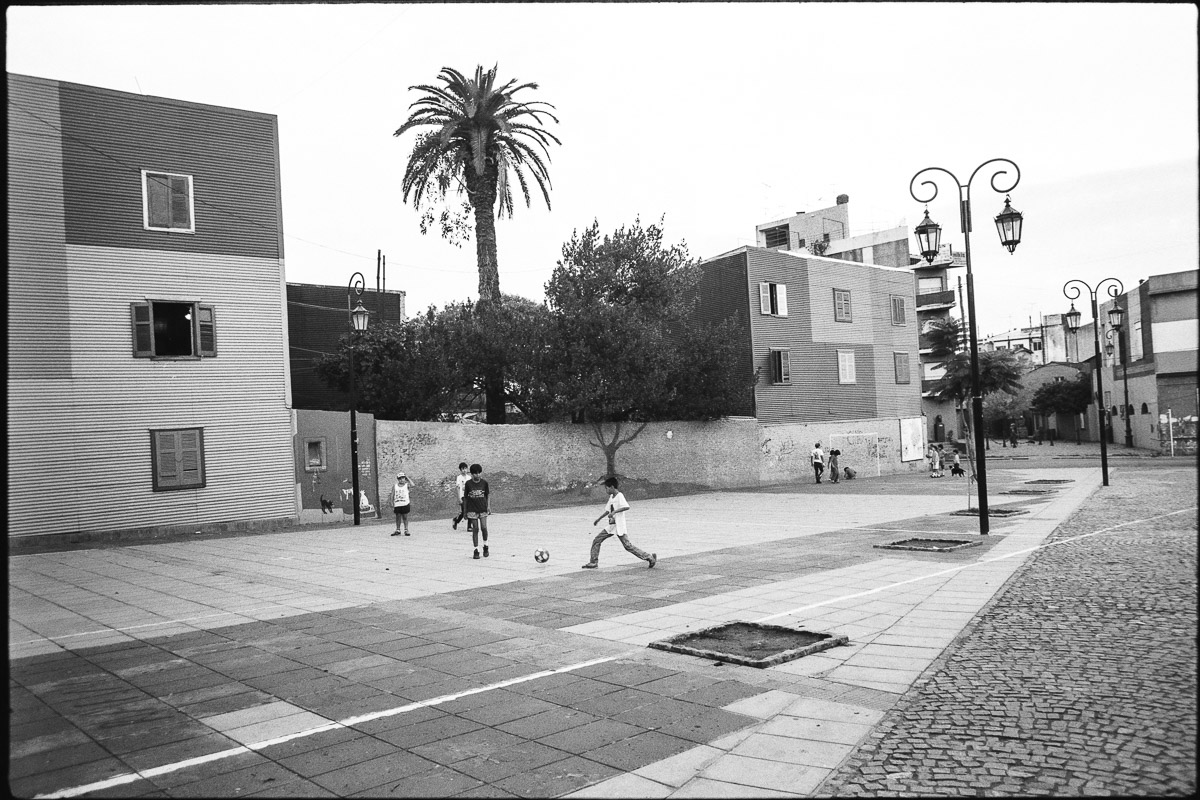
François Baudin knew Argentina well, having travelled there several times for the Rally Argentina. He took me to several places in Buenos Aires, including La Boca.
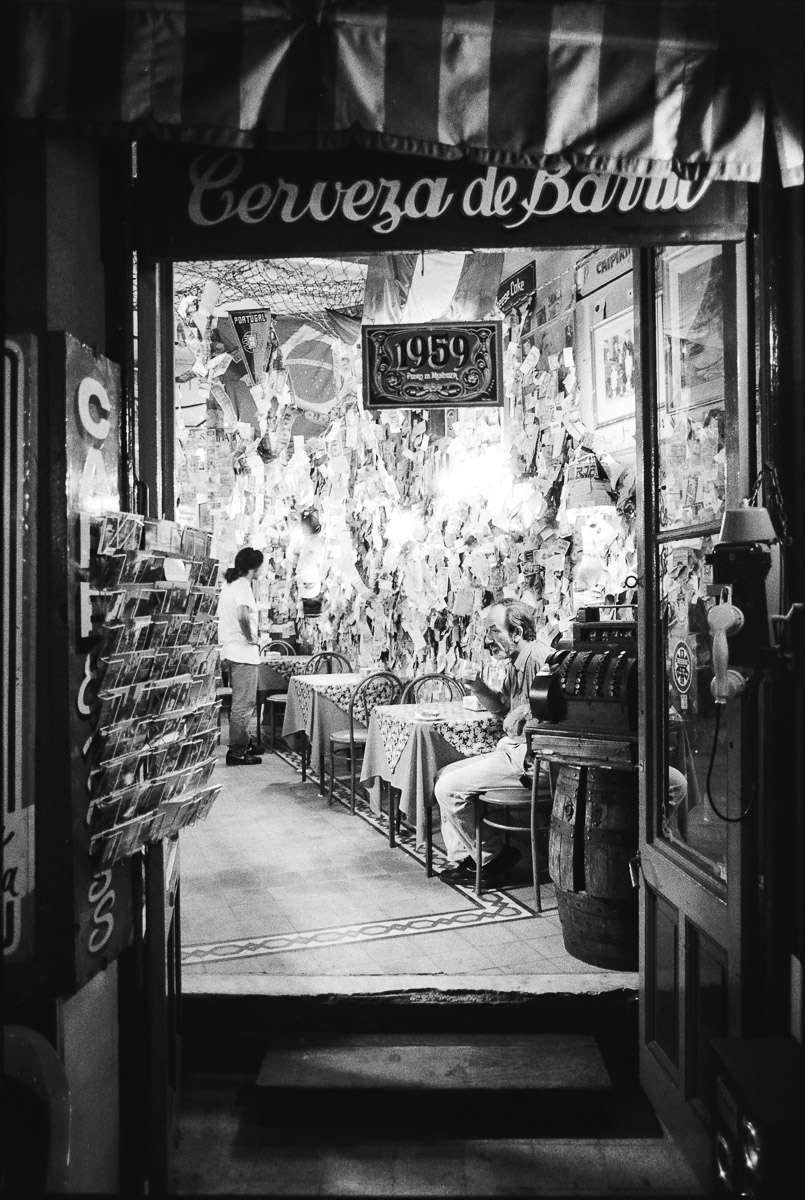
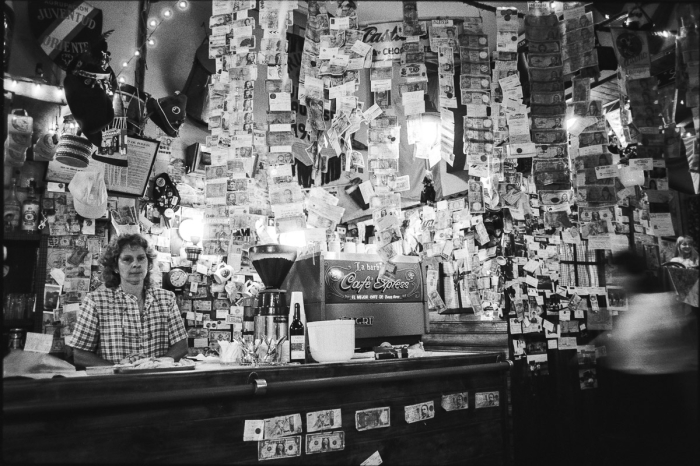
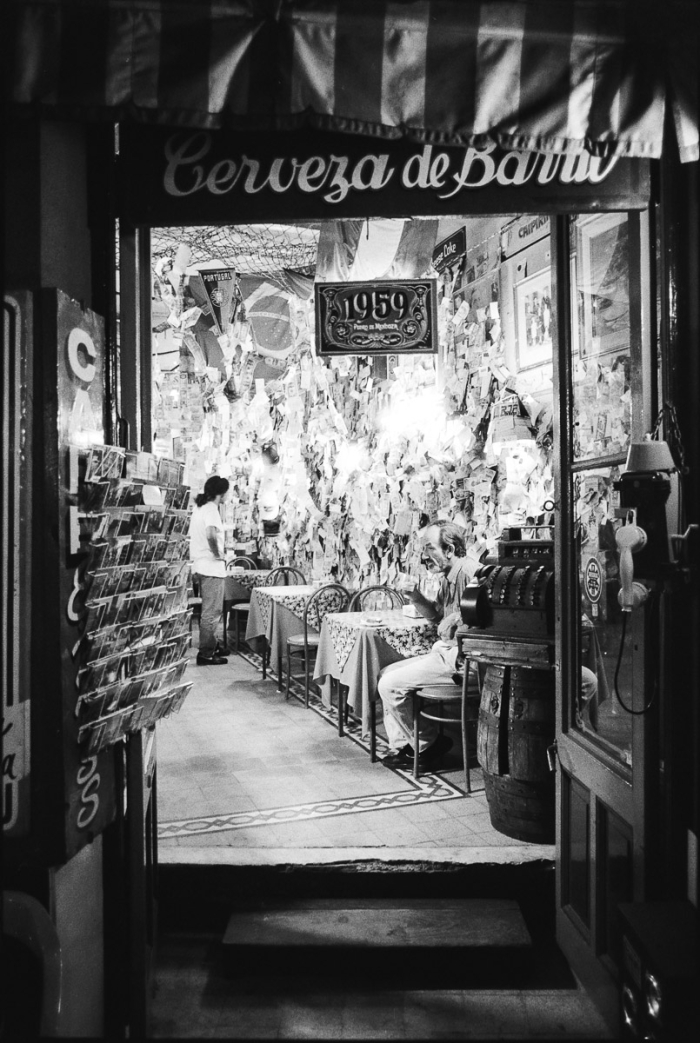
We also went into a bar frequented by travellers from all over the world. The walls, ceiling and even the counter were covered with banknotes left by visitors of many different nationalities.
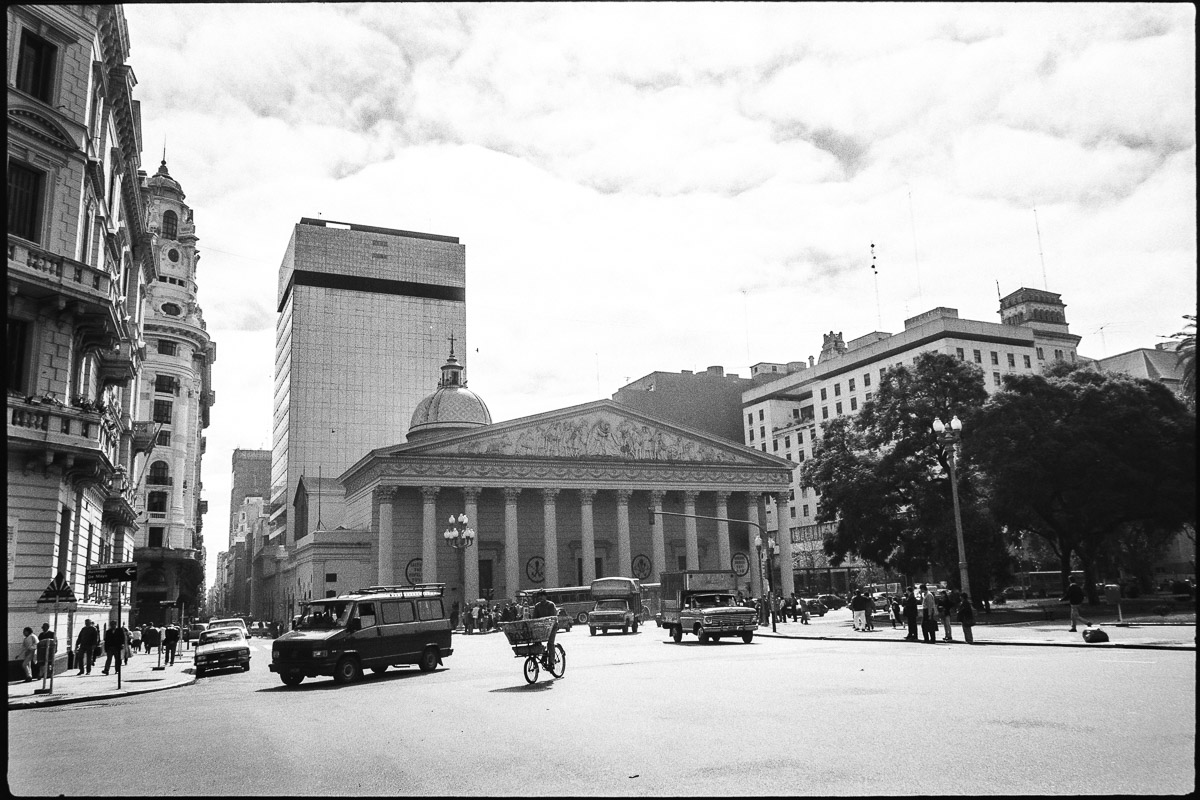
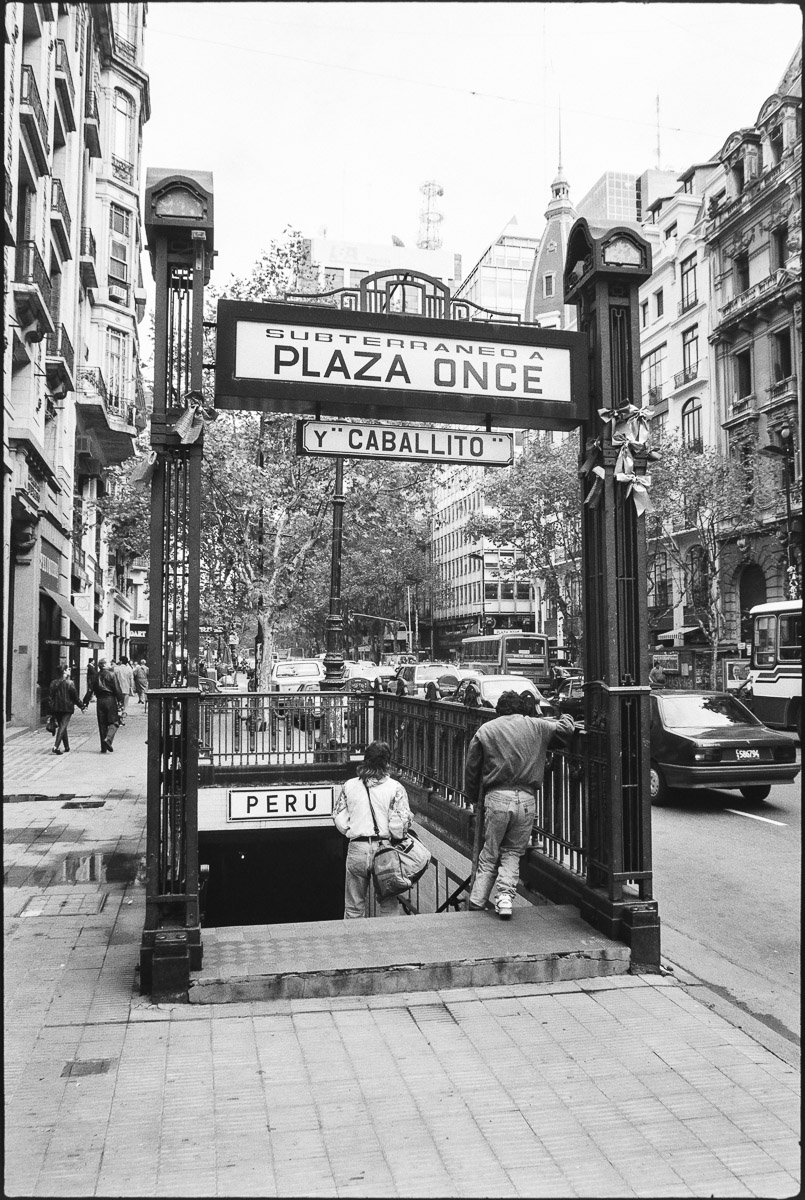
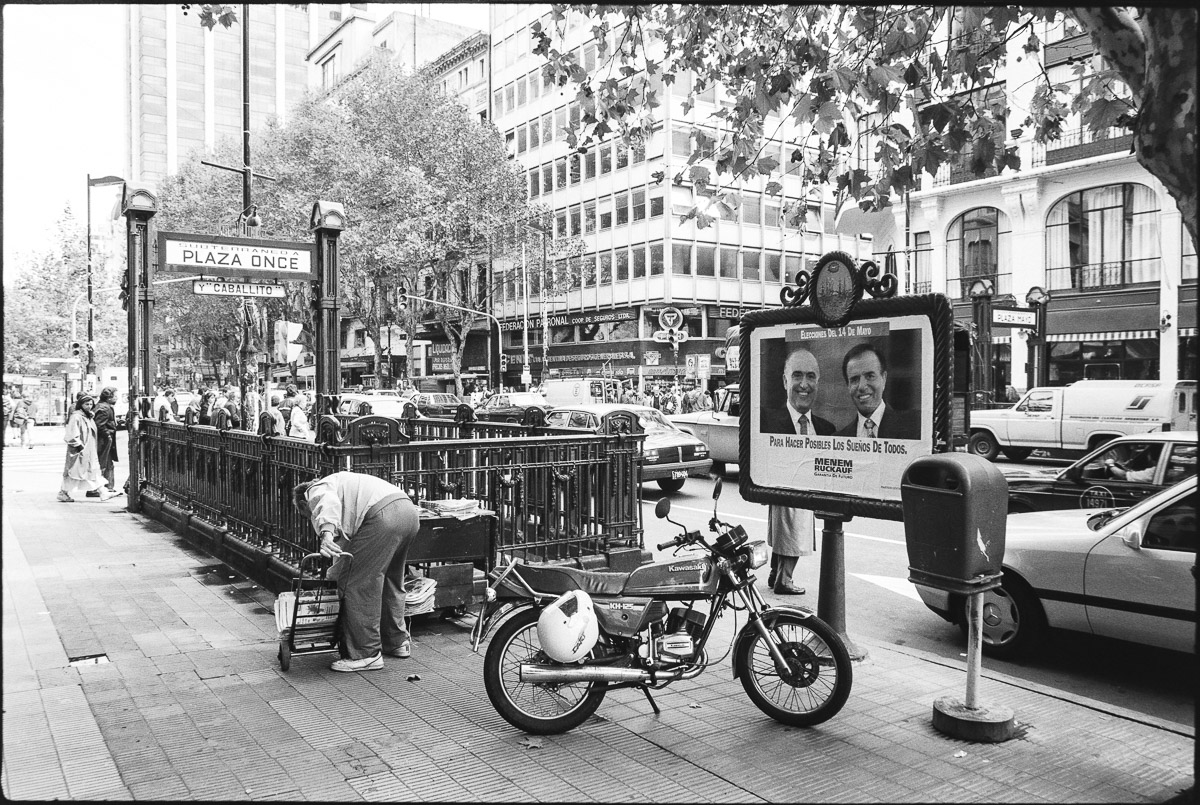
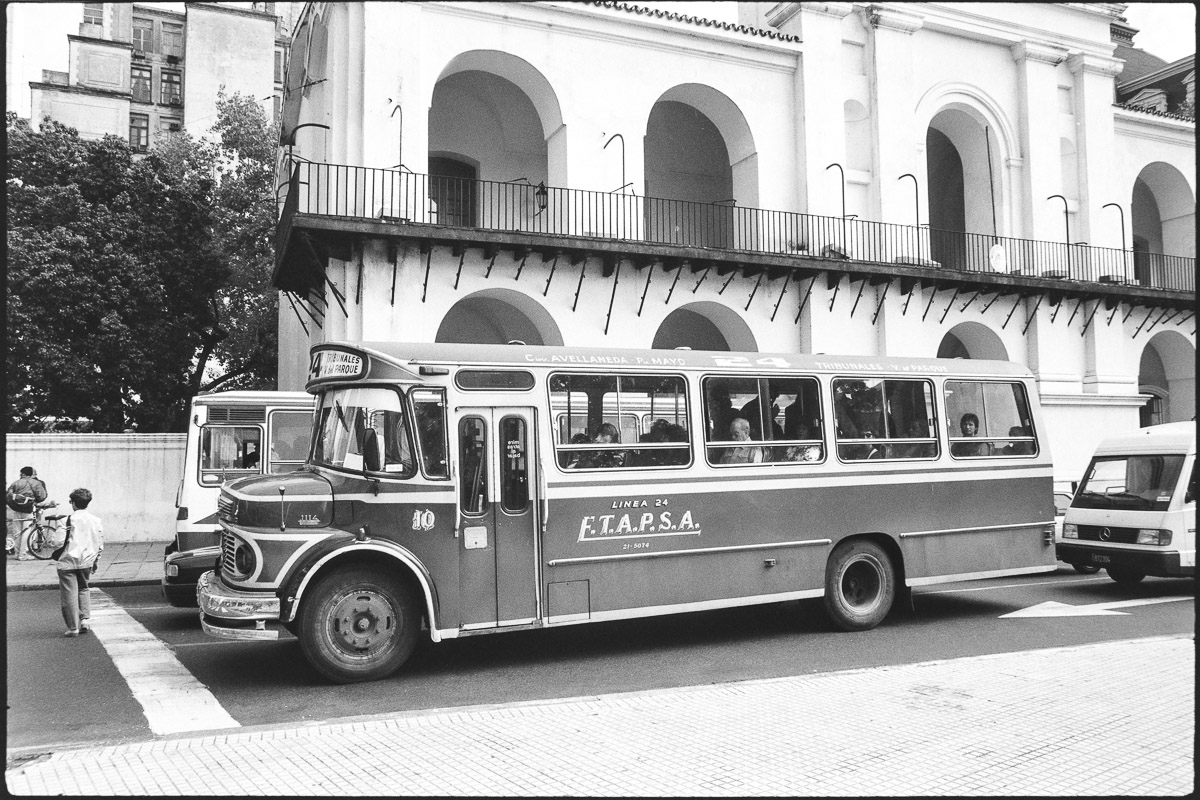
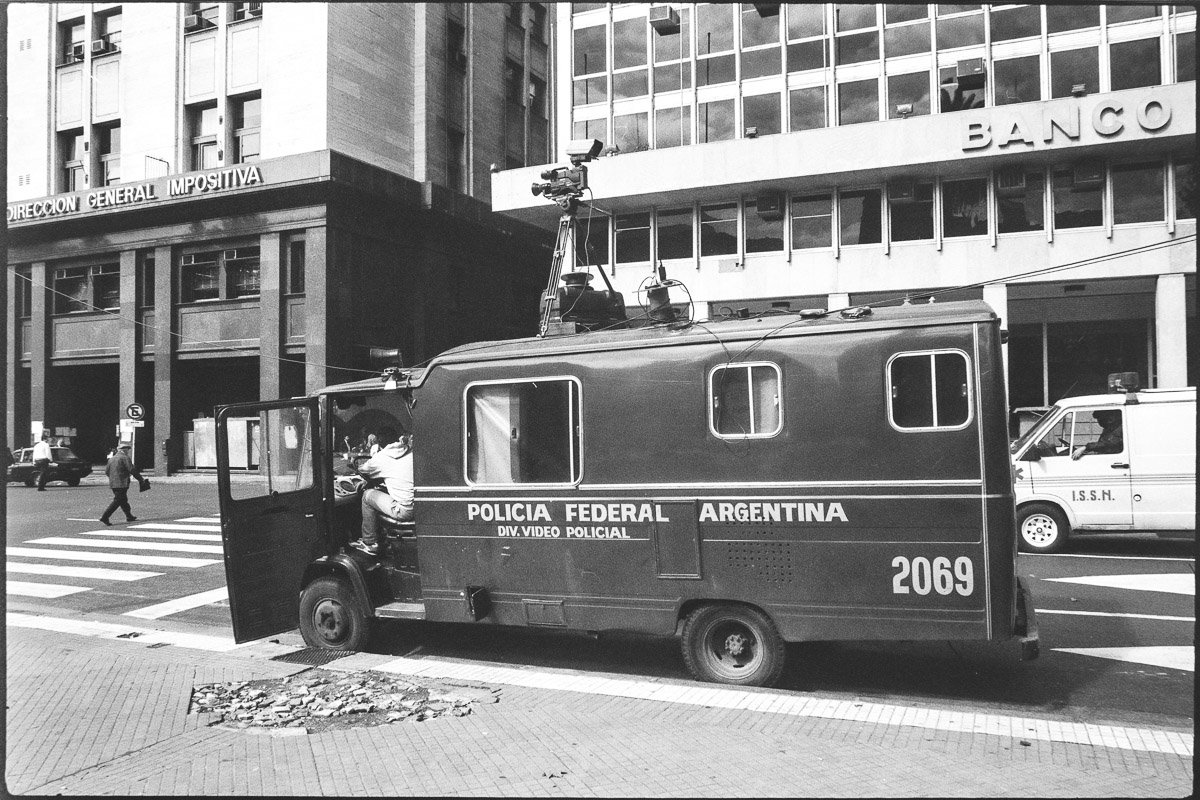
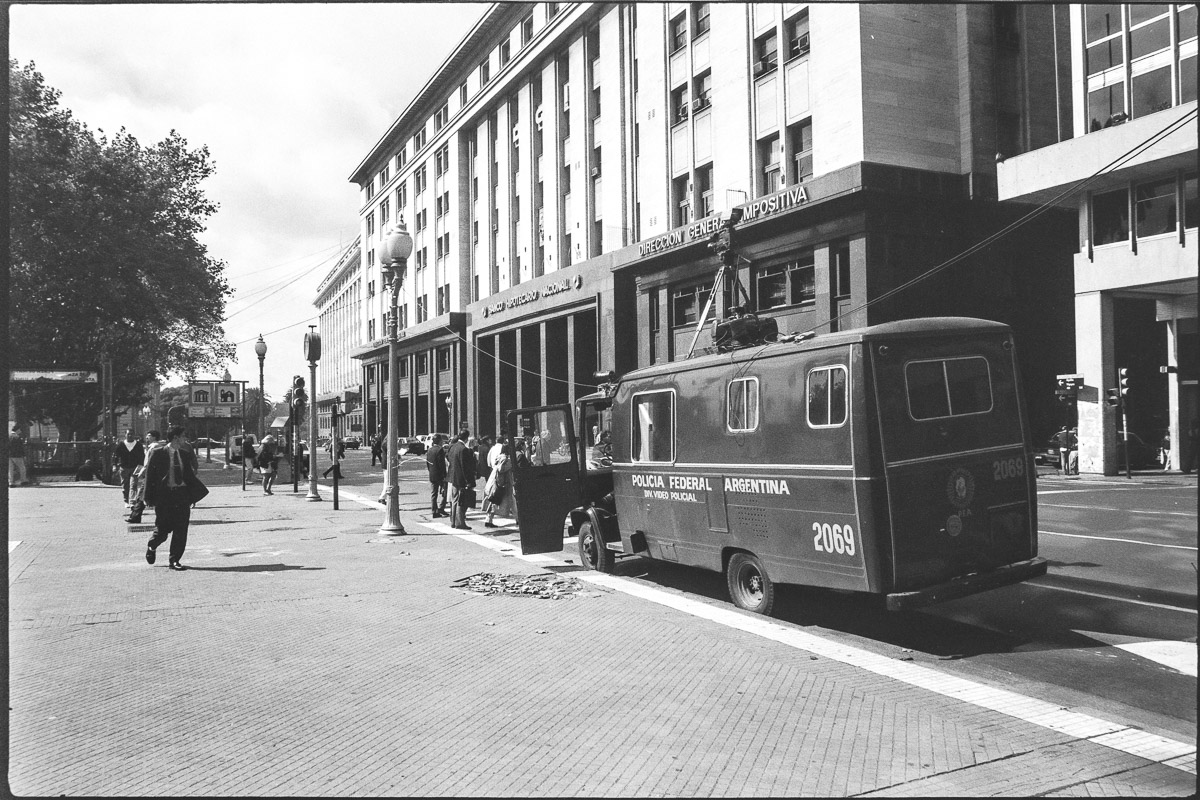
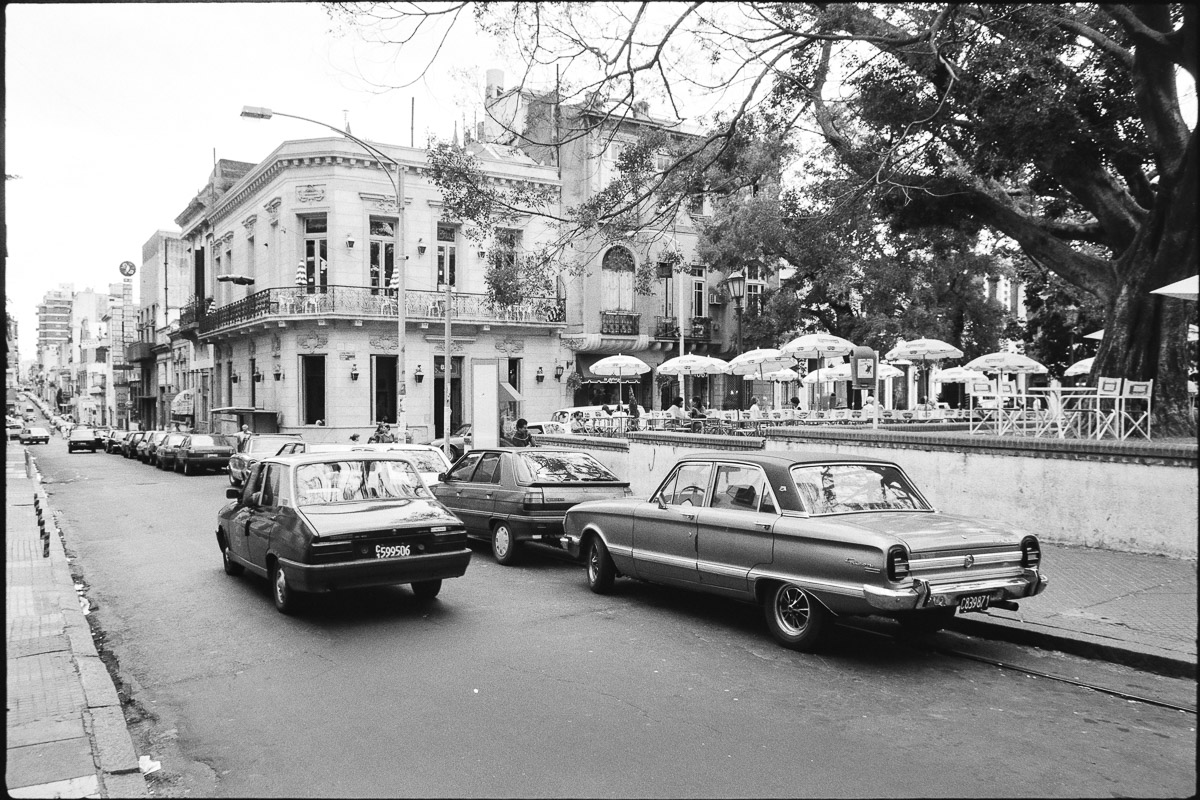
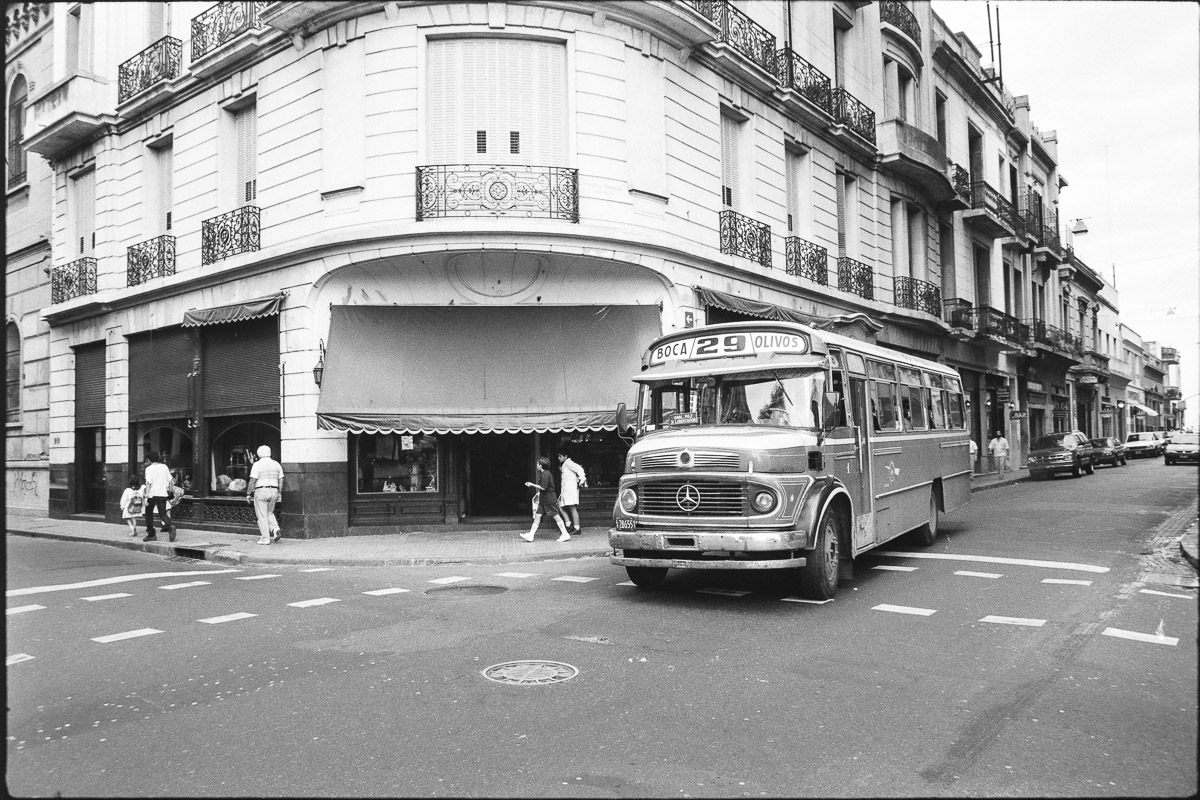
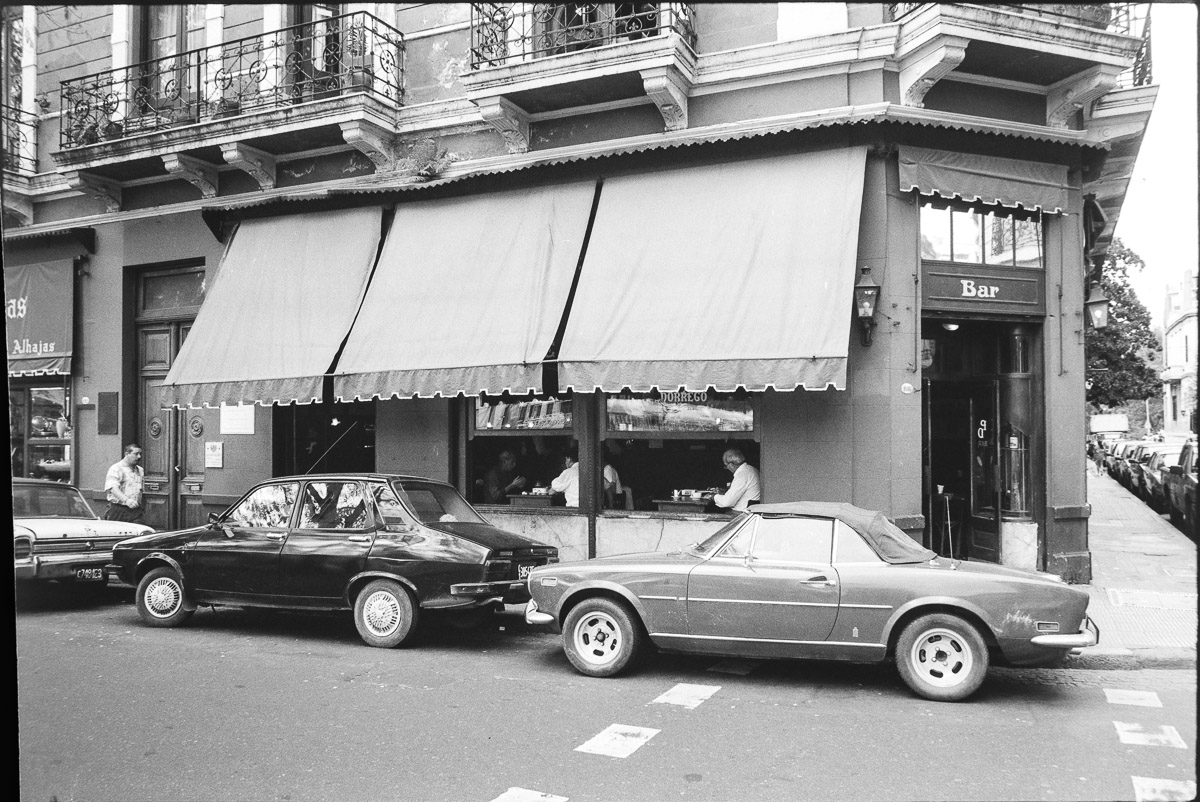
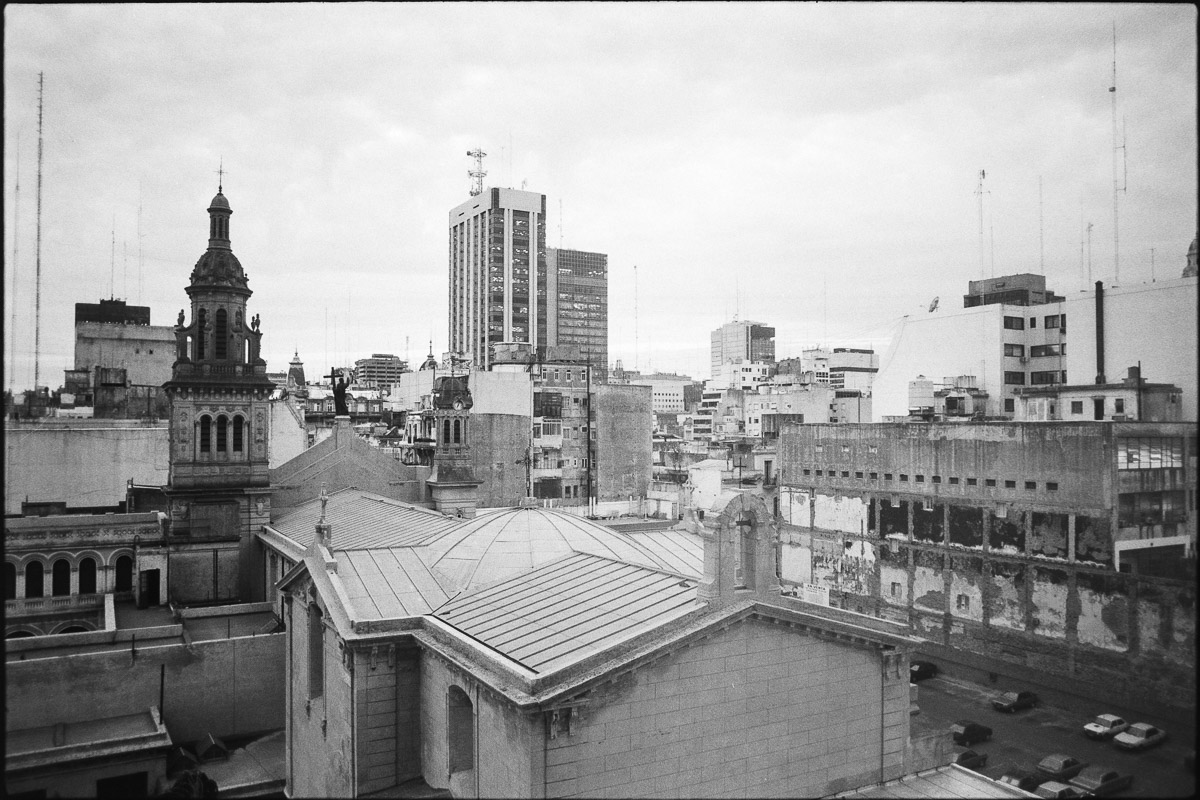
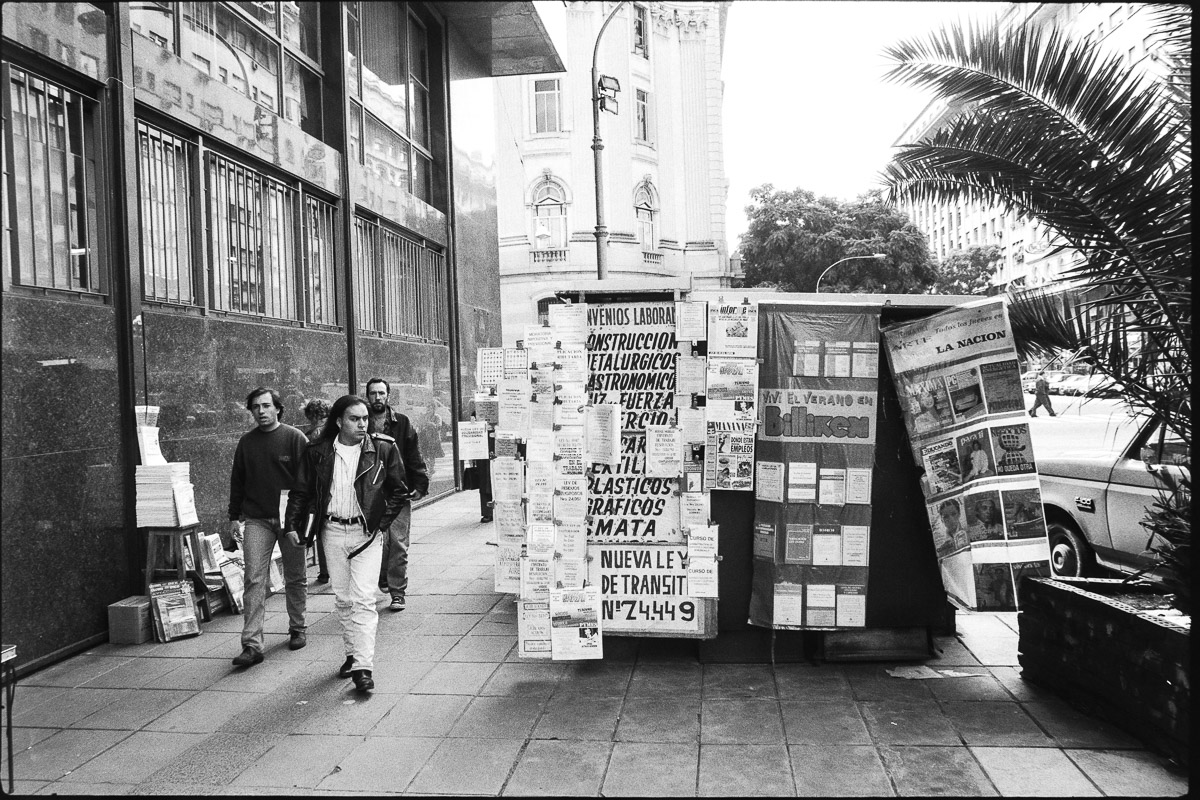
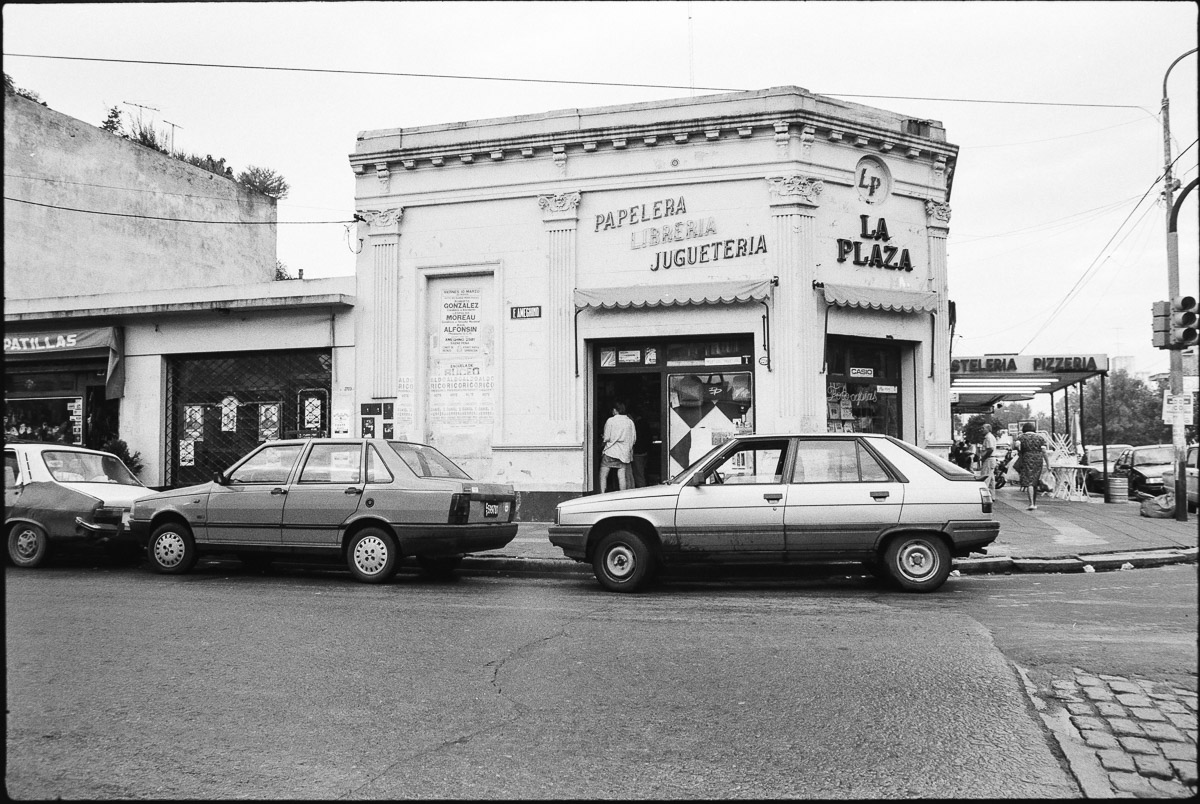
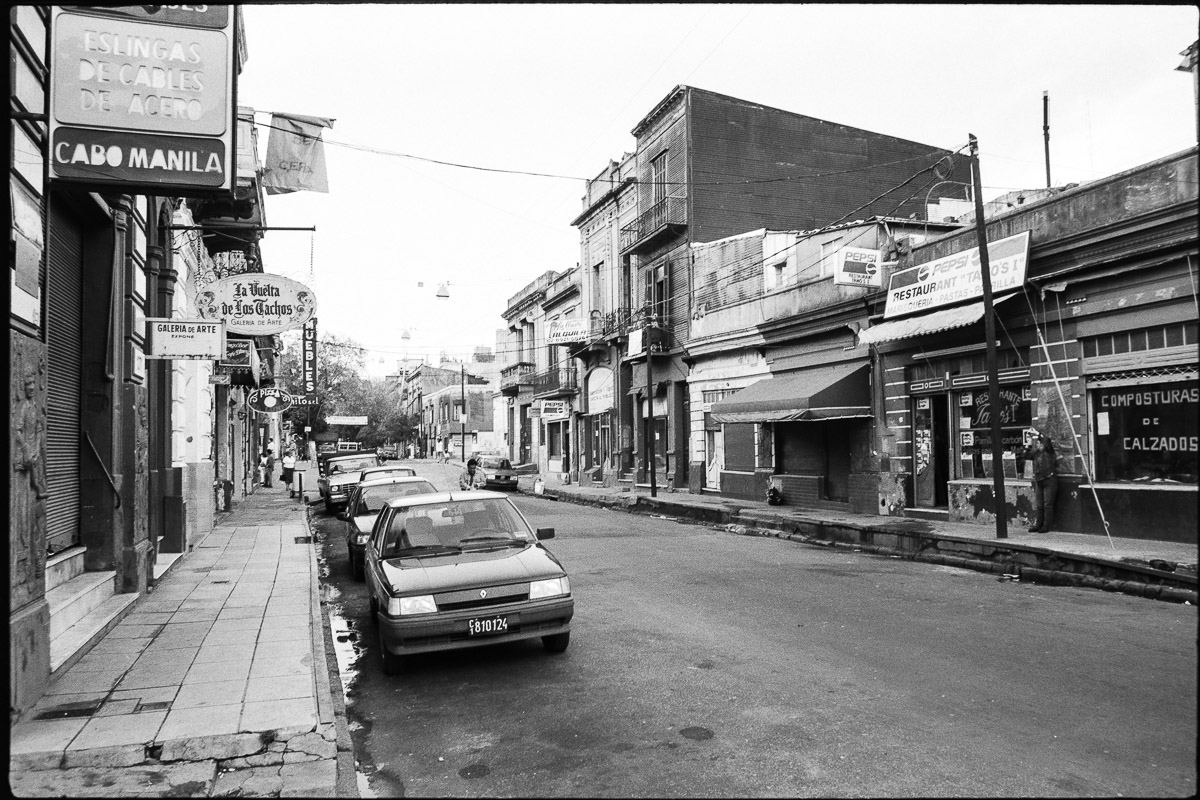
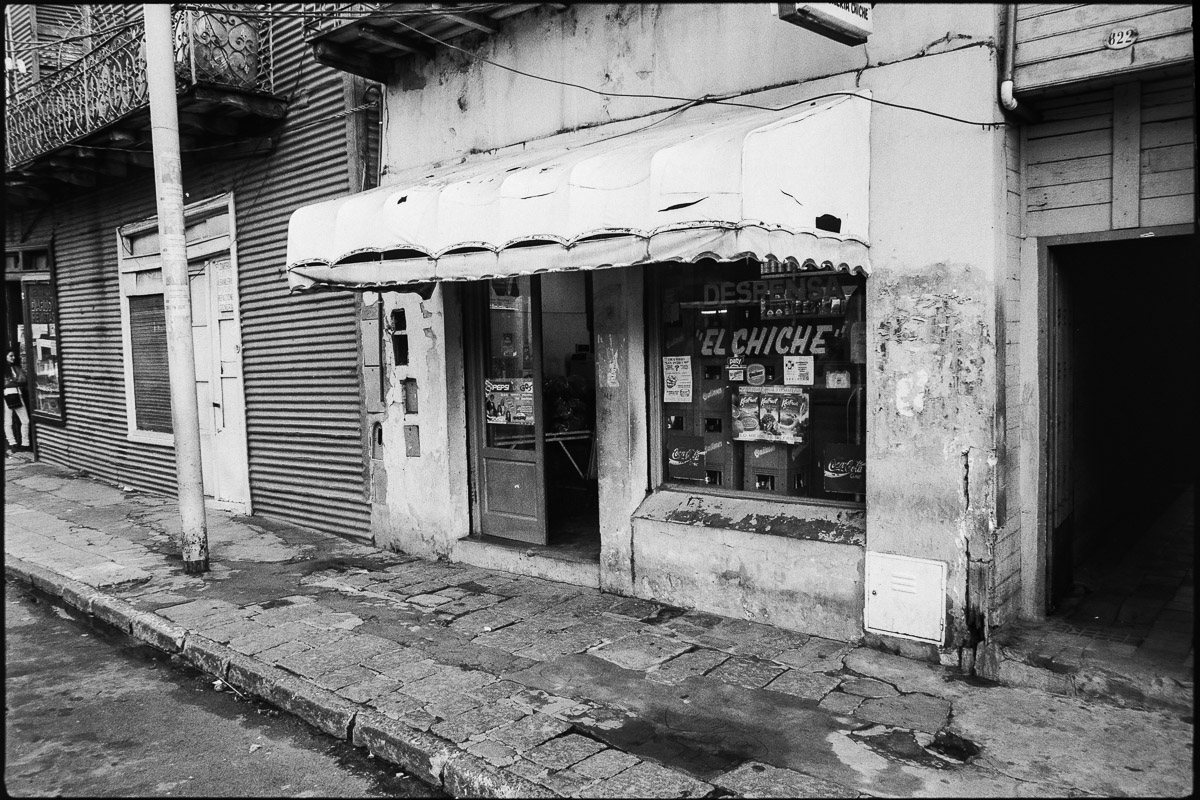
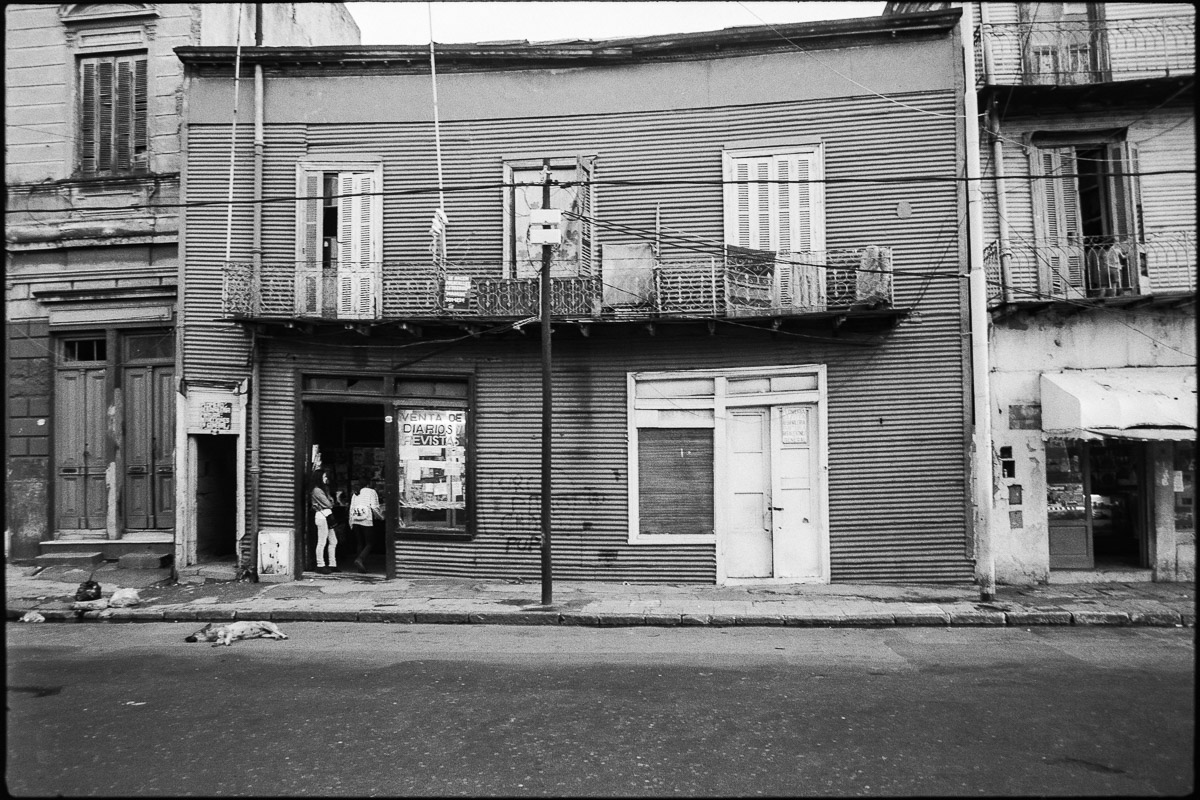
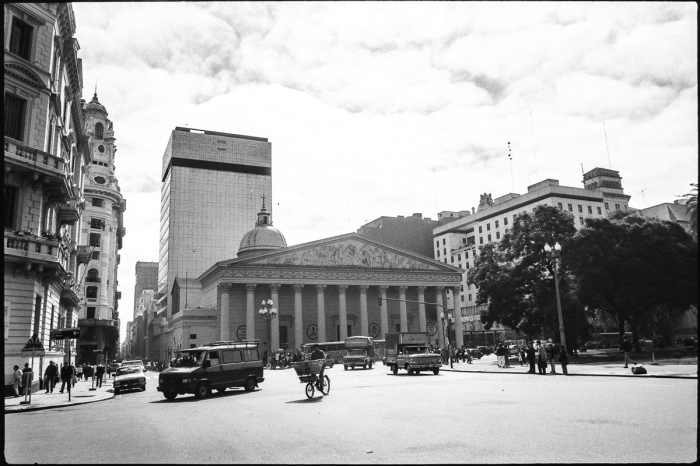
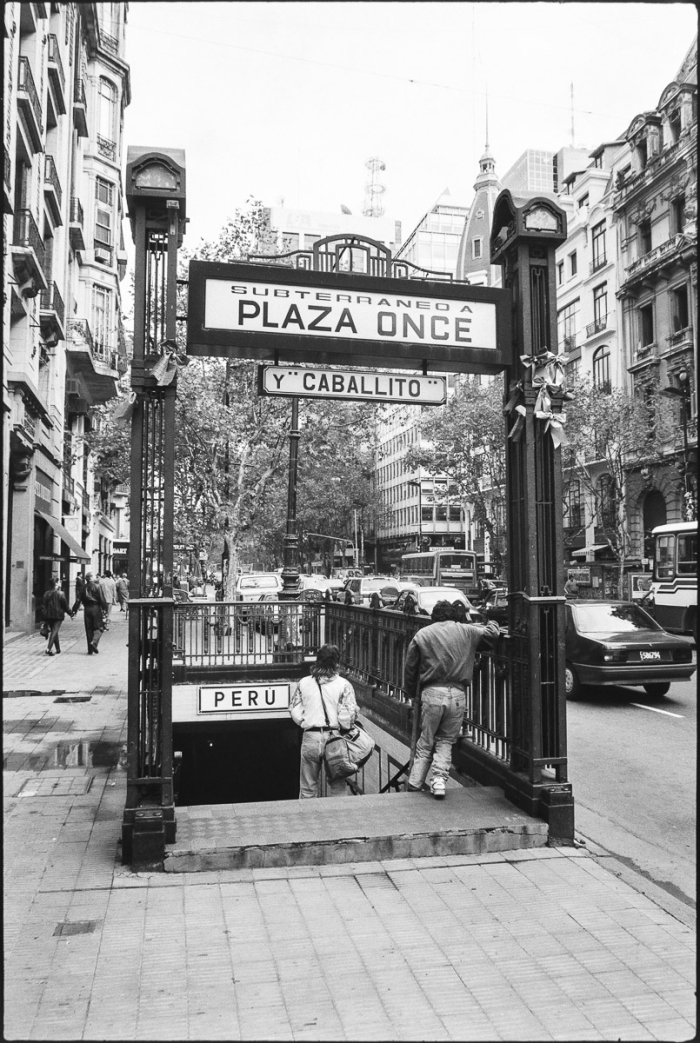
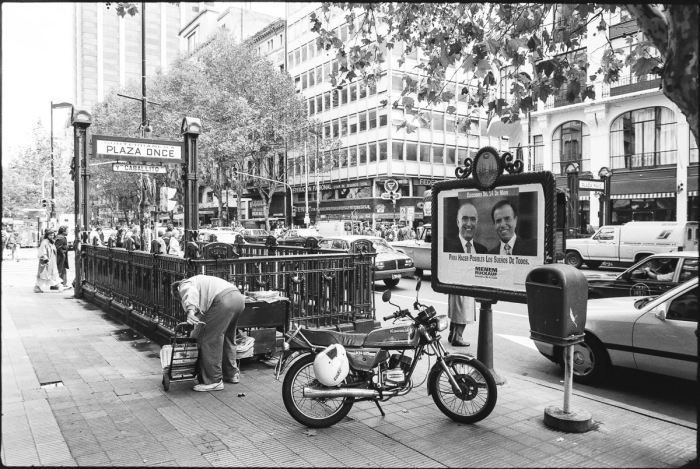
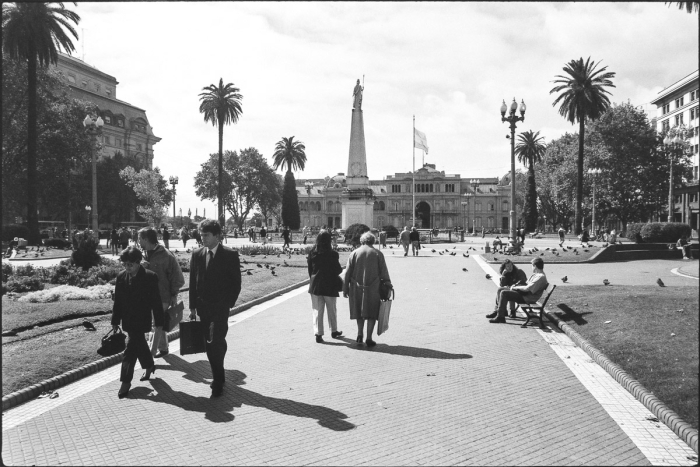
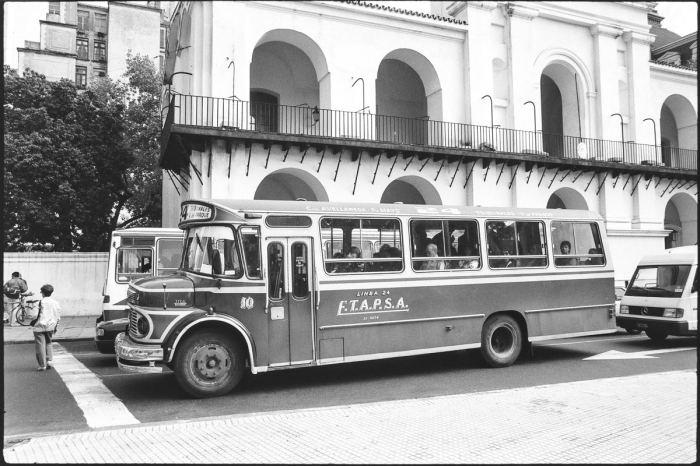
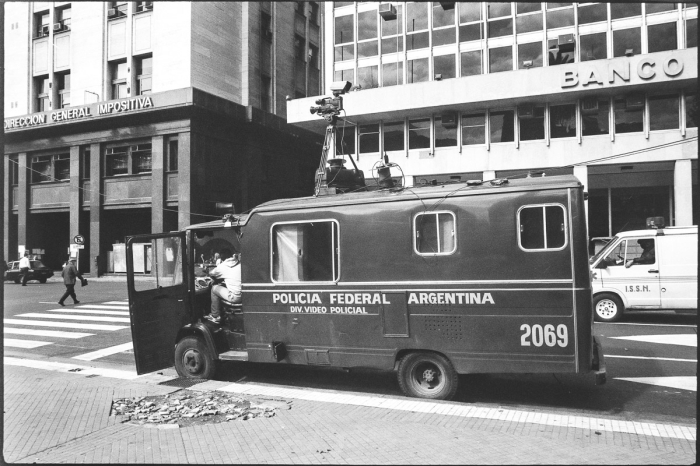
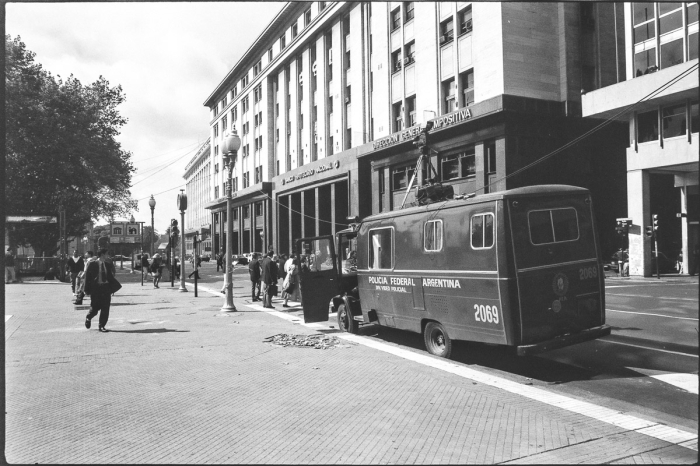
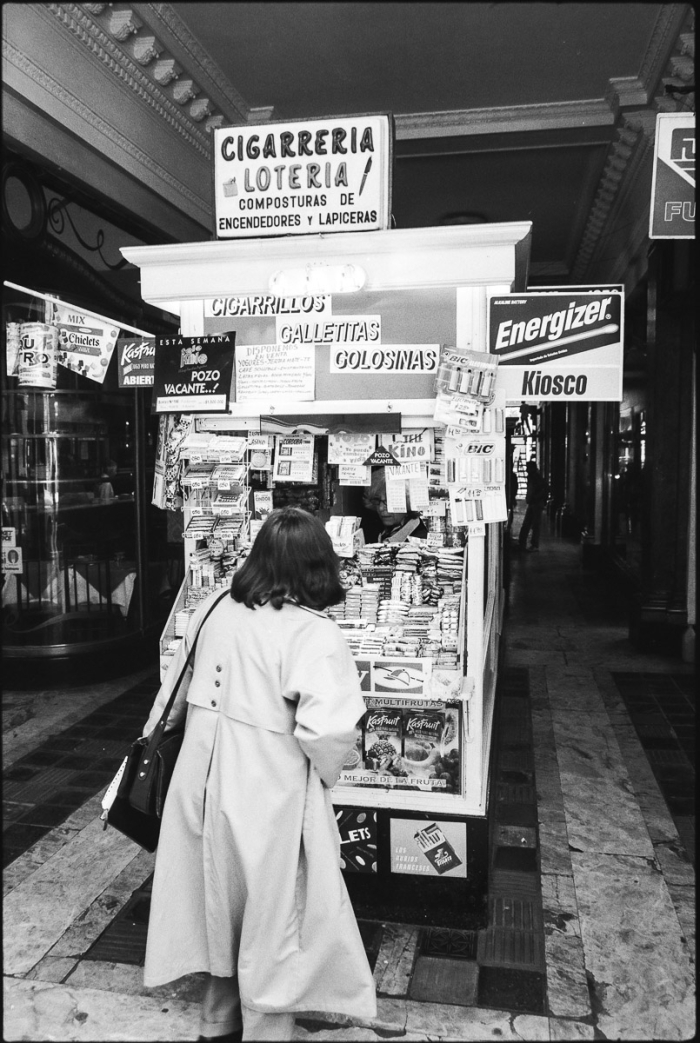
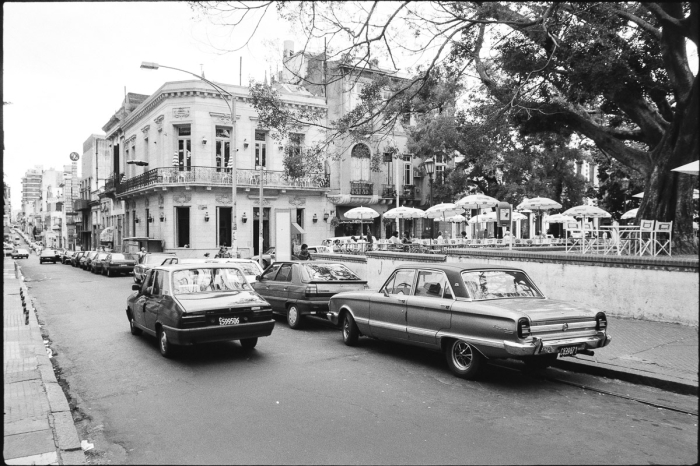
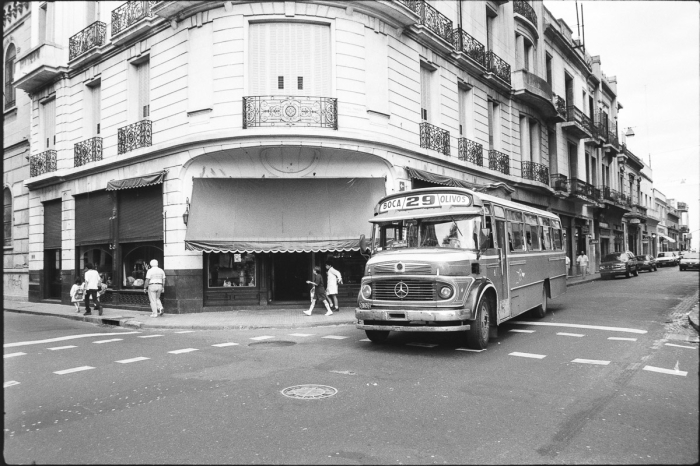
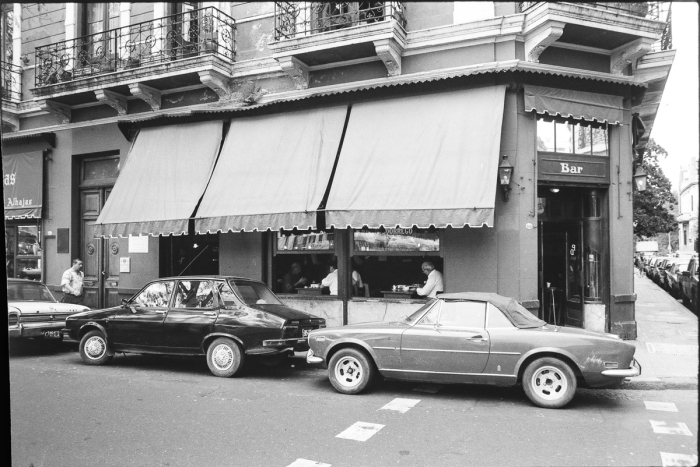
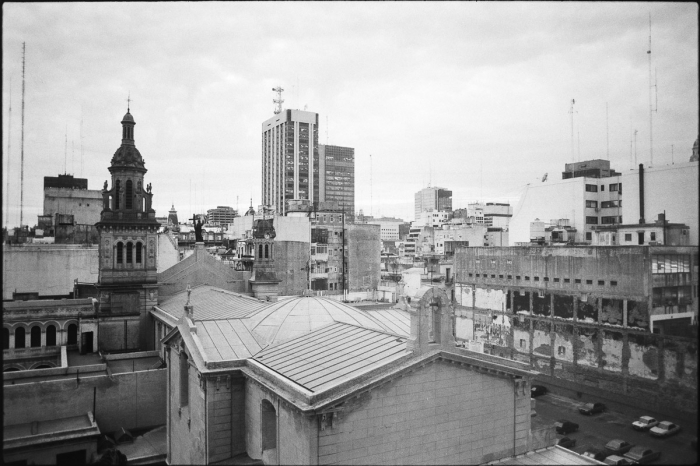
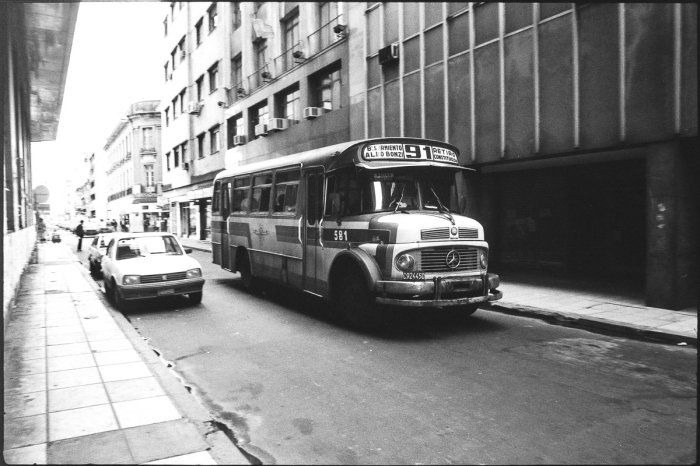
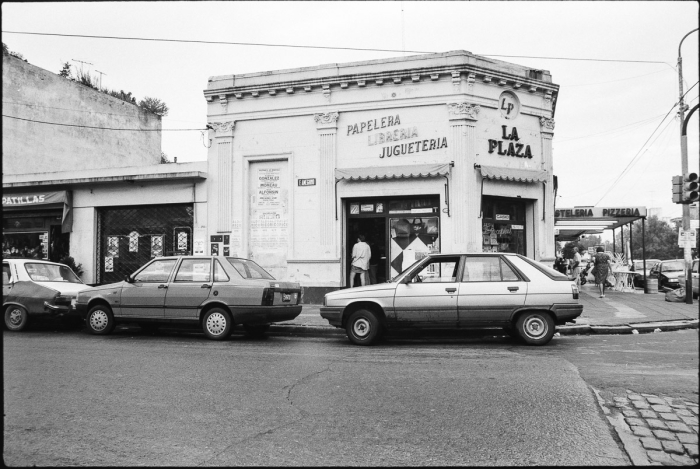
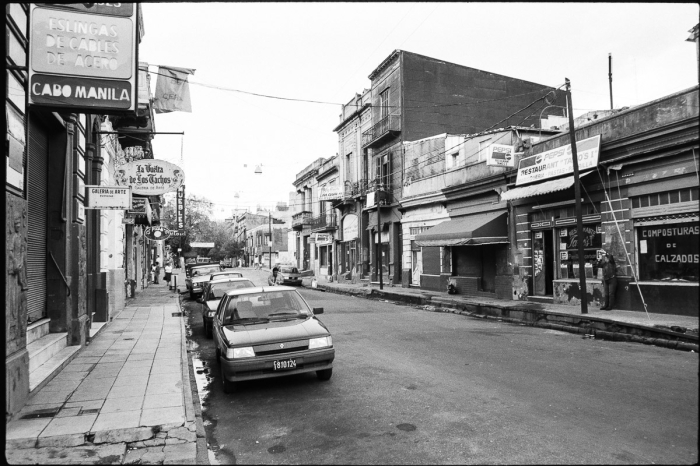
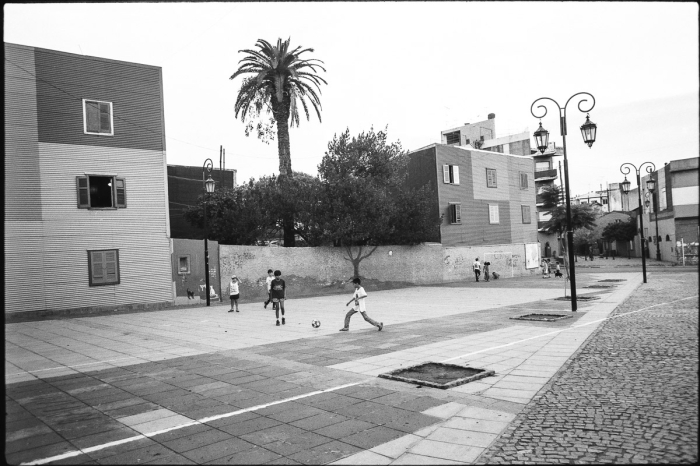
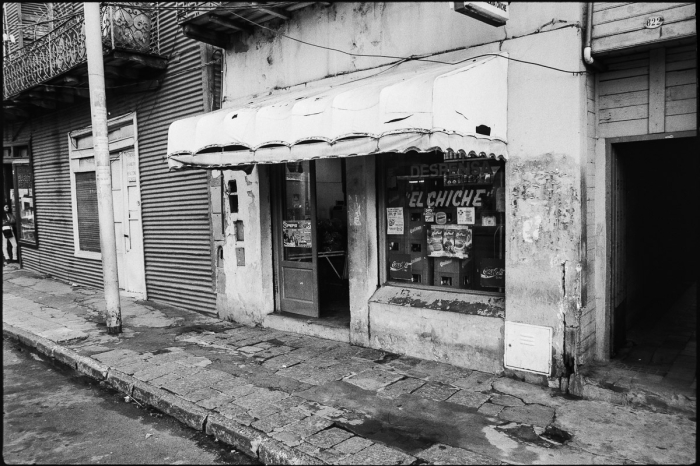
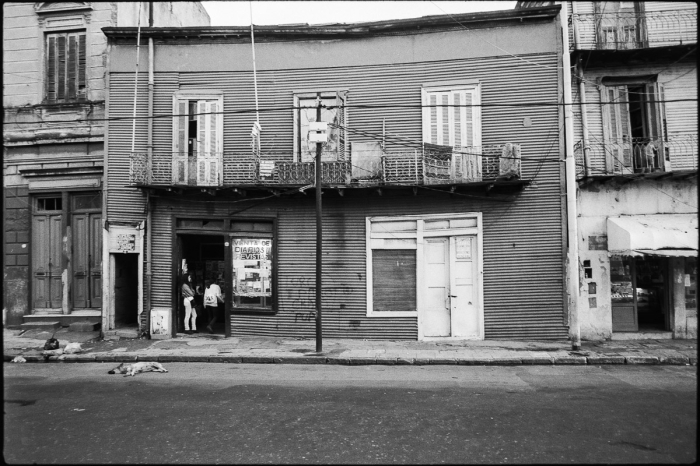
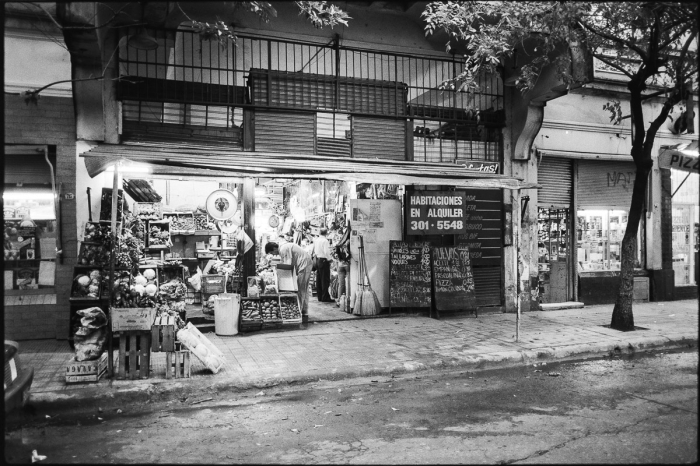
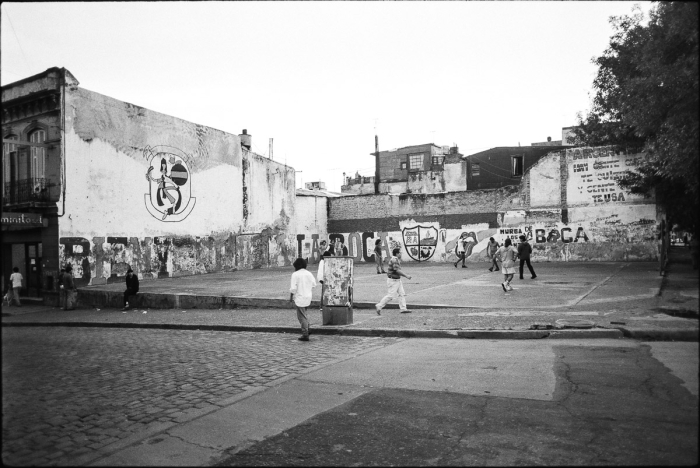
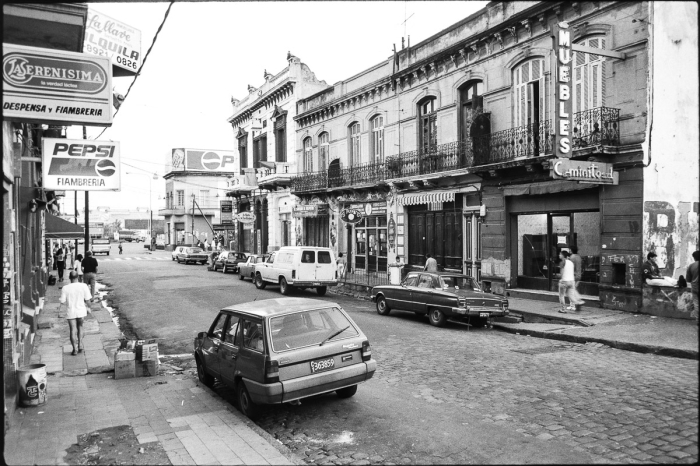
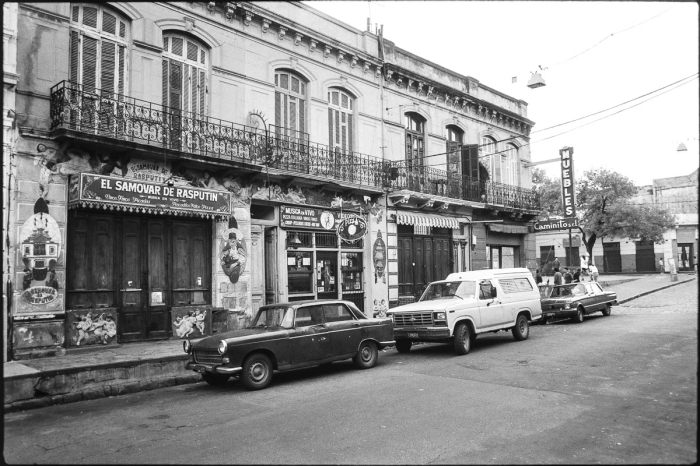
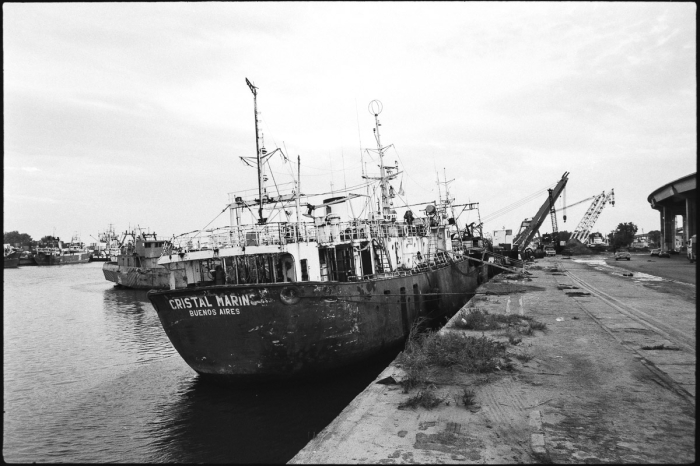
What also struck me in Buenos Aires was the vehicle fleet. Many of the cars, buses and commercial vehicles already seemed old to me in 1995. Some streets in the centre were elegant and very busy, while other working-class neighbourhoods had much more deteriorated facades.
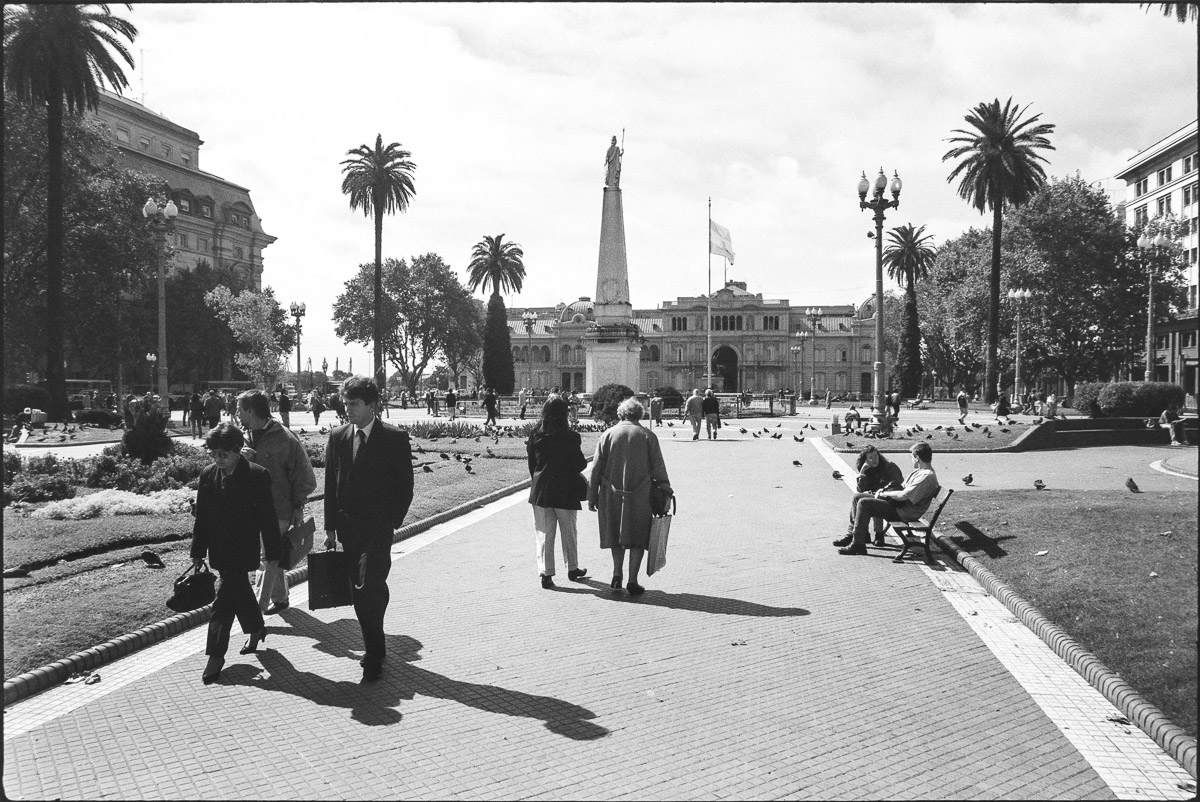
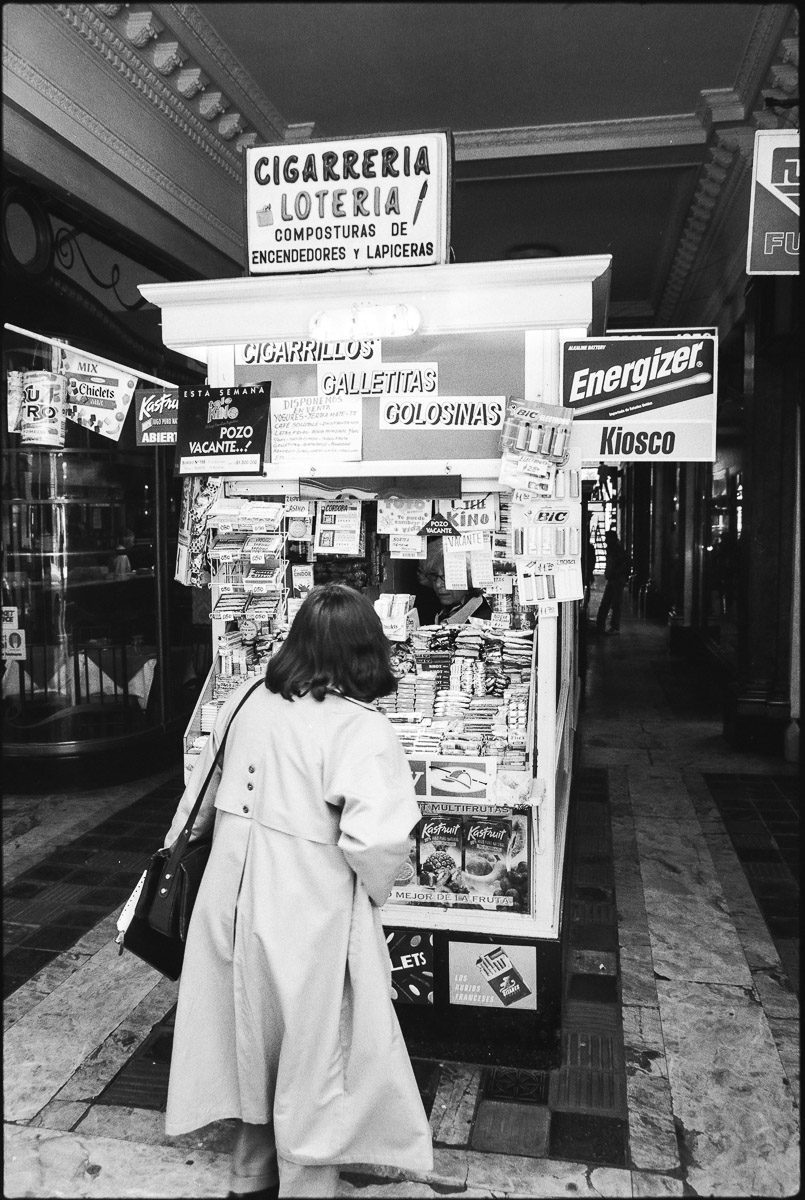
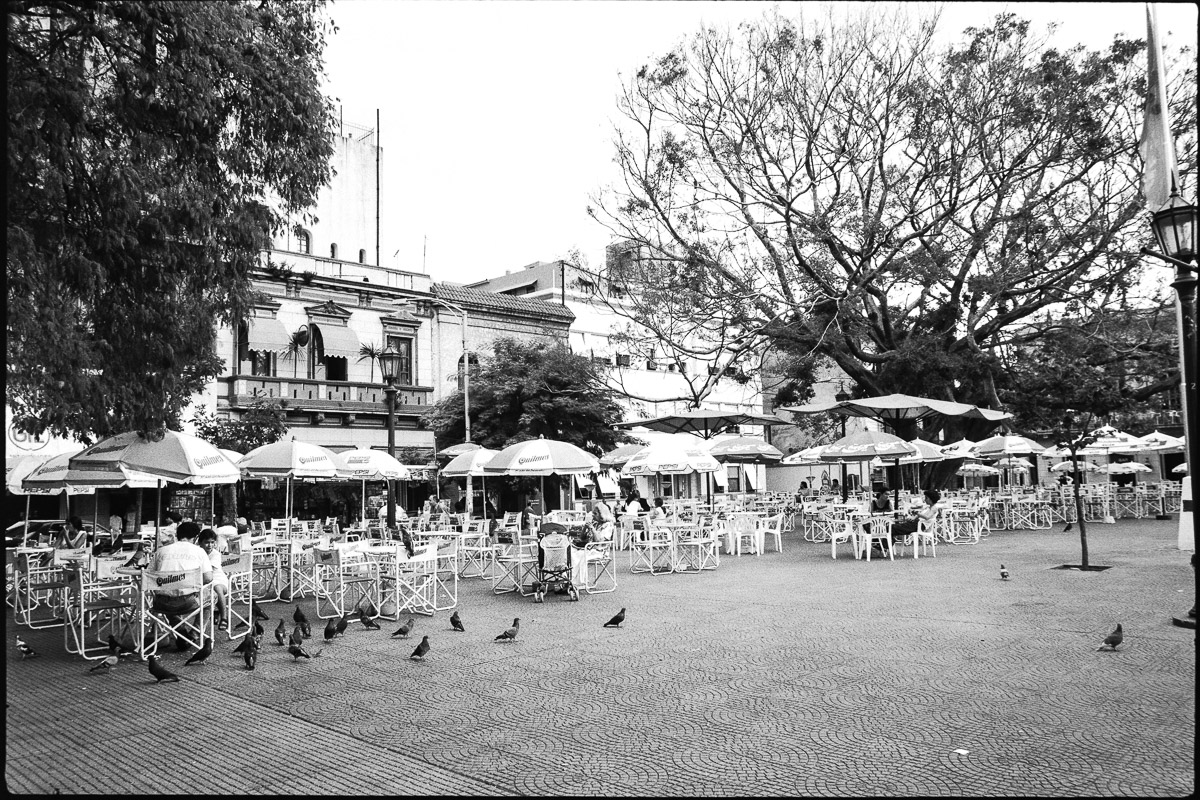
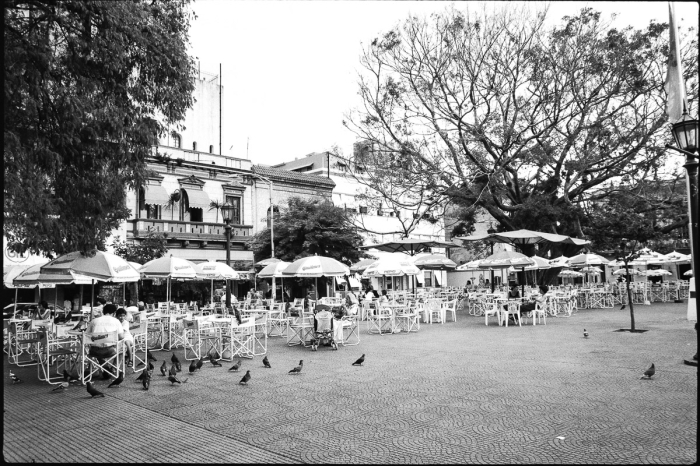
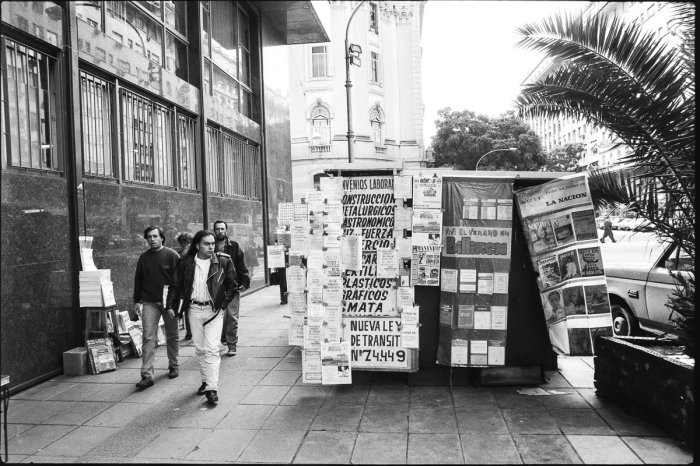
The photographs show this contrast: buses from another era, old cars, small shops and worn facades, but also broad avenues and the monumental architecture of the city centre.
I did not have the time I would have devoted to a genuine photographic report on the city. I was taking pictures during walks of only a few hours, without being able to return to locations or wait for a scene to develop.
Today these images seem fairly simple to me, sometimes even ordinary. But more than thirty years later, that ordinary quality is precisely what interests me: they show what could be seen in the streets of Buenos Aires in April 1995, at the beginning of the southern autumn.
The hair salon on Monday morning
On Monday morning, before our flight back to Paris, I went out alone with the Leica.
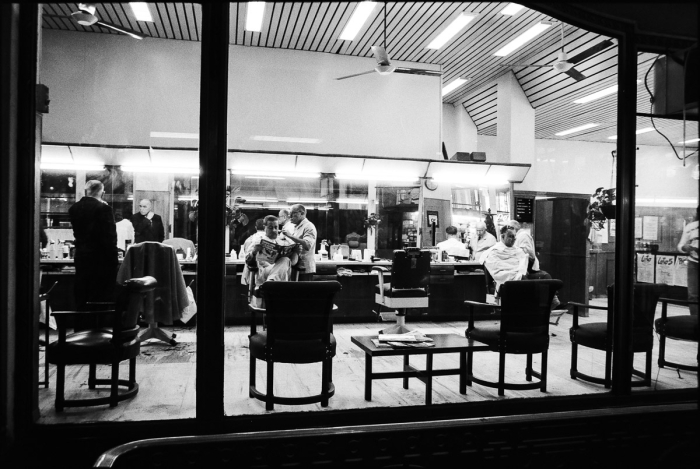
I remember walking around the area near our hotel, in central Buenos Aires. It was during this final walk that I probably made the photograph I now find the most interesting in the series.
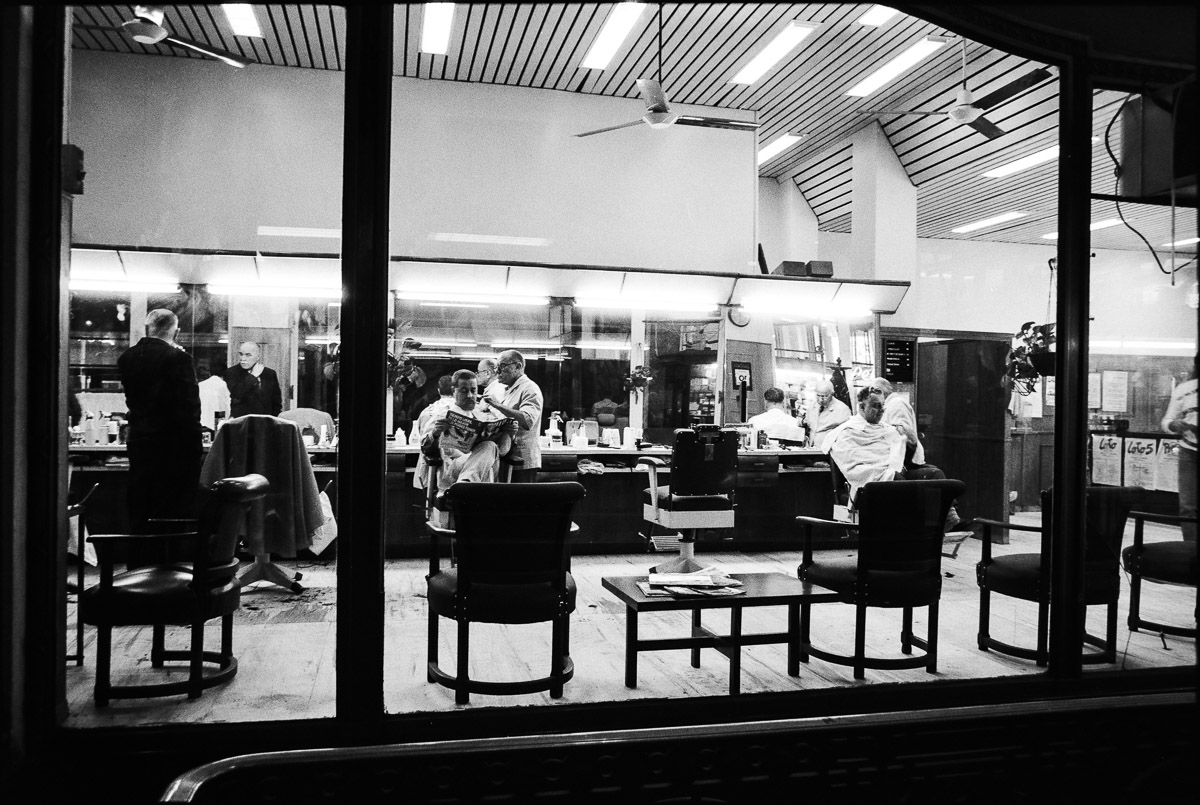
Hair salon in central Buenos Aires, photographed on Monday morning before my return to Paris. Leica M6, Elmarit-M 28mm f/2.8, Ilford HP5 Plus.
I photographed the salon from outside, through its large window. Several customers are seated in front of the mirrors while the hairdressers work. The waiting chairs occupy the foreground behind the glass, while the fluorescent lighting and large mirrors give the interior a very different light from the street outside. The window frames divide the photograph like panels in a comic strip, each telling a different story. In the first, the haircut is finished: the customer looks at himself in the mirror and brushes the fallen hair from his shoulder with one hand. In the others, the hairdressers are busy working around their respective customers.
Nothing exceptional is happening. It is an everyday scene, but that is precisely what gives the photograph its documentary interest today.
Using a rangefinder after years with SLR cameras
Looking again at the negatives today, I can quite clearly remember the sensations I experienced with the Leica M6.
The first concerned framing.
With my Nikon and later Canon SLRs, I had become accustomed to constructing the photograph directly in the viewfinder, precisely controlling the edges of the frame and, in particular, keeping vertical lines parallel.
The Leica rangefinder gave me a feeling of less precision in this respect. I was no longer looking directly through the lens as I would with an SLR: the image was defined by bright frame lines inside the viewfinder.
This was not a technical problem with parallax correction, simply a very different way of framing. I felt I had less control over the exact limits of the photograph and over my verticals.
The results are ultimately less approximate than I remembered. Looking at all the negatives today, the framing and verticals are generally better controlled than I thought.
On the other hand, I often notice a rather large amount of empty space in the lower part of the photographs.
In retrospect, a 35mm might perhaps have suited the way I frame better. It would have allowed me to tighten the compositions slightly while retaining a focal length wide enough for street photography.
My "Leica accident"
One photograph sums up one of the difficulties I experienced with this configuration.
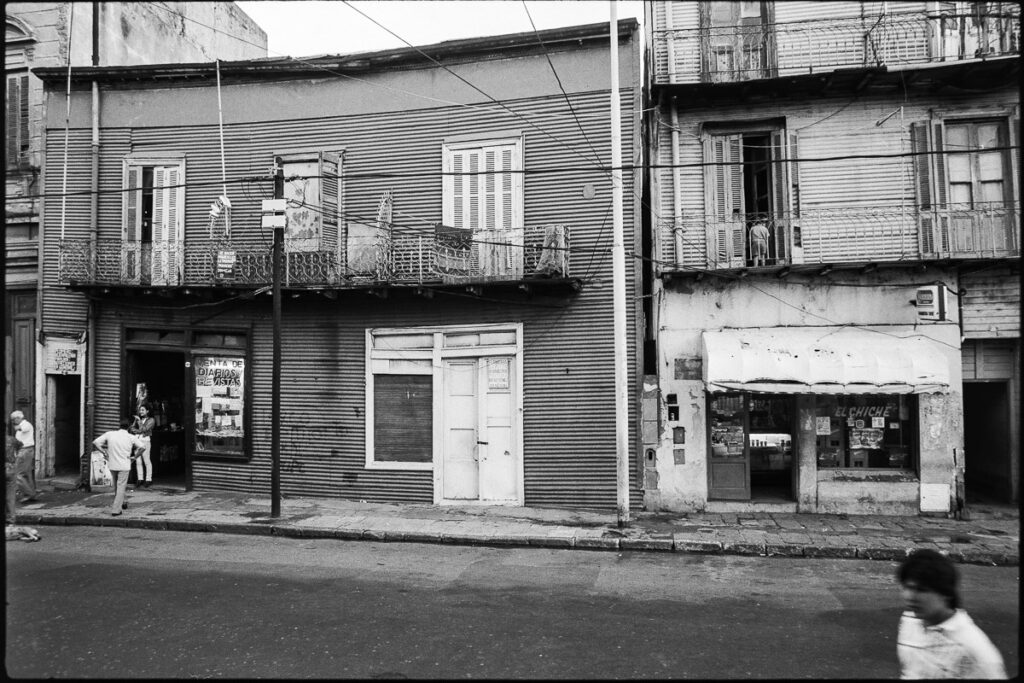
Buenos Aires in 1995 with a Leica M6 during the Argentine Grand Prix - Photo: © Sebastien Desnoulez
In the photograph above, a blurred passer-by appears in the lower-right corner of the frame. I had clearly not seen him enter the picture.
I now call this my "Leica accident".
The Elmarit-M 28mm f/2.8 III was relatively bulky and its lens hood intruded significantly into the lower-right portion of the M6 viewfinder. Part of what the lens was recording was therefore hidden from view.
With an SLR, I would have seen the passer-by immediately because I would have been looking directly through the lens. With the Leica, he happened to be precisely in the area obscured by the lens and its hood.
This photograph illustrates better than a lengthy explanation one of the reasons why the M system did not entirely suit the way I frame photographs.
Changing film in a Leica M6
Another aspect of using the camera required a little adjustment: loading the film.
On most 35mm SLR cameras, the back is hinged and opens widely. You put the cartridge into its chamber, pull the leader across to the take-up spool and then close the camera.
The Leica M retains a much older design. You first have to remove the entire baseplate, which must then be held, put down somewhere or slipped into a pocket. A small rear flap then provides access to the film path in front of the shutter. The cartridge must be inserted, enough of the leader pulled out and correctly engaged with the transport mechanism before replacing the baseplate.
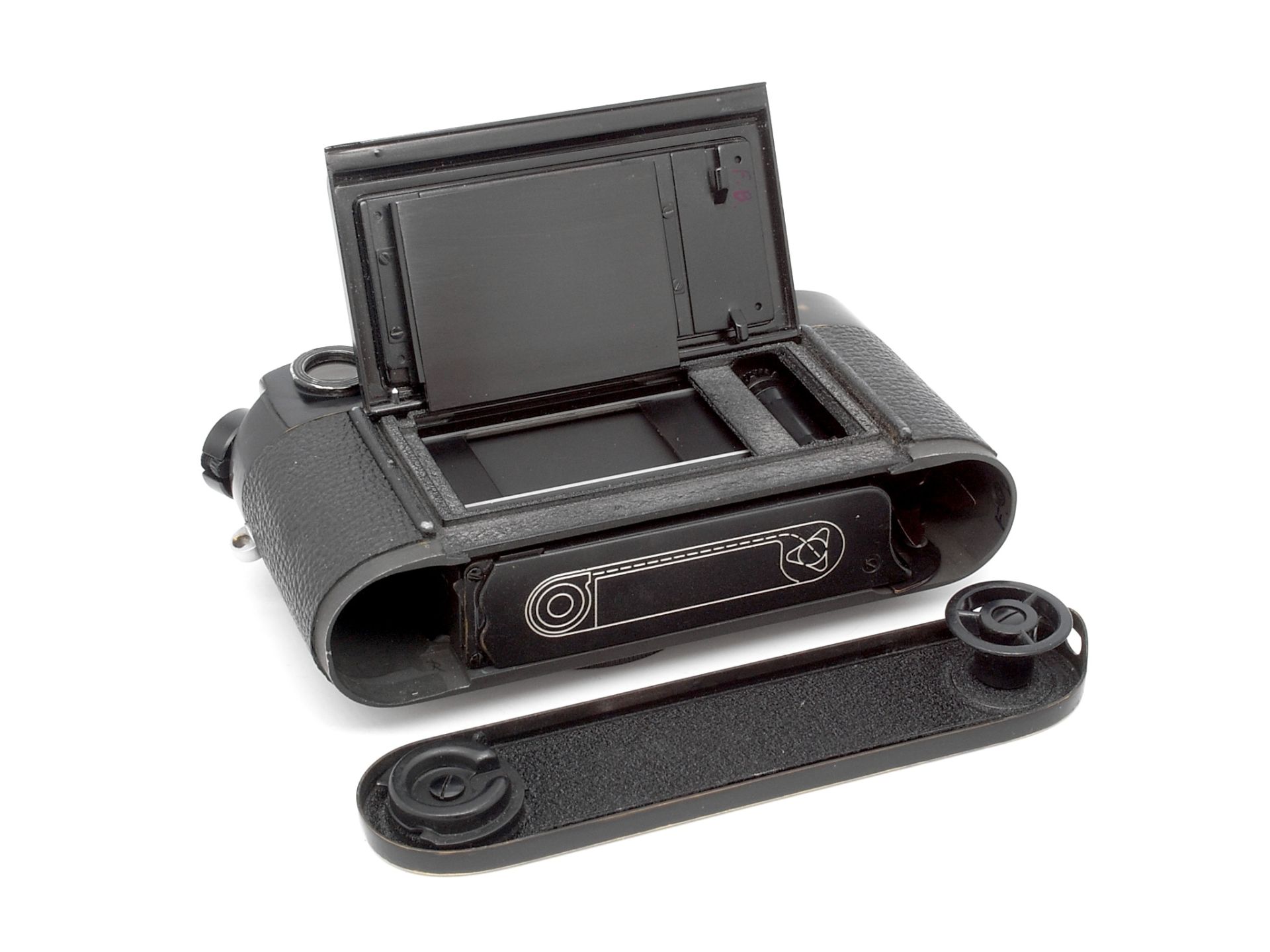
Loading film into a Leica M: the camera's baseplate has to be completely removed. Photo: Leica.
It is not particularly difficult and after two or three rolls the procedure becomes natural. But changing film remains slightly less straightforward than with an SLR fitted with a hinged back.
I was already accustomed to a comparable design with the Nikon F. On that camera, the back and baseplate also form a single unit that has to be removed completely.
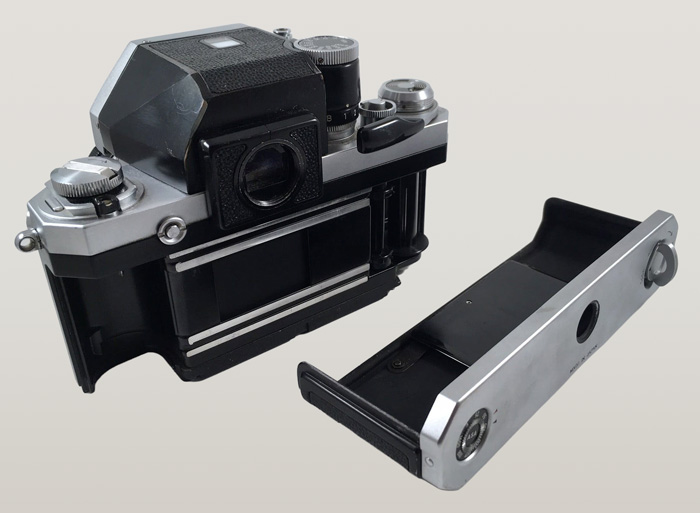
On the Nikon F, the back and baseplate are a single unit and are removed together when changing film.
The difference is that the rear of the Nikon F is then completely accessible. Although you also have to hold or put down the back while changing the film, the film path is fully exposed and I found reloading the Nikon F easier.
Slow shutter speeds handheld
The Leica did, however, offer a clear advantage when the light level dropped.
The week had been marked by frequently overcast skies and relatively low light. For these black-and-white photographs I was using Ilford HP5 Plus rated at ISO 400.
On the contact sheet, several photographs of Buenos Aires show people or vehicles blurred by movement while the buildings remain sharp. I had therefore used shutter speeds slow enough on several occasions to record their movement.
The photograph taken inside the bar provides a good example.
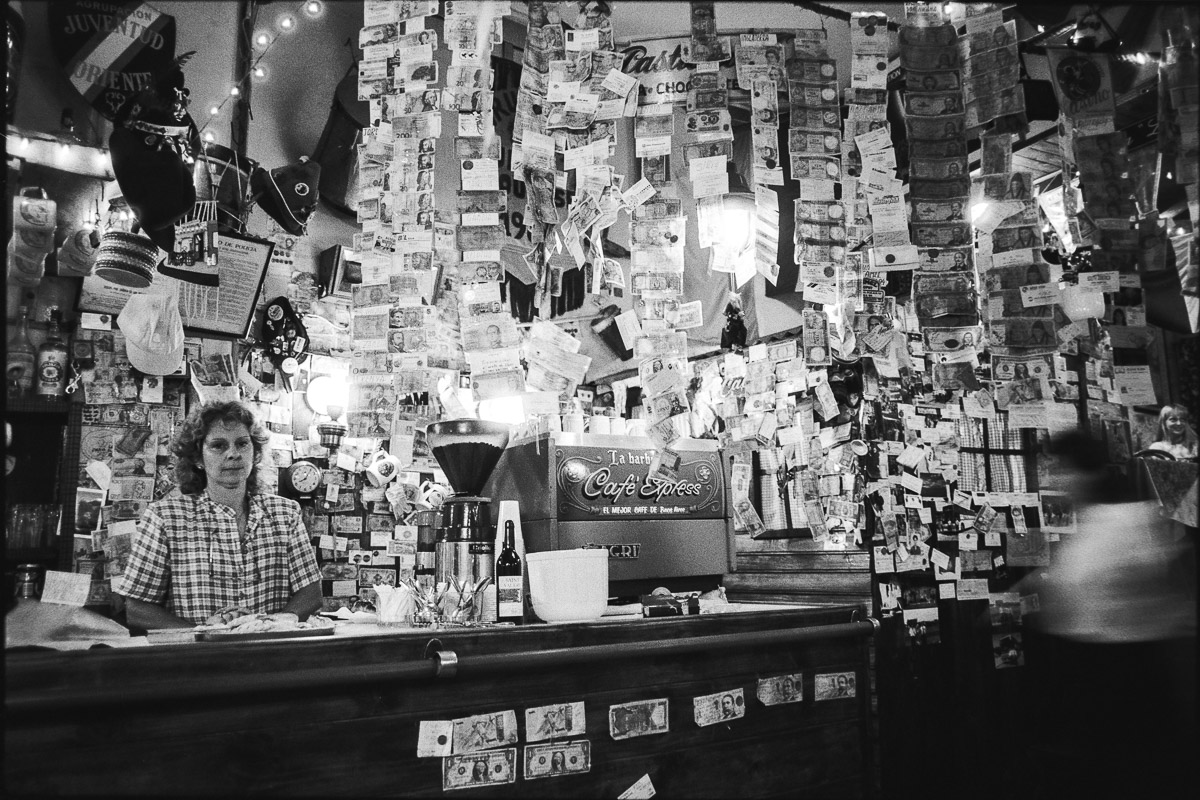
A bar in Buenos Aires whose walls were covered with banknotes from around the world. Leica M6, Elmarit-M 28mm f/2.8, Ilford HP5 Plus, April 1995.
In the photograph above, almost everything in the scene is sharp: the counter, the banknotes, the waitress behind the bar, the bottles and the coffee machine. By contrast, a second waitress moving through the right-hand side of the frame becomes almost transparent because of her movement.
The shutter speed must therefore have been relatively slow.
In another photograph, I followed a bus while releasing the shutter. The vehicle is relatively sharp while its surroundings show a slight degree of motion blur. Given its speed, I may simply have been around 1/60s, which is obviously no great achievement, but the sharpness of the Elmarit remains clearly visible despite the grain of the HP5 Plus.
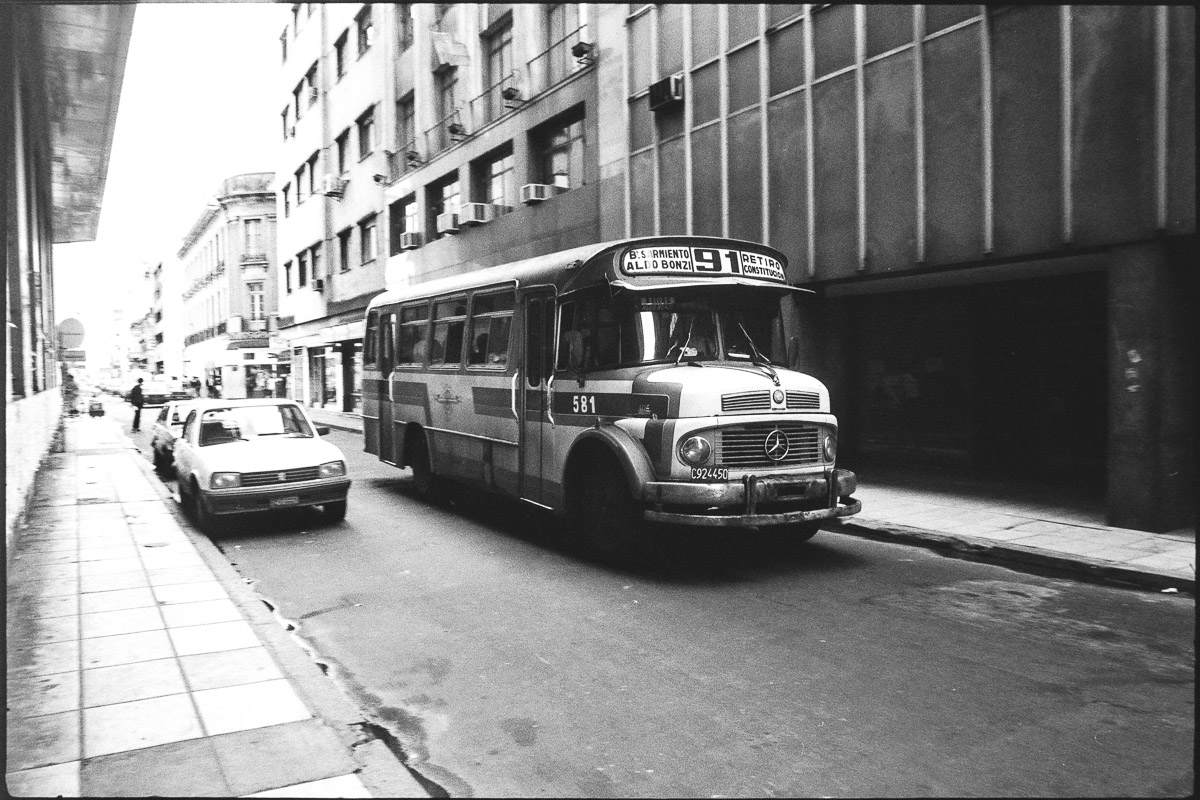
Public bus in Buenos Aires. Leica M6, Elmarit-M 28mm f/2.8, Ilford HP5 Plus, April 1995.
These photographs nevertheless illustrate one of the practical advantages of the Leica M. There is no mirror to lift when the shutter is released and therefore no mirror shock capable of creating vibrations as on an SLR. The shutter itself is of course still a moving part, but the camera makes it comfortable to work at low shutter speeds when the photographer is steady.
The Elmarit 28mm also confirmed the reputation of Leica lenses. I have written a separate article about the rendering of Leica lenses and what can genuinely distinguish their photographic look.
A Grand Prix in difficult weather
The trip was, of course, primarily a professional assignment.
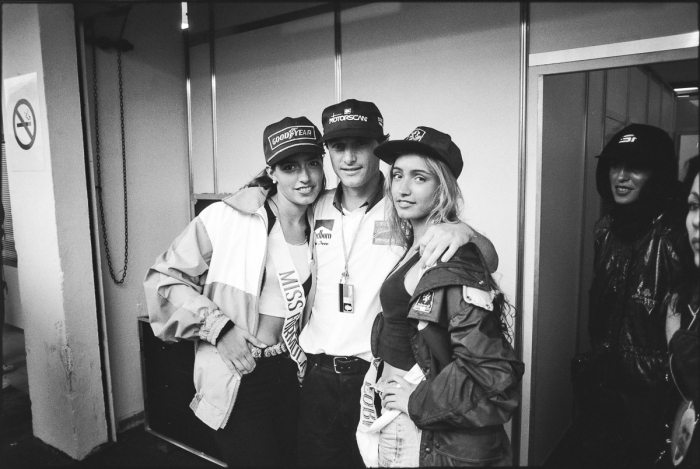
In the pits, we were constantly producing photographs for the agency and our various clients. I particularly remember Eddie Irvine, then driving for Jordan-Peugeot, asking me to photograph him with the Argentinian promotional models who were present in the pits.
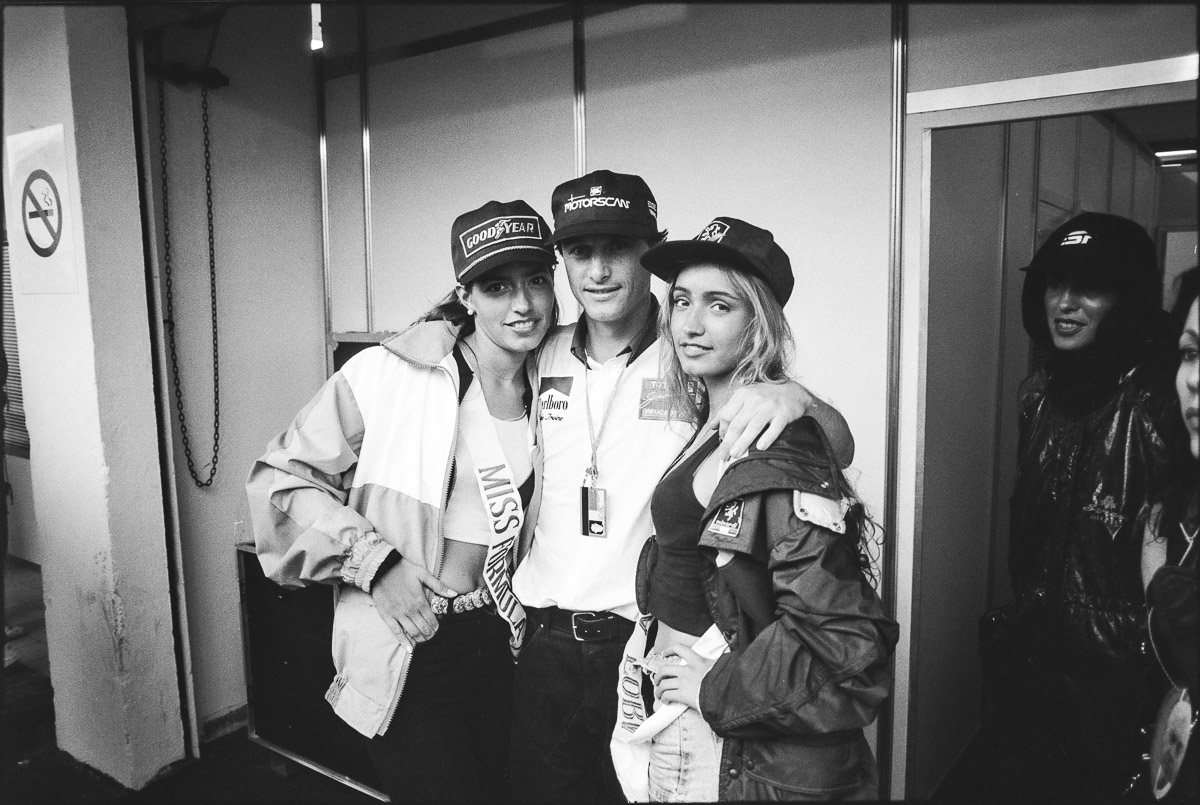
Eddie Irvine poses with local promotional models - Buenos Aires in 1995 during the Argentine Grand Prix - Photo: © Sebastien Desnoulez
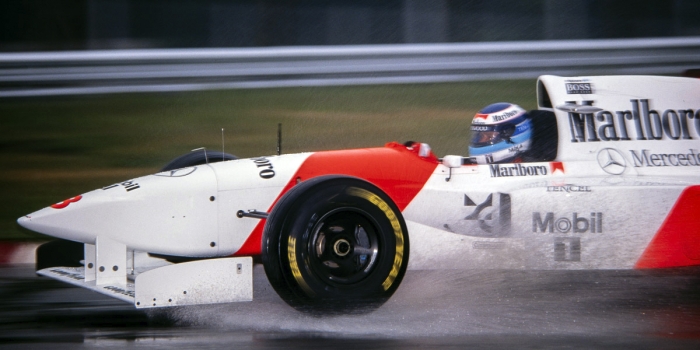
The weather had been poor throughout much of practice and qualifying. The track was regularly soaked and the light was often weak.
One of my photographs of the McLaren was made on the deceleration lane leading towards the pits. A large puddle had formed there and the Formula 1 cars drove through it while slowing down.
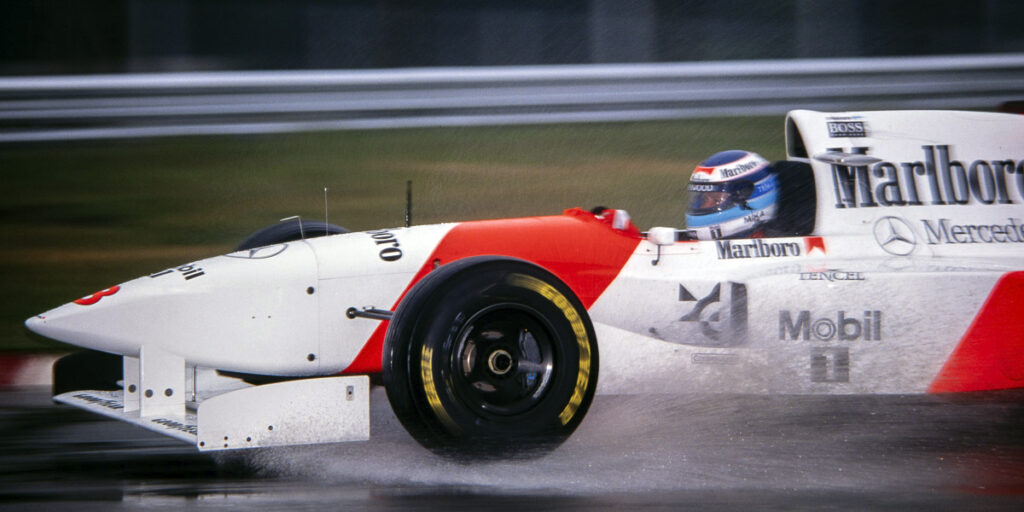
Mika Häkkinen / McLaren - 1995 Argentine F1 Grand Prix - Photo: © Sebastien Desnoulez
I had combined flash with a shutter speed of around 1/60s. The brief flash froze the water droplets thrown up by the car, while the relatively slow shutter speed retained some sense of movement in the photograph.
It was a technique I regularly used in motorsport, particularly in rallying: the flash was not used simply to add light, but to isolate certain details while preserving a sense of speed through the slower shutter speed.
On Sunday, during the race itself, I do not remember making any particularly memorable photographs.
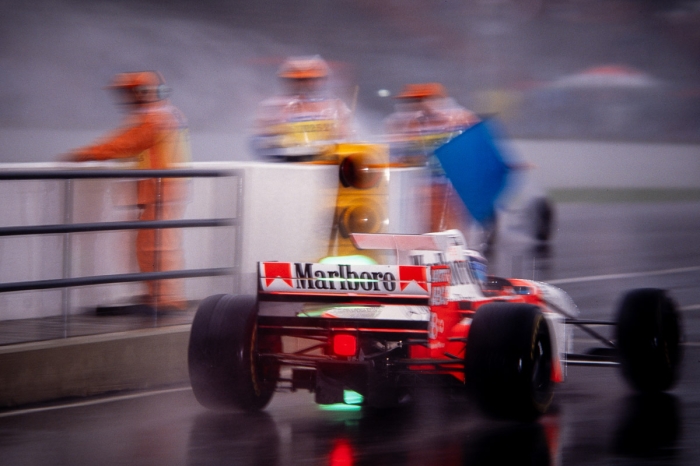
I had mainly been confined to the pit lane in order to produce a pit-stop photograph for Rothmans or Renault.
That was also part of the reality of working for an agency such as DPPI: the most spectacular photograph was not necessarily the photograph the client needed. When a sponsor requested a specific image, you had to be in the right place at the right moment, even if that meant giving up other positions around the circuit.
Three months with a Leica M6
Back in Paris, I shot one more roll with the Leica.
That final film confirmed what I had already begun to understand in Buenos Aires.
The M6 was beautifully built, compact, discreet and particularly pleasant to use when low light required slower shutter speeds. The Elmarit-M 28mm was excellent, and the negatives still confirm that today.
But the camera did not entirely suit the way I construct a photograph.
I needed to see very precisely in the viewfinder what the lens was recording, particularly in order to control the edges of the frame and the vertical lines. I was too accustomed to SLR cameras for the rangefinder viewfinder to become completely natural to me.
I had bought the Leica M6 and its 28mm for around $2,500, equivalent to 12,500 FF. I sold them in Paris in July 1995 for 15,000 FF.
My experience with the Leica M system therefore lasted for approximately three months.
Would I buy a Leica M again today?
More than thirty years have passed, and the question might be viewed differently today.
I take a great deal of pleasure in rediscovering my film archives, which I am gradually digitising using the VALOI easy35 v2.
Some reports even take on a new dimension when I look at them today, whether they are the Dallas police patrols in 1987, Beirut in 1991 and 1992 or my return to Prague in March 1991.
The dynamic range of the Nikon Z8 sensor I use for digitising, combined with the possibilities offered by Lightroom, now allows me to extract from my negatives a result close to what I used to seek in the darkroom, but with even greater latitude.
That does not mean I want to start shooting film again.
Film photography retains a certain magic, particularly because the exact result of the exposure remains unknown until the film has been developed. But I have undertaken a considerable project to digitise my archives while also writing articles for this website. I have no desire to add the processing and scanning of new films to that workload.
Above all, today's mirrorless cameras, and in particular the Nikon Z system I currently use, technically represent what I had long wanted from a camera.
Nevertheless, because I learned photography in the film era, I still retain those reflexes - no pun intended. I construct my photographs in the viewfinder and remain selective before pressing the shutter. Digital photography has never encouraged me to accumulate hundreds of images in the belief that I will sort them out later.
The price of a Leica today
There is also a considerable difference compared with 1995: Leica prices have moved into another category, particularly for new equipment.
The reissued Leica M6 launched in 2022 was initially offered at around 5,050 € and can now be found listed at up to approximately 6,000 €. A new Summicron-M 35mm f/2 ASPH costs around 3,675 € in black and 3,830 € in silver.
A new M6 and 35mm f/2 combination therefore now approaches 10,000 €.
In my view, Leica has become something like the Hermès or Rolex of photography. The company of course continues to produce remarkable photographic tools used by professionals and photographers who choose them for technical, artistic, rendering, ergonomic or simply personal reasons.
But for part of its customer base, Leica has also become a status symbol, a collector's object and sometimes an object of speculation. Owning the camera can then become almost as important a part of the experience as actually photographing with it.
That is not the part of the Leica world that interests me.
Leica M6 or Nikon Z7 II?
The M system does nevertheless have one obvious advantage: with a 35mm f/2, a Leica M remains an extremely compact and lightweight combination.
My Nikon Z7 II is currently my most compact full-frame Nikon body. My Nikkor Z 35mm f/1.8 S is noticeably larger and heavier than a Summicron-M 35mm f/2.
On that criterion alone, the Leica wins.
But at the risk of upsetting the purists - particularly those who actually use these cameras rather than simply collect them - the Nikon Z7 II and Nikkor Z 35mm f/1.8 S combination I already own allows me to make anything I would want to photograph today with a Leica M.
And, judging by some of the photographs I made at dusk in Venice, with just as much soul in my eyes.
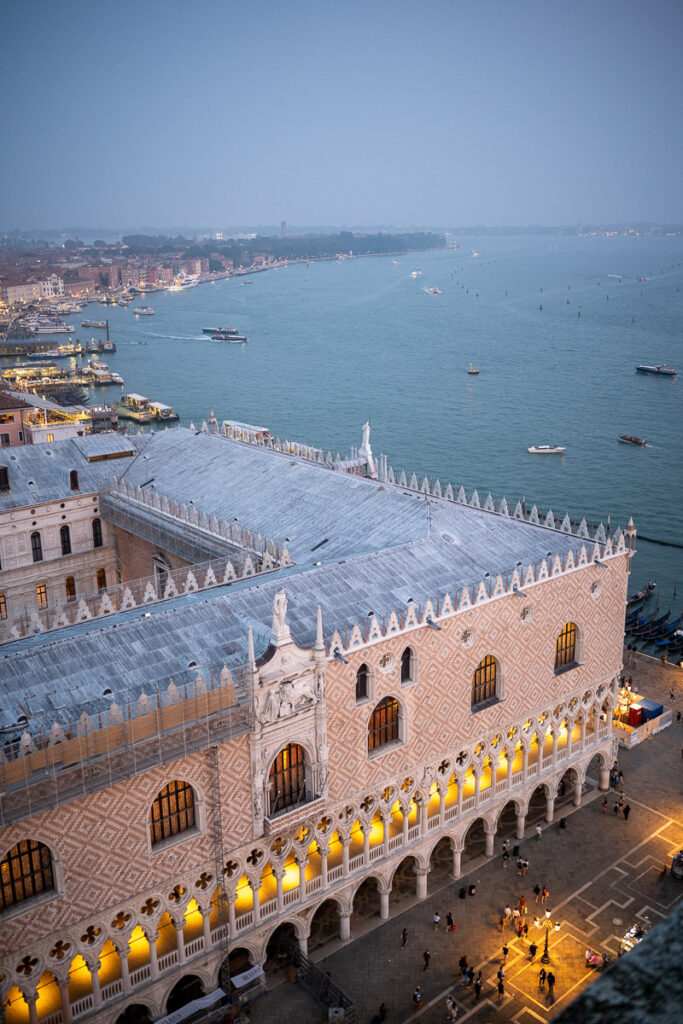
Doge's Palace and the Lagoon from the bell tower of St Mark's Square, Venice - Photo: © Sebastien Desnoulez
What I find there above all is what matters to me: a viewfinder in which I can construct the image very precisely, excellent optical quality, stabilisation, very high dynamic range and the ability to work in virtually any lighting conditions.
This is obviously a personal opinion, based on more than forty years of practice and on the entire evolution of my equipment from film to digital photography.
This is therefore not a personal crusade against Leica.
The M6 remains an exceptional camera and I completely understand why other photographers prefer its simplicity, its rangefinder viewfinder, its lenses and even the ritual of film. My experience in 1995 simply showed me that it did not entirely suit the way I photograph.
Thirty-one years later, I see no reason to think differently.
About the author
Sebastien Desnoulez is a photographer, author and image maker based in Paris. His work spans architectural photography, landscape photography and travel photography, with particular attention to composition, lines, light, blur and visual accidents. Trained in photography in the mid-1980s, he covered Formula 1 and reported from around the world before developing a fine art photography practice built around the tension between graphic rigour and visual instability. He also shares his technical experience through practical articles for passionate photographers, drawing on a strong visual culture acquired in both film and digital photography.
Click on the photographs below to view them full screen.
All the photographs on this website are protected by copyright © Sebastien Desnoulez. No use is authorised without the author's written permission.
All the photos displayed on this website are copyright protected © Sebastien Desnoulez. No use allowed without written authorization.
Legal notice
Tags