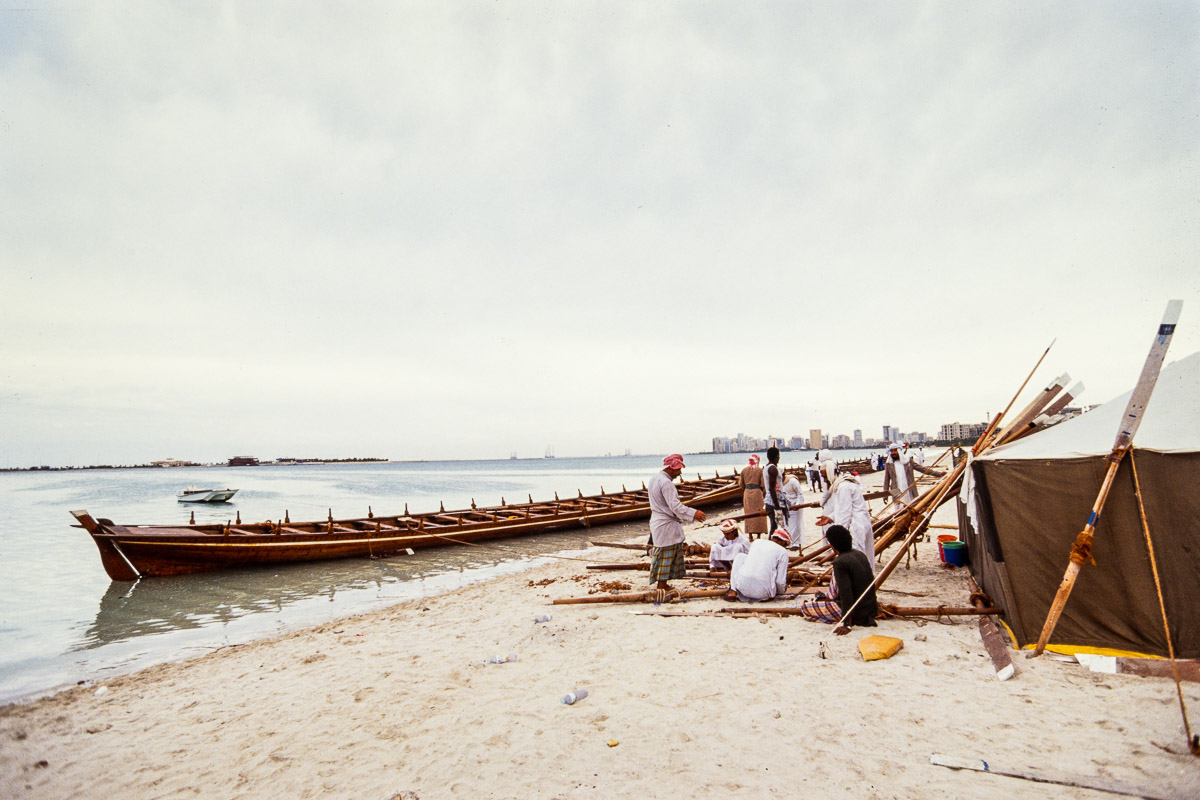


Traditional Rowing Race in Abu Dhabi in 1991

During a stay in Dubai in 1991, I travelled to Abu Dhabi to photograph a traditional rowing race featuring boats crewed by 25 pairs of oarsmen. The assignment also introduced me to a very different relationship with time from the one I was accustomed to in the world of motorsport.
In 1991, I spent several weeks in Dubai working on assignments for Headline News and the DPPI press agency. Alongside my coverage of the Middle East Rally Championship, I also produced various magazine features documenting everyday life and local traditions in the region.
Among these assignments was a traditional rowing race held in Abu Dhabi. The information available was rather vague. As was often the case at the time, my Lebanese friends Sadri Barrage and Yves Aboukhaled arranged to meet me early in the morning so that we could travel to the race venue.
A First Trip Without a Race
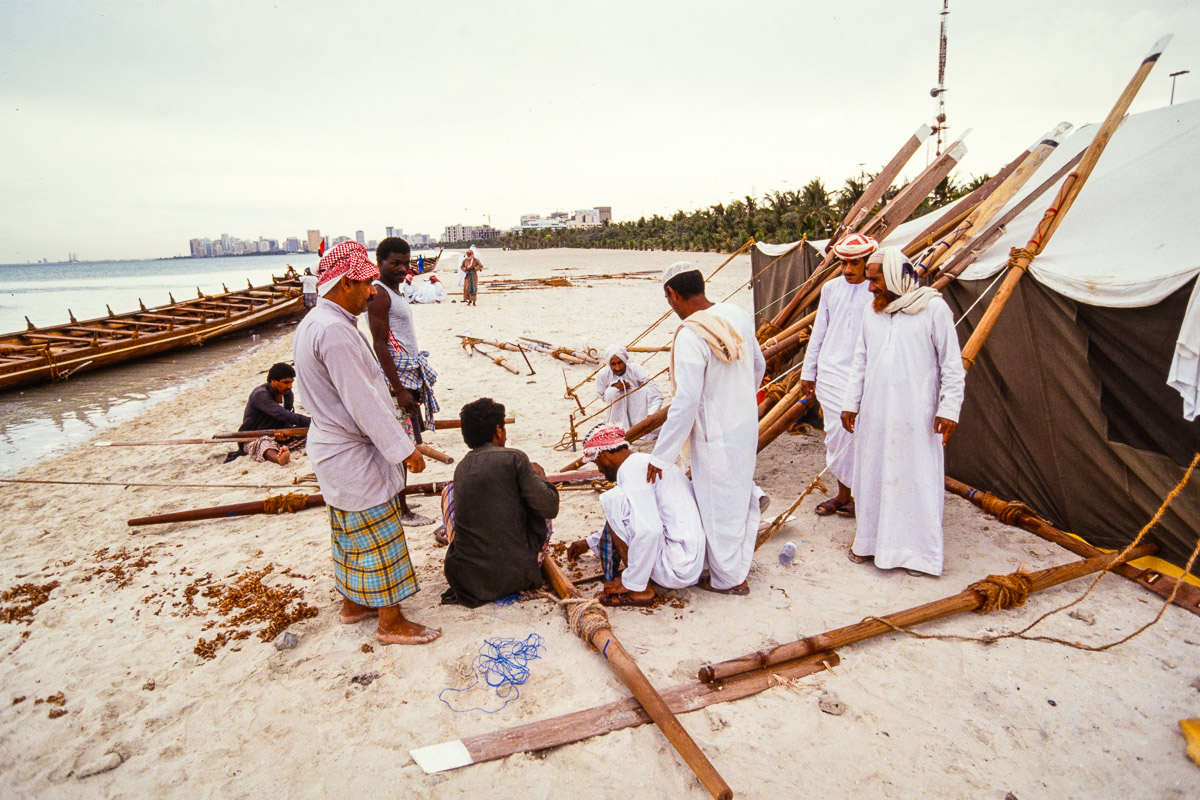
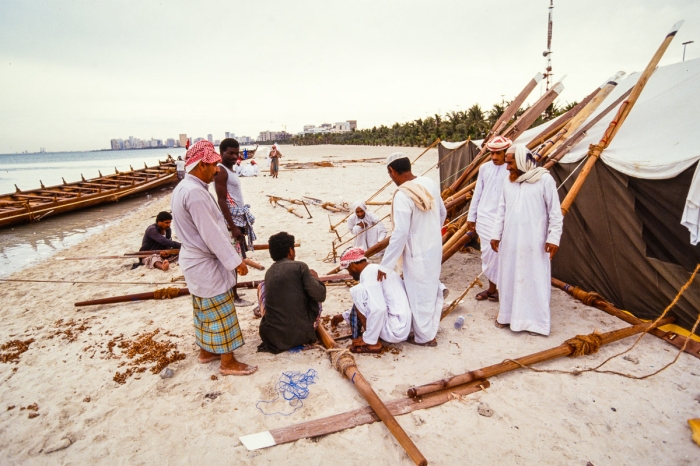
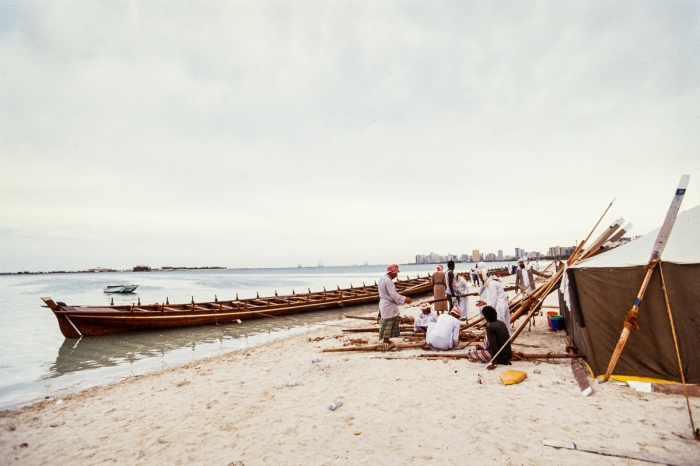
When I arrived, the boats were already lined up on the beach. The crews prepared their oars, talked among themselves, and gathered beneath tents set up along the shoreline. I identified a few promising viewpoints and waited for the start.
An hour passed, then two. Nothing happened. Standing next to me, a British cameraman seemed far less surprised than I was. He explained that this type of delay was common and that the race would begin whenever the attending sheikhs decided it should.
Since my first assignments in the Middle East, Sadri and Yves had already introduced me to a local philosophy of patience. Two expressions came up regularly in conversation: Men Chouf, meaning “we'll see”, and Boukhra, meaning “tomorrow”.
Accustomed to the precise schedules of motorsport events, I gradually discovered that attitudes towards time could differ greatly from one culture to another. This first trip ended without a race. I returned to Dubai with a few atmospheric photographs and instructions to come back the following day.
Preparations on the Beach
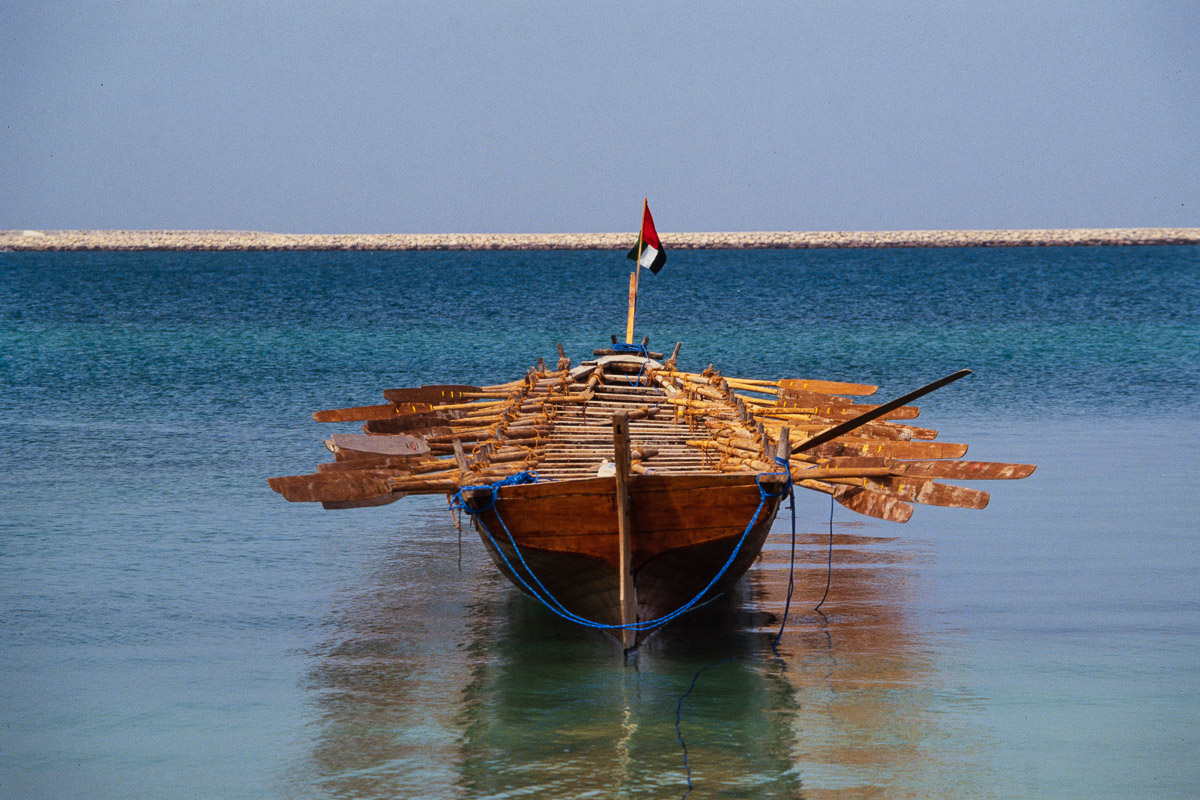
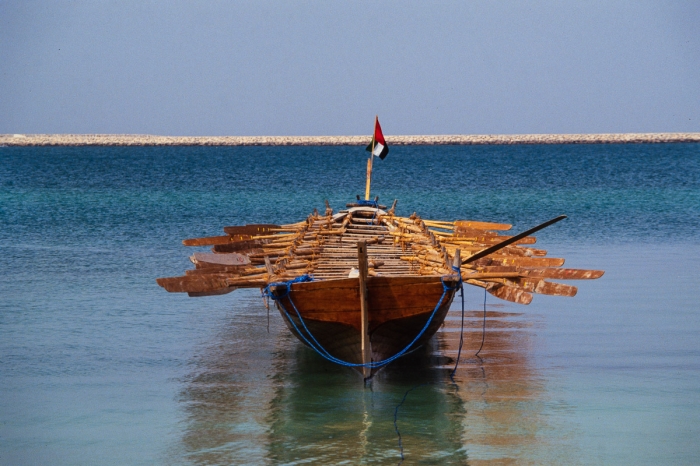
The long wait gave me the opportunity to observe the crews and their boats more closely. The long wooden hulls were lined up on the sand. Oars were prepared and checked before the boats would eventually head out onto the water.
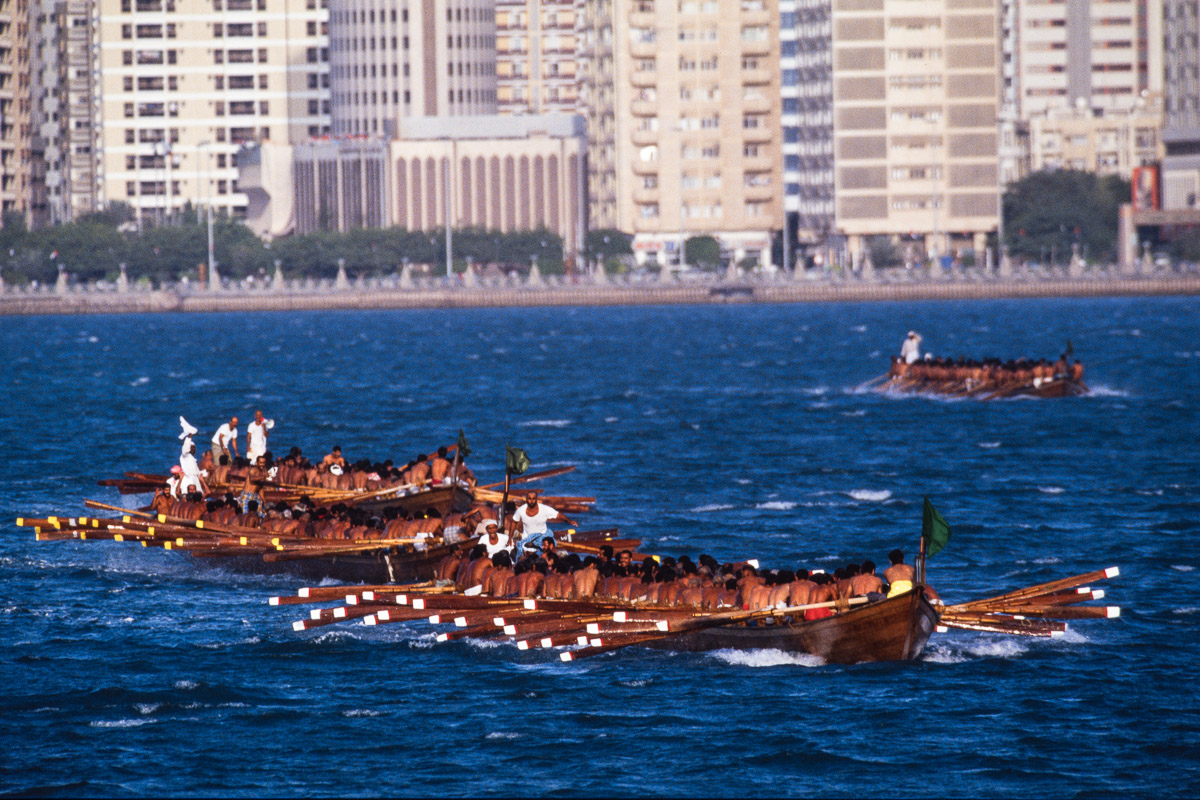
The boats used in this traditional discipline carried several dozen rowers. The crews gathered beneath tents erected along the beach while the organisers completed their preparations.
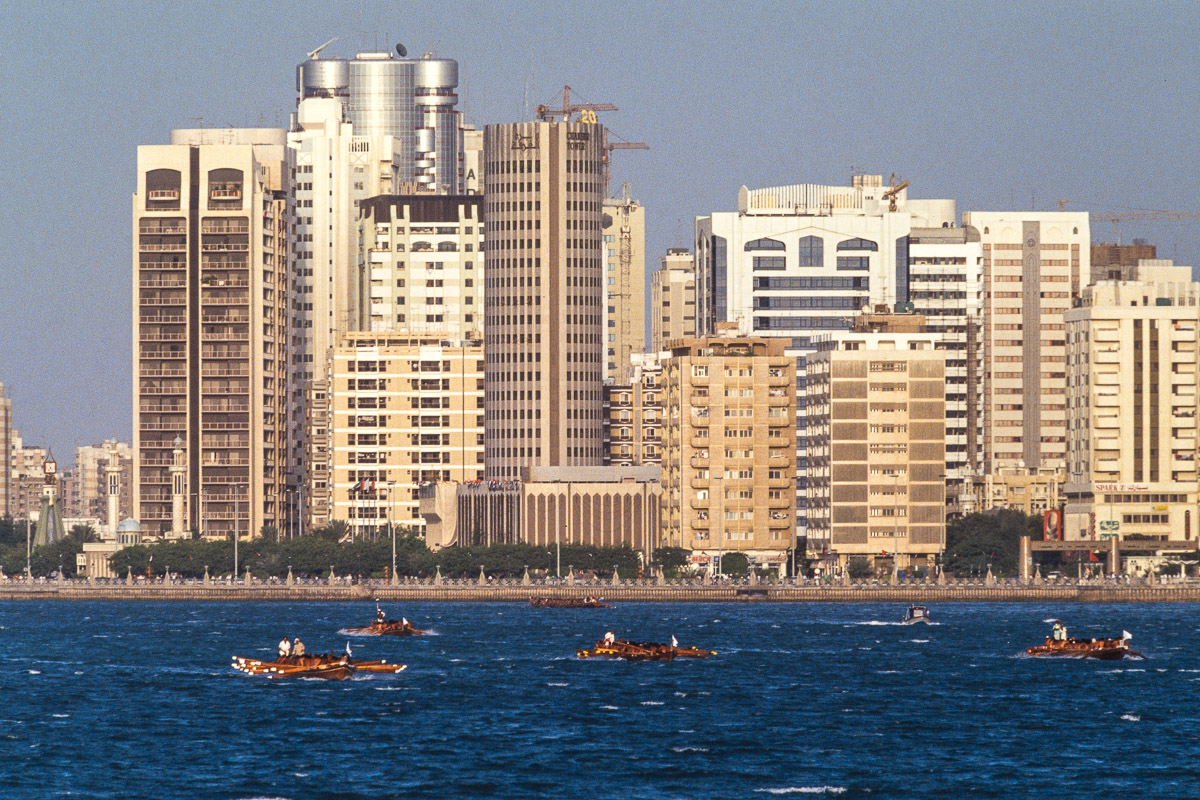
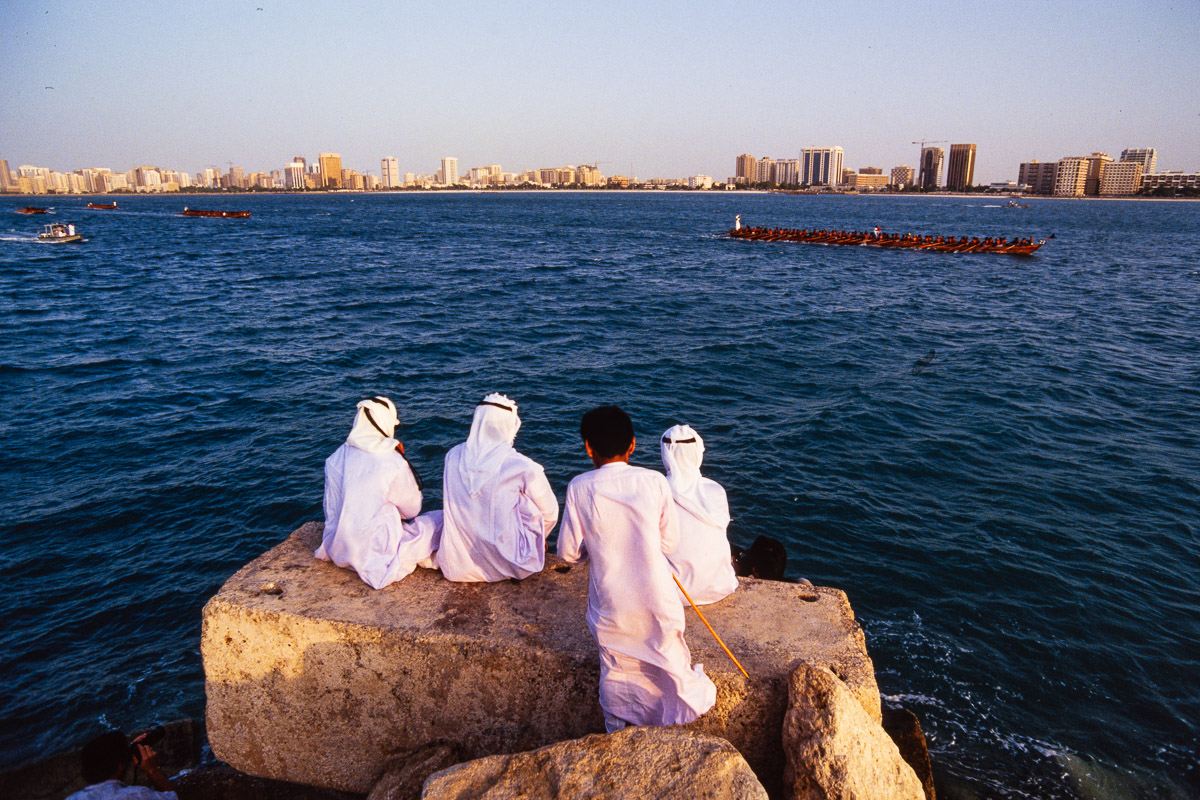
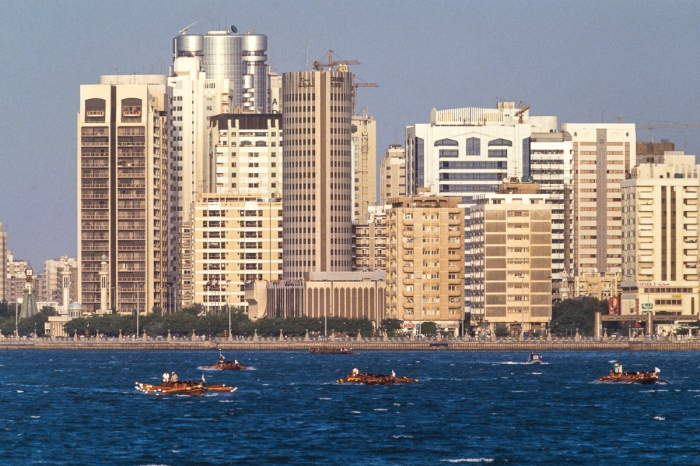
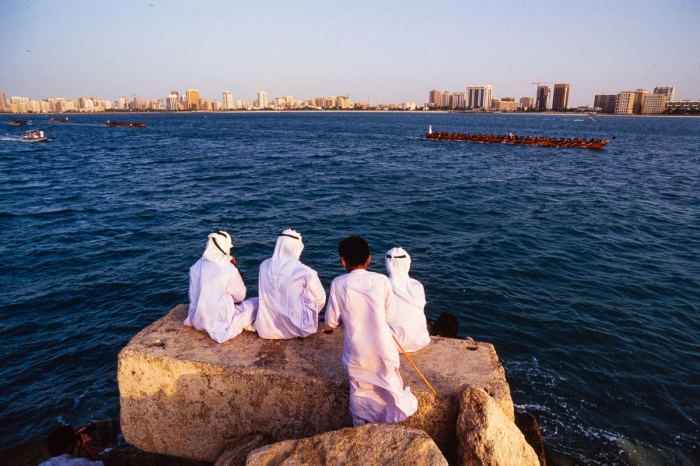
In the distance, the city of Abu Dhabi was already visible across the water. The buildings were there, but the waterfront still looked very different from the one visitors see today.
Returning the Following Day
The next morning, I set off once again from Dubai and made the journey back to the race venue. This time, the race did take place.
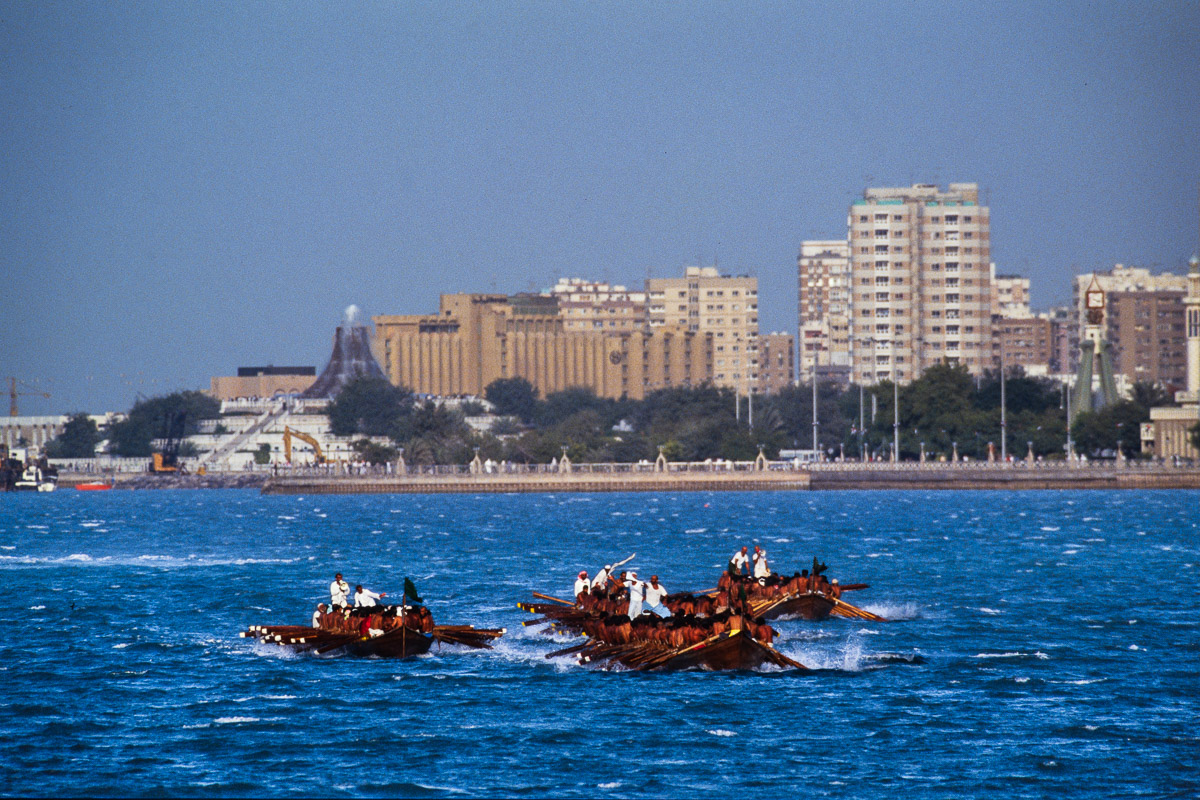
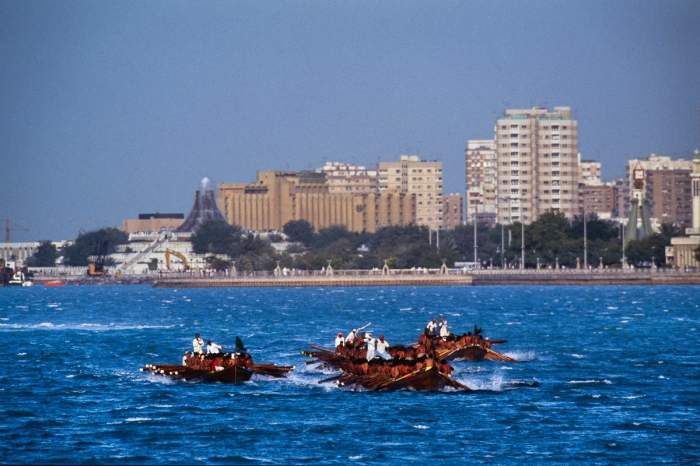
I never actually witnessed the crews taking their starting positions. The boats appeared to set off from the far end of the body of water. Along the shoreline, spectators waited patiently, with no precise information about when the race would begin.
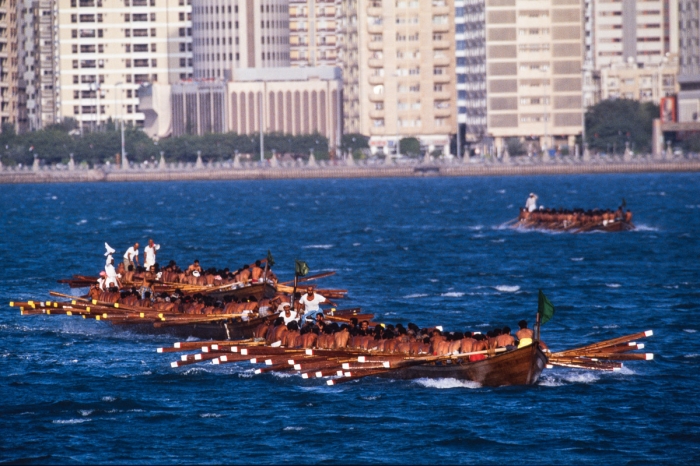
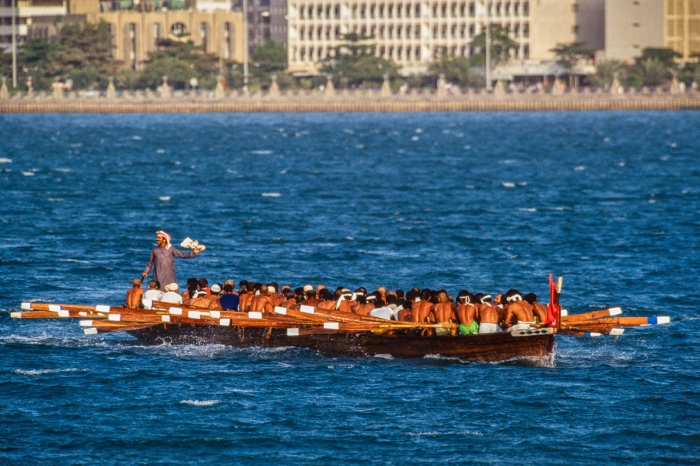
By the time the boats finally came into view, the race was already underway. From the shore, I photographed the competitors with a telephoto lens, using the city of Abu Dhabi as a backdrop.
An Unexpected Protest
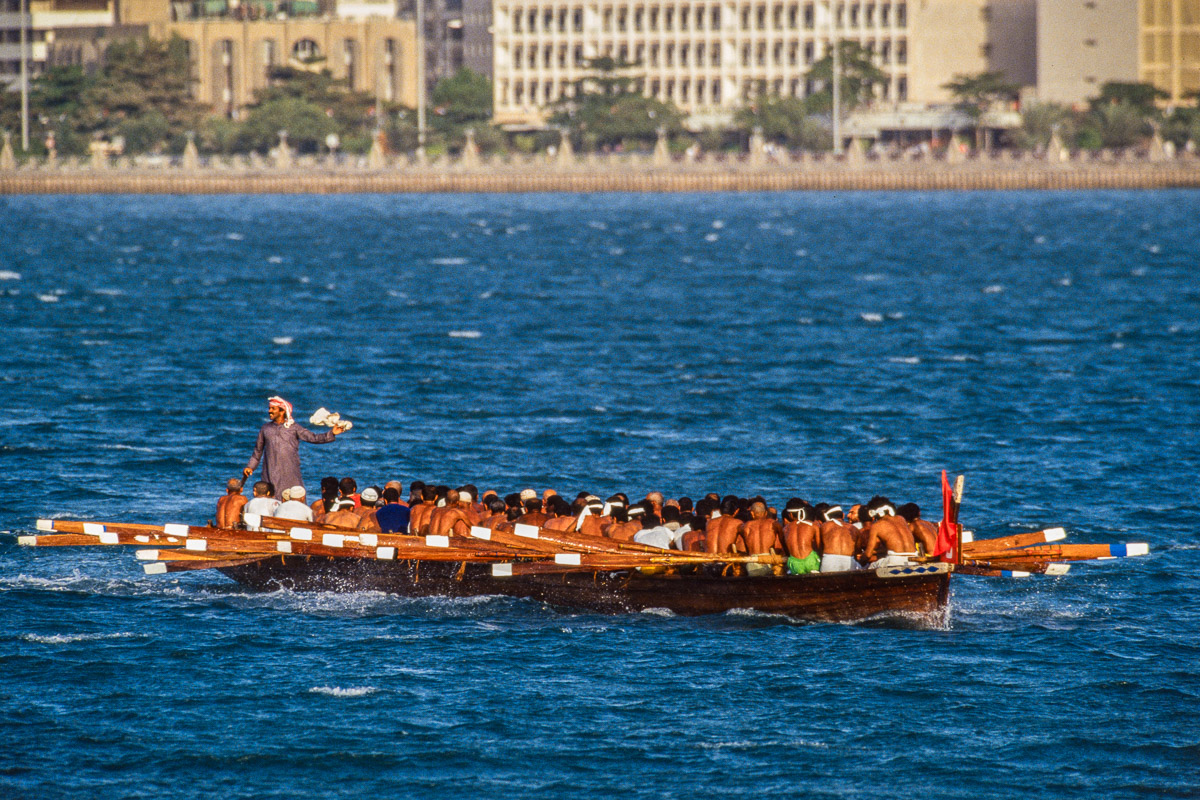
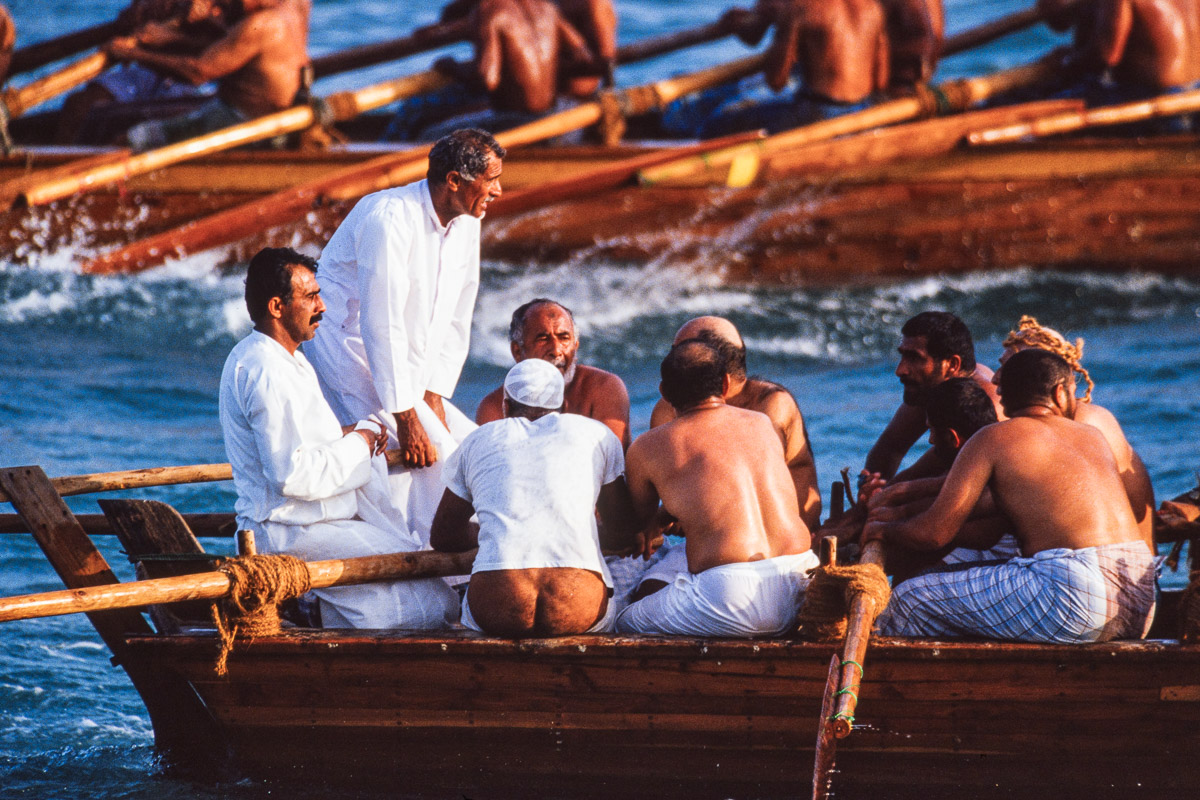
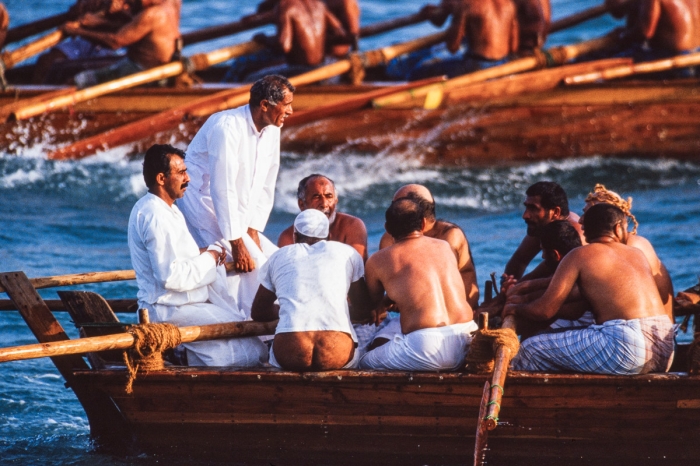
While photographing the race through a telephoto lens, one detail caught my attention aboard a particular boat. One of the rowers was clearly expressing his dissatisfaction and continued competing in rather unusual attire.
The scene lasted only a few moments. I took several frames without ever really understanding what had prompted the protest. It is the kind of small story that photography sometimes preserves better than memory.
A Glimpse of a Gulf Maritime Tradition
When I made these photographs, my intention was not to produce an ethnographic study. As with the other subjects I covered during this stay, the purpose was simply to create editorial material illustrating local life.
Looking back, however, these images provide an interesting record of a traditional sporting practice in the Gulf at the beginning of the 1990s. They document both the race itself and its preparations, the crews, and part of Abu Dhabi’s waterfront at a time when the city was continuing its development.
For me, this assignment also remains associated with the lesson in patience taught by my Lebanese friends. Spending an entire day waiting for a race that never started, then returning the next day to try again, would have seemed unimaginable in the world of motorsport. In the Middle East, it was simply part of the journey.
Other Reports Produced During These Stays
This traditional rowing race forms part of a broader series of reports produced during several stays in the United Arab Emirates between 1990 and 1993. The overall context of these trips is described in the article Dubai in the 1990s, photographs before the city's expansion, a period when the city was already developing but before the major urban projects transformed its skyline.
In 1991, I also produced a report on a camel race in Dubai, featuring very young jockeys, as well as a feature on falcon hunting in the desert.
Alongside these documentary assignments, I also photographed the dunes of Hatta and the mountains of the eastern coast of the Emirates, landscapes that reveal another side of the country beyond its cities and coastal developments.
I continued to return regularly to the Middle East to cover regional rally events. In 1992, Mamdouh Khayat won the Middle East Rally Championship driving a Lancia Delta Integrale. My final stay in Dubai took place in November 1993 during the FIA Cross-Country Rally World Cup round held in the United Arab Emirates, where Citroën secured the manufacturers' title.
Click on the photos below to view them full screen.
All the photos displayed on this website are copyright protected © Sebastien Desnoulez. No use allowed without written authorization.
Legal notice
About the Author
Sebastien Desnoulez is a photographer, author, and image creator based in Paris. His work spans architectural photography, landscape photography, and travel photography, with particular attention to composition, lines, light, blur, and visual accidents. Trained in photography in the mid-1980s, he covered Formula 1 and produced reports around the world before developing a fine art photography practice based on the tension between graphic precision and visual instability. He also shares his technical experience through practical articles for photography enthusiasts, drawing on a solid visual culture acquired through both film and digital photography.
Tags