

My First Photographs of the 24 Hours of Le Mans in 1989

I covered my first 24 Hours of Le Mans in June 1989, a few months after joining the DPPI agency. I had joined the agency the previous September. At the time, I was working as a news photographer and had been interested in motor racing for just over a year. Before being officially sent to cover a major event such as Le Mans, I still had to prove myself.
The race was covered for the agency by Thierry Bovy, François Baudin and Henri Thibault. I had nevertheless requested accreditation from the Automobile Club de l’Ouest, on behalf of DPPI, without having a hotel reservation or any real certainty about how the weekend would be organized. I arrived at Le Mans on Saturday around midday with Laurent Lacoste, photographer for L’Action Automobile.
After taking a few photographs on the starting grid, I was sent to photograph the start from the press grandstand, opposite the pits. At Le Mans, the start is a rolling start. The cars complete a warm-up lap behind a pace car, which then returns to the pits. The cars then launch directly into the race. From the press grandstand, the wide-angle view made it possible to include the grandstands and the cars stretching out along the track, although it was less spectacular than a head-on view.
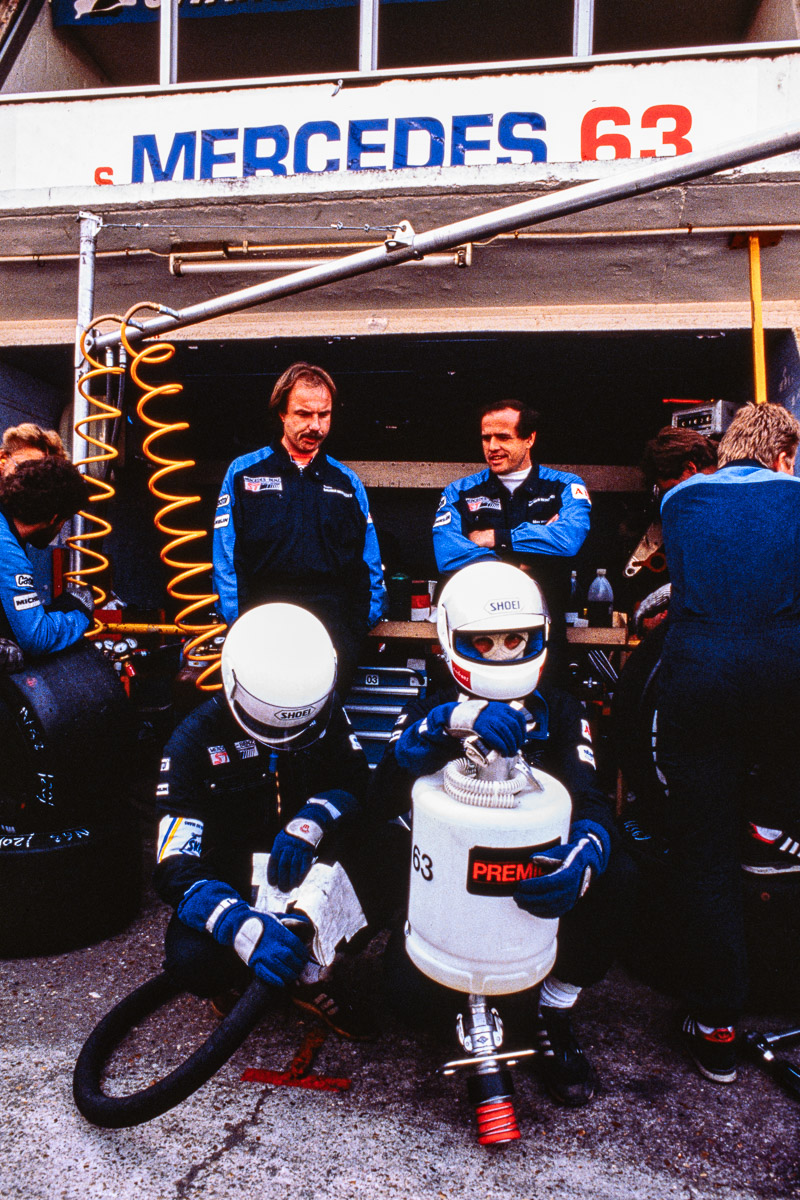
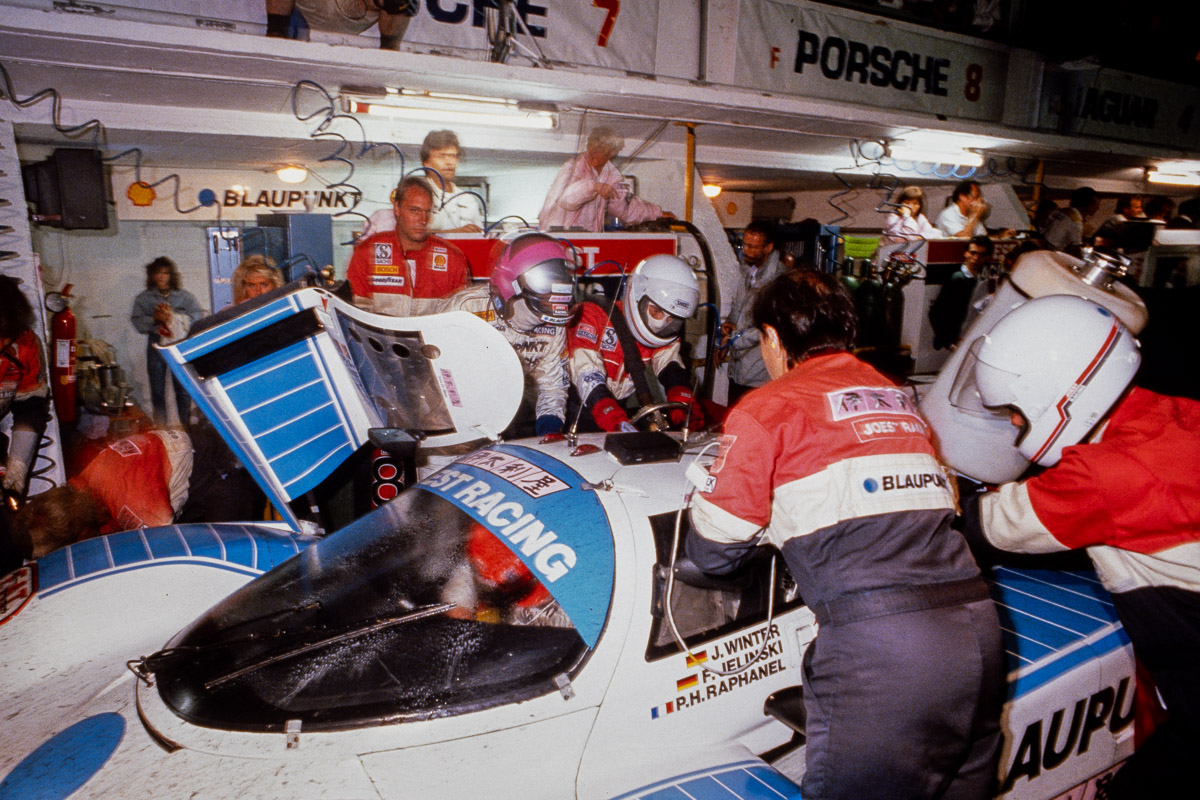
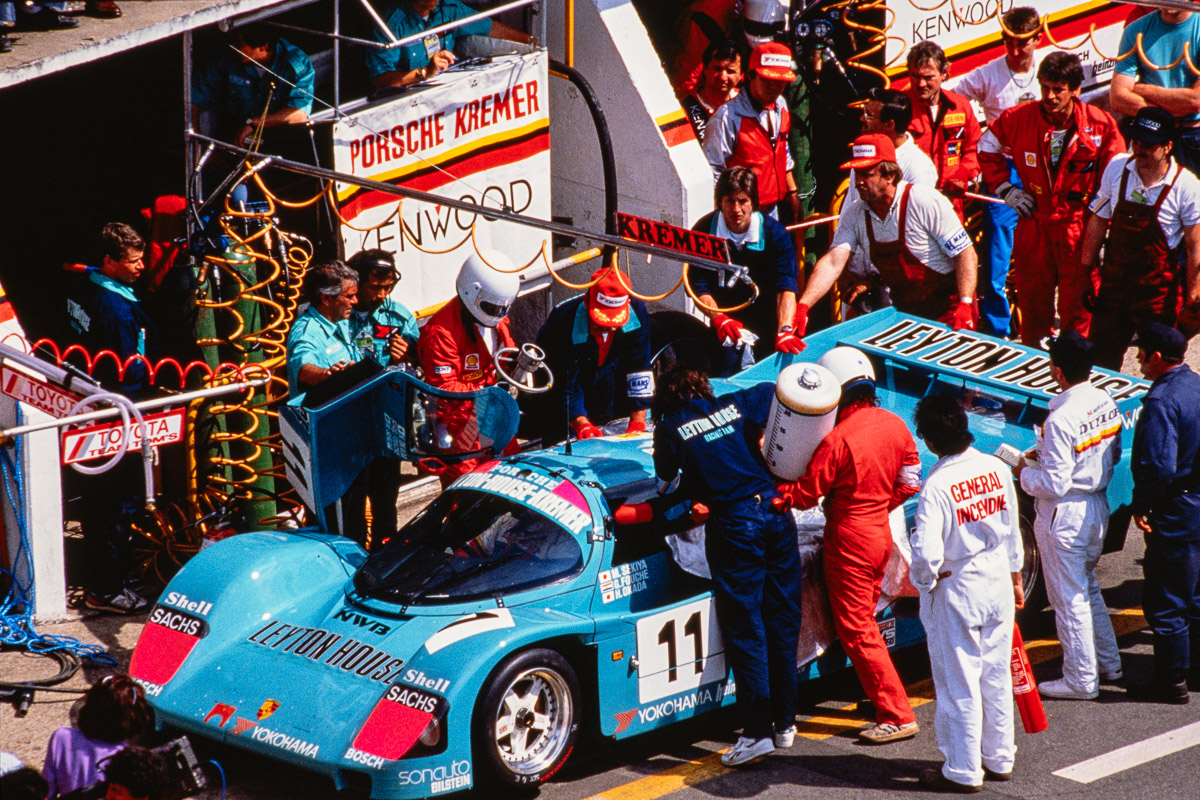
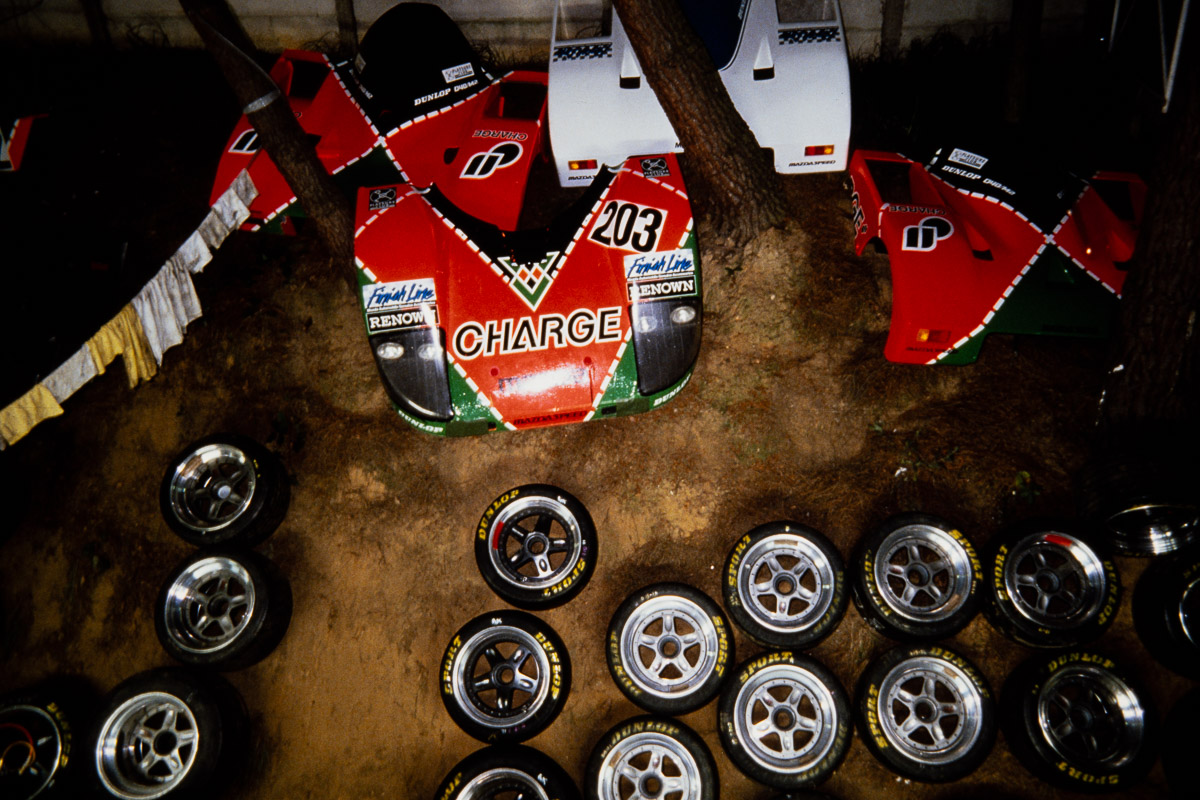
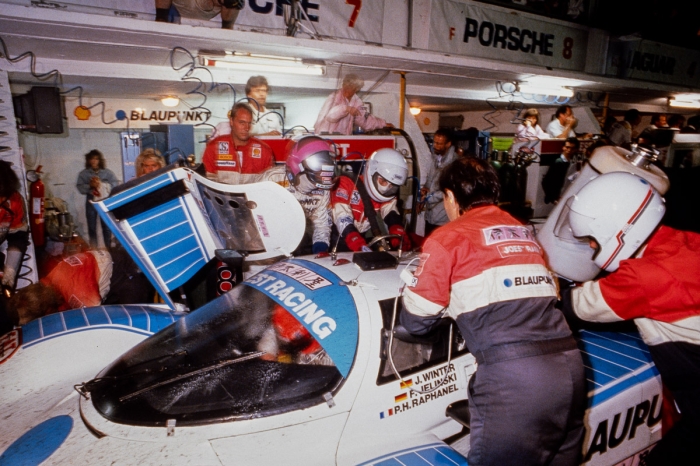
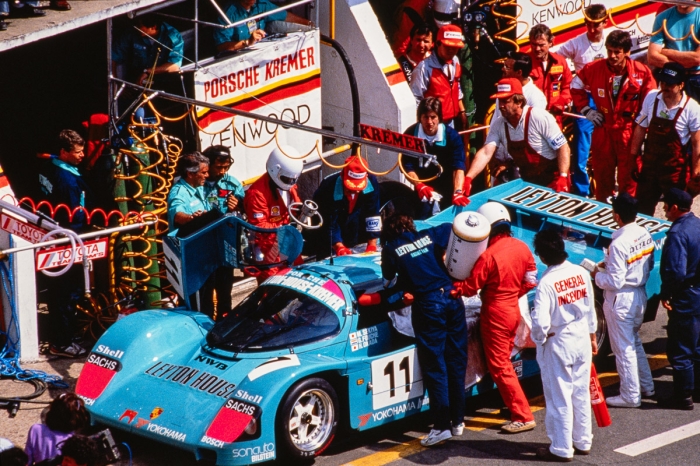
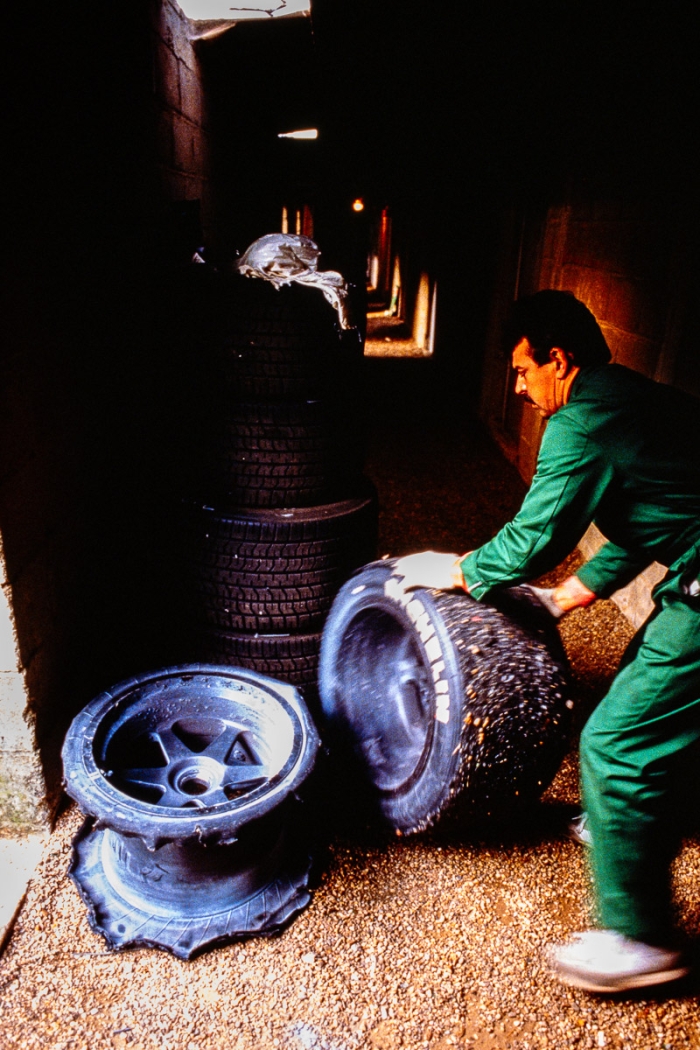
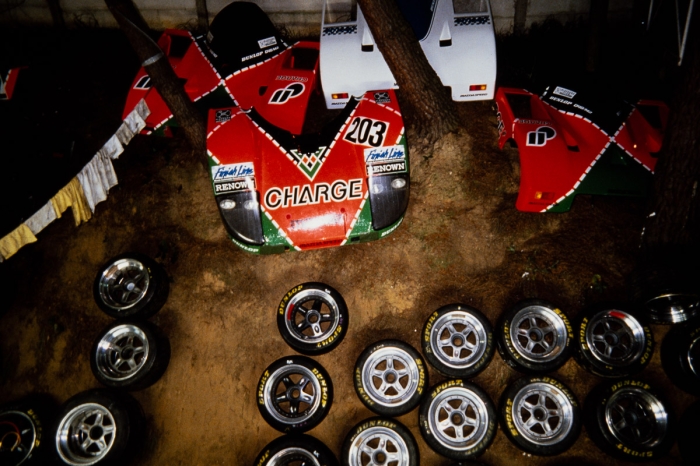
After a few laps, I went down to the pits, the same pits that can be seen in the film Le Mans with Steve McQueen, or later recreated in Le Mans 66 with Matt Damon and Christian Bale. The newer pits, more practical but less visually rooted in history, date from 1991. In 1989, the pits still offered a particular closeness to the cars, the teams and the mechanics.
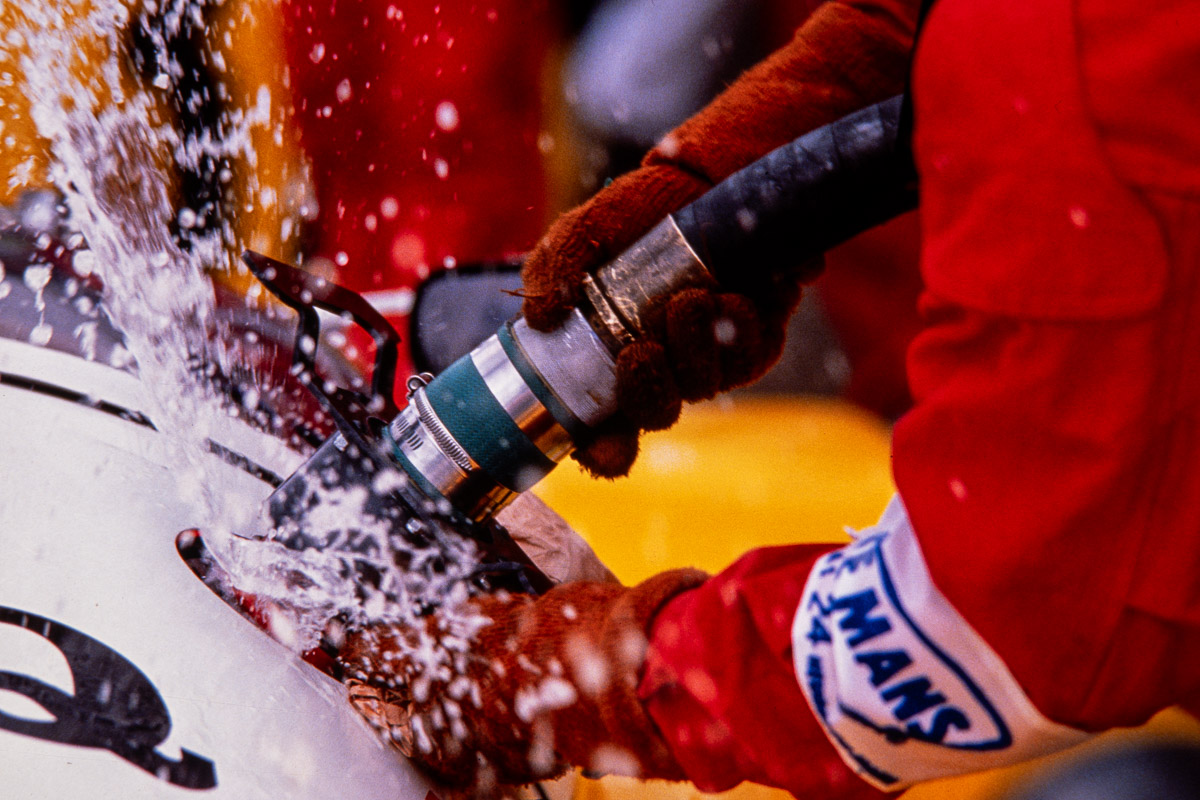
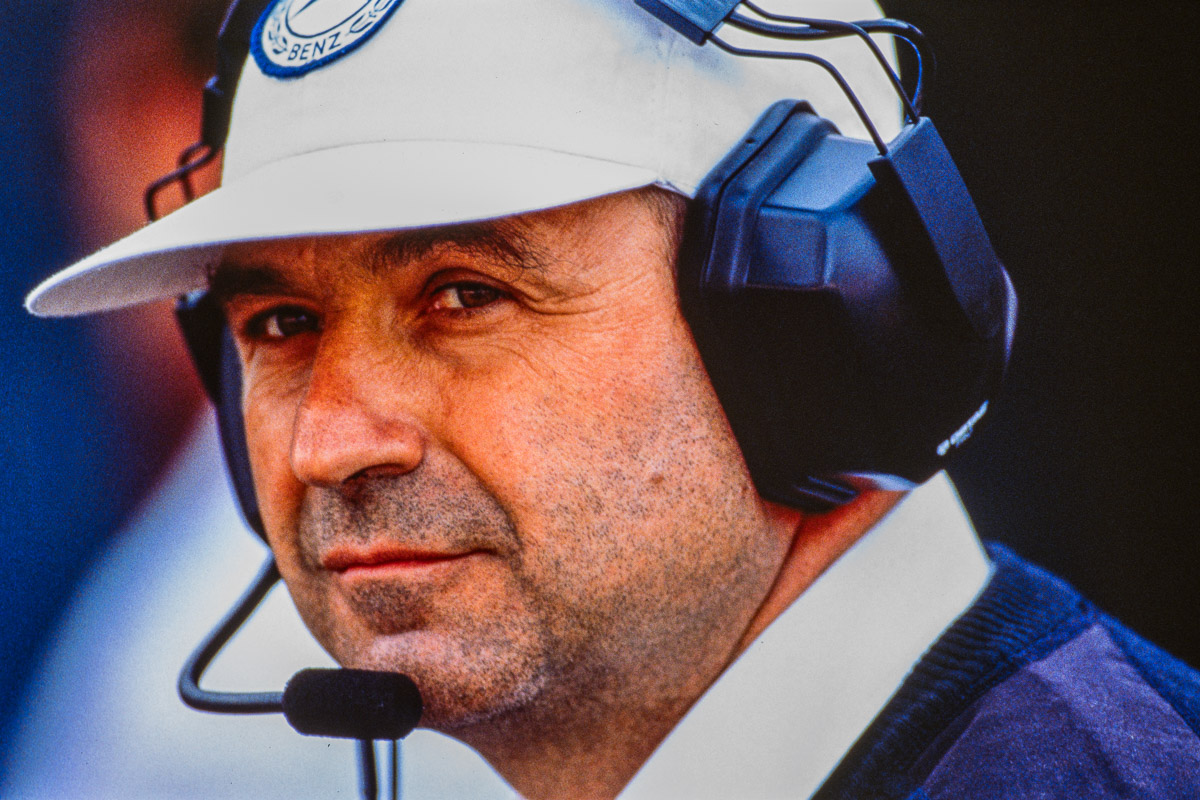
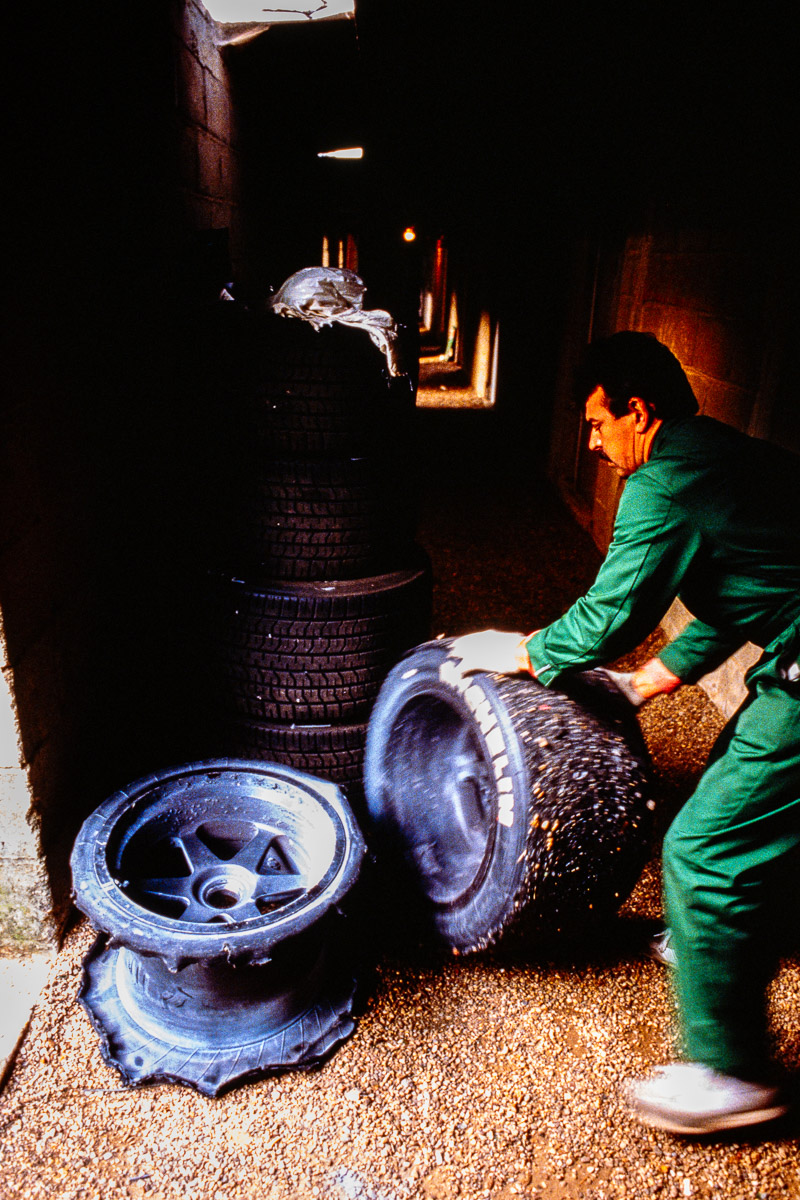
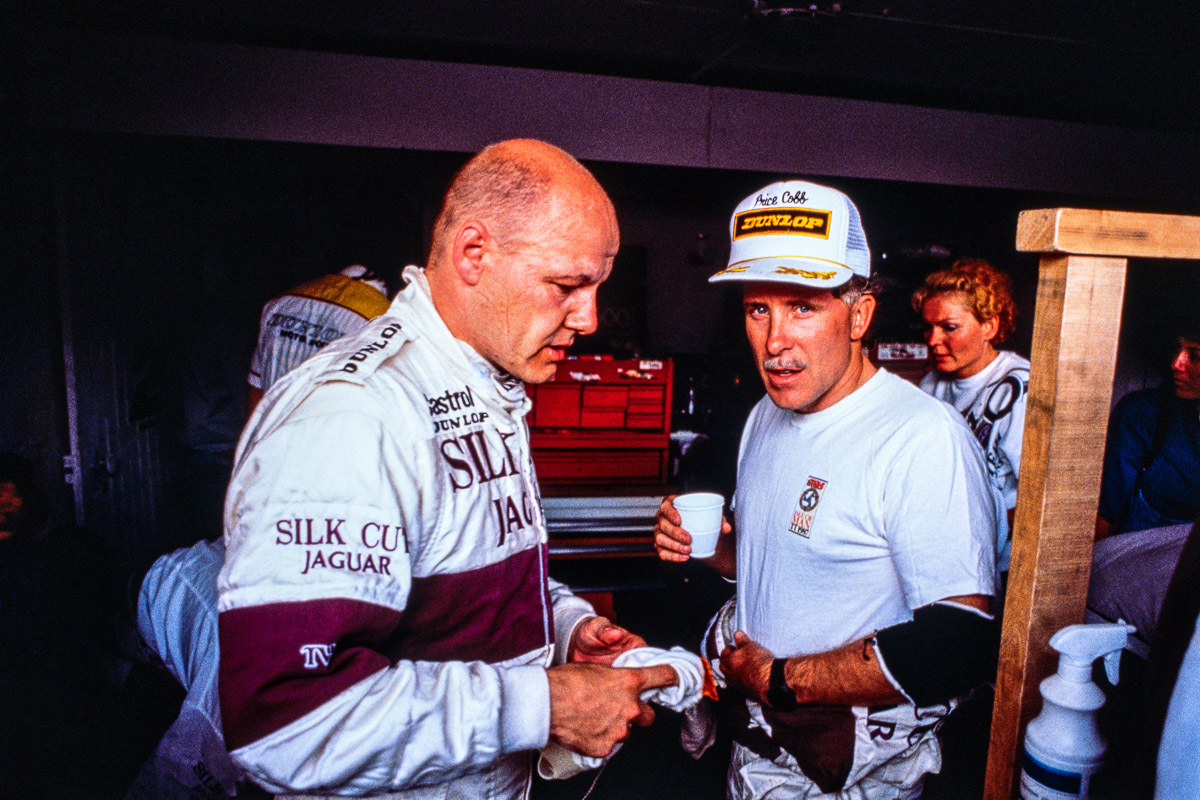
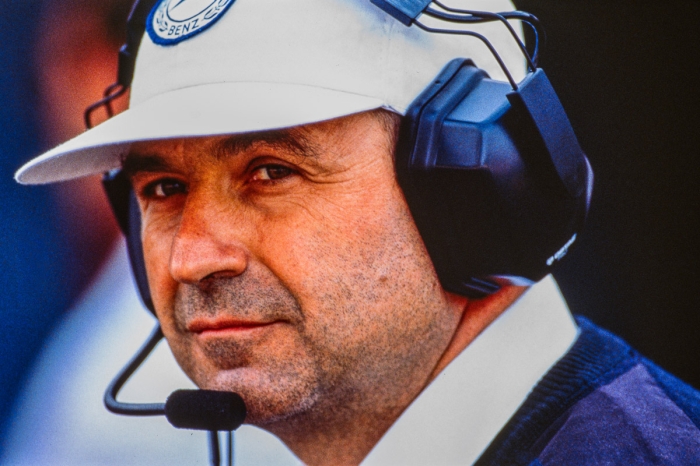
I remember losing one of my earplugs fairly early in the race. I spent the rest of the event with one ear unprotected. In the pits, the noise was constant. I spent several hours photographing atmosphere, mechanical work and portraits, including one of Peter Sauber, Mercedes team manager, shot with the Nikkor 400mm f/3.5.
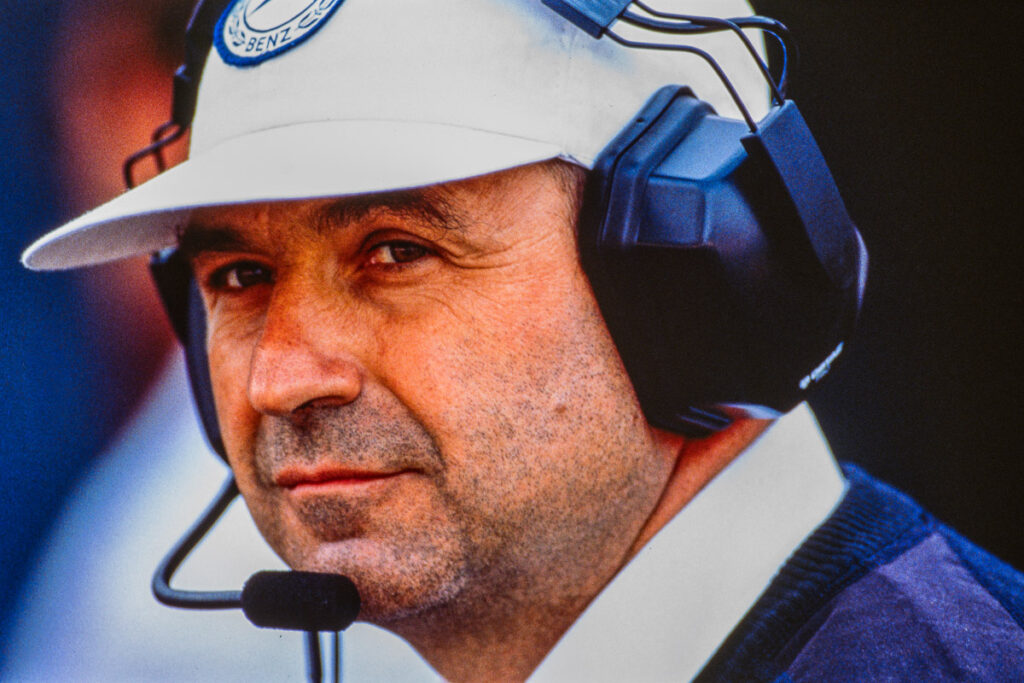 Peter Sauber - 24 Hours of Le Mans 1989 - Photo: © Sebastien Desnoulez
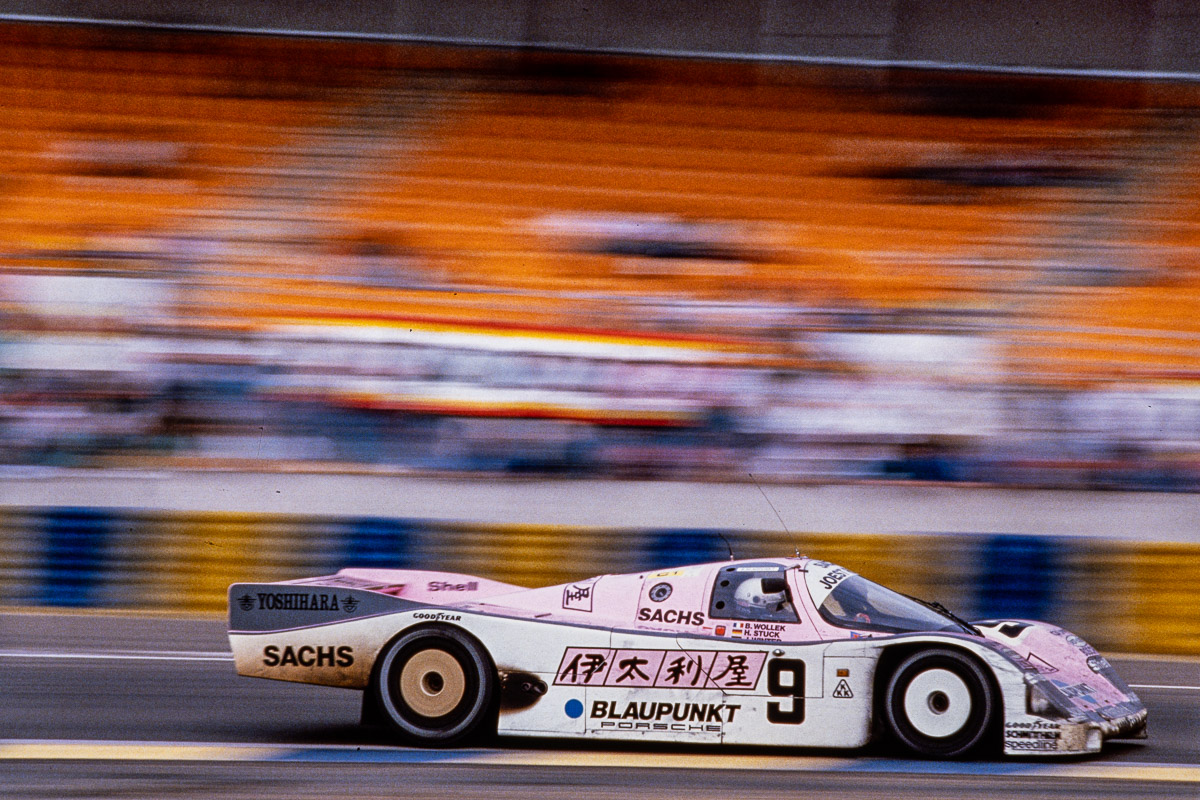
At the time, I was working with motor-driven Nikon FM2 and FM bodies, together with a set of prime lenses: 24mm f/2.8, 35mm f/1.4, 50mm f/1.8, 85mm f/1.8, 180mm f/2.8 and 400mm f/3.5. Focus and exposure were entirely manual. On an event such as the 24 Hours of Le Mans, with fast-moving cars, constantly changing light, highly contrasted pits and night-time scenes, every frame required anticipation. You had to choose the shutter speed and aperture, focus manually, follow the movement and release the shutter without being able to check the result.
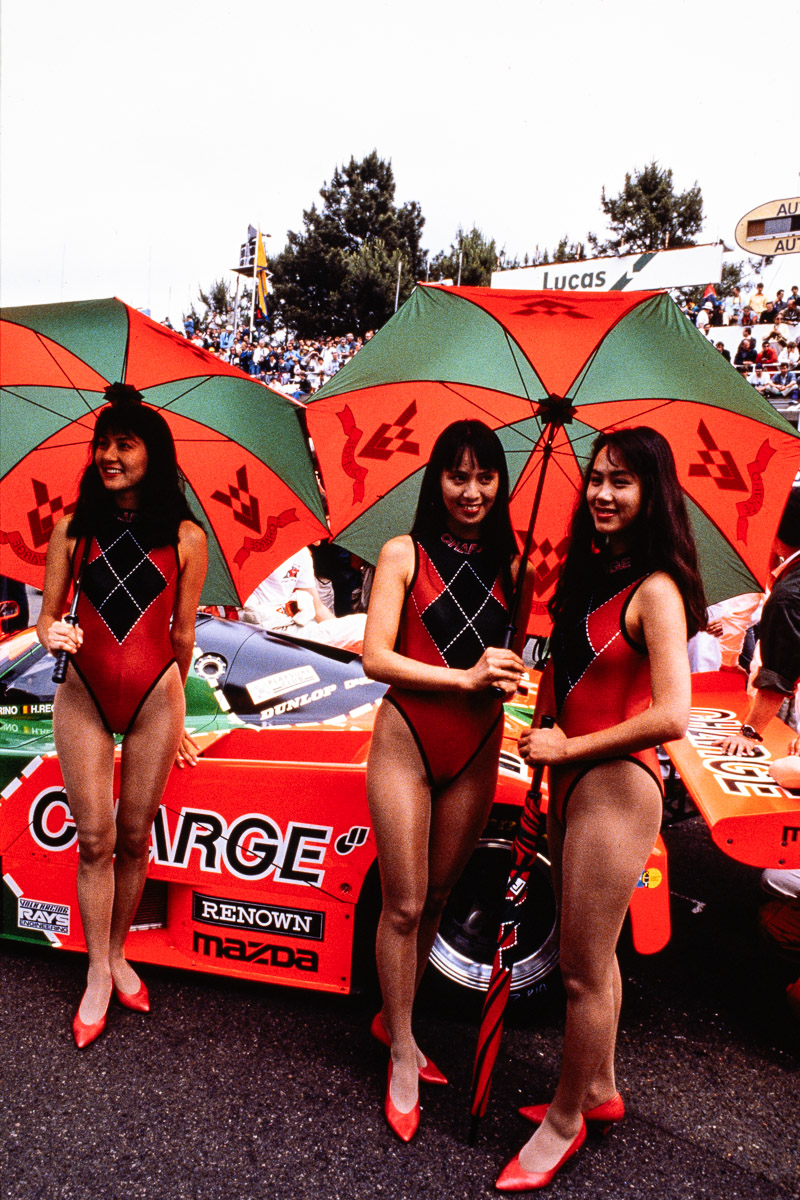
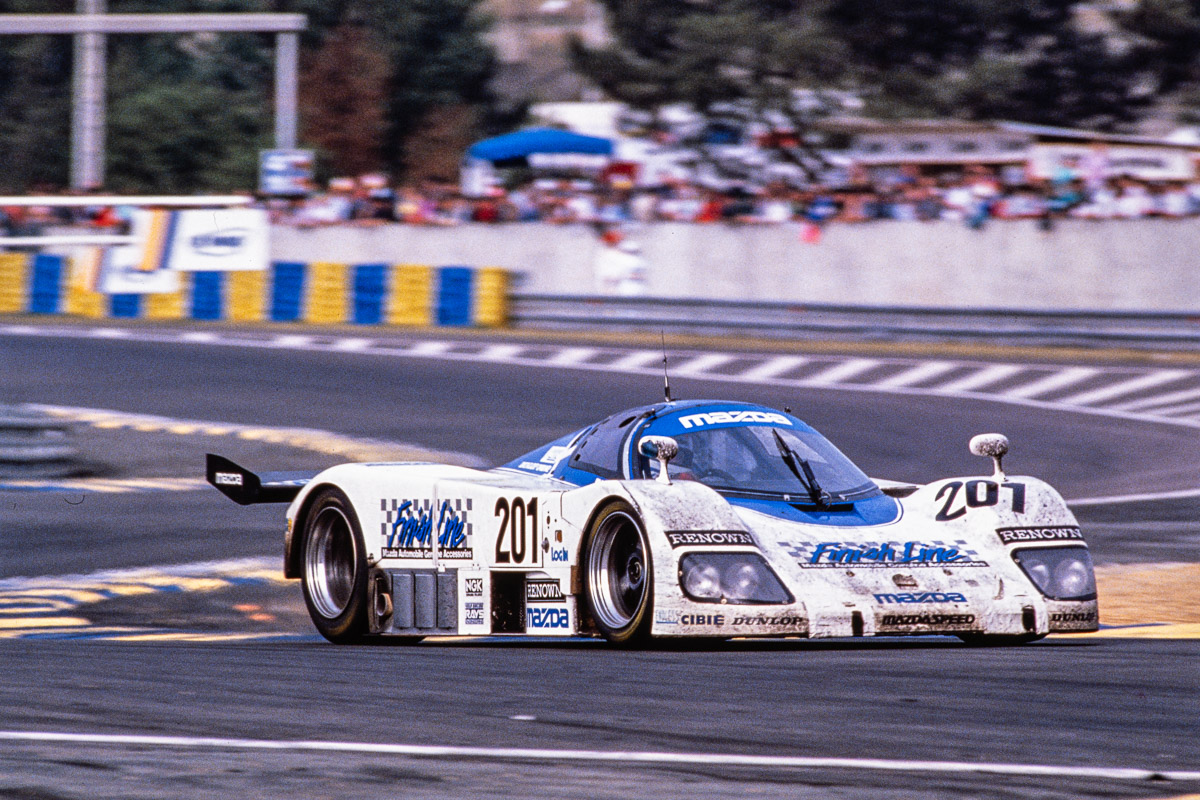
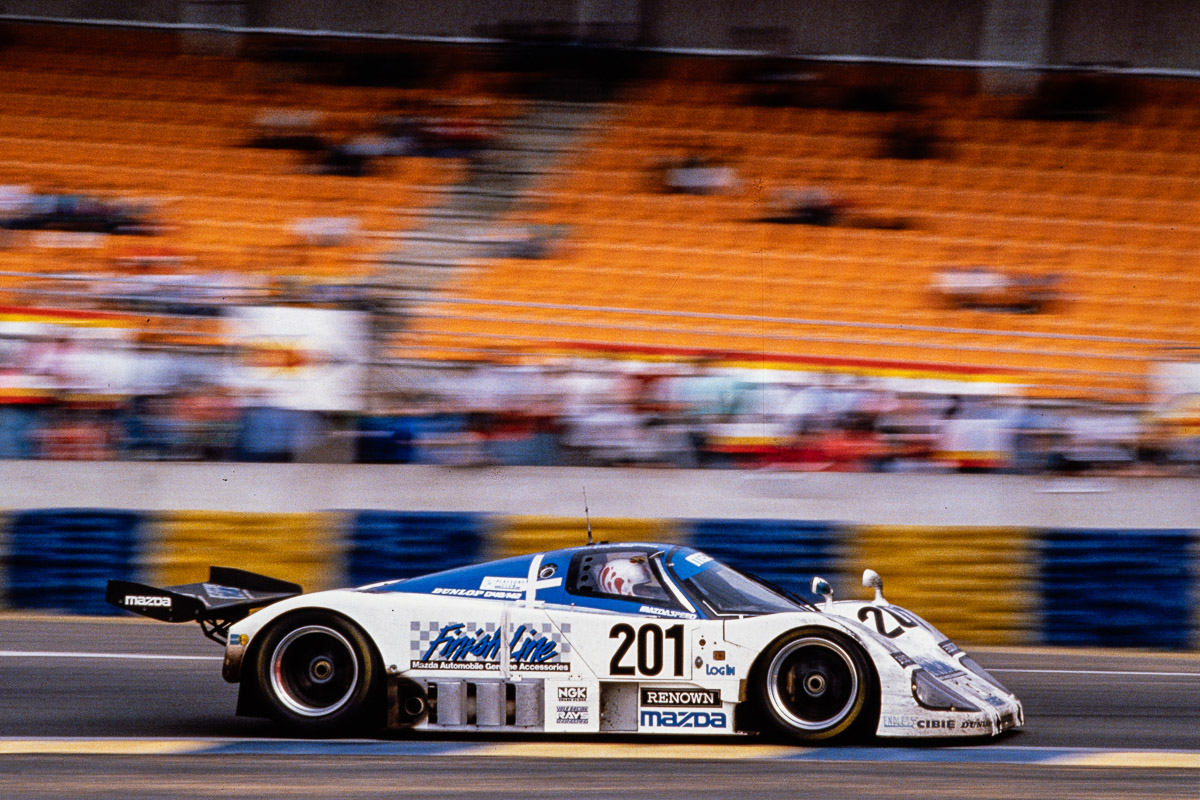
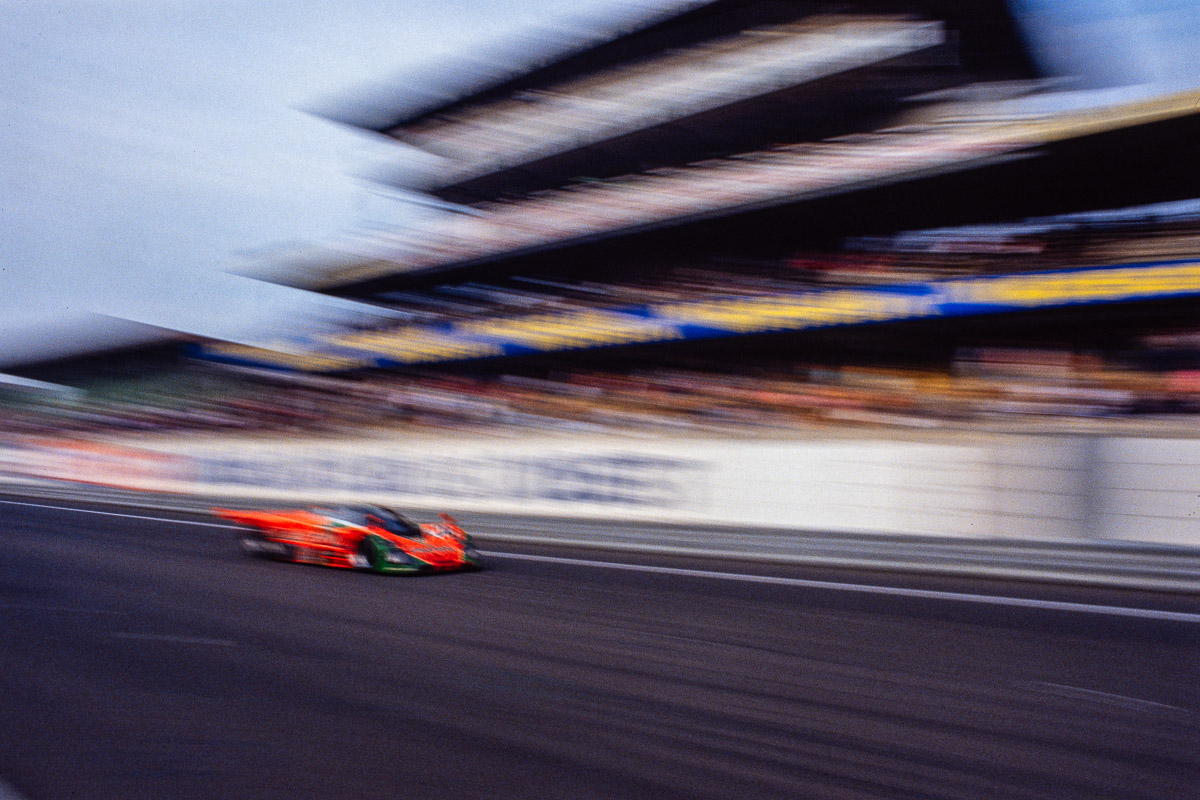
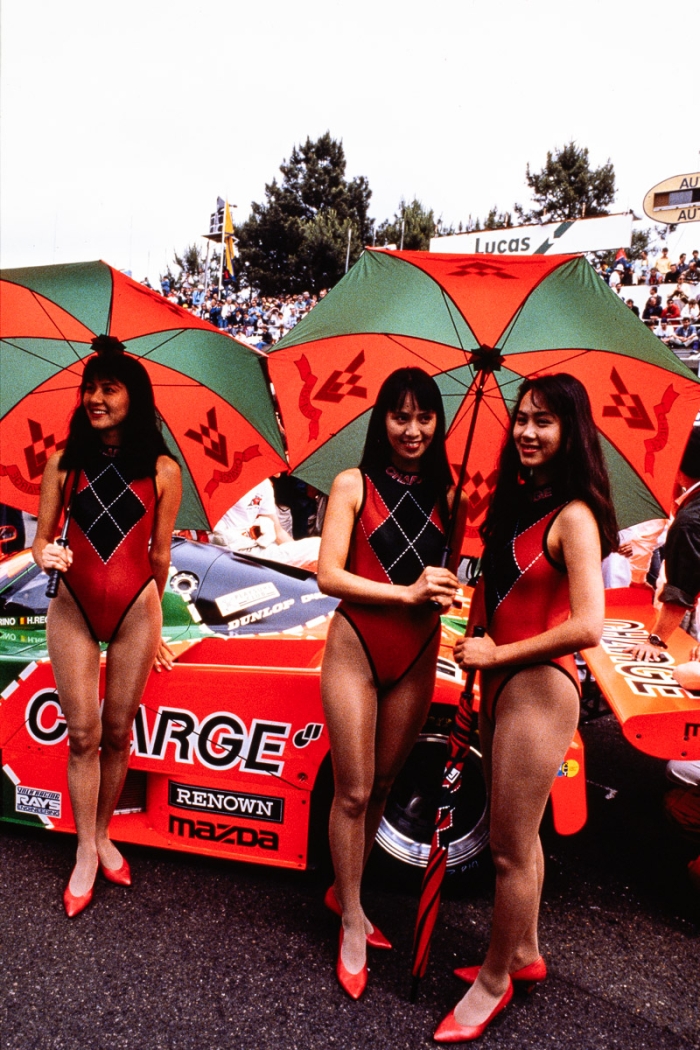
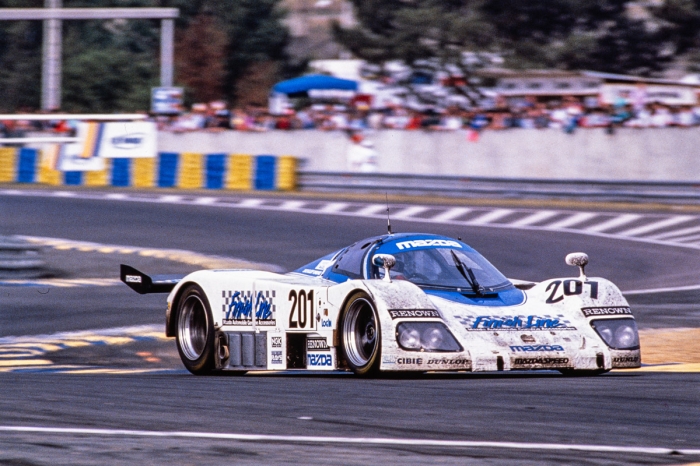
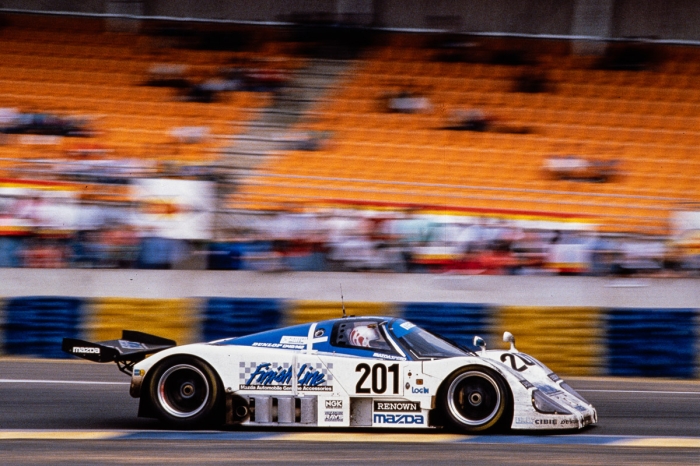
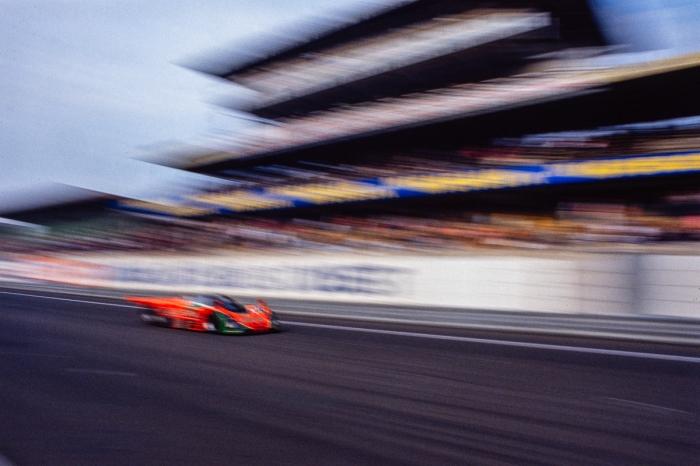
During this event, I also discovered the distinctive sound of the Mazda rotary engine, immediately recognizable among the prototype traffic. I would later get to spend more time with the Mazda team in 1991, during their victory at the 24 Hours of Le Mans, when I was part of the media team.
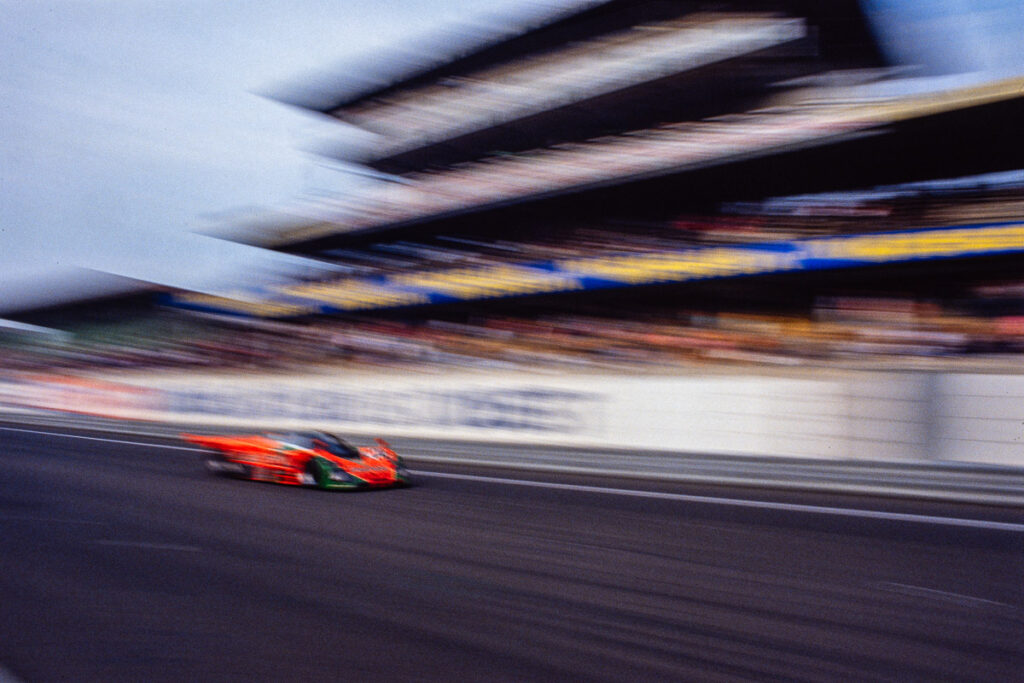 Mazda - 24 Hours of Le Mans 1989 - Photo: © Sebastien Desnoulez
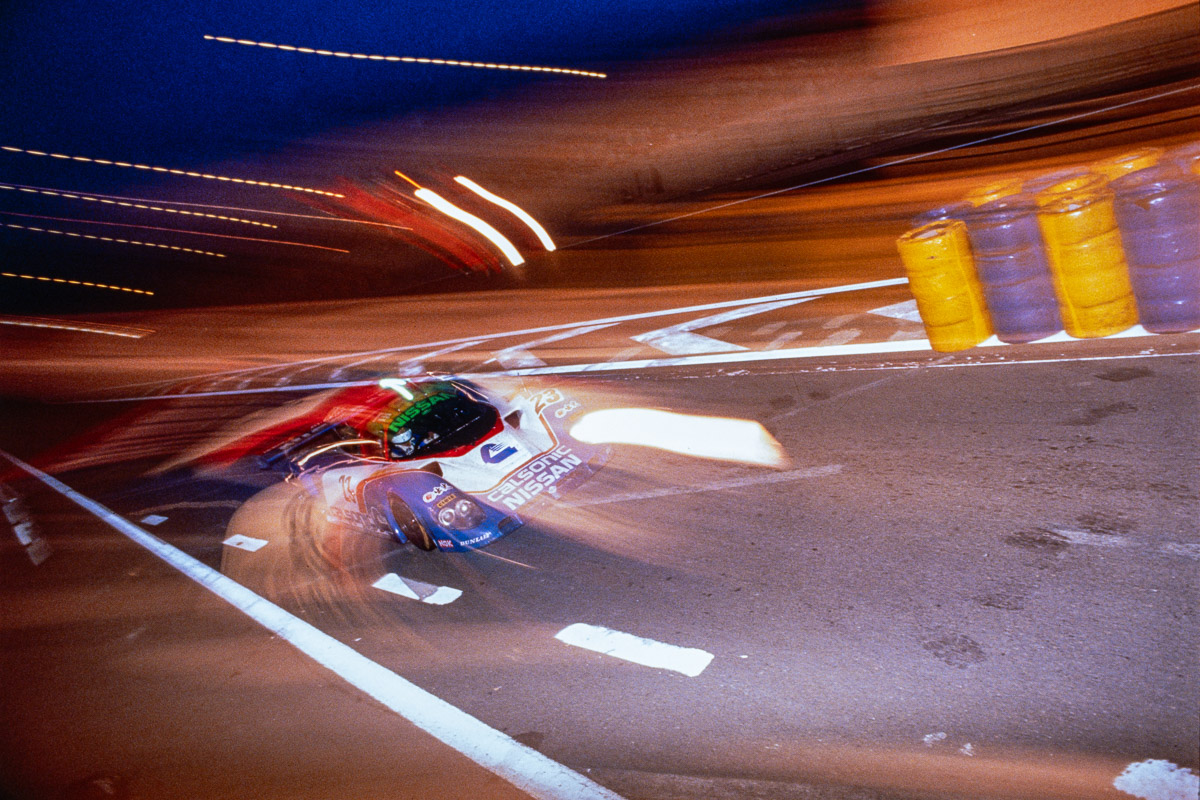
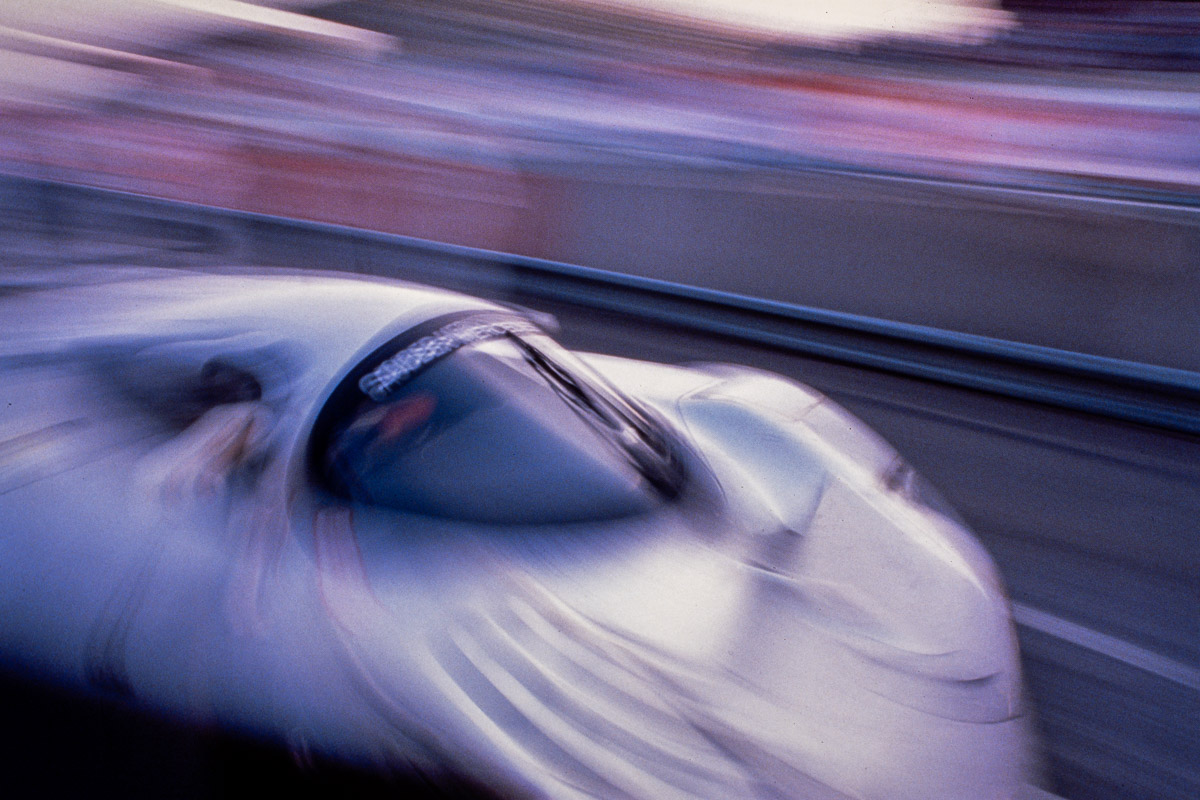
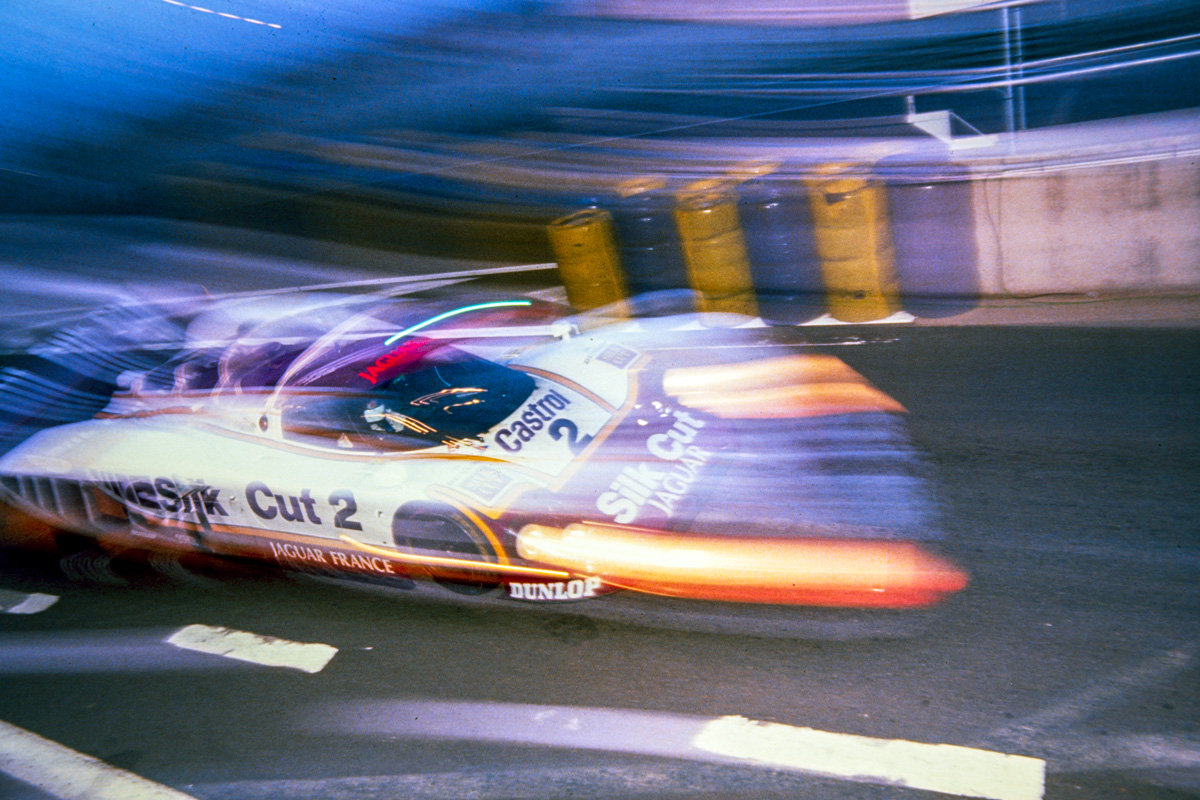
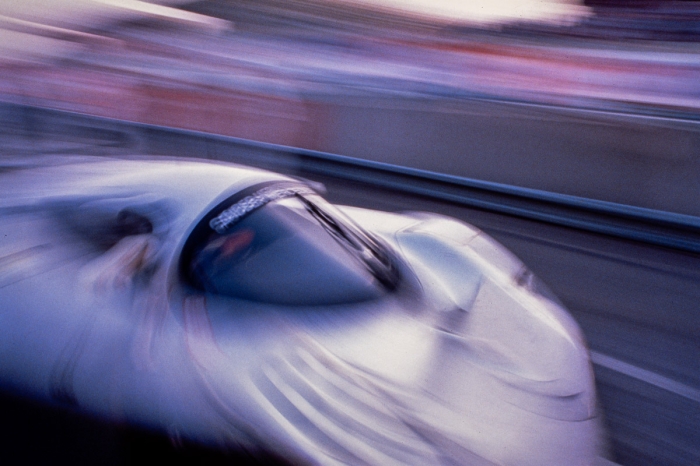
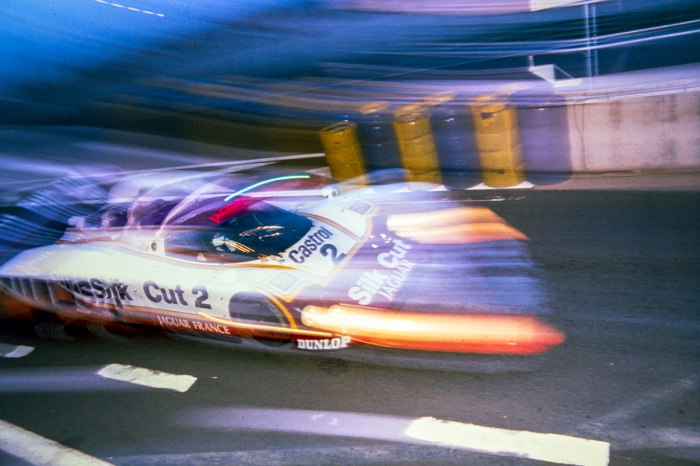
Later, I noticed a small staircase of a few steps leading to a timekeepers’ post or race control position, at the beginning of the track leading into the pit lane. I climbed it and found myself about two metres above the track. From that position, I began photographing the cars as they passed, using flash and a slow shutter speed.
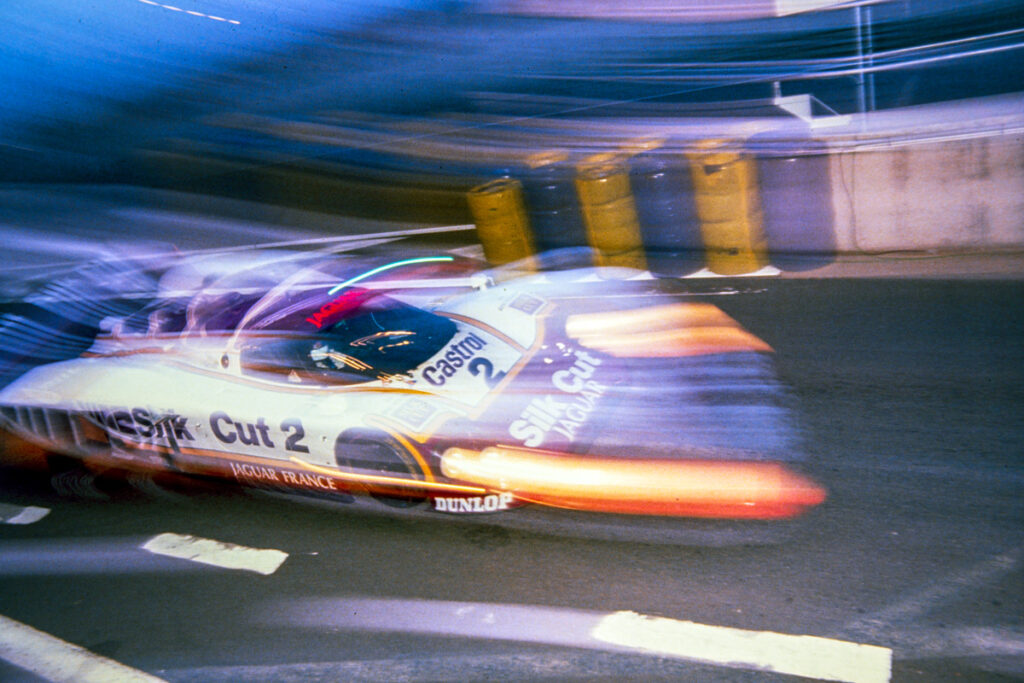 Jaguar XJR 9 - 24 Hours of Le Mans 1989 - Photo: © Sebastien Desnoulez
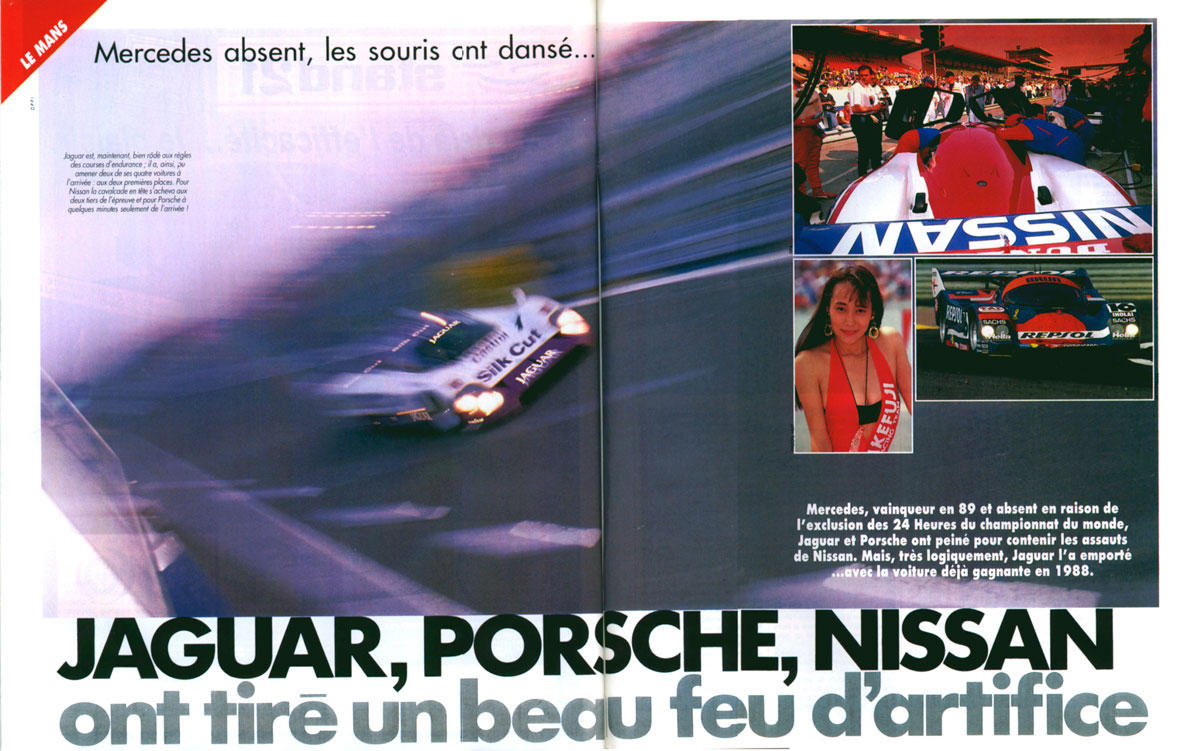
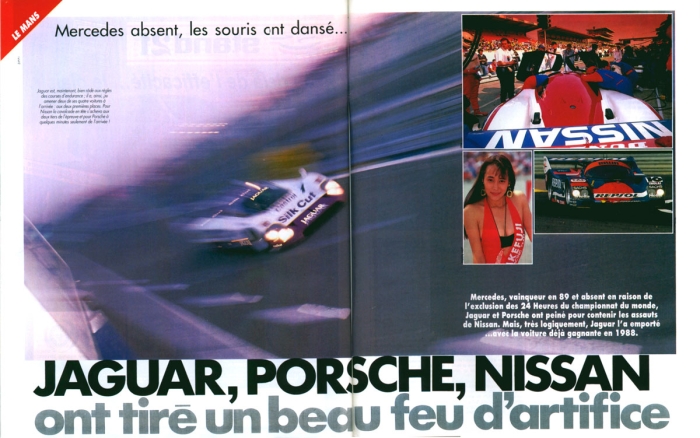
One photograph from this series was published as the opening double-page spread of the article devoted to the 24 Hours of Le Mans in L’Auto Journal. For me, this was obviously unexpected. I was not one of the main photographers assigned to the event, and this image came from an initiative taken on the spot, by looking in the pits for an angle different from the more expected racing photographs. This kind of image, both graphic and less conventional, was well received by the automobile press at the time.
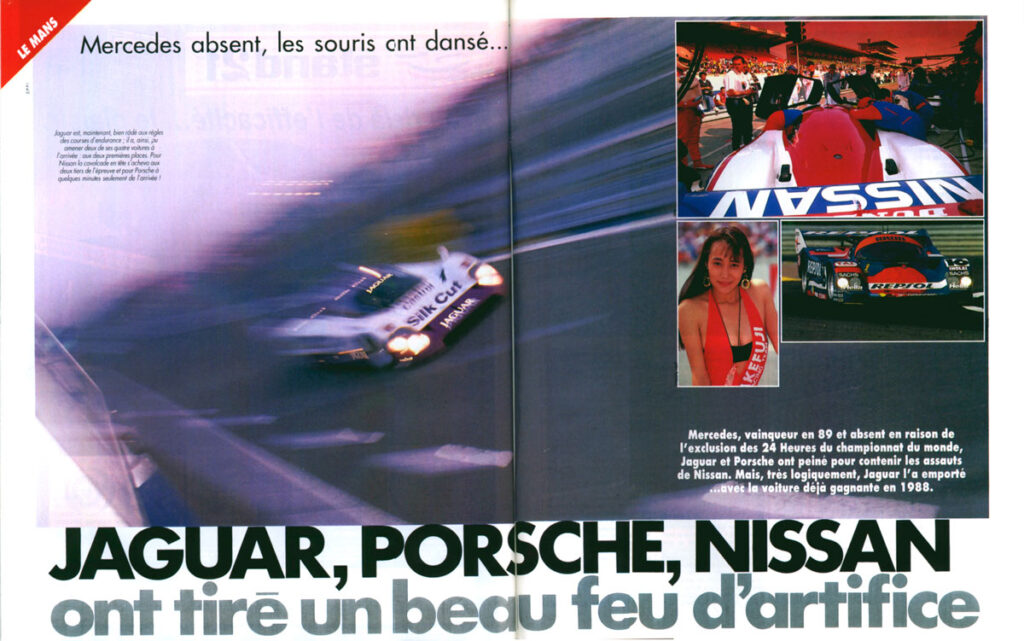 Jaguar XJR-9 24 Hours of Le Mans 1989 - L’Auto Journal - Photo: © Sebastien Desnoulez
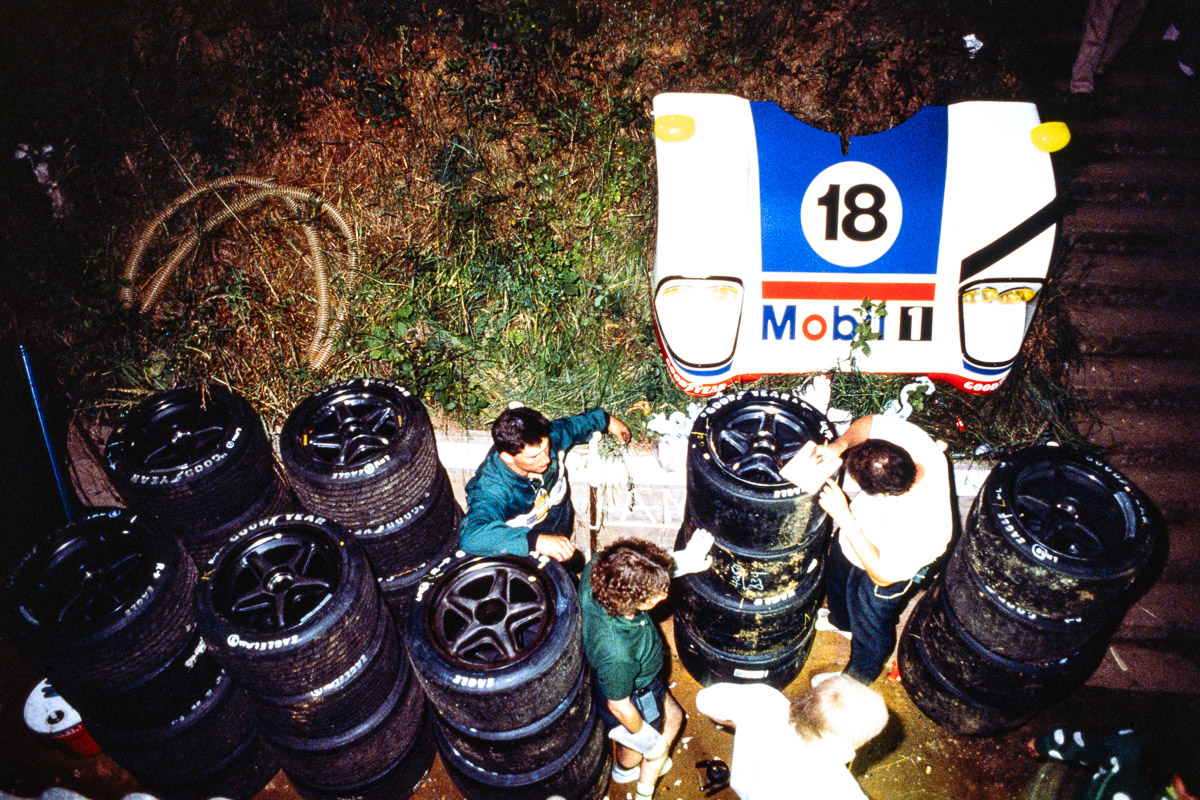
I then went back to photographing the night-time atmosphere in the pits. As one of the photographers preferred to spend the night out on the circuit, a bed was available for me. I was therefore able to sleep for a few hours, which had not been planned at the start.
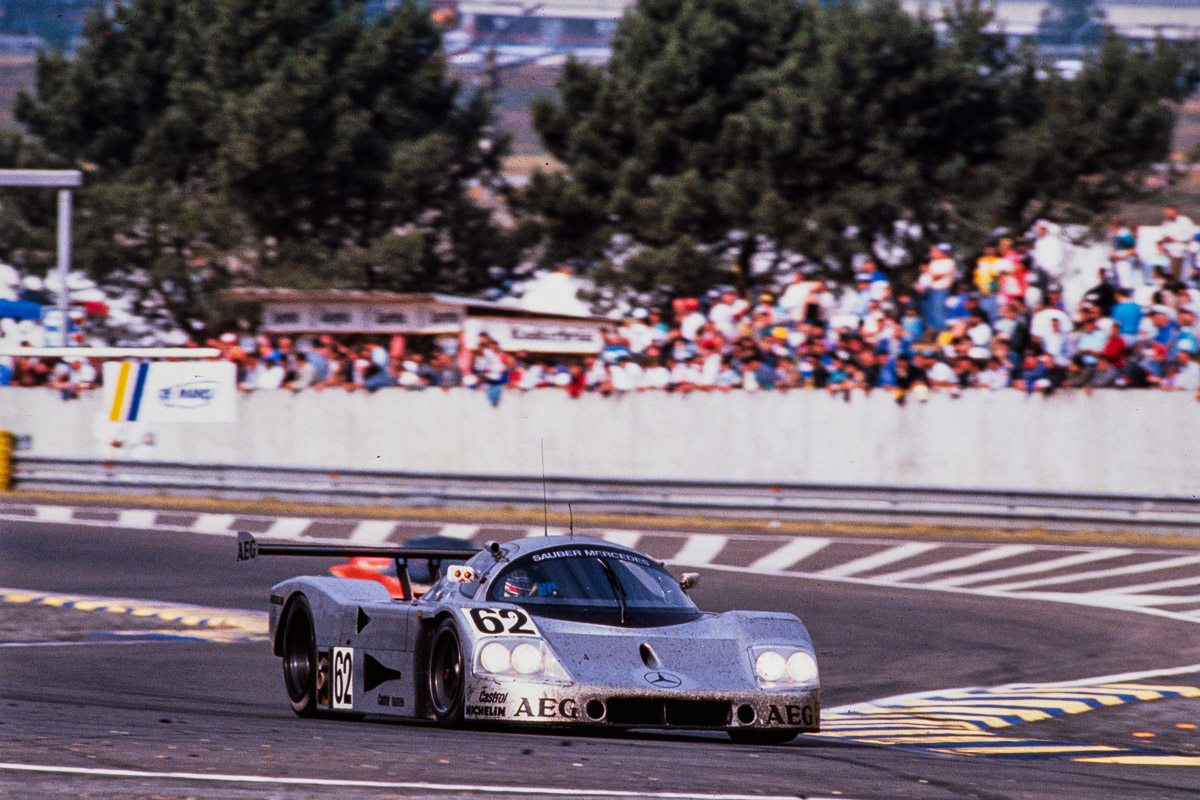
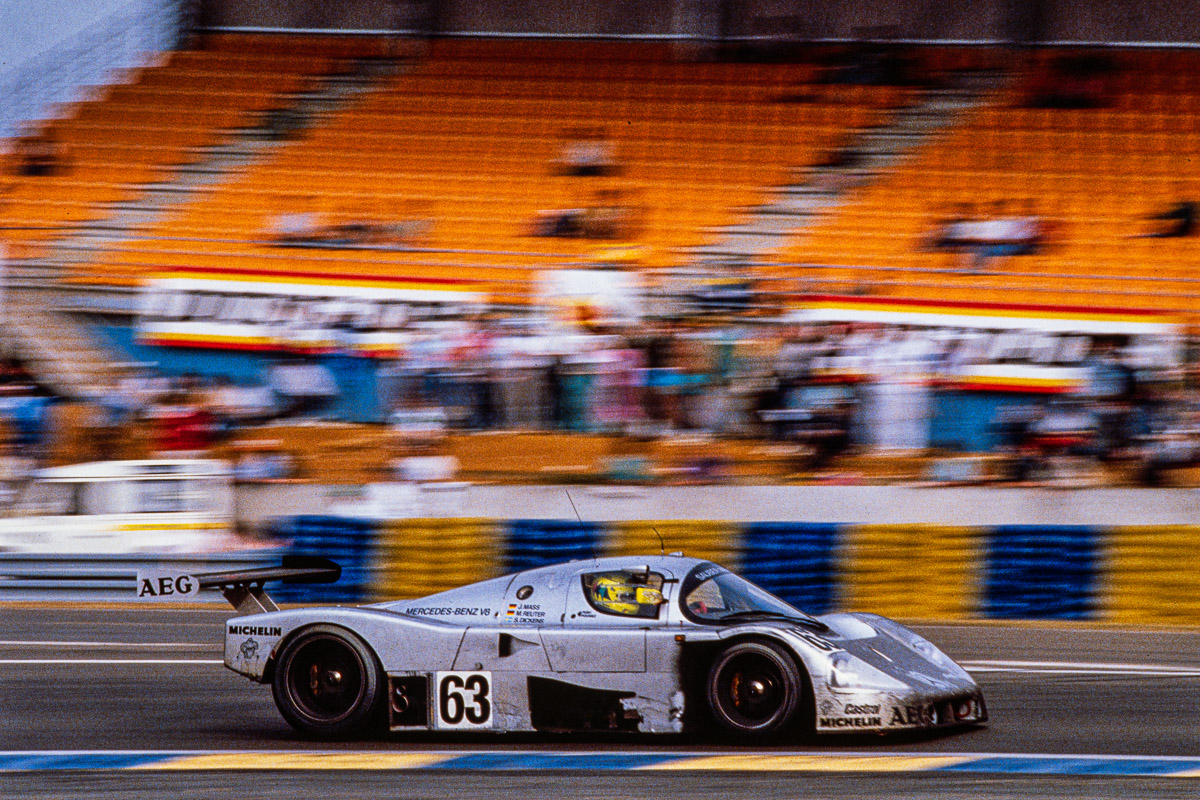
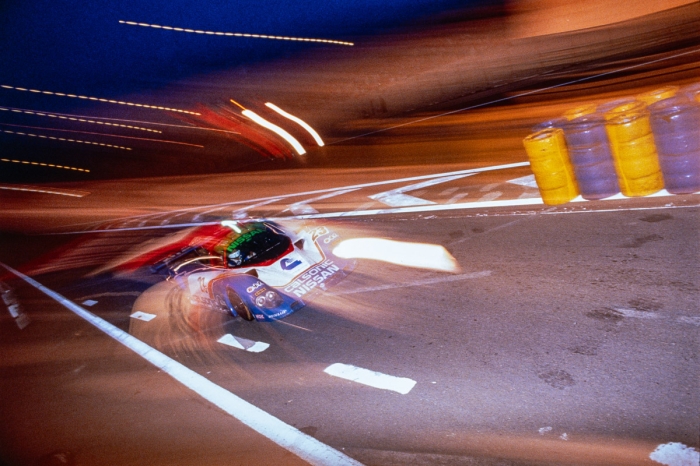
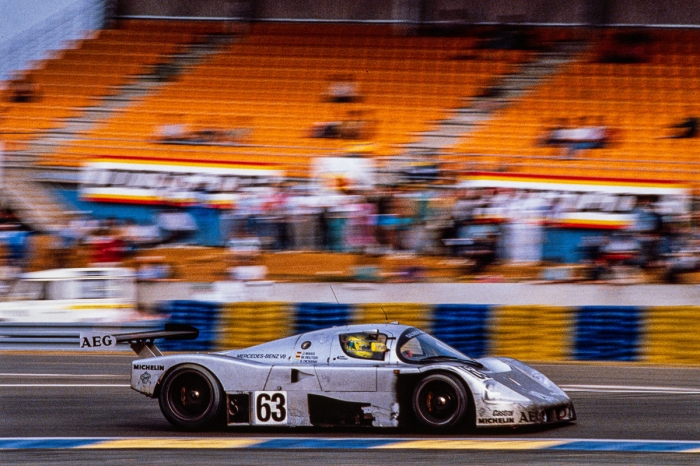
Back on the circuit, I made more images in the pits, then went to the Dunlop chicane to photograph the cars in action.
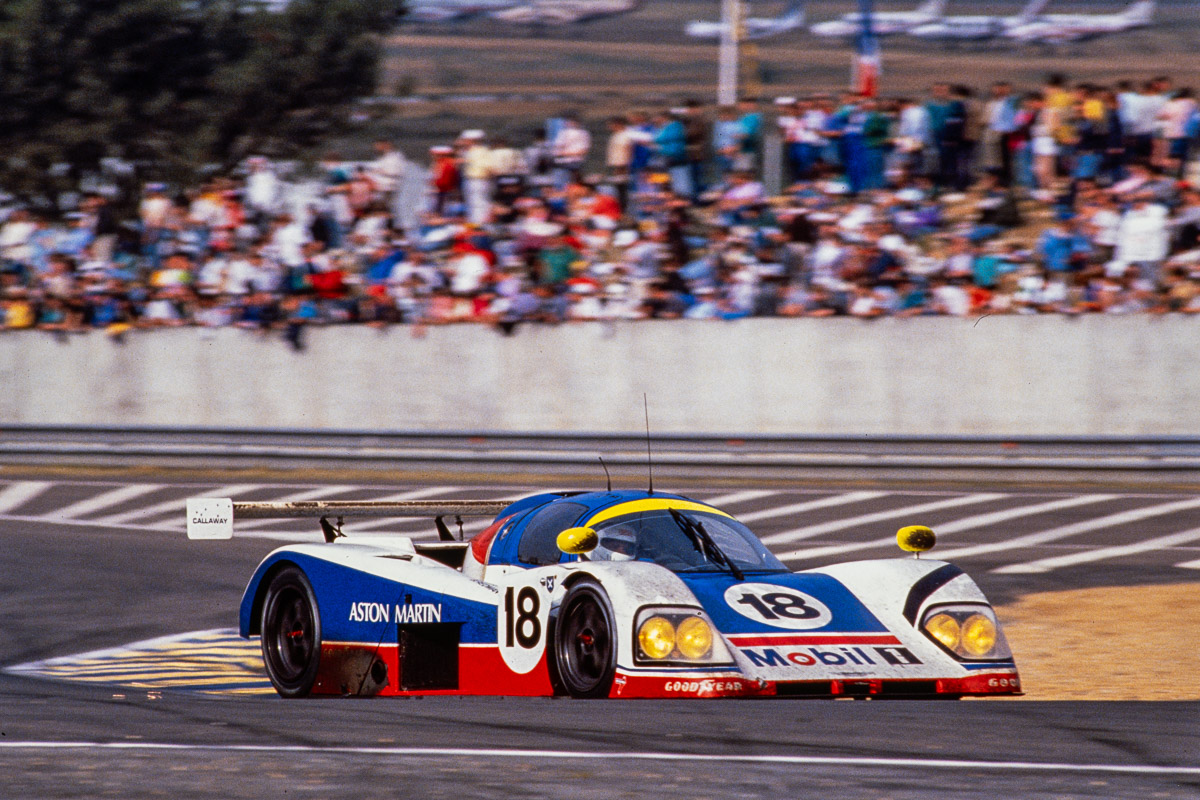
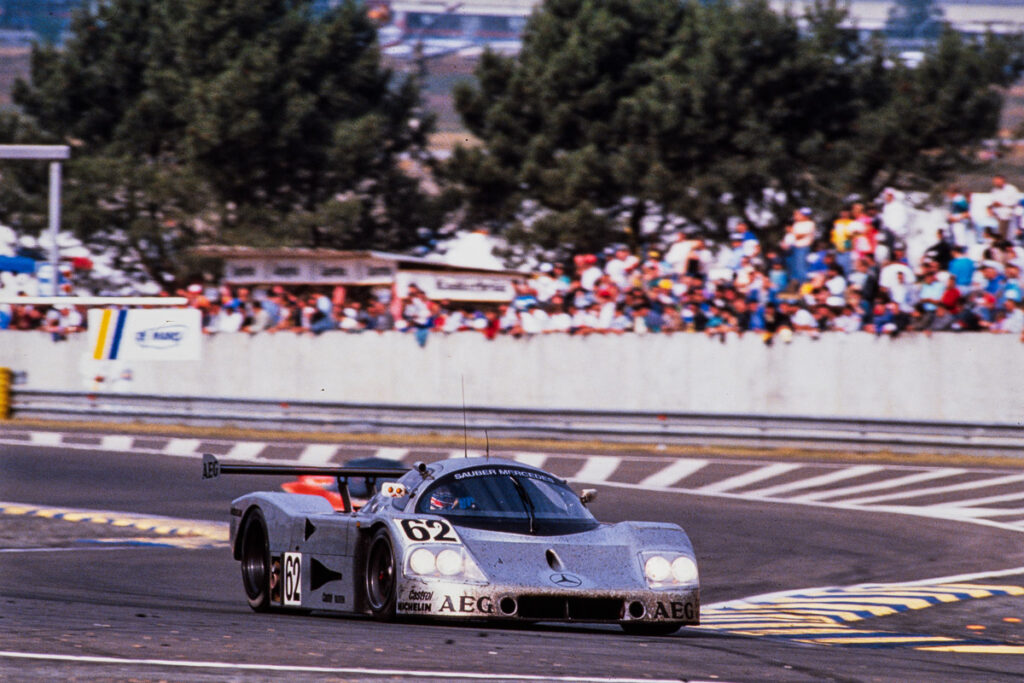 Schlesser-Jabouille-Cudini / Sauber-Mercedes / 5th - 24 Hours of Le Mans 1989 - Photo: © Sebastien Desnoulez
I left the circuit on Sunday around midday with Thierry Bovy to bring the films back to the agency’s laboratory for processing. At the time, images were not transmitted from the circuit. It was only from 1996 onwards that we began scanning transparencies from European races during the night from Sunday to Monday, in response to increasingly pressing requests from our foreign clients. That same year, I created DPPI’s digital department, which I headed until 2011.
After this first edition covered in 1989, I returned to the 24 Hours of Le Mans every year until 1998. That year, in the Esses de la Forêt, I made the photograph of the Porsche 911 GT1-98 on three wheels.
Click on the photos below to view them full screen.
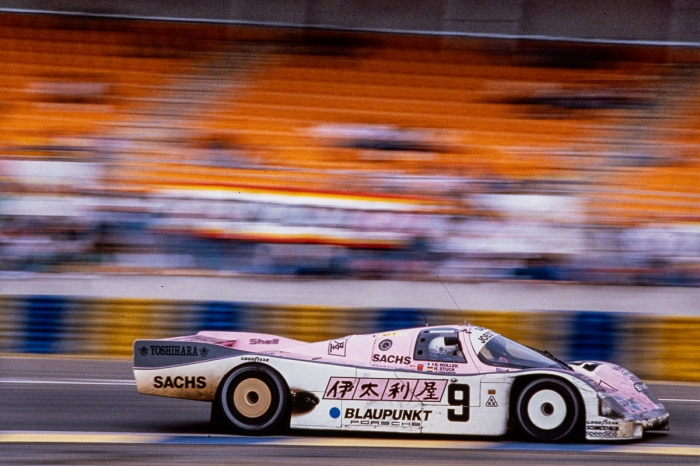
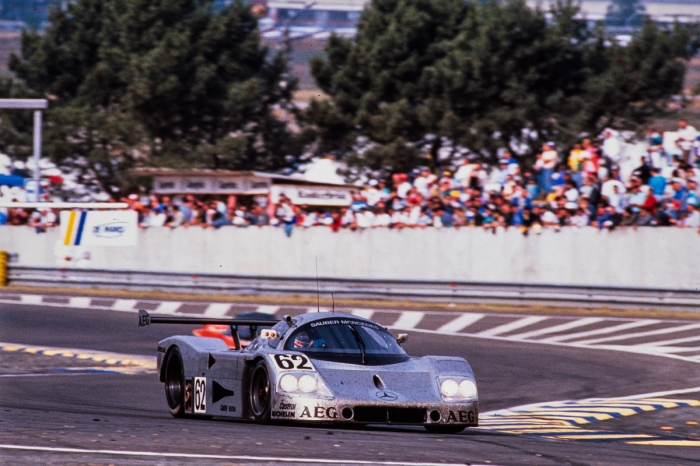
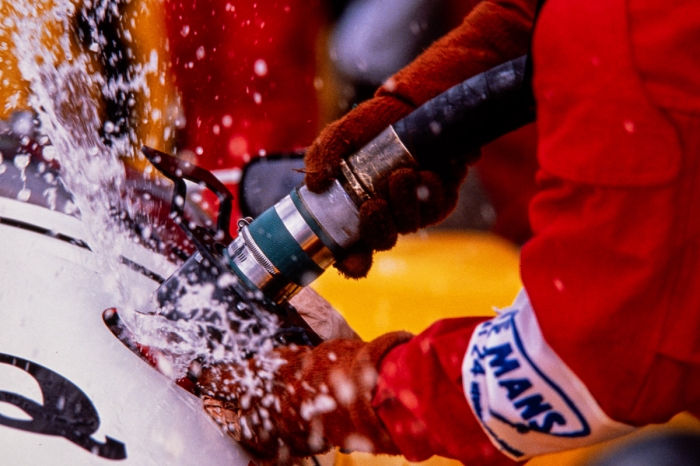
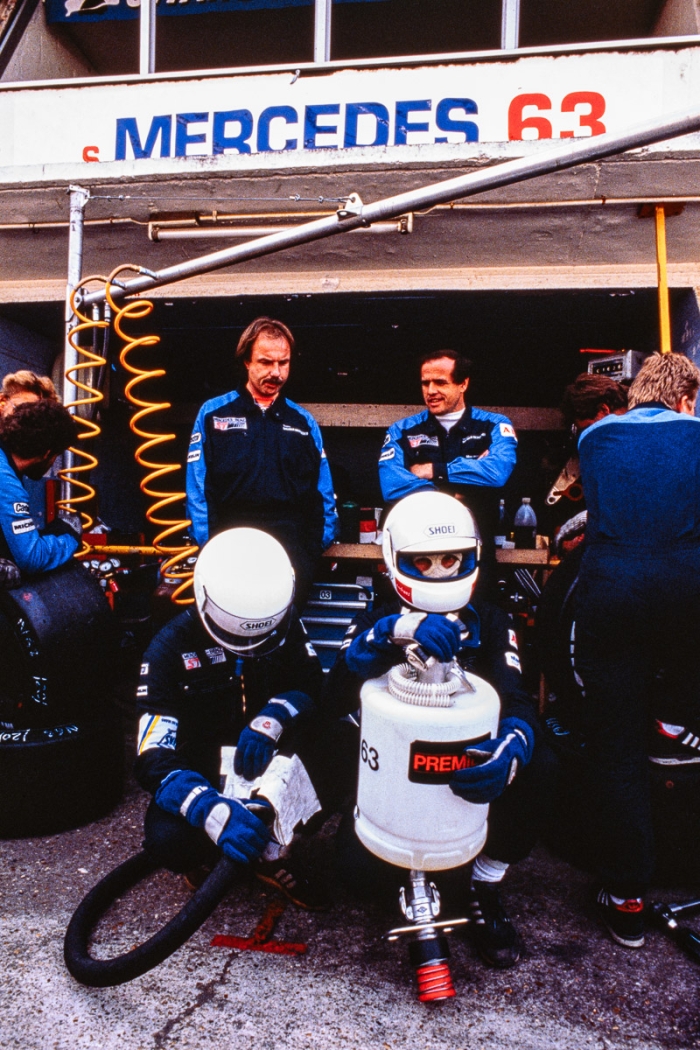
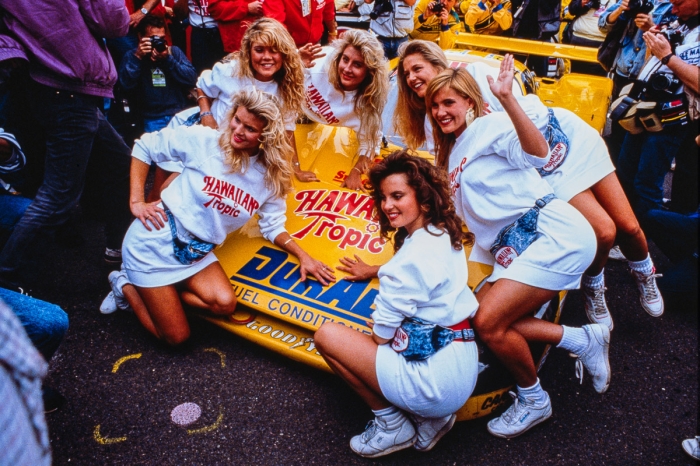
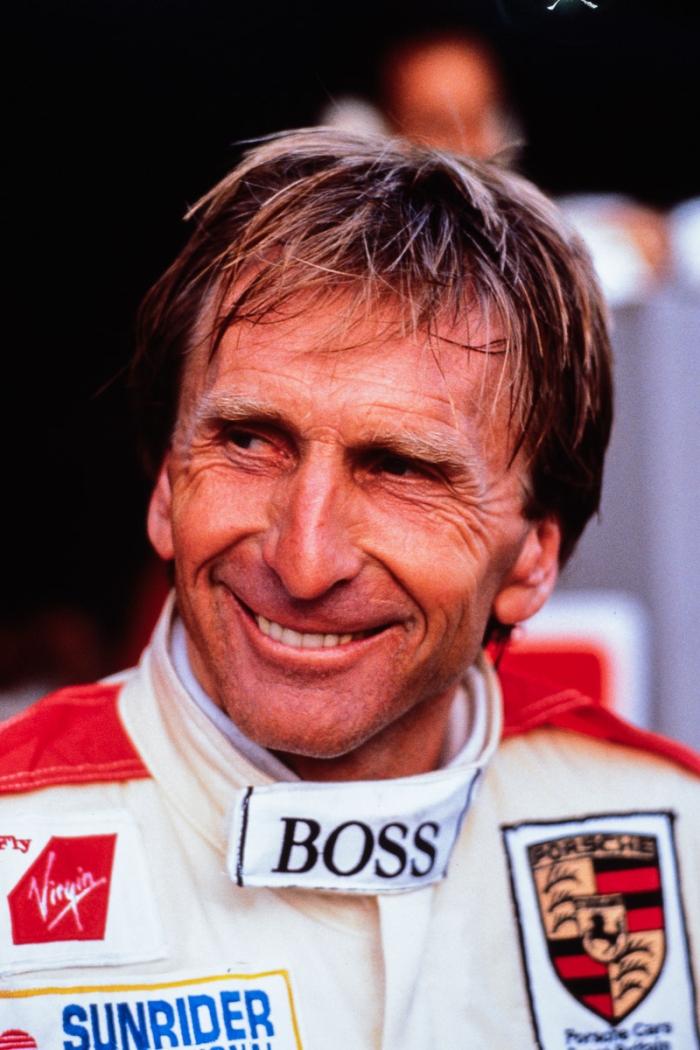
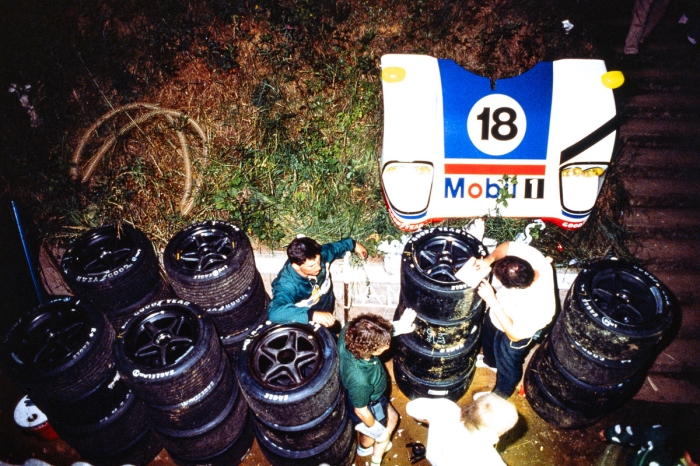
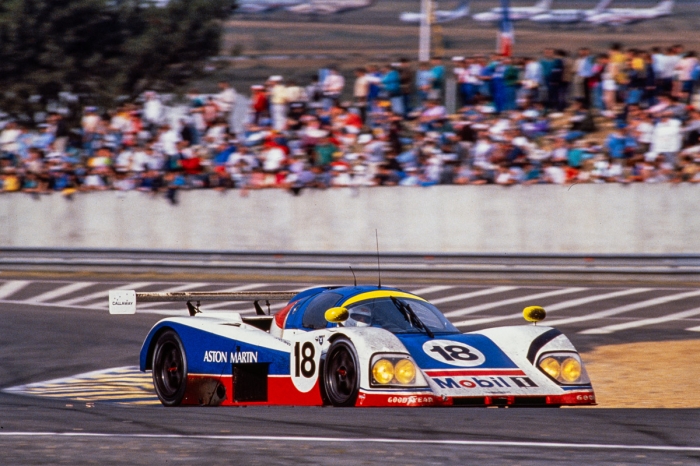
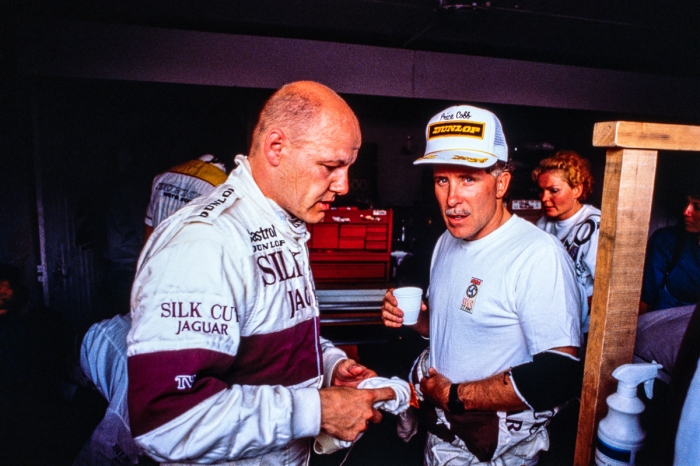
All the photos displayed on this website are copyright protected © Sebastien Desnoulez. No use allowed without written authorization. Legal notice
About the author
Sebastien Desnoulez is a photographer, author and image maker based in Paris. His work spans architectural photography, landscape photography and travel photography, with particular attention to composition, lines, light, blur and visual accidents. Trained in photography in the mid-1980s, he covered Formula 1 and reported from around the world before developing a fine art photography practice built around the tension between graphic rigour and visual instability. He also shares his technical experience through practical articles for passionate photographers, drawing on a strong visual culture acquired in both film and digital photography.
Tags